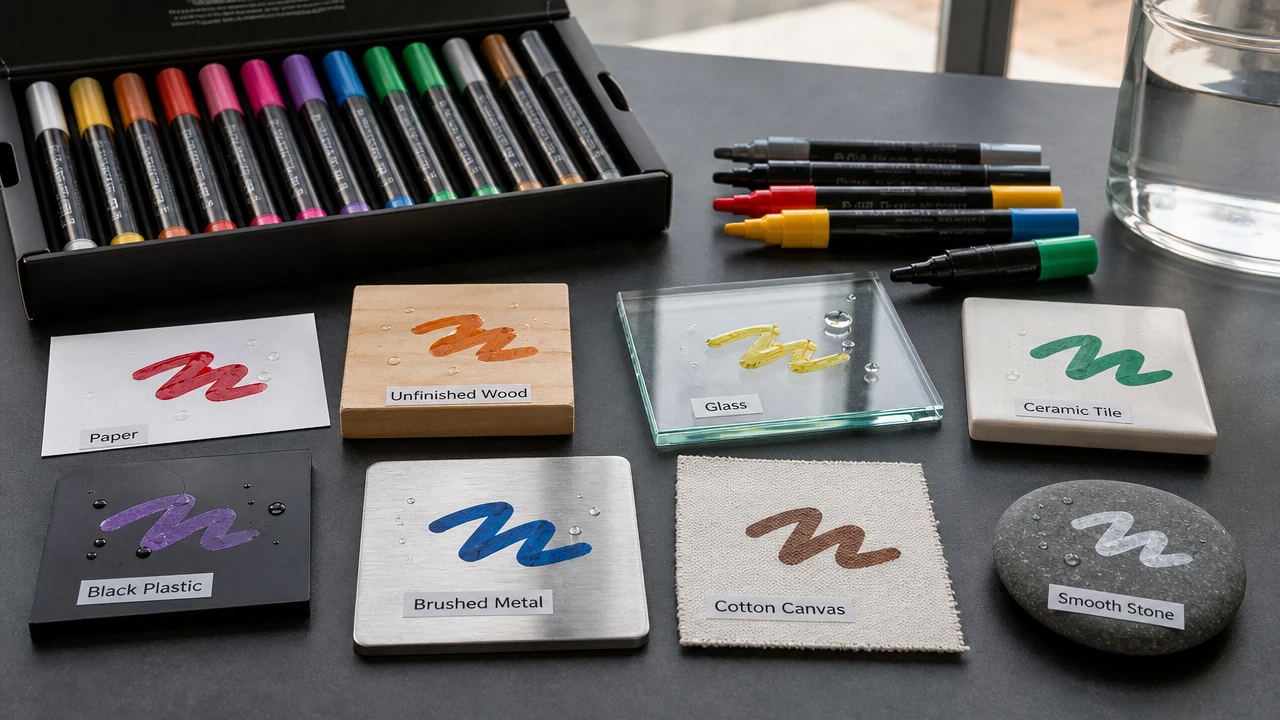
If your buyers ask, are acrylic paint markers permanent and waterproof, the honest answer is: after drying, they are usually water resistant and often permanent on the right surface. Not on every surface. Not under every kind of wear. For B2B sourcing, the wording on the pack must match the surface, cure time, and cleaning method, and test result.
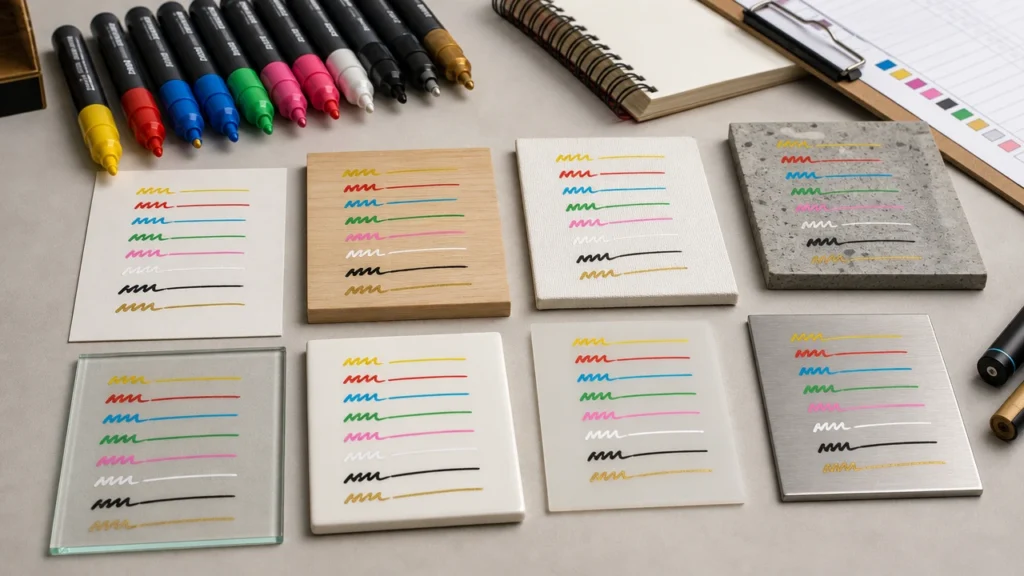
Les marqueurs de peinture acrylique sont-ils permanents et imperméables ? Réponse rapide
Acrylic paint markers dry into a pigmented acrylic film. On porous faces like paper, raw wood, canvas, and stone, that film can grip well and become hard to remove. On low-energy surfaces like glass, glazed ceramic, metal, and many plastics, the mark may resist water after drying. It can still scratch off unless the surface is prepped, the ink cures, and a sealer is used when needed.
So when a buyer asks about permanence and waterproofing, the supplier should answer by surface and test method. A good sample report splits ordinary craft permanence from washable fabric claims, dishwasher exposure, outdoor display, and scratch resistance.
For importers, retailers, and private-label brands, the useful question is not only whether the marker is waterproof. It is which surface, what buyer use, what label claim, and what proof the supplier can give. ZH Stationery supports OEM and ODM acrylic paint markers. That includes set planning, surface-use instructions, pack copy, and sample review. See the gamme de produits.
Liens rapides
- Ce que signifient permanent et imperméable
- Résultats surface par surface
- Surfaces poreuses
- Surfaces non poreuses
- Tissus et surfaces portables
- Comment tester les allégations d'imperméabilité
- Emballage et instructions
- Posez de meilleures questions au fournisseur
- FAQ
Ce que signifient permanent et imperméable pour les marqueurs de peinture acrylique
In retail talk, permanent usually means the mark is not built to wash away like a washable school marker. Waterproof usually means the dried mark resists water touch. Neither word automatically means outdoor durable, dishwasher safe, scratch proof, solvent proof, UV steady, or fit for food-contact faces.
That split matters because acrylic marker ink has two jobs. It must flow through a nib while wet. Then it must form a film after water or solvent leaves the ink. The film can be strong. It still depends on surface energy, surface texture, dirt, dry time, pigment load, binder system, and whether the user rubs, soaks, heats, or washes the marked object.
Safety language is a separate issue from performance language. In the US, Guide sur les matériaux d'art de la CPSC says art materials under LHAMA need toxicology review and ASTM D-4236 conformance marking. The ASTM D4236 standard covers chronic health risk marks for art materials. It does not prove waterproof on glass or permanent on plastic.
Résultats surface par surface que les acheteurs doivent attendre
Use this table as a buyer hope map, not a universal promise. The same marker can perform differently on a dusty stone, sealed wood board, glossy tumbler, raw cotton bag, or oily plastic toy. Always test the exact surface your buyers use.
| Surface | Résultat probable après séchage | Risque pour l'acheteur | Contrôle recommandé |
|---|---|---|---|
| Papier et carton | Généralement assez permanent pour un usage créatif normal. | Bavures, transparence, effilochage, dégradation du papier en cas d'application excessive. | Écrire, laisser sécher, frotter avec un chiffon sec, puis vérifier le contour de la couleur et le gondolage du papier. |
| Bois brut | Bonne adhérence lorsque la surface est propre et légèrement absorbante. | Couleur inégale sur le grain rugueux, contamination par la poussière, assombrissement de la couleur. | Poncer, essuyer la poussière, marquer, laisser sécher, puis effectuer des tests de goutte d'eau et de frottement. |
| Toile | Bonne tenue lorsque le tissu est propre et apprêté ou convenablement texturé. | Fissuration de la surface souple, dérive de teinte, absorption irrégulière. | Plier et frotter après séchage. Comparer une toile apprêtée et une toile non apprêtée. |
| Pierre et roche | Souvent bonne adhérence car la surface est poreuse et texturée. | Poussière, produits de scellement, intempéries, abrasion. | Laver et sécher d'abord la pierre, puis tester l'exposition à l'eau et le frottement de la surface. |
| Verre | Résistant à l'eau après séchage, mais risque de rayures. | Mauvaise adhérence, traces de doigts, exposition au lave-vaisselle, sur-promesse client. | Nettoyer à l'alcool, marquer, sécher ou polymériser, puis tester l'essuyage, le trempage et l'arrachement au ruban adhésif. |
| Céramique émaillée | Similaire au verre, sauf si un scellant compatible ou un procédé de cuisson est approuvé. | Allégations lave-vaisselle, mauvaise utilisation en contact alimentaire, écaillage des bords. | Testez uniquement les zones décoratives extérieures, sauf si la conformité est confirmée. |
| Plastique | Très variable selon le type de résine et la finition de surface. | Faible adhérence sur PP, PE, plastiques huileux ou souples. | Testez le plastique exact, pas une carte d'échantillon aléatoire. |
| Métal | Peut fonctionner sur un métal propre et légèrement texturé ; les revêtements lisses varient. | Résidus d'huile, rayures, incompatibilité de revêtement, exposition extérieure. | Dégraissez, marquez, séchez, puis effectuez des tests d'adhérence et d'abrasion. |
| Tissu | Peut marquer le tissu, mais la résistance au lavage est une allégation distincte. | Échec au lavage, toucher rigide, craquelures sur tissu extensible. | Test de cycle de lavage, test de frottement et libellé clair sur l'étiquette d'entretien. |
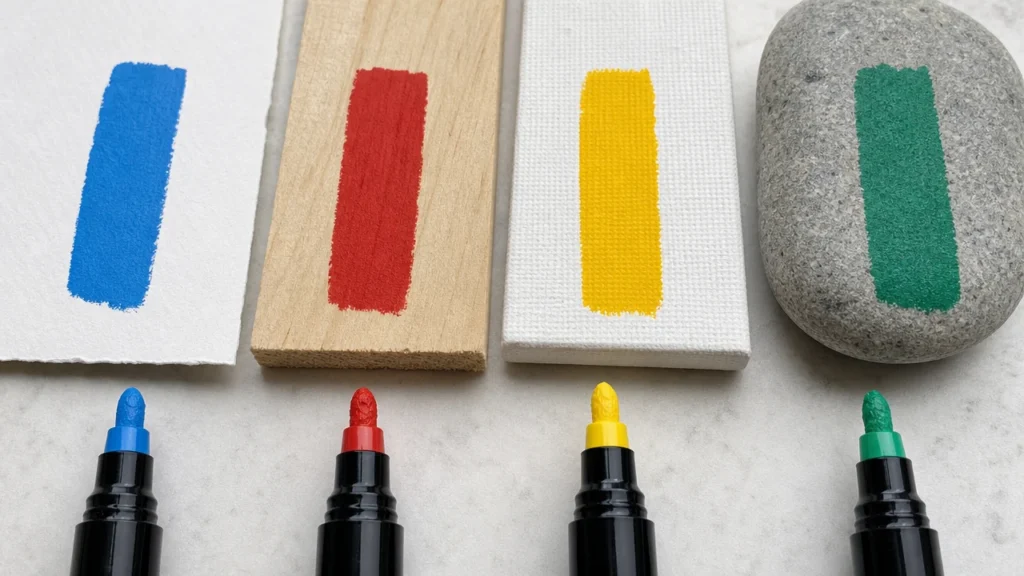
Surfaces poreuses : papier, carton, bois, toile et pierre
Porous faces are usually the safest place for permanence claims. The ink can grip both by shape and by chemistry. Paper, cardboard, raw wood, unsealed stone, and some canvas give the film more contact than glass or plastic. That is why rock and wood craft sets often perform well with acrylic paint markers.
Still, do not treat every porous material the same. Coated paper can push ink away. Dusty stone can make paint sit on loose bits. Freshly sanded wood can take pigment unevenly. Canvas can flex after drying. The sample approval should use the real buyer surface, not only a clean white card.
For a private-label set, build the use card around real faces. Paper crafts, wood tags, canvas boards, stones, gift boxes, or school projects. If the line includes marqueurs de peinture acrylique super brillants, test sparkle on darker porous samples as well as white cards. Glitter can vanish when the surface soaks up too much binder.
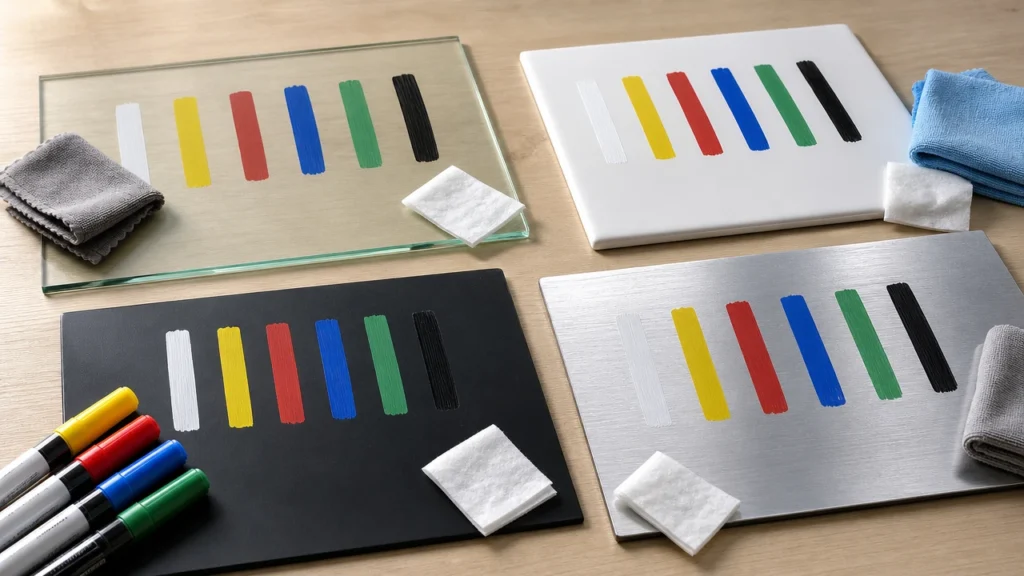
Surfaces non poreuses : verre, céramique, plastique et métal
Non-porous surfaces make more complaints. Buyers expect the marker to perform like paint, but the film has fewer places to grip. A mark can live through a water drop and still fail a fingernail scratch. That is why waterproof and scratch resistant must be tested apart.
Glass and glazed ceramic need a clean surface. Fingerprints, oil, mold-release film, and dust all cut grip. Plastic is harder because PP and PE can reject many coats. Metal depends on raw, painted, powder coated, anodized, polished, or slightly textured conditions. One passed metal sample does not prove every metal product.
A simple supplier talk should cover the marker system, nib delivery, and prime feel. ZH Stationery's technologie de marqueur à valve explains why controlled ink flow matters for opaque acrylic systems. For surface claims, the buyer still needs use tests on the planned base.
Tissus et surfaces portables
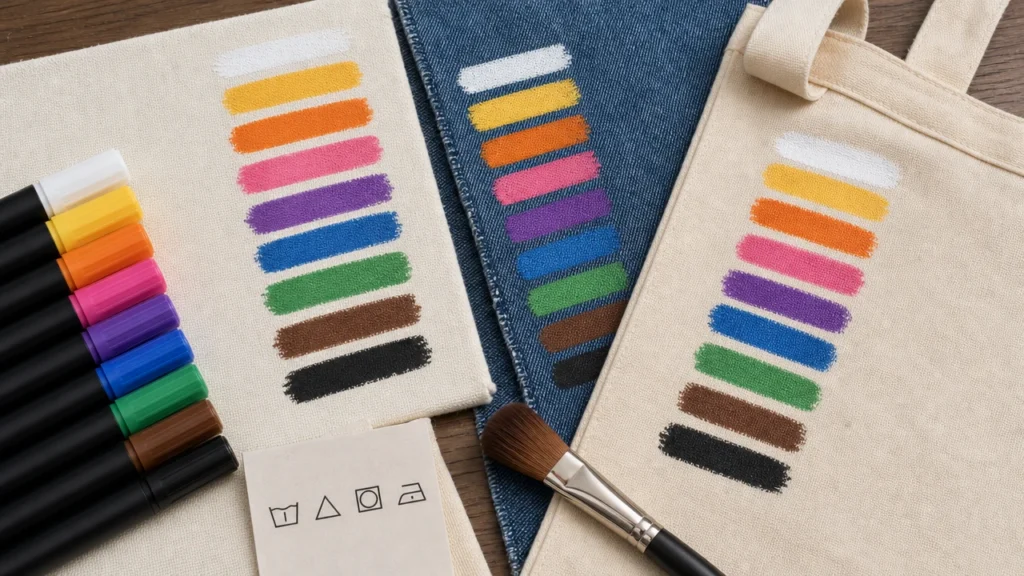
Fabric is where many marker claims get too wide. Acrylic paint markers can leave a clear mark on cotton, canvas totes, denim, and synthetics. Washable fabric performance is a separate need. Stretch, soap, heat, dry method, and fiber content all change the result.
If the product will sell for totes, shoes, hats, costumes, or kids' fabric crafts, ask whether the marker is only for occasional decoration or has passed a set wash test. If heat set is advised, the pack should say so clearly. The card should match the tested state. Do not use loose language like works on all fabrics unless the supplier can back it.
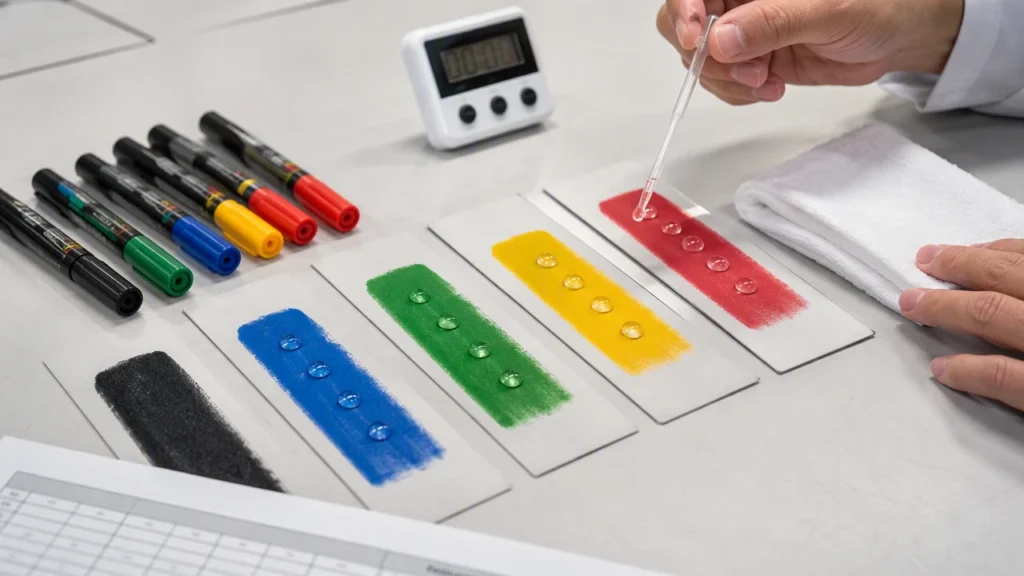
Comment tester les allégations d'imperméabilité avant un bon de commande
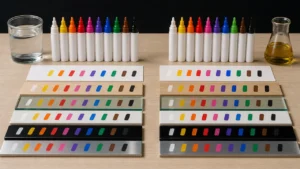
A buyer does not need an expensive lab plan for every first screen sample. The method must be written down. If each seller tests a marker different, the result becomes a debate instead of proof.
- Définissez la surface : matériau exact, revêtement, couleur, finition et méthode de nettoyage.
- Définissez le temps de séchage ou de durcissement : par exemple, 24 heures à température ambiante avant l'exposition à l'eau.
- Effectuez un test de goutte d'eau : placez de l'eau sur la marque, attendez un temps fixe, tamponnez et inspectez le saignement de couleur.
- Effectuez un test d'essuyage humide : essuyez avec la même pression de chiffon et le même nombre de passages.
- Effectuez un test d'immersion uniquement si l'allégation de vente au détail implique un trempage ou une exposition à la pluie en extérieur.
- Effectuez un test de rayure ou de frottement séparément de l'exposition à l'eau.
- Conservez un échantillon de référence et un enregistrement photo du résultat approuvé.
For higher-risk non-porous claims, buyers can borrow from coat tests. The Norme d'adhérence au ruban adhésif ASTM D3359 rates coat grip by tape test. It is not a marker retail rule. It reminds buyers that grip should be checked with a set method, not guessed from a nice sample.
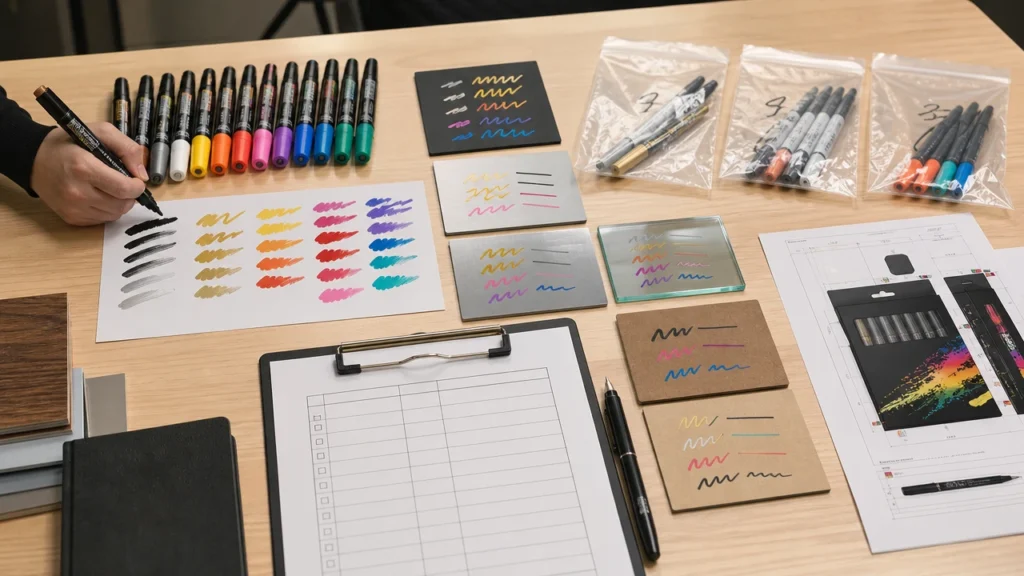
Tie this test record to your liste de contrôle d'approbation des échantillons. Keep the passed surface panels, cure note, pack copy, barcode sample, and supplier sign-off together. That makes reorder review easier when you later compare marker color consistency across batches.
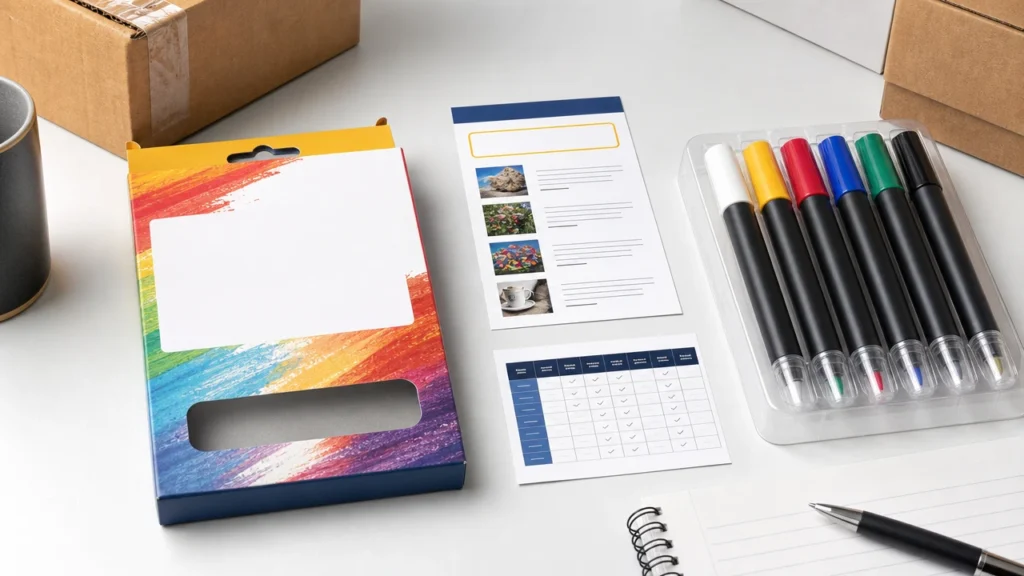
L'emballage et les instructions façonnent les attentes des clients
Most complaints start when the buyer reads more into the pack than the supplier tested. Waterproof may sound simple. A shopper may read it as rainproof, washable, dishwasher safe, outdoor permanent, child safe, or mug safe. Those are different claims.
Better packs use specific language. For example: water resistant after drying on suitable surfaces. Seal for outdoor use. Test a small area first. Decorative use only on the outside of drinkware. Keep away from food-contact faces unless the product has specific pass. Let ink dry fully before handling. These lines cut false hopes without weakening the product.
The art also needs room for safety and compliance language. The Mise à jour ASTM D4236-26 shows art-material marking can change over time. Buyers should ask suppliers to confirm the current version for the target market. ZH buyers can also review our Guide des rapports de test ASTM D-4236 et certificate page before final pack pass.
Libellés d’allégations courants à utiliser avec précaution
| Revendication | Pourquoi cela peut être risqué | Formulation plus sûre maîtrisée par l’acheteur |
|---|---|---|
| Permanent sur toutes les surfaces | Aucun marqueur n’offre des performances identiques sur toutes les surfaces. | Permanent sur de nombreuses surfaces poreuses après séchage. Testez d’abord sur les surfaces lisses. |
| Imperméable | Trop général sans méthode d’exposition. | Résistant à l’eau après séchage sur des surfaces appropriées. |
| Compatible lave-vaisselle | Nécessite des tests de chaleur, de détergent, de pression et d’abrasion. | À utiliser uniquement si des tests spécifiques au produit en lave-vaisselle le confirment. |
| Permanent en extérieur | Les UV, la pluie, la chaleur et l’abrasion ont tous leur importance. | Scellez pour l’affichage extérieur. Testez dans les conditions extérieures prévues. |
| Sans danger pour les mugs | Les clients peuvent marquer des zones en contact avec les aliments. | Usage décoratif extérieur uniquement, sauf si la conformité confirme l’aptitude au contact alimentaire. |
| Fonctionne sur tissu | La résistance au lavage varie considérablement. | Convient à certains travaux sur tissu. Suivez les instructions de séchage ou de thermofixage. |
Posez de meilleures questions au fournisseur
The best supplier answers are not just yes or no. They tie the surface claim to a formula, a sample method, and pack copy.
- Quelles surfaces avez-vous testées pour cette formule d’encre exacte ? Une réponse utile indique le matériau et la finition de surface, par exemple bois brut, céramique émaillée, verre borosilicaté, plastique PP ou toile de coton.
- Combien de temps le marquage doit-il sécher avant exposition à l’eau ? Une réponse utile indique un délai et une condition, pas seulement « après séchage ».
- Que signifie « imperméable » dans votre test ? Une réponse utile distingue goutte d'eau, essuyage humide, trempage, exposition à la pluie et cycles de lave-vaisselle.
- Pouvons-nous utiliser la même mention sur l'emballage pour tous les marchés ? Une réponse utile demande le marché de destination, la tranche d'âge, les exigences d'étiquetage de sécurité et le canal de vente avant d'approuver le libellé.
- Recommandez-vous un scellant pour le verre, la céramique, le métal ou les articles d'extérieur ? Une réponse utile nomme la surface et explique quand le scellant est facultatif ou requis.
- Pouvez-vous conserver des échantillons de référence du lot approuvé ? Une réponse utile inclut l'encre retenue, les marqueurs finis, les échantillons de surface marqués et des photos pour la comparaison lors des réapprovisionnements.
- Que se passe-t-il si les clients se plaignent d'une défaillance de surface ? Une réponse utile explique la collecte de preuves, le traçage des lots et les actions correctives plutôt que de promettre zéro plainte.
If you compare factories, add these questions to your RFQ beside packing, color range, and compliance files. A mature supplier should be at ease talking test limits. You can also compare how a supplier handles complaints with the dry-out case study. Then plan retail display with les options d'emballage des marqueurs acryliques.
FAQ
These answers are written for B2B sourcing teams prepping product claims, sample tests, and pack steps.
Les marqueurs de peinture acrylique sont-ils permanents sur le papier et le bois ?
Usually yes after the ink dries. Porous faces help the film grip. The result still depends on ink formula, surface dust, coat, dry time, and how much rub or water the item gets.
Les marqueurs de peinture acrylique sont-ils résistants à l'eau sur le verre ?
They can be water resistant on clean glass after drying. Plain water resistance is not dishwasher or scratch resistance. For glass programs, pass cleaning, cure, wipe, soak, and tape-pull checks before bulk orders.
Les marqueurs de peinture acrylique tiennent-ils sur le plastique ?
Plastic varies. Some plastics have low surface energy, so acrylic paint sits on top instead of bonding strong. Ask the supplier to test the exact plastic type and finish, not a generic sample.
Les marqueurs à peinture acrylique peuvent-ils être utilisés sur le tissu ?
They can mark many fabrics. Wash durability depends on fiber, ink load, cure, heat set if advised, and wash conditions. Do not sell them as fabric markers unless that claim has product-specific tests.
Les marqueurs de peinture acrylique passent-ils au lave-vaisselle ?
Do not assume dishwasher safety from a waterproof claim. Dishwasher cycles mix heat, soap, water pressure, and rub. Treat dishwasher resistance as a separate claim with a set test plan and passed sample.
What should B2B buyers ask before passing waterproof claims?
Ask for the exact surface, cleaning method, dry or cure time, water test, rub check, sealer advice, and the pack copy. The claim should match the test, not outrun it.
Conclusion
Acrylic paint markers can be permanent and water resistant. Only when the claim ties to the right surface and a clear test method. Porous craft faces are usually easier. Glass, ceramic, metal, plastic, fabric, and outdoor items need stricter sample passes.
When you send an inquiry to ZH Stationery, share the target surfaces, selling country, color count, packing format, order quantity, and any wording you want on the retail box. Our team can review the marker build, sample plan, and pack steps before your OEM or ODM project moves to bulk. Start with product groups, then check our visite de l'usine if factory ability is part of your review.
Lecture associée
- Marqueurs à peinture à base d'eau ou à base d'huile : durabilité, sécurité et meilleures utilisations
- Comment retirer le marqueur à peinture du verre, du plastique, du bois et du tissu
- Comment utiliser les marqueurs à peinture acrylique sur le bois : préparation, peinture et scellement
- Stylos à peinture pour pierres : quels marqueurs choisir et comment les sceller
- Comment utiliser les marqueurs à peinture acrylique sur tissu et faire durer le design
- Guide du fabricant de marqueurs à paillettes : systèmes d'encre, pointes, emballage et MOQ
The minimum order for custom OEM/ODM programs is 50,000 pens per order, counted by total individual pens produced. For a 12-color pack, that equals roughly 4,200 sets, not 50,000 of each color. Standard stock models can be sampled at smaller trial sizes.