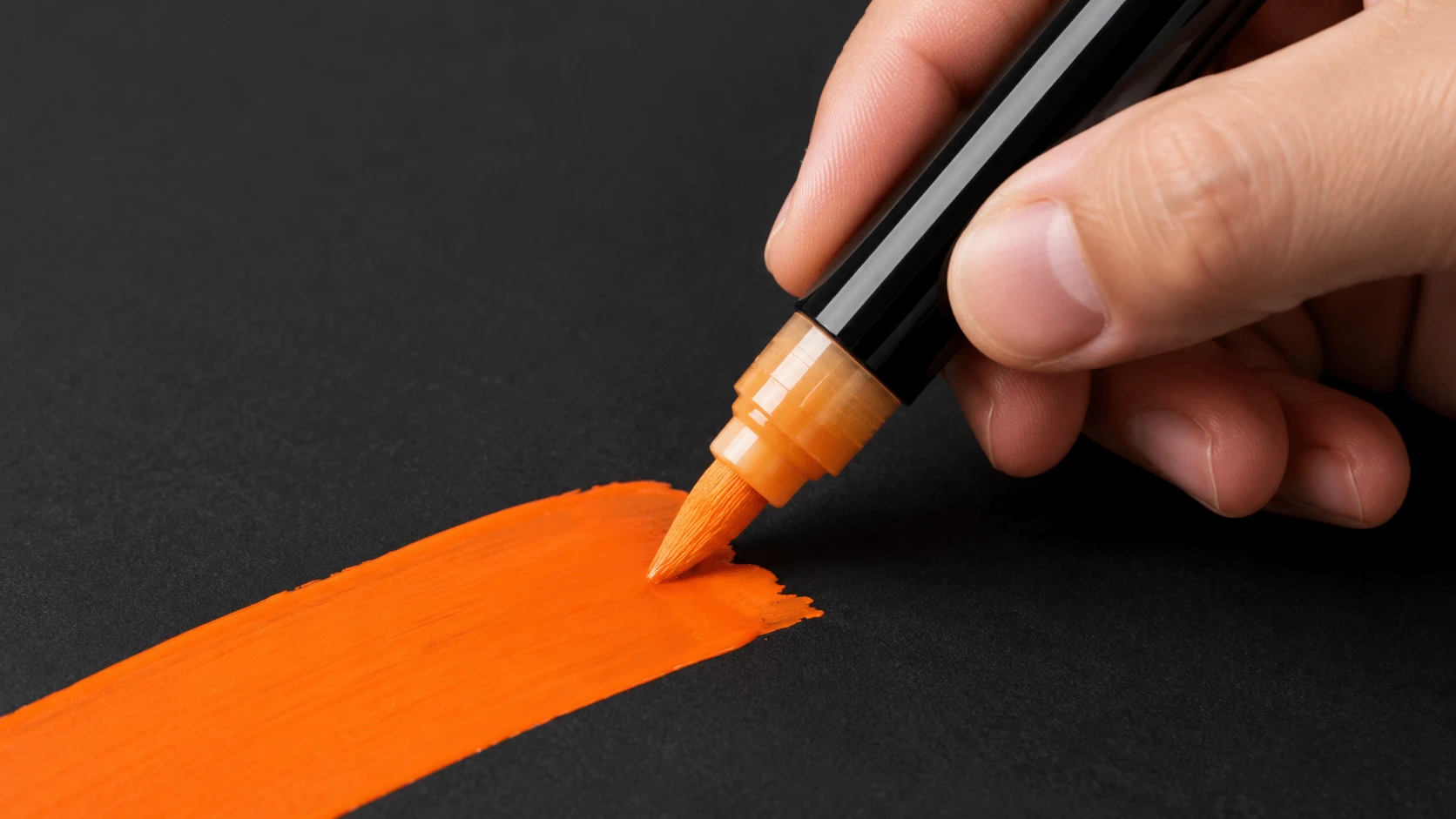
An artist uncaps a paint marker and presses the nib to open the valve. The first stroke is opaque. Vibrant. The second skips. The third leaves a watery streak. By the fourth, the valve is stuck open and paint pools on the surface. The artist puts it down and never picks up that brand again.
For B2B buyers sourcing high quality acrylic paint markers, that chain of failures is not random. Every complaint goes back to a specific build call. Pigment load. Valve spring pull. Nib material density. Batch color control. Each one is measurable. Each one can be tested before you place an order.
This article walks through the seven factors that separate high quality acrylic paint markers from the ones that make returns. It adds checks you can use when comparing suppliers.
Table of Contents
Quick Answer: What Makes High Quality Acrylic Paint Markers?
The gap between a paint marker artists suggest and one they throw away:
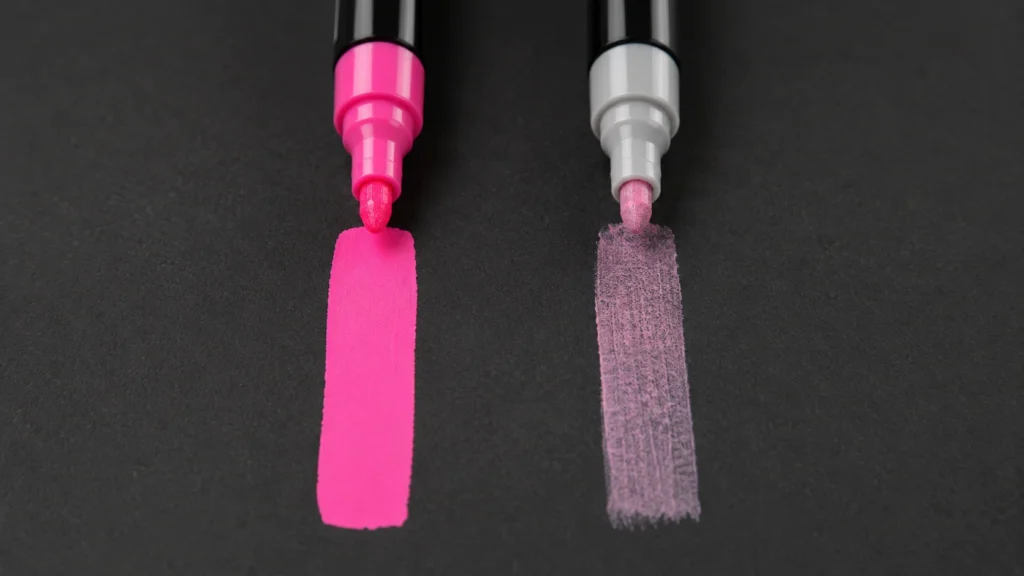
- Pigment load controls opacity. High quality acrylic paint markers carry 25 to 40 percent pigment by weight. Less than that, and coverage turns watery. Artists need single-stroke opacity on dark surfaces.
- Valve reliability controls paint flow. A spring-loaded valve has to open with gentle pressure, deliver consistent volume, and close completely when released. Stuck valves and inconsistent flow are the top warranty claims.
- Nib durability determines how long the marker lasts. Acrylic paint is abrasive. Cheap nibs fray fast.
- Color consistency across batches is what keeps art supply retailers from fielding complaints. If the red in batch two looks different from batch one, retailers hear about it.
- Lightfastness separates artist-grade from craft-grade. Pigments that fade within months destroy a brand in the fine art channel.
For brand owners and buying teams, these factors help set sharper sourcing and quality check bars.
How End-User Complaints Map To Manufacturing Decisions
Every acrylic paint marker failure has a factory-level root cause:
| Common Complaint | Root Cause | Factory QC Metric |
| Paint skips or streaks on first use | Insufficient pigment load; paint viscosity too low for valve | Pigment-to-binder ratio per batch; paint viscosity at controlled temperature |
| Valve sticks open, paint leaks | Valve spring tension too weak; spring corrodes from water-based paint | Spring force measurement (activation and return); corrosion testing on spring material |
| Valve won’t activate | Paint dried inside mechanism; insufficient anti-clogging additive | Cap-seal integrity; accelerated aging with intermittent use simulation |
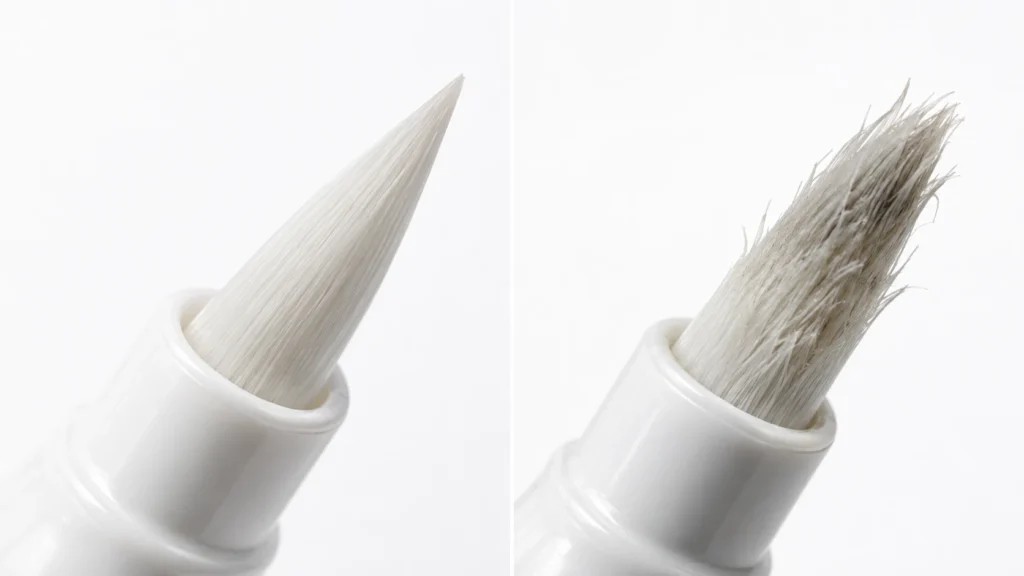
| Nib frays or flattens | Low-density fiber tip; rough tip grinding accelerates wear | Nib abrasion resistance under controlled pressure; material density spec |
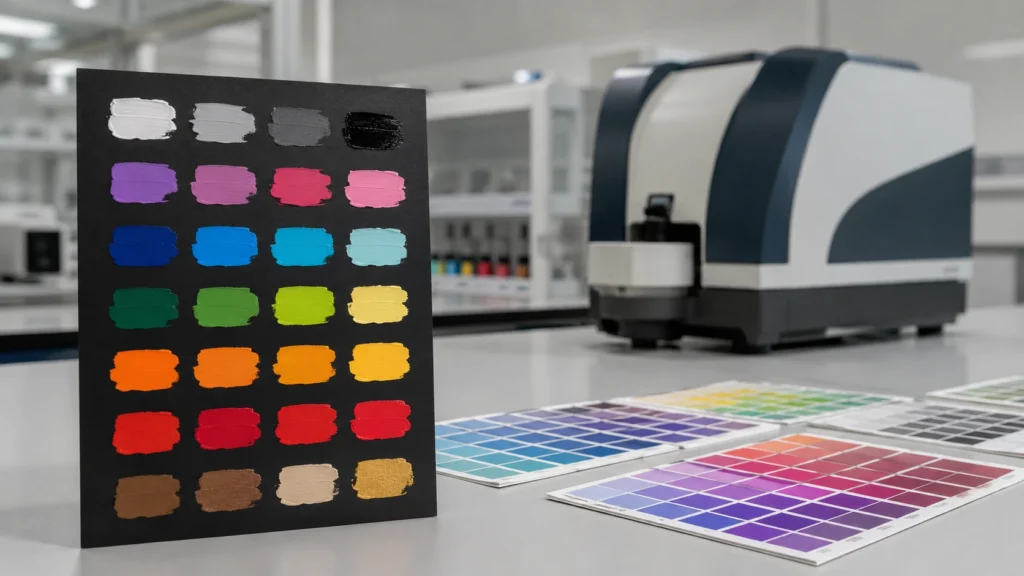
| Colors vary between batches | No spectrophotometer color standard; pigment supplier changed without reformulation | Batch-level spectrophotometer matching (delta-E under 1.5); documented pigment supplier qualification |
| Paint fades within months | Lightfastness too low for artist market; organic pigments where inorganic needed | ASTM D4303 or Blue Wool Scale testing; pigment specification documentation |
| Paint separates inside barrel | Insufficient suspension agent; formulation unstable for shelf life | Accelerated stability testing (temperature cycling); shelf-life verification at 12 and 24 months |
High quality acrylic paint markers are not a marketing claim. They are a set of engineering specs a factory either controls or does not. Start with the B2B ink quality guide.
What Actually Makes An Acrylic Paint Marker Different
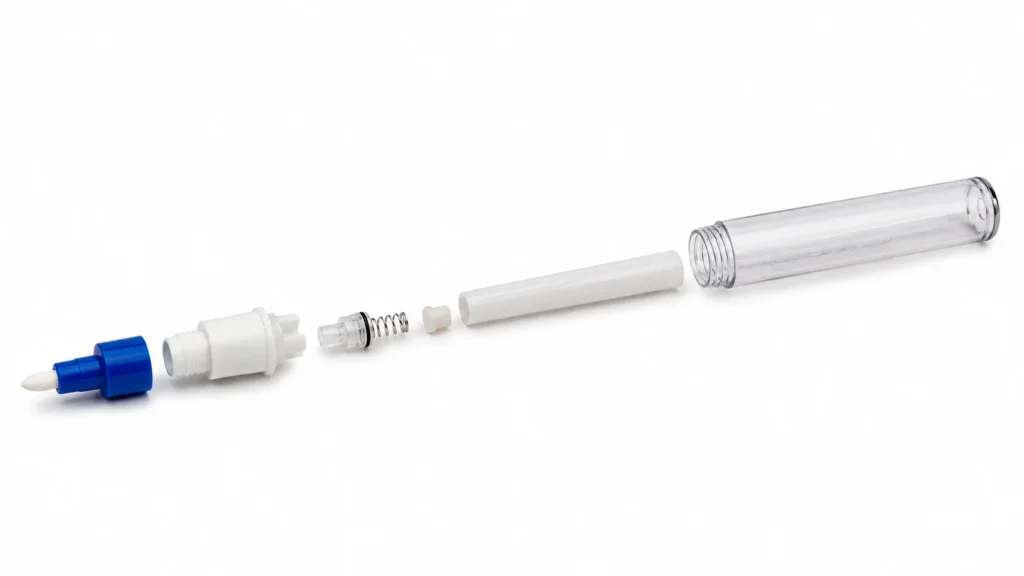
Acrylic paint markers are not standard markers with different ink. A regular marker wicks thin solvent through a fiber core. An acrylic paint marker pumps thick, opaque acrylic paint through a mechanical valve. The test is getting paint, real paint, to flow steady through a part built for liquid.
Four systems decide quality. They depend on each other. High pigment load gives great opacity. It also makes the paint thicker, which strains the valve spring and clogs the nib faster. A soft nib feels good on canvas. It wears fast against rough acrylic pigment. Every design call trades one thing for another. High quality markers balance these trades on purpose. Cheap ones bump into them by luck. For contrast, see the alcohol marker manufacturer guide.
For B2B buyers, the point is simple. You cannot judge a paint marker from a catalog photo. You need to see how each system performs under the conditions your buyers will create.
The Ink: Pigment, Opacity, And Why Lightfastness Matters
Pigment load is the single biggest quality split. Acrylic paint is pigment particles in an acrylic polymer emulsion. Water leaves. The binder forms a film. The pigment locks onto the surface.
Higher pigment load means better opacity. Budget markers cut pigment with fillers. Calcium carbonate. Talc. Those add volume without color. The marker looks full. It writes a long time. It gives pale, see-through strokes. Artists notice at once. They do not re-buy.
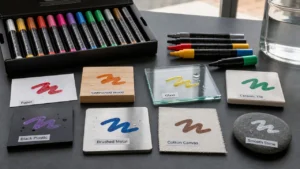
Opacity is measured by laying a set thickness of paint over a black-and-white chart. Then you check how much pattern shows through. High quality acrylic paint markers should give near-full opacity in one pass on dark faces. That is the whole reason artists use paint markers instead of standard ones.
Lightfastness is the other must-have for the artist market. ASTM D4303 and the Blue Wool Scale measure how pigments hold against light. Inorganic pigments, titanium dioxide, iron oxides, and cadmium replacements hit the top ratings. Organic pigments give bright color and fade faster. Any marker sold as artist grade or archival needs written lightfastness ratings. A supplier who cannot give them is selling to a market they do not know.
A manufacturer with in-house ink control sets pigment load, opacity, and lightfastness at the source. It does not accept whatever the paint supplier sends. ZH STATIONERY runs its own ink R&D lab for custom acrylic formulas. That means these numbers are set during development, not found during production. See the custom marker manufacturer and top pen makers pages.
Nib Engineering: The Part The Artist Actually Touches
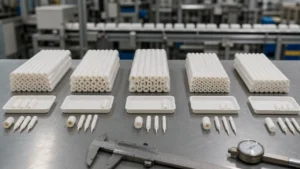
Acrylic paint markers use polyester or acrylic fiber nibs. The material family is the same as standard markers. The difference is what they must survive. Abrasive pigment grinds against the fibers on every stroke.
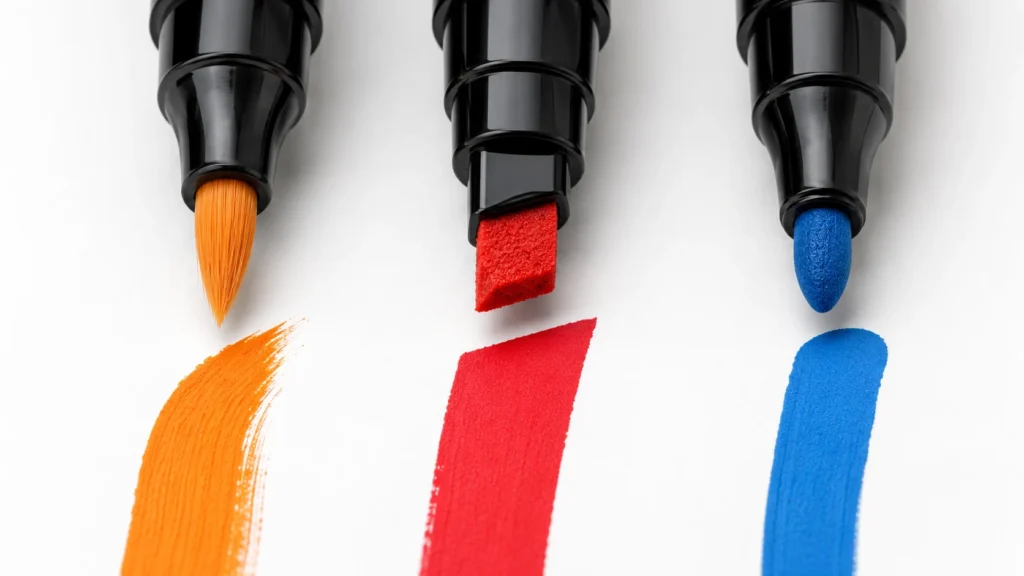
Chisel, bullet, and brush are the three standard shapes. Brush tips lead artist-grade acrylic markers because they feel like a paintbrush. They are also the hardest to make. The fiber bundle must be dense enough to hold shape. It must bond tight enough not to split. It must flex enough to spring back.
Nib quality comes down to wear resistance. How many meters of painting before the tip shows wear, bends, or delivers less paint? High quality acrylic markers should perform the same across the whole paint volume. They should not fade halfway through.
The test for B2B buyers is plain. Paint on a textured surface, canvas or mixed-media paper, until the marker runs dry. If the nib frays before the paint ends, the tip material is wrong for the pigment load. If line width shifts a lot, the nib is wearing unevenly. Neither is the user's fault.
The Valve System: What Most Buyers Overlook
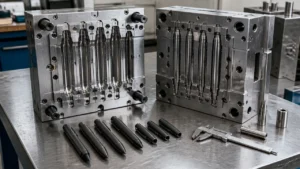
Every acrylic paint marker uses a spring valve inside the nib build. Press the tip down. The valve opens. Paint flows. Release. It closes. This part controls every bit of paint delivery. It is also the most common fail point.
A valve that opens too easy leaks. One that is too stiff makes users press again and again with no paint. One that does not close fully lets paint dry inside. Clogged. For good.
Spring material matters. Water-based acrylic paint is mildly harsh on some metals. A spring that passes a short lab run may weaken after months of wet contact inside a capped marker. Stainless steel holds. Carbon steel does not. The spring force spec, open and return, should be written and steady across batches.
Valve clog makes more warranty claims than any other acrylic fail. Prevention needs three things together. An airtight cap seal. An anti-clog additive in the paint. A valve that clears itself on each press. A factory that cannot show cap-off data and anti-clog results is not controlling this.
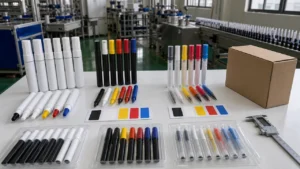
ZH STATIONERY runs 100 percent check on every unit before packing. Valve open. Cap seal. Paint flow. Every marker gets checked. That catches valve fails that sampling would miss. See the factory tour.
What B2B Buyers Should Test Before Ordering
Catalog language will not tell you which paint markers survive in real artist hands. These five tests will. The how it's made guide adds line context.
- Single-stroke opacity. One stroke on a black surface. The paint should be fully opaque. Repeat for every color. Inconsistent opacity across colors means inconsistent pigment loading.
- Continuous painting endurance. Paint on canvas or mixed-media paper until the marker is empty. The nib should hold its shape and flow should stay consistent throughout. Nib wear or flow reduction before the paint is gone means a material or valve problem.
- Cap-off recovery. Leave the marker uncapped for one hour. Re-cap. Wait 24 hours. It should activate and paint normally. This is what happens when a user forgets to cap a marker mid-session.
- Batch color matching. Compare swatches from three separate production batches. Delta-E under 1.5 for professional grade. Visible drift between orders means inconsistent pigment sourcing.
- Lightfastness verification. Get pigment specifications and ratings for every color. If any color falls below ASTM II or Blue Wool 6, the supplier needs to explain why it belongs in a product sold for artistic use.
A factory with in-house R&D and 100 percent check can make this data. The question for suppliers is not is your marker high quality. Ask: can you show me pigment load specs, valve open data, nib wear results, and batch color records for this SKU?
Frequently Asked Questions
What Is The Difference Between Acrylic Paint Markers And Regular Permanent Markers?
Acrylic paint markers use thick, opaque acrylic paint. That is water-based pigment in an acrylic polymer emulsion. Wholesale acrylic markers cover the range. Regular permanent markers use dye or pigment in alcohol solvent. Acrylic markers need a valve to pump paint through the nib. They give opaque, lightfast marks on almost any surface. They are permanent when dry because the binder forms a film, not by solvent soak. The build is more complex. That means more quality points to hold.
How Can I Tell If An Acrylic Paint Marker Is High Quality Before Ordering?
Test one-stroke opacity on black and continuous painting until empty. Watch nib wear and flow, check cap-off recovery after one hour, and compare swatches across batches. Get lightfastness ratings. If the supplier gives this data for your SKU, they hold quality at the factory level. If they cannot, they are betting on after-production checks to catch issues.
Why Do Acrylic Paint Markers Clog?
Paint dries inside the valve between uses. Prevention needs an airtight cap seal, an anti-clog additive, and a valve that clears on open. A manufacturer that runs 100 percent working checks, including valve tests on every unit, catches clogs before shipping. ZH STATIONERY puts valve open testing in its full check plan.
What Nib Types Work Best For Acrylic Paint Markers?
Bullet tips for steady lines and detail. Chisel tips for wide cover and variable width. Brush tips for free, pressure-driven strokes. Brush tips lead artist-grade markers. The material quality matters more than the shape. A factory that tests nib wear with the real paint mix, not a generic fluid, can prove true durability.
What Certifications Do Acrylic Paint Markers Need For U.S. And European Markets?
ASTM D-4236 is needed for all art materials in the US. EN71-3 applies in Europe for kids' art goods. REACH may also apply. ASTM D4303 lightfastness and ACMI AP marks add trust for artist-grade goods. Always get current, dated reports from ISO 17025 labs.
What Is The Typical MOQ For High Quality Acrylic Paint Markers?
The minimum order for custom OEM/ODM programs is 50,000 pens per order, counted by total individual pens produced. For a 12-color pack, that equals roughly 4,200 sets, not 50,000 of each color. Standard stock models can be sampled at smaller trial sizes.
If you are sourcing high quality acrylic paint markers for an art brand, private-label program, or creative retail channel, contact ZH STATIONERY to talk paint mixes, nib specs, valve tests, and certified files. See who we are and the contact page.
Related guide: Dual Tip Acrylic Markers vs Single Tip Markers.