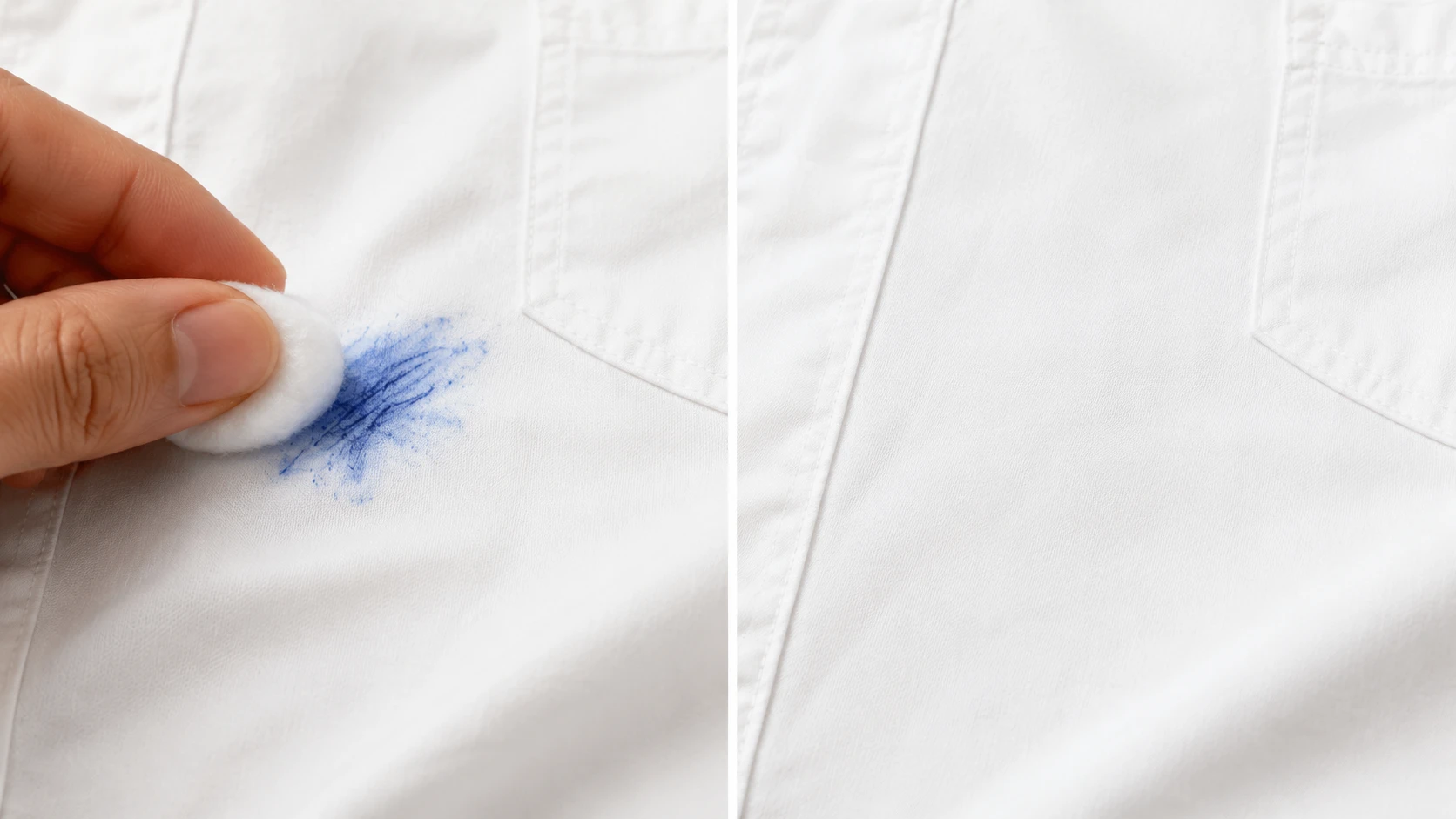
一名教師拿起白板筆,打開筆蓋,朝白板比劃,卻在白色襯衫袖子上留下一道藍色痕跡。污渍看起來無法去除。她先用水,再用肥皂,接著用力搓洗,但都無效。這支筆被丟進垃圾桶,這個品牌也被列入心中的黑名單。
對於采购白板筆的B2B买家而言,這一刻不僅是消費者的挫折,更代表产品质量缺陷帶來的可量化成本。每位無法去除污渍的終端使用者,都是流失的忠實客戶;每所學校因一次投訴而更換品牌,都是你永遠不會知道的采购決策。
白板筆污渍去除的難度並非隨機產生,而是直接源於工厂層級的墨水配方选择。如果你了解什麼因素讓污渍可去除、什麼因素讓它永久殘留,就能在大量訂購前建立一套實用的評估框架。 白板筆污渍逐步去除步驟.
目录
快速解答:如何去除白板筆污渍
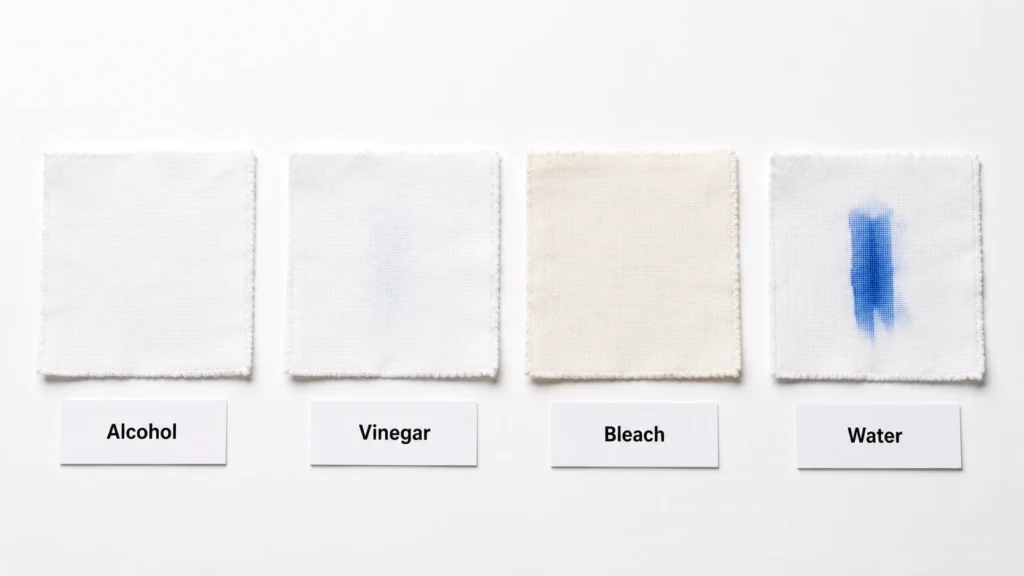
白醋是溫和酸類,能分解部分樹脂黏合劑,但對於頑固污渍,效果比酒精慢且弱。它是精緻織物最安全的选择,因為酒精可能導致這類材質褪色。
- 外用酒精 檸檬汁的作用与白醋大致相同。檸檬酸有助於將顏料從纖維表面鬆脫,最適合處理棉質布料上新鮮且輕微的污渍。
- 漂白水透過氧化作用去除顏料,僅限白色織物使用。它破壞的是颜色分子,而非溶解黏合劑,因此用量過度可能損害布料。 水和肥皂單獨使用幾乎從未奏效。白板筆墨水中的有機矽聚合物脫模劑設計為防水,這正是墨水能在白板上乾淨擦除的原因,也是它無法用水性清潔劑從衣物上洗掉的緣故。
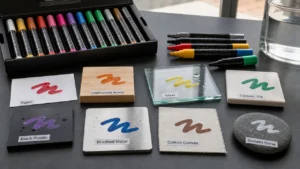
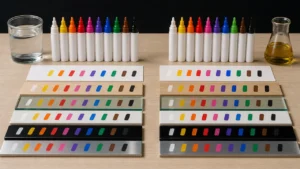
- 白板筆污渍去除方法比較測試 去除方法:外用酒精(異丙醇).
- 去除方法:白醋(乙酸) 去除方法:漂白水(氧化).
- 去除方法:水+清潔劑, 去除方法:加熱(熨斗、烘乾機).
對於品牌所有者和采购經理而言,理解這些因素有助於建立更精準的采购和质量檢驗標準。
干擦白板筆污渍去除難度所揭示的馬克筆墨水质量
棉滌混紡白板筆污渍比較
| 棉質是最糟的情況。棉纖維是中空、帶狀的纖維素結構,能迅速將液體吸入核心。當酒精溶劑將顏料帶入棉纖維時,顏料最終被困在纖維內部空腔,而非僅停留在表面。水無法到達如此深的顏料處,但外用酒精可以,因為它沿著原始溶劑的相同路徑前進。 | 聚酯纖維則是另一种問題。聚酯纖維為合成且疏水性材質,不吸水,但會吸收有機溶劑。因此,白板筆墨水中的酒精溶劑容易滲入聚酯纖維,並將顏料帶入纖維基質深處。當溶劑蒸發後,顏料便機械性地鎖在光滑的聚合物結構中。基於溶劑的去除方法僅在污渍新鮮時(數分鐘至數小時內)對聚酯有效。一旦樹脂黏合劑固化(加熱會加速此過程),聚酯上的污渍將變得極難去除。 | 棉滌混紡結合了兩者的問題:棉質將墨水吸入,聚酯則將其困住。你必須迅速行動,使用正確溶劑,且在污渍完全去除前絕不施加熱源。 | 絲綢和羊毛是蛋白質纖維。它們能快速吸收顏料,但會被強效溶劑損壞。稀釋白醋或专业乾洗溶劑比外用酒精更安全,但對頑固污渍效果較差。 |
| 對B2B买家而言,關鍵在於:終端使用者實際穿著的織物決定了他們對产品的體驗。一支在100%純棉實驗樣布上能輕易去除污渍的白板筆,可能在真實教室中穿的滌棉混紡制服上留下永久痕跡。當供應商聲稱其筆「可水洗」時,請問他們測試的是哪种織物。如果答案含糊,數據便不可靠。 | 白板筆製造存在內在矛盾。买家最想要的三項性能特質彼此衝突。 | 白板擦除乾淨度需要強效脫模劑,通常是能在顏料与白板表面之間形成非黏合薄膜的有機矽聚合物。脫模劑越多,擦除越乾淨。但相同的脫模劑會排斥水,這就是清潔劑無法去除衣物污渍的原因。更好的白板性能等於更難的污渍去除。 | 色彩飽和度需要高顏料含量,通常占墨水配方重量的30%至50%。更多顏料意味著白板上更醒目、更清晰的书写,但也代表發生污渍時有更多固體顆粒可能被困在織物纖維中。更好的色彩等於更嚴重的污渍。 |
| 可洗性需要從顏料轉為聚合染料(能在分子層級溶解並在洗衣時洗掉),或添加染料封鎖劑來阻止著色劑与織物結合。聚合染料在白板上的颜色飽和度略低。染料封鎖劑成本較高,且可能影响墨水黏度。更好的可洗性意味著接受白板性能或製造成本上的取捨。 | 沒有工厂能「解決」這個問題。B2B买家透過了解目標市場的優先順序來應對。學校用品品牌將可洗性放在首位。教師和家長願意原諒略淡的白板书写,只要制服能撐過一週。辦公用品品牌則將白板性能放在首位。成人使用者較不易將墨水沾到衣物上,且更可能抱怨殘影問題。 | 樹脂對酸有一定敏感性;離型劑含量影响去除難度 | High release agent (good for board erasing) makes acid-based removal harder. There’s a direct tradeoff between board performance and stain removal. |
| 漂白劑(氧化) | 通過氧化破壞顏料色分子;不溶解黏合樹脂 | 顏料敏感性各不相同:有機顏料會漂白;無機金屬氧化物則抵抗 | Pigment type matters. Organic pigments (azo compounds) bleach. Titanium dioxide and iron oxide pigments don’t. Ask the supplier which chemistry they use. |
| 水 + 洗滌劑 | 試圖乳化並懸浮顏料;離型劑塗層排斥水 | 離型劑正在發揮作用。防水是有意為之。 | A marker whose ink washes out with plain water has too little release agent for proper board erasability. That’s a formulation choice, not a defect. |
| 熱(熨斗、烘乾機) | 將樹脂黏合劑与織物纖維交聯,將污渍永久鎖住 | 樹脂是熱固性的。一旦熱固化,溶劑再溶解就失效了。 | 熱定型污渍造成最永久的損害。包装上需要明確的僅限冷水洗滌說明。 |
The table surfaces something B2B buyers rarely hear from suppliers: the same formulation choices that make a marker erase cleanly from a whiteboard (strong release agent, alcohol-soluble resin, stable pigment) are the same choices that make it stain clothing. The best markers aren’t stain proof. They’re stain manageable. Their chemistry responds predictably when you use the right removal method.
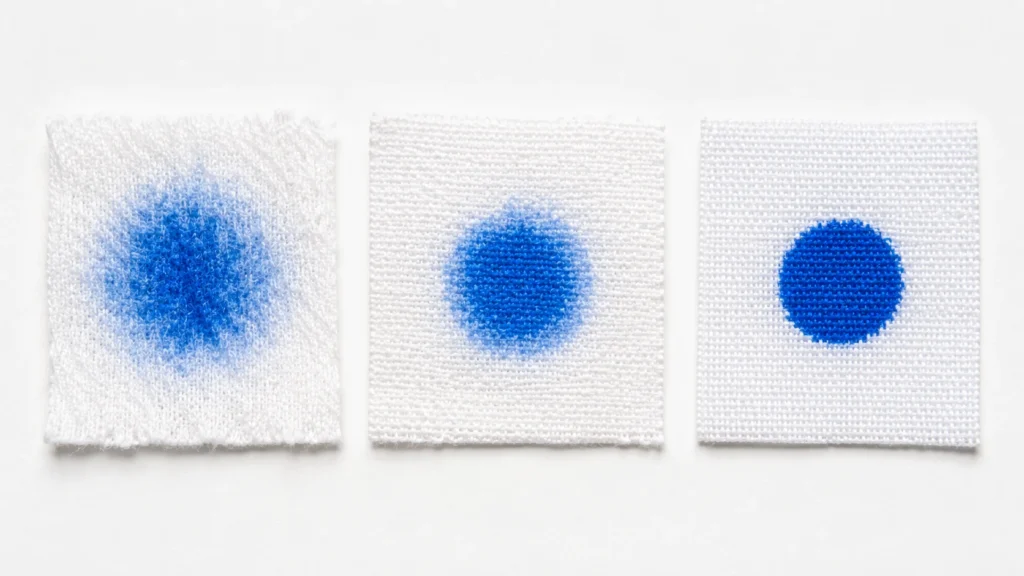
為何布料种類徹底改變去污方式
並非所有織物都同樣容易染色。纖維的孔隙率和化學性質決定了顏料滲透的深度以及清除的難度。
棉是最糟糕的。 棉纖維 are hollow, ribbon-like cellulose structures. They wick liquid into their core fast. When the alcohol solvent carries pigment into a cotton fiber, the pigment ends up trapped inside the fiber’s internal cavity, not just sitting on the surface. Water can’t reach pigment that deep. Rubbing alcohol can, because it travels the same route the original solvent took.
聚酯纖維是另一种問題。 聚酯纖維 are synthetic and hydrophobic. They don’t absorb water, but they do absorb organic solvents. So the alcohol solvent in dry erase ink penetrates polyester easily and carries pigment deep into the fiber matrix. When the solvent evaporates, the pigment is mechanically locked inside that smooth polymer structure. Solvent based removal works on polyester only if the stain is fresh, within minutes to hours. Once the resin binder cures (heat speeds this up), polyester stains become brutal to remove.
棉聚酯混紡結合了兩個問題。 棉吸墨。聚酯纖維會困住墨水。您必須迅速行動,使用正確的溶劑,並且在污渍完全去除之前切勿加熱。
絲綢和羊毛是蛋白質纖維。 它們快速吸收顏料,但會被侵蝕性溶劑損壞。稀釋的醋或专业乾洗溶劑比外用酒精對這些織物更安全,儘管對重污渍效果較差。
For B2B buyers, here is what matters: the fabric your end users actually wear determines how they experience your product. A marker that produces easily removable stains on 100% cotton lab swatches might leave permanent stains on the poly-cotton blend uniforms worn in real classrooms. When a supplier claims their markers are “washable,” ask what fabric they tested on. If the answer is vague, the data isn’t reliable.
B2B买家需要理解的配方取捨
干擦馬克筆製造存在內在的張力。买家最想要的三個性能特徵相互衝突。
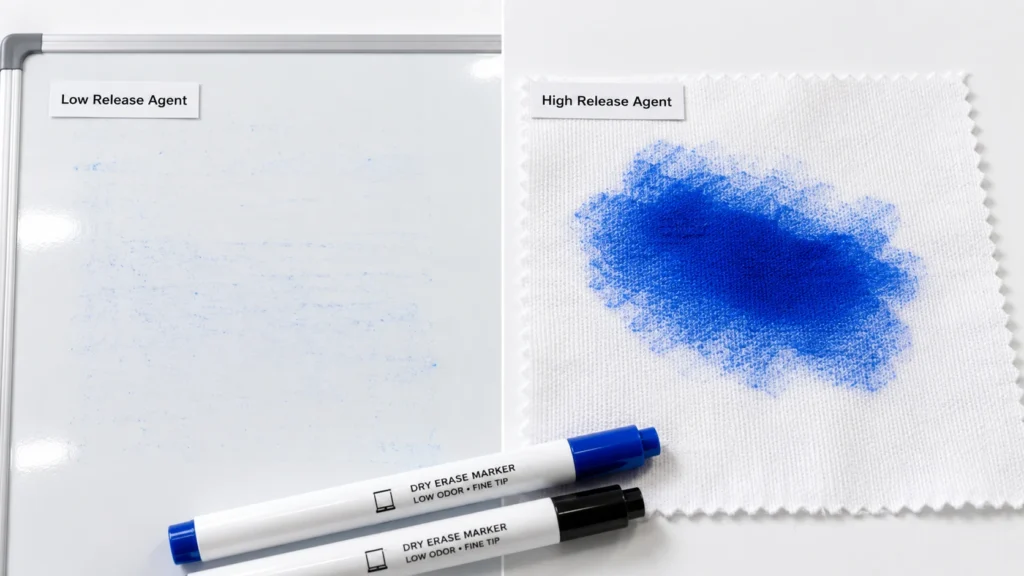
- 乾淨的板擦除性 needs a strong release agent, typically a silicone polymer that forms a non-bonding film between the pigment and the whiteboard surface. More release agent means a cleaner erase. But that same release agent repels water, which is why detergent can’t remove clothing stains. Better board performance equals harder stain removal.
- Strong color 需要高顏料負載,通常佔墨水配方重量的30%至50%。更多顏料意味著在板上更粗、更可見的书写。這也意味著有更多固體顆粒在污渍發生時被困在織物纖維中。更好的颜色等於更差的污渍。
- Washability 需要從顏料轉換為聚合染料(在分子水平上溶解並在洗滌中洗掉)或添加 ——陰離子材料,例如磺化萘縮合物或磺化酚醛縮合物——它們會在染料或顏料附著之前,先与皮膚和布料上的反應位點結合。這些添加劑作為化學屏障,減少污渍,而無需完全從顏料轉換為染料。根據可水洗著色組合物的專利文獻,重量比低至2–5%的防染劑濃度即可在布料可洗性上產生可測量的改善,儘管較高濃度(高達15%)能提供最佳效果。 阻止著色劑与織物結合。聚合染料在板上的颜色強度略低。染料阻擋劑成本更高,並可能影响墨水黏度。更好的可洗性意味著在板性能或製造成本上接受權衡。
No factory “solves” this. B2B buyers navigate it by knowing their target market’s priorities. A school supply brand puts washability first. Teachers and parents forgive slightly lighter board writing if uniforms survive the week. An office supply brand puts board performance first. Adult users are less likely to get ink on clothing and more likely to complain about ghosting.
擁有自有 墨水研發實驗室的工厂 可根據買方市場的實際需求,調整顏料与染料比例、脫模劑含量,以及是否包含防染劑。ZH STATIONERY 在超過 26 年的 OEM/ODM 工作中,一直為记号笔調製定制墨水,包括 干擦记号笔, 。關鍵在於了解您的市場能接受哪些取捨,以及哪些不能接受。
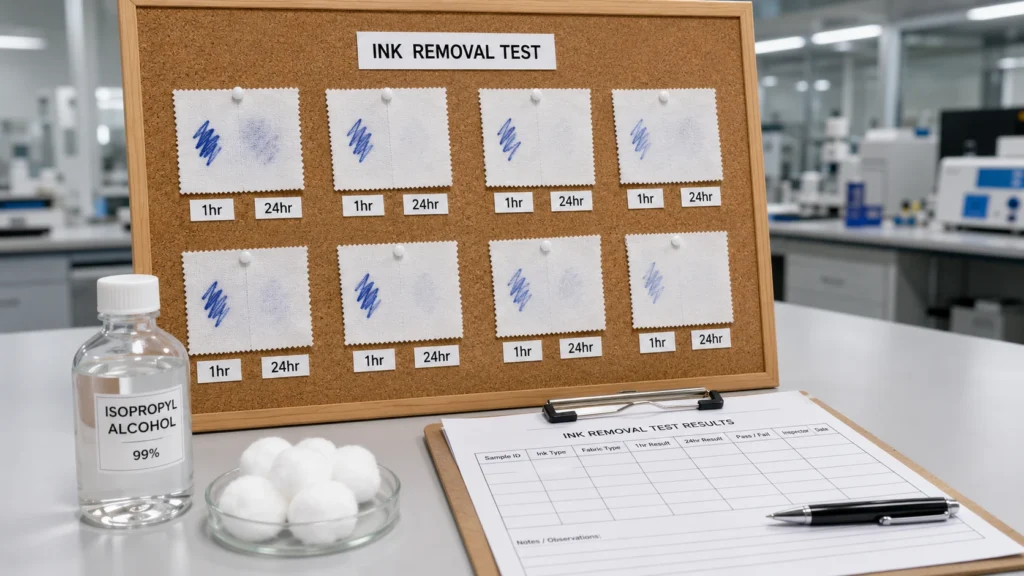
B2B买家在訂購干擦马克笔前應測試的項目
产品目錄描述無法告訴您记号笔實際對織物的染色情況。請執行以下四項測試:
- 滌棉混紡織物的可洗性測試。 將墨水塗在 65/35 滌棉樣布(最常見的校服布料)上。晾乾一小時。使用 70% 異丙醇以按壓法嘗試去除。在另一個乾燥的污渍上,等待 24 小時後再次嘗試。記錄每次殘留的顏料量。這模擬了您的产品將面臨的真實情境。
- 24 小時後的白板可擦性測試。 在標準白板上书写。讓墨水停留 24 小時。用乾布擦拭。優質配方應不留痕跡。殘影表示脫模劑不足或樹脂化學成分錯誤,這兩者也會影响污渍去除。
- 開蓋恢復性測試。 取下筆蓋。將记号笔暴露在空氣中兩小時。然後书写。應能立即出墨,無斷墨,無需預先按壓。開蓋失效源於溶劑揮發速率和筆蓋密封設計,這兩者均由工厂在配方階段控制。
- 熱定型污渍測試。 將墨水塗在織物上。晾乾一小時。用溫熱熨斗(無蒸汽)按壓 10 秒。嘗試用酒精去除。如果加熱後污渍變為永久性,則樹脂為 熱固性. 。這意味著最終用戶若不小心將沾污的襯衫放入烘乾機,將永遠無法去除。此資訊應標註在您的包装警告上。
一家在包装前對 每件产品進行 100% 檢驗 在包装前,於佔地10,000多平方米、設有8個生產車間的廠區內,具備可生成此數據的质量控制基礎設施。 ZH 文具 正是以這种方式運作。要問的問題不是「您的墨水是否能洗掉」,而是:「您能否提供滌棉混紡織物在 1 小時和 24 小時後,有無熱處理情況下的可洗性數據?」“
常見問題解答
去除衣物上干擦式白板筆漬最有效的方法是什麼?
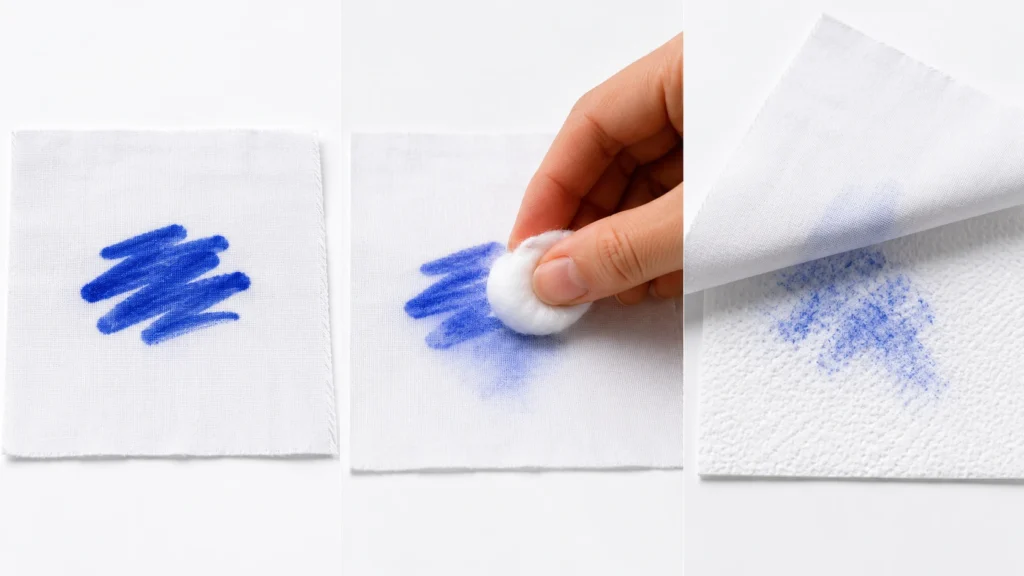
外用酒精(異丙醇, ,濃度 70% 至 90%)。它能重新溶解將顏料固定在織物纖維上的樹脂黏合劑。其化學性質与记号笔本身使用的溶劑載體相匹配。將酒精倒在乾淨的布上。從污渍外緣向內按壓。不要擦拭。擦拭會將顏料推入更深層。當布吸收墨水後更換。持續操作直到沒有更多顏料轉移,然後用冷水清洗。在污渍完全去除前,切勿加熱。
為何當水和肥皂無法去除干擦污渍時,外用酒精卻能有效清除?
白板筆墨水含有一种 有機矽聚合物脫模劑 ,使其具有防水性。這是故意的。正是這种特性讓墨水能從白板上乾淨擦除。水和肥皂無法穿透此有機矽屏障。外用酒精有效,是因為它在化學性質上接近墨水中已有的溶劑(異丙醇或乙醇)。它能重新溶解包裹顏料的樹脂黏合劑,使顏料能被提取出來。
醋是否有效去除干擦记号笔污渍?
白醋(乙酸)可部分去除輕微、新鮮的白板筆污渍,方法是削弱樹脂黏合劑与織物纖維之間的鍵結。它比外用酒精弱,但對絲綢和羊毛等精緻布料更安全,酒精可能導致這些布料變色。對於棉和聚酯纖維,酒精仍是更好的选择。對於輕微污渍,醋在洗衣前作為預處理效果最佳。
為什麼某些干擦记号笔的污渍比其他更嚴重?
墨水配方中的三個因素決定污渍的嚴重程度。顏料粒徑:較小的顆粒會深入纖維。脫模劑濃度:較多的脫模劑可改善白板擦除效果,但會使污渍更難去除。以及墨水使用的是顏料還是 聚合染料:染料型墨水更容易洗掉。使用顏料和強效脫模劑的记号笔在白板上表現最佳,但在織物上造成的污渍最嚴重。這不是缺陷,而是一种取捨。
加熱定型的干擦污渍是否永遠無法去除?
不會。一旦白板筆污渍受熱,無論來自熨斗、烘乾機甚至熱水,樹脂黏合劑會与織物纖維交聯,污渍將變得幾乎永久。對新鮮污渍有效的溶劑方法會失效,因為樹脂与纖維之間的化學鍵結已改變。包装上應始終標明「衣物沾到记号笔墨水僅限冷水清洗」。ZH STATIONERY 在為全球市場生產记号笔超過 26 年後,了解哪些警告用語能有效防止消費者投訴。
B2B买家在購買前應如何評估白板筆的可擦拭性?
要求供應商提供 65/35 滌棉混紡織物的可洗性測試數據,而非 100% 純棉實驗室樣布。獲取 1 小時和 24 小時定時條件下,有無熱處理(以模擬烘乾機)的結果。確保他們使用了 70% 異丙醇和按壓法,而非擦洗法。如果供應商無法為您的特定 SKU 提供此數據,則可洗性聲明未經證實。ZH STATIONERY 提供批次級織物可洗性文件,作為白板筆訂單標準质量控制包的一部分。
如果您正在為學校供應計劃、辦公零售或自有品牌采购白板筆,, 联系ZH STATIONERY 請聯繫我們討論墨水配方選項、索取可洗性測試樣品,並評估符合您目標市場的产品規格。
买家相關閱讀
在發出询价單前,請參考這些相關指南,比較产品、包装、合規及采购決策。
相關指南: 如需相關质量檢查,請參閱 每位 aspiring 艺术家都应掌握的 10 种马克笔技巧.