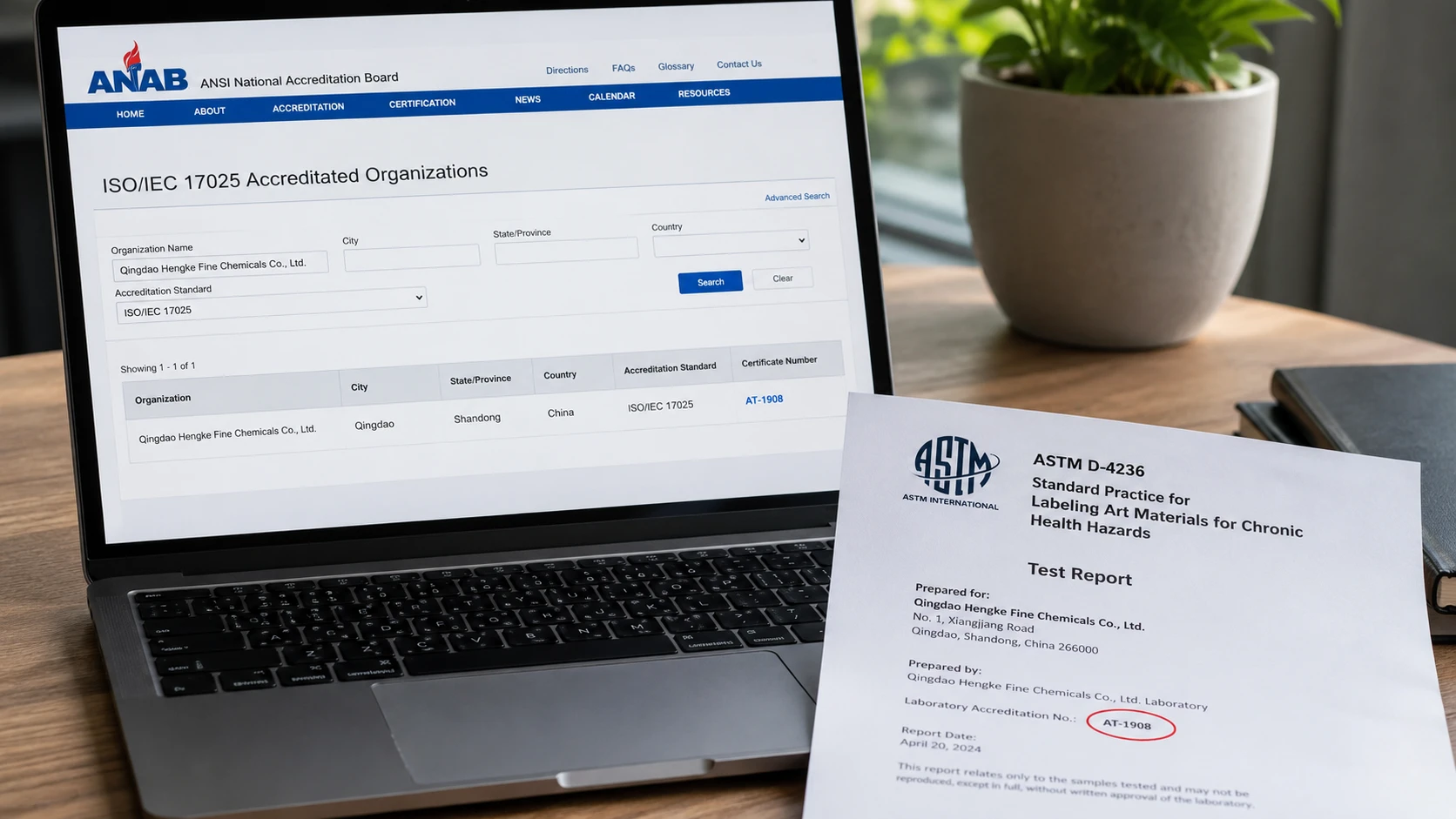
Фабрика отправляет вам PDF-файл с надписью “Сертификат ASTM D-4236”. Одна страница. Логотип. Печать. Слова “Соответствует ASTM D-4236” жирным шрифтом. Вы загружаете его на Amazon. Через три недели ваш листинг приостанавливается. Предоставленный вами сертификат не был протоколом испытаний. Это был маркетинговый документ без названия лаборатории, даты испытаний и ссылки на продукт.
Это происходит постоянно. Amazon запрашивает протокол испытаний ASTM D-4236. Продавец отправляет то, что дала ему фабрика. Отдел комплаенса Amazon отклоняет его. Продавец не понимает, почему, потому что никто никогда не объяснял, как выглядит настоящий протокол в отличие от поддельного.
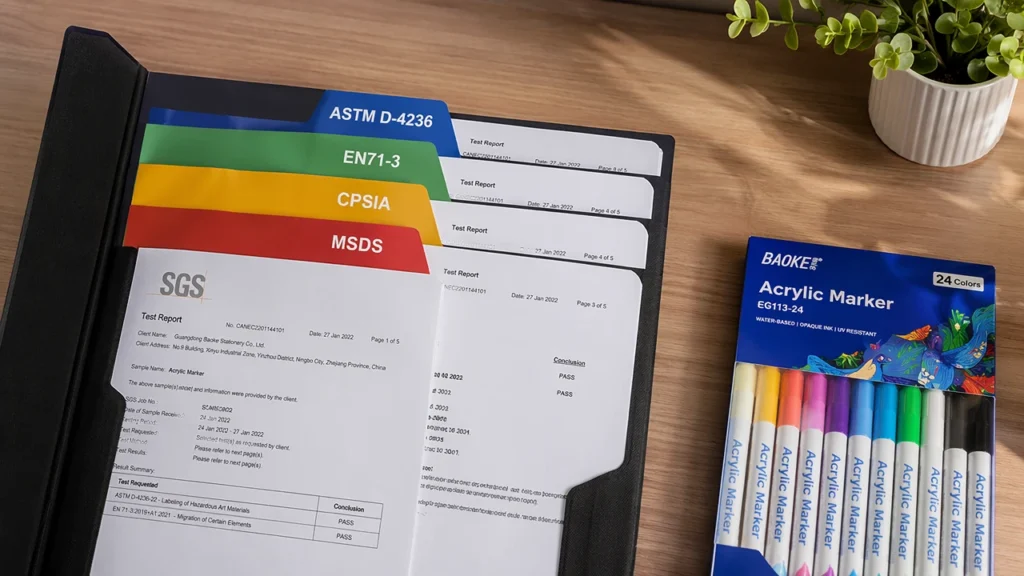
Знание того, как читать ASTM D-4236 протокол испытаний для Акриловые маркеры , не является опциональным, если вы продаете на Amazon или американским ритейлерам. Действительный протокол поддерживает активность вашего листинга. Поддельный приводит к его приостановке. Вот что означает каждый раздел настоящего протокола, какие красные флаги указывают на подделку и что именно проверяет отдел комплаенса Amazon.
Содержание
Краткий ответ: Как читать отчет об испытаниях по стандарту ASTM D-4236
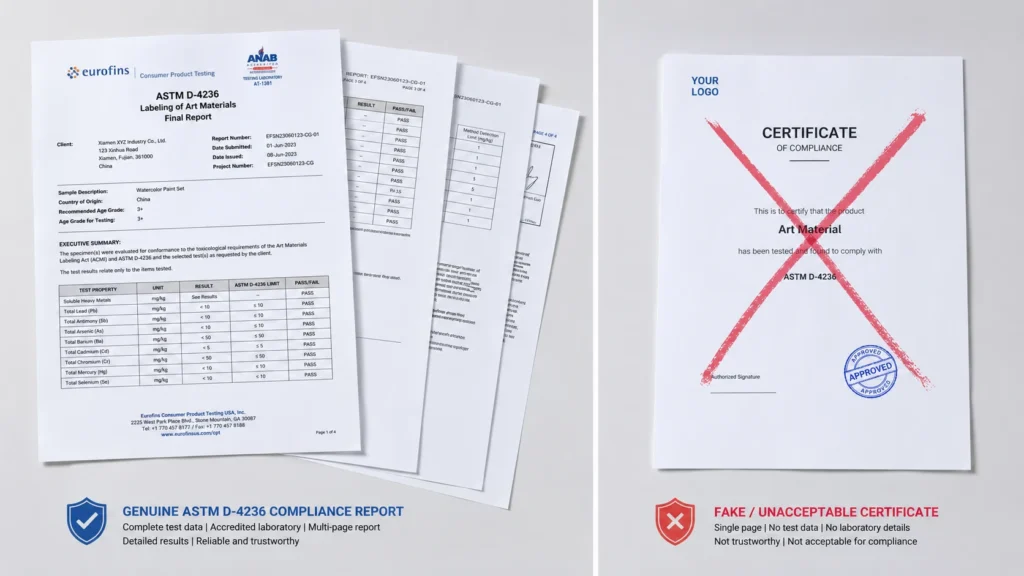
Пять вещей, которые должен содержать настоящий протокол:
- ISO 17025-название и адрес аккредитованной лаборатории. Ищите SGS, Intertek, TUV Rheinland, Bureau Veritas или другую известную аккредитованную лабораторию. Протокол без названия лаборатории — это не протокол. Это маркетинговая листовка.
- Описание продукта, соответствующее вашему точному SKU. “Набор акриловых маркеров, 24 цвета” недостаточно конкретно. В протоколе должна быть указана рецептура чернил, код продукта и протестированные цветовые варианты. Если в протоколе указано “маркерные ручки”, а вы продаете акриловые маркеры, Amazon может отклонить его.
- Дата испытания в пределах последних 12–24 месяцев. ASTM D-4236 требует периодической переоценки. Протокол 2021 года не является актуальным. Если рецептура чернил изменилась с даты испытания, протокол недействителен.
- Результаты токсикологической оценки по каждому цвету или рецептуре. В протоколе должно быть указано, представляет ли каждый протестированный цвет хроническую опасность и какая маркировка требуется. В настоящем протоколе перечислены конкретные результаты. В поддельном просто написано “пройдено”.”
- Сравнение заявление о соответствии. “Соответствует ASTM D-4236” или “Соответствует практике ASTM D-4236”. Эта точная формулировка должна быть на упаковке продукта. Протокол испытаний подтверждает это. Упаковка отображает это.
Прежде чем обсуждать цену за единицу, вам необходимо понять, что на самом деле представляет собой эта цифра. Вот таблица структуры затрат, которая сопоставляет производственные компоненты с их влиянием на ваши общие расходы.
Что на самом деле требует ASTM D-4236
ASTM D-4236 — это стандарт маркировки, а не тест безопасности. Это самое неправильно понимаемое о нем. Стандарт не указывает лаборатории, какие химические вещества тестировать. Он указывает производителям, как маркировать художественные материалы на основе выводов токсиколога.
Сравнение Законом о маркировке опасных художественных материалов, LHAMA, принятый в 1988 году и применяемый Комиссии по безопасности потребительских товаров США, требует, чтобы все художественные материалы, продаваемые в США, проходили токсикологическую оценку на предмет хронических рисков для здоровья. ASTM D-4236 — это стандарт, который определяет, как проводится эта оценка и как результаты сообщаются на этикетке продукта.
Процесс выглядит следующим образом. Производитель предоставляет полную рецептуру чернил сертифицированному токсикологу. Токсиколог проверяет каждый ингредиент на предмет известных данных о хронической опасности. Если какой-либо ингредиент представляет хроническую опасность в используемой концентрации, токсиколог указывает требуемую предупреждающую этикетку. Если хронических опасностей не обнаружено, продукт получает заявление о соответствии: “Соответствует ASTM D-4236”. Это заявление подтверждает, что продукт был проверен, а не то, что он был протестирован на все возможные опасности.
Это различие имеет значение. Фабрика может правдиво заявлять о соответствии ASTM D-4236, используя рецептуры чернил, содержащие ингредиенты, которые некоторые ритейлеры или потребители могут поставить под сомнение. Стандарт требует раскрытия хронических опасностей. Он не требует, чтобы продукт был свободен от всех опасных веществ. Покупатель, который этого не понимает, может принять протокол, который технически действителен, но не соответствует ожиданиям его рынка.
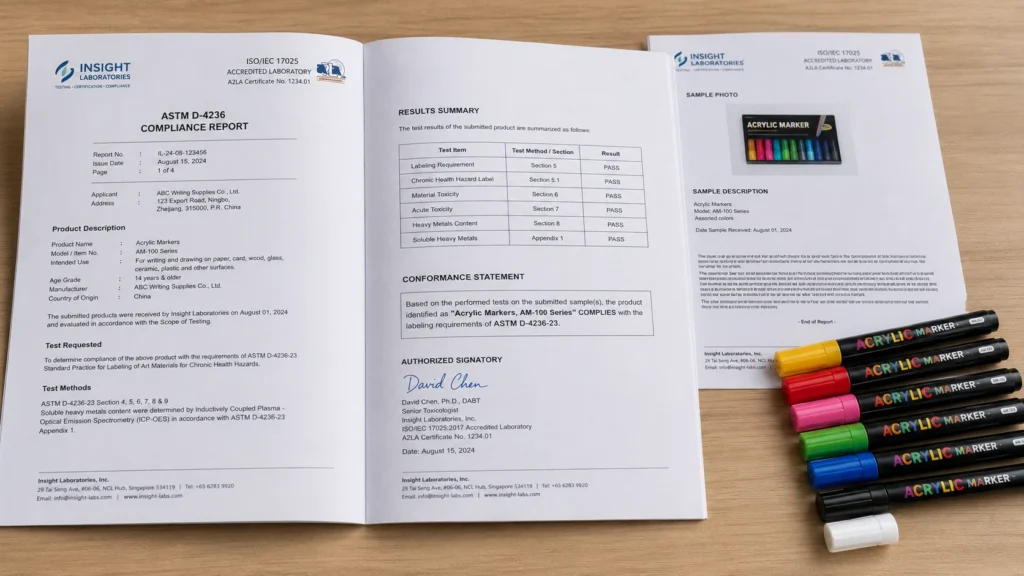
Когда вы читаете протокол испытаний ASTM D-4236, вы читаете профессиональное заключение токсиколога о риске хронической опасности, а не результат теста безопасности «пройдено/не пройдено». В протоколе должно быть указано имя токсиколога, перечислена его сертификация и описана методология проверки. Если ни одна из этих сведений не указана, документ не является настоящим отчетом о соответствии LHAMA.
Как распознать поддельный сертификат испытаний ASTM D-4236
Поддельные сертификаты распространены в цепочке поставок канцелярских товаров. Вот как отличить настоящие.
- Настоящий протокол состоит из нескольких страниц. Он включает бланк лаборатории, ISO 17025 номер аккредитации, имя и полномочия токсиколога, идентификацию продукта, сводку раскрытия рецептуры, определение опасности по каждому ингредиенту и рекомендуемую маркировку. Поддельный протокол — это одна страница с логотипом, печатью и предложением о соответствии продукта.
- Настоящий протокол датирован. Дата испытания должна быть в пределах последних 12–24 месяцев. ASTM D-4236 требует, чтобы художественные материалы переоценивались не реже одного раза в пять лет или раньше, если рецептура изменилась. Добросовестный производитель проводит повторные испытания ежегодно или всякий раз, когда меняется источник пигмента. Фабрика, которая вручает вам сертификат 2019 года без обновления, вероятно, с тех пор изменила рецептуры без повторного тестирования.
- Настоящий протокол ссылается на конкретный протестированный продукт. Название продукта, код SKU, цветовой диапазон и тип чернил должны быть указаны в протоколе. Общий сертификат с надписью “художественные маркеры” может относиться к чему угодно. Отдел комплаенса Amazon отклонит его, поскольку не сможет проверить, что он охватывает ваш конкретный продукт.
- Настоящий протокол поступает из лаборатории, аккредитованной по ISO 17025. Номер аккредитации должен быть в протоколе. Вы можете проверить его на сайте лаборатории или в базе данных органа по аккредитации. Фабрика, которая не может сказать вам, какая лаборатория проводила испытания, либо не знает, либо не хочет, чтобы вы проверяли.
Фабрика с внутренней инфраструктурой комплаенса, такая как ZH STATIONERY, предоставляет протоколы испытаний ASTM D-4236 для конкретных партий , которые ссылаются на фактическую производственную партию, конкретную рецептуру чернил и аккредитованную лабораторию, проводившую оценку. Эта документация создается во время производства, а не задним числом, когда покупатель ее запрашивает.
Что проверяет Amazon, когда вы предоставляете отчет о тестировании ASTM D-4236
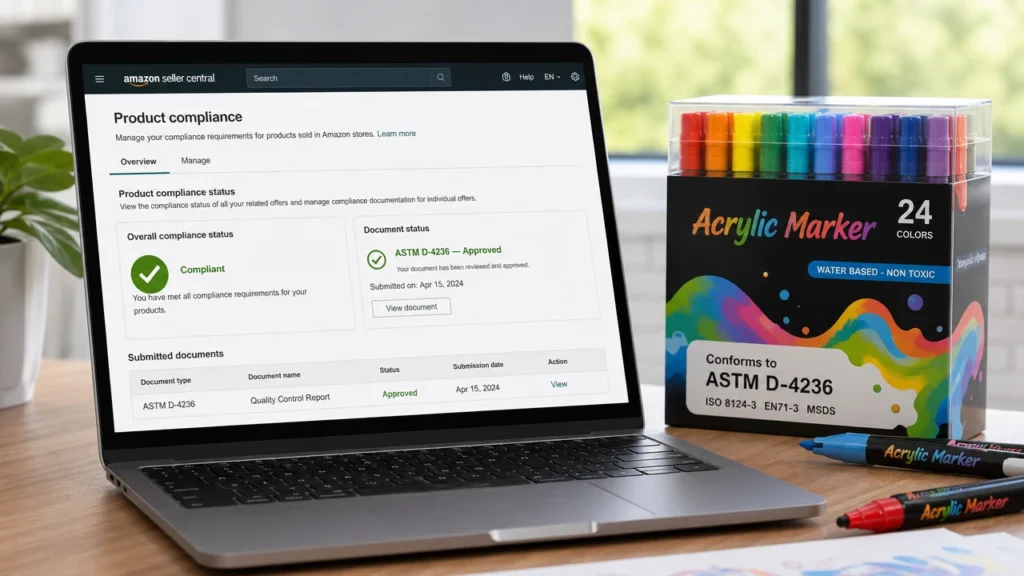
Отдел комплаенса Amazon следует контрольному списку. Если ваш протокол не проходит ни одну из этих проверок, он отклоняется.
- Протокол должен быть в формате PDF от лаборатории, аккредитованной по ISO 17025. Сертификат, выданный фабрикой, даже на фирменном бланке, не принимается. Amazon требует сторонней проверки, а не самостоятельного декларирования.
- В протоколе должна быть указана конкретная ASIN или идентификатор продукта. Если ваш листинг предназначен для набора акриловых маркеров из 24 цветов под ASIN B0XXXXXXX, в протоколе должна быть ссылка на этот продукт. Некоторые отделы комплаенса принимают протоколы, которые ссылаются на продукт по SKU, а не по ASIN, но самый безопасный подход — это протокол, который четко соответствует вашему листингу.
- Протокол должен быть актуальным. Внутренняя политика Amazon обычно требует тестирования в течение последних 12 месяцев для детских товаров и в течение 24 месяцев для художественных материалов для взрослых. Если ваши акриловые маркеры могут использоваться детьми, а большинство из них могут, стремитесь к 12-месячной актуальности.
- Протокол должен включать заявление о соответствии, которое соответствует тому, что напечатано на упаковке вашего продукта. Если на вашей упаковке написано “Соответствует ASTM D-4236” и протокол подтверждает эту формулировку, цепочка документации завершена. Если на упаковке нет этого заявления, Amazon может отклонить продукт независимо от протокола испытаний, поскольку требование к маркировке не выполнено.
- Протокол должен быть полным документом, а не скриншотом, не фотографией, не отсканированным изображением копии. Amazon нужен оригинальный PDF-файл от лаборатории. Фабрика, которая присылает вам размытое фото сертификата на стене, присылает вам украшение, а не документацию.
Часто задаваемые вопросы
В чем разница между ASTM D-4236 и тестом на безопасность?
ASTM D-4236 — это стандарт маркировки. Он требует, чтобы токсиколог проверил рецептуру и определил, необходимы ли предупреждения о хронической опасности. Он не указывает, какие химические вещества тестировать или какие пределы применяются. Отдельный стандарт безопасности, такой как ASTM F963 (для детских товаров) или EN71-3 (для миграции тяжелых металлов), определяет эти пределы. Полный пакет комплаенса включает как токсикологическую оценку ASTM D-4236, так и соответствующие результаты испытаний безопасности.
Как узнать, является ли мой отчёт об испытаниях по стандарту ASTM D-4236 подлинным?
Проверьте название и номер лаборатории, аккредитованной по ISO 17025. Проверьте, что в протоколе указаны ваш конкретный продукт и рецептура. Проверьте дату, максимум 24 месяца. Проверьте, что указан сертифицированный токсиколог. Проверьте, что протокол состоит из нескольких страниц с фактическими результатами, а не из одностраничного сертификата. Если все пять проверок пройдены, протокол, вероятно, настоящий. Если какая-либо проверка не пройдена, запросите у фабрики лучший документ.
Могу ли я использовать один и тот же отчет ASTM D-4236 для нескольких продуктов?
Только если протокол явно охватывает все продукты. Протокол для 12-цветного набора акриловых красок на водной основе не охватывает 24-цветный набор на спиртовой основе. Для разных рецептур требуются отдельные токсикологические оценки. Для разных цветовых диапазонов также могут потребоваться отдельные оценки, если химия пигмента значительно различается между цветами.
Что произойдет, если Amazon отклонит мой отчет о тестировании ASTM D-4236?
Ваш листинг приостанавливается. Вы не можете продавать, пока не предоставите приемлемую документацию. Процесс восстановления занимает от нескольких дней до нескольких недель. В течение этого времени ваши запасы заблокированы, а ваш рейтинг падает. Вот почему получение действительной документации до отправки не является опциональным. ZH STATIONERY предоставляет документацию для конкретных партий с каждым заказом, поэтому протокол готов до того, как продукт попадет на Amazon.
Нужен ли мне стандарт ASTM D-4236, если мои маркеры продаются только взрослым?
Да. Стандарт применяется ко всем художественным материалам независимо от предполагаемого возраста пользователя. Требования к маркировке различаются в зависимости от выводов токсиколога, но требование проведения оценки применяется к каждому художественному материалу, продаваемому в США. Единственное исключение — продукты, которые специально и исключительно маркированы как промышленные, а не художественные материалы.
Как часто мне нужно продлевать соответствие стандарту ASTM D-4236?
Минимум каждые пять лет, согласно стандарту. На практике — ежегодно или всякий раз, когда меняется рецептура чернил. Если ваша фабрика меняет поставщика пигмента, марку растворителя или консерванта, предыдущий протокол испытаний ASTM D-4236 больше не действителен для новой рецептуры. Фабрика, которая документирует изменения рецептуры и проводит повторные испытания соответствующим образом, как это делает ZH STATIONERY, обеспечивает непрерывное покрытие комплаенса. Фабрика, которая не отслеживает изменения рецептуры, не может сказать вам, когда ваш протокол стал недействительным. Свяжитесь с ZH STATIONERY для запроса текущей документации ASTM D-4236 для ваших спецификаций акриловых маркеров.
Протокол испытаний ASTM D-4236 — это не сертификат для рамки. Это юридический документ, который доказывает, что ваш продукт был проверен квалифицированным токсикологом. Разница между настоящим протоколом и поддельным — это разница между листингом, который продается, и листингом, которого не существует. Свяжитесь с ZH STATIONERY для обсуждения документации по комплаенсу для вашей линейки акриловых маркеров.
Связанное руководство: Пояснение о чернилах для маркеров для сухого стирания.
Связанные материалы
- За пределами “Нетоксично”: скрытая правда о пищевых чернилах для детских маркеров
- Упаковка маркеров в соответствии с EU PPWR 2026: что необходимо изменить частным маркам уже сейчас
- Контрольный список утверждения образцов для заказов маркеров под частной маркой
- Руководство по испытанию канцелярских изделий на свободный формальдегид
- Руководство по переговорам с китайскими фабриками по производству ручек
- руководство по закупке акварельных маркеров
- Форматы упаковки акриловых маркеров
- Стратегия маркеров с двойным и одинарным наконечником
- Руководство для импортёров канцелярских товаров в Латинской Америке
- Руководство по наборам маркеров: 12 vs 24 vs 36 vs 48 vs 60 цветов
Внешняя ссылка: Руководство CPSC по детским товарам.
Минимальный заказ составляет 3 000 ручек или маркеров на каждый SKU и каждый цвет, то есть на каждую модель и каждый цвет. Количество считается в отдельных ручках или маркерах, а не в наборах.