Każdy nauczyciel ma historię o suchościeralnym markerze, który zniszczył koszulę. Każdy kierownik biura przyjmował skargi na tusz do tablic suchościeralnych, który nie chciał się wyprać z bluzki. To nie są przypadkowe incydenty – to przewidywalne skutki decyzji dotyczących składu tuszu podejmowanych na poziomie fabryki, na długo zanim marker trafi do klasy lub sali konferencyjnej.
Dla nabywców B2B zaopatrujących się w markery suchościeralne, zrozumienie chemii tuszu do markerów suchościeralnych to nie tylko interesująca nauka. To różnica między produktem, który buduje lojalność klientów, a takim, który generuje zwroty. Gdy wiesz, dlaczego niektóre formuły plamią tkaniny, a inne się wypierają, możesz zadawać dostawcom pytania wykraczające poza opisy katalogowe i arkusze cenowe.
Ten artykuł rozkłada na czynniki pierwsze cztery składniki tuszu suchościeralnego, wyjaśnia kompromis w formulacji determinujący zachowanie względem plamienia oraz daje nabywcom B2B praktyczne ramy do oceny jakości markerów suchościeralnych przed złożeniem zamówienia hurtowego.
Spis treści
Szybka odpowiedź: Dlaczego markery suchościeralne plamią ubrania?
Oto podstawowa chemia w czterech punktach:
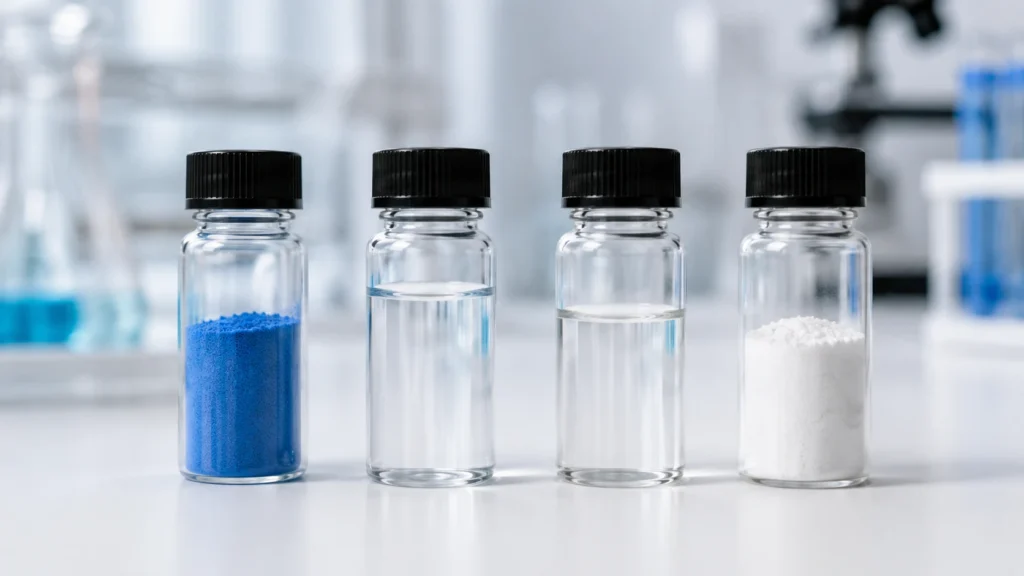
- Tusz suchościeralny zawiera trzy aktywne składniki: pigment (kolor), rozpuszczalnik alkoholowy (utrzymuje tusz w stanie płynnym, odparowuje przy kontakcie) oraz środek uwalniający na bazie silikonowo-polimerowej (zapobiega wiązaniu tuszu z powierzchnią tablicy).
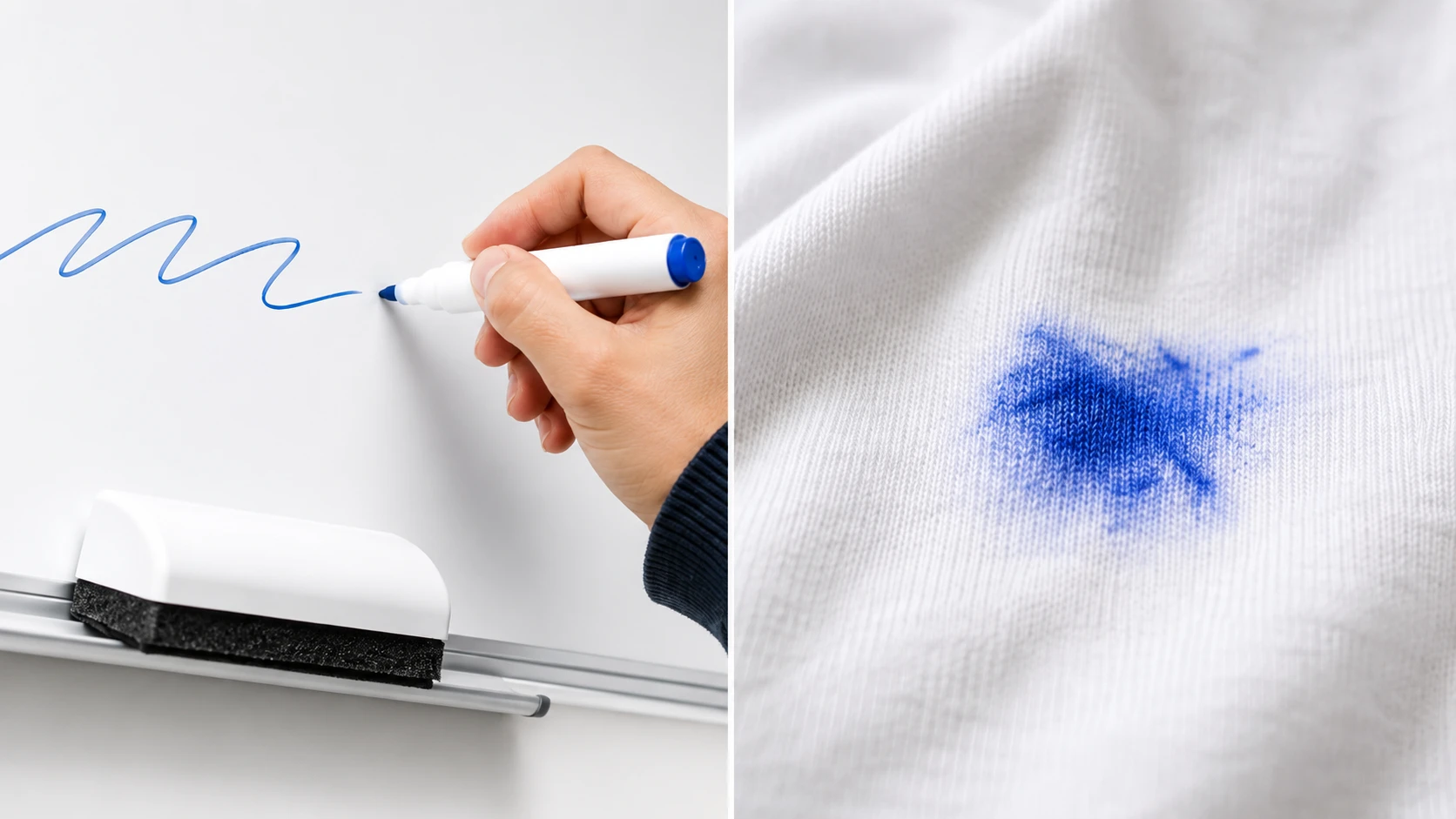
- Środek uwalniający działa tylko na powierzchniach nieporowatych. Na gładkiej tablicy suchościeralnej silikon tworzy śliską warstwę, która pozwala zetrzeć pigment. Na tkaninie – bawełnie, poliestrze lub mieszankach – porowate włókna wchłaniają rozpuszczalnik niosący pigment, zanim środek uwalniający zdąży zadziałać.
- Cząsteczki pigmentu są sprawcą plam. Gdy rozpuszczalnik alkoholowy odparuje wewnątrz włókien tkaniny, cząsteczki pigmentu zostają fizycznie uwięzione w strukturze włókna. Detergenty na bazie wody nie mogą do nich dotrzeć, ponieważ powłoka środka uwalniającego jest odporna na wodę.
- Formuły na bazie barwników i wzmocnione blokerami barwników wypierają się łatwiej. Niektórzy producenci stosują barwniki polimerowe zamiast pigmentów lub dodają anionowe związki blokujące barwnik, które zapobiegają wiązaniu się substancji barwiącej z miejscami receptorowymi na tkaninie – dzięki czemu tusz nadaje się do prania maszynowego.
Dla właścicieli marek i menedżerów ds. zaopatrzenia zrozumienie tych czynników pomaga w ustaleniu bardziej precyzyjnych standardów zaopatrzenia i kontroli jakości przed zobowiązaniem się do produkcji masowej.
Jak skład tuszu do tablic suchościeralnych wpływa na reklamacje klientów
Każda skarga dotycząca markera suchościeralnego – cienie na tablicy, plamy na ubraniach, wysychanie podczas przechowywania – ma swoje źródło w decyzji dotyczącej formulacji. Oto jak cztery składniki formulacji markera suchościeralnego tworzą skargi, których doświadczają Twoi klienci:
| Składnik tuszu | Co robi | Typowa skarga przy słabej formulacji | Wskaźnik jakości na poziomie fabryki |
| Pigment lub barwnik (substancja barwiąca) | Zapewnia kolor; 30–50% formuły | Tusz trwale plami odzież (pigment uwięziony we włóknach tkaniny); kolory na tablicy wyglądają na wyblakłe lub pasiaste | Rozkład wielkości cząstek pigmentu; odczyty spektrofotometru koloru dla każdej partii; testy zmywalności z tkaniny na bawełnie i mieszankach bawełniano-poliestrowych |
| Rozpuszczalnik alkoholowy | Utrzymuje tusz w stanie płynnym w pojemniku; odparowuje w ciągu 2–3 sekund na powierzchni tablicy | Marker szybko wysycha (zbyt dużo lotnego rozpuszczalnika); tusz pozostaje zbyt długo mokry (zbyt mało rozpuszczalnika lub niewłaściwy typ) | Testowanie szybkości parowania rozpuszczalnika; testowanie czasu bez skuwki (minimum 2 godziny ekspozycji); weryfikacja czystości rozpuszczalnika dla każdej partii |
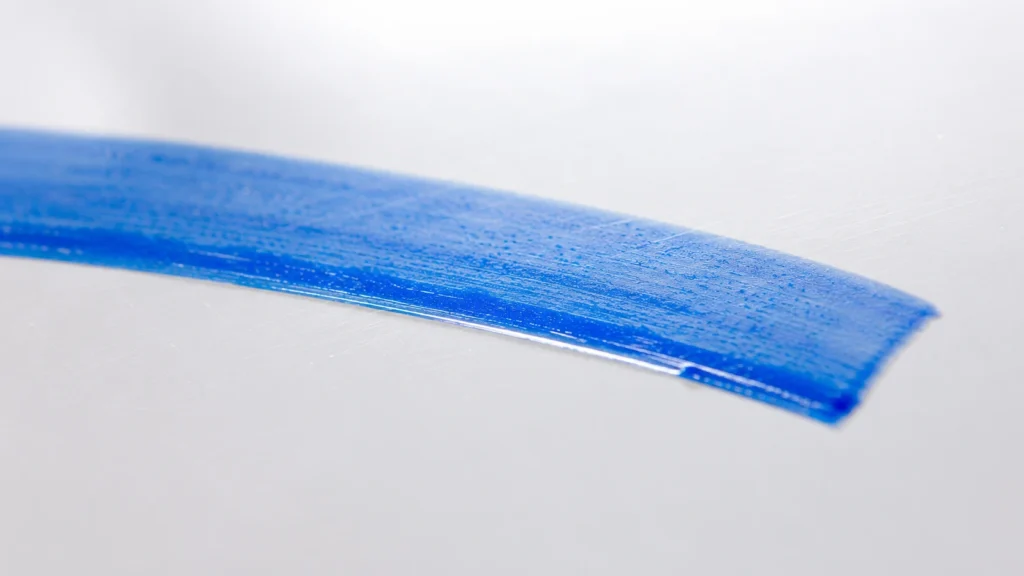
| Środek uwalniający (polimer silikonowy) | Zapobiega wiązaniu pigmentu z tablicą; 10–20% formuły | Tusz pozostawia cienie lub osad na tablicy (niewystarczająca ilość środka uwalniającego); tusz rozmazuje się zamiast czyścić się czysto | Weryfikacja stężenia środka uwalniającego; testowanie ścieralności po 24-godzinnym czasie utrwalania na standardowej powierzchni tablicy |
| Żywica wiążąca | Tworzy warstwę utrzymującą pigment na powierzchni pisania; rozpuszczalna w wodzie w wysokiej jakości formulacjach | Tusz trwale wiąże się z powierzchnią tablicy (niewłaściwy typ żywicy – akrylowa zamiast rozpuszczalnej w wodzie); tusz łuszczy się przed starciem (niewystarczająca ilość żywicy) | Testowanie rozpuszczalności żywicy; testowanie tworzenia warstwy; pomiar stosunku przyczepności do uwalniania |
Zgodnie z Królewskie Towarzystwo Chemiczne, kluczowa różnica między markerami suchościeralnymi a permanentnymi sprowadza się do wyboru polimeru: markery permanentne używają akrylu, który po wyschnięciu trwale wiąże się z powierzchnią; markery suchościeralne używają silikonu, który tworzy niewiążącą warstwę. Ale ta silikonowa warstwa zapobiega wiązaniu tylko na gładkich, nieporowatych powierzchniach. W momencie, gdy tusz dotknie tkaniny, rozpuszczalnik przenosi pigment głęboko w strukturę włókna, gdzie środek uwalniający nie może interweniować.
Kompromis w formulacji: Atrament suchościeralny na bazie pigmentu vs. barwnika
W tym miejscu nabywcy B2B muszą zrozumieć kompromis produkcyjny, którego większość użytkowników końcowych nigdy nie widzi.
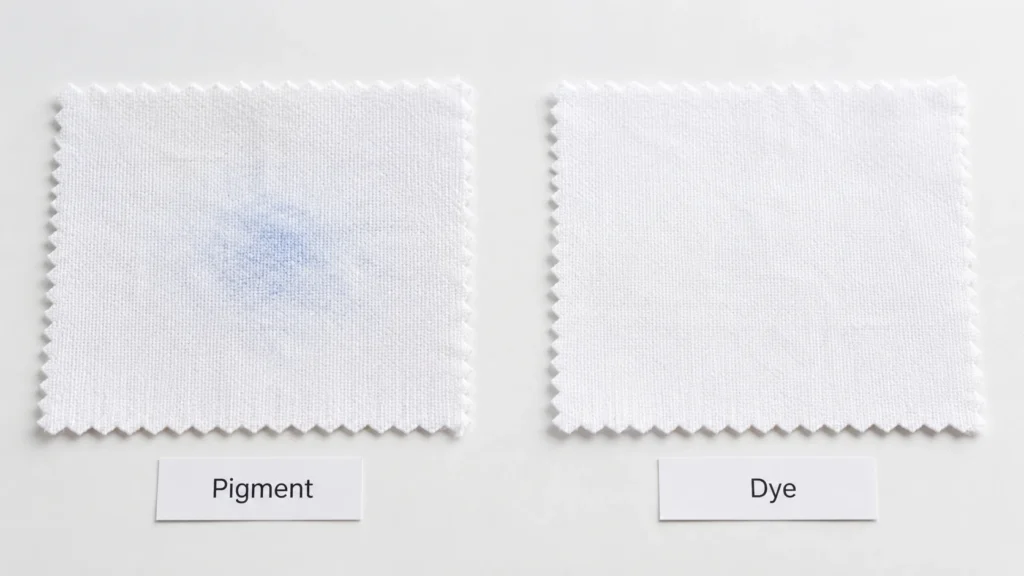
Większość komercyjnych markerów suchościeralnych używa tuszu na bazie pigmentu. Pigmenty to stałe cząsteczki koloru zawieszone w rozpuszczalniku – zapewniają mocny, żywy kolor, są odporne na blaknięcie w świetle biurowym i dają stałą kryjącą linię na tablicy. Ale te same cząsteczki pigmentu są powodem, dla którego markery do tablic suchościeralnych plamią ubrania. Gdy rozpuszczalnik alkoholowy odparuje wewnątrz włókien bawełny lub poliestru, cząsteczki pigmentu pozostają fizycznie osadzone w matrycy włókna – zbyt duże, by się rozpuścić, zbyt głęboko, by wypłukać je wodą.
Alternatywą jest tusz na bazie barwnika, gdzie substancja barwiąca jest rozpuszczona na poziomie molekularnym, a nie zawieszona jako stałe cząsteczki. Zgodnie ze specyfikacjami patentowymi dla zmywalnych kompozycji suchościeralnych, barwniki polimerowe – a konkretnie podstawione poli(oksyalkilenem) substancje barwiące – pozostają rozpuszczalne w wodzie nawet po odparowaniu rozpuszczalnika. Oznacza to, że tusz można usunąć z tkanin w standardowym cyklu prania. Kompromis: tusze na bazie barwnika mogą dawać nieco mniej kryjący kolor na tablicy i mogą być bardziej podatne na blaknięcie przy długotrwałej ekspozycji na promieniowanie UV.
Niektórzy producenci dodają związki blokujące barwnik – materiały anionowe, takie jak sulfonowane produkty kondensacji naftalenu lub sulfonowane produkty kondensacji fenolowo-formaldehydowej – które wiążą się z miejscami reaktywnymi na skórze i tkaninie, zanim barwnik lub pigment zdąży się przyczepić. Te dodatki działają jako bariera chemiczna, zmniejszając plamienie bez konieczności całkowitego przejścia z pigmentu na barwnik. Zgodnie z literaturą patentową dotyczącą zmywalnych kompozycji barwiących, stężenia blokerów barwników już na poziomie 2–5% wagowych mogą przynieść wymierną poprawę zmywalności z tkaniny, choć wyższe stężenia (do 15%) dają najlepsze rezultaty.
Dla nabywców B2B praktyczne pytanie brzmi: jakiej formulacji potrzebuje Twój rynek? Dystrybutor artykułów szkolnych sprzedający do klas K–12 może przedkładać zmywalność nad intensywność koloru – nauczyciele i rodzice wybaczą nieco jaśniejszy tusz, jeśli oznacza to, że marker nie zniszczy mundurka ucznia. Hurtownik artykułów biurowych sprzedający do działów zakupów korporacyjnych może przedkładać wydajność na tablicy i żywość kolorów – ich użytkownicy końcowi to dorośli, rzadziej brudzący ubrania tuszem, ale częściej skarżący się na cienie i słabą ścieralność.
Fabryka z dedykowanym działem B+R nad tuszem – taka jak ZH STATIONERY, która prowadzi własne laboratorium tuszu opracowujące niestandardowe formulacje – może pomóc nabywcom w nawigacji tego kompromisu, produkując próbki o różnych proporcjach pigmentu do barwnika lub stężeniach blokerów barwników i testując je pod kątem konkretnych scenariuszy użytkowania końcowego, które są najważniejsze dla rynku docelowego.
Co powinni przetestować nabywcy B2B przed zamówieniem markerów suchościeralnych
Opisy katalogowe i arkusze specyfikacji nie powiedzą Ci, jak marker suchościeralny sprawuje się w rzeczywistych warunkach. Oto cztery testy, które ujawniają jakość formulacji:
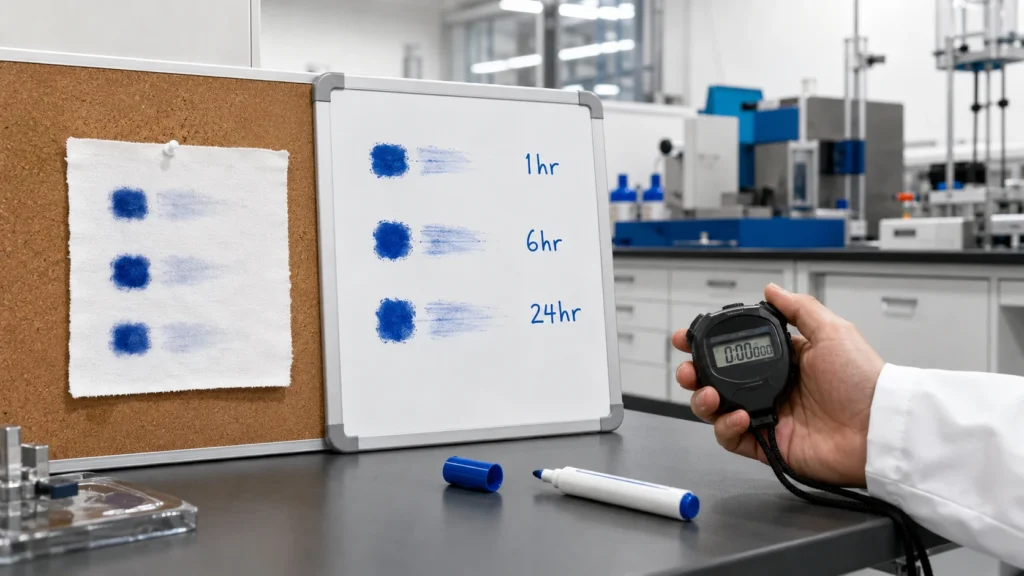
- Ścieralność z tablicy po czasie utrwalania. Napisz na standardowej powierzchni tablicy suchościeralnej i pozostaw tusz na 24 godziny przed starciem. Wysokiej jakości formulacja powinna zetrzeć się czysto, bez cieniowania lub śladów. Cieniowanie wskazuje na niewystarczającą ilość środka uwalniającego lub niewłaściwy typ żywicy – problemy, które wygenerują skargi klientów z biur i szkół, które zostawiają napisy na tablicach na noc.
- Zmywalność z tkaniny na bawełnie i mieszankach bawełniano-poliestrowych. Nałóż tusz na próbki 100% bawełny i 50/50 bawełny z poliestrem, pozostaw do wyschnięcia na godzinę, a następnie przeprowadź przez cykl prania w zimnej wodzie. Formulacja na bazie barwnika lub wzmocniona blokerem barwników powinna wyjść czysta lub prawie czysta. Standardowa formulacja na bazie pigmentu pozostawi widoczne plamy – co może być akceptowalne dla rynku biur dla dorosłych, ale nie dla produktów szkolnych.
- Czas bez skuwki. Zdejmij skuwkę i pozostaw marker wystawiony na otwarte powietrze na dwie godziny, a następnie przetestuj wydajność pisania. Marker powinien pisać natychmiast, bez przerywania. Awaria czasu bez skuwki to najczęstsza skarga dla wszystkich typów markerów i jest spowodowana lotnością rozpuszczalnika oraz konstrukcją uszczelnienia skuwki – oba te czynniki fabryka powinna kontrolować poprzez testowanie na poziomie partii.
- Spójność koloru między partiami. Poproś o odczyty spektrofotometru z trzech oddzielnych partii produkcyjnych. Delta-E między partiami powinna być poniżej 1,5 dla produktu klasy profesjonalnej. Dryf koloru między zamówieniami to czerwona flaga wskazująca na niespójne źródło pigmentu lub kontrolę formulacji.
Fabryka, która przetwarza 2000+ nowych SKU rocznie, z 100% kontrolą wizualną i funkcjonalną przed pakowaniem – jak robi to ZH STATIONERY w swoim zautomatyzowanym obiekcie o powierzchni 4000 mkw. – posiada infrastrukturę testową do generowania tej dokumentacji. Pytanie, które należy zadać dostawcom, brzmi nie “czy testujecie jakość?”, ale “czy możecie mi pokazać dane testowe na poziomie partii dla konkretnego SKU, które zamawiam?”.”
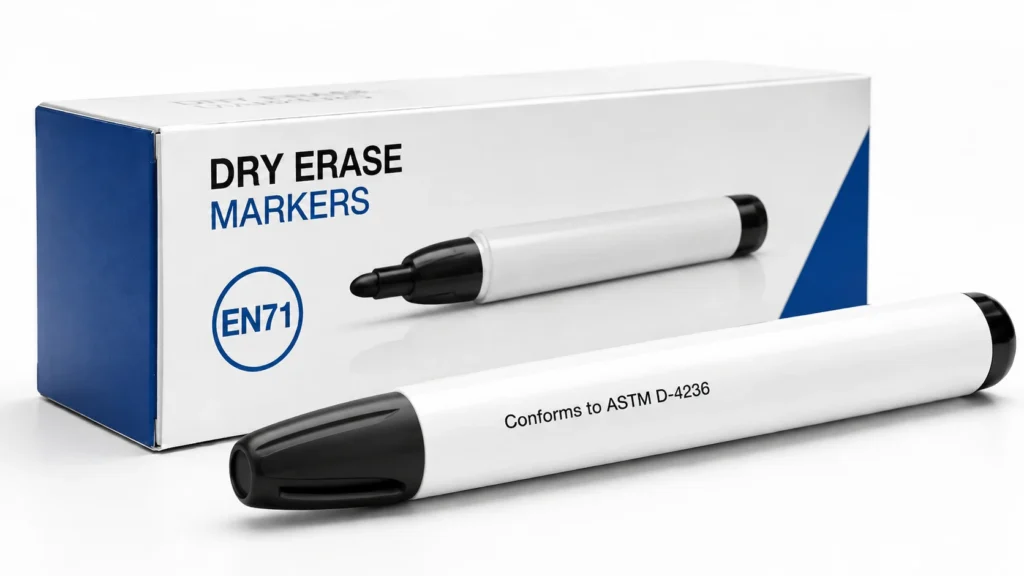
Certyfikaty i bezpieczeństwo: Warstwa zgodności dla markerów suchościeralnych
Markery suchościeralne na sucho podlegają tym samym przepisom bezpieczeństwa, co wszystkie materiały artystyczne i piśmiennicze sprzedawane na rynkach USA i Europy. W przypadku produktów szkolnych i dla dzieci wymogi dotyczące zgodności są wyższe.
Zgodnie z Amerykańską Komisją ds. Bezpieczeństwa Produktów Konsumenckich, Wszystkie materiały artystyczne muszą przejść ocenę toksykologiczną zgodnie z ustawą o etykietowaniu niebezpiecznych materiałów artystycznych i posiadać oświadczenie “Zgodne z ASTM D-4236”. W przypadku markerów suchościeralnych przeznaczonych dla dzieci poniżej 12 roku życia obowiązują dodatkowe wymogi CPSIA – testy stron trzecich na zawartość ołowiu i ftalanów w akredytowanym laboratorium CPSC oraz certyfikat produktu dziecięcego.
W Unii Europejskiej markery suchościeralne klasyfikowane jako zabawki muszą spełniać normę EN71 – w szczególności EN71-3 dotyczącą migracji metali ciężkich. Rozpuszczalniki alkoholowe stosowane w tuszu suchościeralnym (izopropanol,, etanol) są ogólnie uważane za bezpieczniejsze niż rozpuszczalniki ketonowe (metyloetyloketon) stosowane w starszych formulacjach, ale każdy składnik musi być udokumentowany i przetestowany.
Dla nabywców B2B praktyczne kroki są następujące:
- Poproś o aktualne, opatrzone datą raporty z testów EN71 i ASTM D-4236, które konkretnie odnoszą się do zamawianego SKU markera suchościeralnego.
- Potwierdź, że laboratorium testujące jest akredytowane zgodnie z normą ISO 17025.
- Sprawdź, czy wszystkie składniki tuszu są udokumentowane w karcie charakterystyki (MSDS) do celów odprawy celnej.
- W przypadku produktów do kanałów szkolnych potwierdź dostępność certyfikatu produktu dziecięcego CPSIA.
ZH STATIONERY utrzymuje opcje produktów certyfikowanych zgodnie z EN71 i ASTM D-4236, z dokumentacją testów partii powiązaną z rzeczywistymi seriami produkcyjnymi.
Często zadawane pytania
Dlaczego markery suchościeralne plamią ubrania, skoro tak łatwo ścierają się z tablic?
Środek antyadhezyjny na bazie polimeru silikonowego w tuszu suchościeralnym działa tylko na powierzchniach nieporowatych. Na gładkiej tablicy suchościeralnej środek antyadhezyjny tworzy śliską warstwę, która zapobiega wiązaniu pigmentu, więc sucha szmatka usuwa całą warstwę tuszu. Na tkaninie – która jest porowata – rozpuszczalnik alkoholowy przenosi pigment głęboko we włókna, zanim środek antyadhezyjny zdąży utworzyć swoją barierę ochronną. Po odparowaniu rozpuszczalnika, cząsteczki pigmentu są fizycznie uwięzione wewnątrz struktury włókien, co sprawia, że bardzo trudno je usunąć samą wodą.
Jaka jest różnica między tuszem suchościeralnym na bazie pigmentu a tuszem na bazie barwnika?
Tusz pigmentowy wykorzystuje stałe cząsteczki koloru zawieszone w rozpuszczalniku – zapewnia mocny kolor i jest odporny na blaknięcie, ale stałe cząsteczki zostają uwięzione we włóknach tkaniny, powodując trwałe plamy. Tusz barwnikowy rozpuszcza barwnik na poziomie molekularnym, dzięki czemu można go wyprać z tkanin w standardowym cyklu prania. Kompromis: formulacje na bazie barwników mogą dawać nieco mniej kryjący kolor na tablicy i mogą być bardziej podatne na blaknięcie pod wpływem promieni UV. Niektórzy producenci mieszają pigmenty i barwniki, aby zrównoważyć wydajność koloru z możliwością prania.
Czy markery suchościeralne “o niskim zapachu” są bezpieczniejsze lub wyższej jakości niż standardowe?
Formulacje o niskim zapachu zazwyczaj zastępują silniejsze rozpuszczalniki mniej lotnymi alternatywami – na przykład używając etanolu zamiast izopropanolu. Zmniejsza to zapach rozpuszczalnika, ale niekoniecznie zmienia zachowanie przy plamieniu lub wydajność na tablicy. Kluczowym wskaźnikiem jakości nie jest “niski zapach” na etykiecie, ale konkretna chemia rozpuszczalnika i to, czy stężenie środka antyadhezyjnego jest wystarczające do czystego ścierania. Marker o niskim zapachu z niewystarczającą ilością środka antyadhezyjnego będzie pozostawiał ślady na tablicy, niezależnie od tego, jak przyjemnie pachnie.
Jak mogę przetestować jakość markerów suchościeralnych przed złożeniem zamówienia hurtowego?
Przeprowadź cztery testy: zdolność do ścierania tablicy po 24-godzinnym czasie utwardzania (nie powinny pozostać żadne ślady), zmywalność tkanin z bawełny i mieszanek bawełniano-poliestrowych (cykl prania w zimnej wodzie, godzinę po nałożeniu atramentu), wydajność pisania po zdjęciu skuwki po dwóch godzinach ekspozycji na powietrze oraz spójność kolorów między partiami przy użyciu pomiarów spektrofotometrem. Fabryka, która może dostarczyć te dane z zapisów kontroli jakości produkcji – a nie z pojedynczej, ręcznie składanej próbki – wykazuje prawdziwą infrastrukturę kontroli jakości.
Jakie certyfikaty są wymagane dla markerów suchościeralnych na rynkach szkolnych w USA i Europie?
Wszystkie markery suchościeralne sprzedawane w USA wymagają zgodności z ASTM D-4236 (LHAMA). Produkty przeznaczone dla dzieci poniżej 12 roku życia dodatkowo wymagają testów stron trzecich CPSIA i certyfikatu produktu dziecięcego. Na rynek europejski wymagana jest zgodność z EN71-3 dla produktów klasyfikowanych jako zabawki. Zawsze żądaj aktualnych, opatrzonych datą raportów z testów z akredytowanych laboratoriów ISO 17025, które odnoszą się do konkretnego SKU produktu. Fabryka z udokumentowanymi testami zgodności partii – taka jak ZH STATIONERY – może dostarczyć tę dokumentację jako część standardowego procesu zamówienia.
Co sprawia, że marker suchościeralny jest “zmywalny” z perspektywy produkcyjnej?
Możliwość prania wynika z wyborów formulacyjnych, a nie z twierdzeń marketingowych. Istnieją trzy podejścia: stosowanie barwników polimerowych zamiast stałych pigmentów (barwnik rozpuszcza się na poziomie molekularnym i wypiera się), dodawanie związków blokujących barwniki, które zapobiegają wiązaniu się barwników z włóknami tkaniny, lub mieszanie pigmentów z rozpuszczalnymi w wodzie żywicami wiążącymi, które uwalniają swoje wiązanie z włóknami podczas cyklu prania. Jeśli dostawca twierdzi, że jego markery są “zmywalne”, zapytaj, które konkretne podejście formulacyjne zastosowali i poproś o dane z testów zmywalności na tkaninie – a nie ustne zapewnienie.
Jeśli pozyskujesz markery suchościeralne do programów szkolnych, kanałów detalicznych biurowych lub linii artykułów piśmienniczych pod marką własną, skontaktować się z ZH STATIONERY aby omówić opcje formulacji tuszu, poprosić o próbki do testów zmywalności i ocenić specyfikacje markerów suchościeralnych dla swojego rynku docelowego.
Powiązane materiały dla kupujących
Skorzystaj z tych powiązanych przewodników, aby porównać produkt, opakowanie, zgodność z przepisami i decyzje dotyczące zaopatrzenia przed wysłaniem zapytania ofertowego.