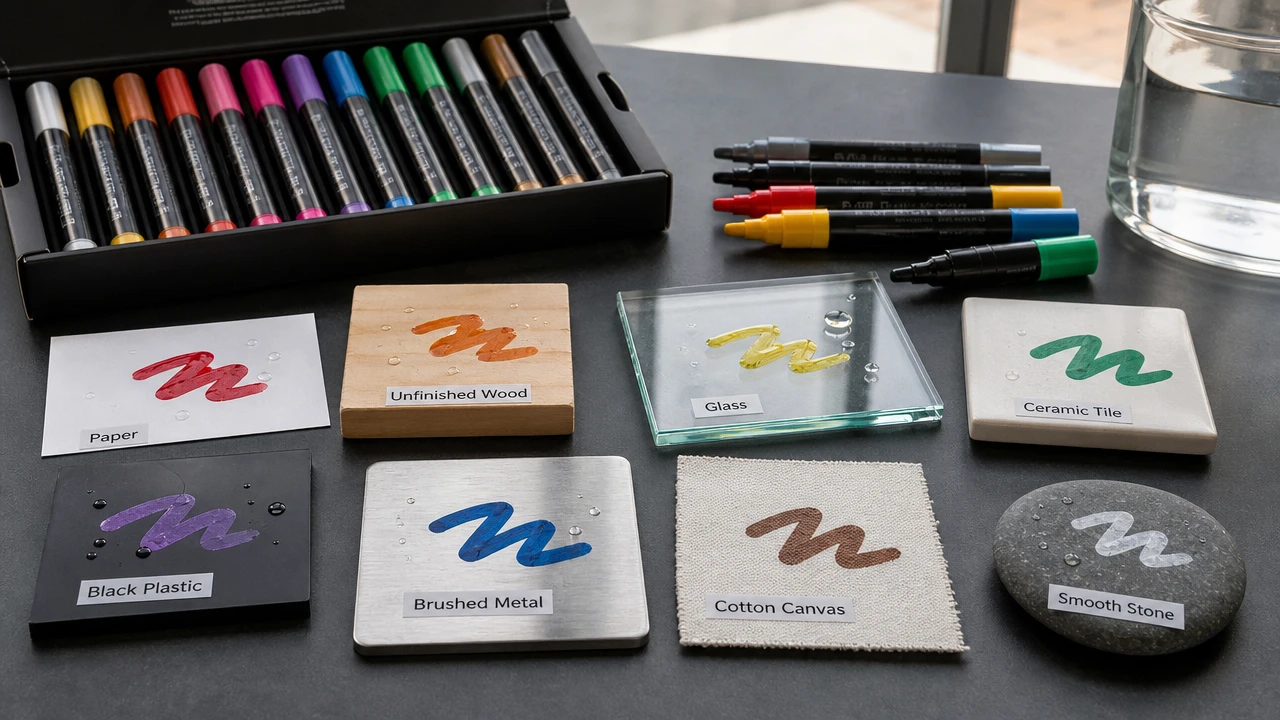
If your buyers ask, are acrylic paint markers permanent and waterproof, the honest answer is: after drying, they are usually water resistant and often permanent on the right surface. Not on every surface. Not under every kind of wear. For B2B sourcing, the wording on the pack must match the surface, cure time, and cleaning method, and test result.
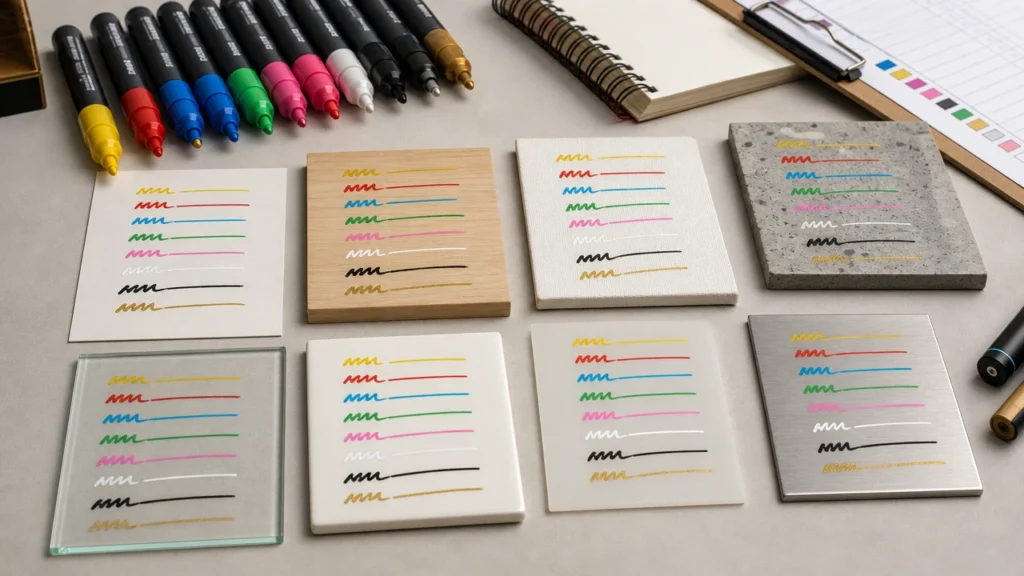
I pennarelli acrilici sono permanenti e impermeabili? Risposta rapida
Acrylic paint markers dry into a pigmented acrylic film. On porous faces like paper, raw wood, canvas, and stone, that film can grip well and become hard to remove. On low-energy surfaces like glass, glazed ceramic, metal, and many plastics, the mark may resist water after drying. It can still scratch off unless the surface is prepped, the ink cures, and a sealer is used when needed.
So when a buyer asks about permanence and waterproofing, the supplier should answer by surface and test method. A good sample report splits ordinary craft permanence from washable fabric claims, dishwasher exposure, outdoor display, and scratch resistance.
For importers, retailers, and private-label brands, the useful question is not only whether the marker is waterproof. It is which surface, what buyer use, what label claim, and what proof the supplier can give. ZH Stationery supports OEM and ODM acrylic paint markers. That includes set planning, surface-use instructions, pack copy, and sample review. See the gamma prodotti.
Collegamenti rapidi
- Cosa significano permanente e impermeabile
- Risultati superficie per superficie
- Superfici porose
- Superfici non porose
- Tessuti e superfici indossabili
- Come verificare le dichiarazioni di impermeabilità
- Imballaggio e istruzioni
- Fai domande migliori al fornitore
- FAQ
Cosa significano permanente e impermeabile per i pennarelli acrilici
In retail talk, permanent usually means the mark is not built to wash away like a washable school marker. Waterproof usually means the dried mark resists water touch. Neither word automatically means outdoor durable, dishwasher safe, scratch proof, solvent proof, UV steady, or fit for food-contact faces.
That split matters because acrylic marker ink has two jobs. It must flow through a nib while wet. Then it must form a film after water or solvent leaves the ink. The film can be strong. It still depends on surface energy, surface texture, dirt, dry time, pigment load, binder system, and whether the user rubs, soaks, heats, or washes the marked object.
Safety language is a separate issue from performance language. In the US, Guida CPSC sui materiali artistici says art materials under LHAMA need toxicology review and ASTM D-4236 conformance marking. The ASTM D4236 standard covers chronic health risk marks for art materials. It does not prove waterproof on glass or permanent on plastic.
Risultati superficie per superficie che gli acquirenti dovrebbero aspettarsi
Use this table as a buyer hope map, not a universal promise. The same marker can perform differently on a dusty stone, sealed wood board, glossy tumbler, raw cotton bag, or oily plastic toy. Always test the exact surface your buyers use.
| Superficie | Risultato probabile dopo l'asciugatura | Consigli per l'approvvigionamento | Controllo consigliato |
|---|---|---|---|
| Carta e cartoncino | Di solito abbastanza permanente per un normale uso artigianale. | Sanguinamento, trasparenza, sfrangiatura, danni alla carta dovuti a un'applicazione eccessiva. | Scrivere, asciugare, strofinare con un panno asciutto, quindi controllare il bordo del colore e l'ondulazione della carta. |
| Legno non finito | Buona presa quando la superficie è pulita e leggermente assorbente. | Colore irregolare su venature ruvide, contaminazione da polvere, scurimento del colore. | Carteggiare, rimuovere la polvere, marcare, asciugare, quindi eseguire test con goccia d'acqua e sfregamento. |
| Tela | Buona tenuta quando il tessuto è pulito e preparato o adeguatamente strutturato. | Screpolature della superficie flessibile, variazione di colore, assorbimento irregolare. | Piegare e strofinare dopo l'asciugatura. Confrontare tela preparata e non preparata. |
| Pietra e roccia | Spesso forte perché la superficie è porosa e strutturata. | Polvere, sigillanti, condizioni atmosferiche esterne, abrasione. | Lavare e asciugare prima la pietra, poi testare l'esposizione all'acqua e lo sfregamento superficiale. |
| Vetro | Resistente all'acqua dopo l'asciugatura, ma rimane il rischio di graffi. | Scarsa adesione, impronte digitali, esposizione in lavastoviglie, dichiarazioni eccessive del cliente. | Pulire con alcol, marcare, asciugare o polimerizzare, quindi testare strofinamento, immersione e prova di adesione con nastro. |
| Ceramica smaltata | Simile al vetro a meno che non venga approvato un sigillante compatibile o un processo di cottura. | Dichiarazioni di idoneità alla lavastoviglie, uso improprio a contatto con alimenti, scheggiature dei bordi. | Testare solo aree decorative esterne a meno che non sia confermata la conformità. |
| Plastica | Altamente variabile in base al tipo di resina e alla finitura superficiale. | Bassa adesione su PP, PE, plastiche oleose o flessibili. | Testare la plastica esatta, non una scheda campione casuale. |
| Metallo | Può funzionare su metallo pulito e leggermente strutturato; i rivestimenti lisci variano. | Residui di olio, graffi, incompatibilità del rivestimento, esposizione all'aperto. | Sgrassare, marcare, asciugare, quindi eseguire controlli di adesione e abrasione. |
| Tessuto | Può marcare il tessuto, ma la durabilità al lavaggio è un'affermazione separata. | Fallimento nel lavaggio, mano rigida, screpolature su tessuto elasticizzato. | Test del ciclo di lavaggio, test di sfregamento e chiara formulazione delle etichette di cura. |
Superfici porose: carta, cartone, legno, tela e pietra
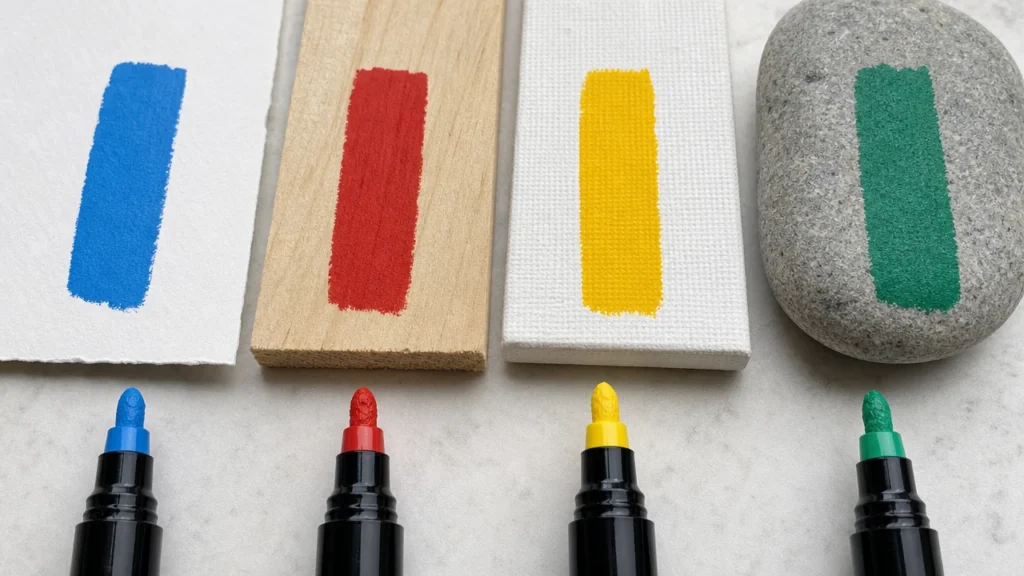
Porous faces are usually the safest place for permanence claims. The ink can grip both by shape and by chemistry. Paper, cardboard, raw wood, unsealed stone, and some canvas give the film more contact than glass or plastic. That is why rock and wood craft sets often perform well with acrylic paint markers.
Still, do not treat every porous material the same. Coated paper can push ink away. Dusty stone can make paint sit on loose bits. Freshly sanded wood can take pigment unevenly. Canvas can flex after drying. The sample approval should use the real buyer surface, not only a clean white card.
For a private-label set, build the use card around real faces. Paper crafts, wood tags, canvas boards, stones, gift boxes, or school projects. If the line includes marcatori di vernice acrilica super glitterati, test sparkle on darker porous samples as well as white cards. Glitter can vanish when the surface soaks up too much binder.
Superfici non porose: vetro, ceramica, plastica e metallo
Non-porous surfaces make more complaints. Buyers expect the marker to perform like paint, but the film has fewer places to grip. A mark can live through a water drop and still fail a fingernail scratch. That is why waterproof and scratch resistant must be tested apart.
Glass and glazed ceramic need a clean surface. Fingerprints, oil, mold-release film, and dust all cut grip. Plastic is harder because PP and PE can reject many coats. Metal depends on raw, painted, powder coated, anodized, polished, or slightly textured conditions. One passed metal sample does not prove every metal product.
A simple supplier talk should cover the marker system, nib delivery, and prime feel. ZH Stationery's tecnologia dei pennarelli a pressione a valvola ZH Stationery explains why controlled ink flow matters for opaque acrylic systems. For surface claims, the buyer still needs use tests on the planned base.
Tessuti e superfici indossabili
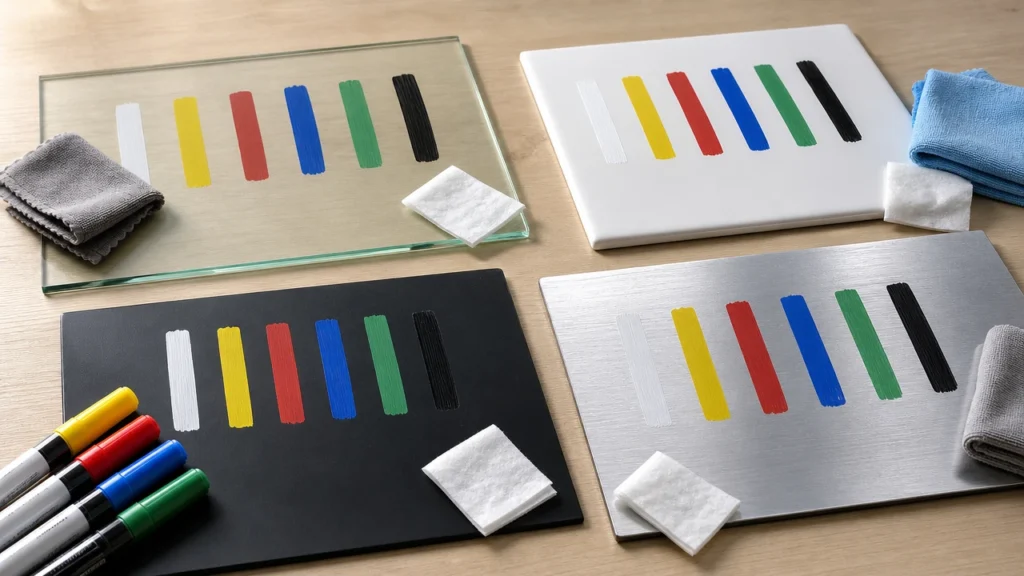
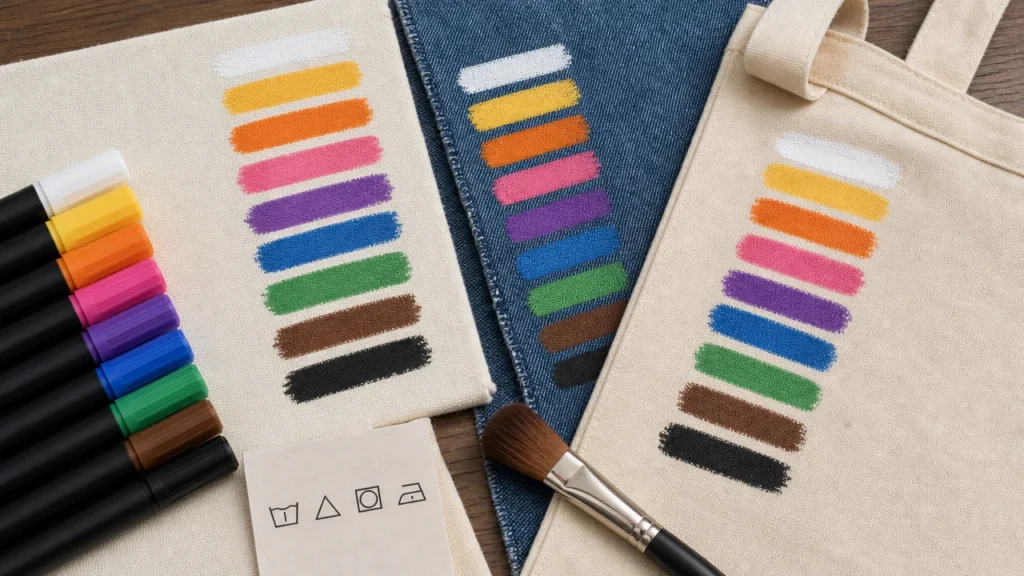
Fabric is where many marker claims get too wide. Acrylic paint markers can leave a clear mark on cotton, canvas totes, denim, and synthetics. Washable fabric performance is a separate need. Stretch, soap, heat, dry method, and fiber content all change the result.
If the product will sell for totes, shoes, hats, costumes, or kids' fabric crafts, ask whether the marker is only for occasional decoration or has passed a set wash test. If heat set is advised, the pack should say so clearly. The card should match the tested state. Do not use loose language like works on all fabrics unless the supplier can back it.
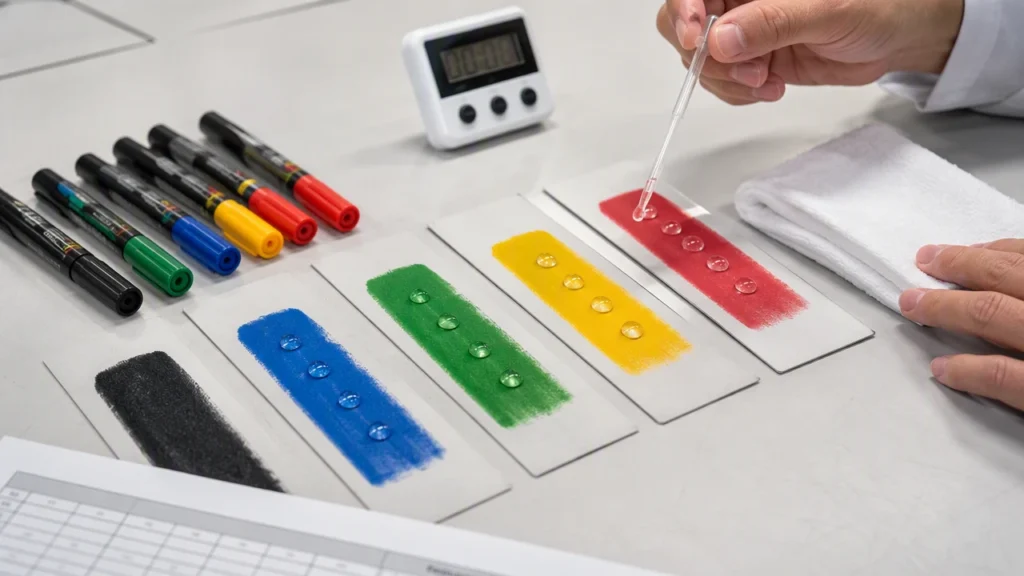
Come testare le dichiarazioni di impermeabilità prima di un ordine di acquisto
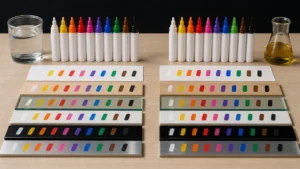
A buyer does not need an expensive lab plan for every first screen sample. The method must be written down. If each seller tests a marker different, the result becomes a debate instead of proof.
- Definire la superficie: materiale esatto, rivestimento, colore, finitura e metodo di pulizia.
- Definire il tempo di asciugatura o polimerizzazione: ad esempio, 24 ore a temperatura ambiente prima dell'esposizione all'acqua.
- Eseguire un controllo con goccia d'acqua: posizionare l'acqua sul segno, attendere un tempo prestabilito, tamponare e ispezionare la fuoriuscita di colore.
- Eseguire un controllo con panno umido: pulire con la stessa pressione del panno e lo stesso numero di passate.
- Eseguire un controllo di immersione solo se l'affermazione commerciale implica ammollo o esposizione alla pioggia all'aperto.
- Eseguire un controllo di graffio o sfregamento separatamente dall'esposizione all'acqua.
- Conservare un campione trattenuto e una documentazione fotografica per il risultato approvato.
For higher-risk non-porous claims, buyers can borrow from coat tests. The standard di adesione con nastro ASTM D3359 rates coat grip by tape test. It is not a marker retail rule. It reminds buyers that grip should be checked with a set method, not guessed from a nice sample.
Tie this test record to your checklist di approvazione campioni. Keep the passed surface panels, cure note, pack copy, barcode sample, and supplier sign-off together. That makes reorder review easier when you later compare marker color consistency across batches.
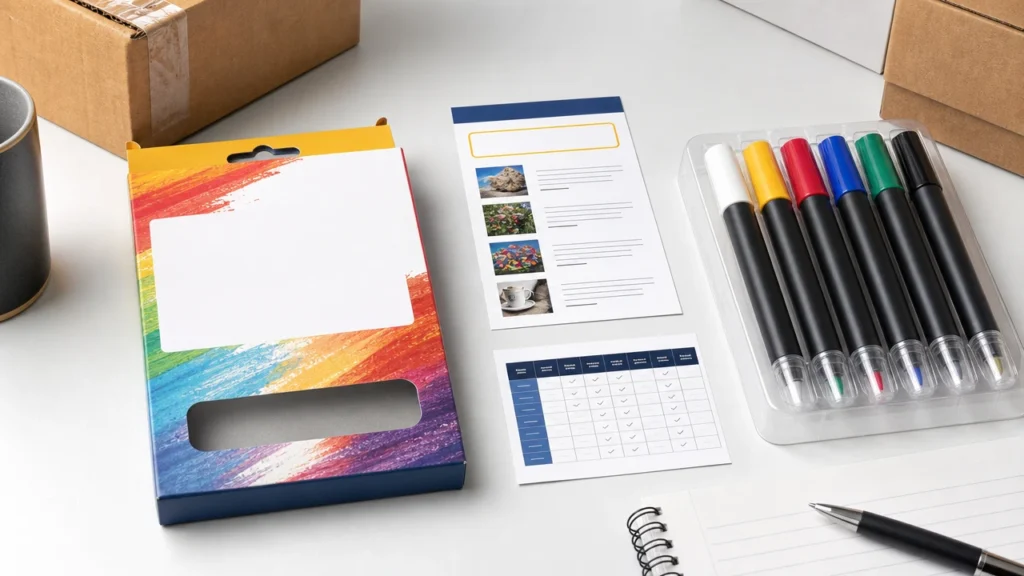
Confezione e istruzioni modellano le aspettative del cliente
Most complaints start when the buyer reads more into the pack than the supplier tested. Waterproof may sound simple. A shopper may read it as rainproof, washable, dishwasher safe, outdoor permanent, child safe, or mug safe. Those are different claims.
Better packs use specific language. For example: water resistant after drying on suitable surfaces. Seal for outdoor use. Test a small area first. Decorative use only on the outside of drinkware. Keep away from food-contact faces unless the product has specific pass. Let ink dry fully before handling. These lines cut false hopes without weakening the product.
The art also needs room for safety and compliance language. The Aggiornamento ASTM D4236-26 shows art-material marking can change over time. Buyers should ask suppliers to confirm the current version for the target market. ZH buyers can also review our Guida al rapporto di test ASTM D-4236 e certificate page before final pack pass.
Diciture comuni che richiedono attenzione
| Dichiarazione | Perché può essere rischioso | Formulazione più sicura controllata dall'acquirente |
|---|---|---|
| Permanente su tutte le superfici | Nessun pennarello funziona allo stesso modo su ogni superficie. | Permanente su molte superfici porose dopo l'asciugatura. Testare prima su superfici lisce. |
| Impermeabile | Troppo generico senza specificare il metodo di esposizione. | Resistente all'acqua dopo l'asciugatura su superfici adatte. |
| Lavabile in lavastoviglie | Richiede test di calore, detergente, pressione e abrasione. | Utilizzare solo se test specifici in lavastoviglie lo supportano. |
| Permanente per esterni | UV, pioggia, calore e abrasione sono tutti fattori rilevanti. | Sigillare per l'esposizione esterna. Testare nelle condizioni esterne previste. |
| Sicuro per tazze | I clienti potrebbero contrassegnare le aree a contatto con gli alimenti. | Uso decorativo solo esterno, salvo conferma di conformità per il contatto con alimenti. |
| Funziona su tessuto | La resistenza al lavaggio varia notevolmente. | Adatto a lavori selezionati su tessuto. Seguire le istruzioni di asciugatura o termofissaggio. |
Fai domande migliori al fornitore
The best supplier answers are not just yes or no. They tie the surface claim to a formula, a sample method, and pack copy.
- Quali superfici avete testato per questa esatta formula di inchiostro? Una risposta utile indica il materiale e la finitura superficiale, come legno non sigillato, ceramica smaltata, vetro borosilicato, plastica PP o tela di cotone.
- Quanto tempo deve asciugare il segno prima dell'esposizione all'acqua? Una risposta utile fornisce un tempo e una condizione, non solo "dopo l'asciugatura".
- Cosa significa impermeabile nel vostro test? Una risposta utile distingue goccia d'acqua, salvietta umida, immersione, esposizione alla pioggia e cicli di lavastoviglie.
- Possiamo usare la stessa affermazione sulla confezione per ogni mercato? Una risposta utile chiede il mercato di destinazione, la fascia d'età, i requisiti dell'etichetta di sicurezza e il canale di vendita prima di approvare la formulazione.
- Consigliate un sigillante per vetro, ceramica, metallo o articoli da esterno? Una risposta utile indica la superficie e spiega quando il sigillante è opzionale o necessario.
- Potete conservare campioni di riferimento del lotto approvato? Una risposta utile include inchiostro conservato, pennarelli finiti, campioni di superficie marcata e foto per il confronto al riordino.
- Cosa succede se i clienti lamentano un cedimento della superficie? Una risposta utile spiega la raccolta delle prove, la tracciabilità del lotto e le azioni correttive, invece di promettere zero reclami.
If you compare factories, add these questions to your RFQ beside packing, color range, and compliance files. A mature supplier should be at ease talking test limits. You can also compare how a supplier handles complaints with the dry-out case study. Then plan retail display with opzioni di confezionamento per pennarelli acrilici.
FAQ
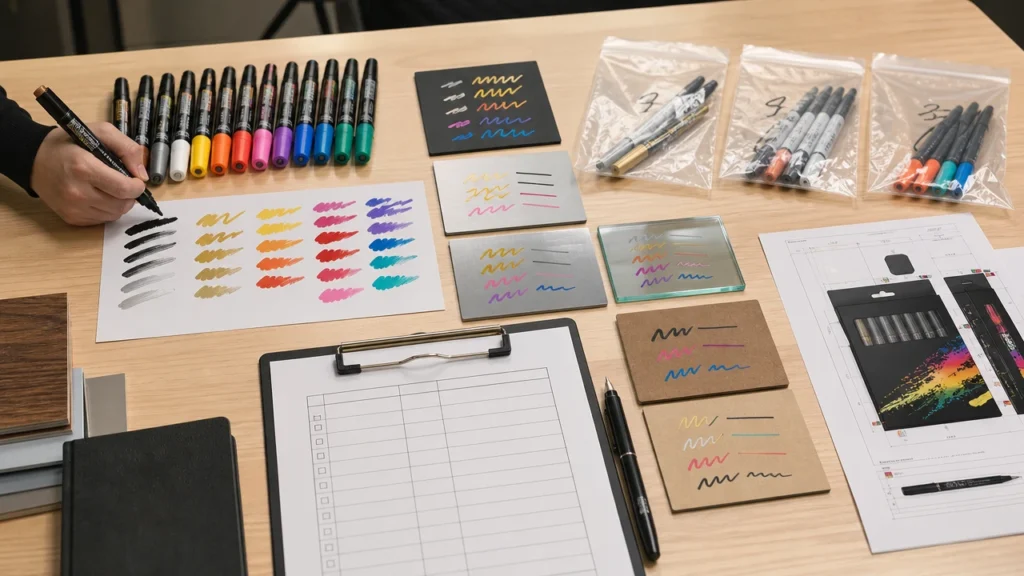
These answers are written for B2B sourcing teams prepping product claims, sample tests, and pack steps.
I pennarelli acrilici sono permanenti su carta e legno?
Usually yes after the ink dries. Porous faces help the film grip. The result still depends on ink formula, surface dust, coat, dry time, and how much rub or water the item gets.
I pennarelli acrilici sono impermeabili sul vetro?
They can be water resistant on clean glass after drying. Plain water resistance is not dishwasher or scratch resistance. For glass programs, pass cleaning, cure, wipe, soak, and tape-pull checks before bulk orders.
I pennarelli acrilici aderiscono alla plastica?
Plastic varies. Some plastics have low surface energy, so acrylic paint sits on top instead of bonding strong. Ask the supplier to test the exact plastic type and finish, not a generic sample.
I pennarelli a vernice acrilica possono essere utilizzati su tessuto?
They can mark many fabrics. Wash durability depends on fiber, ink load, cure, heat set if advised, and wash conditions. Do not sell them as fabric markers unless that claim has product-specific tests.
I pennarelli acrilici sono lavabili in lavastoviglie?
Do not assume dishwasher safety from a waterproof claim. Dishwasher cycles mix heat, soap, water pressure, and rub. Treat dishwasher resistance as a separate claim with a set test plan and passed sample.
What should B2B buyers ask before passing waterproof claims?
Ask for the exact surface, cleaning method, dry or cure time, water test, rub check, sealer advice, and the pack copy. The claim should match the test, not outrun it.
Conclusione
Acrylic paint markers can be permanent and water resistant. Only when the claim ties to the right surface and a clear test method. Porous craft faces are usually easier. Glass, ceramic, metal, plastic, fabric, and outdoor items need stricter sample passes.
When you send an inquiry to ZH Stationery, share the target surfaces, selling country, color count, packing format, order quantity, and any wording you want on the retail box. Our team can review the marker build, sample plan, and pack steps before your OEM or ODM project moves to bulk. Start with product groups, then check our visita guidata alla fabbrica if factory ability is part of your review.
Letture correlate
- Pennarelli a base d'acqua vs a base di olio: durata, sicurezza e migliori utilizzi
- Come Rimuovere il Pennarello a Vernice da Vetro, Plastica, Legno e Tessuto
- Come usare i pennarelli acrilici su legno: preparazione, pittura e sigillatura
- Pennarelli per dipingere le rocce: quali marcatori funzionano meglio e come sigillarli
- Come Usare i Pennarelli Acrilici su Tessuto e Far Durare il Disegno
- Guida al Produttore di Pennarelli Glitter: Sistemi di Inchiostro, Punte, Confezionamento e MOQ
The minimum order for custom OEM/ODM programs is 50,000 pens per order, counted by total individual pens produced. For a 12-color pack, that equals roughly 4,200 sets, not 50,000 of each color. Standard stock models can be sampled at smaller trial sizes.