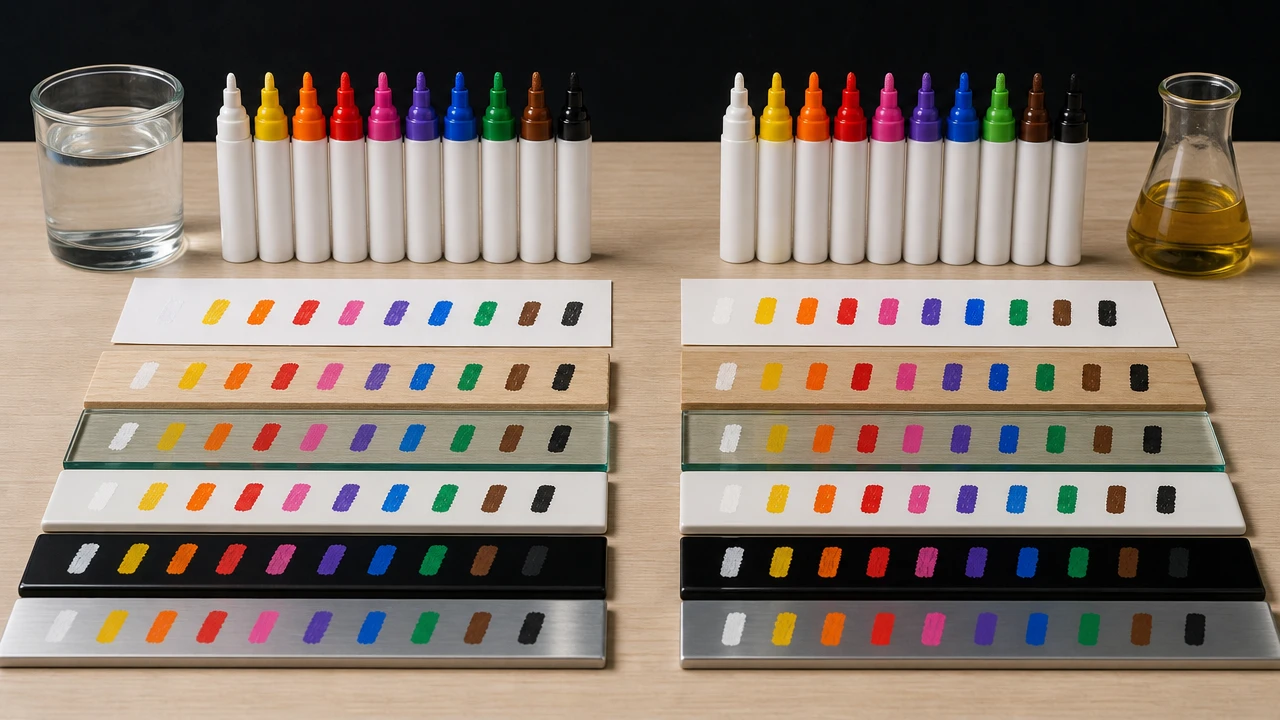
Choosing between water-based and oil-based paint markers is not just chemistry. Odor matters. Drying time matters. Surface grip matters. So do packaging claims, shipping risk, and complaints. For B2B buyers, the best ink system fits the channel and the surface promise.
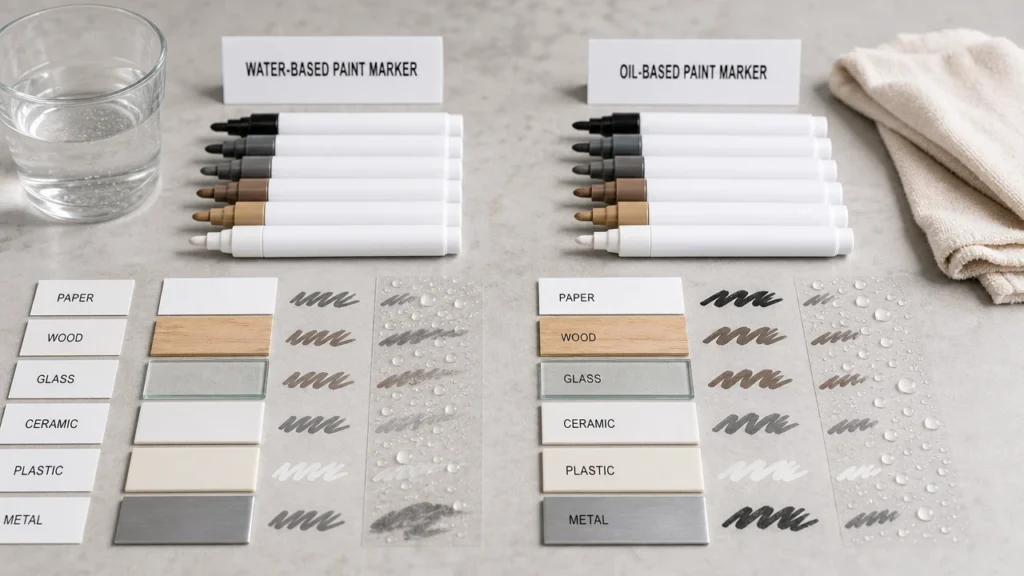
Marqueurs à peinture à base d'eau ou à base d'huile : réponse rapide
In most retail and school-supply programs, water-based paint markers are easier to position. They usually give lower odor and easier cleanup. Oil-based markers are often chosen when the buyer needs stronger grip on metal, glass, ceramic, plastic, or outdoor surfaces. Neither type is automatically better. The right choice depends on the surface, the lasting claim, the compliance documents, and the end user.
ZH Stationery builds OEM and ODM acrylic paint markers, specialty paint markers, and private-label sets. Buyers get formula, nib, packaging, and compliance planning in one workflow. If your line covers school crafts, hobby retail, Amazon sets, hardware marking, or giftable art kits, choose the ink system first. Do not lock artwork and claims too early.
Liens rapides
- Tableau de décision pour l'acheteur
- Différences de durabilité
- Sécurité, odeur et conformité
- Meilleures utilisations par canal
- Adaptation à la surface
- Allégations d'emballage
- Posez de meilleures questions au fournisseur
- FAQ
Tableau de décision pour l'acheteur
| Question de l'acheteur | Marqueurs à peinture à base d'eau | Marqueurs à peinture à base d'huile | Note d'approvisionnement |
|---|---|---|---|
| Positionnement principal | École, artisanat, loisirs, art intérieur, usage familial. | Marquage de style industriel, utilité extérieure, marquage sur surfaces lisses. | Ne vendez pas une formule comme parfaite pour toutes les surfaces. |
| Odeur | Odeur généralement plus faible et plus facile à positionner en vente au détail en intérieur. | Odeur souvent plus forte en raison des solvants organiques. | Review VOC and ventilation wording for the exact solvent system. |
| Nettoyage | Souvent plus facile avant le séchage ou le durcissement complet. | Plus difficile à enlever après séchage. | Une allégation de lavabilité nécessite toujours son propre test. |
| Durabilité | Bon sur les surfaces artisanales poreuses et de nombreuses utilisations de marqueurs acryliques. | Souvent plus fort sur le métal, le verre, la céramique et certains plastiques. | Approuver la surface exacte et la méthode de test. |
| Comportement de séchage | Peut sécher plus lentement sur les surfaces lisses. | Sèche souvent plus vite et adhère plus fortement sur les surfaces lisses. | La vitesse de séchage affecte les bavures et le risque de dessèchement de la pointe. |
| Usage enfants ou scolaire | Généralement le meilleur point de départ. | Nécessite généralement plus de prudence et un libellé d'avertissement plus clair. | Faire correspondre la tranche d'âge, le marché et les documents de test. |
| Allégation d'emballage | Faible odeur, à base d'eau, nettoyage facile, utilisation sur surfaces artisanales. | Permanent, résistant à l'eau, forte adhérence de surface, marquage extérieur sous réserve de test. | Éviter les allégations générales qui dépassent les preuves. |
Différences de durabilité que les acheteurs doivent tester
Oil-based paint markers are often chosen for lasting. The solvent system helps the resin wet low-energy surfaces and form a harder film. That matters on metal tools, glass jars, ceramics, plastic parts, coated boards, and outdoor labels. The trade-off is clear. Stronger grip usually means stronger odor and harder cleanup.
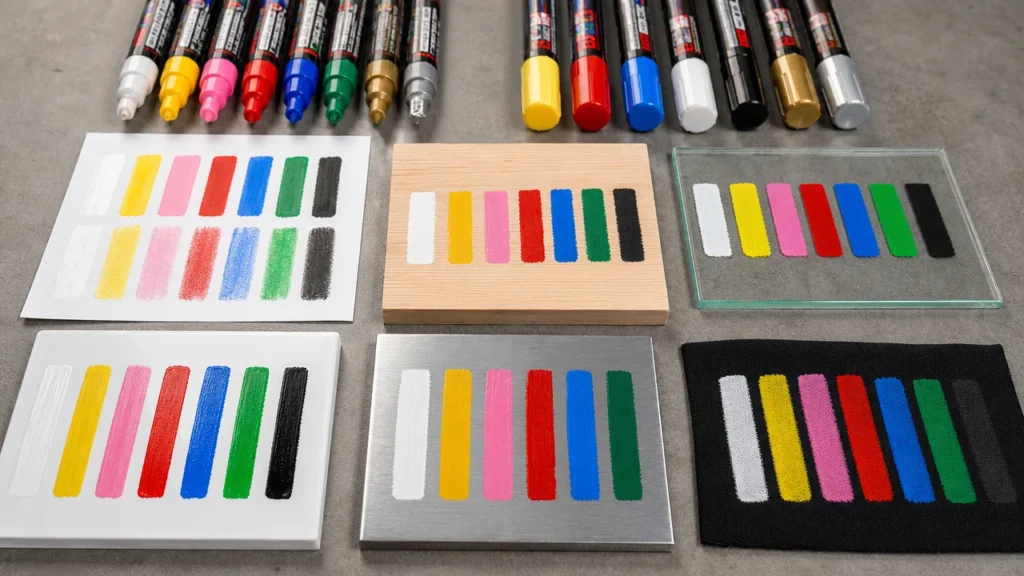
Water-based paint markers, including many acrylic systems, can also last after full curing. On paper, wood, canvas, cardboard, and stone, the acrylic film grips well because the surface anchors the paint. On glass and plastic, the same ink may need surface cleaning, longer drying time, or a sealer.
Do not judge lasting from one bright sample stroke. Ask the supplier to show water-drop, wet-wipe, dry-rub, and scratch checks. Ask for retained samples too. The Norme d'adhérence au ruban adhésif ASTM D3359 is a coating basis. It gives buyers a useful method. Adhesion needs a defined test protocol.
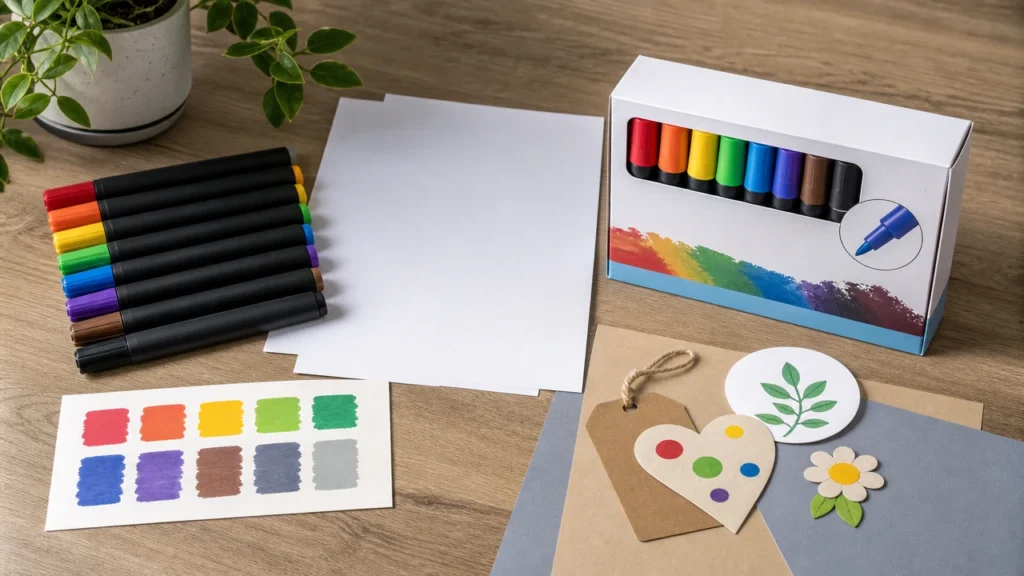
Sécurité, odeur et conformité
Safety language is where buyers need care. Water-based does not mean non-toxic by itself. Oil-based does not mean unsafe by itself. The exact formula, ingredient limits, user age, intended use, warning label, and destination rules define the compliance path.
For US art products, the Guide sur les matériaux d'art de la CPSC sets the path. Covered art products need a toxicology review and ASTM D-4236 labeling. ASTM D4236 covers chronic health-hazard labels. It does not prove that a marker is washable, food-safe, odor-free, waterproof, or fit for every child.
VOC and odor review matters more for oil-based systems. Buyers should not reduce safety to odor alone. The EPA explains that VOCs can come from paints, lacquers, glues, and permanent markers. Oil-based solvents with low flash points may trigger Class 3 flammable liquid rules. These rules come from the IATA DGR and the IMDG Code for air or sea freight. Exporters should confirm whether the finished marker needs a 16-section SDS or a dangerous-goods declaration. If the product is used indoors, in schools, or by young users, ask for the test reports. Ask for packaging copy before approval. ZH buyers can start with the Guide des rapports de test ASTM D-4236 and confirm current certificates during sample sign-off.
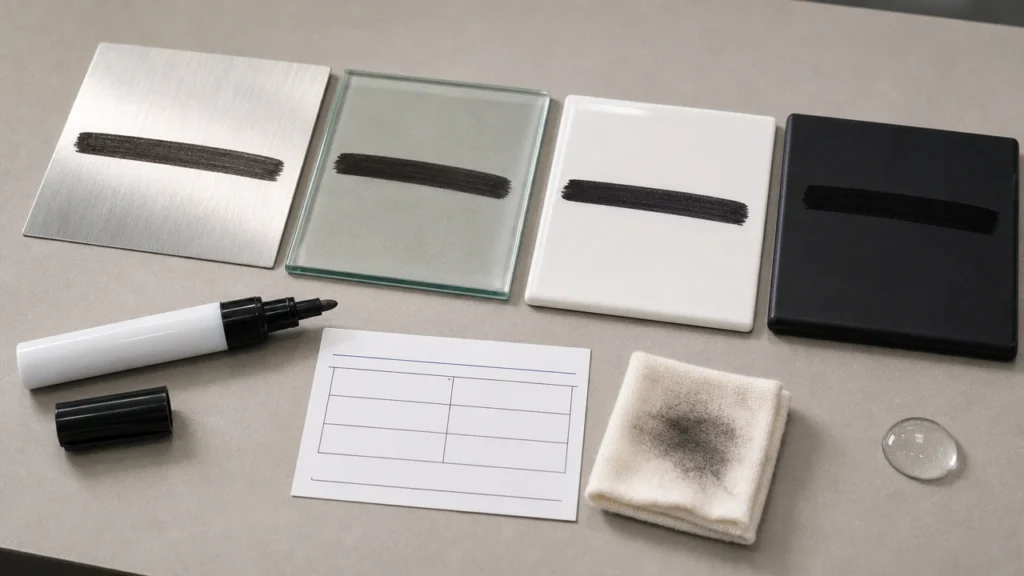
Meilleures utilisations par canal
| Canal de vente ou cas d'usage | Meilleur point de départ | Pourquoi | Vérification acheteur |
|---|---|---|---|
| Kits créatifs pour enfants | À base d'eau | Une odeur plus faible et un nettoyage plus facile répondent aux attentes des parents et des écoles. | Vérifiez la tranche d'âge, les avertissements et les recommandations de la guide des marqueurs sans danger pour la peau en cas de contact cutané possible. |
| Kits d'art créatif pour Amazon | Acrylique à base d’eau | Bon équilibre entre couleur, confort et variété de surfaces pour les utilisateurs en intérieur. | Testez les fuites, l'étanchéité du capuchon, les allégations d'emballage et le rendu des couleurs pour les photos. |
| Peinture sur galets et travaux sur bois | Acrylique à base d’eau | Les surfaces poreuses retiennent généralement bien le film acrylique après séchage. | Testez la résistance au frottement à sec, aux gouttes d'eau et les instructions de scellant pour extérieur. |
| Étiquettes pour outils métalliques ou machines | À base d’huile | Une meilleure accroche et résistance à l'eau peuvent compter davantage que l'odeur. | Vérifiez les mentions de ventilation, le nettoyage des surfaces et l'abrasion. |
| Décoration sur verre et céramique | Dépend de l'allégation | L'acrylique à base d'eau convient à la décoration artisanale ; à base d'huile, l'adhérence peut être plus forte. | Distinguez la résistance à l'eau de la résistance au lave-vaisselle. |
| Panneaux extérieurs et marqueurs de jardin | À base d’huile ou à base aqueuse scellée | Les UV, la pluie et l’abrasion augmentent les exigences de durabilité. | Effectuez des tests de vieillissement ou en conditions réelles avant toute revendication. |
| Acrylic display panels or PVC figurines | Water-based acrylic paint marker | Oil-based solvents can soften, craze, or etch ABS and PS plastics. | Require adhesion tests on the exact plastic grade before bulk orders. |
Compatibilité des surfaces : où chaque formule performe le mieux
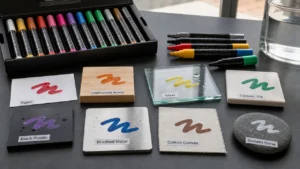
Surface fit is the simplest method for preventing wrong orders. A buyer may ask for one marker on paper, school projects, glass jars, metal tools, shoes, plastic decor, and outdoor labels. That request covers many use cases. The supplier should narrow the priority. Do not accept a blanket yes.
- Papier et carton : les marqueurs peinture à base d'eau sont généralement plus faciles à utiliser et à positionner pour les kits créatifs.
- Bois et pierre : les marqueurs acryliques à base d'eau donnent souvent de bons résultats, mais la poussière et les agents de scellement peuvent modifier l'adhérence.
- Verre et céramique : les deux types peuvent marquer la surface, mais les systèmes à base d'huile offrent souvent une meilleure adhérence lorsque la surface est propre.
- Plastique : les marqueurs à base d'huile peuvent mieux adhérer sur certains plastiques, mais le PP et le PE restent difficiles et nécessitent des tests précis.
- Métal : les marqueurs à base d'huile sont souvent privilégiés pour le marquage utilitaire, tandis que les marqueurs à base d'eau peuvent convenir aux objets métalliques décoratifs d'intérieur.
- Tissu : aucun des deux types ne doit être vendu comme marqueur textile lavable, sauf si la formule exacte a passé les tests de lavage.
The nib and ink flow matter too. Thicker paint ink may need a wider channel and controlled priming. ZH Stationery's valve-press marker page explains why paint markers need controlled delivery. The dual tip marker guide montre pourquoi la conception de la pointe doit correspondre au système d'encre.
Séchage, étanchéité du capuchon et durée de conservation
Water-based formulas can be easier for the user. They still need care against dry tips, pigment settling, germ risk, and uneven flow after storage. Oil-based formulas face a different risk profile. Solvent loss, odor, leakage, and cap-seal quality become the critical checks.
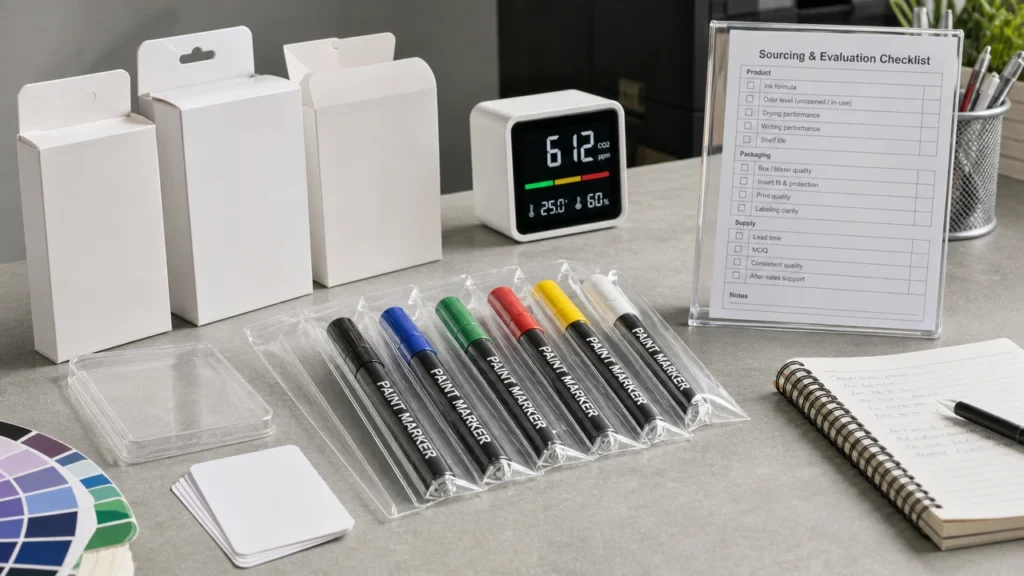
Cap-seal quality is a sourcing item, not a minor extra. The cap must protect the nib through warehouse storage, ocean transit, and shelf display. It must protect the nib through consumer use. Buyers should add cap-off time, leak, drop, high-heat storage, and restart checks to the liste de contrôle d'approbation des échantillons. For related QC logic, review the article sur le contrôle qualité des marqueurs.
Allégations d'emballage nécessitant des preuves
Packaging turns formula decisions into legal and service risk. A phrase that feels harmless in a catalog can cause returns when the customer expects more than the marker can deliver. The claim must match the tested surface and the intended user.
| Revendication | Risque | Meilleur contrôle |
|---|---|---|
| Non toxique | Trop général sans le rapport actuel et le contexte exact du marché. | Utiliser uniquement avec des justificatifs spécifiques au produit et l'étiquetage requis. |
| Faible odeur | L'odeur est subjective, sauf si l'acheteur définit la comparaison et les conditions d'utilisation. | À associer au type de formule et aux consignes de ventilation. |
| Permanent | Les clients peuvent interpréter cela comme permanent sur toutes les surfaces. | Indiquer les surfaces adaptées et le temps de séchage. |
| Imperméable | Peut être confondu avec la résistance au lave-vaisselle, aux conditions extérieures ou au lavage. | Définir l'exposition à l'eau et la surface. |
| Pour les enfants | Nécessite une classification par âge, des étiquettes d'avertissement et un examen de conformité spécifique au canal de distribution. | Confirmez la documentation avant l'approbation du visuel. |
| Fonctionne sur toutes les surfaces | Presque toujours trop vague. | Listez les surfaces testées et recommandez de faire un test au préalable. |
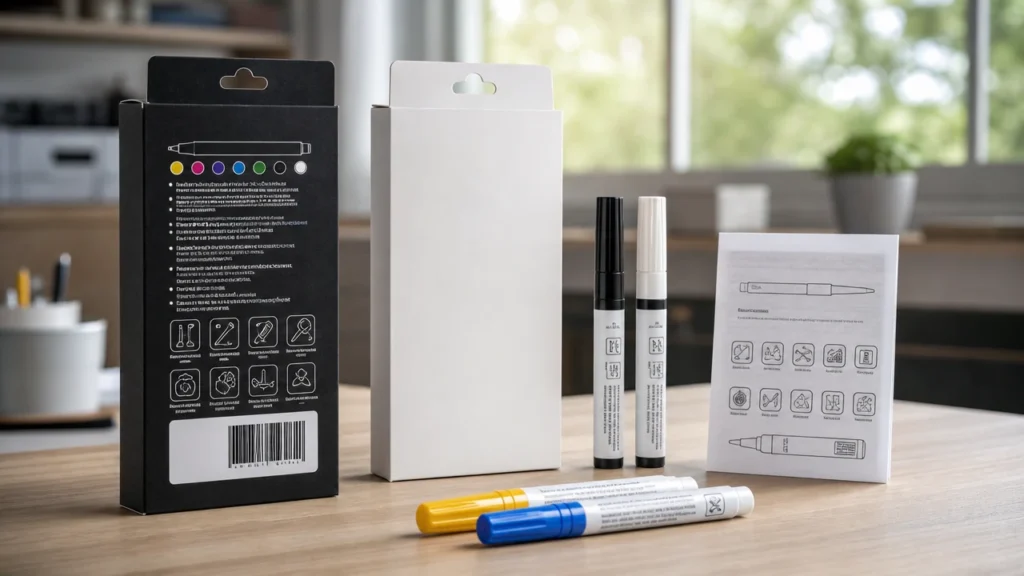
Packaging format also shapes the guidelines. A blister card has less room for warnings than a color box or gift box. If you select the retail format at the same time as the ink system, compare les options d'emballage des marqueurs acryliques before final artwork. For premium color or sparkle lines, marqueurs de peinture acrylique super brillants may need extra space for priming, surface testing, and storage notes.
Posez de meilleures questions au fournisseur
A useful supplier answer should connect the ink system to test evidence. It should not simply repeat water-based or oil-based as a selling point.
- Quel type de formule proposez-vous ? Une bonne réponse nomme le système d'encre et explique pourquoi il convient aux surfaces cibles.
- Quelles surfaces avez-vous testées ? Une bonne réponse liste les surfaces exactes, la méthode de nettoyage, le temps de séchage et les limites de résultat.
- Comment définissez-vous la durabilité ? Une bonne réponse distingue la résistance à l'eau, à l'abrasion, aux rayures, l'exposition extérieure et l'exposition au lave-vaisselle.
- Quelle formulation d'odeur ou de ventilation est nécessaire ? Une bonne réponse varie selon les formules à base d'eau, à base d'huile, à base d'alcool et l'âge de l'utilisateur cible.
- Quels documents de sécurité pouvez-vous fournir pour ce SKU exact ? Une bonne réponse fournit des rapports actuels spécifiques au produit, et non un certificat d'usine générique.
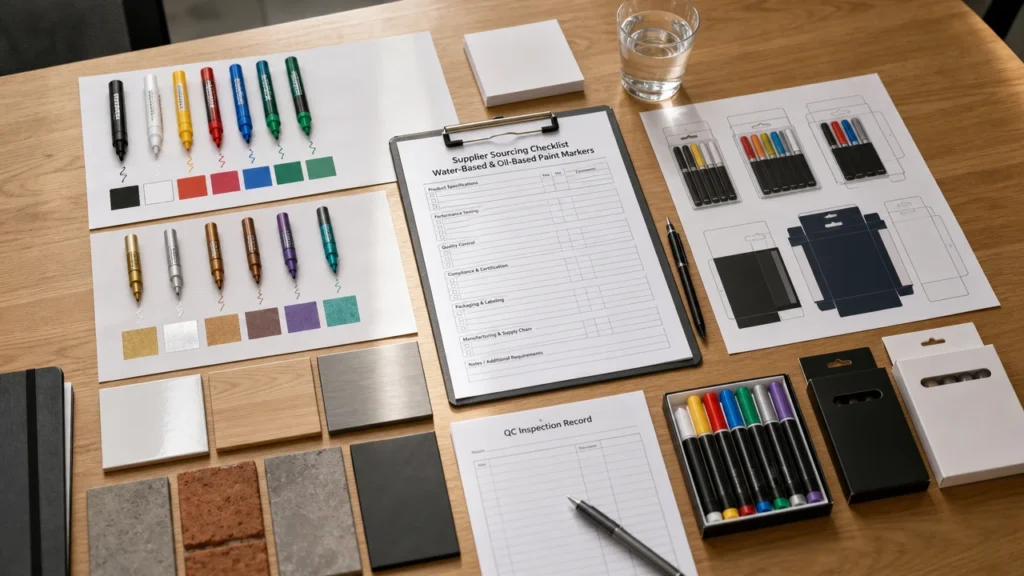
- Pouvez-vous conserver des échantillons de référence ? Une bonne réponse inclut les marqueurs finis, les preuves d'emballage, les panneaux de surface marqués et les enregistrements de lot.
- Pouvons-nous réviser les allégations d'emballage après les tests ? Un bon fournisseur accueille favorablement une formulation plus sûre au lieu d'imposer des allégations générales susceptibles de générer des réclamations.
FAQ
These answers are for B2B buyers selecting a paint marker formula for retail, distributor, school, craft, hardware, or private-label programs.
Are water-based paint markers safer than oil-based?
Water-based markers often have lower odor and are easier to position for school, craft, and indoor retail. Safety still depends on the exact formula, age grade, labeling, and test reports. Do not treat water-based as child-safe by default without test documents.
Les marqueurs à peinture à base d'huile sont-ils plus durables ?
Oil-based markers often grip low-energy surfaces better, including metal, glass, ceramic, and plastic. They may offer better water and rub resistance. Lasting still needs testing on the exact surface and use conditions.
Which type is better for metal or glass?
Oil-based markers are often chosen for metal and glass when stronger grip is needed. Water-based acrylic markers can also work, especially on clean surfaces with sealing. Buyers should still approve wipe, scratch, and grip tests before bulk orders.
Conclusion
Which type is better for children or school?
Water-based paint markers are usually the better start for children, classroom, and craft programs. Odor and cleanup are easier to manage. The final product still needs the right warning labels, age grade, and safety documents.
Can one formulation cover every use?
No. A system with low odor and easy cleanup may not give the strongest grip on metal. A system that bonds hard to low-energy surfaces may need stricter air flow, labeling, and handling rules.
What should buyers ask before selecting a type?
Ask for the ink type and target surfaces. Also ask for odor data, drying time, water and rub tests, safety reports, packaging copy, retained samples, and compliance documents for your channel.
Water-based paint markers are often the better start for indoor craft, school, hobby, and low-odor retail. Oil-based markers are often stronger when the buyer needs higher grip, water resistance, and utility marks on low-energy surfaces. The final call should come from the surface, the claim, and the test method. This is a B2B OEM/ODM factory program. The minimum order is 50,000 pens per order, with smaller trial sizes available for standard stock models.
For an OEM or ODM project, send ZH Stationery your target surfaces, selling country, age group, packing format, lasting claim, color count, and order plan. We can compare formula direction, nib build, sample testing, and packaging copy before bulk production.
Lecture associée
- Les marqueurs de peinture acrylique sont-ils permanents et imperméables ? Guide surface par surface
- Marqueurs à peinture acrylique vs marqueurs à alcool : lequel choisir ?
- Marqueurs pour impressions 3D : options acrylique vs à base d'huile
- Les marqueurs à alcool sont-ils sans danger pour la peau ? Pourquoi “ non toxique ” ne signifie pas sans danger pour la peau