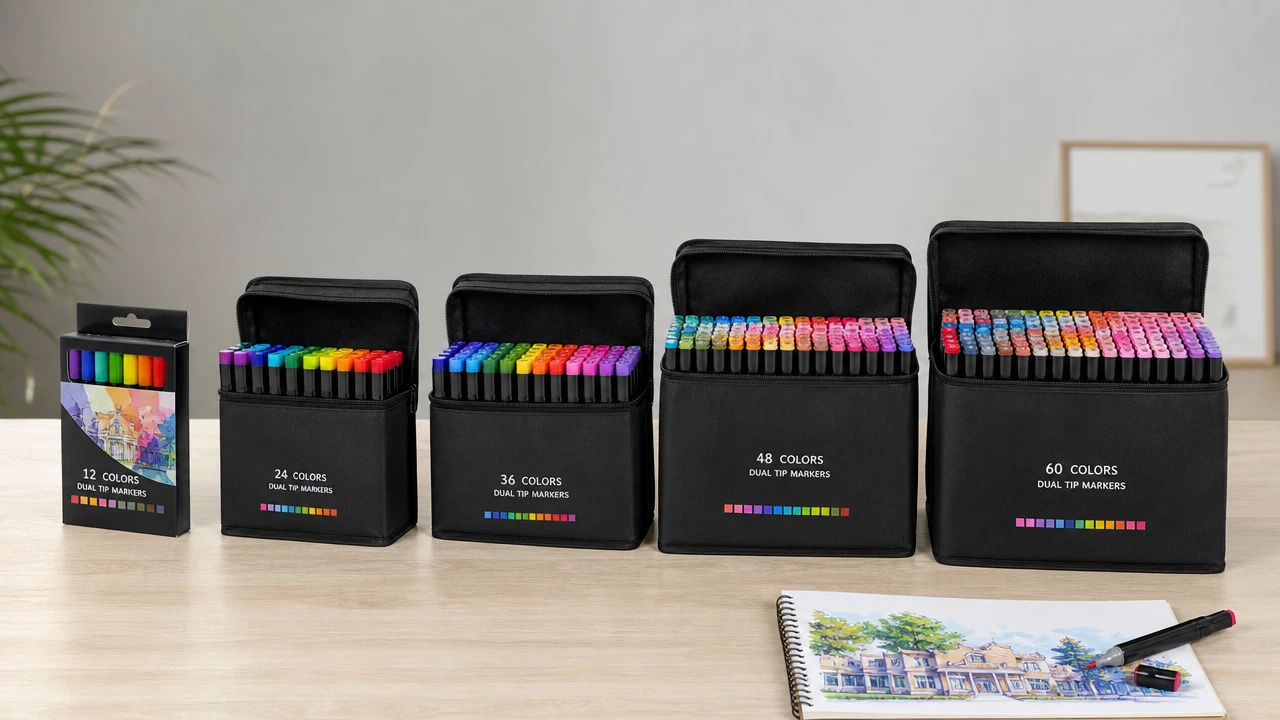
Choosing between 12 vs 24 vs 36 vs 48 vs 60 color marker sets is a sourcing call, not only a color-count call. The wrong size can make a product look cheap. It can push retail price too high. It can leave the buyer with slow-moving stock.
For most buyers, the best size depends on the channel, target user, pack format, and first-order risk. A 12 color set can be a clean entry SKU. A 60 color set can work as a premium gift or serious art set. The middle sizes often decide whether the line makes money.
ZH Stationery works with marker and writing buyers who need OEM/ODM help, private-label packing, and set plans across channels. Before comparing colors, review the product categories, acrylic markers, and the custom acrylic marker guide for making context.
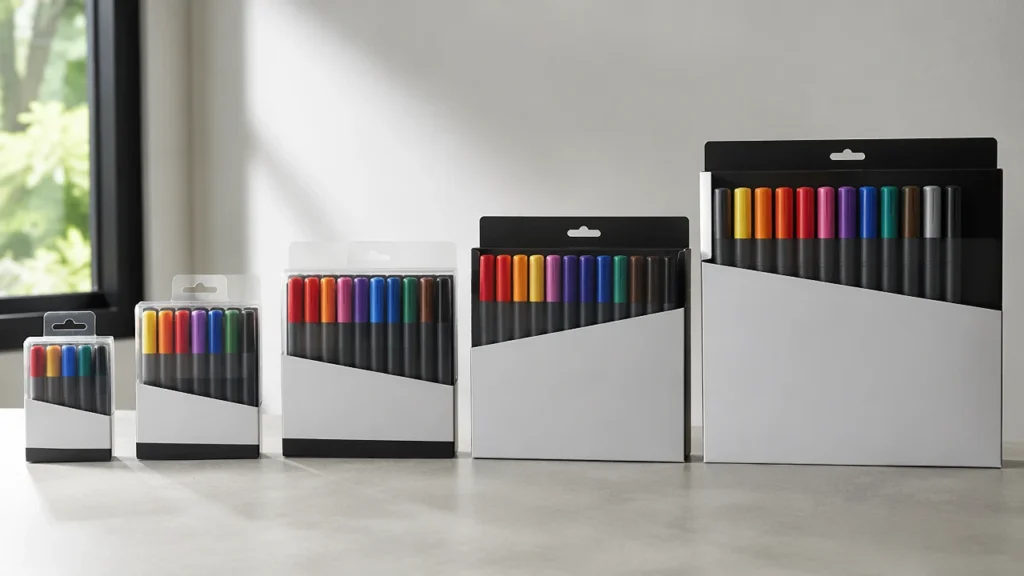
Quick Answer
If buyers need one starter SKU, pick a 24 color set for school, gift, and general retail. Pick 36 when the product must feel more full without getting bulky. Pick 48 or 60 when the target is an artist, hobby user, Amazon shopper, or gift buyer who compares value by color count. Use 12 for budget, classroom, trial, and promo programs.
The safest range plan is usually 24 colors as the core, 48 as the upgrade, and 12 as the entry only when the channel is price-tight. A full 12/24/36/48/60 range is better for established brands with sales data, not a first test order.
Quick Links
- Comparison Table
- Match Set Size To Channel
- When To Source 12 Colors
- When To Source 24 Colors
- When To Source 36 Colors
- When To Source 48 Colors
- When To Source 60 Colors
- Packaging And Compliance
- Build The First RFQ
- FAQs
Comparison Table
Use this table as a sourcing start. The numbers are not fixed factory promises. They show how buyers usually place each count before final art, pack, carton, and test needs are set.
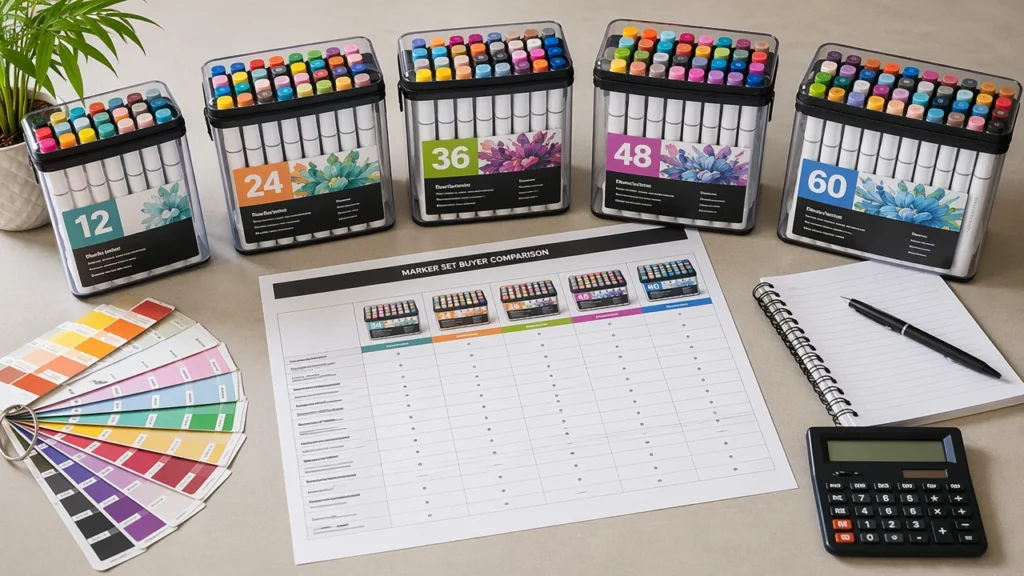
| Set Size | Best Fit | Buyer Risk | Packaging Notes | Sourcing Advice |
|---|---|---|---|---|
| 12 colors | School, budget, promo, trial kits | Low price pressure but limited perceived value | Small box, pouch, or blister card | Use when the channel needs volume and a low shelf price. |
| 24 colors | General retail, back-to-school, entry art | Usually the safest first SKU | Color box, PP case, or compact case | Good first private label size for many buyers. |
| 36 colors | Mid-range retail and hobby users | Higher cost but better color story | Stronger case or two-layer tray | Use when 24 colors feels too basic for the market. |
| 48 colors | Premium retail, Amazon, hobby art | More inventory and carton volume | Rigid case, zipper pouch, or giftable box | Good upgrade SKU when buyers compare value online. |
| 60 colors | Gift, serious hobby, marketplace bundles | Highest landed-cost risk | Large case, organizer, or gift box | Use after demand is proven or when color count drives conversion. |
Match Set Size To Channel
Color count should follow the channel. A distributor selling to schools cares about price, reorder ease, and carton speed. An Amazon seller cares about thumbnail value, review hopes, barcode accuracy, and pack that survives fulfillment. A gift buyer may take a larger set when the box looks premium.
For e-commerce, check pack and barcode calls early. GS1 explains that GTINs name trade items used in listings and retail systems. Each retail SKU needs clean product ID. If the same brand sells 24, 36, and 48 sets, each set normally needs its own SKU and barcode flow.
| Channel | Recommended First Size | Reason |
|---|---|---|
| School and classroom | 12 or 24 colors | Easy price point, simple color range, easier carton planning. |
| Supermarket or mass retail | 24 or 36 colors | Enough shelf value without making the pack too large. |
| Amazon or online marketplace | 36, 48, or 60 colors | Color count and presentation affect click value and reviews. |
| Gift and seasonal programs | 48 or 60 colors | Larger sets feel more giftable when packaging is strong. |
| Private label test order | 24 or 36 colors | Balanced MOQ, tooling, artwork, and cash risk. |
When To Source 12 Colors
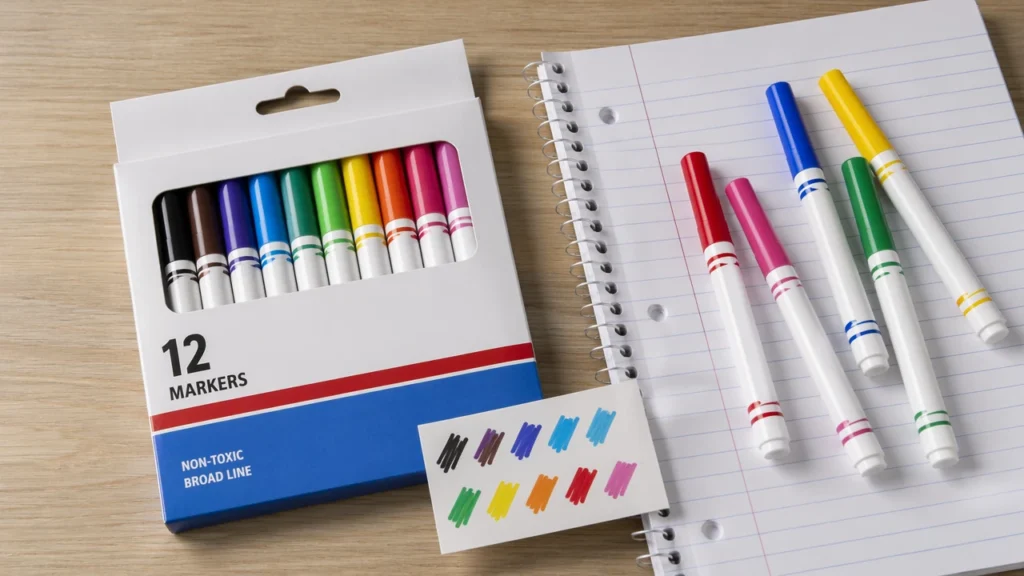
A 12 color set works when the buyer needs an entry product. It is common for classroom, low-price retail, promo packs, sample kits, and starter ranges. It is easy to explain, easy to pack, and easier to move in higher counts.
The weak point is clear. 12 colors can look too basic in art channels. If the market compares by color count, a 12 set may lose before the buyer reads the details. It needs a clear role. School use. Travel size. First art kit. Bundle add-on.
Best Use Cases For 12 Colors
- Back-to-school packs for younger users.
- Trial sets before a larger private label program.
- Budget retail shelves where price matters more than range.
- Promotional bundles with notebooks, coloring books, or pencil cases.
- Sampling programs for distributors who want to test ink and nib quality.
When To Source 24 Colors
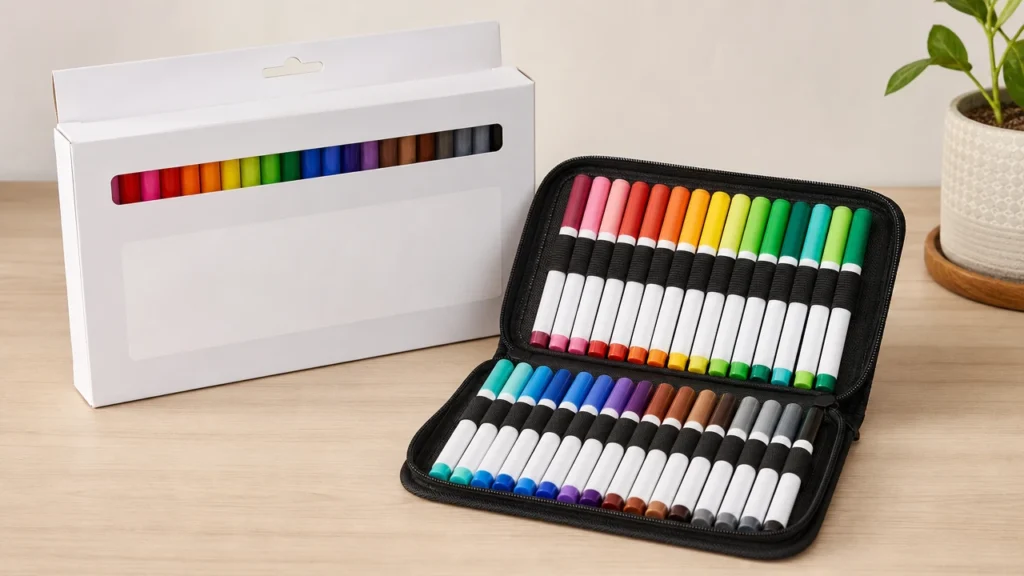
A 24 color set is often the most practical first SKU. It gives enough range for daily drawing, school projects, journals, crafts, and beginner art. It keeps pack and freight light. For many importers, it is the size that holds retail price and MOQ in check.
Without sales history, 24 is usually easier to defend than 48 or 60. It also leaves room for an upgrade later. For a private-label launch, it tests the palette, ink feel, pack art, and reorder cycle without tying too much cash into one large SKU.
Best Use Cases For 24 Colors
- First private label order for a general stationery brand.
- School and retail programs with moderate shelf space.
- Starter art kits sold with sketchbooks or craft accessories.
- Distributor catalogs where buyers want a safe, familiar set size.
- Seasonal programs where price and carton efficiency matter.
When To Source 36 Colors
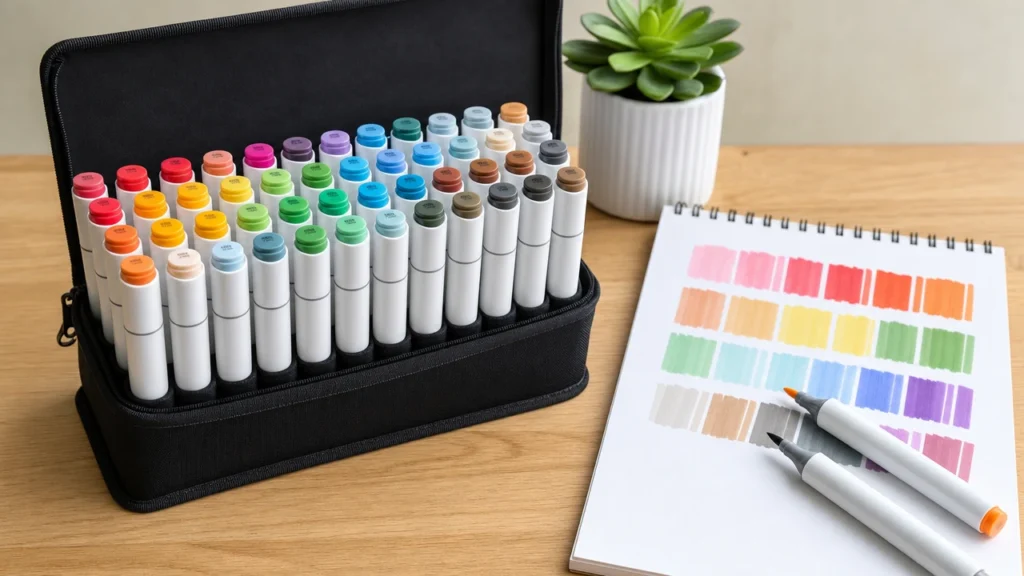
A 36 color set sits in a useful middle lane. It feels more full than 24. It does not make the same pack and freight pressure as 48 or 60. That fits mid-range retail, hobby users, and brands that want a stronger value story without overbuilding the first order.
The main test is position. Some buyers get 24 and 48 faster than 36. If the set uses 36, the pack should explain the logic. Portrait tones. Grayscale. Blend colors. School colors. A balanced palette for journaling and craft.
When To Source 48 Colors
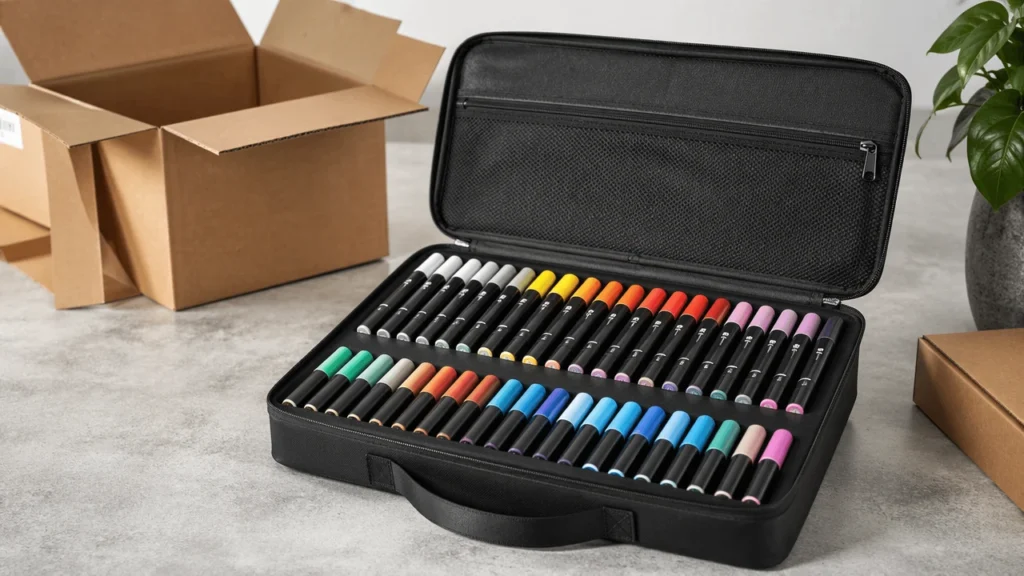
A 48 color set is a strong upgrade SKU. It gives enough variety for listings, hobby art, illustration, and gifts. Against 60, it can keep the pack more manageable when the body, tray, and outer box are built with care.
Check carton size, gross weight, and CBM before passing a 48 order. A set that looks good by unit price can fade once freight and warehouse work join in. The carton, gross weight, and CBM guide gives a separate method to compare the shipping side.
When To Source 60 Colors
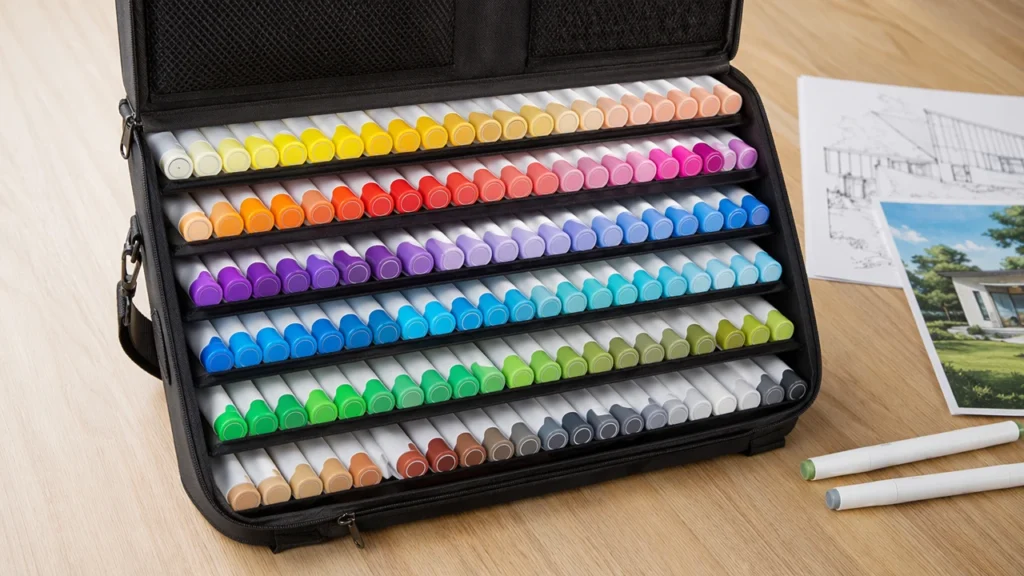
A 60 color set is best when color count is part of the sell. It can work for gift boxes, Amazon bundles, premium retail, art hobby, and brands that need a large visual spread in photos. It looks strong when the case opens clean and colors sit in a clear order.
The risk is overbuying. A 60 set raises the value of each carton. It uses more warehouse space. It makes more colors to control in production. Confirm color names, color order, replacement policy, carton strength, and drop performance before a large order.
Packaging And Compliance
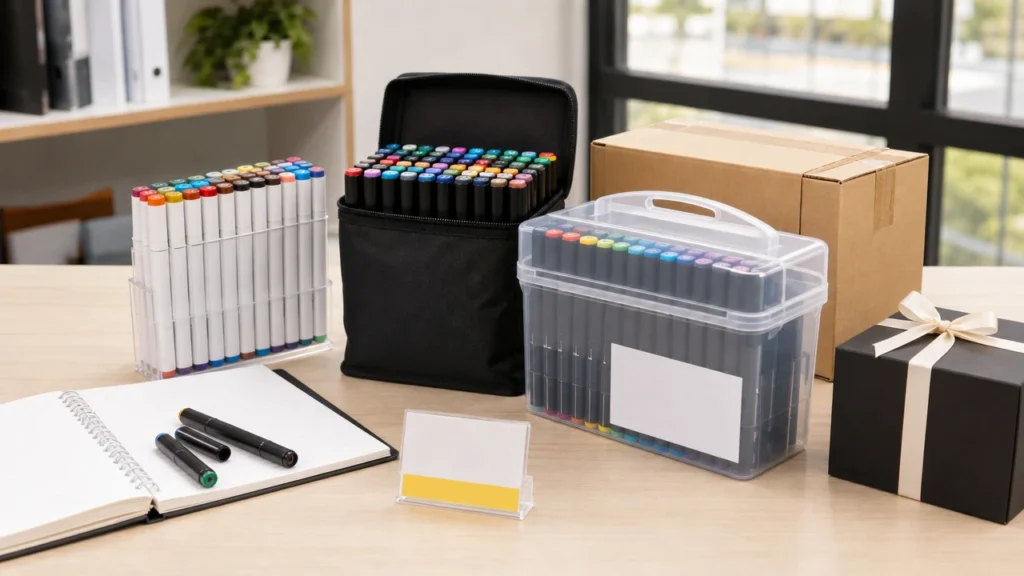
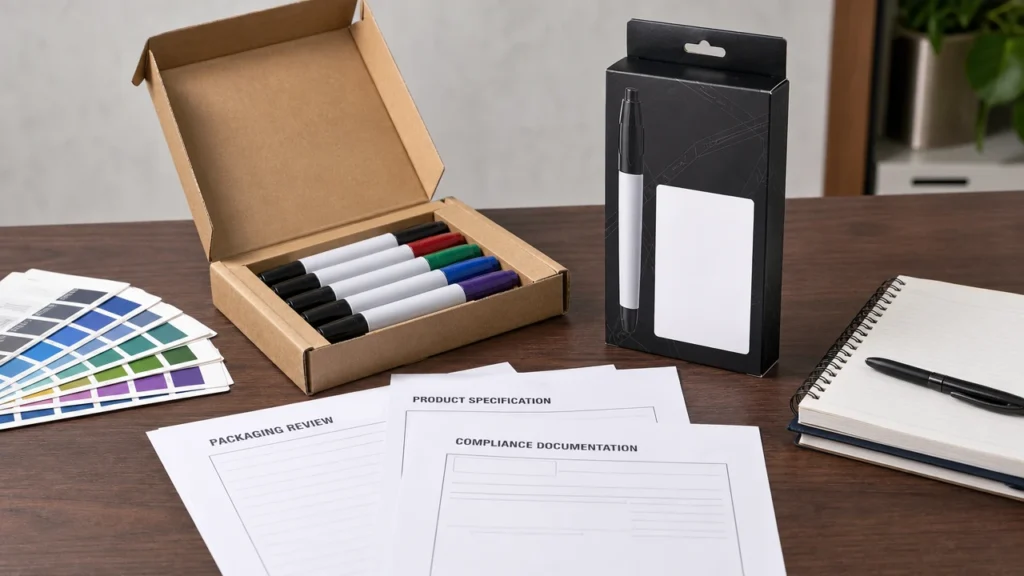
The same count can feel cheap or premium by pack. A 24 set in a thin paper box may fight on price. A 24 set in a reusable PP case can sell as a better school or travel kit. A 48 or 60 set often needs a stronger case, tray, or gift box. Users expect order, not only more colors.
For US art materials, review label duties early. CPSC art materials guidance says art materials under ASTM D-4236 need a conformance line where practical. Hazardous art materials need the right marks. This is not a place for generic files. Ask whether the report and label cover the exact marker type, ink system, and final SKU.
Packing also hits landed cost. A zipper case, tin box, rigid gift box, or molded tray can lift seen value. Each one changes carton size. ZH Stationery has a separate acrylic marker packaging guide. Use that logic for wider color set plans.
Build The First RFQ
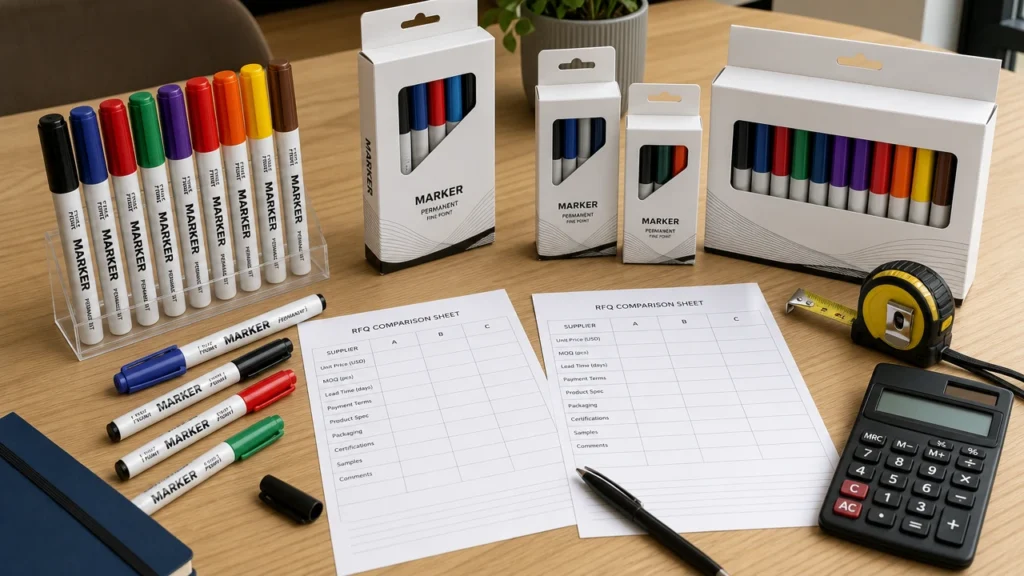
The RFQ should force suppliers to compare the same thing. If one quote is 24 colors in a paper box and another is 24 colors in a plastic case, the price gap tells you little. Ask for the same body, same nib, same ink type, same pack build, and same shipping base.
RFQ Fields Buyers Should Include
- Target set size: 12, 24, 36, 48, 60, or a custom color count.
- Marker type: acrylic marker, alcohol marker, watercolor marker, brush marker, or other type.
- Nib structure: single tip, dual tip, brush tip, chisel tip, bullet tip, or valve system.
- Color list: standard factory palette or buyer-supplied color order.
- Retail packaging: paper box, PP case, zipper pouch, tin box, display box, or gift box.
- Compliance needs: target market, age grading, warning label, and test report requirement.
- Logistics fields: sets per carton, carton size, gross weight, net weight, and CBM.
- Barcode and SKU setup: confirm whether each set size needs its own barcode and artwork file.
Recommended Sourcing Paths
A buyer does not need every count on day one. A small clean range is easier to run than five half-tested SKUs. For a new brand, start with one core and one clear upgrade. For an existing distributor, add sizes from channel feedback and reorder data.
| Buyer Situation | Recommended Path | Why It Works |
|---|---|---|
| New private label brand | 24 colors first, then 48 colors | Tests the core product before adding a premium set. |
| School distributor | 12 and 24 colors | Matches classroom budgets and repeat orders. |
| Amazon seller | 36 and 60 colors | Creates a mid-range SKU and a strong listing visual. |
| Gift program buyer | 48 or 60 colors | Supports giftable packaging and higher perceived value. |
| Retail chain test | 24 and 36 colors | Controls shelf space while offering a visible upgrade. |
If the goal is a full family, build it in phases. Start with 24. Pass ink and pack. Expand to 36 or 48. Add 12 for price-tight channels. Add 60 only when the big set has a clear retail role. ZH Stationery can support custom quote talks when the set build, color count, and pack path are ready. Use the contact page.
FAQs
Which color marker set size is best for a new private label brand?
A 24 or 36 set is usually the safer first private-label pick. A 24 keeps price and MOQ easy to test. A 36 gives better shelf value when the buyer wants a more serious art product without the freight and stock pressure of a 60.
Should buyers source all five sizes at the same time?
Not for the first order unless demand is proven. Most buyers should start with one main SKU and one upsell. Add sizes after sales data confirms the palette, pack format, and price.
Is a 60 color marker set always better than a 48 color set?
No. A 60 looks stronger in a listing. It also raises carton volume, pack cost, and stock value. A 48 can be easier to sell when the market wants a premium set and the buyer still needs a controlled landed cost.
What is the best marker set size for school and classroom channels?
A 12 or 24 is usually more practical for school and classroom. The set is easier for parents, schools, and distributors to buy in volume. The pack stays compact for shelves and cartons.
How should buyers compare quotes for different marker set sizes?
Compare price per set, price per marker, carton size, gross weight, CBM, pack type, barcode setup, report cover, and replacement rate. A cheap 60 quote can get costly if the carton is bulky or the pack fails in transit.
Can one test report cover 12, 24, 36, 48, and 60 color marker sets?
It depends on the ink system, formula, barrel part, cap part, age grade, and market need. Ask the supplier and lab whether the report covers the exact SKU family and every color or part in the final order.
Related guide: For the next packing and logistics step, see How to Source Private Label Acrylic Markers from China.
Related Reading
The minimum order for custom OEM/ODM programs is 50,000 pens per order, counted by total individual pens produced. For a 12-color pack, that equals roughly 4,200 sets, not 50,000 of each color. Standard stock models can be sampled at smaller trial sizes.