
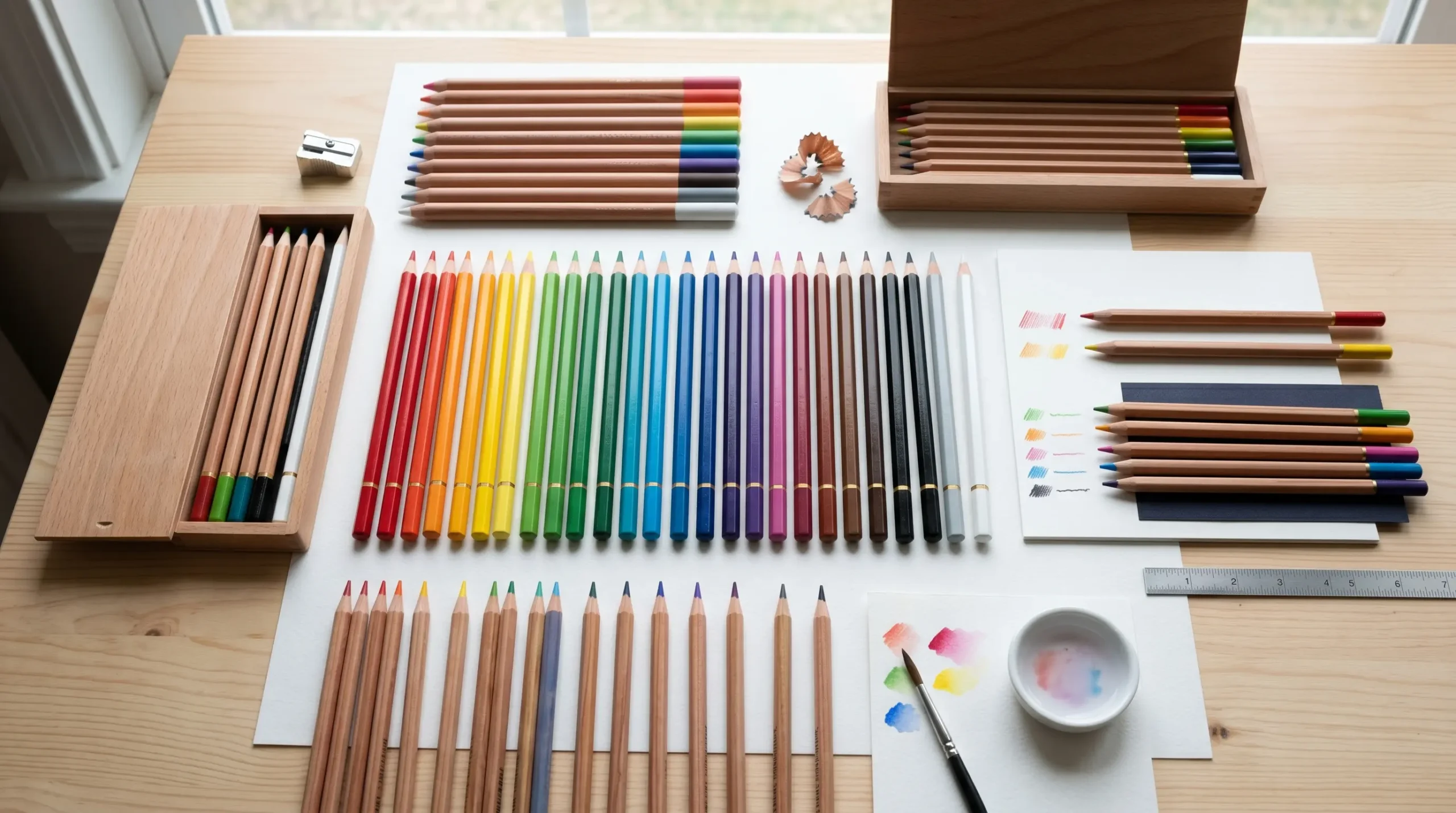
Colored pencils serve classroom drawing, adult coloring, and illustration. Different users need different lead hardness, blend performance, and paper fit. For wholesale picks, compare these traits on samples. Do not treat an unsupported volume claim as proof of demand.
Here is a simple guide to help you understand the types of colored pencils and how to pick the right ones for your customers.
1. The 4 Main Types of Colored Pencils
We split the colored pencil market into four main groups. Here is a quick look at what they are and what they do:
| Category | Specific Type | Drawing Effect & Features |
| Standard Color | Classic Oil-Based | Bright colors, medium-hard core. Great for drawing details and large areas. Not easy to erase. |
| Erasable | Works like a classic pencil but can be erased! Perfect for kids, planners, and quick fixes without ruining the paper. | |
| Professional (Hard) | Best for fine details. Excellent lightfastness (the color will not fade over time). Great for layering colors. | |
| Professional (Soft) | Softer core for easy coloring. Blends beautifully. High lightfastness for high-quality professional artwork. | |
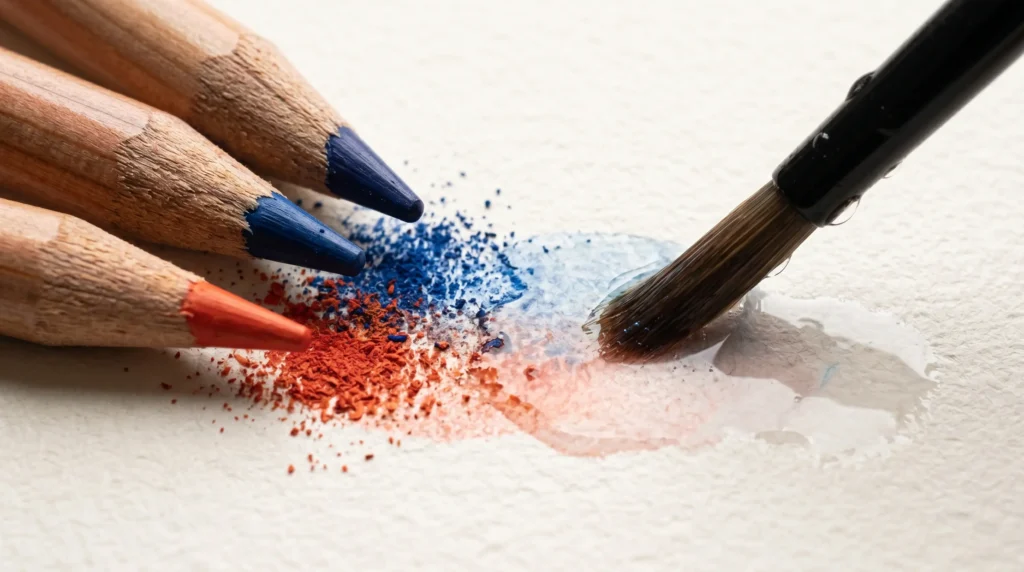
| Watercolor | Water-Soluble | Colors look normal dry, but turn into transparent watercolor paint when you brush them with water! |
| Pastel / Charcoal | Pastel Pencils | Feels like chalk but is much easier to control. Blends easily, has a vintage look, but the core is a bit fragile. |
| Special Use | Glass & Ceramic | Hard core, used for making strong marks on glass or smooth pottery surfaces. |
| Underglaze | Heat-resistant! Used for drawing on raw pottery before it goes into the high-heat kiln. | |
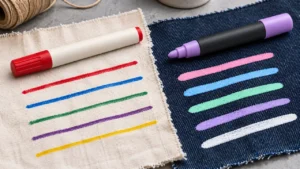
| Fabric / Tailor | Used for marking clothes and fabric in sewing. The color safely washes out with water. |
2. How to Choose the Right Colored Pencils
Different users need different pencils. Here is what to look for based on who is using them:
- For Students & Beginners (Soft Pencils)
- Feel: Soft and smooth.
- Color: Bright, clear, and very easy to apply to the paper.
- Performance: Colors go on evenly with very few white gaps. You can layer colors up to 10 times without making a mess!
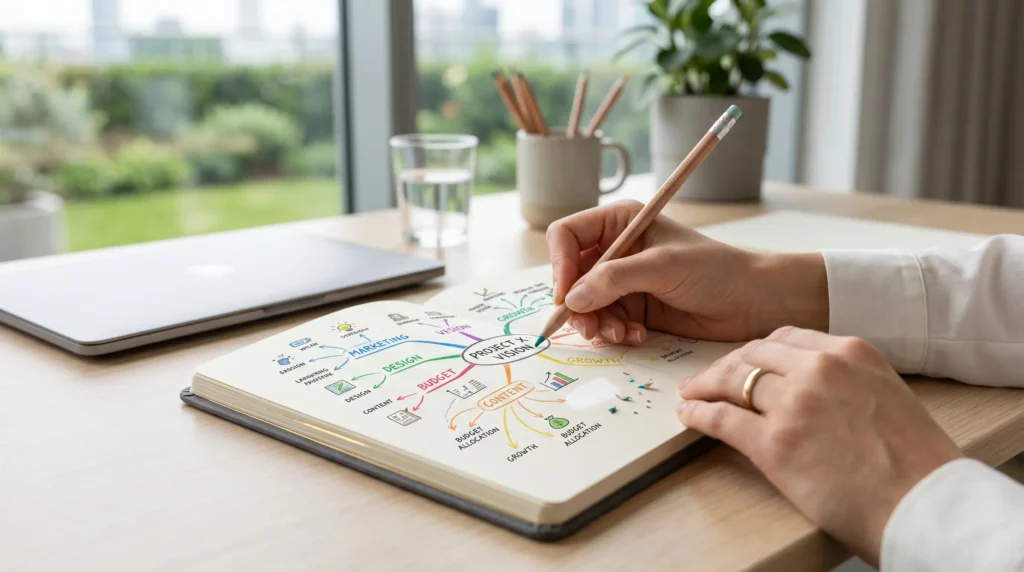
- For Office Workers & Planners (Erasable Pencils)
- Feel: Similar to regular colored pencils.
- Use Case: Perfect for mind maps, designing, taking notes, or doing bullet journals. If you make a mistake, just erase it quickly!
- For Professional Artists (Soft Pencils)
- Feel: Extremely smooth and delicate.
- Performance: The pencil dust does not stick to the paper and make it dirty. It blends easily, covers dark colors well, and will not fade in the sunlight over time.
- For Professional Artists (Hard Pencils)
- Feel: Crisp and clean.
- Performance: Perfect for drawing very tiny, sharp details (like hair or animal fur). It layers well so artists can build deep, rich colors.
Partner with ZH STATIONERY
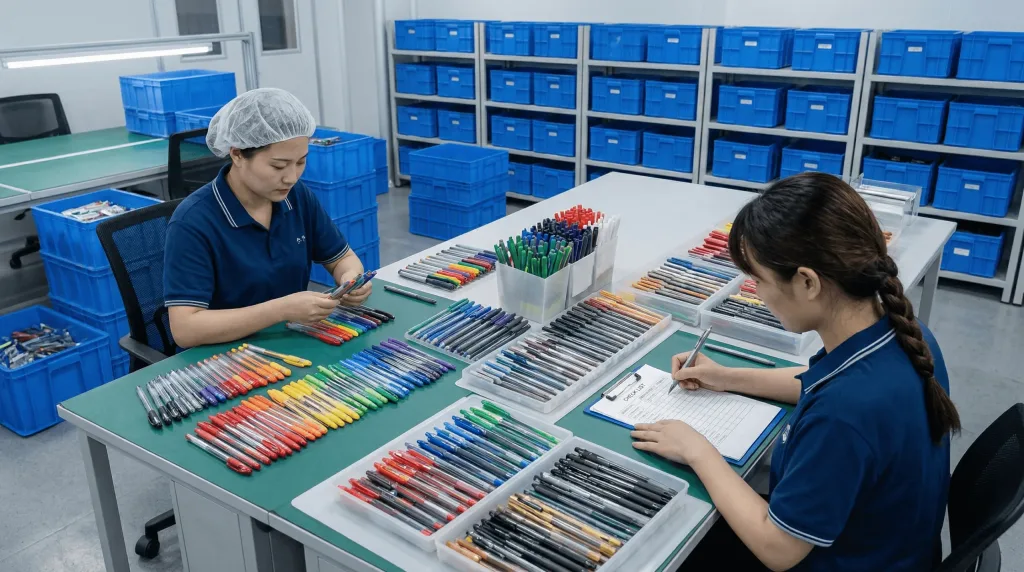
Whether you source premium markers, smooth gel pens, or track colored pencil trends, ZH STATIONERY is your direct-from-factory partner. We make high-quality writing goods with strong wholesale support. See the product range, the gel ink pen line, or contact us to upgrade your catalog and get factory prices.
Frequently Asked Questions (FAQ) About Colored Pencils
Q: What is the difference between soft and hard colored pencils? A: Soft pencils have a smoother core. They are great for blending and bright, solid color. Hard pencils keep a sharp point longer. They are the best pick for tiny details like hair, fur, or sharp lines.
Q: Can I use watercolor pencils without water? A: Yes. You can use them dry, like classic colored pencils. Their real magic shows when you brush a little water over the drawing. The color melts into soft, clear watercolor paint.
Q: Do you offer custom colored pencils for wholesale orders? A: Yes. As a direct manufacturer, ZH STATIONERY gives full OEM service. We can change pencil colors, print your brand logo on the barrel, and design custom packing for bulk orders.
Q: What is the MOQ for factory-direct orders? A: MOQ depends on the SKU, color count, and packing. For custom OEM/ODM programs, the minimum order is 50,000 pens per order, counted by total individual pens produced. Whether you source colored pencils, premium markers, or gel pens, contact our sales team for a fast, accurate quote for your needs.
Related guide: For additional market context, see Classic Blackboard Material.
Related Reading
- How Are Color Pencils Made? The Secret Behind the Lead
- Colored Pencil Quality Standards and Future Trends: What You Need to Know
- The Ultimate Guide to Kids Art Materials: Enhancing Artistic Perception Through Interactive Play
- 15 Summer Coloring Ideas Using Gel Pens
- art therapy and stress relief guide
- children's marker OEM safety guide
The minimum order for custom OEM/ODM programs is 50,000 pens per order, counted by total individual pens produced. For a 12-color pack, that equals roughly 4,200 sets, not 50,000 of each color. Standard stock models can be sampled at smaller trial sizes.
Wax-Based and Oil-Based: The Two Manufacturing Families
Almost every colored pencil on the market falls into one of two families, and the difference is not marketing language — it is a different binder chemistry with different behavior on paper.
Wax-based. Paraffin or microcrystalline wax carries the pigment. The pencil lays down color easily, blends well, and is forgiving for beginners. The tradeoff is bloom: wax rises to the surface over time and creates a whitish haze that can only be removed by buffing or a fixative. Wax cores are also softer and more prone to breaking in transit.
Oil-based. A drying oil replaces most of the wax. The core is harder, holds a point longer, and produces more saturated color with less pressure. Oil pencils do not bloom, and they layer more predictably because each layer sets rather than staying soft. The tradeoff is cost and a slightly drier feel that some artists find less pleasant.
For buyers, the practical question is which failure mode matters more. A wax pencil that blooms on a retail shelf after six months is a returns problem. An oil pencil that costs 40 percent more at the factory is a margin problem. Neither is wrong; they serve different channels.
Water-Soluble Pencils and the Brush Question
Water-soluble pencils use a binder that redissolves when wet. Draw dry, then apply a damp brush, and the line spreads into a wash. It is a hybrid tool that sits between a pencil and a watercolor pan.
The behavior depends heavily on the binder ratio. A pencil with high water solubility produces dramatic washes but lays down weakly when dry. A pencil with low solubility draws like a normal pencil and only washes faintly. Most retail sets sit in the middle, which means they do neither extreme particularly well.
For buyers, water-soluble sets are a distinct SKU rather than a variation of a standard set. The packaging has to explain the technique, and the included brush or the absence of one changes the perceived value. A set sold without a brush and without clear instructions generates support questions.
Hardness Grades and What They Actually Mean
Colored pencil grading is not standardized the way graphite grading is. A “2B” on one brand does not mean the same thing as a “2B” on another, and there is no equivalent of the pencil-grade ladder that governs graphite.
What manufacturers actually control is pigment load and binder hardness. A higher pigment load gives more saturated color but softens the core. A harder binder holds a point but lays down less color per stroke. The grade label is a shorthand for where a given product sits on that tradeoff, not a universal scale.
The practical consequence for buyers is that grades are not comparable across suppliers. When evaluating two factories, compare actual samples on the same paper at the same pressure. A grade label comparison tells you nothing.
Matching Type to Use Case
Four common programs and the type that fits each.
School sets. Wax-based, 12 to 24 colors, hard enough to survive a backpack. Break resistance matters more than lightfastness. Cost per unit drives the decision.
Adult coloring books. Wax-based or a wax-oil blend, 36 to 72 colors, soft enough for blending and burnishing. The buyer cares about color range and smooth laydown; shelf life bloom matters because these sets sit on retail shelves for months.
Artist and illustration sets. Oil-based, 48 to 120 colors, high lightfastness ratings on most colors. The buyer will check the Blue Wool rating by color and will notice if eight colors in a 72-color set rate poorly.
Watercolor hybrid sets. Water-soluble, usually 24 to 48 colors, packaged with a brush and technique instructions. A distinct SKU with its own positioning.
Frequently Asked Questions
Is oil-based always better than wax-based? No. Oil-based holds a point and avoids bloom, but it costs more and feels drier. Wax-based is more forgiving and blends more easily for beginners.
What causes the white haze on old colored pencils? Wax bloom. It is a surface phenomenon, not mold, and it can be buffed off or prevented with a fixative.
Are hardness grades comparable between brands? No. There is no standardized colored pencil grading scale. Compare samples, not labels.
What is the MOQ for a custom colored pencil set? Stock bodies with custom packaging typically start at 3,000 to 5,000 sets. Custom barrel profiles or new tin formats raise the floor because of tooling and print setup.

The core inside a pencil comes from a specialist supplier in most cases.