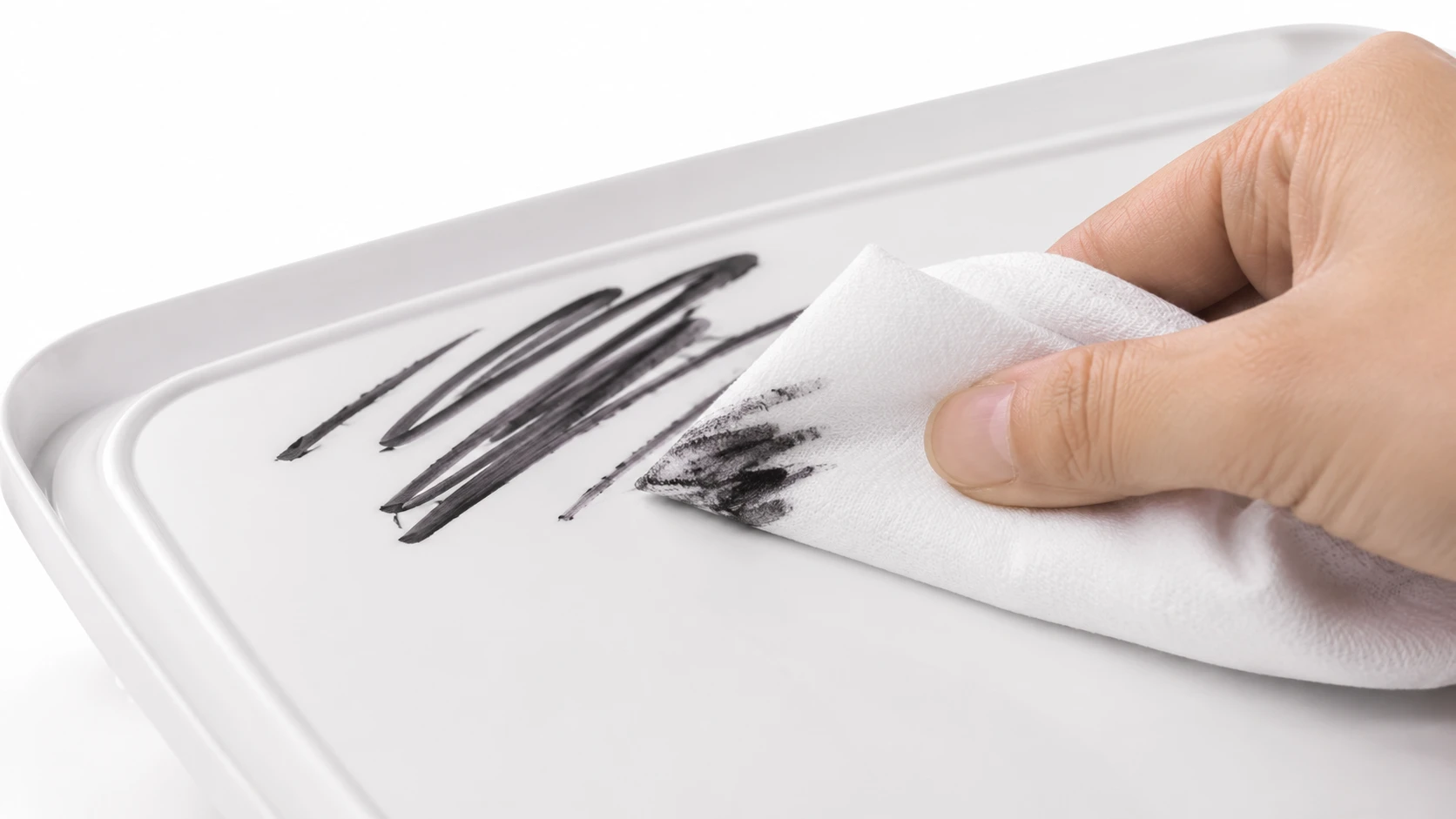
Someone writes on a plastic storage bin with a permanent marker. Then they change their mind. Water does nothing. Soap does nothing. Glass cleaner leaves a faint smear at best. The marker is doing exactly what it was built to do. The user is not impressed.
For B2B buyers sourcing permanent markers, that moment matters. Every end user who cannot remove permanent marker from plastic blames the brand, not the chemistry. They remember which marker failed them.
The removal problem is not random. It measures how well the ink formula does its job. Know what makes permanent marker bond to plastic. Know what solvent chemistry breaks that bond. Then you have a real method to judge ink quality before placing orders.
Índice
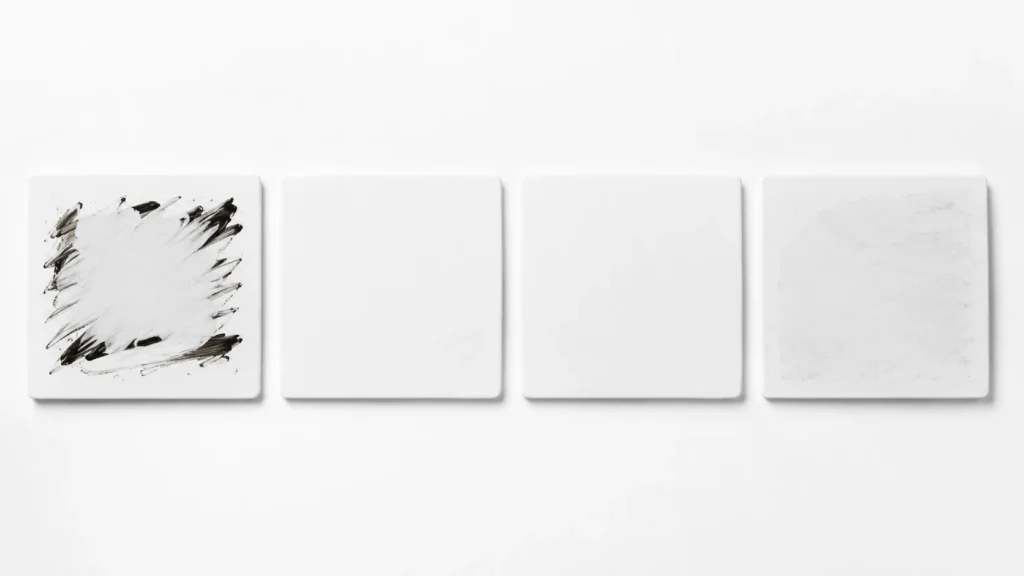
Resposta Rápida: Como Remover Marcador Permanente de Plástico
Cada método abaixo ataca uma parte diferente da tinta. O que funciona revela qual sistema de solvente o marcador utiliza:
- Álcool isopropílico (isopropanol, 70 a 90 por cento) lida com a maioria dos marcadores permanentes. Redissolve a resina acrílica antes de ela curar completamente. Tente este primeiro. Coloque em um pano, esfregue suavemente. A tinta sai.
- Acetona (removedor de esmalte) é mais forte. Dissolve acrílico mesmo após a cura. Mas a acetona também dissolve alguns plásticos. ABS, poliestireno, superfícies pintadas ficam turvas ou amolecem ao contato. Teste em um local oculto.
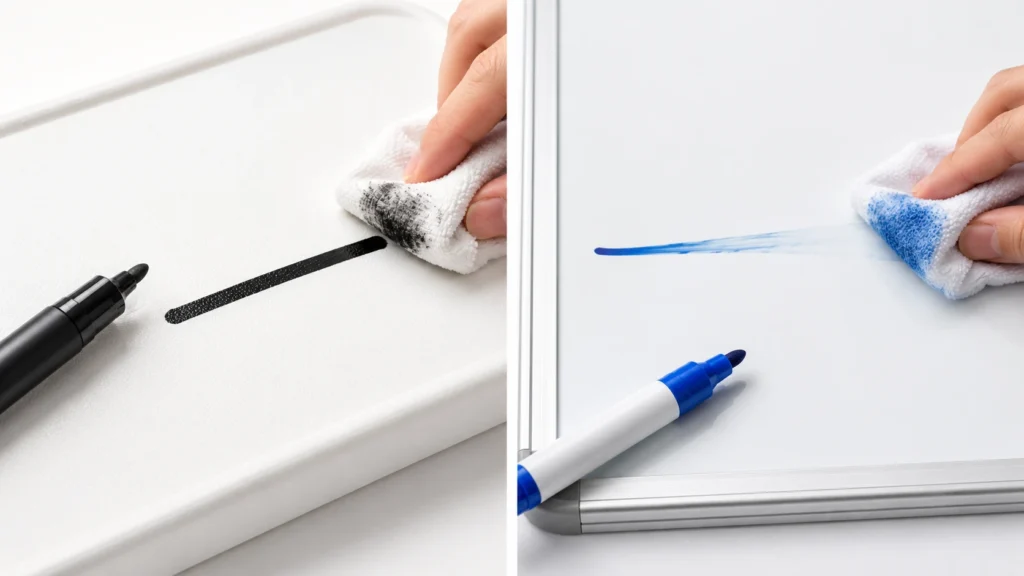
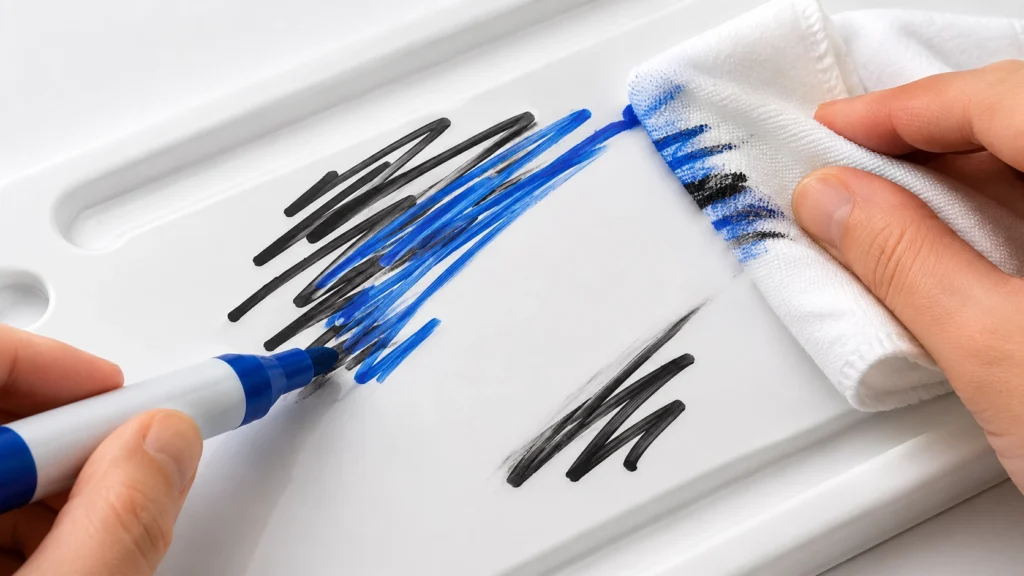
- Truque do marcador para quadro branco. Rabisque a tinta do marcador para quadro branco sobre a marca permanente e limpe. O solvente na tinta do marcador para quadro branco reliquefaz a resina permanente. Ambos os tipos de marcador compartilham um veículo alcoólico. Método mais suave para plásticos delicados.
- Pasta de bicarbonato de sódio. Misture bicarbonato de sódio com algumas gotas de água até formar uma pasta espessa, esfregue suavemente com um pano, enxágue. Abrasão leve levanta fisicamente o filme de tinta. Funciona em plásticos texturizados onde apenas solventes não conseguem alcançar o pigmento nos sulcos.
- Limpadores comerciais (Goo Gone, Magic Eraser). Solventes mais microabrasão. Eficaz em manchas curadas e envelhecidas. Teste primeiro em plástico oculto. Alguns contêm destilados de petróleo que atacam certos polímeros.
Para proprietários de marcas e equipes de compras, esses fatores ajudam a definir critérios mais rigorosos de sourcing e controle de qualidade.
O que a Dificuldade de Remoção Revela sobre a Qualidade da Tinta de Marcador Permanente
Every removal method either gets the ink off or does not. The reason tells you something exact about the formula. For B2B buyers, the removal profile says more about ingredient quality than a spec sheet ever will:
| Método de Remoção | Como Funciona | O Que Revela Sobre a Tinta | Sinal de Qualidade B2B |
| Álcool isopropílico | Redissolve resina acrílica antes da cura completa | A tinta usa acrílico solúvel em álcool; o pigmento está suspenso, não ligado | Formulação padrão à base de álcool. Verifique o tempo de cura da resina e a pureza do solvente |
| Acetona | Dissolve acrílico curado; ação solvente mais forte | A resina é acrílica e responde a solventes cetônicos | Sistema acrílico robusto. Bom para permanência industrial. Resistência à acetona indica resina de maior qualidade |
| Sobrescrita com marcador para quadro branco | O solvente alcoólico na tinta do marcador para quadro branco reliquefaz a resina permanente | Ambos os marcadores compartilham um veículo alcoólico; as resinas são compatíveis | Química solvente padrão da indústria. Se isso falhar, o marcador pode usar xileno ou tolueno, o que sinaliza um nível de qualidade diferente |
| Bicarbonato de sódio (abrasão) | Levanta fisicamente o filme de tinta seco da superfície | O filme de tinta tem adesão mecânica; pigmento preso em resina curada | Filme durável, bom para permanência. Se o bicarbonato sozinho o remover facilmente, o filme pode ser fraco demais para uso permanente real |
| Nada funciona | Resina totalmente reticulada e quimicamente ligada ao plástico | Resina de alto desempenho com forte adesão ao substrato | Verdadeiramente permanente. Para rotulagem industrial, é isso que se deseja. Para produtos de consumo, esse nível pode gerar reclamações |
Permanent markers are supposed to be permanent. The real question is whether they come off under the conditions your end users face. A marker that shrugs off alcohol but gives in to acetone is well built for office and school use. A marker that resists everything, acetone included, is built for industrial labels where permanence is the only goal. Different markets. Different formulas.
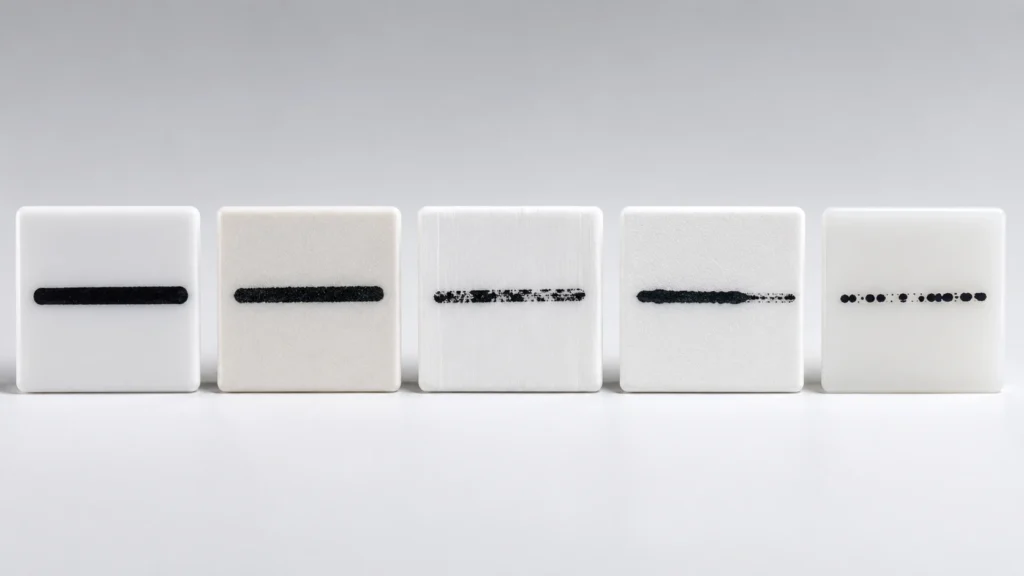
Por que a caneta permanente adere ao plástico
Plastic is not one material. It is a family of polymers. Each has its own surface chemistry. Which plastic your marker hits explains why some removal methods work on one surface and fail on another.
Polyethylene and polypropylene are the hardest to bond to. Low surface energy. Liquids bead up instead of spreading. Permanent ink grips these faces by shape. The resin film wraps micro texture and sets in place. Rubbing alcohol usually works because it re-dissolves the resin and breaks that mechanical grip. No chemical bond to break.
Polystyrene and ABS are easier to bond to and easier to damage. The acrylic resin in permanent ink can partly dissolve the surface of these plastics. That makes a mixed polymer layer at the join. Acetone works well here. It also damages here. Same solvent, two effects.
Policarbonato (PC) e acrílico (PMMA) and acrylic sit in the middle. They resist most solvents better than polystyrene. They bond more easy than polyethylene. Alcohol usually gets the job done. Avoid acetone. It crazes or clouds polycarbonate almost at once.
Polyvinyl chloride shows in plumbing, vinyl, and some packing. Moderate chemical resistance. Alcohol is safe. Acetone softens PVC with enough contact time.
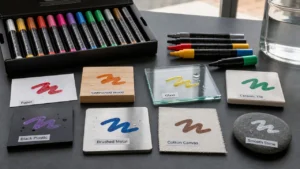
The same marker acts different across these faces. A marker that writes well on a polypropylene shipping label can smear on a polystyrene pen barrel. If your buyers use markers on varied plastics, ask the supplier for grip data across several bases. A factory that tests one surface is not giving data you can trust.
Permanente vs. Apagável a Seco: Uma Diferença de Polímero
Permanent and dry erase markers are nearly the same under the hood. Both use a polyester core, a felt or fiber tip, and an alcohol solvent carrier. According to the De acordo com a Royal Society of Chemistry, a principal diferença entre marcadores de quadro branco e permanentes se resume à escolha do polímero: marcadores permanentes usam acrílico, que se fixa permanentemente à superfície quando seco; marcadores de quadro branco usam silicone, que cria um filme não aderente. Mas esse filme de silicone só evita a fixação em superfícies lisas e não porosas. No momento em que a tinta toca o tecido, o solvente carrega o pigmento profundamente na estrutura da fibra, onde o agente de liberação não pode intervir., the whole difference is one part. The polymer.
Marcadores permanentes usam resina acrílica. The alcohol leaves. The acrylic cures into a hard film that bonds to the surface. Same chemistry as acrylic paint. Once cured, it is durable, waterproof, and hard to remove without a matching solvent.
Marcadores para quadro branco trocam o acrílico por polímero de silicone. The silicone makes a film that sits on the surface without attaching. A dry cloth lifts the whole film in one pass. No bond. That same silicone is why dry erase stains clothes. It repels water, so soap never reaches the pigment underneath.
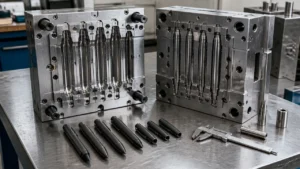
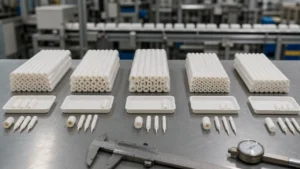
A factory making both types runs two separate polymer systems. Permanent markers need exact acrylic balance between grip and removal. Dry erase markers need exact silicone balance between erase and film strength. A factory with in-house ink R&D holds both at formula level instead of buying pre-mixed ink outside.
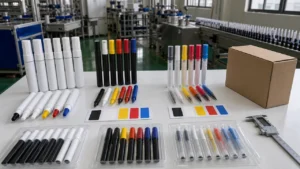
ZH Stationery runs its own ink lab. It has built custom inks for marker pens, permanent markers included, across 26-plus years of OEM/ODM work. See the gama de produtos. For private-label lines, the ability to tune resin chemistry and solvent ratio to end-user needs turns a catalog order into a spec talk.
O que os compradores B2B devem testar antes de encomendar marcadores permanentes
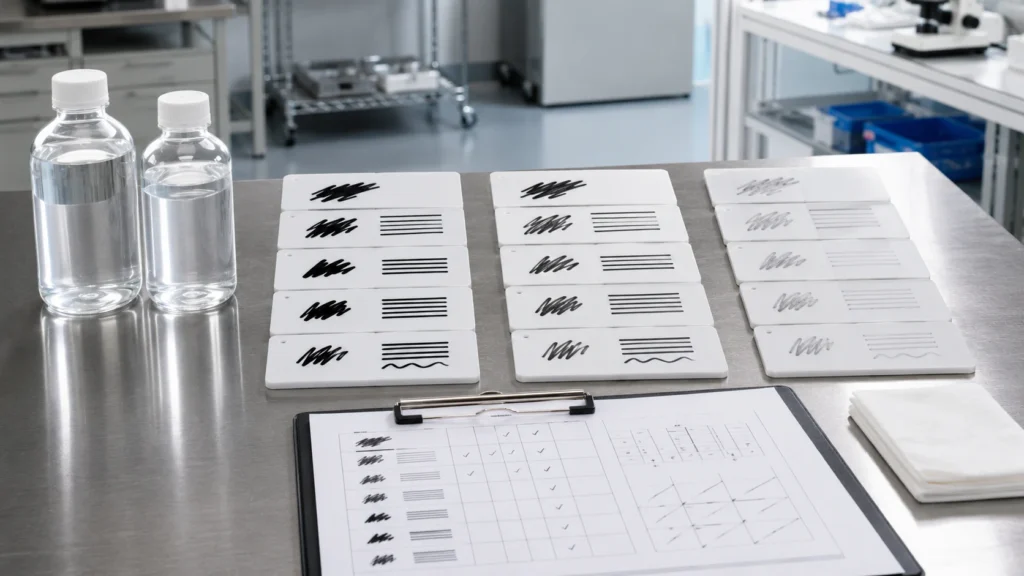
Catalog claims about permanent and waterproof mean nothing alone. Four tests tell you what the ink really does:
- Adesão aos substratos alvo. Escreva nos plásticos reais que seus clientes usam. Recipientes de polipropileno. Tubo de PVC. Carcaças de ABS. Óculos de policarbonato. Deixe a tinta curar por uma hora. Tente removê-la. Documente quais superfícies seguram e quais soltam. Essa é sua linha de base real de desempenho.
- Resistência a solventes. Curar por 24 horas. Testar a remoção com álcool, depois acetona e, em seguida, um limpador comercial. Um bom marcador permanente deve resistir ao álcool em plásticos não porosos, mas ceder à acetona. Se apenas o álcool remover a tinta, a cura da resina está fraca. Se nada a remover, você tem uma formulação de nível industrial. Decida se isso se adequa ao seu mercado.
- Resistência à água após cura completa. Escrever em plástico. Curar por 24 horas. Submergir em água por uma hora. A tinta não deve borrar, levantar ou desbotar. A resistência à água é o requisito básico para qualquer coisa rotulada como permanente. Se a tinta falhar nisso, o sistema de resina está comprometido.
- Resistência a UV e desbotamento. Colocar uma amostra de plástico marcada sob luz solar direta por 72 horas. Comparar com um controle não exposto. Marcadores usados ao ar livre, construção, paisagismo, transporte, precisam de pigmentos estáveis a UV. Se a tinta desbotar em dias, usuários industriais notarão. Pergunte ao fornecedor qual química de pigmento eles usam e se estabilizadores UV estão na mistura.
A factory running 100 percent check on every unit, with batch QC files, can make this data. The question for suppliers is not is your marker permanent. Ask: can you show grip results on polypropylene, ABS, and polycarbonate after 24 hour cure, with solvent resistance data? See the visita à fábrica.
Perguntas Frequentes
Qual é a melhor maneira de remover marcador permanente de plástico?
Rubbing alcohol, 70 to 90 percent, on a cloth. Rub gently. It re-dissolves the acrylic resin before it fully cures. For cured stains, step up to acetone. Test a hidden spot first. Acetone eats some plastics. The dry erase trick is safest for delicate faces. Scribble dry erase ink over the mark and wipe both away. The guia de marcadores B2B adds line context.
Por que o Marcador Permanente Adere Tão Fortemente ao Plástico?
Acrylic resin is the binder. Alcohol leaves. Acrylic cures into a hard film that grips the plastic. On slightly rough faces, the resin flows into micro texture and locks by shape. Alcohol removes it by re-dissolving the acrylic before it hardens. After full cure, you need acetone.
Por que um marcador de quadro branco remove o marcador permanente?
Both marker types use an alcohol solvent carrier. Scribble dry erase over permanent. The alcohol in the dry erase ink re-liquefies the acrylic resin. Then the silicone release agent in the dry erase ink coats the loose pigment and stops it from re-bonding. Wipe once. Everything comes off. The trick works because the two markers share solvent chemistry even with different polymers.
O Marcador Permanente Sai de Todos os Plásticos da Mesma Forma?
No. PE and PP release most easy with alcohol. The bond is by shape, not chemistry. Poliestireno and ABS hold tighter. Acetone works better on them and also attacks them. Polycarbonate is acetone-sensitive and will craze on touch. Always test a hidden spot of the exact plastic you are cleaning.
O Que Torna Um Marcador Permanente Verdadeiramente Permanente?
The resin load, the cure chemistry, and the pigment type. More resin makes a stronger film. Some formulas cross-link for extra life. Carbon black and iron oxide hold under UV far better than organic dyes. A marker that washes off with water has a resin problem. One that fades in sun has a pigment problem. ZH Stationery, through its ink lab, tunes these by need. See the fabricante líder de marcadores personalizados e páginas do processo de marcador de tinta .
Como os compradores B2B devem testar a qualidade dos marcadores permanentes antes da compra?
Test grip on the real plastics your buyers use, not the factory card. Test solvent resistance after 24 hour cure with alcohol and acetone. Test water by soaking a marked sample for one hour. Test UV with 72 hours of direct sun. If the supplier cannot give this data for your SKU, the claims are not verified. ZH Stationery puts batch grip and life files in the QC pack for permanent orders.
Knowing how to remove permanent marker from plastic tells you more about formula quality than any catalog claim. If you source permanent markers for industrial labels, office supply, or private label, contact ZH Stationery to talk ink specs. See the guia de qualidade da tinta, o fabricantes de marcador à base de álcool, or the página de contacto.
Guia relacionado: Remoção de Manchas de Marcador de Quadro Branco.
Guia relacionado: Marcadores de Tinta para Impressões 3D.
Leitura relacionada
- Você pode escrever em CDs com marcador permanente? Veja o que realmente acontece
- Como Remover Marcas de Sharpie de Quadro Branco: 3 Truques Sem Químicos
- Como Remover Marcador de Tinta de Vidro, Plástico, Madeira e Tecido
- relatório de fornecimento de marcadores para apagamento a úmido
- guia de comparação de marcadores para apagamento a úmido
- Guia de tinta para marcadores de grau alimentício
- guia de segurança do marcador infantil OEM