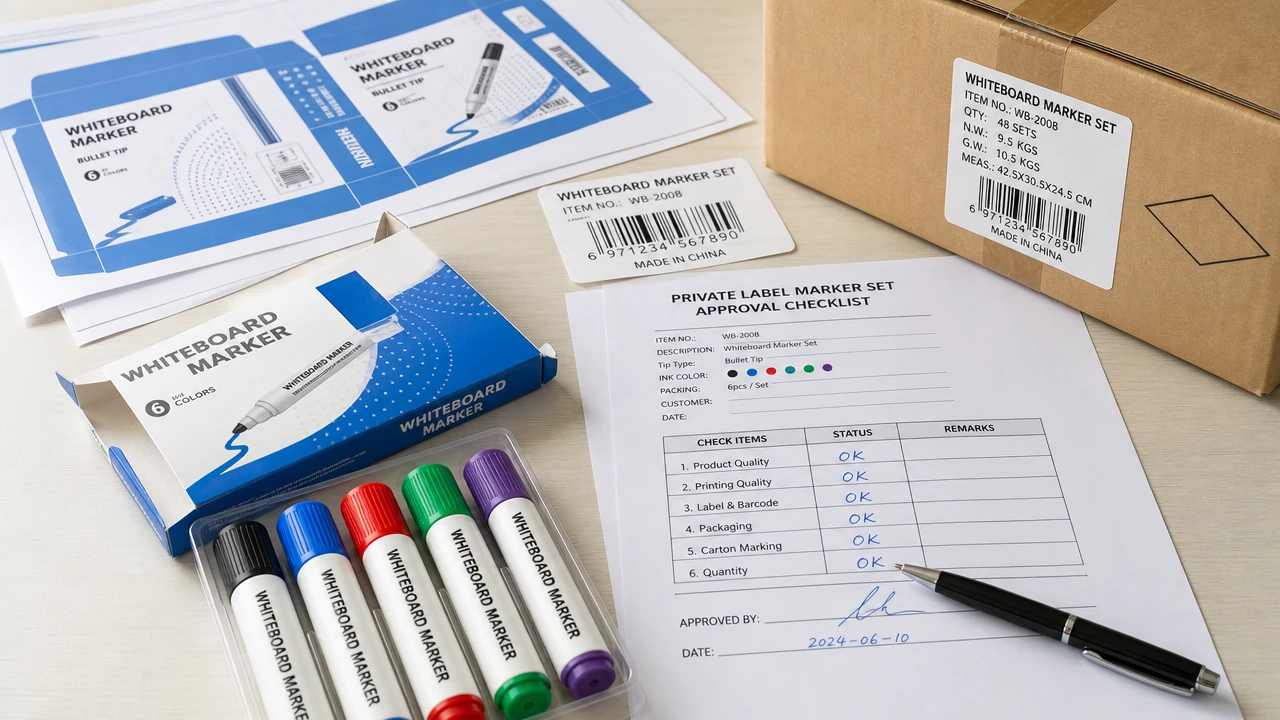
A private label marker order can pass the quote stage and still fail at sample sign-off. The buyer passes a barrel color from a photo. The retail card changes later. The barcode is checked after mass production. Or the signed sample does not match the final carton. A good sample approval checklist stops those small gaps from becoming shipment problems.
This guide is for importers, distributors, Amazon sellers, retail brands, and sourcing teams preparing custom marker sets with a China marker manufacturer. Use it before you sign the pre-production sample. Do not use it after production starts.
Szybka odpowiedź
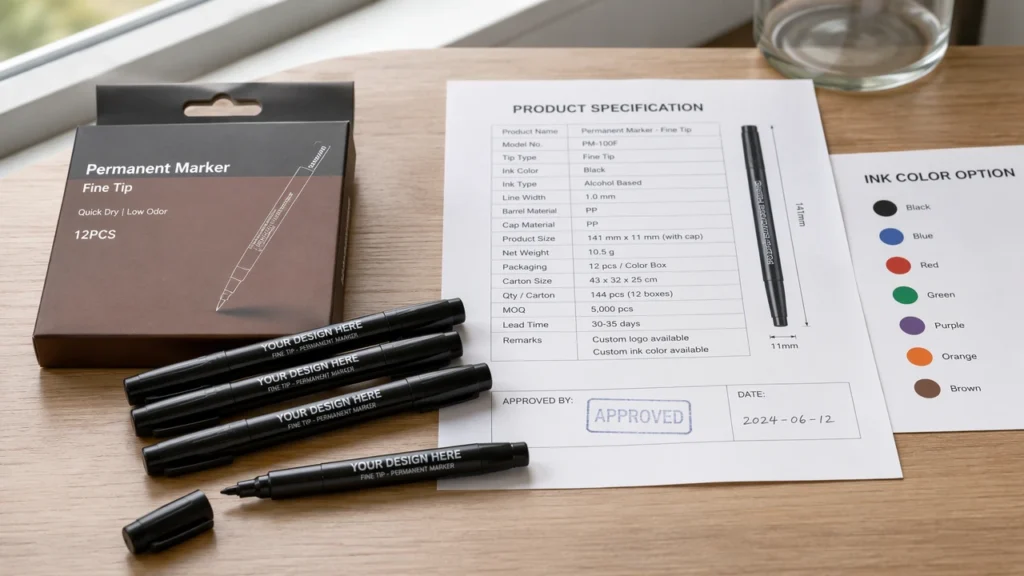
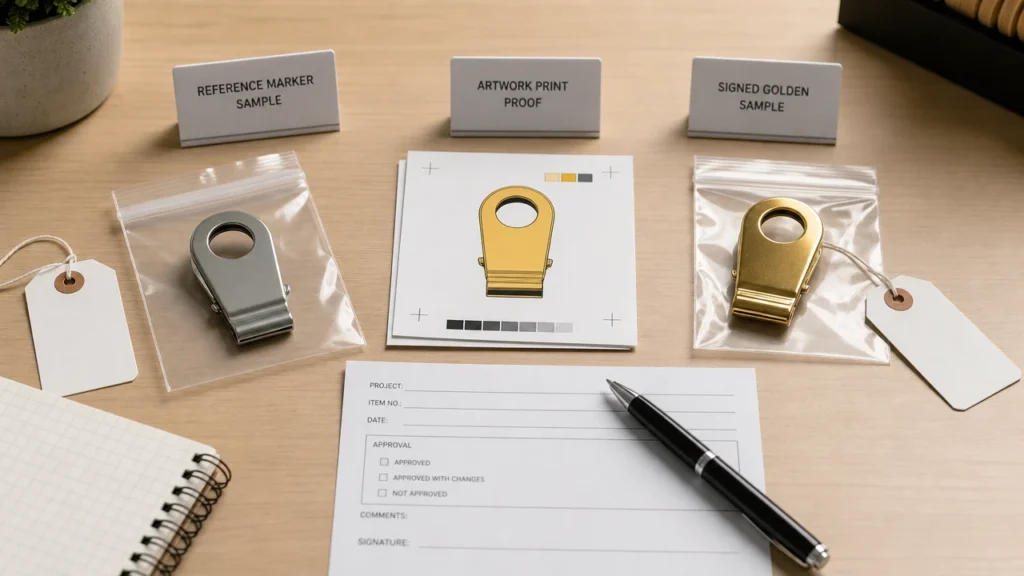
For private label marker orders, pass samples in four layers. Product performance. Appearance. Packing. Shipment marks. Do not pass from photos alone when the call touches color, nib feel, ink flow, cap fit, retail packing, barcode, carton marks, or compliance language. Keep one signed golden sample. Keep one supplier-retained sample. Keep one buyer-retained sample tied to the PO.
Szybkie linki
- Szybka odpowiedź
- Dlaczego zatwierdzanie próbek ma znaczenie
- Etapy zatwierdzania
- Lista kontrolna próbki produktu
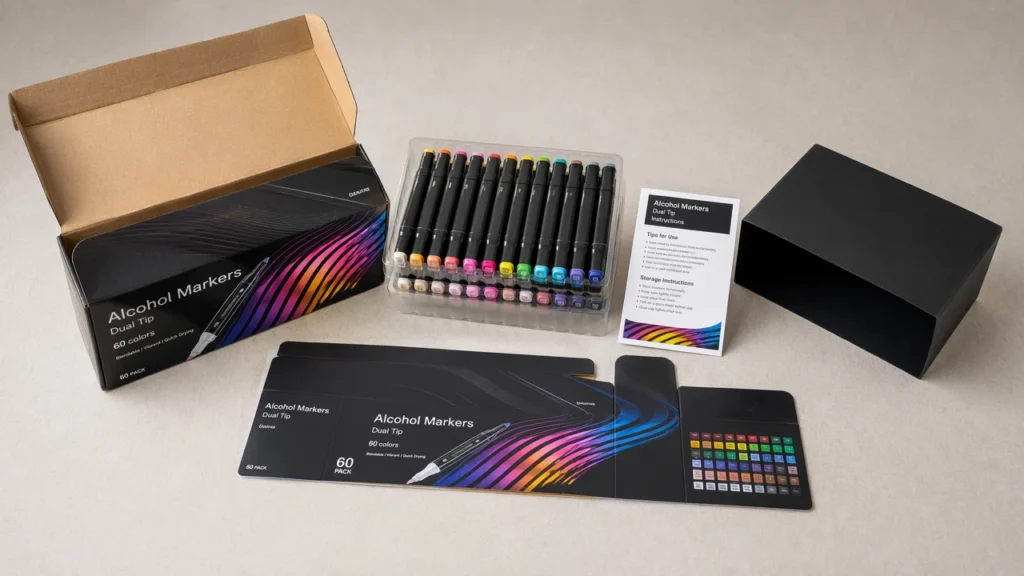
- Lista kontrolna próbki opakowania
- Kontrola kodu kreskowego i kartonu
- Dokumenty zgodności
- Pola formularza zatwierdzenia
- Zadawaj lepsze pytania dostawcom
- FAQ
Dlaczego zatwierdzanie próbek ma znaczenie
Private label markers usually join several picks in one SKU. Marker body. Ink system. Nib. Cap. Logo. Color order. Retail pack. Barcode label. Inner box. Export carton. If the buyer passes only the visible product, the hidden details can drift during production.
The sample stage should answer one practical question. What exactly is the factory allowed to copy in mass production? If the answer is vague, the supplier may treat the sample as a style base instead of a locked spec.
Buyers comparing marker groups can start with the ZH Stationery marker range. For packing picks, the acrylic marker packing guide is a useful partner, because packing format changes the sample work.
Etapy zatwierdzania
A simple sign-off flow beats one big final check. The buyer should decide which sample stage is needed before the RFQ is set. Each stage takes factory time and courier time.
| Etap próbki | Co powinien potwierdzać | Decyzja kupującego |
|---|---|---|
| Próbka referencyjna | Ogólny typ markera, wielkość zestawu, kierunek opakowania i docelowy poziom cenowy | Czy projekt jest wart rozwijania |
| Próbka graficzna | Umiejscowienie logo, układ etykiety, nazwy kolorów, obszar kodu kreskowego i wymagany tekst ostrzegawczy | Czy plik projektu jest gotowy do próby drukarskiej |
| Próbka przedprodukcyjna | Rzeczywiste materiały, kolor korpusu, końcówka, przepływ tuszu, struktura opakowania i oznaczenia kartonu | Czy można rozpocząć produkcję masową |
| Próbka złota | Podpisany standard, którego muszą przestrzegać produkcja i kontrola jakości | Która fizyczna próbka kontroluje inspekcję końcową |
| Próbka wysyłkowa | Losowo wybrany gotowy zestaw z produkcji masowej | Czy zamówienie nadal odpowiada zatwierdzonemu standardowi |
Lista kontrolna zatwierdzania próbek dla zamówień markerów pod marką własną
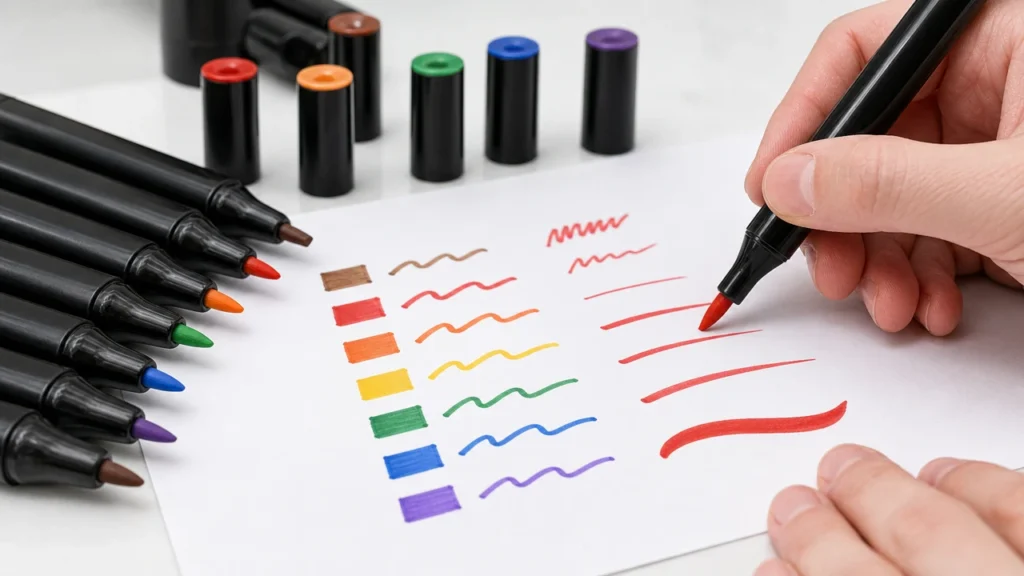
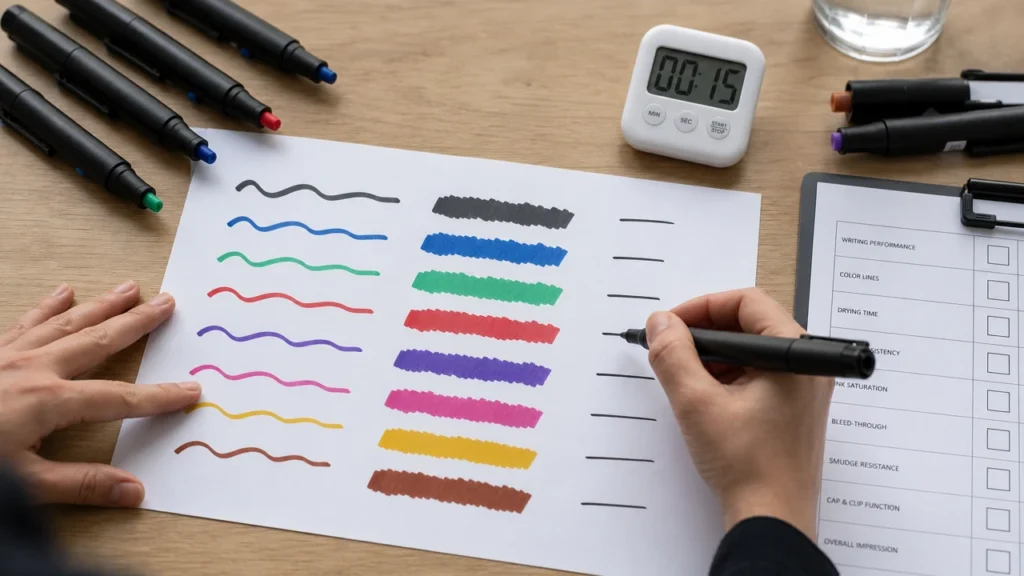
Start with the marker itself. Photos can show art position. They cannot show writing feel, cap tightness, tip recovery, or how even the ink reaches the nib. The buyer should test the sample by hand.
| Element do sprawdzenia | Jak sprawdzić | Zatwierdź tylko, gdy |
|---|---|---|
| Korpus markera | Porównaj kształt korpusu, długość, średnicę, kolor, wykończenie i obszar chwytu | Odpowiada uzgodnionemu SKU i dobrze leży w dłoni |
| Logo i nadruk | Sprawdź pozycję, rozmiar, kolor, ostrość krawędzi i odporność na ścieranie | Branding wygląda czysto przy normalnym użytkowaniu |
| Dopasowanie nakrętki | Otwórz i zamknij kilka razy, a następnie sprawdź luz | Nakrętka trzyma się mocno, ale nie jest trudna do zdjęcia |
| Końcówka | Sprawdź kształt końcówki, sztywność, szerokość linii i uszkodzenia po pisaniu | Końcówka odpowiada przeznaczeniu i nie strzępi się zbyt szybko |
| Przepływ tuszu | Pisz krótkie pociągnięcia, długie pociągnięcia i wypełnione kształty po odpoczynku | Przepływ jest stabilny i odpowiedni dla danego typu produktu |
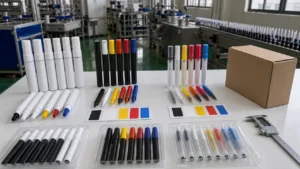
| Kolejność kolorów | Porównaj sekwencję zestawu z opakowaniem i kartą kolorów | Kupujący może zidentyfikować każdy kolor bez pomyłki |
For valve-controlled acrylic projects, the valve press marker technology page explains why tip prime and flow control should be checked on the finished marker. Do not check only an ink swatch.
Lista kontrolna próbki opakowania
Packing sign-off is where many private label orders get messy. The buyer may pass the product sample first. Then the tray is too loose. The retail card covers a warning line. Or the carton cannot take the planned shipping route.
| Punkt dotyczący opakowania | Co potwierdzić | Typowe ryzyko |
|---|---|---|
| Pudełko detaliczne lub woreczek | Rozmiar, materiał, sposób otwierania, powierzchnia okienka oraz kierunek ekspozycji na półce | Produkt dobrze wygląda na zdjęciach, ale sprawia wrażenie słabego podczas obsługi w handlu detalicznym |
| Wkładka (taca) z tworzywa | Dopasowanie markera, kolejność kolorów, grubość wkładki oraz docisk skuwki | Przesuwanie wkładki rysuje marker lub wypycha skuwki |
| Plik graficzny (artwork) | Logo, nazwy kolorów, ikony, tekst ostrzegawczy, pole na kod kreskowy oraz marginesy druku | Późna zmiana pliku graficznego opóźnia produkcję |
| Karta instruktażowa | Język, treść ostrzeżeń, wskazówki użytkowania oraz zgodność z SKU | Ogólne instrukcje nie odpowiadają rzeczywistemu produktowi |
| Pudełko wewnętrzne | Liczba sztuk w zestawie, orientacja, konieczność przekładek oraz umiejscowienie etykiety | Zestawy ocierają się o siebie podczas transportu |
| Karton zbiorczy (opakowanie transportowe) | Wytrzymałość kartonu, oznaczenia, waga brutto, wymiary oraz plan paletyzacji | Koszt frachtu lub przyjęcie w magazynie okazuje się później problematyczne |
Carton calls should link to logistics. The Przewodnik po rozmiarze kartonu, wadze brutto i CBM helps buyers check whether the passed packing still works for LCL, FBA, or warehouse receiving.
Kontrola kodu kreskowego i kartonu
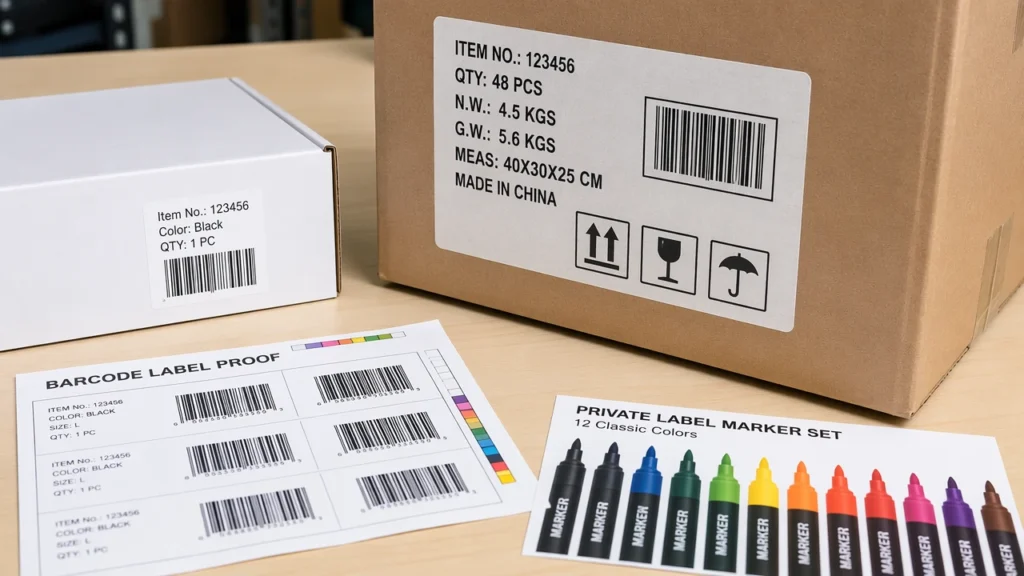
Barcode and carton sign-off should happen before mass production art is locked. The Przegląd GTIN GS1 explains how GTINs name trade items. For a private label order, the buyer should give the barcode data and confirm it scans with the planned retailer or platform.
- Sprawdź numer kodu kreskowego, rozmiar kodu, strefę ciszy, kontrast wydruku oraz umiejscowienie.
- Potwierdź, czy kod kreskowy ma znajdować się na jednostce detalicznej, pudełku wewnętrznym, kartonie zbiorczym, czy na wszystkich trzech.
- Sprawdź SKU, liczbę kolorów, nazwę zestawu, tekst kraju pochodzenia, ilość w kartonie, wagę brutto, wagę netto oraz wymiary kartonu.
- W przypadku zamówień z Amazon potwierdź FNSKU, etykietowanie kartonów, liczbę sztuk w zestawie oraz plan wysyłki przed zatwierdzeniem próbki kartonu.
- Skorzystaj z przewodnika Amazon FBA dla sprzedawców pisaków gdy przesyłka ma trafić bezpośrednio do magazynu fulfillment.
Dokumenty zgodności
Compliance sign-off is separate from visual sample sign-off. For US art products, the wytyczne dotyczące materiałów plastycznych CPSC points buyers to ASTM D-4236 marking needs. The official ASTM D4236 page covers chronic health hazard marking for art products. These sources help review labels. They do not replace the buyer's own legal or retailer check.
If packing or shipment testing is part of the project, the official ASTM D4332 page covers conditioning containers, packages, or packing parts before testing. Most private label marker orders do not need a lab program for every shipment. Buyers should know when a retailer or internal QA team expects conditioning or transit checks.
W przypadku plików ZH Stationery kupujący mogą przejrzeć certyfikatów ZH Stationery and ask for current documents that match the product, market, and order needs. A generic file is not enough if the SKU, ink system, or age grade changes.
For a deeper paper checklist, the Przewodnik po raportach z testów ASTM D-4236 explains how buyers should read art-material reports before treating them as order-ready proof.
Pola formularza zatwierdzenia
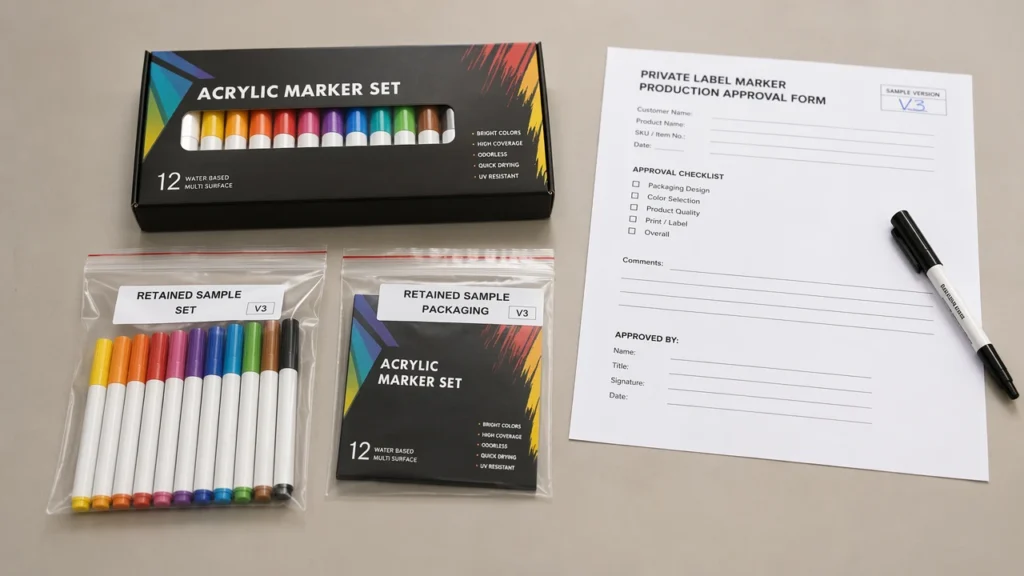
A signed sample is useful only when the sign-off record is specific. The form should be short enough for the buyer to use. It must be detailed enough for production and QC to follow.
| Pole | Co wpisać | Dlaczego to ma znaczenie |
|---|---|---|
| Projekt i zamówienie | Nazwa kupującego, nazwa projektu, SKU, numer PO i data | Łączy próbkę z zamówieniem handlowym |
| Wersja próbki | Numer wersji, data próbki i notatki o zmianach | Zapobiega przypadkowemu ponownemu użyciu starych próbek |
| Zakres zatwierdzenia | Produkt, opakowanie, pliki graficzne, kod kreskowy, karton lub wszystkie elementy | Umożliwia jasne określenie częściowego zatwierdzenia |
| Wyjątki | Wszelkie zatwierdzone odstępstwa i informacja, czy są tymczasowe | Zapobiega niespodziewanym zmianom podczas inspekcji |
| Próbki archiwalne | Lokalizacje próbki kupującego, próbki fabrycznej i próbki kontroli jakości | Daje obu stronom fizyczny punkt odniesienia |
| Podpisanie | Osoba zatwierdzająca po stronie kupującego, osoba zatwierdzająca po stronie dostawcy oraz data końcowego zatwierdzenia | Wskazuje, kto przyjął standard produkcyjny |
Typowe błędy przy zatwierdzaniu
Most sample problems are ordinary. The buyer is busy. The supplier wants to move production. Both sides assume the missing detail is obvious. It usually is not.
- Zatwierdzanie koloru markera na podstawie zdjęcia z telefonu zamiast fizycznej próbki.
- Zatwierdzanie grafiki przed potwierdzeniem rozmiaru kodu kreskowego i zasad etykiet detalicznych.
- Traktowanie jednej próbki produktu jako zatwierdzenia dla kilku rozmiarów zestawów lub formatów opakowań.
- Zapomnienie o podpisaniu i oznaczeniu złotej próbki.
- Zmiana końcówki, tuszu, korpusu, skuwki, wkładu, kartonu po zatwierdzeniu bez nowego zapisu próbki.
- Sprawdzanie opakowania detalicznego, ale ignorowanie oznaczeń na kartonie zbiorczym i etykiet wysyłkowych.
Zadawaj lepsze pytania dostawcom
The best sample questions force the supplier to explain the sign-off line. A yes answer is not enough.
| Pytanie | Przydatna odpowiedź dostawcy powinna zawierać |
|---|---|
| Które części tej próbki są ostateczne? | Jasna lista: korpus markera, końcówka, tusz, logo, opakowanie, kod kreskowy, karton lub tylko wybrane elementy. |
| Jakie zmiany nadal wymagają zatwierdzenia? | Wszelkie otwarte pozycje, takie jak kolor grafiki, materiał wkładu, plik kodu kreskowego, oznaczenie kartonu lub treść zgodności. |
| Ile złotych próbek zostanie zachowanych? | Co najmniej jedna próbka dla kupującego i jedna dla fabryki, obie oznaczone projektem i datą. |
| Jak produkcja będzie porównywana z zatwierdzoną próbką? | Punkty kontroli, termin pobierania próbek i postępowanie w przypadku różnic w produkcji. |
| Które dokumenty muszą być zgodne z próbką? | Plik graficzny, specyfikacja produktu, lista pakowania, plik kodu kreskowego, raport z testów i etykieta kartonu. |
| Co się stanie, jeśli kupujący zażąda zmiany po zatwierdzeniu? | Czy wymagana jest nowa próbka, nowa wycena, nowy czas realizacji lub pisemna zgoda na odstępstwo. |
FAQ
These FAQs cover the sample questions buyers usually ask before private label marker production starts.
Czym jest złota próbka przy zamówieniach markerów pod marką własną?
A golden sample is the signed physical base that mass production should follow. It should show the passed marker, packing, art, barcode or label spot, and any agreed exceptions. Both buyer and supplier should keep a marked copy.
Can I pass a private label marker sample from photos?
Photos help quick design review. They are not enough for final sign-off when color, nib feel, ink flow, cap fit, packing strength, barcode print, or carton marks matter. Use a physical sample for final sign-off whenever the risk touches quality or retail acceptance.
Should packing be passed apart from the marker?
Yes. A marker can be right while the tray, retail box, label, barcode, or carton is wrong. Treat product and packing sign-off as separate gates. Then sign one final production base.
What should be in a sample approval checklist?
Marker body. Color. Logo. Nib. Ink flow. Cap fit. Packing build. Art. Barcode. Carton marks. Compliance language. Kept samples. Sign-off date. Approved exceptions.
When does a sample need re-sign-off?
When the buyer or supplier changes the ink, nib, barrel, cap, logo style, packing build, barcode, warning language, carton, or any detail that touches retail look, compliance, shipment, or performance.
How do I stop sample delays?
Send the supplier final art, barcode data, market needs, packing style, destination country, set size, and shipping plan before sampling. Also decide who can sign samples and how many kept samples are needed.
Wniosek
Sample sign-off is where a private label marker order becomes real. The buyer should not pass a sample as a general idea. Pass a specific product. Pass a specific package. Pass a specific barcode or carton label. Pass a specific set of documents.
If you are preparing a private label marker order, send ZH Stationery your target market, set size, art, barcode needs, packing format, expected order quantity, and shipping route. The team can turn those details into a sample approval checklist before production starts. Buyers who want to check the production side can also review the wycieczka po fabryce oraz kim jesteśmy pages before talking samples.
Powiązany przewodnik: W zakresie planowania zgodności z przepisami, patrz Producent niestandardowych długopisów w kształcie zwierząt.