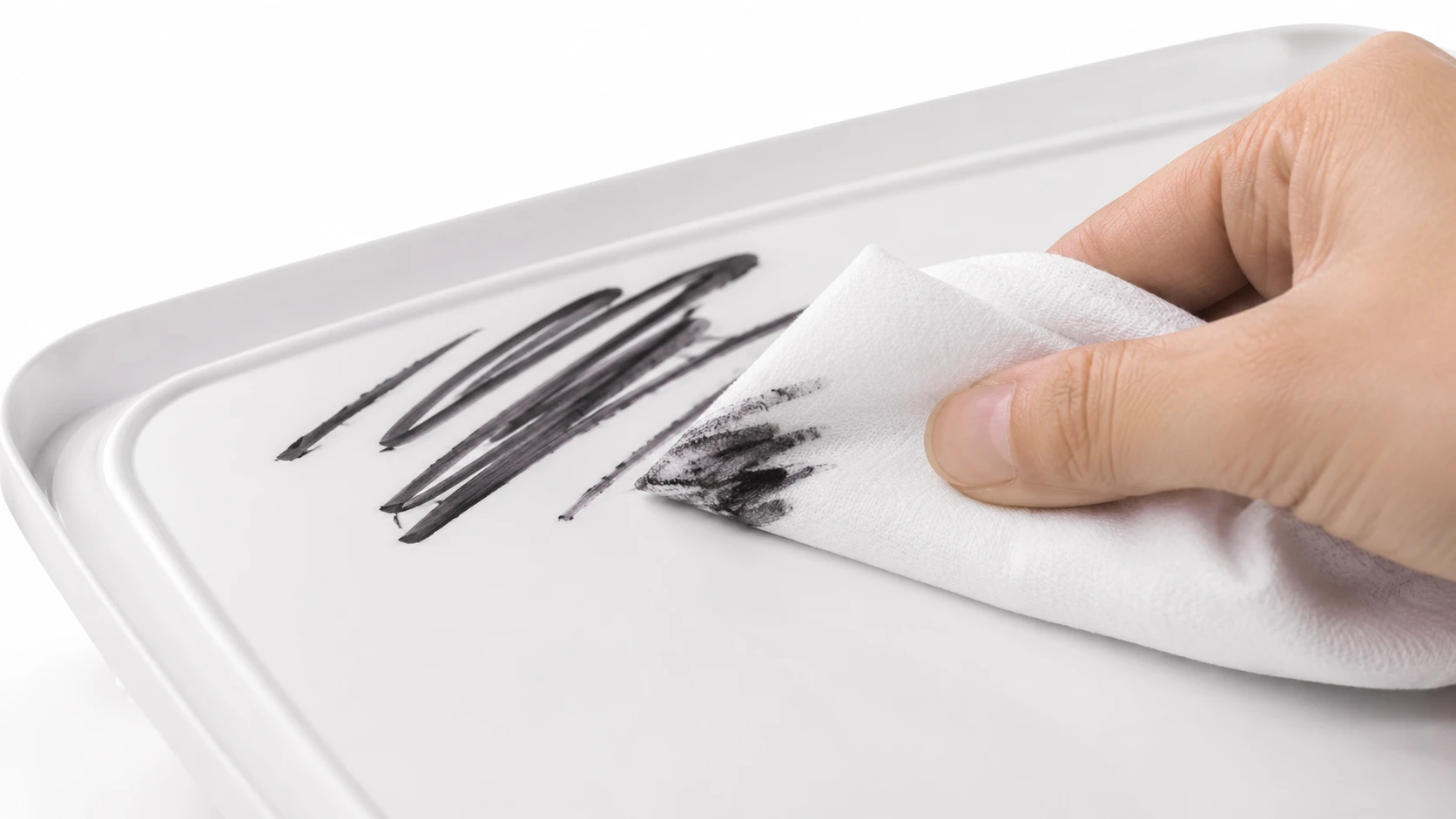
Someone writes on a plastic storage bin with a permanent marker. Then they change their mind. Water does nothing. Soap does nothing. Glass cleaner leaves a faint smear at best. The marker is doing exactly what it was built to do. The user is not impressed.
For B2B buyers sourcing permanent markers, that moment matters. Every end user who cannot remove permanent marker from plastic blames the brand, not the chemistry. They remember which marker failed them.
The removal problem is not random. It measures how well the ink formula does its job. Know what makes permanent marker bond to plastic. Know what solvent chemistry breaks that bond. Then you have a real method to judge ink quality before placing orders.
Spis treści
Szybka odpowiedź: Jak usunąć permanentny marker z plastiku
Każda z poniższych metod działa na inną część atramentu. Ta, która działa, mówi, jakiego systemu rozpuszczalnika używa marker:
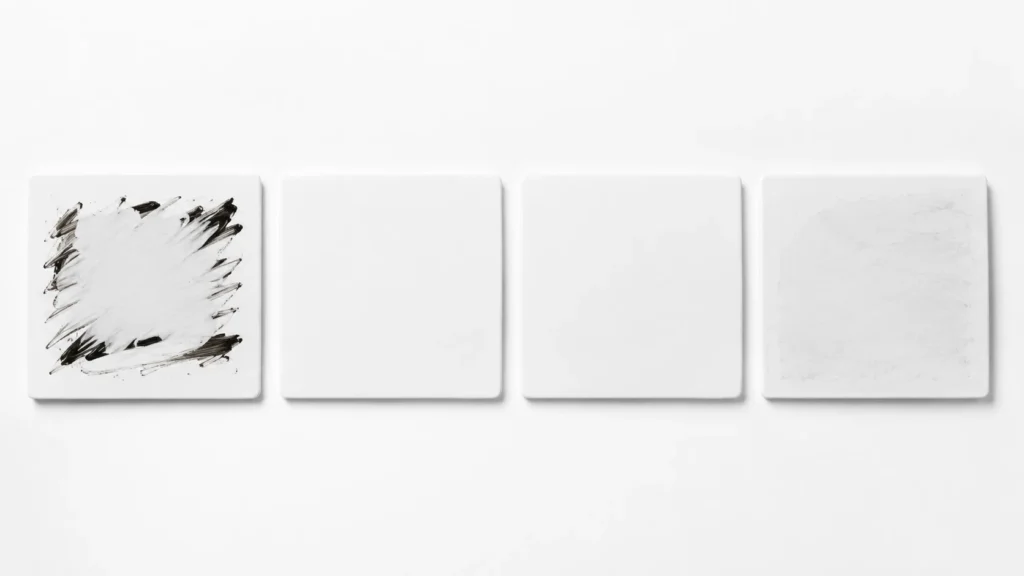
- Alkohol izopropylowy (izopropanol, 70 do 90 procent) radzi sobie z większością permanentnych markerów. Ponownie rozpuszcza żywicę akrylową, zanim w pełni utwardzi się. Wypróbuj to najpierw. Nałóż na szmatkę, delikatnie pocieraj. Atrament się unosi.
- Aceton (zmywacz do paznokci) jest silniejszy. Rozpuszcza akryl nawet po utwardzeniu. Ale aceton rozpuszcza również niektóre tworzywa sztuczne. ABS, polistyren, malowane powierzchnie matowieją lub miękną przy kontakcie. Przetestuj w ukrytym miejscu.
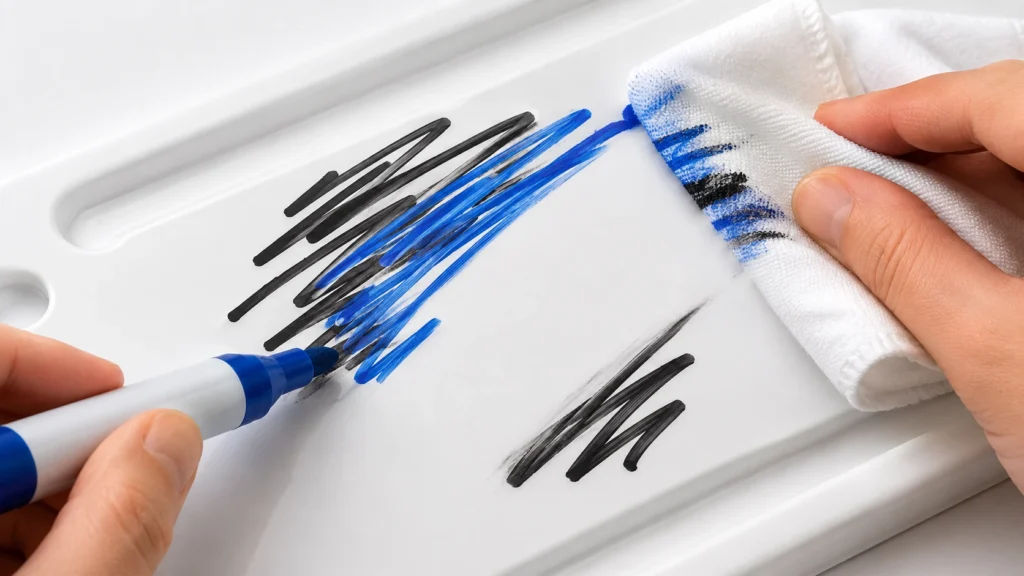
- Sztuczka z markerem suchościeralnym. Narysuj suchościeralnym atramentem po permanentnym znaku i wytrzyj. Rozpuszczalnik w suchościeralnym atramencie ponownie upłynnia permanentną żywicę. Oba typy markerów dzielą nośnik alkoholowy. Najdelikatniejsza metoda dla delikatnych plastików.
- Pasta z sody oczyszczonej. Wymieszaj sodę oczyszczoną z kilkoma kroplami wody, aby uzyskać gęstą pastę, delikatnie pocieraj szmatką, spłucz. Łagodne ścieranie fizycznie unosi warstwę atramentu. Działa na teksturowanych plastikach, gdzie same rozpuszczalniki nie mogą dotrzeć do pigmentu w rowkach.
- Komercyjne środki czyszczące (Goo Gone, Magic Eraser). Rozpuszczalniki plus mikrościeranie. Skuteczne na utwardzone, stare plamy. Najpierw przetestuj na ukrytym plastiku. Niektóre zawierają destylaty ropy naftowej, które niszczą niektóre polimery.
For brand owners and buying teams, these factors help set sharper sourcing and quality check bars.
Co Trudność Usunięcia Ujawnia o Jakości Tuszu Permanentnego Markera
Every removal method either gets the ink off or does not. The reason tells you something exact about the formula. For B2B buyers, the removal profile says more about ingredient quality than a spec sheet ever will:
| Metoda usuwania | Jak działa | Co ujawnia o atramencie | Sygnał jakości B2B |
| Alkohol izopropylowy | Ponownie rozpuszcza żywicę akrylową przed pełnym utwardzeniem | Atrament używa alkoholowo rozpuszczalnego akrylu; pigment jest zawieszony, nie związany | Standardowa formuła na bazie alkoholu. Sprawdź czas utwardzania żywicy i czystość rozpuszczalnika |
| Aceton | Rozpuszcza utwardzony akryl; silniejsze działanie rozpuszczalnika | Żywica jest akrylowa i reaguje na rozpuszczalniki ketonowe | Solidny system akrylowy. Dobry dla przemysłowej trwałości. Odporność na aceton oznacza wyższej jakości żywicę |
| Nadpisywanie markerem suchościeralnym | Rozpuszczalnik alkoholowy w suchościeralnym atramencie ponownie upłynnia permanentną żywicę | Oba markery dzielą nośnik alkoholowy; żywice są kompatybilne | Standardowa chemia rozpuszczalników w branży. Jeśli to zawiedzie, marker może używać ksylenu lub toluenu, co sygnalizuje inny poziom jakości |
| Soda oczyszczona (ścieranie) | Fizycznie unosi wyschniętą warstwę atramentu z powierzchni | Warstwa atramentu ma mechaniczną przyczepność; pigment zamknięty w utwardzonej żywicy | Trwała warstwa, dobra dla trwałości. Jeśli soda oczyszczona łatwo ją usuwa, warstwa może być zbyt słaba do prawdziwego trwałego użytku |
| Nic nie działa | Żywica w pełni usieciowana i chemicznie związana z plastikiem | Wysokowydajna żywica z silną przyczepnością do podłoża | Naprawdę trwały. Do etykietowania przemysłowego to jest to, czego chcesz. Do produktów konsumenckich ten poziom może generować skargi |
Permanent markers are supposed to be permanent. The real question is whether they come off under the conditions your end users face. A marker that shrugs off alcohol but gives in to acetone is well built for office and school use. A marker that resists everything, acetone included, is built for industrial labels where permanence is the only goal. Different markets. Different formulas.
Dlaczego permanentny marker przylega do plastiku
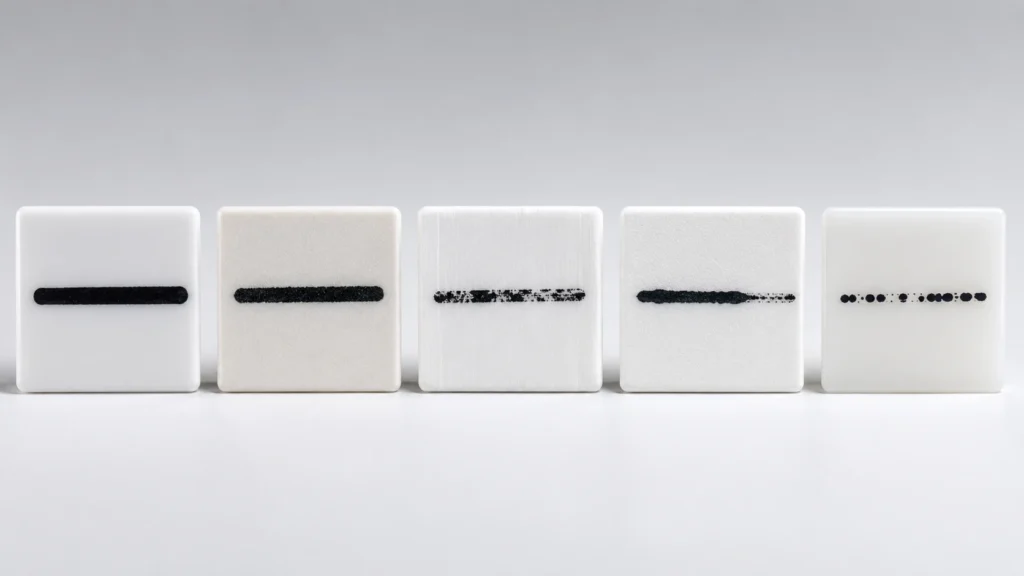
Plastic is not one material. It is a family of polymers. Each has its own surface chemistry. Which plastic your marker hits explains why some removal methods work on one surface and fail on another.
Polyethylene and polypropylene are the hardest to bond to. Low surface energy. Liquids bead up instead of spreading. Permanent ink grips these faces by shape. The resin film wraps micro texture and sets in place. Rubbing alcohol usually works because it re-dissolves the resin and breaks that mechanical grip. No chemical bond to break.
Polystyrene and ABS are easier to bond to and easier to damage. The acrylic resin in permanent ink can partly dissolve the surface of these plastics. That makes a mixed polymer layer at the join. Acetone works well here. It also damages here. Same solvent, two effects.
Poliwęglan (PC) i akryl (PMMA) znajdują się pośrodku. Lepiej opierają się większości rozpuszczalników niż polistyren, ale wiążą się łatwiej niż polietylen. Alkohol zwykle załatwia sprawę. Unikaj acetonu. Prawie natychmiast powoduje spękanie lub matowienie poliwęglanu. and acrylic sit in the middle. They resist most solvents better than polystyrene. They bond more easy than polyethylene. Alcohol usually gets the job done. Avoid acetone. It crazes or clouds polycarbonate almost at once.
Polyvinyl chloride shows in plumbing, vinyl, and some packing. Moderate chemical resistance. Alcohol is safe. Acetone softens PVC with enough contact time.
The same marker acts different across these faces. A marker that writes well on a polypropylene shipping label can smear on a polystyrene pen barrel. If your buyers use markers on varied plastics, ask the supplier for grip data across several bases. A factory that tests one surface is not giving data you can trust.
Permanentne vs. suchościeralne: jedna różnica polimerowa
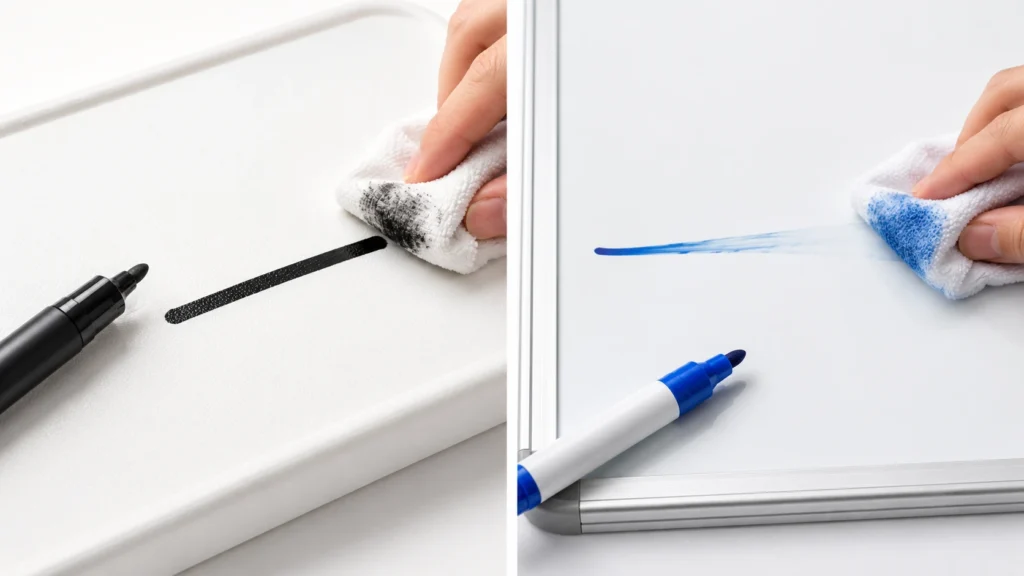
Permanent and dry erase markers are nearly the same under the hood. Both use a polyester core, a felt or fiber tip, and an alcohol solvent carrier. According to the Królewskie Towarzystwo Chemiczne, the whole difference is one part. The polymer.
żywicy akrylowej . Alkohol odparowuje, akryl utwardza się w twardą warstwę, która wiąże się z powierzchnią. Ta sama chemia co farba akrylowa. Po utwardzeniu jest trwała, wodoodporna i trudna do usunięcia bez odpowiedniego rozpuszczalnika.. The alcohol leaves. The acrylic cures into a hard film that bonds to the surface. Same chemistry as acrylic paint. Once cured, it is durable, waterproof, and hard to remove without a matching solvent.
polimerem silikonowym . Silikon tworzy warstwę, która leży na powierzchni bez przyczepiania się. Sucha szmatka unosi całą warstwę za jednym razem. Brak wiązania. Ale ten sam silikon powoduje, że suchościeralne markery plamią ubrania. Odpycha wodę, więc detergent nigdy nie dociera do pigmentu pod spodem.. The silicone makes a film that sits on the surface without attaching. A dry cloth lifts the whole film in one pass. No bond. That same silicone is why dry erase stains clothes. It repels water, so soap never reaches the pigment underneath.
A factory making both types runs two separate polymer systems. Permanent markers need exact acrylic balance between grip and removal. Dry erase markers need exact silicone balance between erase and film strength. A factory with in-house ink R&D holds both at formula level instead of buying pre-mixed ink outside.
ZH Stationery runs its own ink lab. It has built custom inks for marker pens, permanent markers included, across 26-plus years of OEM/ODM work. See the zakres produktów. For private-label lines, the ability to tune resin chemistry and solvent ratio to end-user needs turns a catalog order into a spec talk.
Co nabywcy B2B powinni przetestować przed zamówieniem markerów permanentnych
Catalog claims about permanent and waterproof mean nothing alone. Four tests tell you what the ink really does:
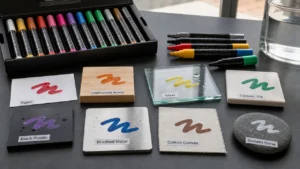
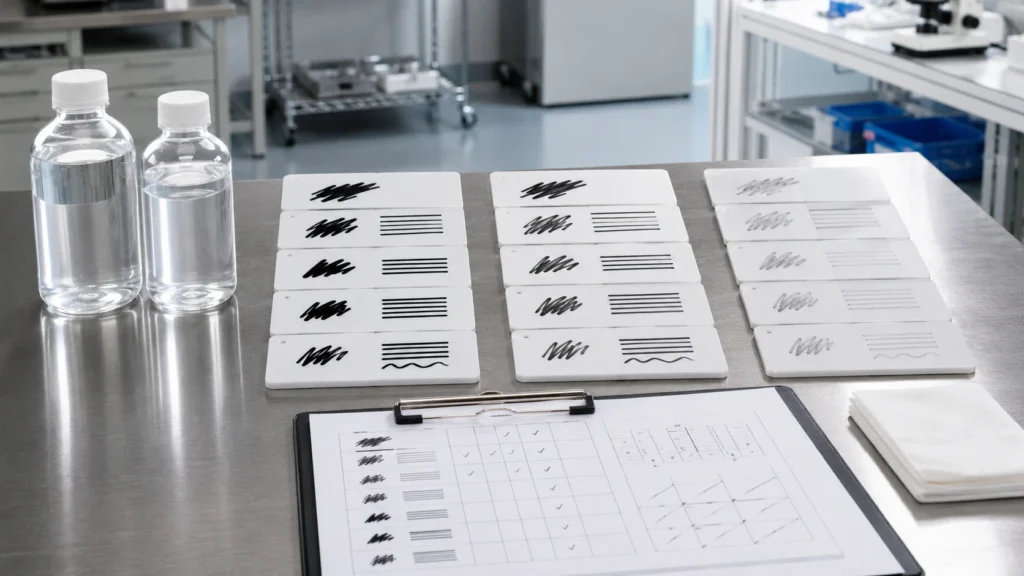
- Przyczepność do docelowych podłoży. Pisz na rzeczywistych tworzywach sztucznych, których używają Twoi klienci. Pojemniki polipropylenowe. Rury PCV. Obudowy ABS. Okulary poliwęglanowe. Pozostaw atrament do utwardzenia na jedną godzinę. Spróbuj go usunąć. Udokumentuj, które powierzchnie go trzymają, a które uwalniają. To jest Twój rzeczywisty punkt odniesienia wydajności.
- Odporność na rozpuszczalniki. Utwardzaj przez 24 godziny. Testuj usuwanie alkoholem, następnie acetonem, a potem komercyjnym środkiem czyszczącym. Dobry marker permanentny powinien opierać się alkoholowi na nieporowatych tworzywach sztucznych, ale ulegać acetonowi. Jeśli sam alkohol go usuwa, utwardzanie żywicy jest słabe. Jeśli nic go nie usuwa, masz formułę klasy przemysłowej. Zdecyduj, czy pasuje to do Twojego rynku.
- Odporność na wodę po pełnym utwardzeniu. Pisz na plastiku. Utwardzaj przez 24 godziny. Zanurz w wodzie na jedną godzinę. Atrament nie powinien się rozmazywać, odklejać ani blaknąć. Odporność na wodę to podstawowy wymóg dla wszystkiego, co jest oznaczone jako trwałe. Jeśli atrament tego nie spełnia, system żywicy jest uszkodzony.
- Odporność na promieniowanie UV i blaknięcie. Umieść oznaczoną próbkę plastiku w bezpośrednim świetle słonecznym na 72 godziny. Porównaj z nieeksponowaną próbką kontrolną. Markery używane na zewnątrz, w budownictwie, architekturze krajobrazu, transporcie, potrzebują pigmentów stabilnych w UV. Jeśli atrament blaknie w ciągu dni, użytkownicy przemysłowi to zauważą. Zapytaj dostawcę, jaką chemię pigmentów stosują i czy w mieszance są stabilizatory UV.
A factory running 100 percent check on every unit, with batch QC files, can make this data. The question for suppliers is not is your marker permanent. Ask: can you show grip results on polypropylene, ABS, and polycarbonate after 24 hour cure, with solvent resistance data? See the wycieczka po fabryce.
Często zadawane pytania
Jaki jest najlepszy sposób na usunięcie permanentnego markera z plastiku?
Rubbing alcohol, 70 to 90 percent, on a cloth. Rub gently. It re-dissolves the acrylic resin before it fully cures. For cured stains, step up to acetone. Test a hidden spot first. Acetone eats some plastics. The dry erase trick is safest for delicate faces. Scribble dry erase ink over the mark and wipe both away. The B2B marker guide adds line context.
Dlaczego permanentny marker tak mocno wiąże się z plastikiem?
Acrylic resin is the binder. Alcohol leaves. Acrylic cures into a hard film that grips the plastic. On slightly rough faces, the resin flows into micro texture and locks by shape. Alcohol removes it by re-dissolving the acrylic before it hardens. After full cure, you need acetone.
Dlaczego marker suchościeralny usuwa marker permanentny?
Both marker types use an alcohol solvent carrier. Scribble dry erase over permanent. The alcohol in the dry erase ink re-liquefies the acrylic resin. Then the silicone release agent in the dry erase ink coats the loose pigment and stops it from re-bonding. Wipe once. Everything comes off. The trick works because the two markers share solvent chemistry even with different polymers.
Czy marker permanentny schodzi ze wszystkich tworzyw sztucznych w ten sam sposób?
No. PE and PP release most easy with alcohol. The bond is by shape, not chemistry. Polistyren and ABS hold tighter. Acetone works better on them and also attacks them. Polycarbonate is acetone-sensitive and will craze on touch. Always test a hidden spot of the exact plastic you are cleaning.
Co Sprawia, że Marker Permanentny Jest Naprawdę Trwały?
The resin load, the cure chemistry, and the pigment type. More resin makes a stronger film. Some formulas cross-link for extra life. Carbon black and iron oxide hold under UV far better than organic dyes. A marker that washes off with water has a resin problem. One that fades in sun has a pigment problem. ZH Stationery, through its ink lab, tunes these by need. See the producent markerów na zamówienie oraz Proces produkcji markerów .
Jak kupujący B2B powinni testować jakość markerów permanentnych przed zakupem?
Test grip on the real plastics your buyers use, not the factory card. Test solvent resistance after 24 hour cure with alcohol and acetone. Test water by soaking a marked sample for one hour. Test UV with 72 hours of direct sun. If the supplier cannot give this data for your SKU, the claims are not verified. ZH Stationery puts batch grip and life files in the QC pack for permanent orders.
Knowing how to remove permanent marker from plastic tells you more about formula quality than any catalog claim. If you source permanent markers for industrial labels, office supply, or private label, contact ZH Stationery to talk ink specs. See the ink quality guide, the alcohol marker makers, or the strony kontaktowej.
Powiązany przewodnik: Usuwanie plam po markerach suchościeralnych.
Powiązany przewodnik: Markery do wydruków 3D.
Powiązane artykuły
- Czy można pisać po płytach CD markerem permanentnym? Oto, co się naprawdę dzieje
- Jak Usunąć Marker Permanentny z Tablicy Suchościeralnej: 3 Sposoby Bez Chemii
- Jak usunąć marker farbowy ze szkła, plastiku, drewna i tkaniny
- raport dotyczący pozyskiwania markerów suchościeralnych na mokro
- przewodnik porównawczy markerów suchościeralnych na mokro
- przewodnik po tuszach markerów dopuszczonych do kontaktu z żywnością
- Poradnik bezpieczeństwa markera dziecięcego OEM