ある工場が、10,000本のカスタムマーカーペンについて単価を提示してきました。その数字は素晴らしく、あなたは承諾しようとしています。ところが、彼らはその価格がFOB寧波であると伝えます。あなたはFOBの意味を知っているかのようにうなずきます。実際には知りません。3週間後、あなたのフォワーダーから海上運賃、保険、通関手続き、港湾料金、トラック輸送の請求書が届きます。「素晴らしい価格」は予算より40%も高くなり、Amazonの紹介料すらまだ支払っていません。
FOB、CIF、DDP。工場価格の後に続く3つのアルファベット。これらは、工場の生産現場からあなたの受け入れドックまでの間で、誰が何を負担するかを決定します。間違ったものを選べば、予算オーバーで済みません。書類不足でコンテナが税関に留まった場合、責任を負うのはあなたです。不適切な補償内容であったために保険金請求が却下されるのもあなたです。
FOB vs CIF vs DDP は複雑ではありません。各インコタームズは何かを移転し、何かを隠しています。それを理解すれば、計算は簡単です。
目次
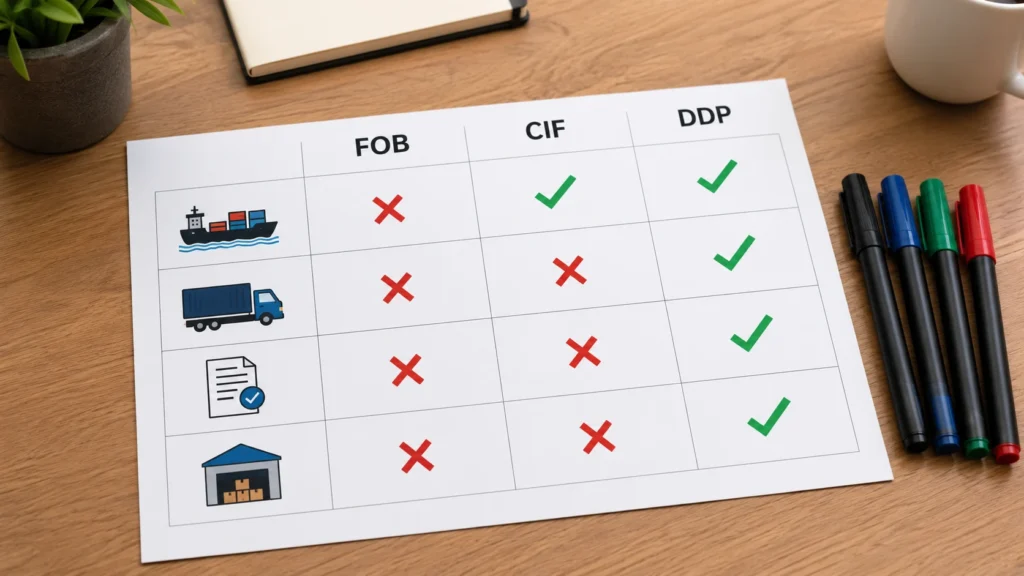
簡単な回答:FOB vs CIF vs DDP
中国からペンを発送する際に、 誰が何を負担するか:
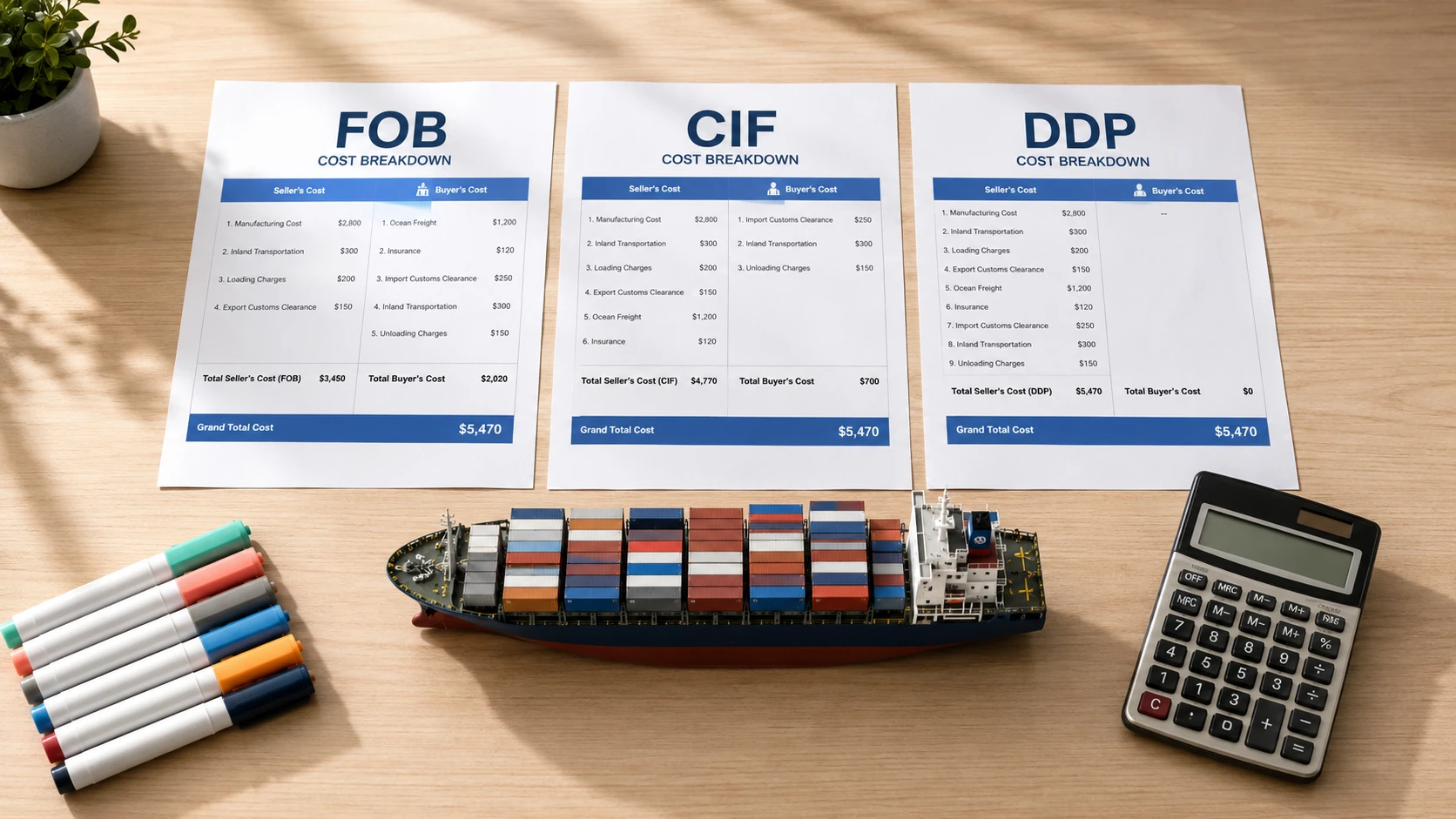
- FOB(本船渡し条件)。 工場は、コンテナを船に積み込むまでを含むすべての費用を負担します。あなたは海上運賃、保険、仕向地での通関手続き、トラック輸送を負担します。貨物が船に積まれた時点で所有権はあなたに移ります。コンテナが海中に転落した場合、それはあなたの問題です。
- CIF(運賃・保険料込み条件)。 工場は海上運賃と仕向港までの最低限の保険を負担します。あなたは通関手続き、関税、港から倉庫までのトラック輸送を負担します。工場が運送を手配します。便利に聞こえますが、彼らがどのフォワーダーを使用するか、いくら請求するかについて、あなたはまったくコントロールできません。
- DDP(関税込み条件)。 工場はすべてを負担します:運賃、保険、通関手続き、輸入関税、ドア配送。すべて込みの単一価格です。単価あたり最も高額です。フォワーダーとの関係がない初心者にとって最も安全です。サプライチェーンのどこかで問題が発生した場合、工場が責任を負います。
単価を交渉する前に、その数字が実際に何を表しているのかを理解する必要がある。以下は、製造コンポーネントと総支出への影響をマッピングしたコスト構造表である。
各インコタームズがペン貨物に実際に意味するもの
インコタームズms は理論ではありません。それらはチェックリストです。各条件がカバーする範囲とカバーしない範囲のギャップこそ、あなたのお金が消える場所です。
| 責任範囲 | FOB | CIF | DDP |
| 工場が自社施設でコンテナを積載 | 工場負担 | 工場負担 | 工場負担 |
| 出荷港までのトラック輸送 | 工場負担 | 工場負担 | 工場負担 |
| 中国での輸出通関手続き | 工場負担 | 工場負担 | 工場負担 |
| 海上運賃 | あなた負担 | 工場負担 | 工場負担 |
| 輸送中の保険 | あなたが手配(任意) | 工場が最低限提供 | 工場が提供 |
| 仕向地での輸入通関手続き | あなた負担 | あなた負担 | 工場負担 |
| 輸入関税と税金 | あなた負担 | あなた負担 | 工場負担 |
| 港から倉庫までのトラック輸送 | あなた負担 | あなた負担 | 工場負担 |
FOBは運送管理をあなたの手に委ねます。フォワーダーを選び、運賃を交渉し、コンテナの移動時期を決定します。経験豊富な輸入業者はこれを望みます。工場の役割は港で終了します。それ以降はすべてあなたの責任です。
CIFは簡単に見えます。工場が運送を処理します。実際には、彼らは運送費にマークアップを上乗せして請求します。フォワーダーが市場価格を請求しているのか、工場の親戚の物流会社がその月に請求することにした金額なのか、あなたにはわかりません。工場が提供する保険は法定最低限です。ペンのような安価なユニットの場合、最低限の保険では紛失したコンテナの全額再調達価格をカバーできない可能性があります。
DDPはすべてを工場に委ねます。単価あたり最も高額です。工場は税関遅延、関税率の変更、運賃変動を価格に織り込んでいるためです。税関保証もフォワーダーもない初回注文には価値があります。数回の出荷後、物流体制が整えば、FOBに切り替えることでランディングコストを10~20%節約できます。 ランディングコスト.
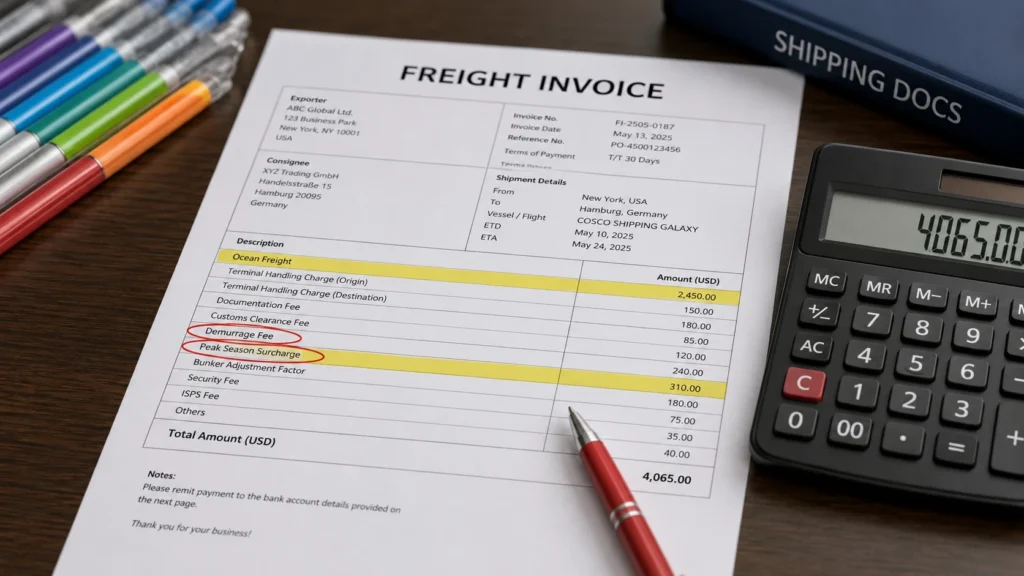
隠れたコストが存在する場所
すべてのインコタームズにはギャップがあります。カバーするものと、実際に予算を圧迫するものとの間のギャップです。ペン出荷の場合、 ペン出荷の場合、, これらが買い手を不意を突くギャップです。
FOBの場合、ギャップは運賃です。海上運賃は変動します。寧波からロサンゼルスまで、3月は2,000ドル、9月はピークシーズンサーチャージで4,500ドルになります。FOBでは運賃に賭けることになります。工場が出荷準備完了になる前にフォワーダーの運賃を確定しなければ、その週のスポットレートを支払うことになります。生産スケジュールを確定する前に、書面で運賃を確保してください。
CIFの場合、ギャップはフォワーダーのマークアップと保険です。工場のフォワーダーはあなたのフォワーダーではありません。彼らは工場に対して責任を負い、あなたに対してではありません。コマーシャルインボイスに誤りがあるためにコンテナが米国税関で保留された場合、そのフォワーダーが迅速に動く理由はありません。あなたはデマレージと保管料を支払うことになります。CIFの保険は協会貨物約款(C)です。これは船舶の全損をカバーします。部分損、水濡れ損、コンテナからの盗難はカバーしません。ペンの価値が15,000ドルだとします。最低限補償とオールリスク補償の差額は約50ドルです。あなたが依頼しない限り、工場は補償をアップグレードしません。 コマーシャルインボイス に誤りがあるためにコンテナが米国税関で保留された場合、そのフォワーダーが迅速に動く理由はありません。あなたは デマレージ と保管料を支払うことになります。CIFの保険は 協会貨物約款 (C)です。これは船舶の全損をカバーします。部分損、水濡れ損、コンテナからの盗難はカバーしません。ペンの価値が15,000ドルだとします。最低限補償とオールリスク補償の差額は約50ドルです。あなたが依頼しない限り、工場は補償をアップグレードしません。
DDPの場合、ギャップは関税計算と通関業者手数料です。工場は推定関税率に基づいてDDPを見積もります。実際の税率が高ければ、工場が負担します。低ければ、工場が差額を懐に入れます。あなたは実際に支払った金額を確認できません。つまり、後でそれらの商品を輸出する場合、関税払戻しを請求できません。国間で在庫を移動するAmazonセラーにとって、これは重要です。 関税払戻し を請求できません。国間で在庫を移動するAmazonセラーにとって、これは重要です。
ZH STATIONERY 当工場は3つの条件すべてで出荷しており、それぞれのコスト内訳をお示しできます。FOB価格を希望するが書類サポートが必要なバイヤーのために、工場は過去に取引のあるフォワーダーを、運賃にマークアップすることなく紹介できます。工場紹介によるFOB管理です。
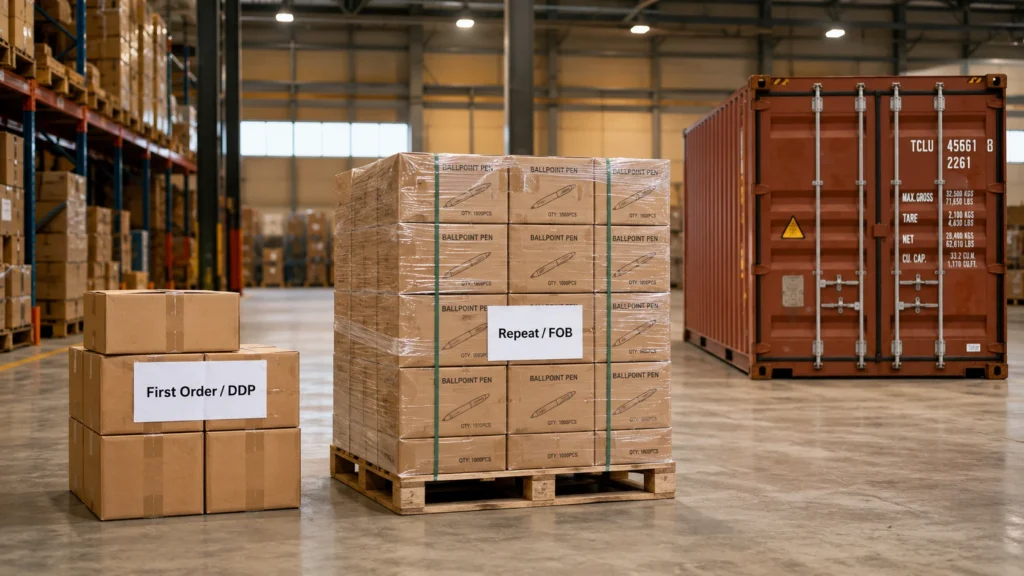
各用語を使用するタイミング
- 初回注文。 DDP。税関保証なし。フォワーダーなし。あなたのペンタイプに必要なHSコードや、インクの化学的性質が追加書類を必要とするかどうかも不明。DDPプレミアムを支払いましょう。追跡情報を確認し、プロセスを学びましょう。一度、出荷がエンドツーエンドで完了するのを見れば、何を最適化すべきかがわかります。 税関保証. なし。フォワーダーなし。あなたのペンタイプに必要な HSコード や、インクの化学的性質が追加書類を必要とするかどうかも不明。DDPプレミアムを支払いましょう。追跡情報を確認し、プロセスを学びましょう。一度、出荷がエンドツーエンドで完了するのを見れば、何を最適化すべきかがわかります。
- 少量注文、2立方メートル未満。 DDPまたは航空貨物。LCLの最低海上運賃は多くの場合、工場DDPが自分で管理するよりも有利になるほど高額です。ペンは軽量です。2,000ユニットの少量注文は数カートンです。工場はあなたの注文を同じ地域向けの他の注文と混載できます。この運送効率を自分で再現することはできません。
- リピート注文、5立方メートル以上。 FOB。あなたは今やHSコードを知っています。税関保証を持っています。フォワーダーがいて、運賃交渉ができます。10~20%の運賃節約とサプライチェーンの可視性により、追加の調整作業を行う価値があります。
- 欧州向け。 経験があってもDDPを検討してください。文房具に関する欧州の通関手続きは米国よりも複雑です。EN71準拠、CEマーキング、国ごとに異なるVAT税率があります。間違えると修正コストが高くなります。工場のDDPプレミアムは、一部通関リスク保険です。欧州では、その保険は通常支払う価値があります。 FOB vs CIF vs DDP運賃比較 工場は商品を船に積むまでを負担します。その後はすべてお客様が負担します。商品が船のレールを越えた時点で所有権はお客様に移ります。輸送中に何かが発生した場合、保険請求は工場ではなくお客様の責任です。
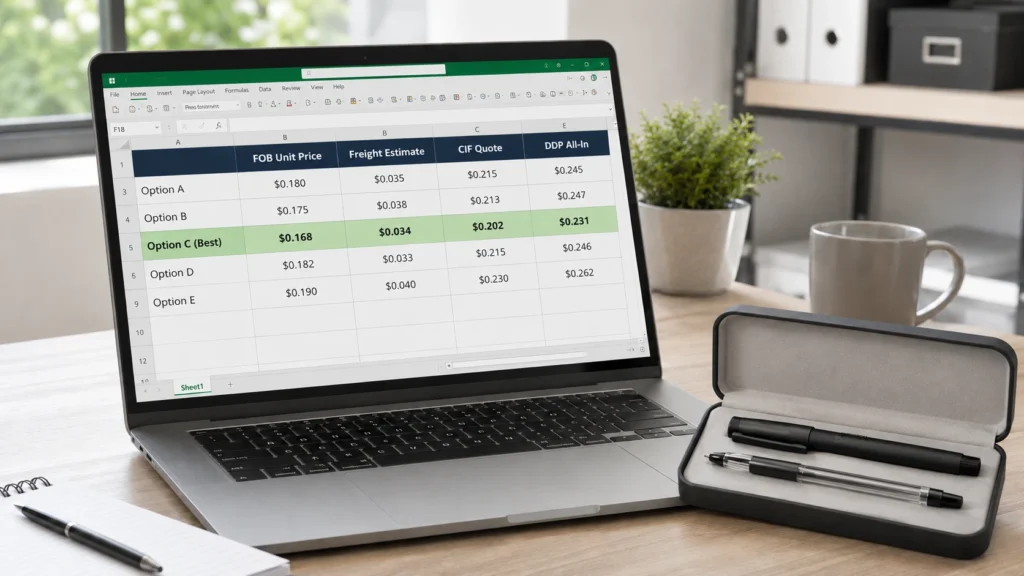
よくある質問
FOBとは簡単に言うと何を意味しますか?
工場はリスクを価格に織り込みます。通関遅延、関税率の変動、運賃の変動、目的地国のブローカーネットワークなどです。DDPプレミアムは通常、FOBに実際の運賃と関税を加えた額より15~25%高いです。不確実性を吸収する代わりに支払っているのです。
初めてのペン出荷において、CIFはFOBより優れていますか?
お客様が負担します。商品が船に積まれた瞬間、リスクはお客様に移ります。これが、経験豊富な輸入業者が自ら貨物保険を購入する理由です。1万5000本のペン出荷に対するオールリスク海上貨物保険は、約75~100通貨単位です。損傷、盗難、水濡れ、コンテナ紛失をカバーします。購入してください。
DDPがFOBよりも高額になる理由は何ですか?
中国のペン工場とインコタームズを交渉できますか?
FOB条件で輸送中に商品が損傷した場合、誰が費用を負担するのか。
はい。ほとんどの工場はリスクを限定するためFOBを標準とします。依頼すればCIFやDDPの見積もりも提示します。比較のために常に少なくとも2つの条件を取得してください。CIFの見積もりがFOBに推定運賃を加えた額より5~8%以上高い場合、水増しされています。ZH STATIONERYは3つの条件すべてを見積もり、コスト構成を分解して比較できるようにします。
はい。お客様が海上運賃を予約します。フォワーダーが船舶予約、船荷証券、目的地の通関手続き、トラック輸送を担当します。文房具やペン出荷に精通したフォワーダーを見つけてください。適切なHSコード、インクの書類要件、そしてAmazon FBAへの配送方法(該当する場合)を把握しています。ZH STATIONERYに連絡して配送条件を協議し、FOBとDDPの見積もりを並べて取得し、ペン輸入のための書類サポートを受けてください。 FOB vs CIF vs DDP工場バイヤー交渉?
FOB vs CIF vs DDPは、どの条件が勝るかではありません。どの条件がお客様の経験、注文サイズ、負担したいリスクの程度に合うかです。初心者はDDPを選んでください。フォワーダーがいる場合はFOBに切り替えてください。CIFは保険とフォワーダーの上乗せを確認した後にのみ使用してください。
FOBの下でフォワーダーは必要ですか?
ペン製品ラインの配送オプションを協議し、透明性のある見積もりを取得するためにご連絡ください。 中国工場の配送条件. CIFインコタームズペン DDP配送中国, FOB配送ペン.
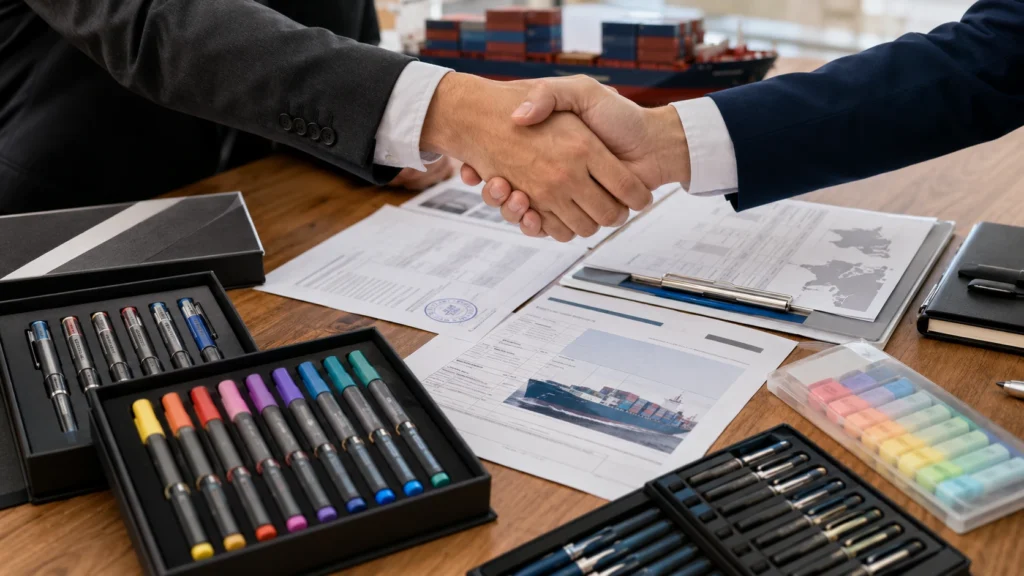
国際配送ペン. お問い合わせ先:ZH STATIONERY ペン貨物フォワーディング.
関連ガイド: 次のパッケージングおよび物流のステップについては、こちらをご覧ください。 法人顧客向けカスタム刻印ペン.
関連記事
- マーカーセットのカートンサイズ:12/24/36/48/60色セットの総重量とCBMガイド
- ラテンアメリカ文房具輸入ガイド:マーカーセット、MOQ、および配送計画
- 2025年上半期中国ペン市場レポート:究極の調達ガイド
外部参照: ICCインコタームズのチェックリストとフローチャート.
最低注文数量は、SKUごと・色ごと(ペンの各モデルの各色)に3,000本です。数量はセット数ではなく、ペン1本単位で数えます。