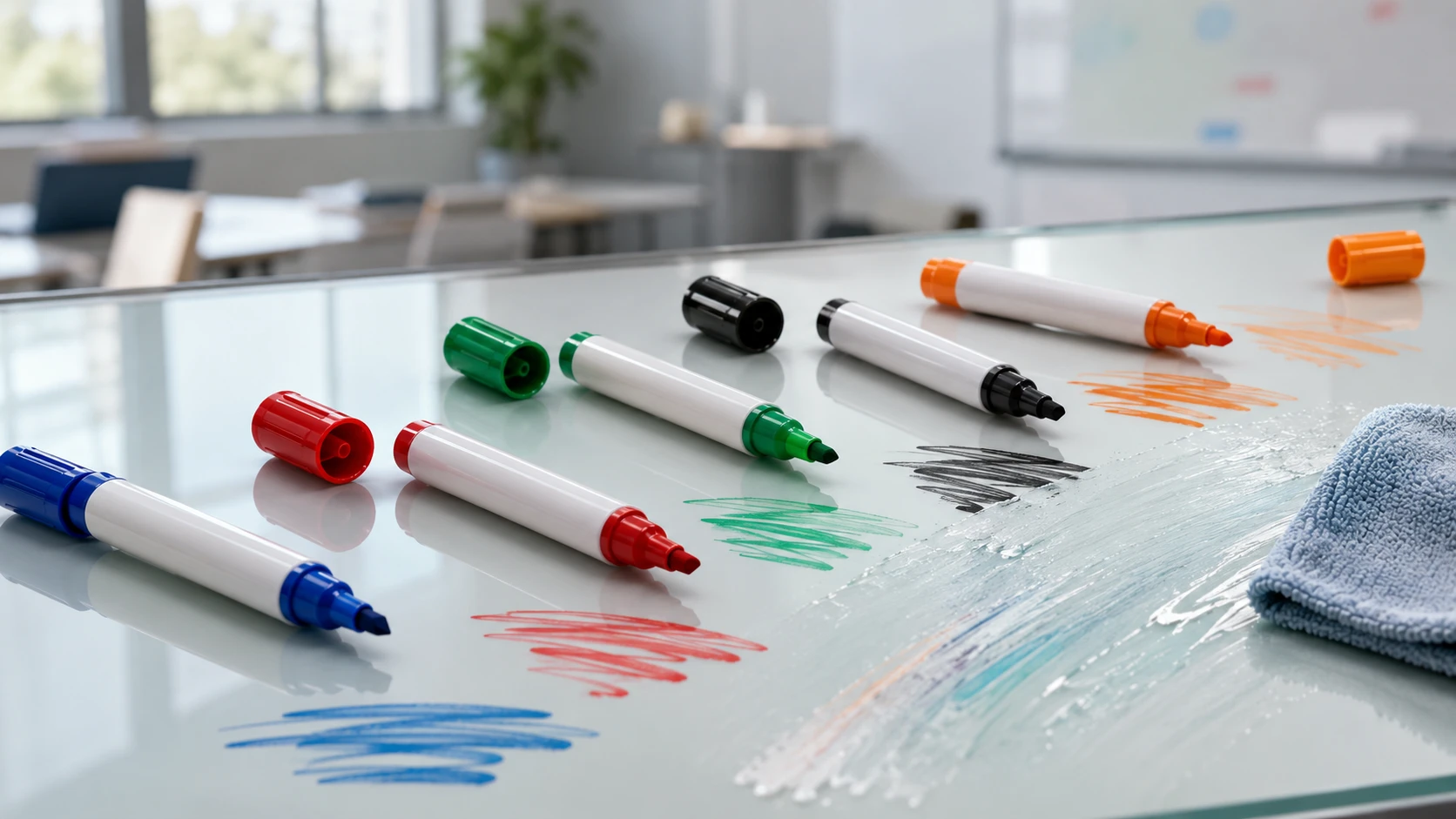
If you source writing instruments for commercial, education, or hotel and food channels, watch buyer demand. More end users want markers that stay put until someone removes them on purpose. Permanent markers are a different category. The product gaining steady traction is the wet erase marker. The reasons run deeper than most buying teams realize.
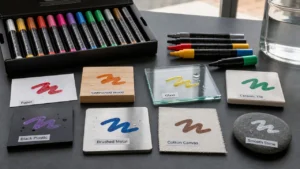
Wet erase markers sit between dry erase ease and permanent ink strength. Their water-based, paste ink sticks well to non-porous surfaces. That includes whiteboards, glass, laminated boards, acrylic displays, and projector films. The ink resists accidental smudging, heat, and light wear. Removal needs a damp cloth. The writing survives casual contact, then cleans up when it is time to update. That behavior solves real workflow problems. Restaurants rotate menu boards. Schools keep weekly schedules. Offices run planning templates. Retailers manage promotional signs.
The numbers back up the signal. Global Growth Insights puts the global whiteboard markers market near USD 658 million in 2025. Wet-erase variants make up about 16% of category value. That is roughly USD 110 million in 2026. Growth runs at an estimated 4.76% CAGR through 2035. Intel Market Research pegs the wider wet erase chalk marker segment at USD 850 million in 2024. The projection passes USD 1.15 billion by 2034. These are not explosive numbers. They are steady, supported demand across sectors that keep buying in downturns. Schools still need schedules. Restaurants still need menus. Warehouses still need bin labels.
For brand owners, wholesalers, and buying managers, wet erase markers matter. The real question is your supplier. Can it deliver the steadiness, custom work, and compliance your channel needs? This report covers what is changing, what to watch, and how to source with fewer surprises.
Tabla de Contenidos
Respuesta Rápida: ¿Qué Deben Priorizar los Compradores B2B al Adquirir Marcadores de Borrado Húmedo en 2026?
- Ink formula stability matters more than unit price (batch-level color and viscosity drift is the most common cause of end-user complaints in wet erase products
- Surface compatibility testing should be part of your supplier audit, not assumed from spec sheets) different laminate coatings, glass treatments, and board materials interact differently with paste-based inks
- Las formulaciones de bajo olor y no tóxicas representan ahora aproximadamente el 48% de la preferencia de los compradores en mercados desarrollados, y EN71 / ASTM D-4236 el cumplimiento normativo es cada vez más innegociable para los canales educativo y minorista.
- Customization depth (tip type, barrel design, color range, packaging format) separates commodity suppliers from partners who can support private-label programs across multiple SKUs
- El borrado en húmedo y el borrado en seco sirven para diferentes casos de uso, y tener ambos en su catálogo fortalece su posición con compradores que atienden entornos mixtos como escuelas, hoteles y espacios de coworking.
These factors help brand owners and buying managers set clearer sourcing standards. They also shape inspection rules before you commit to bulk making.

Borrado en Húmedo vs. Borrado en Seco: Una Decisión de Abastecimiento B2B, No Solo una Elección de Producto
The difference between wet erase and dry erase markers is not just a consumer preference question. It is a product-line strategy choice. It affects your inventory mix, your quality-control checklist, and how customers see your catalog.
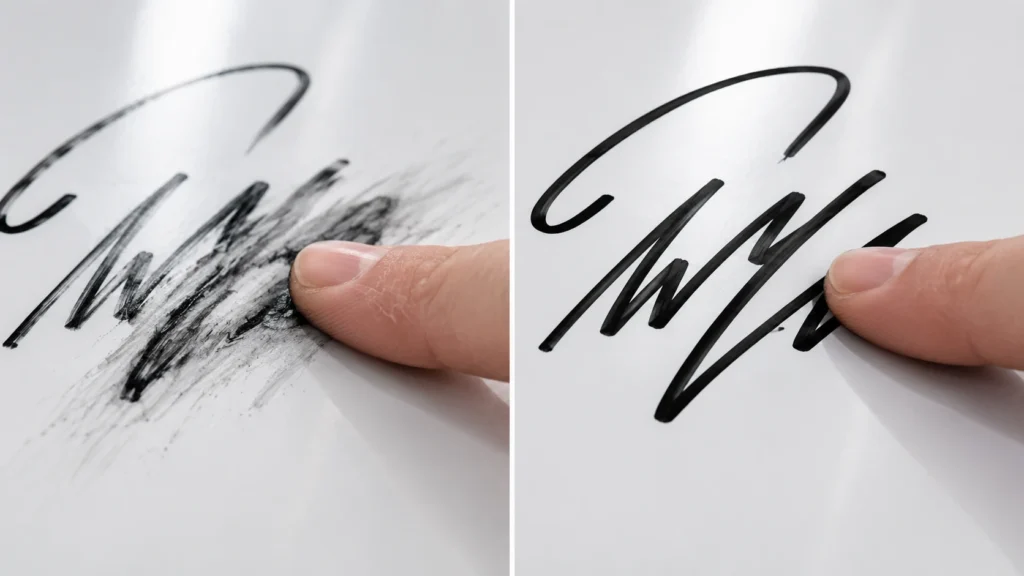
Dry erase markers use alcohol ink. It evaporates fast and wipes off with a dry cloth or eraser. They dominate classrooms and meeting rooms because they support quick, repeated updates. Wet erase markers use water-based, paste ink. It grips surfaces harder and needs moisture for removal. That makes them the default for static displays, scheduling boards, menu panels, transit labels, and similar settings. Accidental erasure creates friction there. Think of a server brushing a drink special board. Think of a student leaning on a timetable. Think of a warehouse worker handling labeled bins.
The table below maps common end-user pain points to factory-level quality metrics. Experienced buyers check these before bulk orders.
| Problema común | Por qué falla (causa raíz) | Métrica de control de calidad en fábrica |
| La tinta se mancha días después de escribir | Viscosidad de la tinta demasiado baja; aglutinante insuficiente en la formulación de la pasta | Pruebas de viscosidad por lote; ensayos de tiempo sin tapa a temperatura y humedad controladas |
| Los colores se desvanecen de manera desigual en vidrio o laminado | Dispersión de pigmento inconsistente; solvente portador incompatible con el recubrimiento de la superficie | Pruebas de adhesión específicas para la superficie y resistencia a la luz en al menos 3 tipos de sustrato |
| El marcador se seca semanas después de abrirlo | Tolerancia del sello de la tapa demasiado floja; formulación de retención de tinta insuficiente | Medición de la fuerza de extracción de la tapa; pruebas de envejecimiento acelerado a 40°C para la integridad del sello de la tapa |
| Fantasmas o residuos después de la limpieza | El componente colorante penetra en los microporos de la superficie; el aglutinante deja una película | Pruebas de limpieza sin residuos en pizarras blancas y superficies de vidrio envejecidas después de tiempos de permanencia de 24 y 72 horas |
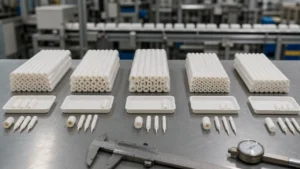
| Punta deshilachada o blanda después de un uso moderado | Densidad de fibra inconsistente; unión de la punta inadecuada para el flujo de tinta a base de pasta | Pruebas de resistencia a la abrasión de la punta; consistencia del flujo de tinta entre lotes de producción |
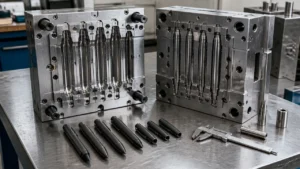
| Agrietamiento del cuerpo en la rosca o el clip | Proporción de mezcla de resina fuera de especificación; temperatura del molde inconsistente durante la inyección | Prueba de caída a 1.2 m; prueba de torque de la rosca; prueba de fatiga cíclica del clip |
Each failure mode traces back to a controllable making variable. When you evaluate a bulk wet erase markers supplier, ask to see more than finished samples. Ask for the in-process QC records that tie to these metrics.

What Is Changing In The Wet Erase Marker Market (And Why It Matters For B2B Buyers
La demanda se está desplazando hacia el uso en múltiples superficies y múltiples sectores.
The old view of wet erase markers as a niche product for overhead projectors is outdated. Today's demand spans many channels. hotel and food uses menu boards, table signs, and kitchen displays. Education uses classroom scheduling boards, reusable worksheets, and lab labels. Retail uses window signs, shelf talkers, and promotional displays. Logistics uses bin labels, rack tags, and shipping board marks. Corporate teams use planning boards, conference calendars, and facility tags.
That spread changes what buyers should look for in a supplier. A factory that only optimizes for classroom whiteboards may fail on glass. It may also fail on certain laminates. A wet erase marker OEM manufacturer with multi-surface testing gives you flexibility across channels. You do not need a separate supplier for every use case.
Las expectativas de cumplimiento normativo se están endureciendo en los mercados de Estados Unidos y Europa.
Two standards dominate U.S. and EU buying conversations. EN71 is the EU toy safety standard. Parts 3 and 9 cover migration of certain elements and organic compounds. ASTM D-4236 is the U.S. standard for art materials with chronic hazard labeling. Neither is new, but enforcement scrutiny and buyer awareness have both grown.
For education-channel buyers, EN71 and ASTM compliance is table stakes. Without it, products cannot enter most school supply systems. For retail and hotel and food, the same certificates cut liability exposure and simplify your compliance files. When you evaluate suppliers, confirm the certificates are current. Confirm the reports come from accredited third-party labs, not in-house claims.
Las formulaciones de bajo olor se están convirtiendo en una expectativa del mercado.
Across developed markets, low-odor markers now make up about 48% of buyer preference. Indoor air quality sensitivity is rising in classrooms, offices, and food-service settings. That preference hits wet erase quality standards directly. The solvents and binders in paste ink shape the odor profile. Rebuilding a mix for low odor while keeping adhesion, erasability, and shelf stability takes real R&D.
A factory with an in-house ink lab can tune the mix for low odor. It can also tune for the performance your market needs. A factory that buys standard ink from third parties has less room to adjust. A facility with 26+ years of OEM/ODM experience has a dedicated ink R&D lab. There, odor, viscosity, color, and surface fit are normal work. They are not special requests that add months to your timeline.
Estrategia de Abastecimiento: Cómo Evaluar a los Proveedores de Marcadores de Borrado en Húmedo Antes de Realizar Pedidos al Por Mayor
Comience con la superficie de su usuario final, no con la ficha técnica del proveedor.
The most common sourcing mistake is testing markers in isolation. A fresh whiteboard in an office is not the same as a restaurant's laminated menu. It is also not the same as a school's five-year-old board. Surface conditions vary a lot. Microscopic scratches from cleaning change things. Different laminate chemistries change things. Anti-glare coatings on glass change things. Plasticizer migration from some PVC surfaces changes how paste ink sticks and releases.
Before you request samples, define the surfaces your customers actually use. Then ask the supplier for adhesion and clean-erase results on those exact substrates. If the supplier cannot show tests on the right surfaces, the risk of post-delivery complaints lands on you.
La consistencia del lote importa más que el precio unitario
When you order 5,000 to 50,000+ units, batch-to-batch ink steadiness drives the most end-user complaints. It is also the variable that commodity-focused factories are least equipped to control.
paste ink wet erase ink is more sensitive to drift than alcohol dry erase ink. Small shifts in pigment dispersion, binder ratio, or solvent loss can change color between batches. Drying time and erasability can shift too. A shipment that looks different from the approved sample starts a chain of problems. Customer returns. Bad reviews. Rework costs. Lost trust.
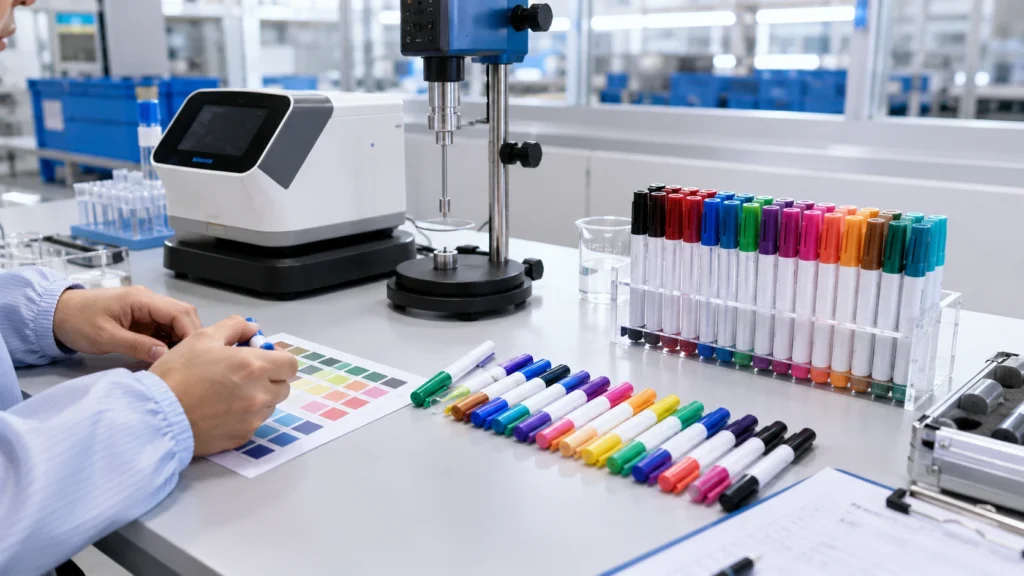
Factories that control the ink mix in-house can hold tighter batch steadiness, because they own the variables. making records tell the real story. Look for viscosity readings, color spectrophotometer data, and cap-off time for each batch. When you evaluate a wet erase marker OEM manufacturer, ask how it documents batch steadiness. Ask whether it keeps retention samples for dispute resolution.
La personalización debería ser estándar, no un complemento de pago adicional.
For private-label programs, custom work goes beyond printing a logo on a barrel. Real custom work ability includes:
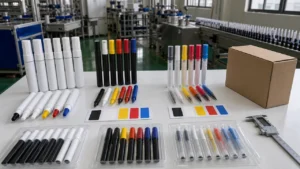
- Opciones de tipo y tamaño de punta: Puntas de bala, cincel, fina y jumbo para diferentes aplicaciones de escritura, desde trabajos detallados con plantillas hasta señalización de gran formato.
- Flexibilidad en la gama de colores: La capacidad de igualar colores específicos de marca o de mercado más allá de los conjuntos estándar de negro, azul, rojo y verde.
- Diseño del barril y opciones de molde: Moldes estándar para programas sensibles al costo o moldes personalizados para diseños exclusivos de marca privada.
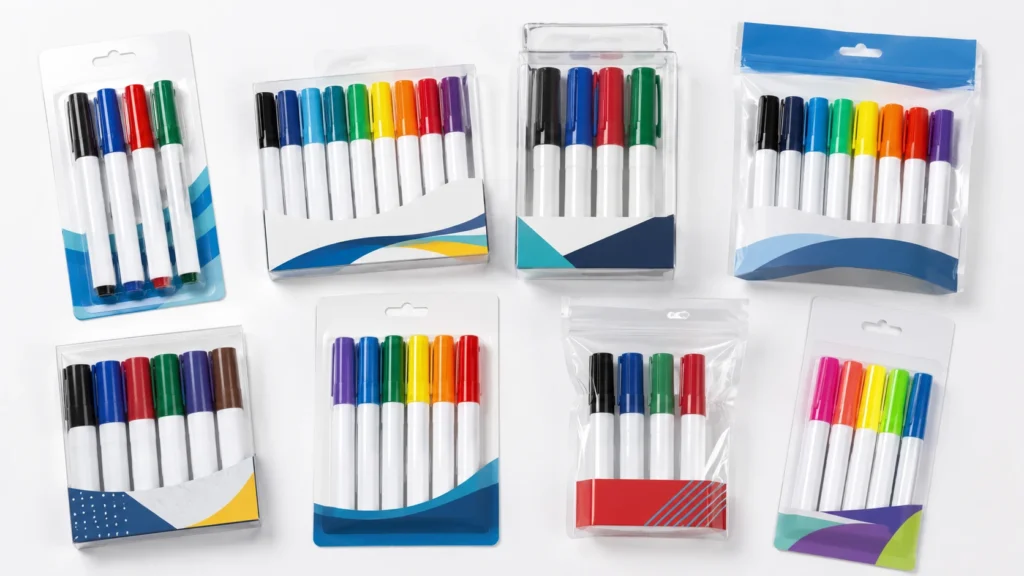
- Formato de empaque: Tarjetas blister, cajas de PET, bolsas, empaques listos para exhibición minorista o empaques a granel para compradores institucionales.
- Ajuste de la formulación de la tinta: Ajustar el tiempo de secado, la opacidad, el perfil de olor y la compatibilidad con la superficie para cumplir con los requisitos específicos del canal.
A factory with 10000+ sqm of space and automated lines can prove its scale. So can 2,000+ new SKUs per year. Those signals show that custom work is core to its model. It is not an occasional favor. When you ask for a 6-color set with chisel tips and low-odor ink, watch the response. Add retail display packaging to the request. The response time and sample quality tell you the truth. custom work is either standard workflow or a special favor.
La Fase de Muestreo Revela Más Que La Cotización
Pricing, MOQ, and lead time are necessary data points. The sampling phase shows whether a supplier can actually execute. Pay attention to:
- Tiempo de entrega de muestras: ¿Se mide en días o semanas? Una entrega rápida con especificaciones precisas sugiere una coordinación interna eficiente.
- Coincidencia entre muestra y producción: ¿La muestra de producción coincide con la muestra de preproducción? Si no es así, el control de procesos de la fábrica es insuficiente para pedidos repetidos.
- Comunicación durante el muestreo: ¿El proveedor hace preguntas aclaratorias sobre sus tipos de superficie, entorno de uso y requisitos de empaque? ¿O simplemente confirman el pedido y envían lo que tienen en el estante?
These signals predict long-term supplier performance better than the quoted unit price.
Señales de Control de Calidad que Todo Comprador B2B Debe Verificar
Before you commit to a making run, check the supplier's QC system. It must cover the failure modes that hit your channel. The following checkpoints separate suppliers who control quality from suppliers who inspect after problems appear.
- Inspección de materiales entrantes. Las puntas, los barriles, las tapas y las materias primas de la tinta deben verificarse según las especificaciones antes de ingresar a la producción. Un lote de resina de barril faltante o inconsistente puede causar problemas de agrietamiento que solo aparecen después del envío.
- Verificaciones de viscosidad y flujo durante el proceso. Ink viscosity directly affects writing feel, line consistency, and cap-off longevity. In-process measurement (not just final inspection) catches drift before it affects an entire batch.
- Pruebas de integridad del sellado. La tolerancia del ajuste de la tapa es uno de los puntos de falla más comunes en los marcadores de borrado en húmedo porque la tinta a base de pasta se seca más rápido que las formulaciones a base de alcohol una vez expuesta al aire. La medición de la fuerza de extracción y las pruebas de envejecimiento acelerado son métodos estándar.
- Inspección completa antes del empaque. At facilities where every unit passes through visual and functional inspection before packing, defect rates at the buyer’s warehouse drop measurably. This is not a marketing claim (it is an operational choice that adds labor cost in exchange for complaint reduction.
- Retención de lotes y trazabilidad. Un proveedor que conserva muestras físicas de cada lote de producción y mantiene registros de trazabilidad a nivel de lote puede resolver disputas de manera objetiva en lugar de mediante negociación.
Some of these practices need investment beyond what small workshops can support. A factory running 10000+ sqm with 8 making workshops and automated lines is built for steadiness at scale. It is not better because it claims to be. It is better because the making environment makes process control possible.
Preguntas Frecuentes
1. ¿Cuál es la diferencia entre los marcadores de borrado en húmedo y los de borrado en seco desde una perspectiva de abastecimiento?
From a sourcing view, the critical difference is the ink and what it means for QC. Wet erase markers use water-based, paste ink. It needs tighter viscosity control than alcohol dry erase ink. Batch management must be more sensitive. Cap-seal testing must be more thorough. If your supplier runs the same checklist for both types, expect more complaints on the wet erase side.
2. ¿Cómo puedo verificar la calidad de un proveedor de marcadores de borrado en húmedo antes de realizar un pedido al por mayor?
Request making samples tested on the surfaces your customers use. A generic whiteboard is not enough. Ask for batch-level QC records with viscosity and color data. Confirm that EN71 and ASTM D-4236 certificates are current. Confirm they come from accredited third-party labs. Order a small trial batch before full making. Compare the trial batch with the approved sample. A supplier with structured sampling and QC files cuts your exposure. So does 100% inspection before packing.
3. ¿Qué Certificaciones Debo Buscar al Adquirir Marcadores de Borrado en Húmedo para los Mercados de EE. UU. y Europa?
For the U.S. market, ASTM D-4236 is the standard for art and writing materials. For Europe, EN71 Part 3 covers migration of certain elements. EN71 Part 9 covers organic compounds. Both are essential for school and retail channels. REACH compliance is increasingly expected for EU distribution. Always confirm that reports come from accredited independent labs, not supplier self-declarations.
4. ¿Se pueden personalizar completamente los marcadores de borrado en húmedo para marcas de etiqueta privada?
Yes. A capable OEM manufacturer can customize the ink mix, color, drying time, and odor profile. It can customize tip type and size, bullet, chisel, fine, or jumbo. It can customize barrel design with standard or custom molds. It can customize color sets and packaging formats like blister cards, boxes, pouches, or display-ready packs. When you evaluate custom wet erase markers private label options, ask to see past projects with similar scope. Do not rely on ability claims alone. The minimum order for custom OEM/ODM programs is 50,000 pens per order, counted by total individual pens produced. For a 12-color pack, that equals roughly 4,200 sets, not 50,000 of each color. Standard stock models can be sampled at smaller trial sizes.
5. ¿Cuál es el MOQ típico para pedidos al por mayor de marcadores de borrado en húmedo?
The minimum order for custom OEM/ODM programs is 50,000 pens per order, counted by total individual pens produced. For a 12-color pack, that equals roughly 4,200 sets, not 50,000 of each color. Standard stock models can be sampled at smaller trial sizes.
6. ¿Cómo Debo Considerar los Marcadores de Borrado en Húmedo Versus los de Borrado en Seco para Mi Catálogo de Productos?
The decision depends on your customer base. If your buyers mainly serve schools and corporate offices, dry erase will likely lead volume. A complementary wet erase line still strengthens your position as a full-category supplier. That helps with customers who run administrative offices, facilities teams, or campus operations. Many OEM makers offer both types under one sourcing relationship. That simplifies logistics. It cuts supplier management overhead. It supports consolidated pricing. For buyers sourcing wholesale wet erase markers for schools alongside dry erase, a combined program can improve unit economics and supply chain efficiency.
Conclusión: Los marcadores de borrado en húmedo merecen su propio manual de abastecimiento.
Wet erase markers sit in a category many buyers treat as an afterthought. It is a checkbox added to a dry erase order without much scrutiny. That approach creates risk that is fully avoidable. paste ink is more sensitive to making variables than alcohol ink. Surface fit varies. Batch steadiness needs real process control, not final inspection alone. End-user expectations around odor, erasability, and color are rising in every channel that buys these products.
The good news is that the supplier landscape is mature. Buyers who invest in review can find partners that fit their needs. The right factory brings steadiness, custom work, and compliance at competitive prices. A factory with deep OEM/ODM experience and in-house ink ability removes the variables behind common sourcing headaches. Add systematic QC and the scale for repeat bulk orders, and the picture is complete.
If you are sourcing wet erase markers, metallic markers, or gel pens for private-label programs, retail, school supply, or commercial accounts, contact ZH STATIONERY. We can discuss specifications. We can send samples. We can review packaging options. We can provide bulk making quotes.
Guía relacionada: Para obtener más contexto del mercado, consulte How to Sourcing Children's Drawing Markers? A B2B Buyer's Guide Based on 3-6 Year Olds' Color Preferences.
Lecturas relacionadas
- Marcadores de borrado en húmedo frente a otros tipos de bolígrafos: una estrategia de abastecimiento B2B para 2026
- Explicación de la tinta de los marcadores de borrado en seco: por qué algunas fórmulas manchan las telas y qué deben verificar los compradores B2B
- Eliminación de manchas de marcadores de borrado en seco: Lo que todo comprador B2B debe saber sobre la lavabilidad de la tinta
- Guía de tinta de marcadores de grado alimenticio
- guía de seguridad del marcador infantil OEM
- Guía de pruebas de formaldehído en artículos de papelería
- Guía para rotuladores comestibles