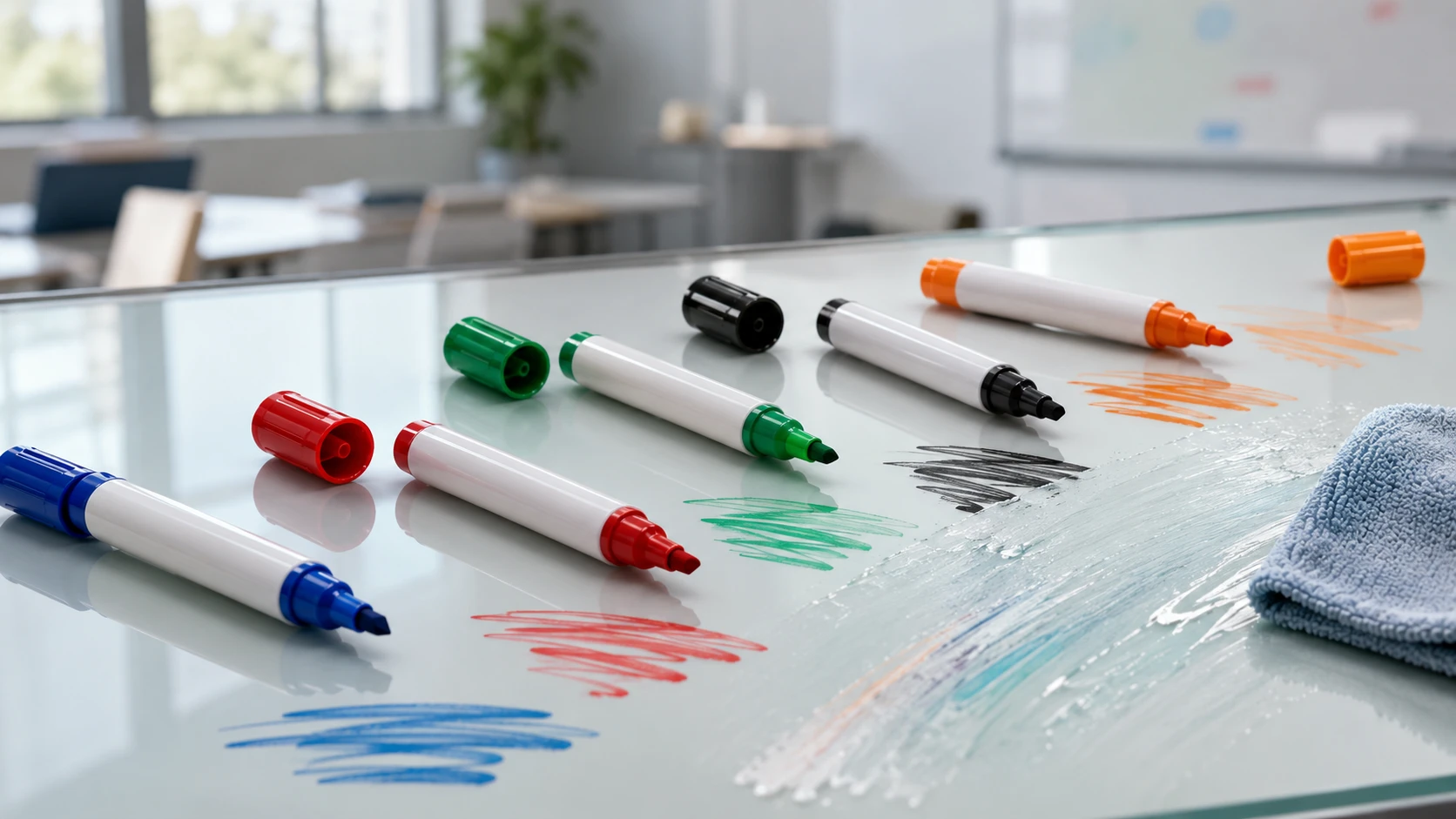
If you source writing instruments for commercial, education, or hotel and food channels, watch buyer demand. More end users want markers that stay put until someone removes them on purpose. Permanent markers are a different category. The product gaining steady traction is the wet erase marker. The reasons run deeper than most buying teams realize.
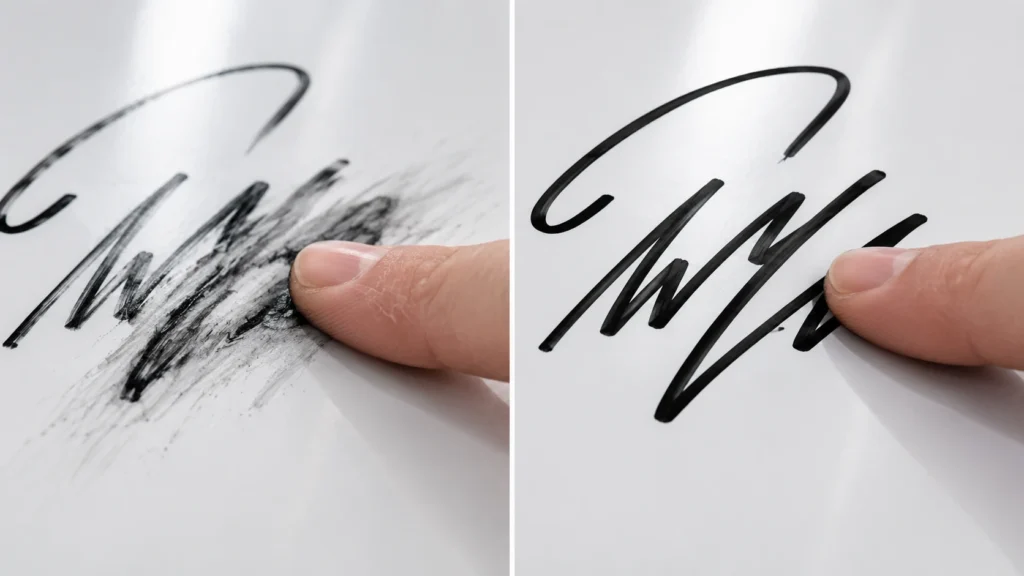
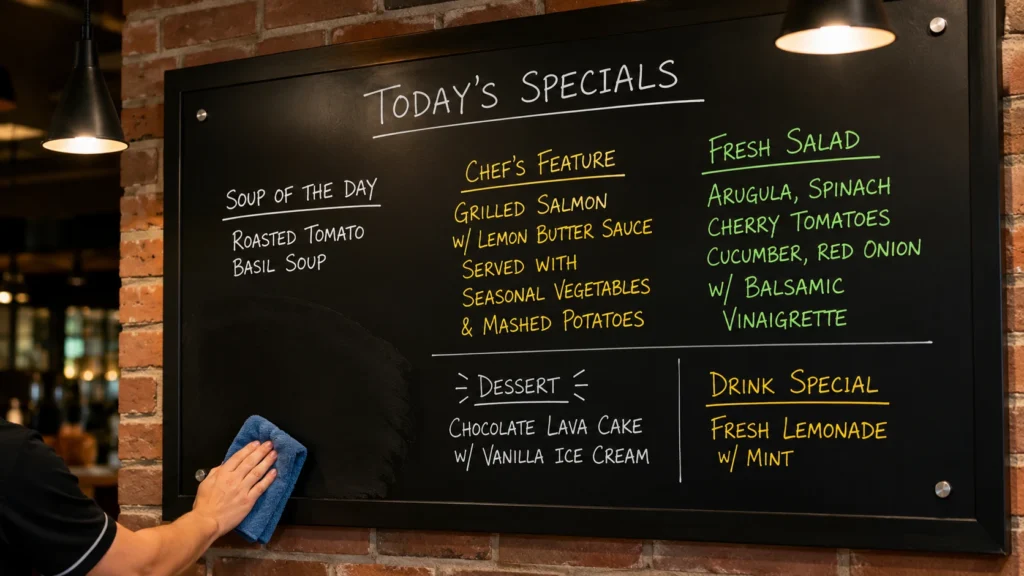
Wet erase markers sit between dry erase ease and permanent ink strength. Their water-based, paste ink sticks well to non-porous surfaces. That includes whiteboards, glass, laminated boards, acrylic displays, and projector films. The ink resists accidental smudging, heat, and light wear. Removal needs a damp cloth. The writing survives casual contact, then cleans up when it is time to update. That behavior solves real workflow problems. Restaurants rotate menu boards. Schools keep weekly schedules. Offices run planning templates. Retailers manage promotional signs.
The numbers back up the signal. Global Growth Insights puts the global whiteboard markers market near USD 658 million in 2025. Wet-erase variants make up about 16% of category value. That is roughly USD 110 million in 2026. Growth runs at an estimated 4.76% CAGR through 2035. Intel Market Research pegs the wider wet erase chalk marker segment at USD 850 million in 2024. The projection passes USD 1.15 billion by 2034. These are not explosive numbers. They are steady, supported demand across sectors that keep buying in downturns. Schools still need schedules. Restaurants still need menus. Warehouses still need bin labels.
For brand owners, wholesalers, and buying managers, wet erase markers matter. The real question is your supplier. Can it deliver the steadiness, custom work, and compliance your channel needs? This report covers what is changing, what to watch, and how to source with fewer surprises.
Inhaltsverzeichnis
Kurze Antwort: Worauf sollten B2B-Käufer bei der Beschaffung von abwischbaren Markern im Jahr 2026 priorisiert achten?
- Ink formula stability matters more than unit price (batch-level color and viscosity drift is the most common cause of end-user complaints in wet erase products
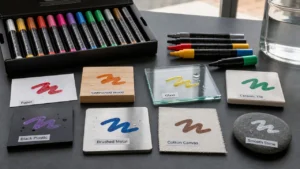
- Surface compatibility testing should be part of your supplier audit, not assumed from spec sheets) different laminate coatings, glass treatments, and board materials interact differently with paste-based inks
- Geruchsarme, ungiftige Formulierungen machen inzwischen etwa 48 % der Käuferpräferenz in entwickelten Märkten aus, und EN71- / und ASTM D-4236- Compliance ist für Bildungs- und Einzelhandelskanäle zunehmend nicht verhandelbar
- Customization depth (tip type, barrel design, color range, packaging format) separates commodity suppliers from partners who can support private-label programs across multiple SKUs
- Wet erase und dry erase bedienen unterschiedliche Anwendungsfälle, und die Aufnahme beider in Ihren Katalog stärkt Ihre Position bei Käufern, die gemischte Umgebungen wie Schulen, Hotels und Coworking-Spaces bedienen
These factors help brand owners and buying managers set clearer sourcing standards. They also shape inspection rules before you commit to bulk making.
Nass abwischbar vs. Trocken abwischbar: Eine B2B-Beschaffungsentscheidung, nicht nur eine Produktwahl
The difference between wet erase and dry erase markers is not just a consumer preference question. It is a product-line strategy choice. It affects your inventory mix, your quality-control checklist, and how customers see your catalog.
Dry erase markers use alcohol ink. It evaporates fast and wipes off with a dry cloth or eraser. They dominate classrooms and meeting rooms because they support quick, repeated updates. Wet erase markers use water-based, paste ink. It grips surfaces harder and needs moisture for removal. That makes them the default for static displays, scheduling boards, menu panels, transit labels, and similar settings. Accidental erasure creates friction there. Think of a server brushing a drink special board. Think of a student leaning on a timetable. Think of a warehouse worker handling labeled bins.
The table below maps common end-user pain points to factory-level quality metrics. Experienced buyers check these before bulk orders.
| Häufiges Problem | Warum es auftritt (Grundursache) | Werkseitige Qualitätskontrollmetrik |
| Tinte verschmiert Tage nach dem Beschriften | Tintenviskosität zu niedrig; unzureichendes Bindemittel in der Pastenformulierung | Chargenweise Viskositätsprüfung; Offenzeitversuche bei kontrollierter Temperatur und Luftfeuchtigkeit |
| Farben verblassen ungleichmäßig auf Glas oder Laminat | Pigmentdispersion inkonsistent; Trägerlösungsmittel inkompatibel mit Oberflächenbeschichtung | Oberflächenspezifische Haftungs- und Lichtechtheitsprüfung auf mindestens 3 Substrattypen |
| Marker trocknet innerhalb von Wochen nach dem Öffnen aus | Toleranz der Kappendichtung zu locker; Tintenrückhalteformulierung unzureichend | Messung der Kappenabzugskraft; beschleunigte Alterungstests bei 40°C für die Integrität der Kappendichtung |
| Geisterbilder oder Rückstände nach der Reinigung | Farbstoffkomponente dringt in Oberflächenmikroporen ein; Bindemittel hinterlässt einen Film | Sauber-Wisch-Tests auf gealterten Whiteboard- und Glasoberflächen nach 24-stündigen und 72-stündigen Standzeiten |
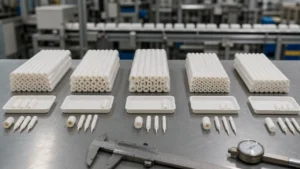
| Spitzenausfransen oder -aufweichen nach mäßigem Gebrauch | Faserdichte inkonsistent; Spitzenbindung unzureichend für pastenbasierten Tintenfluss | Prüfung der Spitzenabriebfestigkeit; Konsistenz der Tintenflussrate über Produktionschargen hinweg |
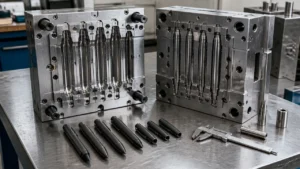
| Schaftbruch am Gewinde oder Clip | Harzmischungsverhältnis außerhalb der Spezifikation; Formtemperatur während des Spritzgießens inkonsistent | Falltest aus 1,2 m Höhe; Gewindedrehmomentprüfung; Ermüdungszyklentest des Clips |
Each failure mode traces back to a controllable making variable. When you evaluate a bulk wet erase markers supplier, ask to see more than finished samples. Ask for the in-process QC records that tie to these metrics.

What Is Changing In The Wet Erase Marker Market (And Why It Matters For B2B Buyers
Die Nachfrage verlagert sich hin zur Nutzung über mehrere Oberflächen und Sektoren hinweg.
The old view of wet erase markers as a niche product for overhead projectors is outdated. Today's demand spans many channels. hotel and food uses menu boards, table signs, and kitchen displays. Education uses classroom scheduling boards, reusable worksheets, and lab labels. Retail uses window signs, shelf talkers, and promotional displays. Logistics uses bin labels, rack tags, and shipping board marks. Corporate teams use planning boards, conference calendars, and facility tags.
That spread changes what buyers should look for in a supplier. A factory that only optimizes for classroom whiteboards may fail on glass. It may also fail on certain laminates. A wet erase marker OEM manufacturer with multi-surface testing gives you flexibility across channels. You do not need a separate supplier for every use case.
Die Erwartungen an die Einhaltung von Vorschriften werden auf den US-amerikanischen und europäischen Märkten strenger.
Two standards dominate U.S. and EU buying conversations. EN71 is the EU toy safety standard. Parts 3 and 9 cover migration of certain elements and organic compounds. ASTM D-4236 is the U.S. standard for art materials with chronic hazard labeling. Neither is new, but enforcement scrutiny and buyer awareness have both grown.
For education-channel buyers, EN71 and ASTM compliance is table stakes. Without it, products cannot enter most school supply systems. For retail and hotel and food, the same certificates cut liability exposure and simplify your compliance files. When you evaluate suppliers, confirm the certificates are current. Confirm the reports come from accredited third-party labs, not in-house claims.
Geruchsarme Formulierungen werden zunehmend zur Markterwartung.
Across developed markets, low-odor markers now make up about 48% of buyer preference. Indoor air quality sensitivity is rising in classrooms, offices, and food-service settings. That preference hits wet erase quality standards directly. The solvents and binders in paste ink shape the odor profile. Rebuilding a mix for low odor while keeping adhesion, erasability, and shelf stability takes real R&D.
A factory with an in-house ink lab can tune the mix for low odor. It can also tune for the performance your market needs. A factory that buys standard ink from third parties has less room to adjust. A facility with 26+ years of OEM/ODM experience has a dedicated ink R&D lab. There, odor, viscosity, color, and surface fit are normal work. They are not special requests that add months to your timeline.
Beschaffungsstrategie: Wie man Lieferanten von feucht abwischbaren Markern bewertet, bevor man Großbestellungen aufgibt
Beginnen Sie mit der Oberfläche Ihres Endverbrauchers, nicht mit dem Datenblatt des Lieferanten
The most common sourcing mistake is testing markers in isolation. A fresh whiteboard in an office is not the same as a restaurant's laminated menu. It is also not the same as a school's five-year-old board. Surface conditions vary a lot. Microscopic scratches from cleaning change things. Different laminate chemistries change things. Anti-glare coatings on glass change things. Plasticizer migration from some PVC surfaces changes how paste ink sticks and releases.
Before you request samples, define the surfaces your customers actually use. Then ask the supplier for adhesion and clean-erase results on those exact substrates. If the supplier cannot show tests on the right surfaces, the risk of post-delivery complaints lands on you.
Die Konsistenz der Chargen ist wichtiger als der Stückpreis.
When you order 5,000 to 50,000+ units, batch-to-batch ink steadiness drives the most end-user complaints. It is also the variable that commodity-focused factories are least equipped to control.
paste ink wet erase ink is more sensitive to drift than alcohol dry erase ink. Small shifts in pigment dispersion, binder ratio, or solvent loss can change color between batches. Drying time and erasability can shift too. A shipment that looks different from the approved sample starts a chain of problems. Customer returns. Bad reviews. Rework costs. Lost trust.
Factories that control the ink mix in-house can hold tighter batch steadiness, because they own the variables. making records tell the real story. Look for viscosity readings, color spectrophotometer data, and cap-off time for each batch. When you evaluate a wet erase marker OEM manufacturer, ask how it documents batch steadiness. Ask whether it keeps retention samples for dispute resolution.
Individualisierung sollte Standard sein, kein Zusatzverkauf
For private-label programs, custom work goes beyond printing a logo on a barrel. Real custom work ability includes:
- Optionen für Spitzentyp und -größe: Spitzen in den Ausführungen Rund, Meißel, Fein und Extrabreit für verschiedene Schreibanwendungen, von detaillierten Schablonenarbeiten bis hin zu großformatigen Beschriftungen.
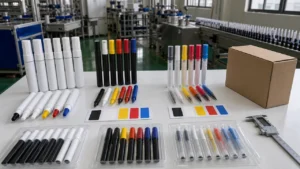
- Flexibilität der Farbpalette: Die Möglichkeit, marken- oder marktspezifische Farben abzustimmen, die über die Standardsets Schwarz, Blau, Rot und Grün hinausgehen.
- Schaftdesign und Formenoptionen: Standardformen für kostenbewusste Programme oder kundenspezifische Formen für exklusive Eigenmarken-Designs.
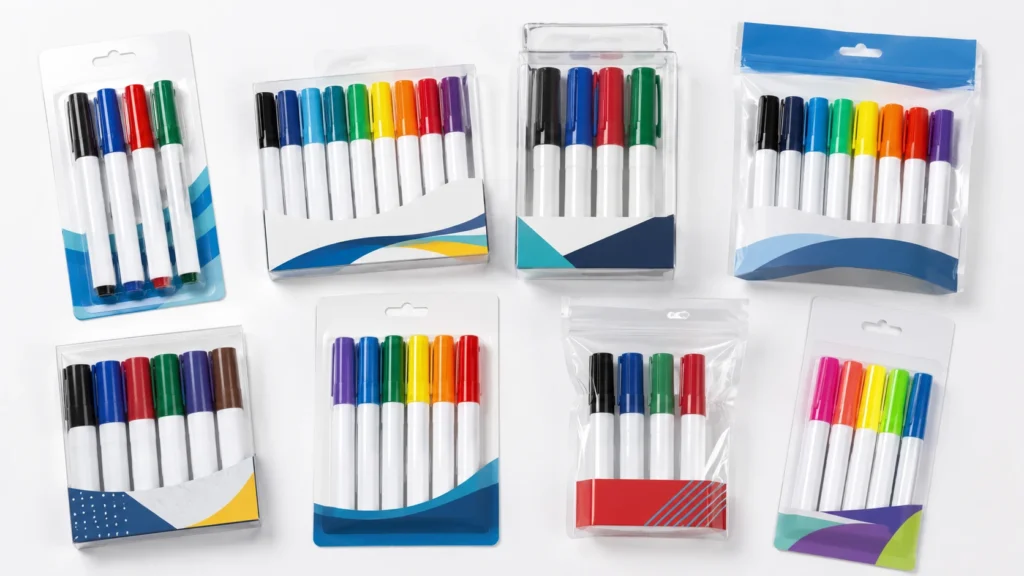
- Verpackungsformat: Blisterkarten, PET-Boxen, Beutel, verkaufsfertige Einzelhandelsverpackungen oder Großgebinde für institutionelle Käufer.
- Optimierung der Tintenrezeptur: Anpassung von Trocknungszeit, Deckkraft, Geruchsprofil und Oberflächenverträglichkeit an spezifische Kanalanforderungen.
A factory with 10000+ sqm of space and automated lines can prove its scale. So can 2,000+ new SKUs per year. Those signals show that custom work is core to its model. It is not an occasional favor. When you ask for a 6-color set with chisel tips and low-odor ink, watch the response. Add retail display packaging to the request. The response time and sample quality tell you the truth. custom work is either standard workflow or a special favor.
Die Probenahmephase offenbart mehr als das Angebot.
Pricing, MOQ, and lead time are necessary data points. The sampling phase shows whether a supplier can actually execute. Pay attention to:
- Musterdurchlaufzeit: Wird sie in Tagen oder Wochen gemessen? Eine schnelle Bearbeitungszeit mit genauen Spezifikationen deutet auf eine effiziente interne Koordination hin.
- Übereinstimmung von Muster und Produktion: Stimmt das Produktionsmuster mit dem Vorserienmuster überein? Wenn nicht, ist die Prozesskontrolle der Fabrik für Wiederholbestellungen unzureichend.
- Kommunikation während der Musterphase: Stellt der Lieferant klärende Fragen zu Ihren Oberflächentypen, Einsatzumgebungen und Verpackungsanforderungen? Oder bestätigt er einfach die Bestellung und versendet, was auf Lager ist?
These signals predict long-term supplier performance better than the quoted unit price.

Qualitätssicherungssignale, die jeder B2B-Käufer überprüfen sollte
Before you commit to a making run, check the supplier's QC system. It must cover the failure modes that hit your channel. The following checkpoints separate suppliers who control quality from suppliers who inspect after problems appear.
- Wareneingangsprüfung. Spitzen, Schäfte, Kappen und Tintenrohstoffe sollten vor dem Produktionseingang gemäß den Spezifikationen geprüft werden. Eine fehlende oder inkonsistente Charge Schaftharz kann Rissprobleme verursachen, die erst nach dem Versand auftreten.
- In-Prozess-Viskositäts- und Fließprüfungen. Ink viscosity directly affects writing feel, line consistency, and cap-off longevity. In-process measurement (not just final inspection) catches drift before it affects an entire batch.
- Dichtheitsprüfung. Die Passungstoleranz der Kappe ist einer der häufigsten Fehlerpunkte bei Feuchtlöschmarkern, da pastenbasierte Tinte bei Luftkontakt schneller austrocknet als alkoholbasierte Rezepturen. Kraftmessung und beschleunigte Alterungstests sind Standardmethoden.
- Vollständige Prüfung vor der Verpackung. At facilities where every unit passes through visual and functional inspection before packing, defect rates at the buyer’s warehouse drop measurably. This is not a marketing claim (it is an operational choice that adds labor cost in exchange for complaint reduction.
- Chargenrückhalt und Rückverfolgbarkeit. Ein Lieferant, der physische Muster jeder Produktionscharge aufbewahrt und Chargen-Rückverfolgbarkeitsaufzeichnungen führt, kann Streitigkeiten objektiv und nicht durch Verhandlung lösen.
Some of these practices need investment beyond what small workshops can support. A factory running 10000+ sqm with 8 making workshops and automated lines is built for steadiness at scale. It is not better because it claims to be. It is better because the making environment makes process control possible.
Häufig gestellte Fragen
1. Was ist der Unterschied zwischen abwischbaren und trocken abwischbaren Markern aus Beschaffungsperspektive?
From a sourcing view, the critical difference is the ink and what it means for QC. Wet erase markers use water-based, paste ink. It needs tighter viscosity control than alcohol dry erase ink. Batch management must be more sensitive. Cap-seal testing must be more thorough. If your supplier runs the same checklist for both types, expect more complaints on the wet erase side.
2. Wie kann ich die Qualität eines Lieferanten von wet erase Markern überprüfen, bevor ich eine Großbestellung aufgebe?
Request making samples tested on the surfaces your customers use. A generic whiteboard is not enough. Ask for batch-level QC records with viscosity and color data. Confirm that EN71 and ASTM D-4236 certificates are current. Confirm they come from accredited third-party labs. Order a small trial batch before full making. Compare the trial batch with the approved sample. A supplier with structured sampling and QC files cuts your exposure. So does 100% inspection before packing.
3. Welche Zertifizierungen sollte ich bei der Beschaffung von abwischbaren Markern für den US-amerikanischen und europäischen Markt beachten?
For the U.S. market, ASTM D-4236 is the standard for art and writing materials. For Europe, EN71 Part 3 covers migration of certain elements. EN71 Part 9 covers organic compounds. Both are essential for school and retail channels. REACH compliance is increasingly expected for EU distribution. Always confirm that reports come from accredited independent labs, not supplier self-declarations.
4. Können Nassabwischbare Marker für Private-Label-Marken vollständig individualisiert werden?
Yes. A capable OEM manufacturer can customize the ink mix, color, drying time, and odor profile. It can customize tip type and size, bullet, chisel, fine, or jumbo. It can customize barrel design with standard or custom molds. It can customize color sets and packaging formats like blister cards, boxes, pouches, or display-ready packs. When you evaluate custom wet erase markers private label options, ask to see past projects with similar scope. Do not rely on ability claims alone. The minimum order for custom OEM/ODM programs is 50,000 pens per order, counted by total individual pens produced. For a 12-color pack, that equals roughly 4,200 sets, not 50,000 of each color. Standard stock models can be sampled at smaller trial sizes.
5. Wie hoch ist die typische Mindestbestellmenge (MOQ) für Großbestellungen von abwischbaren Markern?
Die Mindestbestellmenge für kundenspezifische OEM/ODM-Programme beträgt 50.000 Stifte pro Bestellung, gezählt als Gesamtzahl der produzierten Einzelstifte. Bei einer 12-Farben-Packung entspricht das etwa 4.200 Sets, nicht 50.000 pro Farbe. Standard-Lagerware kann in kleineren Testmengen bemustert werden.
6. Wie sollte ich über Nass-abwischbare vs. Trocken-abwischbare Marker für meinen Produktkatalog denken?
The decision depends on your customer base. If your buyers mainly serve schools and corporate offices, dry erase will likely lead volume. A complementary wet erase line still strengthens your position as a full-category supplier. That helps with customers who run administrative offices, facilities teams, or campus operations. Many OEM makers offer both types under one sourcing relationship. That simplifies logistics. It cuts supplier management overhead. It supports consolidated pricing. For buyers sourcing wholesale wet erase markers for schools alongside dry erase, a combined program can improve unit economics and supply chain efficiency.
Fazit: Nass abwischbare Marker verdienen ihr eigenes Beschaffungskonzept.
Wet erase markers sit in a category many buyers treat as an afterthought. It is a checkbox added to a dry erase order without much scrutiny. That approach creates risk that is fully avoidable. paste ink is more sensitive to making variables than alcohol ink. Surface fit varies. Batch steadiness needs real process control, not final inspection alone. End-user expectations around odor, erasability, and color are rising in every channel that buys these products.
The good news is that the supplier landscape is mature. Buyers who invest in review can find partners that fit their needs. The right factory brings steadiness, custom work, and compliance at competitive prices. A factory with deep OEM/ODM experience and in-house ink ability removes the variables behind common sourcing headaches. Add systematic QC and the scale for repeat bulk orders, and the picture is complete.
If you are sourcing wet erase markers, metallic markers, or gel pens for private-label programs, retail, school supply, or commercial accounts, contact ZH STATIONERY. We can discuss specifications. We can send samples. We can review packaging options. We can provide bulk making quotes.
Verwandter Leitfaden: Weitere Marktinformationen finden Sie unter How to Sourcing Children's Drawing Markers? A B2B Buyer's Guide Based on 3-6 Year Olds' Color Preferences.
Weiterführende Literatur
- Nass abwischbare Marker im Vergleich zu anderen Stiftarten: Eine B2B-Beschaffungsstrategie für 2026
- Erklärung der Tinte für trocken abwischbare Marker: Warum einige Formeln Stoffe verfärben und worauf B2B-Käufer achten sollten
- Entfernung von Whiteboard-Marker-Flecken: Was jeder B2B-Käufer über die Auswaschbarkeit von Tinte wissen sollte
- Leitfaden für lebensmittelechte Marker-Tinte
- Sicherheitsleitfaden für Kindermarker OEM
- Leitfaden zur Formaldehydprüfung bei Schreibwaren
- Leitfaden für essbare Marker-Stifte