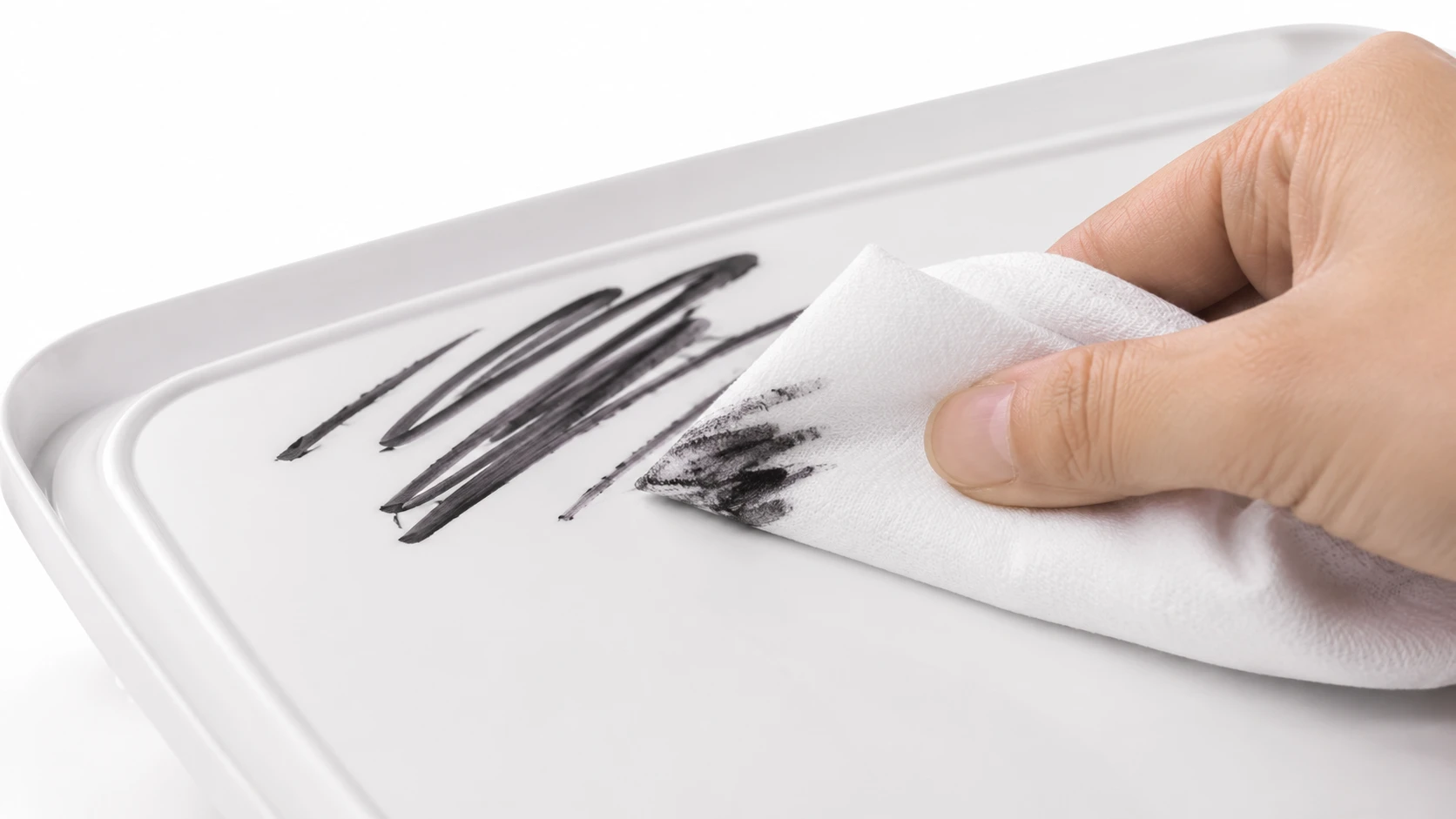
Someone writes on a plastic storage bin with a permanent marker. Then they change their mind. Water does nothing. Soap does nothing. Glass cleaner leaves a faint smear at best. The marker is doing exactly what it was built to do. The user is not impressed.
For B2B buyers sourcing permanent markers, that moment matters. Every end user who cannot remove permanent marker from plastic blames the brand, not the chemistry. They remember which marker failed them.
The removal problem is not random. It measures how well the ink formula does its job. Know what makes permanent marker bond to plastic. Know what solvent chemistry breaks that bond. Then you have a real method to judge ink quality before placing orders.
Tabla de Contenidos
Respuesta Rápida: Cómo Eliminar Marcador Permanente del Plástico
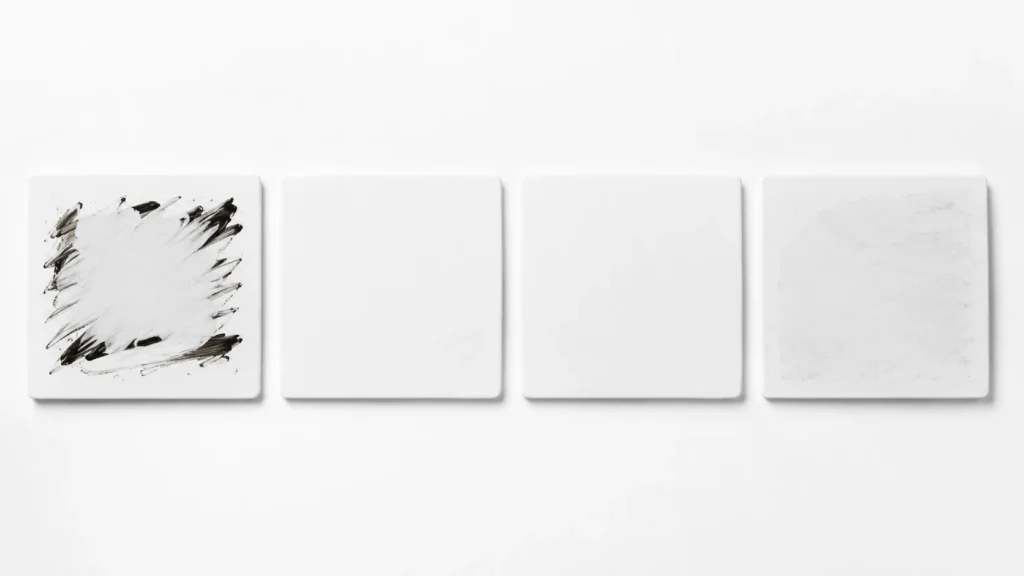
Cada método a continuación ataca una parte diferente de la tinta. El que funciona le indica qué sistema solvente utiliza el marcador:
- Alcohol isopropílico (isopropanol, 70 a 90 por ciento) Maneja la mayoría de los marcadores permanentes. Redisuelve la resina acrílica antes de que cure por completo. Pruebe esto primero. Aplíquelo en un paño, frote suavemente. La tinta se levanta.
- Acetona (quitaesmalte de uñas) Es más fuerte. Disuelve el acrílico incluso después del curado. Pero la acetona también disuelve algunos plásticos. ABS, poliestireno, superficies pintadas se nublan o ablandan al contacto. Pruebe en un lugar oculto.
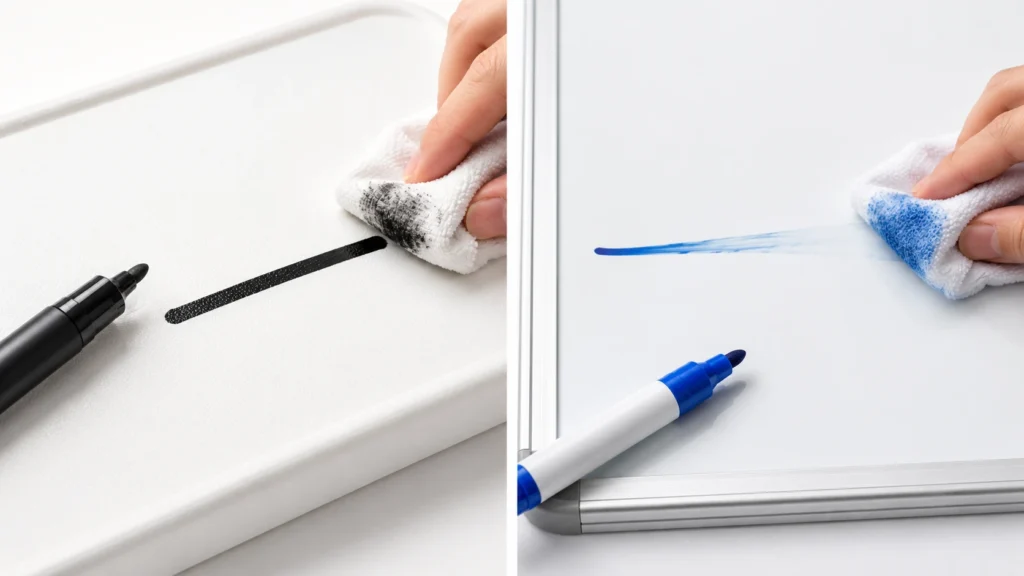
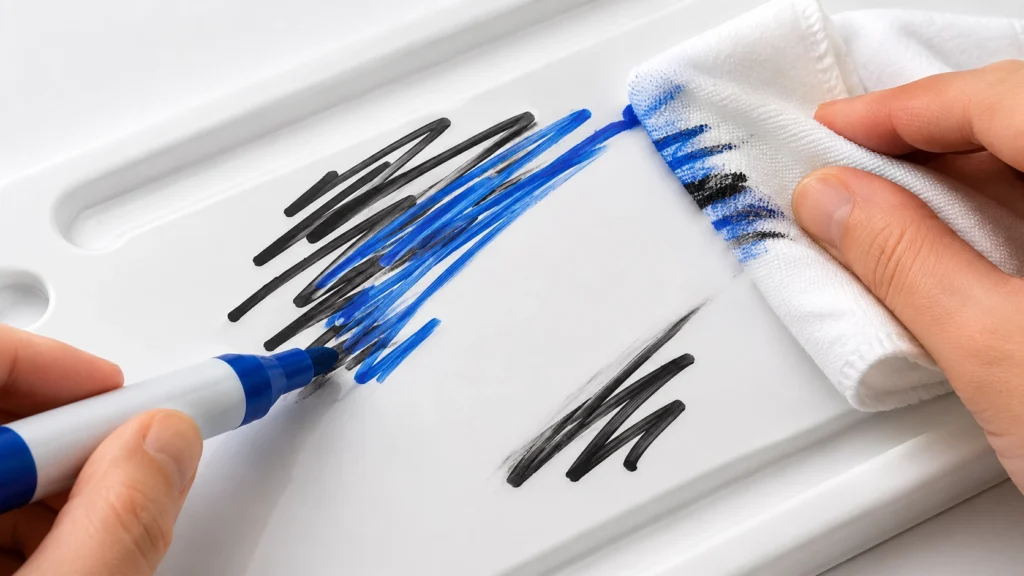
- Truco del marcador de borrado en seco. Garabatee tinta de borrado en seco sobre la marca permanente y limpie. El solvente en la tinta de borrado en seco reliquifica la resina permanente. Ambos tipos de marcadores comparten un portador de alcohol. El método más suave para plásticos delicados.
- Pasta de bicarbonato de sodio. Mezcle bicarbonato de sodio con unas gotas de agua hasta formar una pasta espesa, frote suavemente con un paño, enjuague. La abrasión suave levanta la película de tinta físicamente. Funciona en plásticos texturizados donde los solventes solos no pueden alcanzar el pigmento en las ranuras.
- Limpiadores comerciales (Goo Gone, Magic Eraser). Solventes más microabrasión. Efectivos en manchas curadas y envejecidas. Pruebe primero en plástico oculto. Algunos contienen destilados de petróleo que atacan ciertos polímeros.
For brand owners and buying teams, these factors help set sharper sourcing and quality check bars.
Lo que la Dificultad de Eliminación Revela sobre la Calidad de la Tinta del Marcador Permanente
Every removal method either gets the ink off or does not. The reason tells you something exact about the formula. For B2B buyers, the removal profile says more about ingredient quality than a spec sheet ever will:
| Método de eliminación | Cómo funciona | Qué revela sobre la tinta | Señal de calidad B2B |
| Alcohol isopropílico | Redisuelve la resina acrílica antes del curado completo | La tinta usa acrílico soluble en alcohol; el pigmento está suspendido, no unido | Formulación estándar a base de alcohol. Verifique el tiempo de curado de la resina y la pureza del solvente |
| Acetona | Disuelve el acrílico curado; acción solvente más fuerte | La resina es acrílica y responde a solventes de cetona | Sistema acrílico robusto. Bueno para permanencia industrial. La resistencia a la acetona indica una resina de mayor grado |
| Sobreescritura con marcador de borrado en seco | El solvente de alcohol en la tinta de borrado en seco reliquifica la resina permanente | Ambos marcadores comparten un portador de alcohol; las resinas son compatibles | Química solvente estándar de la industria. Si esto falla, el marcador puede usar xileno o tolueno, lo que indica un nivel de calidad diferente |
| Bicarbonato de sodio (abrasión) | Levanta físicamente la película de tinta seca de la superficie | La película de tinta tiene adhesión mecánica; pigmento bloqueado en resina curada | Película duradera, buena para permanencia. Si el bicarbonato de sodio solo la elimina fácilmente, la película puede ser demasiado débil para uso permanente real |
| Nada funciona | Resina completamente reticulada y unida químicamente al plástico | Resina de alto rendimiento con fuerte adhesión al sustrato | Verdaderamente permanente. Para etiquetado industrial, esto es lo que desea. Para productos de consumo, este nivel puede generar quejas |
Permanent markers are supposed to be permanent. The real question is whether they come off under the conditions your end users face. A marker that shrugs off alcohol but gives in to acetone is well built for office and school use. A marker that resists everything, acetone included, is built for industrial labels where permanence is the only goal. Different markets. Different formulas.
Por qué el marcador permanente se adhiere al plástico
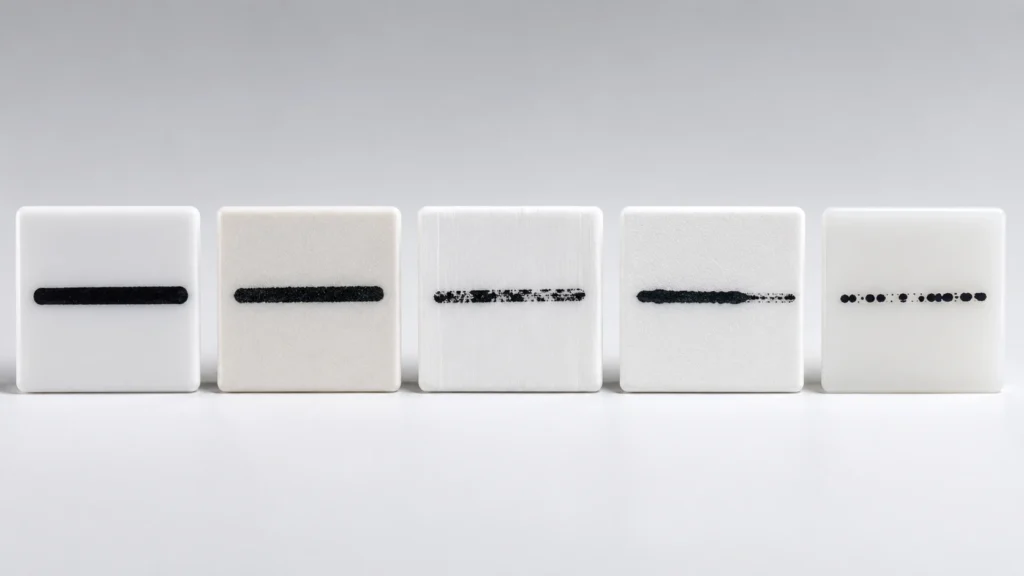
Plastic is not one material. It is a family of polymers. Each has its own surface chemistry. Which plastic your marker hits explains why some removal methods work on one surface and fail on another.
Polyethylene and polypropylene are the hardest to bond to. Low surface energy. Liquids bead up instead of spreading. Permanent ink grips these faces by shape. The resin film wraps micro texture and sets in place. Rubbing alcohol usually works because it re-dissolves the resin and breaks that mechanical grip. No chemical bond to break.
Polystyrene and ABS are easier to bond to and easier to damage. The acrylic resin in permanent ink can partly dissolve the surface of these plastics. That makes a mixed polymer layer at the join. Acetone works well here. It also damages here. Same solvent, two effects.
Policarbonato (PC) y acrílico (PMMA) and acrylic sit in the middle. They resist most solvents better than polystyrene. They bond more easy than polyethylene. Alcohol usually gets the job done. Avoid acetone. It crazes or clouds polycarbonate almost at once.
Polyvinyl chloride shows in plumbing, vinyl, and some packing. Moderate chemical resistance. Alcohol is safe. Acetone softens PVC with enough contact time.
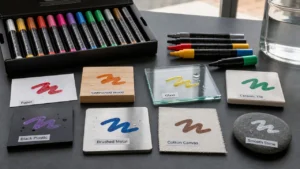
The same marker acts different across these faces. A marker that writes well on a polypropylene shipping label can smear on a polystyrene pen barrel. If your buyers use markers on varied plastics, ask the supplier for grip data across several bases. A factory that tests one surface is not giving data you can trust.
Permanente vs. Borrado en Seco: Una Diferencia de Polímero
Permanent and dry erase markers are nearly the same under the hood. Both use a polyester core, a felt or fiber tip, and an alcohol solvent carrier. According to the Los marcadores permanentes usan resina acrílica. El alcohol se evapora, el acrílico cura en una película dura que se adhiere a la superficie. Misma química que la pintura acrílica. Una vez curada, es duradera, impermeable y difícil de eliminar sin un solvente compatible., the whole difference is one part. The polymer.
Una fábrica que produce ambos tipos maneja dos sistemas de polímeros completamente diferentes. Los marcadores permanentes necesitan una formulación acrílica precisa que equilibre la adhesión con la removibilidad. Los marcadores de borrado en seco necesitan una formulación de silicona precisa que equilibre la borrabilidad con la integridad de la película. Una fábrica con I+D de tinta interna controla ambos a nivel de formulación en lugar de comprar tinta premezclada de proveedores externos. ZH STATIONERY opera su propio laboratorio de I+D de tinta y ha estado formulando tintas personalizadas para bolígrafos marcadores, incluidos los permanentes, durante más de 26 años de trabajo OEM/ODM. Para los compradores que construyen líneas de marcadores permanentes de marca privada, la capacidad de ajustar la química de la resina y la relación de solvente a requisitos específicos del usuario final es lo que convierte un pedido de catálogo en una conversación de especificaciones.. The alcohol leaves. The acrylic cures into a hard film that bonds to the surface. Same chemistry as acrylic paint. Once cured, it is durable, waterproof, and hard to remove without a matching solvent.
Los marcadores de borrado en seco cambian acrílico por polímero de silicona. The silicone makes a film that sits on the surface without attaching. A dry cloth lifts the whole film in one pass. No bond. That same silicone is why dry erase stains clothes. It repels water, so soap never reaches the pigment underneath.
A factory making both types runs two separate polymer systems. Permanent markers need exact acrylic balance between grip and removal. Dry erase markers need exact silicone balance between erase and film strength. A factory with in-house ink R&D holds both at formula level instead of buying pre-mixed ink outside.
ZH Stationery runs its own ink lab. It has built custom inks for marker pens, permanent markers included, across 26-plus years of OEM/ODM work. See the gama de productos. For private-label lines, the ability to tune resin chemistry and solvent ratio to end-user needs turns a catalog order into a spec talk.
Qué deberían probar los compradores B2B antes de pedir marcadores permanentes
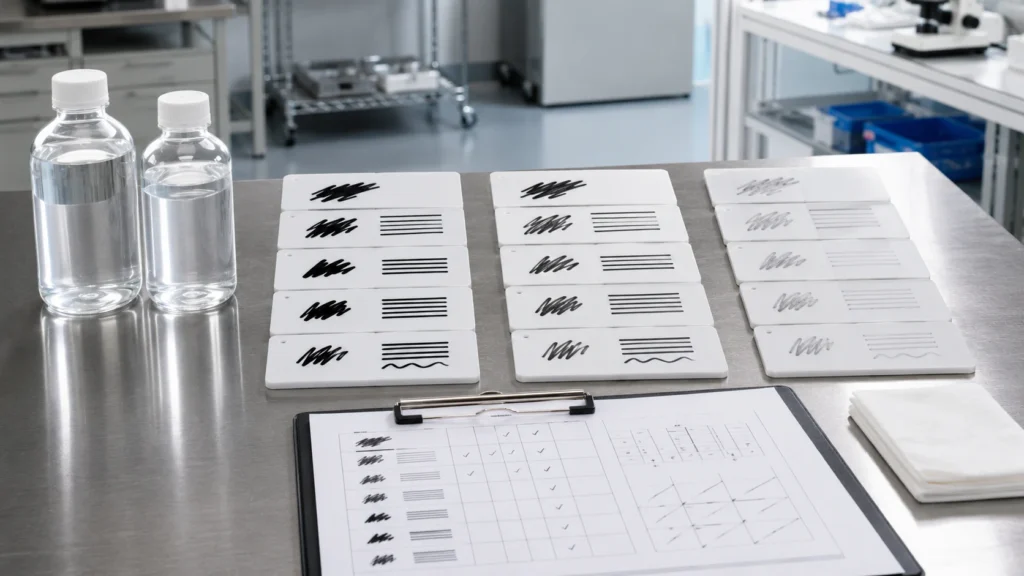
Catalog claims about permanent and waterproof mean nothing alone. Four tests tell you what the ink really does:
- Adhesión a sustratos objetivo. Escriba sobre los plásticos reales que usan sus clientes. Contenedores de polipropileno. Tuberías de PVC. Carcasas de ABS. Gafas de policarbonato. Deje que la tinta se cure durante una hora. Intente eliminarla. Documente qué superficies retienen la tinta y cuáles la liberan. Ese es su verdadero punto de referencia de rendimiento.
- Resistencia a disolventes. Cure durante 24 horas. Pruebe la eliminación con alcohol, luego con acetona y luego con un limpiador comercial. Un buen marcador permanente debe resistir el alcohol en plásticos no porosos, pero ceder ante la acetona. Si solo el alcohol la elimina, el curado de la resina es débil. Si nada la elimina, tiene una formulación de grado industrial. Decida si eso se ajusta a su mercado.
- Resistencia al agua después del curado completo. Escriba sobre plástico. Cure durante 24 horas. Sumérjalo en agua durante una hora. La tinta no debe mancharse, desprenderse ni desteñirse. La resistencia al agua es un requisito básico para cualquier cosa etiquetada como permanente. Si la tinta falla en esto, el sistema de resina está defectuoso.
- Resistencia a los rayos UV y a la decoloración. Coloque una muestra de plástico marcada bajo luz solar directa durante 72 horas. Compare con un control no expuesto. Los marcadores utilizados en exteriores, construcción, paisajismo y envíos necesitan pigmentos estables a los rayos UV. Si la tinta se desvanece en días, los usuarios industriales lo notarán. Pregunte al proveedor qué química de pigmentos utilizan y si la mezcla incluye estabilizadores UV.
A factory running 100 percent check on every unit, with batch QC files, can make this data. The question for suppliers is not is your marker permanent. Ask: can you show grip results on polypropylene, ABS, and polycarbonate after 24 hour cure, with solvent resistance data? See the recorrido por la fábrica.
Preguntas Frecuentes
¿Cuál es la mejor manera de eliminar marcador permanente del plástico?
Rubbing alcohol, 70 to 90 percent, on a cloth. Rub gently. It re-dissolves the acrylic resin before it fully cures. For cured stains, step up to acetone. Test a hidden spot first. Acetone eats some plastics. The dry erase trick is safest for delicate faces. Scribble dry erase ink over the mark and wipe both away. The B2B marker guide adds line context.
¿Por qué el marcador permanente se adhiere tan fuertemente al plástico?
Acrylic resin is the binder. Alcohol leaves. Acrylic cures into a hard film that grips the plastic. On slightly rough faces, the resin flows into micro texture and locks by shape. Alcohol removes it by re-dissolving the acrylic before it hardens. After full cure, you need acetone.
¿Por qué un marcador de borrado en seco elimina el marcador permanente?
Both marker types use an alcohol solvent carrier. Scribble dry erase over permanent. The alcohol in the dry erase ink re-liquefies the acrylic resin. Then the silicone release agent in the dry erase ink coats the loose pigment and stops it from re-bonding. Wipe once. Everything comes off. The trick works because the two markers share solvent chemistry even with different polymers.
¿El marcador permanente se quita de todos los plásticos de la misma manera?
No. PE and PP release most easy with alcohol. The bond is by shape, not chemistry. El poliestireno and ABS hold tighter. Acetone works better on them and also attacks them. Polycarbonate is acetone-sensitive and will craze on touch. Always test a hidden spot of the exact plastic you are cleaning.
¿Qué Hace Que Un Marcador Permanente Sea Realmente Permanente?
The resin load, the cure chemistry, and the pigment type. More resin makes a stronger film. Some formulas cross-link for extra life. Carbon black and iron oxide hold under UV far better than organic dyes. A marker that washes off with water has a resin problem. One that fades in sun has a pigment problem. ZH Stationery, through its ink lab, tunes these by need. See the fabricante líder de marcadores personalizados y paint marker process .
¿Cómo deberían los compradores B2B probar la calidad de los marcadores permanentes antes de comprar?
Test grip on the real plastics your buyers use, not the factory card. Test solvent resistance after 24 hour cure with alcohol and acetone. Test water by soaking a marked sample for one hour. Test UV with 72 hours of direct sun. If the supplier cannot give this data for your SKU, the claims are not verified. ZH Stationery puts batch grip and life files in the QC pack for permanent orders.
Knowing how to remove permanent marker from plastic tells you more about formula quality than any catalog claim. If you source permanent markers for industrial labels, office supply, or private label, contact ZH Stationery to talk ink specs. See the ink quality guide, los alcohol marker makers, or the página de contacto.
Guía relacionada: Eliminación de manchas de marcador de borrado en seco.
Guía relacionada: Marcadores de pintura para impresiones 3D.
Lecturas relacionadas
- ¿Se puede escribir en CD con marcador permanente? Esto es lo que realmente sucede
- Cómo Quitar Sharpie de una Pizarra Blanca: 3 Trucos Sin Químicos
- Cómo quitar el marcador de pintura de vidrio, plástico, madera y tela
- informe de abastecimiento de marcadores borrables en húmedo
- guía comparativa de marcadores borrables en húmedo
- Guía de tinta de marcadores de grado alimenticio
- guía de seguridad del marcador infantil OEM