Replacing a refill needs two signs. It must fit the mechanism. It must give the planned writing result. Keep the old part and compare the built pen. Do not lean on an ink-family name alone.
Quick Answer
Pen refill types describe both ink tech and physical shape. Ballpoint, gel, and liquid-ink rollerball are writing groups. They do not promise mechanical swap fit. Find the pen model and old refill. Then match length, width, tip shoulder, and rear fit. Confirm that the built pen extends, retracts, or caps right.
Quick Links
- Pen Refill Types: Ink and Fit Are Separate Decisions
- How to Identify an Unknown Refill
- The Three Common Refill Families
- Mechanical Compatibility Checklist
- Writing Performance Is Part of Fit
- Ink and Component Documentation
- Approve the Refill Inside the Final SKU
- FAQs
- Three Refill Problems a Loose-Part Check Misses
Pen Refill Types: Ink and Fit Are Separate Decisions
| Inspection Evidence | Approval Decision |
|---|---|
| Old refill, drawing and assembled extension | Do not force or cut a refill to obtain a fit. |
| Repeated extension and retraction in the target pen | Reject sticking, incomplete return or loose seating. |
| Target-paper writing panel after agreed storage | Approve writing performance together with fit. |
How to Identify an Unknown Refill
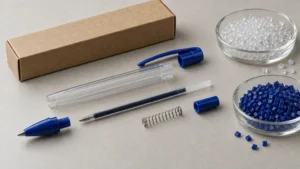
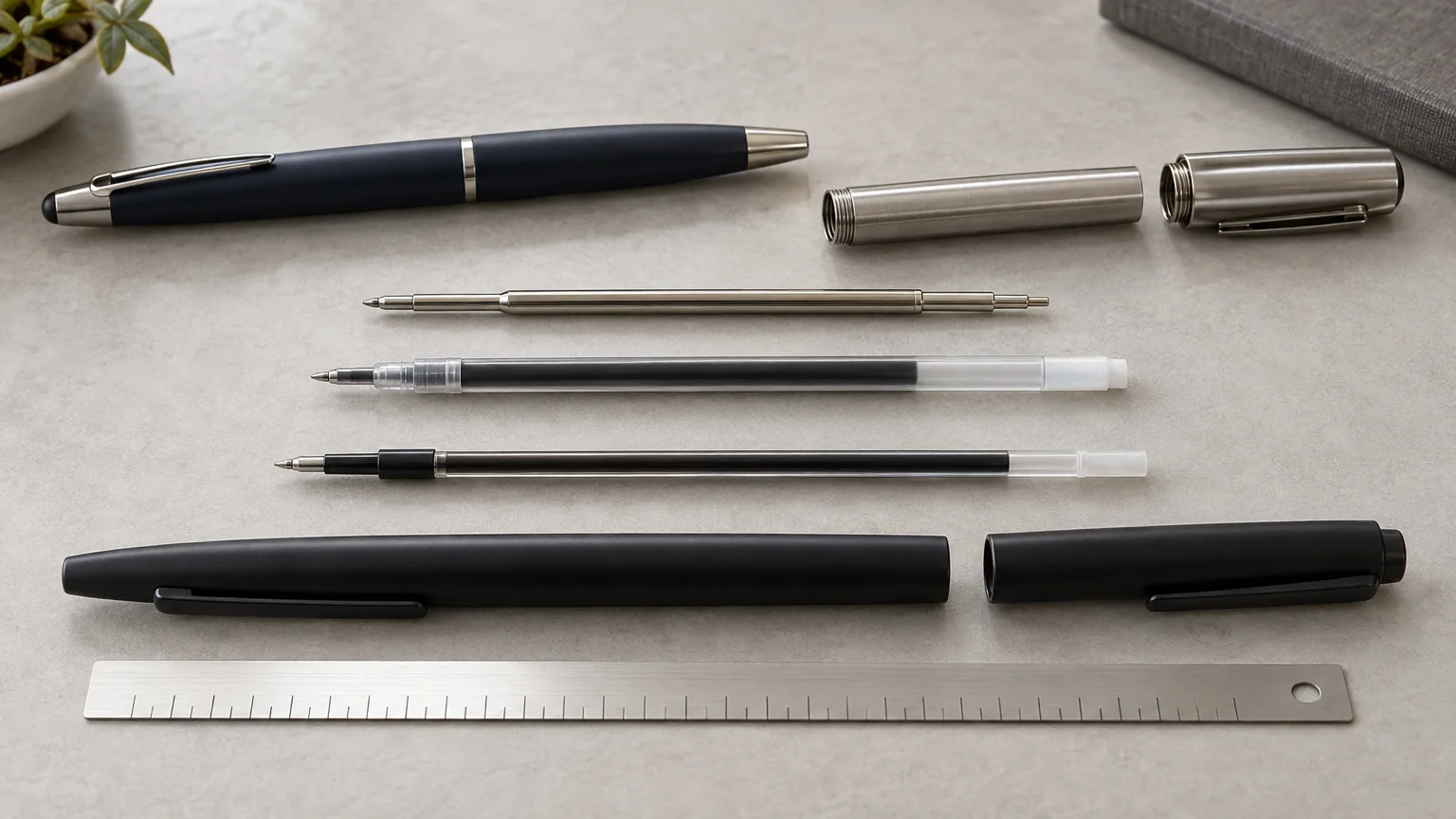
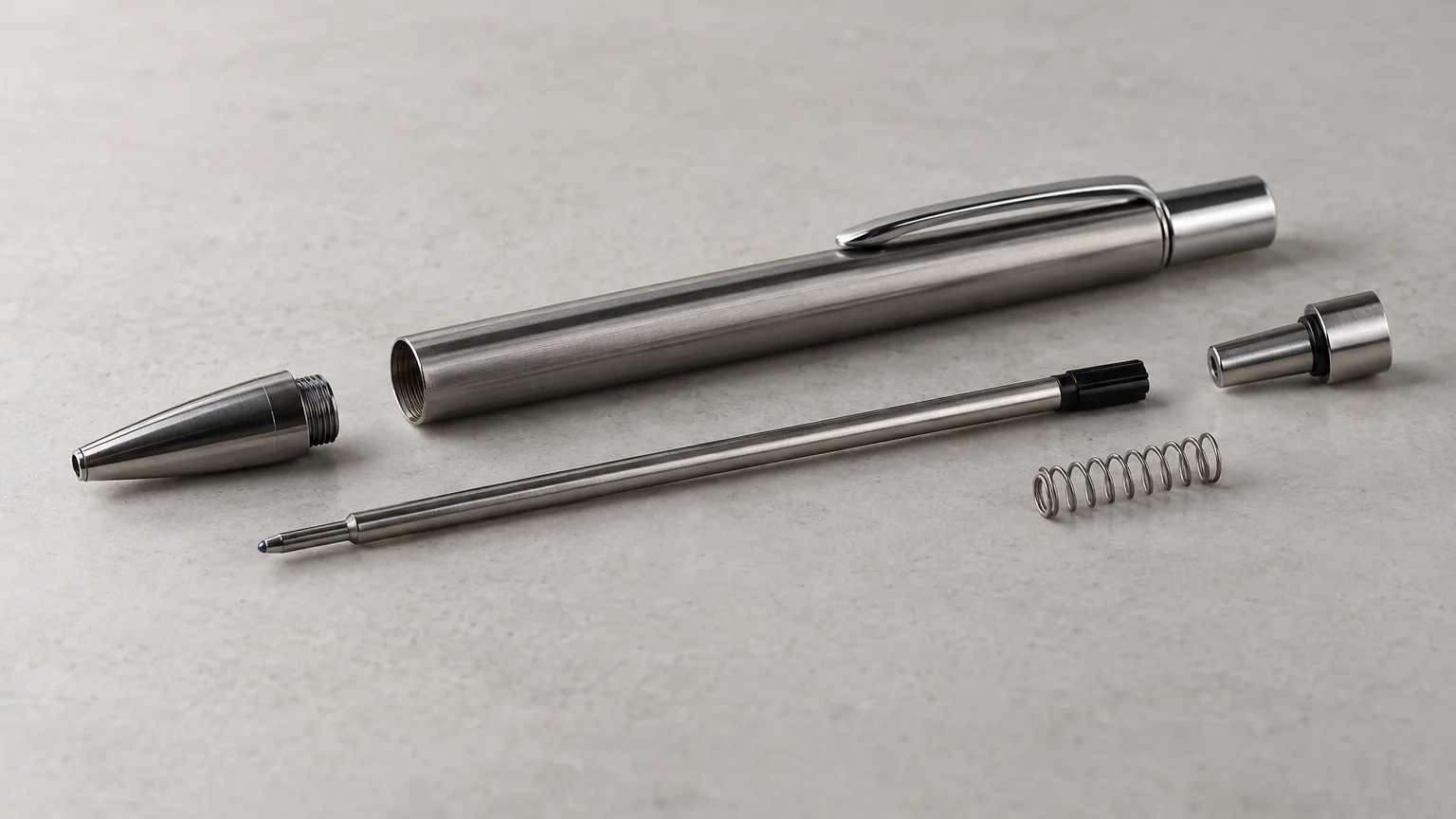
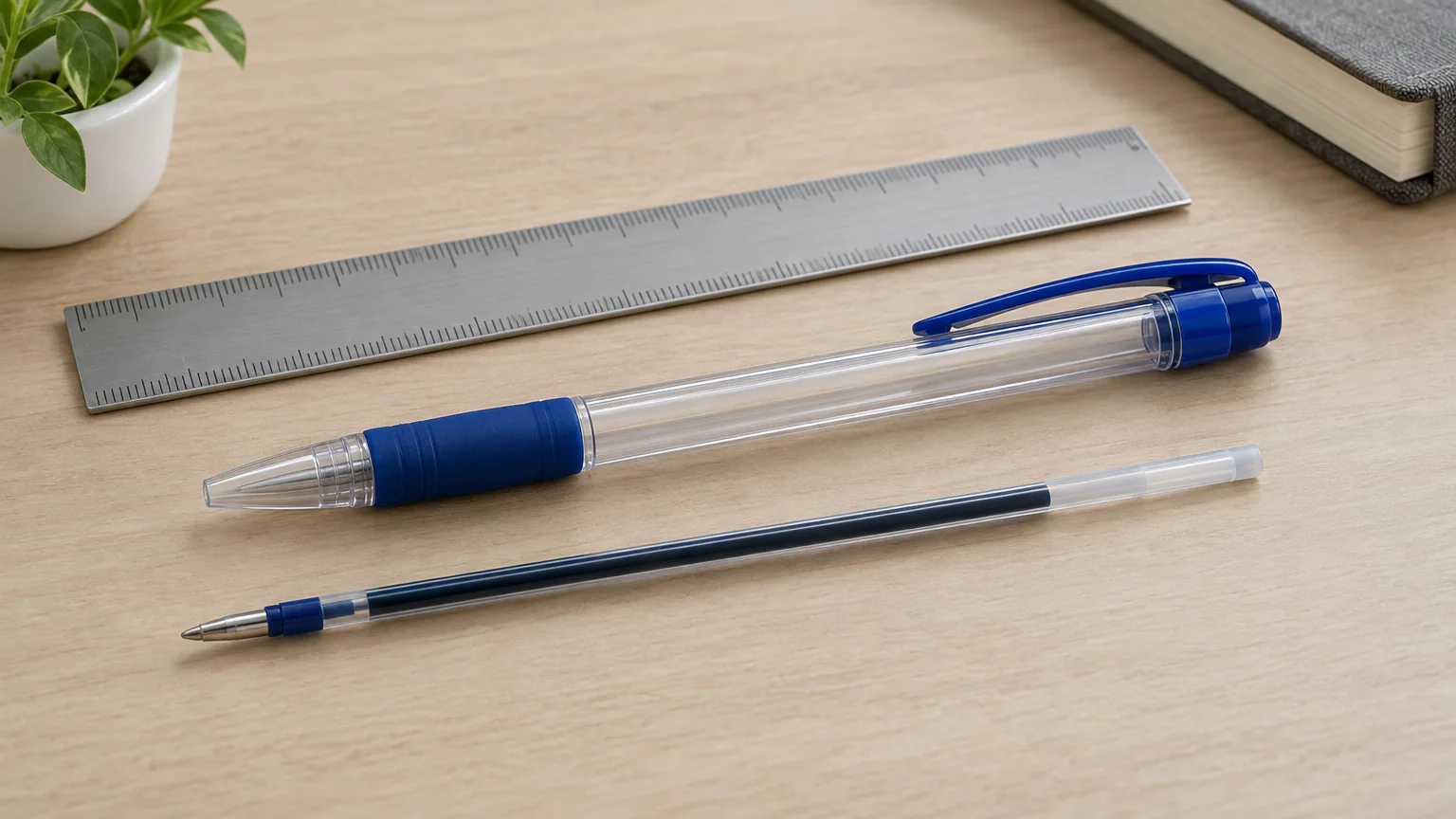
Keep the old refill even when it is empty. Photo it next to a ruler. Show the tip shoulder and rear end. Look for a printed part number. Search the pen manufacturer's fit guide with the exact pen range and writing type. If the pen was a promo gift, ask the seller for the supplied refill code.
Do not cut a refill, force the rear plug, or stretch the spring to make a shaky fit work. A refill that seems to fit may leave the point open or bind the click flow. For bulk swaps, test several samples across several pen bodies. Put the passed part number on the order.
The Three Common Refill Families
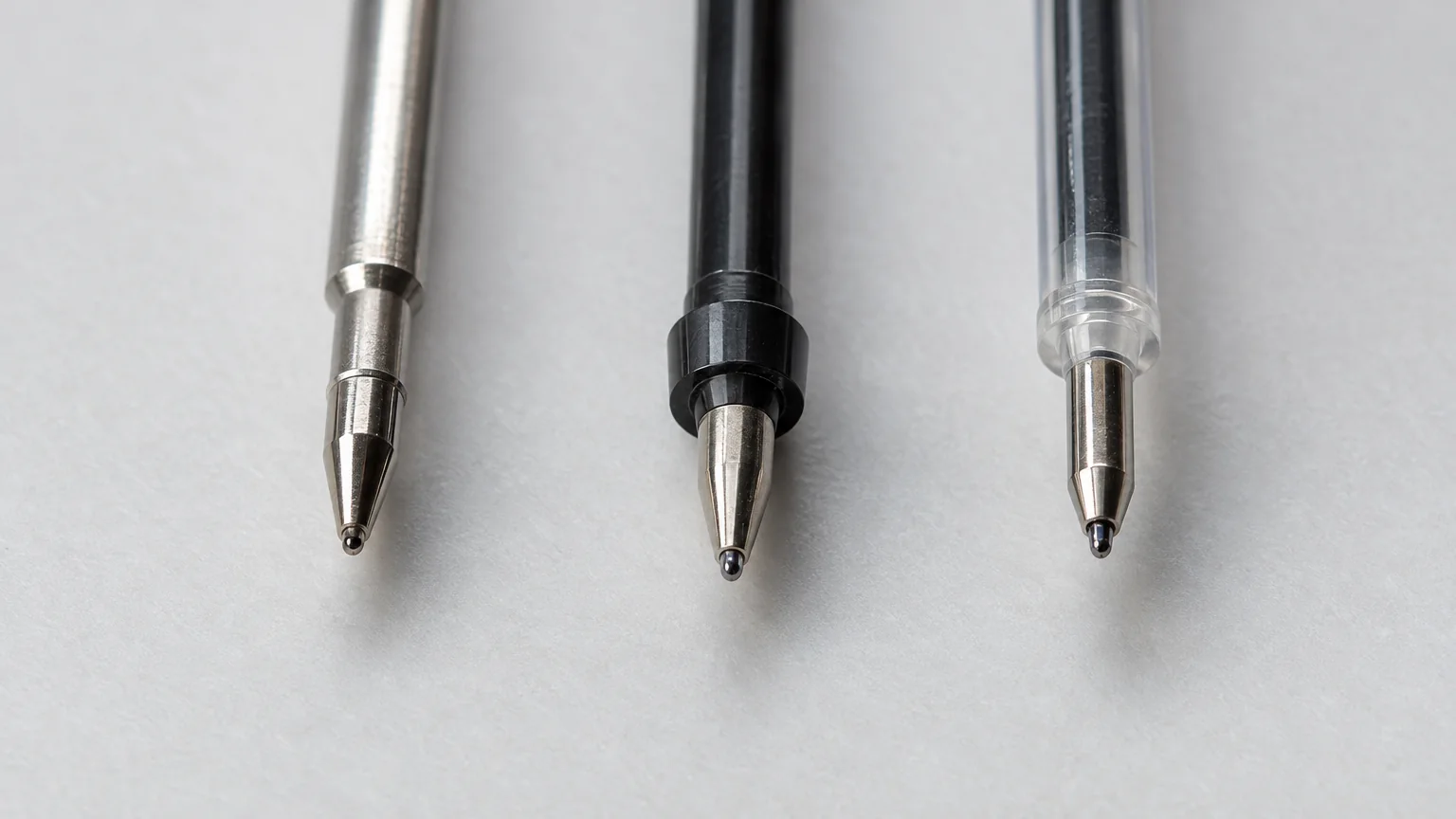
Ballpoint refills usually use a thick oil-based ink, with lower-viscosity hybrid types, and a ball tip built for controlled flow. Gel refills use a water-based gel system with a different flow and drying performance. Rollerball refills often pair with liquid ink and a feel closer to a fountain-style flow. These names describe families, not one universal spec.
Use the pen tip types guide to compare tip shape and writing performance. Then confirm the exact tube and nose sizes with the supplier's drawing.
Mechanical Compatibility Checklist
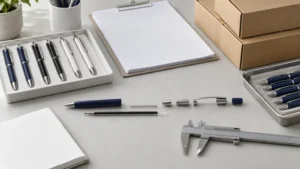
Measure overall length, body width, nose length, tip reach, shoulder shape, spring seat, and rear plug. Check whether the refill rattles, binds, bottoms out, or stops the click from resetting. A refill can fit the barrel and still fail the cap, clip, or action part.
Test size spread across many refills, not one sample. Record the smallest and biggest sizes. Confirm that the pen body, spring, and nose insert can take the production range.
Writing Performance Is Part of Fit
Write on the target paper at the planned angle and pressure. Record start, skip, blob, dry time, line width, color density, and writing distance. Repeat after flat and upright storage, heat exposure, and the planned shelf time.
For an OEM project, split the refill cost from the body and assembly cost with the custom pen manufacturing cost guide. A low refill price is not useful when the finished pen fails start or leak checks.
Ink and Component Documentation
Ask for the ink family, tip part, ball part, tube part, plug spec, and the SDS or technical data that applies. If the pen sells for a regulated use or to kids, say which finished-product tests cover the refill and which cover only the raw part.
Use the marker factory audit checklist model to check incoming checks, batch codes, fill volume, and kept samples. Refill changes can shift the whole pen's performance even when the shell stays the same.
Approve the Refill Inside the Final SKU
The final sign-off should include a signed drawing, production refill sample, built pen, writing panel, leak result, storage position, swap test, and packing. If the refill supplier changes, run a fit and writing check before you accept a new lot.
For wider sourcing, review the China pen manufacturer compare and ask for a built sample. Do not pass on an isolated refill photo.
Three Refill Problems a Loose-Part Check Misses
The checks below name common failure modes and the proof needed to fix them. They are a buying and check frame, not measured claims for a ZH Stationery SKU.
- The point extends too far or not enough. A small difference in shoulder or rear fitting can affect the assembled mechanism.
- The click action binds. A refill may enter the barrel while interfering with the spring seat or return stroke.
- A good fit writes poorly. Mechanical compatibility does not establish start-up, dry time or line consistency.
For a product-format start, review the ballpoint pen formats. Confirm the exact model and planned use before treating a catalog option as a match.
Sources and Scope
manufacturer guidance applies to the named product. Follow the steps for your exact item. These tables and buyer checks are editorial help, not tests run by ZH Stationery.
FAQs
Can I put a gel refill in a ballpoint pen?
Only if the sizes, spring, nose, and writing performance fit and the finished pen is rechecked.
Are rollerball and gel refills the same?
No. Ink flow and part specs can differ even when the feel is close.
What refill size matters most?
Length, outer width, nose shape, and tip reach must all match the pen mechanism.
Should refill samples be tested apart?
Test them apart for incoming control. Then pass them again inside the built pen.
Request a Refill Compatibility Review
Send ZH Stationery your pen model, old refill photos, sizes, ink pick, and quantity. Use the inquiry to ask for project-specific details before sample sign-off:
- Product fit: available models and any limitations against your brief.
- Sample and quotation scope: sample availability and charges, MOQ by variation, packaging options and lead time after approval.
- Evidence: the relevant specification, document scope and proposed acceptance checks for the offered item.
For custom work, review the OEM/ODM manufacturing guide before you decide which changes belong in the quote. Sample terms and performance needs must be set for the exact project.