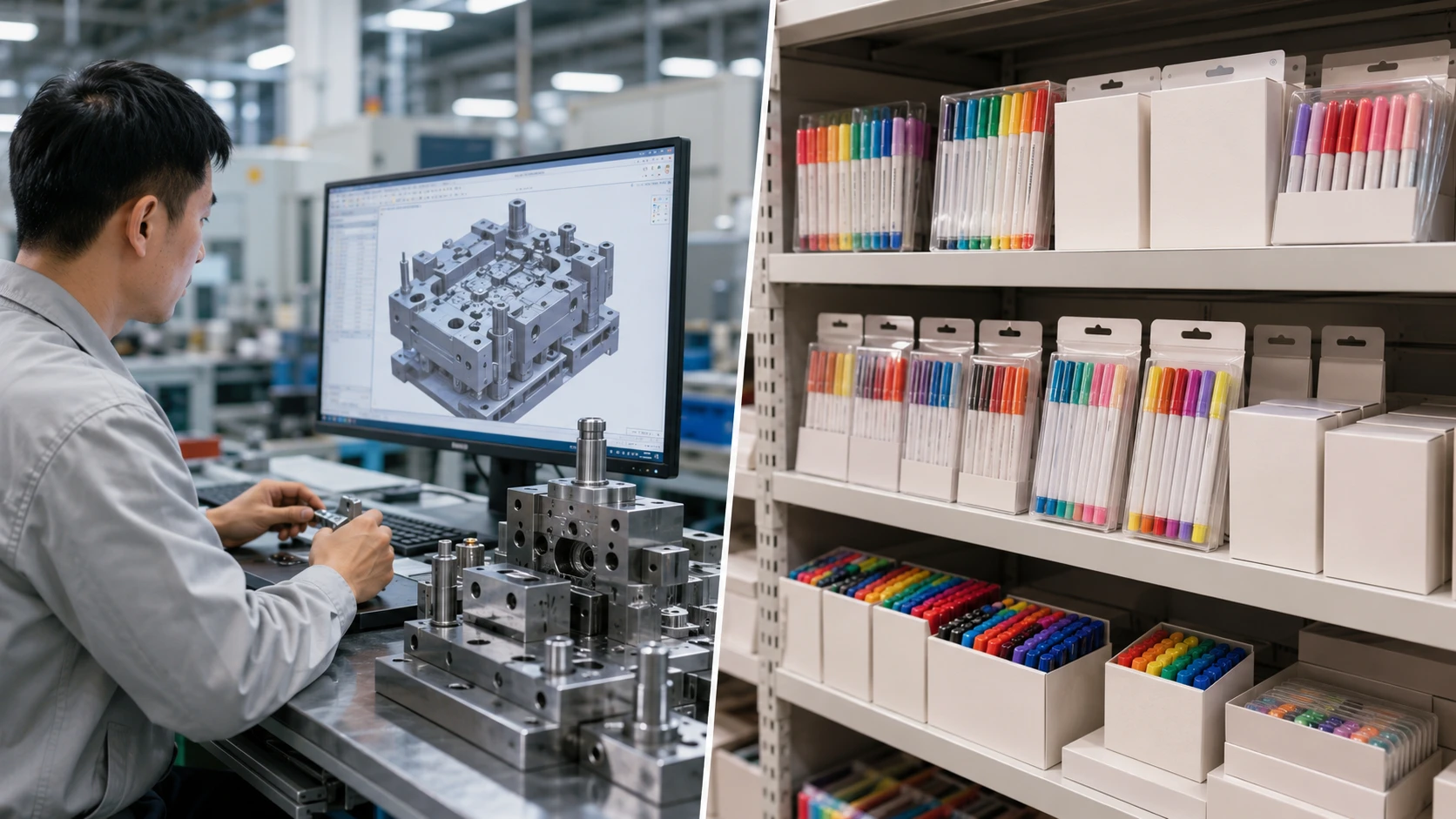
Every B2B buyer who starts pen manufacturing for a private label meets two terms early: OEM and ODM. They appear in every supplier call and sourcing checklist. Yet few guides explain what each model means for a real buying decision.
The confusion is costly. The wrong model can lock you into a product that is hard to tell apart from rivals. It can add mold costs your order volume cannot support. It can also pair you with a factory that lacks the skills your brand needs. Buyers who mix up OEM vs ODM pen manufacturing often face late launches, surprise tooling bills, uneven batch quality, and customs delays.
This guide explains both models as practical sourcing frameworks. It covers timeline, budget, design control, compliance duties, and supplier relations. Some readers are brand owners building a private-label marker line. Others are distributors adding custom stationery. Some are retailers buying factory-direct for the first time. For all of them, the decisions that matter are here.
Table of Contents
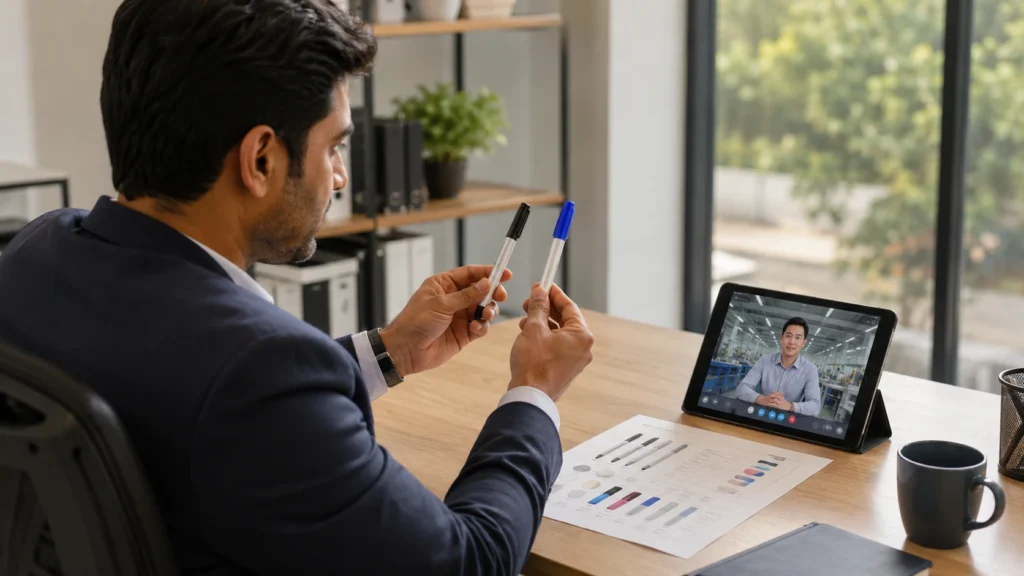
Quick Answer: Which Manufacturing Model Should You Choose?
Here is a short breakdown of when each model makes sense:
- Choose OEM if you have a specific product design, need full control over ink formulation and tip specifications, want exclusive mold ownership, and are prepared to invest in development time and tooling costs.
- Choose ODM if you need to test a new market quickly, want to brand an existing product with your logo and packaging, have a limited budget for upfront development, and are comfortable working within the factory’s existing product catalog.
- If you are scaling a brand, start with ODM to validate demand, then transition to OEM for your hero products once volume justifies the investment.
- If compliance and safety are critical (school supplies, children’s products, EU/US retail), verify that your supplier holds current, batch-level certifications regardless of the model you choose.
These factors help brand owners and procurement managers set clearer sourcing and quality standards before contacting factories.
OEM Vs ODM: What The Difference Means For Bulk Pen Buyers
The difference between OEM and ODM is not academic. It sets who owns the design. It sets who pays for the molds. It sets how long development takes. It also sets whether your brand can build a strong market position.
| Factor | OEM (Original Equipment Manufacturer) | ODM (Original Design Manufacturer) |
| Who provides the design? | Buyer provides complete specifications and technical drawings | Factory provides pre-designed products; buyer customizes logo, colors, packaging |
| Who owns the intellectual property? | Buyer retains design IP and mold ownership | Factory typically retains core design IP |
| Upfront development cost | Higher (mold creation, design validation, sampling | Lower) working from existing templates |
| Typical development timeline | 3–6 months (including mold fabrication and sampling) | 2–6 weeks (artwork approval and packaging setup) |
| Minimum order quantity | 50,000 pens per order | 50,000 pens per order |
| Customization depth | Full control: ink, tip, barrel shape, materials, packaging | Limited to catalog options: colors, logo placement, packaging style |
| Repeat-order consistency | Spec-locked to your design; factory cannot change without approval | Dependent on factory maintaining the same SKU in production |
| Best suited for | Established brands, unique product requirements, long-term private label programs | Market testing, promotional runs, brands with limited R&D resources |
The table shows a pattern that surprises many first-time buyers. OEM is not simply a better version of ODM. Each model solves a different business problem. The right choice depends on your brand strategy, budget, timeline, and the level of differentiation your market demands.
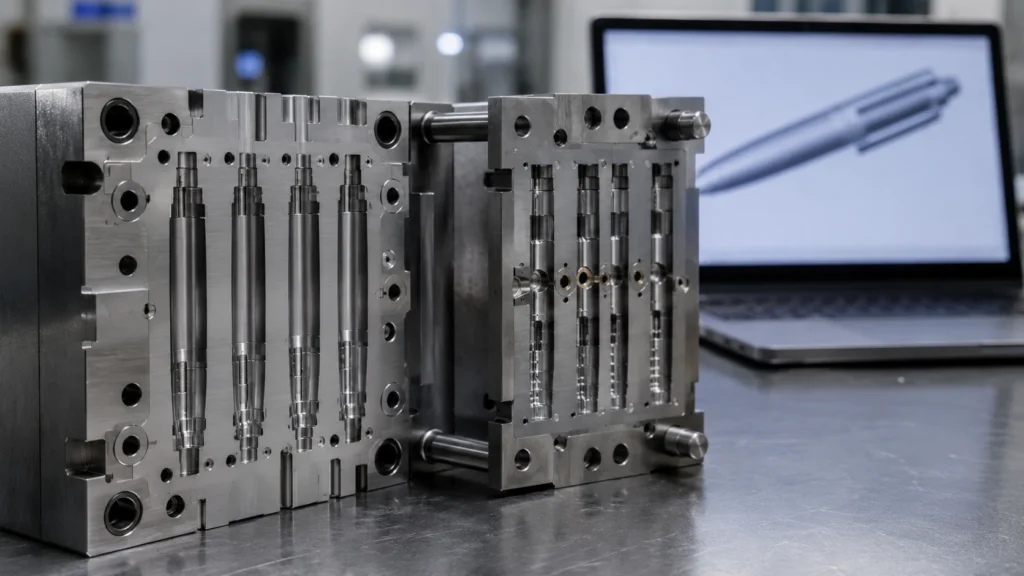
When OEM Pen Manufacturing Is The Right Investment
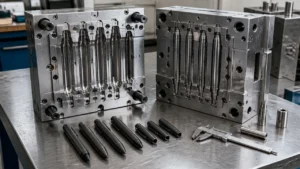
OEM pen manufacturing means you, the buyer, control the product spec. You define the ink chemistry, tip shape, barrel feel, cap seal, and every part of the packaging. The factory executes your design to that spec.
This model suits established stationery brands that know their end users. A brand selling permanent markers to warehouses may need a resin system that bonds to plastic bins and metal shelves. No stock ODM product will reliably deliver that. The brand must order a custom ink formulation. It must also pick a nib that resists wear on rough surfaces. And it needs a cap that keeps an airtight seal through months of use.
The cost structure reflects this depth of control. New mold development for a custom barrel, cap, or end plug is a major line item. Complex multi-cavity molds need precision machining and trial runs. That is why OEM minimum order quantities start higher. The mold cost must be spread across production volume to reach a workable per-unit price.
The return is equally real. When you own the mold and the spec, no competitor can walk into the same factory and order your product. Your supply chain is protected. Your repeat orders stay spec-locked. The factory cannot change ink suppliers, barrel materials, or tip sizes without your approval and a new sample round.
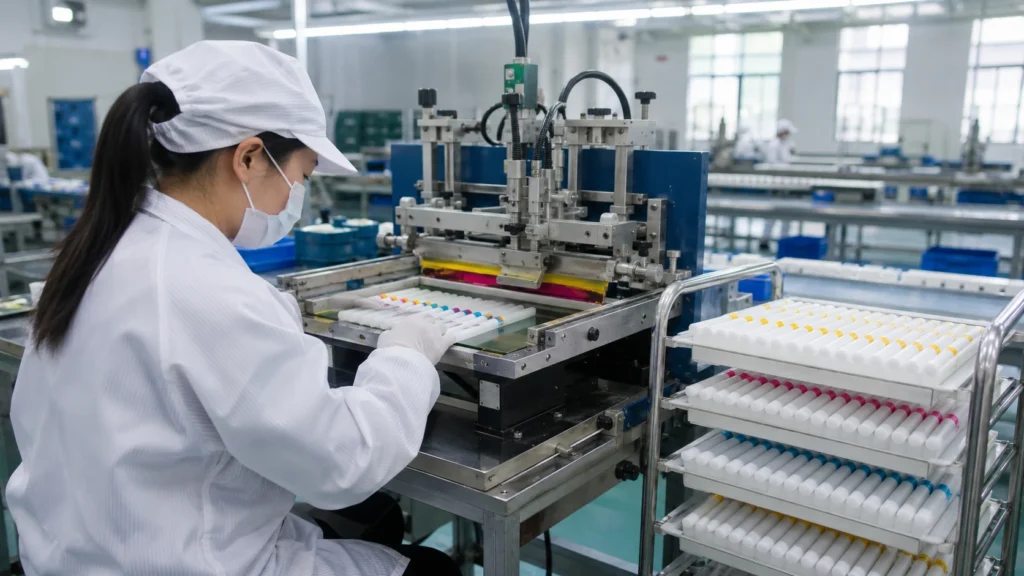
A factory with genuine OEM ability should walk you through a clear workflow. The stages start with requirement confirmation. Then come 3D design and mold making. Next is sampling and performance testing. After that come spec lock, mass production with in-process QC, and final inspection. If a supplier cannot explain these stages, they may not have real OEM capability.
Some buyers work with an experienced design team. Others have already proven product-market fit through ODM sales. For them, OEM is the next step toward a brand that is hard to copy.
When ODM Gives You The Speed You Need
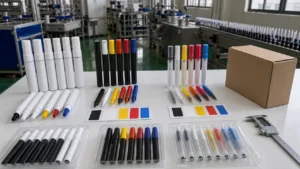
ODM flips the equation. The factory has already designed the product, built the molds, and proven the line. You choose from their catalog. Then you add your branding: logo printing, custom barrel and cap colors, and branded packaging. Retail display design is available where supported.
The speed gain is real. Without mold development, an ODM project can move from artwork approval to finished goods in two to six weeks. That makes seasonal launches, trade show inventory, and market tests feasible on short notice.
ODM is also the right start for businesses that still need to prove product-market fit. Why pay for custom mold development before you know what customers prefer? Do they like alcohol-based ink or water-based? Do they value a brush tip over a chisel tip? ODM lets you test SKUs, gather sales data, and refine your needs before you commit capital.
The tradeoff is differentiation. When three brands source the same ODM marker from the same factory, only the logo, packaging, and price differ. That may be fine for commodity categories where price drives purchases. For premium brands, the limits of ODM become a ceiling on growth. Think of art supply brands selling to pros. Think of school brands selling to buyers who remember failed products.
Many successful brands follow a hybrid path. They use ODM for catalog products that fill out the line, and OEM for the hero SKUs that define the brand. This is not a compromise. It is a deliberate use of development resources.
What The Factory Needs To Execute Either Model Well
Both models depend on manufacturing basics that are invisible in a catalog but decisive in practice. Three abilities separate factories that can run either model from those that cannot.
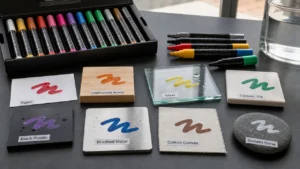
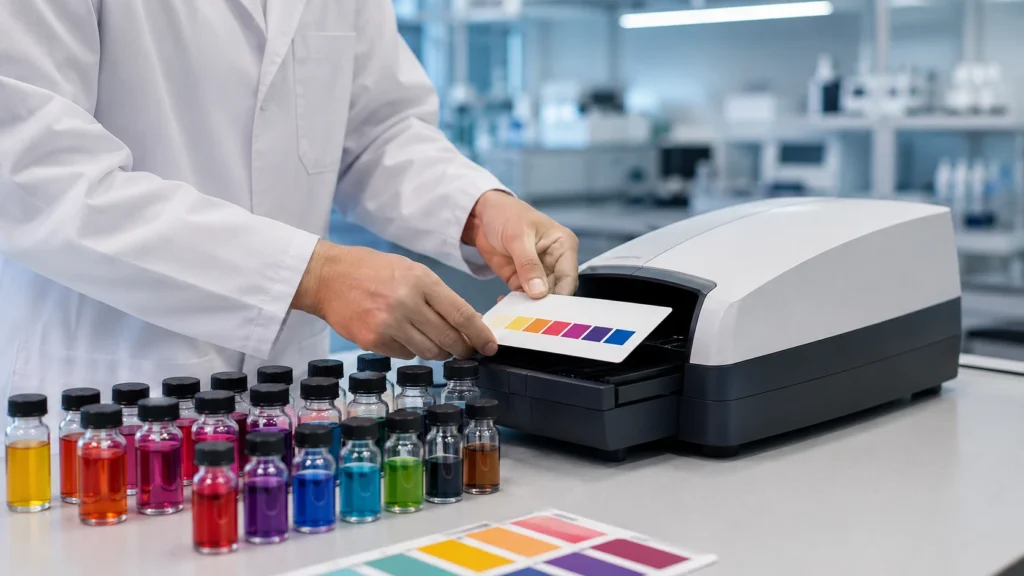
Ink control. Batch differences come down to one question: is the ink mixed in-house or bought outside? This applies to a custom mix for your OEM spec and to a standard ODM ink. When ink is bought outside, changes can happen without the factory knowing. A pigment supplier may switch sources. A solvent grade may drift. Then a color that passed lab testing no longer matches the run. Factories with in-house labs control the mix at the source. ZH STATIONERY runs such a team for marker, metallic, and acrylic pens. The team checks batch color with a spectrophotometer and records the source of every ingredient.
Mold and tooling. Even in ODM, the condition of the factory's molds decides part quality. Worn molds give uneven barrel walls, caps that fit loosely, and threads that strip fast. For OEM projects, mold design and manufacture determine how well your 3D design becomes real parts. A factory with in-house 3D design and sample making, rather than outsourced molds, can adjust faster and maintain tighter tolerances.
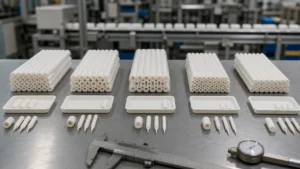
Quality control. The QC difference is not about whether inspection happens. It is about what gets checked and when. In ODM, the factory should already have checkpoints: raw material checks, in-process checks, and final AQL sampling. In OEM, the QC plan must be built for your spec. What color variance, measured as delta-E, is acceptable? What cap-off time is the minimum? What drop-test standard fits your packaging? A factory that runs 100% inline automated inspection before packing can support both models. It also applies strict AQL sampling for shipment, covering fit, sealing, print alignment, cap tightness, and writing performance.
ZH STATIONERY operates from a 10000+ sqm factory area with 8 workshops and automated assembly lines, backed by 26+ years of OEM/ODM experience. You can verify these claims with factory audits, sample tests, and batch-level QC records.
Safety Compliance: What Both Models Require For U.S. And European Markets
Compliance is not optional, and it does not depend on the model. If your pens enter the U.S. or European market, they must meet the applicable safety standards. The burden of proof falls on you, the buyer, not on the factory's marketing team.
In the United States, the Consumer Product Safety Commission, or CPSC, requires all art materials to pass a toxicological review under LHAMA. That includes markers, gel pens, and paint pens. The product or packaging must carry the statement Conforms to ASTM D-4236. The rule covers adult and children's products. For markers sold to children under 12, the CPSIA adds lead limits and mandatory third-party testing by a CPSC-accredited lab.
In the European Union, markers classed as toys fall under the Toy Safety Directive and must meet EN71. EN71-3 sets migration limits for 19 heavy metals, including lead, cadmium, arsenic, and mercury. The test mimics what a child may take in through chewing, licking, or swallowing.
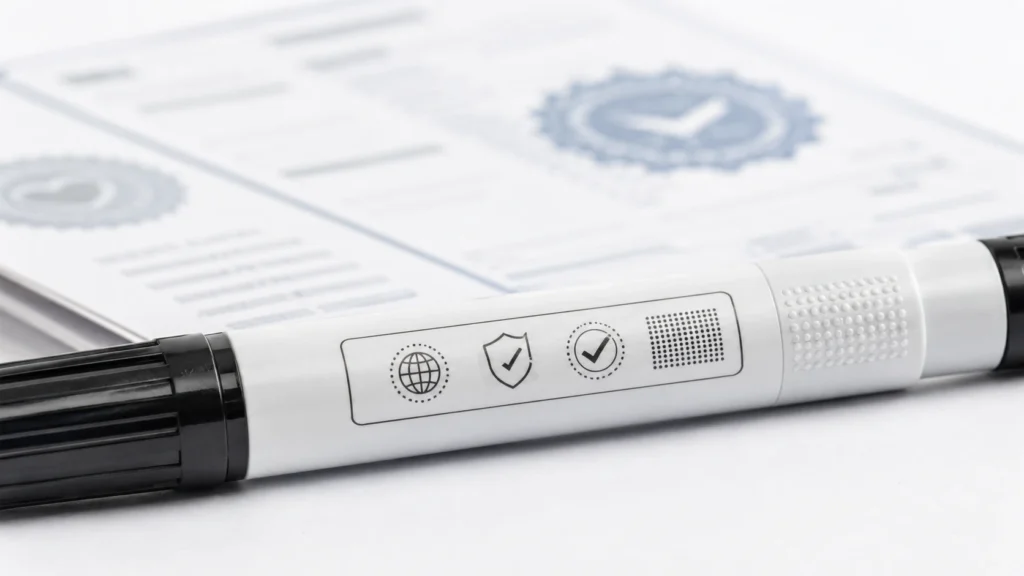
A factory with current EN71 and ASTM D-4236 certificates shows that its sourcing, ink mixing, and production align with recognized safety limits. Ask for dated, batch-specific test reports from labs like SGS, Intertek, or TUV. Ask to see the full report, not a certificate screenshot. Check the date. Confirm it covers the exact product and ink mix you are ordering.
ZH STATIONERY keeps EN71 and ASTM D-4236 certified options with batch-level test records. That ties the paperwork to real production runs, not to a sample sent to a lab years ago.
For buyers building private-label stationery, the practical compliance checklist is short:
- EN71-3 test reports for European distribution (updated within 12–24 months)
- ASTM D-4236 / LHAMA toxicological review for U.S. distribution
- REACH documentation if the EU market requires chemical substance registration
- CPSIA Children’s Product Certificate (CPC) if products are marketed to children under 12 in the U.S.
- MSDS (Material Safety Data Sheet) for each ink type, required for international transport and customs clearance
Frequently Asked Questions
What Is The Difference Between OEM And ODM Pen Manufacturing?
OEM means you provide the design, specs, and technical needs. The factory makes to your exact spec, and you keep IP ownership. ODM means the factory offers pre-designed products from its catalog, which you customize with your logo, colors, and packaging. OEM gives full control but needs higher upfront spend. ODM gives speed and lower cost but limits how different your product can be.
How Much Does Custom Mold Development Cost For OEM Marker Pens?
Mold costs vary a lot with complexity. A simple single-cavity cap mold costs far less than a multi-cavity barrel mold with textured grips and custom shape. Instead of one number, look at total landed cost per unit at your order volume, including mold spread. A factory with in-house 3D design and mold making, like ZH STATIONERY, can usually adjust faster and control cost better than one that outsources tooling.
What Is The Typical MOQ For OEM Vs ODM Pen Orders?
The minimum order for custom OEM/ODM programs is 50,000 pens per order, counted by total individual pens produced. For a 12-color pack, that equals roughly 4,200 sets, not 50,000 of each color. Standard stock models can be sampled at smaller trial sizes.
Can I Start With ODM And Switch To OEM Later?
Yes, and this is a common growth path. Many brands start with ODM to prove fit, gather feedback, and build sales data. Then they move hero SKUs to OEM when volume supports the mold spend. Ask suppliers whether they can handle both models. An ODM-only factory may lack the design and project skills that OEM demands.
What Safety Certifications Do I Need For U.S. And European Pen Imports?
For the U.S., ASTM D-4236, or LHAMA, compliance is required for all art materials. Products for children under 12 also need CPSIA testing for lead and phthalates, plus a Children's Product Certificate. For Europe, EN71-3 applies to products classed as toys or children's items, and REACH documents may apply. Always ask for current, dated test reports from ISO/IEC 17025-accredited labs, not a logo on a website.
How Do I Verify That A Factory Can Actually Deliver OEM Quality, Not Just ODM?
Ask the factory for its OEM project flow: requirement confirmation, 3D design, mold making, sampling, spec lock, mass production QC, and final inspection. Ask for physical samples from a past project, not catalog samples. Ask for batch QC records: color readings, viscosity checks, cap-seal results, and surface adhesion data. A factory with 26+ years of experience and 100% inline automated inspection before packing can usually share these records, because the testing is built into the workflow.
Every B2B sourcing decision comes back to one question. Which model gives your brand the right mix of control, cost, and speed? Look at where you are today. Then look at where you plan to be in 24 months.
OEM ODM pen manufacturing is not a binary choice between better and worse. It is a strategic call about how much of your brand's value lives in the product versus the marketing around it. ODM gets you to market fast with low upfront cost. OEM builds a defensible product that rivals cannot copy by walking into the same factory.
The best long-term partners support both stages. ODM gives speed and market testing. OEM builds the brand and improves margins. The factory should not cut corners on ink quality, assembly precision, safety compliance, or batch consistency.
ZH STATIONERY sources marker pens, metallic markers, and gel pens for private-label brands, retail programs, and wholesale channels. We can send samples and discuss your specs. We support ODM and OEM production. Reach out through the contact page to start a conversation about your project.
Related guide: For compliance planning, see Wet Erase Markers vs. Other Pen Types.