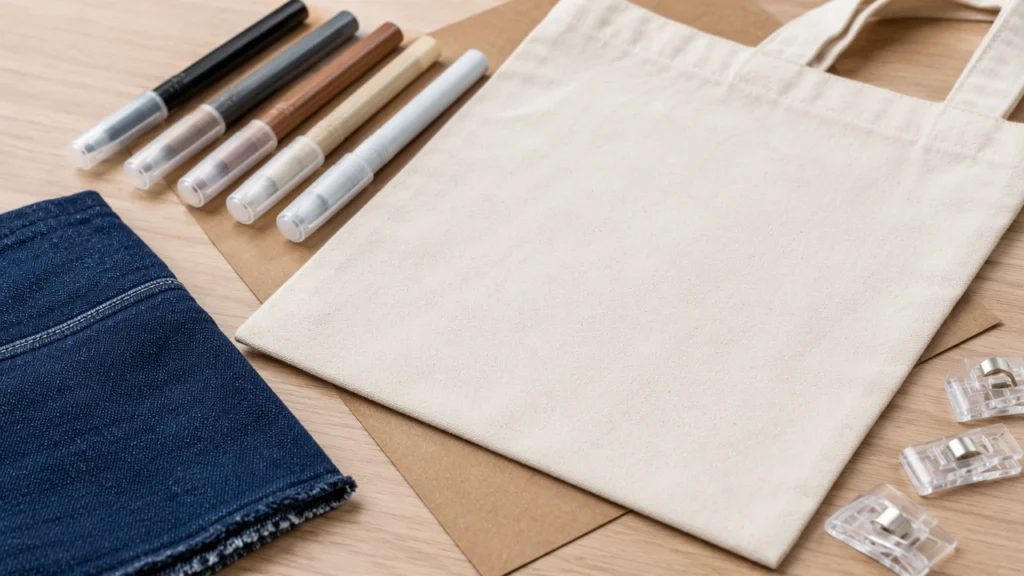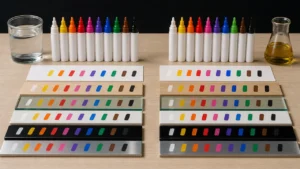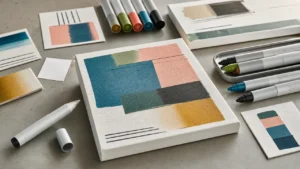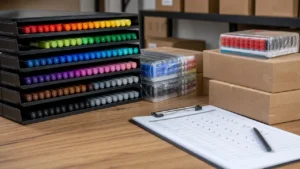
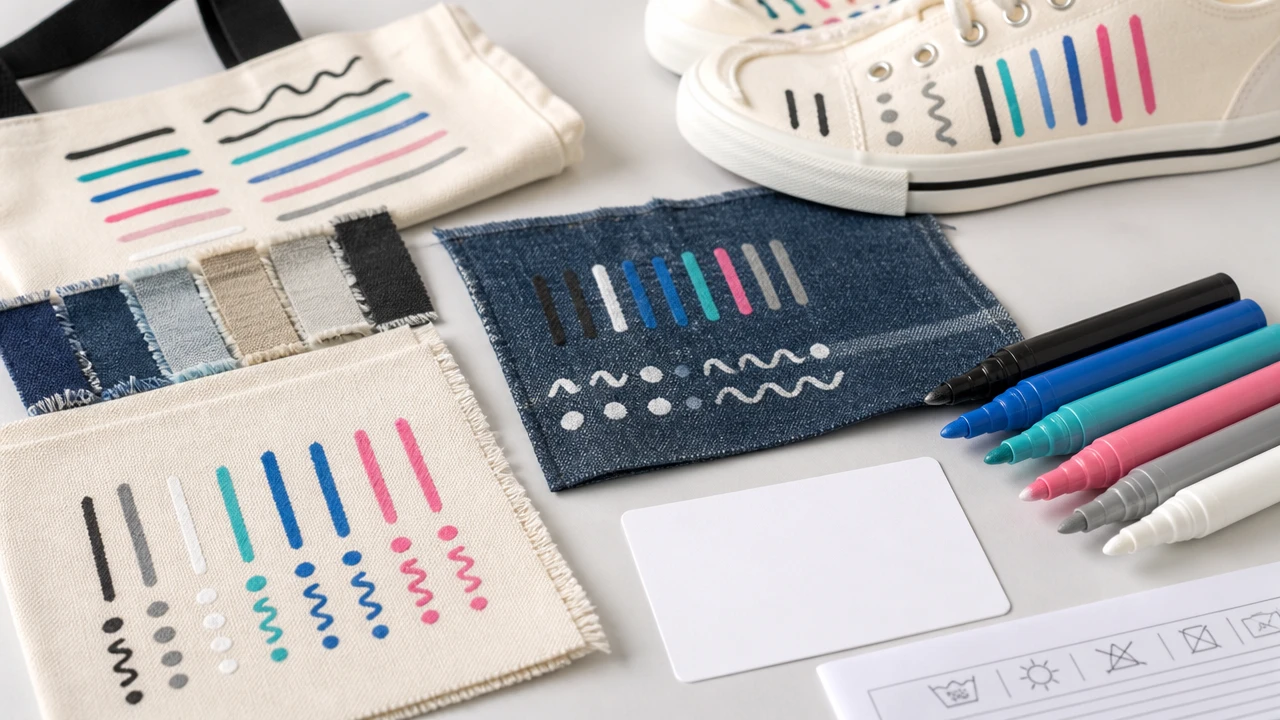
Fabric is one of the most attractive uses for acrylic paint markers, but it is also one of the easiest places to overpromise. A marker can look sharp on a tote bag today and fade, crack, or bleed after washing if the fabric, ink load, drying time, and care instructions are not controlled.

How to Use Acrylic Paint Markers on Fabric: Quick Answer
To use acrylic paint markers on fabric, start with clean, dry, tightly woven fabric. Prewash when possible, place a backing sheet under the fabric, test a small swatch, apply light layers, let the design dry fully, heat set only if the marker formula and fabric allow it, then wash gently inside out. For B2B projects, treat fabric durability as a tested claim, not a casual product note.
ZH Stationery supports OEM and ODM acrylic paint markers for craft, school, hobby, retail, and private-label marker sets. If your line will mention tote bags, canvas shoes, denim, cotton pouches, or fabric crafts, approve the usage method and care wording before packaging is printed.
快速連結
- Choose the Right Fabric
- Prewash and Set Up the Fabric
- Apply the Design in Light Layers
- Drying and Heat Setting
- Washing Care
- B2B Sample Approval and Durability Testing
- Safety and Labeling
- 提出更好的供應商問題
- 常見問題
Choose the Right Fabric
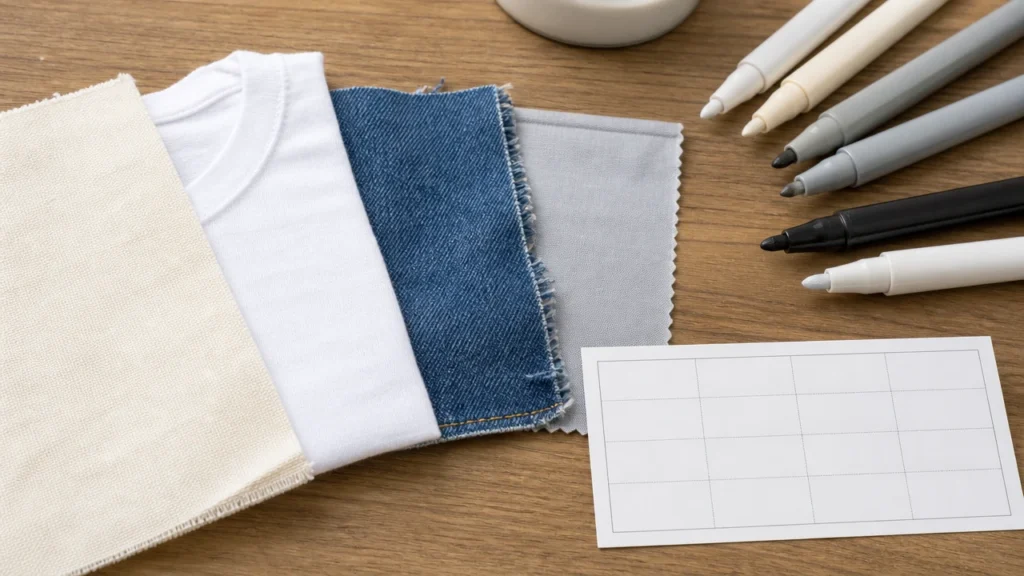
Acrylic paint markers usually behave best on stable, absorbent fabrics. Cotton canvas, denim, cotton tote bags, and woven cotton panels are easier than stretch knits, silky synthetics, waterproof coatings, fleece, or heavily treated fabric. The tighter and cleaner the surface, the cleaner the line.
| Fabric Type | Expected Result | 主要風險 | Buyer Check |
|---|---|---|---|
| Cotton canvas | Usually strong for tote bags, pouches, and craft panels. | Stiff hand-feel if ink is applied too heavily. | Test light layers and one wash cycle before claims. |
| Denim | Good visual effect on light or mid-tone denim. | Dark denim may reduce color visibility. | Test opacity and rub resistance. |
| Cotton T-shirt fabric | Works, but stretch can stress the paint film. | Cracking after wearing or washing. | Stretch and wash test the marked area. |
| Canvas shoes | Can work on clean canvas uppers. | Flexing, dirt, moisture, and abrasion. | Test bend, rub, and spot-cleaning. |
| Polyester | Variable by weave and finish. | Lower absorption and heat sensitivity. | Test the exact fabric and heat setting limit. |
| Waterproof or coated fabric | Often difficult. | Paint sits on coating and may peel. | Do not claim suitability without testing. |

Prewash and Set Up the Fabric
Prewashing helps remove sizing, dust, softener residue, and shrinkage risk. If the finished item will be washed by customers, the sample should be tested after the same preparation. Marking an unwashed sample can produce a result that looks better than the real consumer experience.
- Wash the fabric without fabric softener when possible.
- Dry it fully before marking.
- Iron or flatten wrinkles if the fabric allows heat.
- Place a clean backing sheet under the working area to prevent bleed-through.
- Secure the fabric so the marker tip does not drag folds into the line.
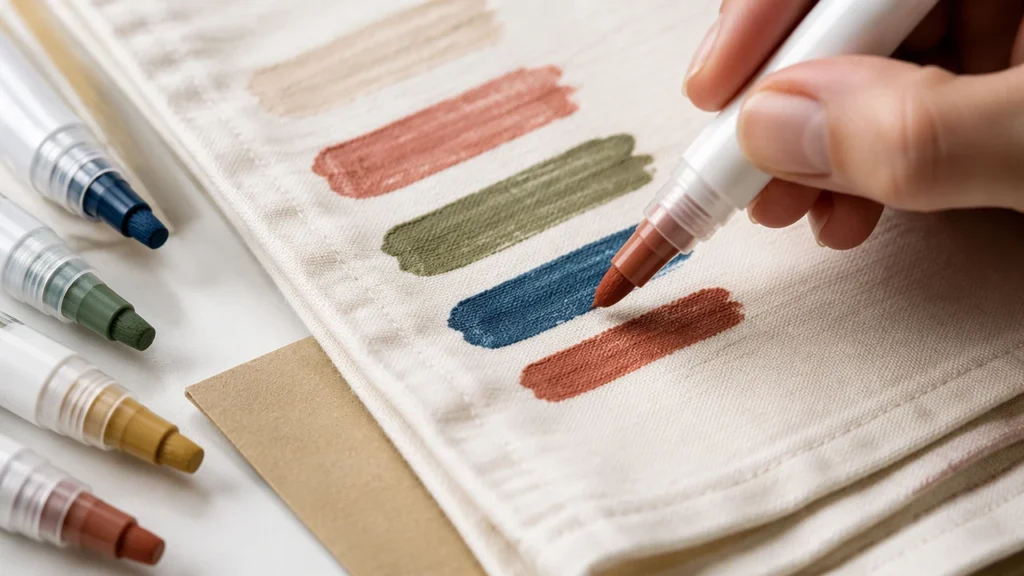
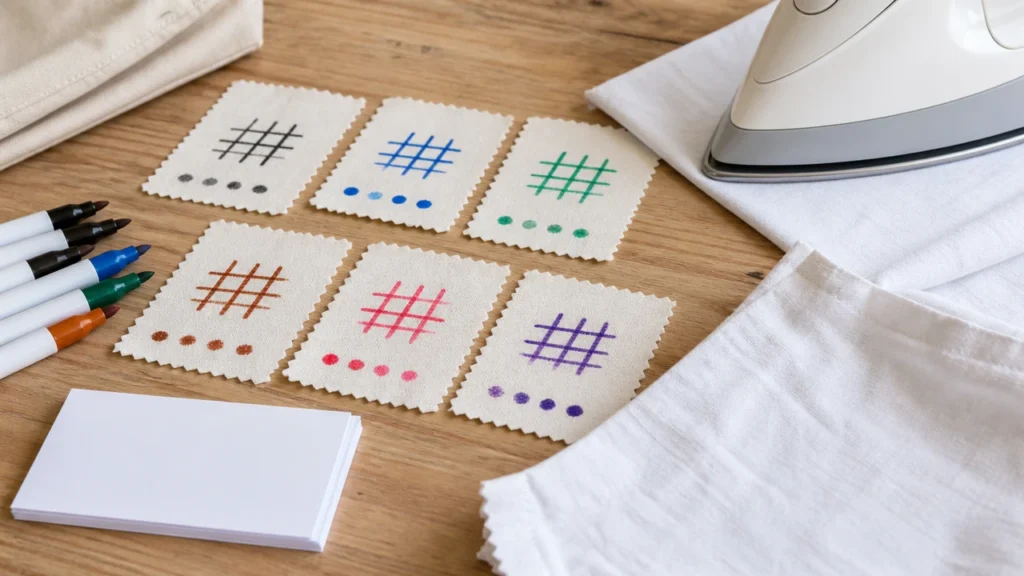
- Test the exact color on a hidden corner or spare swatch.
This step is especially important for private-label sets that show fabric examples on the box. If the artwork promises tote bags or canvas shoes, include the tested preparation method in the instruction card. The wording should be reviewed together with the sample approval checklist, not added at the end.
Apply the Design in Light Layers
Heavy ink loads make fabric feel stiff and can crack more easily after flexing. Light layers usually last better than one wet pass. Let the first layer settle before adding detail. Keep the marker tip clean if fibers begin to lift from the fabric.
Valve-press markers need controlled priming. Too little ink gives weak color; too much ink floods the weave. ZH Stationery’s valve-press marker technology explains how controlled ink release supports opaque paint systems. For fabric, that control helps the user avoid blobs and uneven edges.
If the set includes glitter or specialty effects, test them separately. 超閃粉丙烯顏料馬克筆 can create strong retail appeal, but glitter visibility, fabric feel, and wash behavior may differ from standard opaque colors.

Drying and Heat Setting
Drying is not the same as full durability. The surface may feel dry while the paint film still needs time before washing, folding, or rubbing. For consumer instructions, the supplier should define a waiting period based on the formula and fabric test, not on habit.
Heat setting can help some fabric marker systems, but it is not a universal rule. Cotton canvas may handle ironing better than polyester. A glitter effect may be damaged by heat. A coated fabric may melt, warp, or change texture. If heat setting is recommended, the instruction should specify the method, temperature direction, protective cloth, time, and whether steam is avoided.

Washing Care That Helps the Design Last
For ordinary consumer use, gentle care reduces failure risk. Wash inside out, use cold or mild water settings, avoid bleach, avoid harsh scrubbing on the design, and air dry when possible. If machine drying, high heat should be tested before it appears in care instructions.
Care wording matters because decorated fabric can fall under textile-care expectations when it is sold as apparel or certain piece goods. The FTC Care Labeling Rule guide explains that covered manufacturers and importers need reliable evidence for care instructions and warnings. If a marker kit is sold with fabric blanks, or if a buyer sells finished decorated apparel, care claims should not be copied from a generic craft instruction.

B2B Sample Approval and Durability Testing
For a sourcing team, the question is not whether one sample looked good. The question is whether the marked fabric still looks acceptable after the customer does what the package told them to do.
- Define the fabric: fiber content, weave, color, coating, and prewash condition.
- Define the marker formula, color, nib size, and ink load.
- Record drying or curing time before washing.
- Test dry rub before washing.
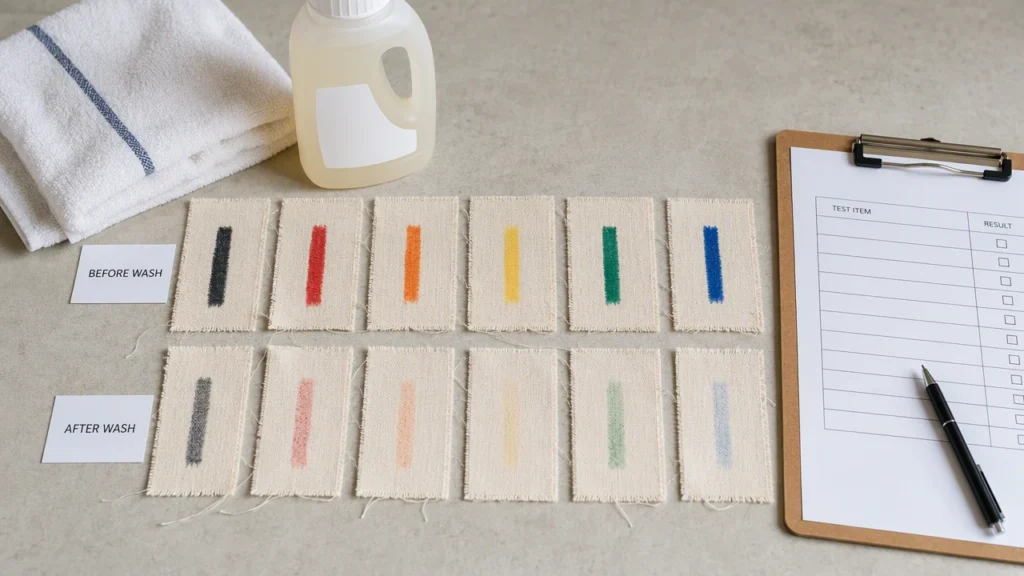
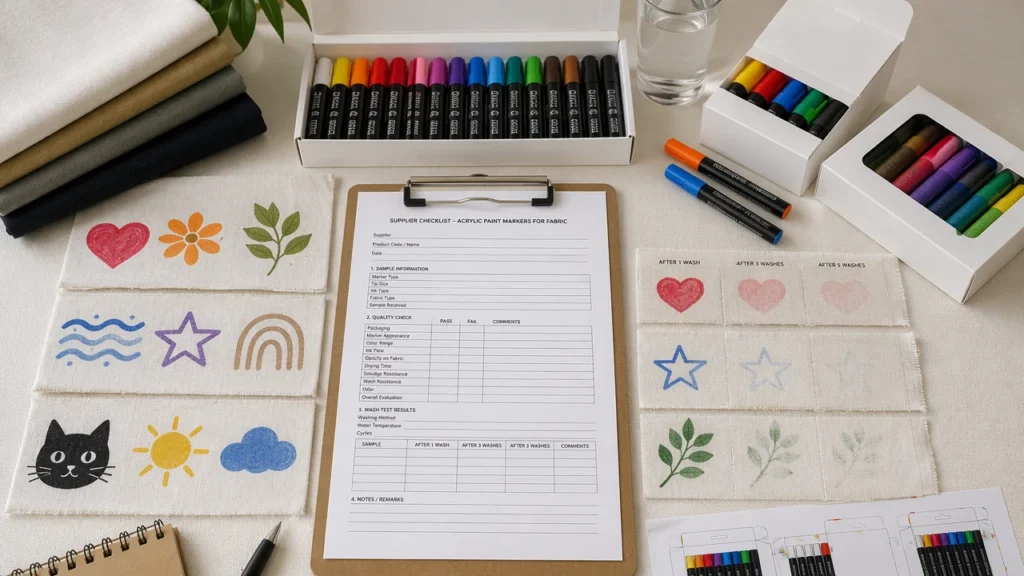
- Wash by the intended consumer method and inspect color loss, cracking, bleeding, and staining.
- Compare against a retained approved sample.
- Photograph the result and attach it to the bulk order approval file.
AATCC’s AATCC TM61 laundering test method summarizes accelerated laundering tests for textile colorfastness, and ISO lists ISO 105-C06 laundering colorfastness standard for domestic and commercial laundering colorfastness. Your marker project may not need a formal lab test for every retail claim, but these standards show why wash durability must be tied to a defined procedure.
Keep the approved fabric panels with your color masters. That helps when checking marker color consistency across reorders and when handling complaints similar to our marker dry-out complaint case study. A fabric complaint can come from ink, surface preparation, customer washing, or unclear instructions.
Safety and Labeling for Fabric Marker Claims
If the marker is sold as an art material in the U.S., review art-material labeling separately from fabric durability. 藝術材料指引 states that covered art materials need toxicological assessment and ASTM D-4236 conformance labeling. That type of review supports chronic hazard labeling. It does not prove wash durability, skin safety, or suitability for all textile products.
Do not position ordinary acrylic paint markers as body paint or skin-safe cosmetic products. Fabric use can create incidental skin contact, but direct skin application is a different claim. If the product may be used at events, schools, or with children, review the skin-safe marker guide, current certification documents, and the ASTM D-4236測試報告指南 before artwork approval.
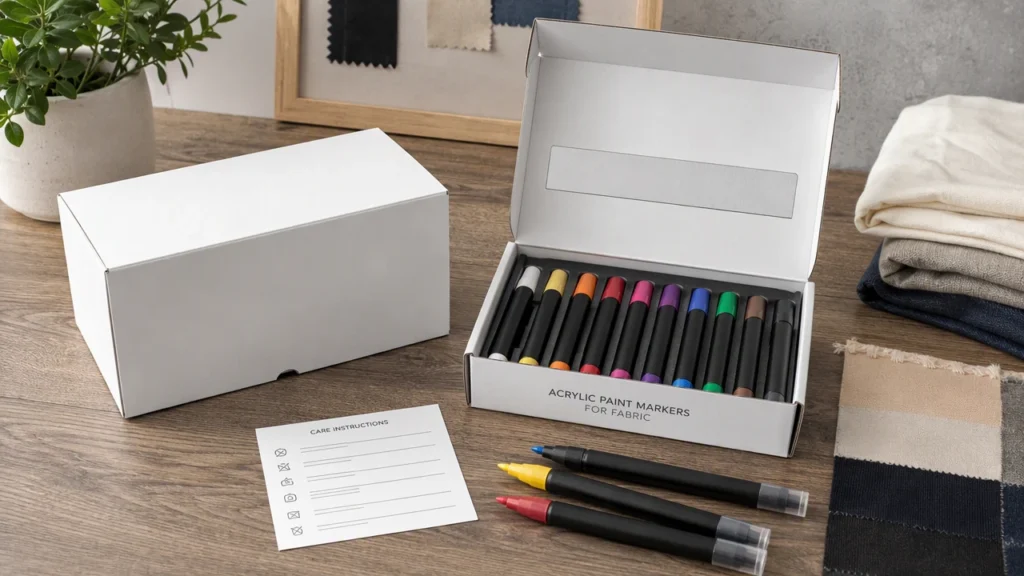
Packaging should also leave space for specific fabric instructions. If you are choosing between color boxes, blister cards, and gift boxes, compare 壓克力馬克筆包裝選項 before finalizing the instruction panel.

提出更好的供應商問題
A fabric-use claim should lead to practical supplier answers, not a simple yes. Ask for the method behind the claim.
- Which fabrics did you test? A good answer names fiber, weave, color, and prewash condition.
- Does the marker require heat setting? A good answer explains the fabric limit, protective cloth, time, and whether steam is allowed.
- How many washes did the design survive in your test? A good answer names the wash method and inspection criteria.
- Will the design crack on stretch fabric? A good answer includes bend, stretch, or wear checks for the intended item.
- Can we claim machine washable? A good answer asks for the wash cycle, water temperature, detergent, and drying method before approving that phrase.
- What warning or care wording should appear on the package? A good answer matches the test result and target market.
- Can you keep retained fabric samples? A good answer includes marked fabric panels, finished markers, packaging proof, and batch records.

常見問題
These answers are written for buyers preparing fabric-use instructions, retail claims, and private-label acrylic marker sample approvals.
1. Can acrylic paint markers be used on fabric?
Yes, acrylic paint markers can mark many fabrics, especially cotton, canvas, denim, and tote-bag materials. The final durability depends on fabric type, surface finish, ink load, drying time, heat setting if recommended, and washing method.
2. Do you need to prewash fabric before using acrylic paint markers?
Prewashing is usually a good step because it removes sizing, dust, softeners, and shrinkage risk. The fabric should be fully dry and flat before marking.
3. Should acrylic paint marker designs be heat set on fabric?
Heat setting may help some formulas, but it should only be recommended when the supplier has tested the formula and the fabric can handle heat. Some synthetic fabrics, coatings, or glitter effects can be damaged by heat.
4. How long should acrylic paint marker designs dry before washing?
Buyers should define a drying or curing time with the supplier. For consumer instructions, many products use a waiting period before the first wash, but the exact time should come from formula testing rather than guesswork.
5. Will acrylic paint markers survive machine washing?
Some designs can survive gentle washing, but machine-wash resistance is a separate claim. Test the exact fabric, marker formula, drying time, washing temperature, detergent, and cycle before putting wash claims on packaging.
6. Can acrylic paint markers be sold as fabric markers?
Only if the product is tested and positioned for fabric use. A general acrylic marker that can mark fabric is not automatically a dedicated fabric marker with proven wash durability.
結論
Acrylic paint markers can work well on fabric when the fabric is clean, the ink is applied in controlled layers, the design dries properly, and the washing instruction matches the tested result. The phrase works on fabric should never stand alone on a B2B order.
For an OEM or ODM acrylic marker project, send ZH Stationery your target fabric, product type, selling market, color count, packaging format, and the exact fabric claim you want to make. We can help review the marker formula, nib flow, sample test plan, and instruction wording before bulk production.