











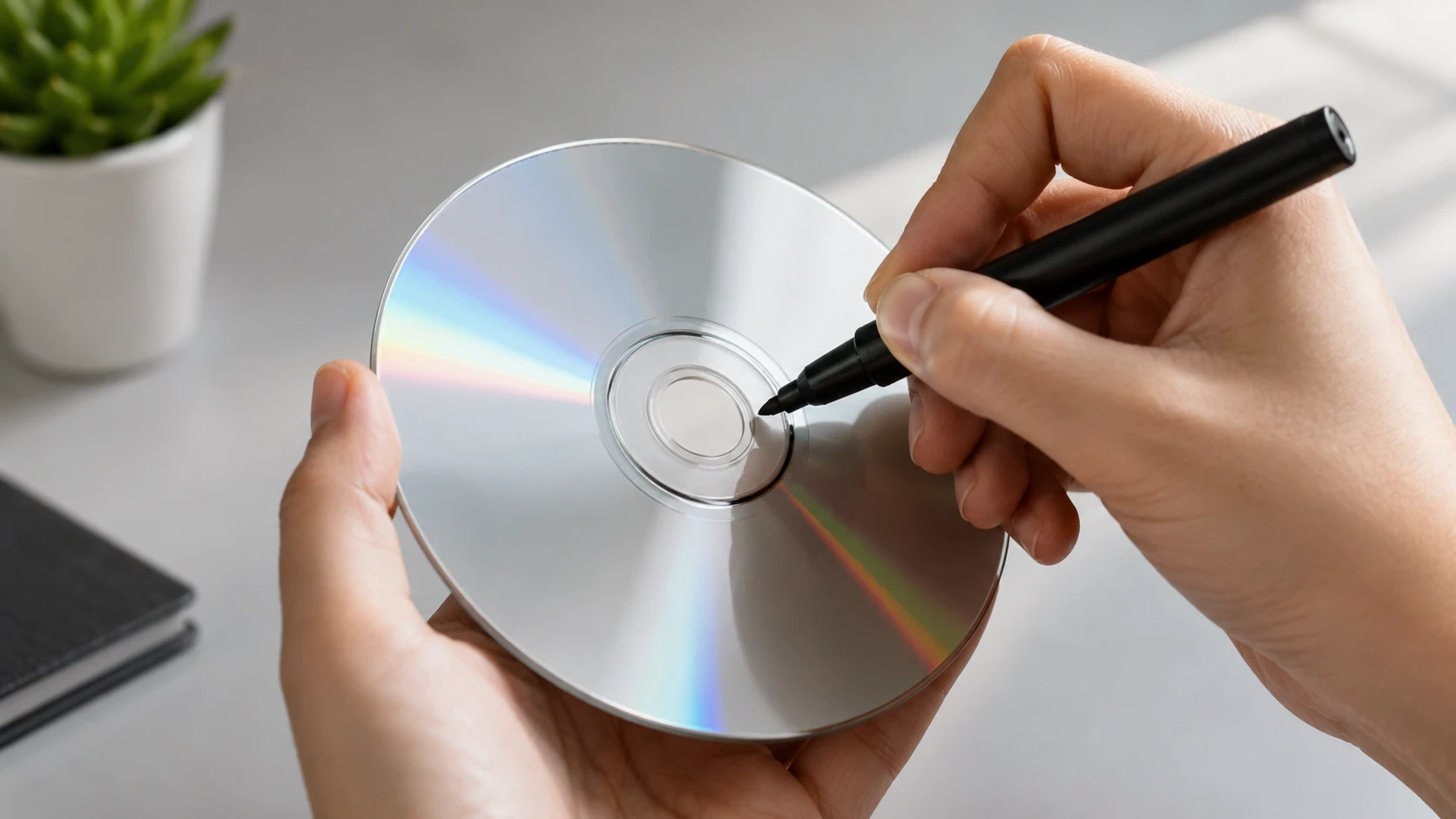
You burn a mix CD. Grab the nearest Sharpie. Scribble the tracklist across the label side. Looks fine. Six months later, track seven starts skipping. Same spot. Every time.
Using permanent marker on CDs is something millions of people have done without a second thought. Most get away with it. Some don’t. Whether your disc survives depends on three things: what is in the ink, how a CD is built, and which side you wrote on.
Содержание
Quick Answer: Does Permanent Marker on CDs Cause Damage?
Depends on the solvent. And where you write.
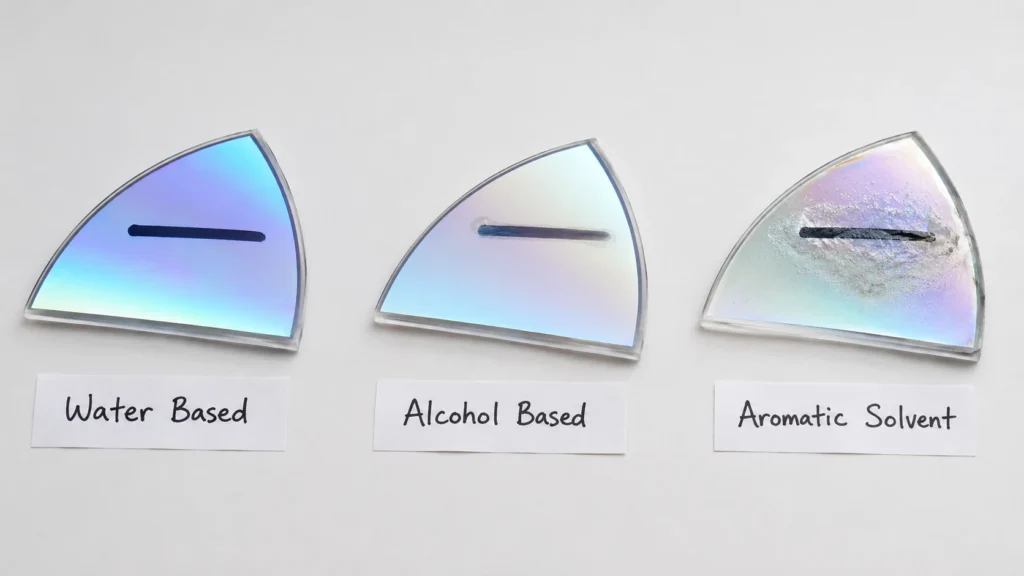
- Water based markers are completely safe for permanent marker on CDs labeling. No organic solvents that attack disc materials. Every dedicated CD marker on the market uses water based ink for exactly this reason.
- Alcohol based markers (standard Sharpie) are probably fine on the label side. The alcohol evaporates fast, usually before it penetrates the protective coating. Low risk, not zero risk.
- Markers with xylene or toluene can damage CDs over time. These solvents eat through the thin lacquer layer that protects the data. The disc might read fine for months before oxidation catches up.
- Acetone or nail polish remover destroys a CD instantly. It dissolves polycarbonate. Visible damage. Permanent.
- Never write on the shiny bottom. Label side only. Cleanest approach for permanent marker on CDs: write on the clear plastic ring in the center. No data there, no risk.
How a CD Is Built, and Why It Matters Where You Write
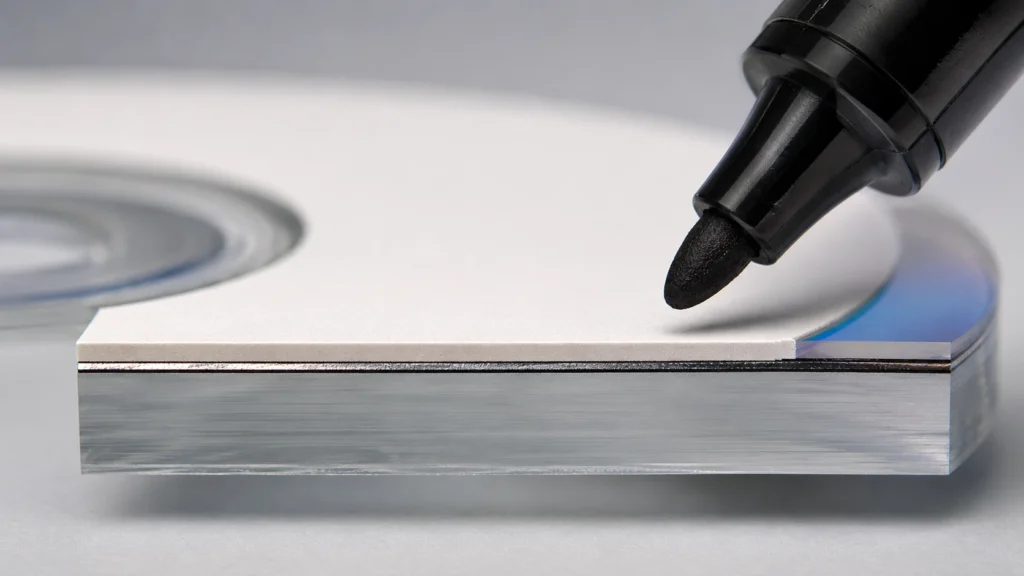
A CD is not a solid piece of plastic. It has layers. From the bottom up: a thick clear polycarbonate layer (the side the laser reads), a metal reflective layer (usually aluminum), a very thin protective lacquer coating, and whatever label or printing sits on top.
The metal layer that stores your data is right under the label surface. On a CD, the label side is more fragile than the read side. The lacquer protecting the metal is only a few microns thick. Its entire job is keeping air and moisture away from the aluminum underneath.
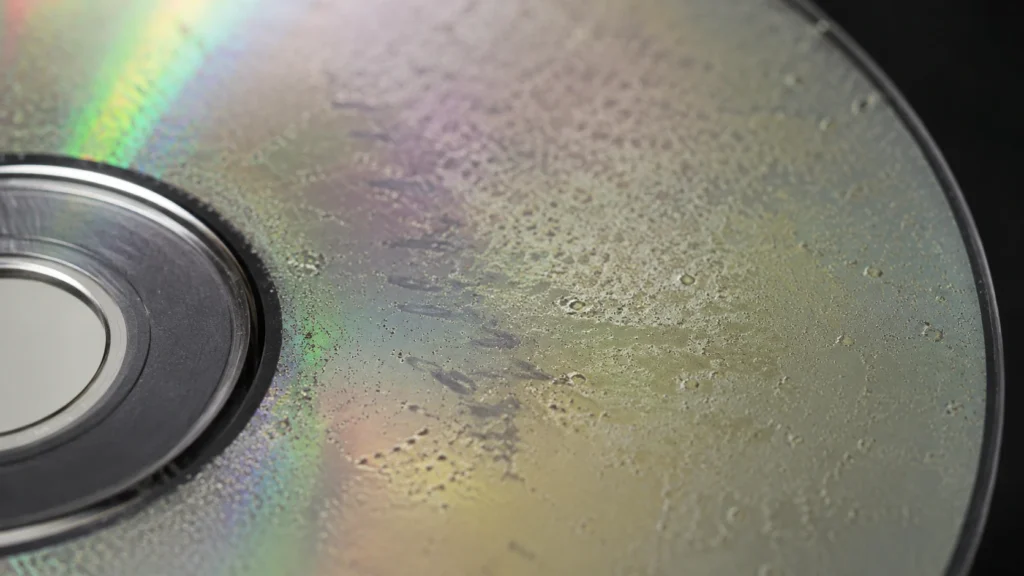
This is why writing with permanent marker on CDs can go wrong. Your marker tip and your ink both interact with this lacquer. A hard tip scratches through it into the metal. A harsh solvent chemically breaks it down over time. Either way, the aluminum underneath gets exposed, starts oxidizing, and oxidized aluminum does not reflect a laser beam.
DVDs are more forgiving. The data layer sits in the middle, sandwiched between two layers of polycarbonate. There is just more plastic between your marker and the data.
根据 Council on Library and Information Resources, whose optical media guide is the standard reference for archives worldwide, the safest approach for permanent marker on CDs is simple: water based marker, soft tip, write on the inner hub.
What Is Actually in Permanent Marker Ink
Three things. Pigment for color. Resin to form a durable film. Solvent to keep everything liquid until you write. The solvent is what makes permanent marker on CDs safe or dangerous.
Water is safest. It evaporates cleanly. No chemical residue. Does not dissolve lacquer or polycarbonate. Water based permanent markers dry a little slower and do not grip slick surfaces as aggressively. For CDs, that slower dry time is a feature, not a bug. It means the ink sits on the surface without going to work on it.
Isopropyl alcohol and ethanol sit in the middle. They evaporate faster. They give good permanence on most surfaces. They are generally safe on CD lacquer because they flash off before reaching the metal layer. But they can dissolve some coatings, especially if you go over the same spot repeatedly. The CLIR guidelines note that alcohol markers are widely used for permanent marker on CDs labeling without reported failures. They also note that no controlled study has verified long term safety.
Xylene and toluene are the ones to avoid. Industrial permanent markers use them because they bite into tough surfaces. On a CD, that bite breaks down the lacquer. The damage is not always immediate. The disc reads fine for weeks. Oxidation starts the moment the barrier is breached.
Acetone and MEK are in their own category. They dissolve polycarbonate directly. Writing on a CD with anything containing acetone is not marking. It is melting.
CD-Safe Markers: What Makes Them Different
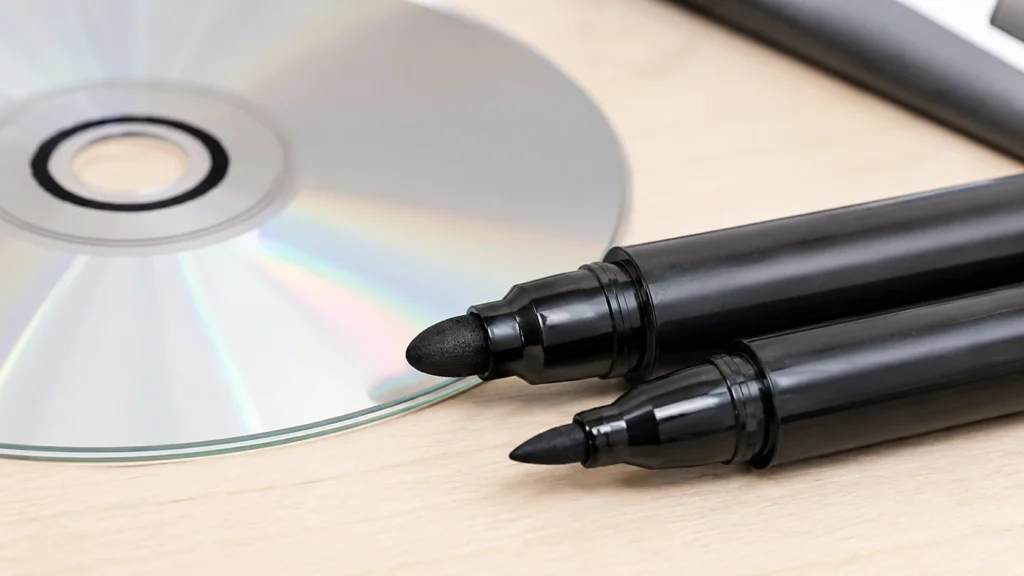
Dedicated CD markers are permanent markers with two simple choices: water based ink, and an extra soft tip that cannot scratch through lacquer. These are the safest option when you need to use permanent marker on CDs regularly.
Сравнение edding 8400 uses water based pigment ink and a soft round nib. The Staedtler Lumocolor 310 is built the same way. The Schneider Maxx 244 adds a toluene-free, xylene-free guarantee. Same approach across all three: eliminate the solvents that attack CD materials, soften the tip so it cannot scratch.
The writing looks like regular permanent marker. Waterproof once dry. No smearing or fading. The only functional difference between a dedicated CD marker and using standard permanent marker on CDs is that the dedicated tool does not destroy what it writes on.
No CD marker handy? A standard water based permanent marker with a felt tip works. Fine point Sharpies and other alcohol markers are probably fine for casual labeling. If the data on the disc matters, spend the few dollars on the right tool.
How to Label CDs the Safe Way
Five rules that eliminate the risk entirely when using permanent marker on CDs:
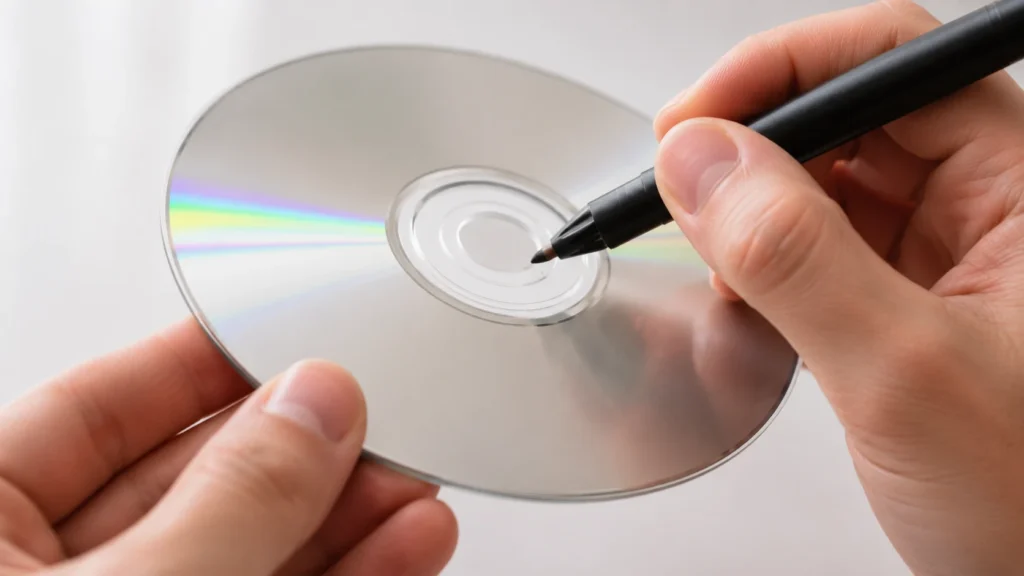
Write on the inner hub. The clear plastic ring around the center hole stores no data. Any marker, even a Sharpie, is safe there because there is nothing to damage.
Use a soft tip. Ballpoints and dried out nibs scratch. Felt tips and soft fiber tips distribute pressure and will not cut through lacquer unless you deliberately try.
Do not go over the same spot repeatedly. Each pass with an alcohol marker puts down more solvent. One pass dries harmlessly. Five passes in the same spot might not.
Skip adhesive labels on recordable discs. The glue in standard CD labels can react with the disc surface over time and cause warping or chemical damage. Write directly on the disc with a safe marker, or use printable-surface discs with an inkjet printer.
Store discs in cases, upright, away from heat and humidity. UV and moisture speed up oxidation on any disc, labeled or not.
Часто задаваемые вопросы
- Will a Sharpie ruin a CD? Probably not, but no guarantee. Sharpies use alcohol based ink, which is less aggressive than xylene or toluene and evaporates fast. CLIR says alcohol markers are used for permanent marker on CDs all the time without reported failures. But no controlled long term study exists. If the disc matters, use a water based CD marker.
- What is the safest marker for CDs? Water based permanent markers with a soft felt or fiber tip, labeled CD/DVD safe. The edding 8400, Staedtler Lumocolor 310, and Schneider Maxx 244 are the most common dedicated options. All use water based pigment ink with non-scratching tips. If you cannot find a dedicated CD marker, any water based permanent marker with a soft tip beats using an alcohol marker for permanent marker on CDs.
- Can I write on a DVD with permanent marker? Yes. Safer than a CD, actually. The data layer in a DVD sits in the middle of the disc between two polycarbonate layers. There is more plastic between your marker and the data than on a CD. Same solvent risks apply to the surface coating though. Water based markers are still safest.
- Why is the label side of a CD more fragile than the bottom? The metal reflective layer sits right under the label surface, protected by a few microns of lacquer. The bottom is thick polycarbonate. Scratches on the bottom can sometimes be polished out. Damage on the top that reaches the metal is permanent. The data at that spot is gone.
- What if I already wrote on a CD with the wrong marker? Back it up. Right now. Copy every file off while it still reads. Once a CD starts showing errors from label side damage, the deterioration usually speeds up. Aluminum oxidation spreads from damaged spots outward. Do not wait.
- Are printable CDs better than writing on regular ones? For archiving, yes. Printable surface CDs have a coating designed to absorb ink without passing solvent through to the lacquer underneath. Paired with a compatible inkjet printer, this is the safest labeling method that still lets you customize each disc. For everyday use, a water based CD marker does the job.
Whether you are archiving family photos or labeling a one-off mix for the car, using permanent marker on CDs safely comes down to three choices: water based ink, soft tip, inner hub. Get those right and your discs will outlast the player you put them in.