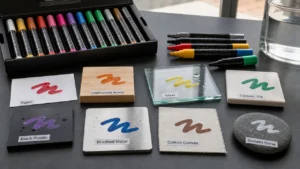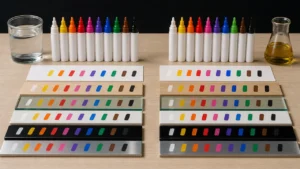
Художник покупает два акриловых маркера. Один бренд. Один цвет. Один имеет клапанно-нажимной механизм, где вы нажимаете наконечник вниз, чтобы прокачать краску. Другой — стандартный фибертип, который впитывает краску за счет капиллярного действия. Шесть месяцев спустя маркер с клапанно-нажимным механизмом все еще пишет как новый. Фибертип износился, засорился и выдает неравномерный цвет.
Был ли клапанно-нажимной маркер лучше спроектирован или ему просто повезло? Для B2B-покупателей, закупающих акриловые маркеры, этот вопрос напрямую влияет на прибыль. Выбранный механизм определяет уровень возвратов, гарантийные претензии и то, как художники будут говорить о вашем бренде.
An акриловый маркер с клапанно-нажимным механизмом — это не трюк. Он подает густую акриловую краску через наконечник принципиально иначе, чем фибертип. Поймите компромиссы между ними, и вы будете знать, какие жалобы возникнут у ваших клиентов, прежде чем они откроют маркер.
Содержание
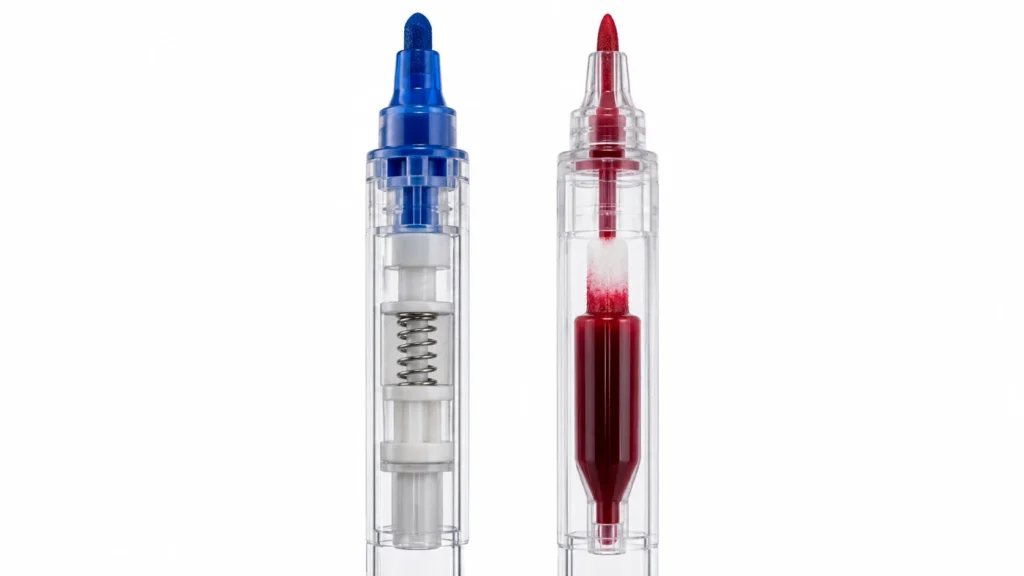
Краткий ответ: Клапан акрилового маркера с нажатием против фибрового наконечника
Сравнение двух механизмов по показателям, которые действительно определяют долговечность:
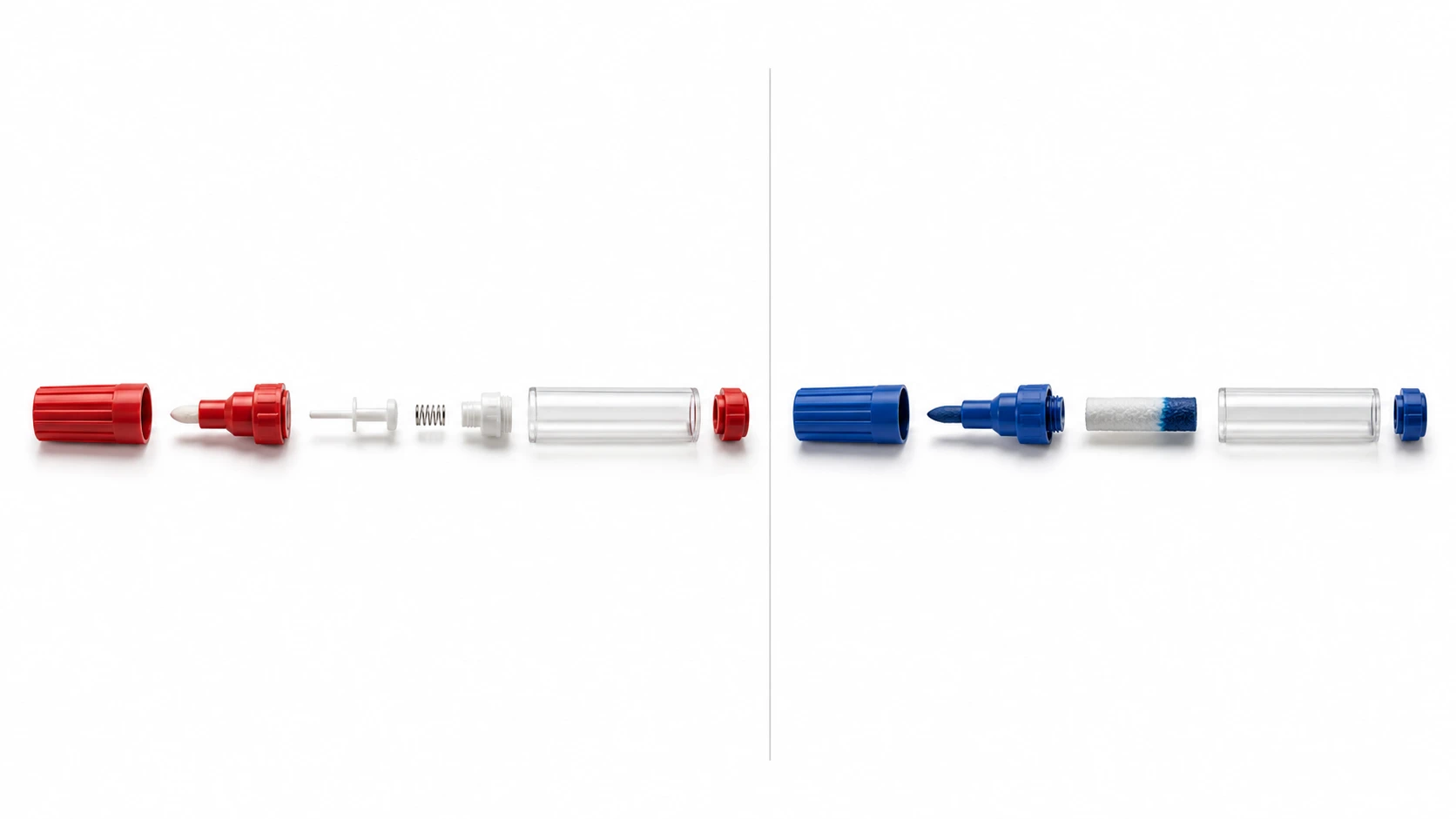
- Клапанно-нажимные маркеры подают краску механически. Нажмите на наконечник, пружинный клапан открывается, краска течет. Краска остается герметично запечатанной внутри корпуса до активации. Это означает, что краска никогда не задерживается в наконечнике между использованиями. Наконечник не может засориться от высохшего акрила. Эти маркеры доминируют при прерывистом использовании.
- Маркеры с фибертипом используют капиллярного действия, тот же принцип, что и любой стандартный маркер. Краска всегда контактирует с наконечником. Вы открываете колпачок и пишете мгновенно. Но акриловая краска может высыхать внутри волокон наконечника между использованиями. После засорения восстановить его практически невозможно.
- Клапанно-нажимные маркеры дороже в производстве. Пружина, плунжер, седло клапана, дополнительные этапы сборки. Маркеры с фибертипом механически проще и дешевле, поэтому они занимают бюджетный сегмент.
- Художники, работающие ежедневно, хорошо справляются с фибертипами. Постоянное использование поддерживает поток краски и предотвращает высыхание. Художники, работающие время от времени, получают гораздо больше пользы от клапанно-нажимного маркера. Герметичный механизм защищает краску между сеансами.
Прежде чем обсуждать цену за единицу, вам необходимо понять, что на самом деле представляет собой эта цифра. Вот таблица структуры затрат, которая сопоставляет производственные компоненты с их влиянием на ваши общие расходы.
Как каждый механизм выходит из строя
Каждая жалоба на акриловый маркер имеет причину, связанную с механизмом:
| Распространенная жалоба | Основная причина (клапанно-нажимной) | Основная причина (фибертип) | Сигнал качества для B2B |
| Маркер не пишет после хранения | Пружина клапана подверглась коррозии из-за акрила на водной основе; пружина потеряла натяжение | Акриловая краска высохла внутри волокон наконечника; капиллярные каналы заблокированы | Клапан: спецификация материала пружины. Фибертип: целостность уплотнения колпачка и добавки против засорения |
| Неравномерный поток краски | Клапан открывается неравномерно; вязкость краски слишком высока для зазора клапана | Пористость наконечника неравномерна; одни волокна забиты, другие открыты | Клапан: тестирование постоянства усилия активации. Фибертип: измерение допуска пористости наконечника |
| Наконечник изнашивается или деформируется | Пользователь нажимает слишком сильно, пытаясь активировать жесткий клапан | Материал волокна низкой плотности; акриловый пигмент абразивен | Оба: устойчивость наконечника к истиранию под контролируемым давлением с использованием реальной краски |
| Утечка краски при хранении | Клапан не закрывается полностью; недостаточное усилие возврата пружины | Наконечник перенасыщен; колпачок не герметизирует | Клапан: усилие возврата пружины на единицу. Фибертип: вакуумное тестирование уплотнения колпачка |
| Разница в цвете между партиями | Неравномерное смешивание краски перед заправкой; оседание пигмента | Частицы пигмента слишком велики для каналов наконечника; неравномерная фильтрация | Оба: спектрофотометрическое соответствие партий и проверка размера частиц пигмента |
Ни один механизм не является по своей сути более долговечным. Каждый выходит из строя по-своему. Клапанный механизм выходит из строя, когда пружина или уплотнение дешевые. Фибертип выходит из строя, когда материал наконечника или уплотнение колпачка дешевые. В обоих случаях “дешевый” означает производственные решения, а не розничную цену.
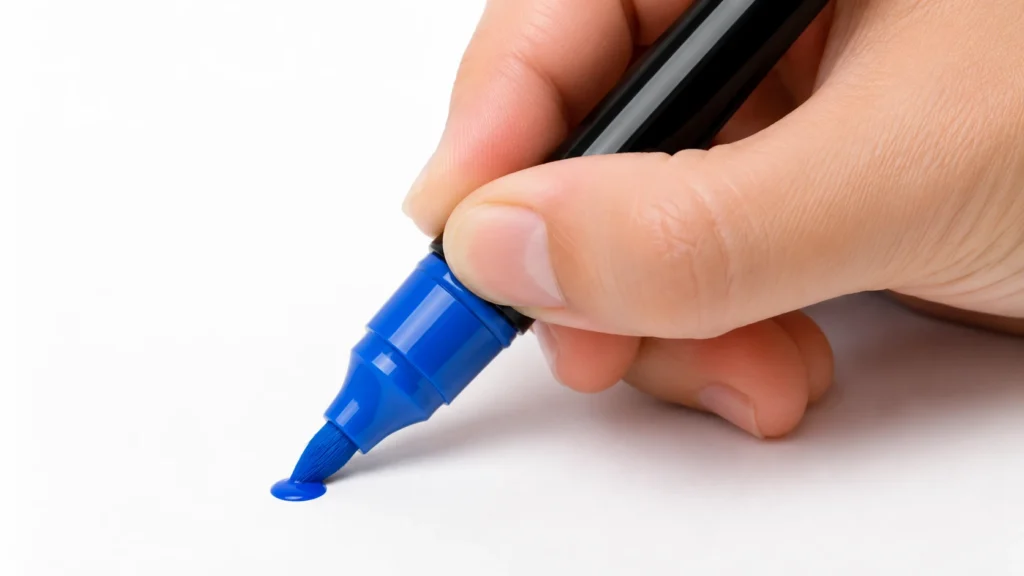
Как работает механизм клапан-пресс
Акриловый маркер с клапанно-нажимным механизмом помещает пружинный плунжер внутрь корпуса наконечника. Нажмите наконечник вниз, плунжер открывает проход между резервуаром с краской и кончиком наконечника. Краска течет. Поднимите маркер, пружина возвращает плунжер вверх, проход закрывается.
Это тот же механизм, который используется в промышленных помповых маркерах, уменьшенный и адаптированный для акриловых художественных маркеров. Сложность заключается в том, чтобы заставить густую, насыщенную пигментом акриловую краску проходить через узкий проход клапана без засорения.
Три конструктивных переменных определяют надежность. Материал пружины: акрил на водной основе слабокоррозионен. Углеродистая сталь ржавеет и ослабевает. Нержавеющая сталь выдерживает. Усилие пружины: слишком жесткое — пользователи нажимают сильнее и повреждают наконечник до активации клапана. Слишком слабое — клапан не закрывается полностью после использования, и воздух проникает внутрь, высушивая краску. Геометрия седла клапана: поверхность, где плунжер уплотняется относительно корпуса, должна быть гладкой и точно обработанной. Шероховатое седло дает микроскопические утечки. Достаточно одной микроскопической утечки.
Преимущество простое. Клапан закрыт, краска запечатана. Наконечник не насыщен. Художник, рисующий раз в неделю, может взять маркер через шесть месяцев, нажать на наконечник и получить свежую краску. Пользователь фибертипа с тем же графиком берет засоренный маркер.
Компромисс — это прокачка. Клапанным маркерам требуется несколько нажатий при первом использовании, чтобы провести краску через механизм. Некоторые пользователи считают это интуитивным. Некоторые находят это раздражающим и думают, что маркер сломан. Если ваша упаковка не объясняет этап прокачки, вы получите возвраты от клиентов, считающих маркер бракованным. Эти возвраты — не отказ продукта. Это отказ упаковки.
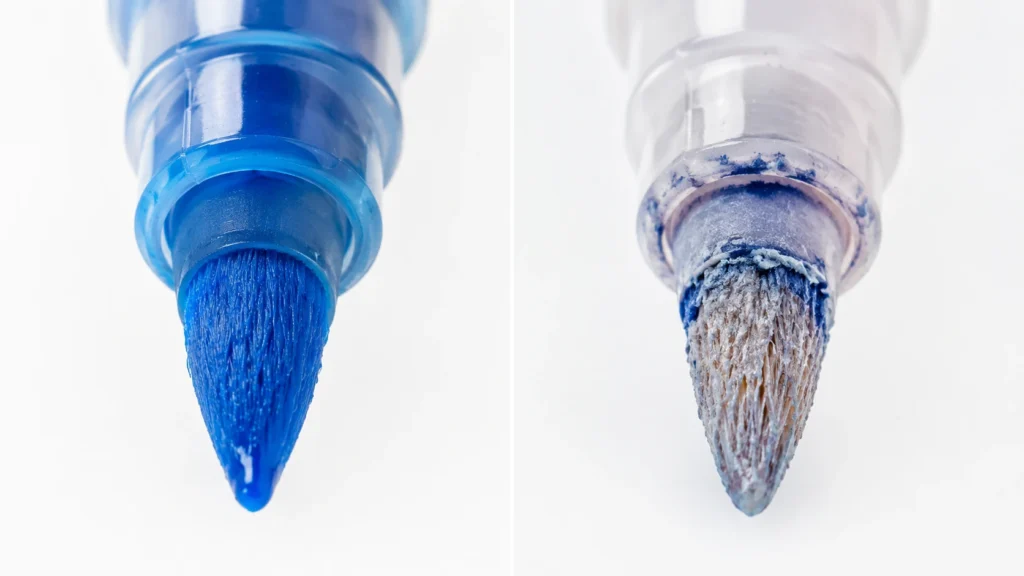
Как работает механизм с волоконным наконечником и почему он выходит из строя
A фибертип акрилового маркера работает как любой стандартный маркер. Пористый наконечник из спрессованного полиэстера или акриловых волокон впитывает краску из внутреннего резервуара за счет капиллярного действия. Краска всегда соприкасается с наконечником. Маркер всегда готов к использованию.
Это одновременно его сила и его проблема. Художники, которые используют Акриловые маркеры ежедневно, любят фибертипы. Никакой прокачки. Никакой подготовки. Открой колпачок и рисуй. Но постоянное насыщение означает, что акриловая краска, которая отверждается в водостойкую пленку, всегда находится внутри волокон наконечника. Несовершенное уплотнение колпачка. Маркеры, не используемые неделями. Состав краски без увлажнителя. Любой из этих факторов приводит к высыханию краски внутри наконечника. Как только акрил отверждается внутри волоконных каналов, это необратимо. Маркер мертв.
Производственные переменные отличаются от клапанного механизма. Плотность материала наконечника: слишком плотный — густая акриловая краска не может течь достаточно быстро. Слишком пористый — наконечник переполняется, капает, изнашивается. Геометрия уплотнения колпачка: внутренний колпачок должен создавать герметичную камеру вокруг наконечника. Зазор в 0,1 мм вокруг уплотнения пропускает достаточно воздуха, чтобы высушить наконечник в течение недель. Добавки против засорения: увлажнители и модификаторы текучести в краске замедляют высыхание внутри наконечника. Качественные акриловые составы их включают. Бюджетные составы их пропускают для снижения затрат.
Для B2B-покупателей механизм с фибер-наконечником требует более строгого контроля качества герметичности колпачка и стабильности состава краски, чем механизм с клапанным нажатием. Отказ в виде засорения наконечника затвердевшим акрилом является катастрофическим и необратимым.
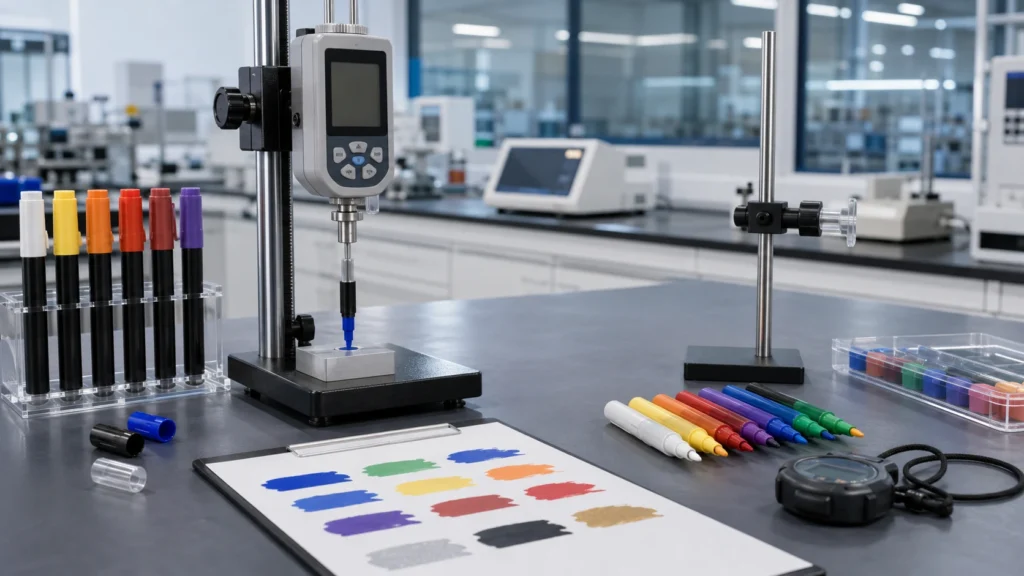
Что B2B-покупатели должны протестировать перед выбором
Решение между клапанным нажатием и фибер-наконечником должно приниматься на основе тестовых данных, а не теории.
- Для маркеров с клапанным нажатием: Проверьте усилие активации на десяти маркерах из одной партии. Оно должно быть одинаковым. Проверьте возврат пружины. После активации наконечник должен мгновенно возвращаться. Любая задержка означает, что пружина слишком слабая. Проверьте прерывистое использование: используйте маркер, закройте колпачок, подождите семь дней, используйте снова. Он должен писать без дополнительной прокачки после первоначальной подготовки. Проверьте на утечки: храните горизонтально в течение 48 часов. Краска не должна вытекать.
- Для маркеров с фибер-наконечником: Проверьте время без колпачка при 15, 30 и 60 минутах. Качественный фибер-наконечник с антизасоряющими добавками должен восстанавливаться после 30 минут без колпачка. Проверьте прерывистое использование: используйте, закройте колпачок, подождите семь дней. Если наконечник засорился, герметичность колпачка нарушена. Проверьте износостойкость наконечника: непрерывно рисуйте на текстурированной бумаге до опустошения. Наконечник должен выдержать полный объем краски без разлохмачивания.
- Для обоих типов: Проверьте согласованность партий. Закажите образцы из двух отдельных производственных циклов и протестируйте их рядом. Любое различие в усилии активации, скорости потока или плотности цвета между партиями означает, что производственный процесс не находится под статистическим контролем.
Фабрика с собственными исследованиями и разработками чернил и более чем 26-летним опытом OEM/ODM, такая как ZH STATIONERY, имеет протоколы испытаний долговечности для обоих механизмов, встроенные в рабочий процесс контроля качества. Вопрос к поставщикам не в том, “какой механизм лучше”. Спрашивайте: “Можете ли вы показать мне тестовые данные, доказывающие, что этот механизм работает в условиях использования моих клиентов?’
Часто задаваемые вопросы
Какие акриловые маркеры служат дольше: с клапанным нажатием или с фибровым наконечником?
Маркеры с клапанным нажатием выигрывают при прерывистом использовании. Краска герметично запечатана в корпусе, наконечник не высыхает. Маркеры с фибер-наконечником могут сравниться или превзойти клапанное нажатие при ежедневном использовании. Постоянный поток поддерживает наконечник насыщенным. Разница не в типе механизма. Она в том, соответствует ли качество изготовления характеру использования.
Почему маркеры на акриловой основе с клапанным нажатием необходимо сначала прокачать?
Подготовка. Клапанный проход и камера наконечника пусты из коробки. Прокачка протягивает краску через клапан в наконечник. После подготовки он работает мгновенно. Это нормально. Возвраты от клиентов, считающих, что маркер сломан, — это не отказы продукта, а отказы упаковки. Разместите инструкции по подготовке там, где их увидят.
Можете ли вы починить засорившийся акриловый маркер с фибровым наконечником?
Почти никогда. Акриловая краска затвердевает в водонепроницаемую пленку. Как только она высыхает внутри волокон наконечника, эти волокна навсегда скрепляются. Замачивание в воде или спирте может спасти частично засоренный наконечник. Полностью высохший наконечник мертв. Вот почему качество герметичности колпачка является самым важным параметром для тестирования акриловых маркеров с фибер-наконечником.
Являются ли маркеры с клапанным прессом более дорогими в производстве?
Да. Пружина, плунжер, седло клапана, дополнительные этапы сборки — всё это увеличивает стоимость. Но сопоставьте это с гарантийными претензиями и возвратами из-за засорённых фибровых наконечников. Для брендов, продающих маркеры случайным художникам, более высокая себестоимость клапанного механизма может оказаться дешевле, чем репутационный ущерб от неработающих маркеров.
Какие типы наконечников работают с каждым механизмом?
Пуля, стамеска, кисть. Все три формы работают с обоими механизмами. Механизм не зависит от формы наконечника. Важно соответствие материала наконечника краске. Акрил абразивен. Нейлон превосходит полиэстер по долговечности. Для наконечников-кистей плотность пучка волокон и качество скрепления определяют срок службы. Лаборатория ZH STATIONERY 内部墨水研发能力 тестирует материалы наконечников на соответствие фактическому составу краски, а не универсальной тестовой жидкости.
Как покупателям B2B следует проверять долговечность акриловых маркеров перед заказом?
Тестируйте в реальных условиях использования ваших клиентов. Для ежедневных пользователей тестируйте ежедневно. Для случайных пользователей тестируйте с недельными перерывами. Измеряйте согласованность активации для клапанных маркеров, восстановление после снятия колпачка для фибер-наконечников и надежность при прерывистом использовании для обоих. Запрашивайте данные контроля качества на уровне партий.. Поставщик, который не может предоставить данные о времени без колпачка для фибер-наконечников или данные об усилиях пружины для клапанных механизмов, не контролирует переменные, определяющие срок службы продукта. Свяжитесь с ZH STATIONERY для получения образцов акриловых маркеров, данных о долговечности и документации по контролю качества для конкретных механизмов.
Если вы закупаете акриловые маркеры для бренда художественных принадлежностей, канала творческой розничной торговли или программы частных марок, выбранный вами механизм определяет жалобы, которые вы получите. Свяжитесь ZH STATIONERY для обсуждения вариантов акриловых маркеров с клапанным нажатием и фибер-наконечником, запроса тестовых образцов и оценки данных о долговечности для вашего целевого рынка.
Связанное руководство: Для соответствующей проверки контроля качества см. Поиск поставщика маркеров на водной основе.