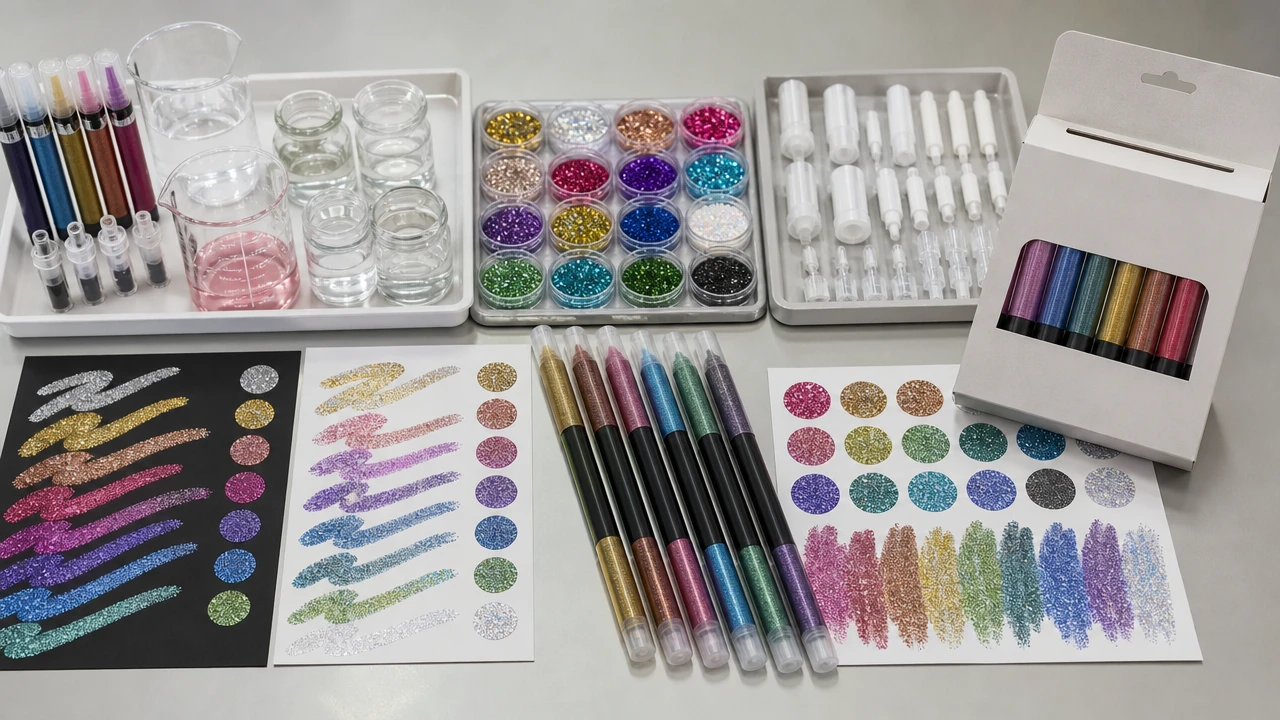
A fabricante de marcadores com glitter deve mover partículas decorativas através de reservatório, válvula e ponta sem assentar em um bloco duro, inundar a superfície ou deixar apenas aglutinante transparente. Isso torna os marcadores com glitter um projeto de formulação e entrega de tinta, não apenas uma variação de cor metálica.
Para compradores OEM, as decisões-chave são a base da tinta, o tipo e tamanho das partículas, a estabilidade da suspensão, a opacidade, a geometria da ponta, o fluxo da válvula, a vedação da tampa, as alegações de superfície, a embalagem, a revisão de conformidade e MOQ. Aprove estes itens em conjunto, porque um efeito de glitter mais brilhante pode criar um problema de fluxo mais difícil.
A ZH Stationery oferece uma linha de marcadores de tinta acrílica com super glitter e plataforma de marcador de pressão por válvula para compradores que comparam opções especializadas de marcadores de tinta.
Resposta Rápida
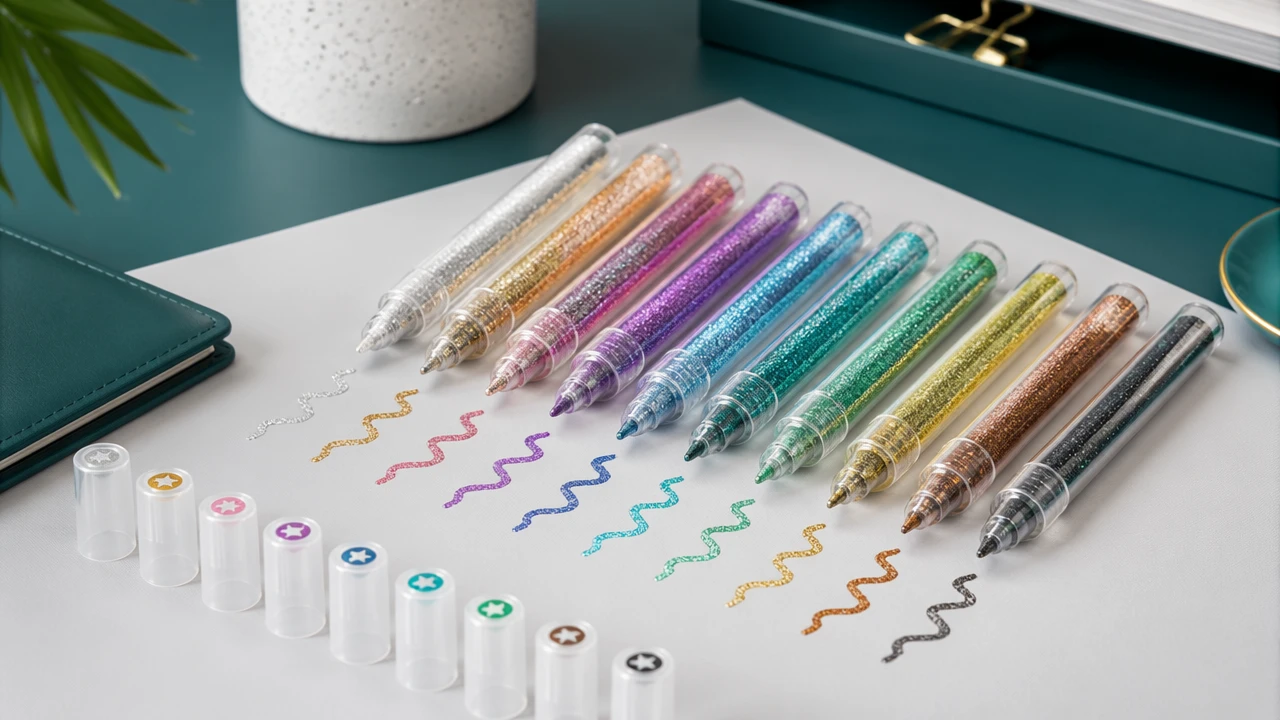
Para uso amplo em artesanato e varejo, um marcador de glitter acrílico à base de água geralmente é o ponto de partida mais prático. Ele pode combinar pigmento opaco, efeito glitter e posicionamento de baixo odor, mas ainda precisa de preparação controlada, instruções de agitação, tempo de secagem e testes reais de superfície. Partículas finas e uma ponta compatível melhoram o fluxo; partículas decorativas maiores ou mais pesadas podem aumentar o brilho, mas também o risco de assentamento e entupimento.
Não aprove um marcador de glitter com base em uma única amostra nova. Teste após armazenamento, condicionamento de temperatura, uso repetido, reinício, exposição sem tampa, simulação de transporte e todo o plano de vida útil declarado.
Links Rápidos
- Como Comparar um Fabricante de Marcadores com Glitter
- Controle de Partículas e Suspensão
- Pontas, Válvulas e Fluxo
- Testes de Superfície e Desempenho
- Embalagem e Instruções
- MOQ e Personalização
- Segurança e Revisão de Microplásticos da UE
- Perguntas ao Fornecedor
- Perguntas Frequentes
Compare Sistemas de Tinta com Glitter
| Sistema de Tinta | Melhor Aplicação | Força | Risco a Controlar |
|---|---|---|---|
| Glitter acrílico à base de água | Pedras, madeira, lona, papel, vidro, plástico e artesanato geral após testes | Cor opaca mais efeito glitter e posicionamento amplo no varejo | Assentamento, fluxo da válvula, secagem, adesão e compatibilidade com selante. |
| Tinta glitter transparente ou estilo cola com glitter | Artesanato em papel, cartões, detalhes decorativos | Brilho intenso onde a transparência é aceitável | Secagem mais longa, filme elevado, cobertura fraca em superfícies escuras. |
| Marcador com pigmento metálico | Lettering e cor reflexiva sem partículas de glitter visíveis | Fluxo mais suave e linhas mais finas | Brilho metálico não é o mesmo que glitter; alegações e fotos devem ser precisas. |
| Sistema de glitter à base de óleo ou solvente | Usos selecionados para adultos ou superfícies duras após revisão | Potenciais benefícios de adesão e acabamento em algumas superfícies | Odor, ventilação, secagem, inflamabilidade ou comunicação de perigo, e posicionamento de usuário mais restrito. |
Pergunte se o efeito vem de pigmento reflexivo, material perolado, partículas decorativas visíveis ou uma mistura. Termos de marketing como glitter, shimmer, metálico, cromo, brilho e contorno não são intercambiáveis. Aprove a amostra seca física e o texto exato.
Controle de Partículas e Suspensão
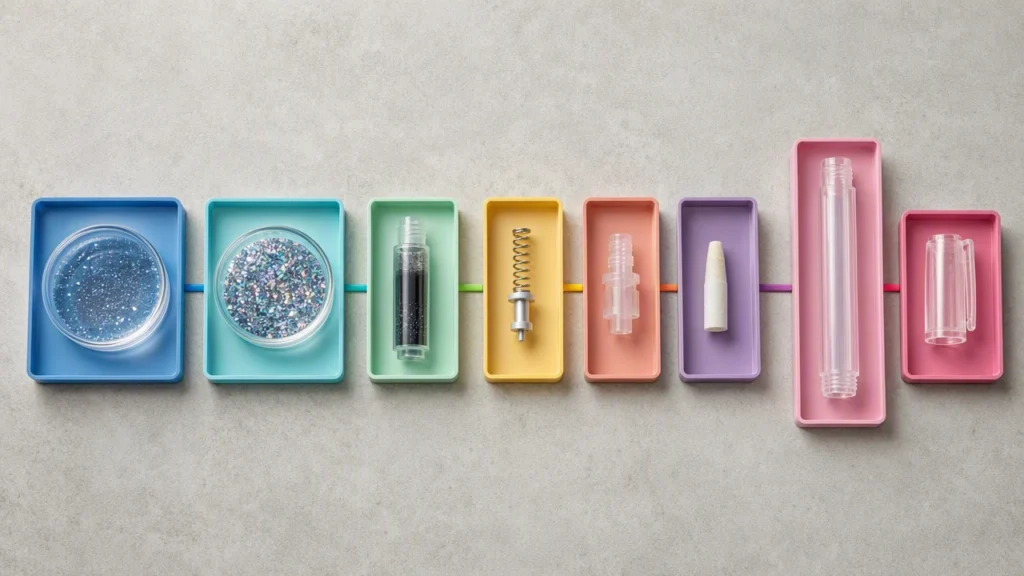
Um efeito glitter depende de como as partículas refletem a luz após o aglutinante secar. Material, forma, distribuição de tamanho, densidade, tratamento de superfície e concentração das partículas mudam tanto a aparência quanto a forma como a tinta se move. Uma fórmula que parece dramática no frasco pode não passar pelo marcador de forma confiável.
| Controle | O que Perguntar | Falha se Não Controlado |
|---|---|---|
| Distribuição do tamanho das partículas | Tamanho máximo, tamanho médio e consistência entre lotes | Ponta entupida, linha áspera, brilho irregular ou separação de partículas. |
| Densidade e suspensão | A rapidez com que as partículas assentam e como a agitação normal restaura a uniformidade | Primeiros traços com aglutinante transparente e traços posteriores sobrecarregados. |
| Compatibilidade do aglutinante | Se as partículas permanecem dispersas sem atacar resina ou aditivos | Grumos, deriva de viscosidade, mudança de odor ou filme seco fraco. |
| Filtragem | Como a contaminação é removida sem filtrar o efeito pretendido | Partículas estranhas, válvulas entupidas ou brilho reduzido. |
| Liberação de lote | Amostra seca visual, fluxo, viscosidade ou limites relevantes em processo, e amostra retida | Grandes diferenças de brilho e cor entre recompensas. |
Mantenha uma amostra seca assinada em superfícies de referência claras e escuras. Use o guia de consistência de cores dos marcadores para controlar a aparência entre lotes, mas adicione um padrão separado de densidade de glitter, porque a cor sozinha não mede o brilho.
Pontas, Válvulas e Fluxo
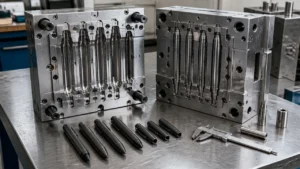
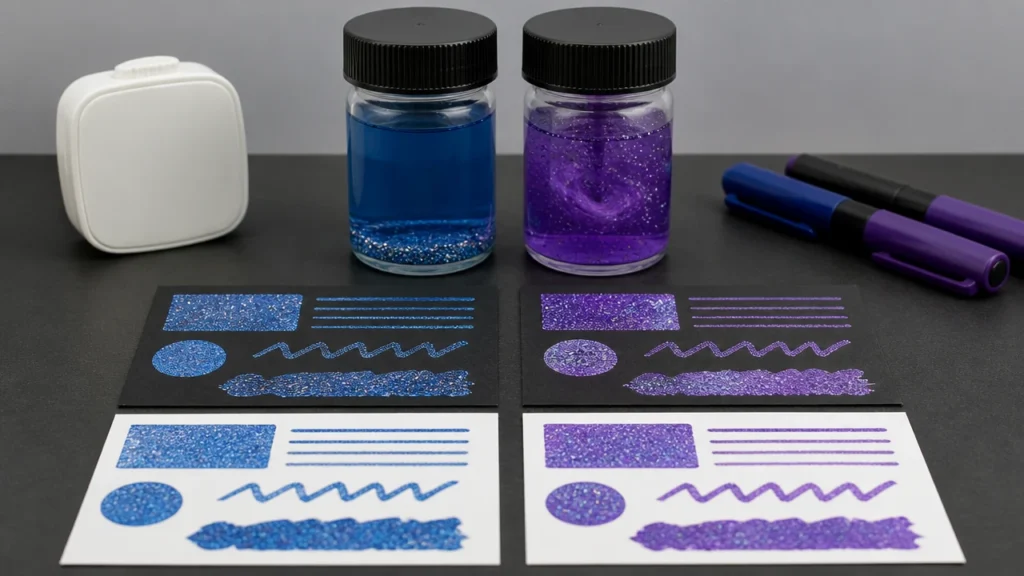
A ponta deve ser aberta o suficiente para o sistema decorativo, mas controlada o suficiente para fazer uma linha limpa. O reservatório deve conter e liberar uma fórmula que pode ser mais espessa e com mais partículas do que tinta comum. Em marcadores de válvula, o usuário também precisa de uma forma repetível de agitar e preparar o produto.
| Componente | Verificação do Comprador | Falha Típica |
|---|---|---|
| Ponta | Largura da linha, estrutura de poros, dureza, abrasão e passagem de partículas | Traço seco, ponta desfiada, centro obstruído ou traço largo sem controle. |
| Válvula | Força de acionamento, retorno, vedação, dose de tinta e orientação | Excesso de tinta, início demorado, vazamento ou bombeamento repetido. |
| Reservatório | Capacidade, saturação, compatibilidade e liberação de tinta após o armazenamento | Tinta retida no reservatório ou desempenho irregular no último terço da carga. |
| Tampa e plugue | Força de vedação, perda por evaporação, resistência a trincas e fechamento completo | Ponta seca, obstrução por sedimentação perto da ponta, vazamento ou reclamações sobre a tampa. |
| Auxiliar de mistura | Se é usado um agitador interno e se o usuário consegue ouvi-lo e senti-lo | As partículas continuam sedimentadas apesar da agitação normal. |
Teste o primeiro uso e a retomada com as instruções exatas que aparecerão na embalagem. Se o marcador exigir agitação intensa, bombeamento repetido ou limpeza da ponta, informe isso com clareza. Um vídeo do produto pode ensinar o movimento, mas a caixa ainda precisa de instruções curtas e utilizáveis.
Testes de Superfície e Desempenho
| Teste | Decisão sobre o método | O que registrar |
|---|---|---|
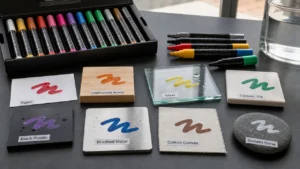
| Opacidade e brilho | Versões claras e escuras de cada superfície anunciada | Cobertura, densidade do glitter, cor, número de demãos e ângulo de observação. |
| Fluxo e traço | Primeiro uso, linha contínua, pontos, curvas e uso na vertical | Falhas no traço, excesso de tinta, largura do traço e distribuição das partículas. |
| Secagem | Tempo de secagem ao toque e de manuseio em temperatura e umidade definidas | Borrões, pegajosidade, danos à película e transferência. |
| Adesão | Teste por riscamento ou com fita adesiva adequado à superfície e à alegação. | Descascamento, lascamento e falhas nas bordas após a cura. |
| Retomada do uso e armazenamento | Posição vertical, horizontal e, quando aplicável, com a ponta para baixo; amostras condicionadas e envelhecidas | Traços para iniciar o fluxo, pontas obstruídas, vazamento e separação de cor/glitter. |
| Compatibilidade com selante | Revestimentos transparentes à base de água e de solvente selecionados pelo comprador | Borrões, turvação, mudança no brilho, deslocamento de partículas ou película macia. |
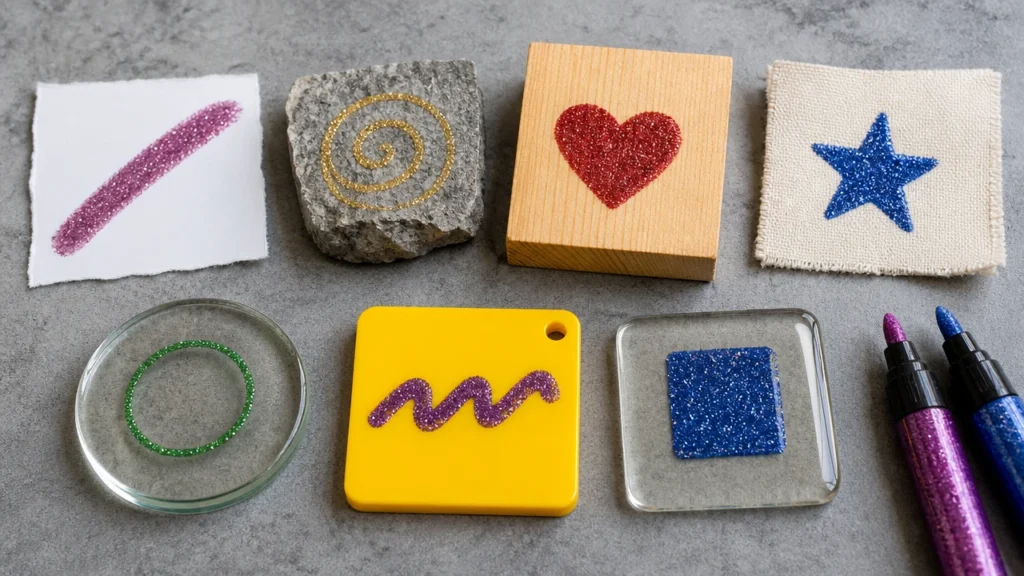
Para conhecer o contexto de uso final, consulte os guias sobre canetas de pintura em pedras e aplicação de selante e marcadores de tinta acrílica para madeira. Um marcador com glitter só deve anunciar essas aplicações em superfícies depois que a mesma fórmula, ponta, tempo de secagem e sistema de selante tiverem sido testados.
Embalagem e instruções de uso
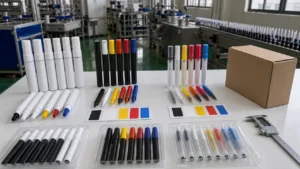
Marcadores com glitter precisam de embalagens que mostrem o efeito sem prometer uma cor que só existe na tela. Use amostras reais secas ou fotografias feitas em condições cuidadosamente controladas. Inclua instruções para agitar, preparar a ponta, testar, aplicar camadas, secar, aplicar selante quando necessário, recolocar a tampa e armazenar. Avise que as superfícies e os selantes variam.
- Mostre o formato real da ponta e a faixa de largura do traço.
- Explique se o produto tem glitter opaco, glitter transparente, efeito metálico, cintilante ou misto.
- Informe quais superfícies foram testadas e quais exigem um teste em uma pequena área.
- Forneça instruções realistas de secagem e informe que a durabilidade total pode exigir mais tempo do que a secagem ao toque.
- Mantenha legíveis os avisos, as informações da parte responsável, o código do lote e as declarações específicas de cada mercado.
- Proteja as pontas com válvula e as tampas contra esmagamento na bandeja e na caixa de exportação.
- Use uma tabela de cores que corresponda ao lote final de produção, e não um gradiente digital genérico.
Compare os formatos de varejo com opções de embalagem para marcadores acrílicos e confirme as premissas da caixa de transporte com o guia de caixas e CBM. Fotografias de glitter, impressão com fundo escuro e acabamentos especiais podem aumentar o MOQ da embalagem, mesmo quando o corpo do marcador é padrão.

MOQ e Personalização
O MOQ de marcadores com glitter costuma ser determinado pelo maior lote mínimo entre tinta especial, compra de partículas, cores do corpo e da tampa, componentes da ponta ou da válvula, impressão e embalagem de varejo. Uma fórmula de glitter já disponível, em cores padrão, pode facilitar o início em comparação com um efeito de partículas personalizado ou um molde personalizado.
| Personalização | Fator que determina o MOQ | Opção para reduzir o risco |
|---|---|---|
| Logotipo e conjunto padrão | Preparação da impressão no corpo, da etiqueta ou da embalagem | Use uma fórmula padrão validada e as cores existentes dos componentes. |
| Cor de glitter personalizada | Lote de tinta e partículas, ajuste de cor e validação de estabilidade | Limite a paleta de cores do lançamento e aprove amostras físicas. |
| Ponta ou largura de traço personalizada | Quantidade mínima do fornecedor de componentes e nova validação do fluxo | Escolha uma ponta comprovada da plataforma existente. |
| Estojo ou caixa personalizada | Quantidade mínima associada ao ferramental ou à adaptação da embalagem | Use uma bandeja existente com uma luva ou caixa impressa personalizada para o lote piloto. |
| Nova fórmula ou efeito | Economia de desenvolvimento, envelhecimento, testes e rendimento de produção | Execute um piloto pago e fixe as alegações somente após evidências de desempenho. |
Revisão de Segurança, Rotulagem e Microplásticos da UE
Para materiais de arte de consumo nos EUA, revise os requisitos de materiais de arte CPSC e a prática de rotulagem ativa ASTM D4236-26. Orientação da Health Canada recomenda que os usuários sigam os rótulos, usem ventilação adequada e mantenham materiais inadequados longe de crianças.
Para vendas na UE, partículas decorativas exigem uma revisão específica de material. A visão geral de microplásticos da Comissão Europeia afirma que a UE adotou uma restrição REACH sobre microplásticos adicionados intencionalmente em 2023. Orientação da ECHA sobre as primeiras medidas para microplásticos observa que as primeiras medidas incluíram a proibição de glitter solto, mas uma caneta de glitter não é automaticamente da mesma categoria legal que glitter solto. Solicite ao fornecedor a identidade das partículas e obtenha aconselhamento REACH específico do produto, em vez de presumir que todo material brilhante é permitido ou proibido.
Revise também a embalagem separadamente. O PPWR e as regras químicas operam em conjunto com a segurança do produto e a rotulagem de materiais de arte. Não use alegações de biodegradável, livre de plástico, eco glitter, não tóxico, seguro para crianças ou seguro para a pele sem uma base definida.
Faça Perguntas Melhores ao Fornecedor
- O que cria o efeito glitter: pigmento reflexivo, material perolado, partículas visíveis ou uma mistura?
- Qual faixa de tamanho de partícula a ponta e a válvula validadas suportam?
- Por quanto tempo as amostras podem ficar em repouso antes que a agitação normal restaure uma linha uniforme?
- Quais superfícies, tempos de secagem, selantes e orientações de armazenamento foram testados?
- Quais resultados de vedação da tampa, vazamento, reinício e condicionamento de temperatura estão disponíveis?
- Quais fórmulas e cores são cobertas pela revisão toxicológica ou regulatória?
- Qual é o MOQ para versões de estoque, cores personalizadas, embalagens personalizadas e versões completas ODM?
- Como a fábrica evitará alterações não aprovadas de partículas, aglutinante, ponta ou válvula em novos pedidos?
Use o lista de verificação de aprovação de amostra e mantenha marcadores retidos e amostras secas. Uma linha úmida fresca não é suficiente para aprovar um sistema especializado sensível à vida útil.
Perguntas Frequentes
1. Qual é o melhor sistema de tinta para canetas de glitter?
Glitter acrílico à base de água é um ponto de partida prático para uso amplo em artesanato e varejo, pois pode combinar cor opaca e brilho. A escolha final ainda depende da superfície, usuário, sistema de partículas, secagem, adesão e necessidades de conformidade.
2. Por que as canetas de glitter precisam ser agitadas?
Partículas decorativas podem assentar porque são mais densas que o aglutinante líquido. Uma fórmula validada deve retornar a uma linha uniforme após a instrução normal de agitação e preparação da embalagem.
3. Canetas metálicas são iguais às canetas de glitter?
Não. Canetas metálicas geralmente usam pigmentos reflexivos finos ou perolados para um brilho suave. Canetas de glitter geralmente mostram partículas de brilho mais distintas. A linha, opacidade, fluxo e alegação de marketing podem diferir.
4. Qual ponta é melhor para uma caneta de glitter?
A melhor ponta suporta o sistema de partículas validado enquanto controla a largura da linha e a dose de tinta. Pontas médias tipo bala ou de válvula são pontos de partida comuns, mas o comprador deve testar a fórmula exata, a ponta e a válvula juntas.
5. Qual é o MOQ para canetas de glitter personalizadas?
O MOQ depende de lotes especiais de tinta e partículas, cores dos componentes, fornecimento de pontas e válvulas, impressão e embalagem. Solicite mínimos separados para fórmula de estoque, cores de glitter personalizadas, embalagens personalizadas e desenvolvimento de novos produtos.
6. As canetas de glitter são afetadas pela restrição de microplásticos da UE?
Elas podem exigir revisão dependendo da identidade das partículas, forma, concentração, uso e transição ou derrogação aplicável. Não presuma que uma caneta é legalmente equivalente a glitter solto. Obtenha os dados de material do fornecedor e aconselhamento específico da UE para o produto.
Conclusão
Uma caneta de glitter confiável equilibra impacto visual com estabilidade de fluxo. O comprador deve aprovar o sistema de partículas, aglutinante, ponta, válvula, tampa, superfícies, tempo de secagem, comportamento do selante, instruções, embalagem, arquivo de conformidade e MOQ como um único produto.
Para um projeto de caneta de glitter OEM, envie ZH Stationery a superfície alvo, usuário, número de cores, referência de efeito glitter, tamanho da ponta, embalagem, alegações, mercados de venda, níveis de pedido e data de lançamento. As primeiras amostras devem ser testadas frescas e após armazenamento controlado antes da aprovação da produção em massa.
Leitura relacionada
- Os marcadores de tinta acrílica são permanentes e impermeáveis? Um guia superfície por superfície
- Válvula de Pressão do Marcador Acrílico vs Ponta de Fibra: Qual Mecanismo Realmente Dura Mais?
Referência externa: Guia de materiais de arte CPSC.
A quantidade mínima de pedido é de 3.000 canetas ou marcadores por SKU e por cor, ou seja, para cada modelo e cada cor. A quantidade é contada em unidades individuais, não em conjuntos.