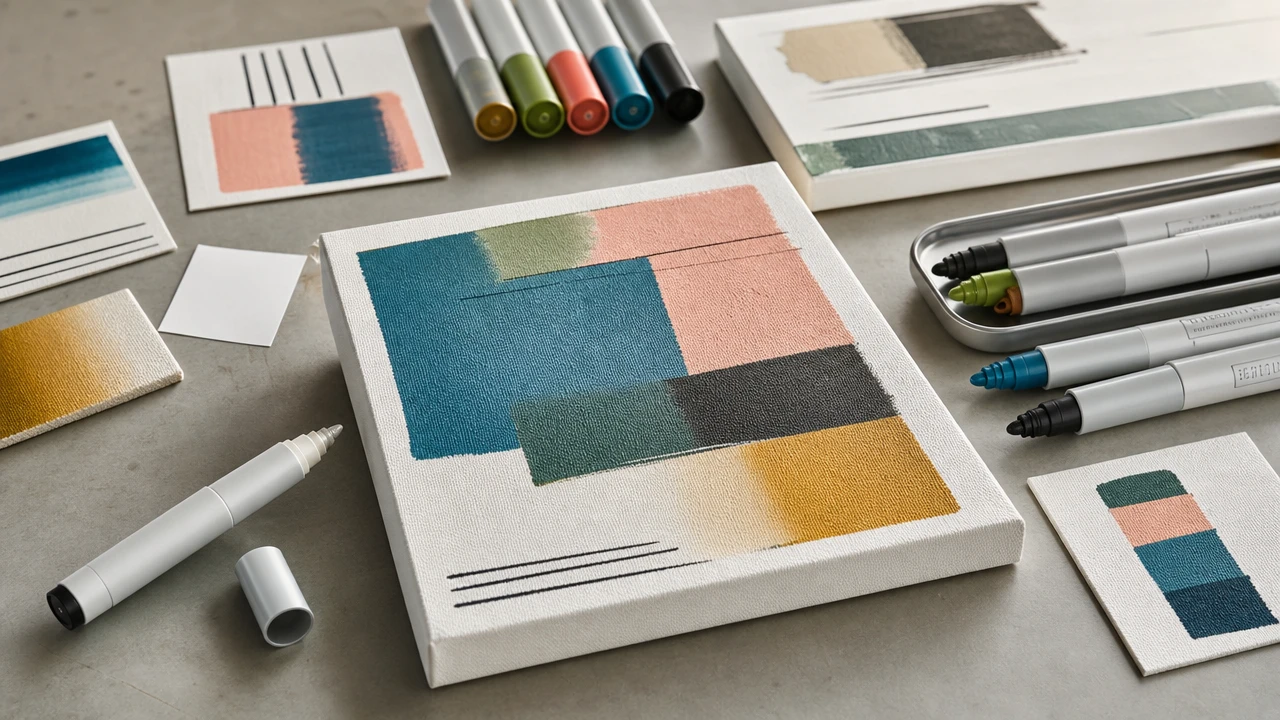
Canvas is a natural fit for acrylic paint markers, but it exposes every weakness in the marker set: weak opacity, dry nibs, poor priming instructions, bad color layering, and packaging claims that promise smooth blending when the formula is really built for controlled lines.
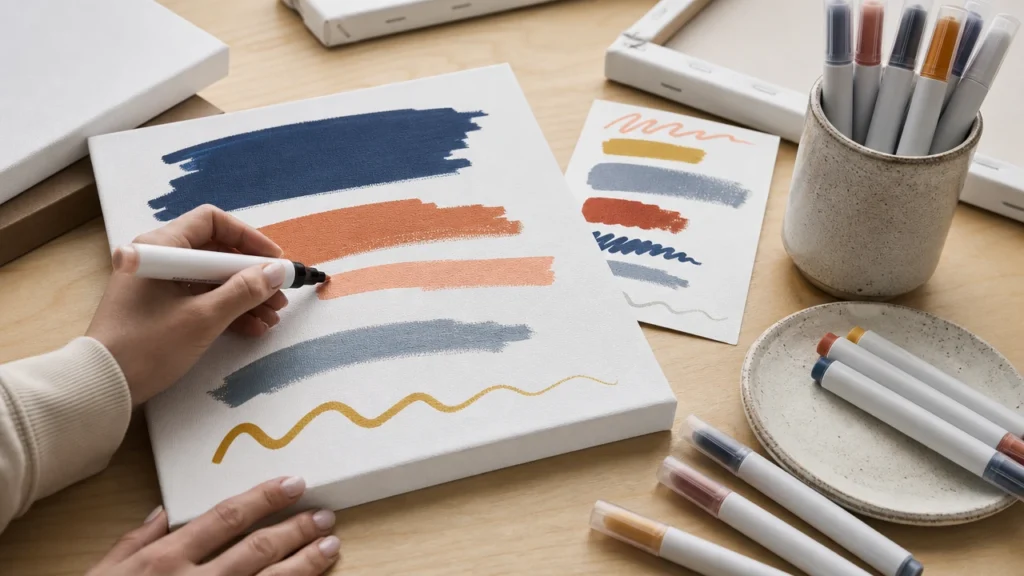
Acrylic Paint Markers on Canvas: Quick Answer
Acrylic paint markers on canvas work best on primed canvas with clean, light layers. Let each layer dry before adding the next color, use the right nib size for the canvas texture, blend only while the ink is still wet, and test any sealer before recommending it. For B2B buyers, the packaging should explain realistic canvas use instead of promising every user a painterly blend.
ZH Stationery develops OEM and ODM 아크릴 페인트 마커 for art sets, craft kits, retail channels, and private-label programs. If your marker line will show canvas artwork on the box, approve canvas samples and user instructions before final packaging.
빠른 링크
- Choose the Right Canvas
- Prepare the Marker and Surface
- Layering Technique
- Blending Limits
- Details and Outlines
- 흔한 실수
- B2B Sample Approval
- 더 나은 공급업체 질문을 하세요
- 자주 묻는 질문
Choose the Right Canvas
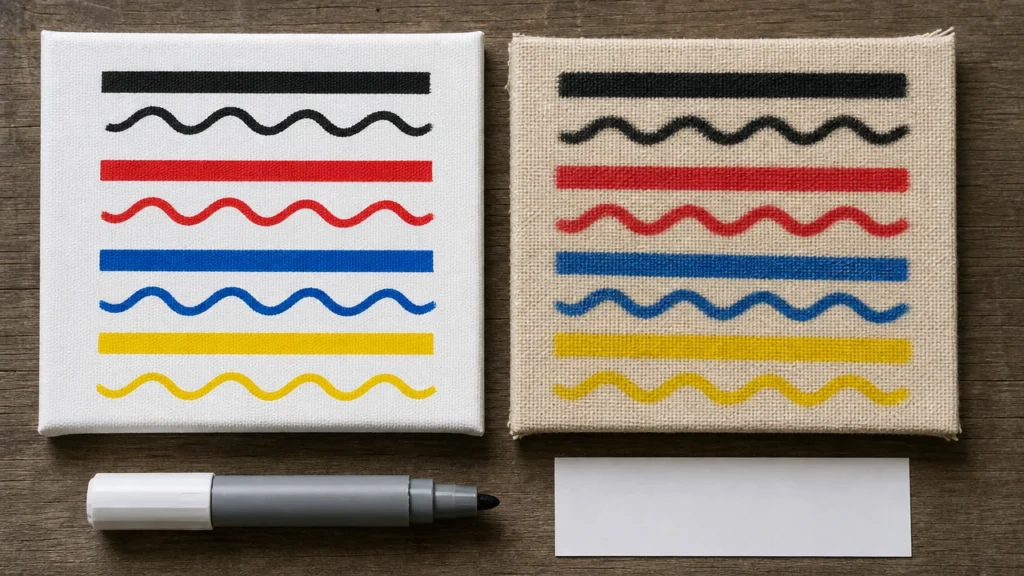
Canvas choice changes the entire user experience. Smooth primed canvas helps marker tips glide and keeps color closer to the surface. Rough canvas gives texture, but it can pull fibers, interrupt lines, and make the user press too hard. Raw canvas absorbs more ink and can make colors look dull.
| Canvas Type | 최적 용도 | Risk | Buyer Test |
|---|---|---|---|
| Smooth primed canvas | Fine lines, lettering, layered color blocks. | May still show streaks if the marker is under-primed. | Test line width, opacity, and second-layer coverage. |
| Medium-texture canvas | General craft art and school projects. | Nib drag and uneven fill. | Test bullet and brush tips separately. |
| Rough canvas | Textured effects and bold work. | Tip wear, skipped lines, and heavy ink use. | Test nib durability and user instructions. |
| Canvas board | Retail kits and beginner sets. | Surface coating varies by supplier. | Compare several board suppliers before bulk approval. |
| Raw canvas | Special craft effect only. | Ink absorption and dull color. | Do not use as the main claim surface unless tested. |
Prepare the Marker and Surface
Most acrylic paint markers need priming before the first use. Shake the marker with the cap on, press the nib on scrap paper until the paint reaches the tip, then test the flow before touching the final canvas. A dry nib scratches the surface; an over-primed nib can flood the weave.
Controlled ink release matters on canvas because the surface is not perfectly smooth. ZH Stationery’s 阀门按压标记笔技术 explains why valve-press systems are useful for opaque paint inks. For canvas sets, that mechanism should be paired with clear priming instructions.
Layering Technique That Works on Canvas
Layering is where acrylic markers usually perform better than wet blending. Use the first layer as a base, let it settle, then build coverage with a second light pass. For shadows or highlights, add detail after the base layer is dry enough that the tip does not drag wet paint.
- Start with lighter colors when the design allows it.
- Use short strokes that follow the canvas texture.
- Avoid grinding the nib into the fabric.
- Let each layer dry before adding a high-contrast color.
- Use darker outlines after the color blocks are stable.
- Keep a scrap canvas swatch nearby for flow checks.
For color sets, layering quality should be checked alongside 标记笔颜色一致性. If a reorder changes opacity or flow, the same canvas artwork can suddenly need more passes.
Blending Limits Buyers Should Explain Clearly
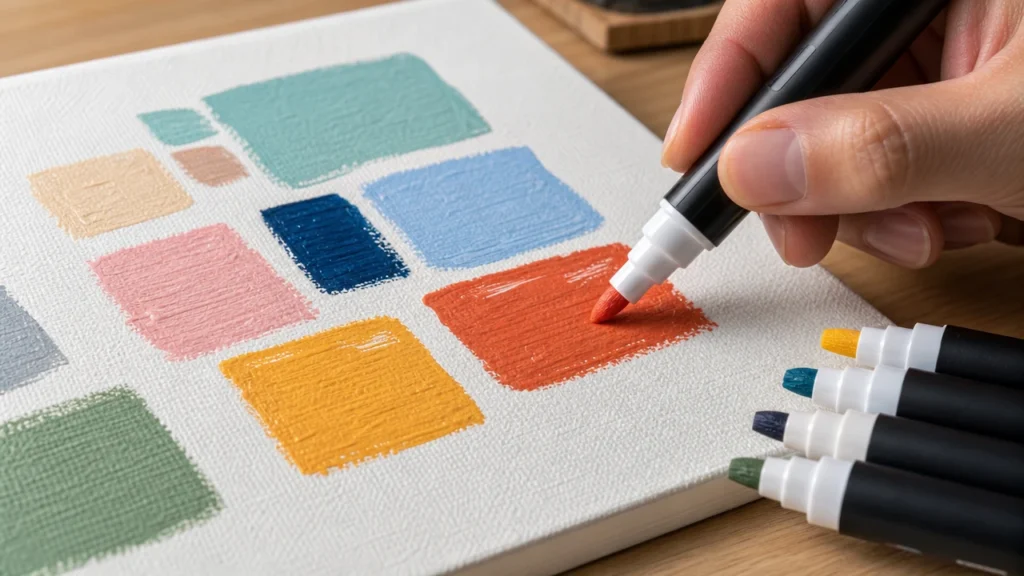
Acrylic marker blending is possible, but it is not the same as alcohol-marker blending. The wet window is shorter, and canvas texture breaks up smooth gradients. Users get better results by blending small areas quickly, using related colors, or layering dry colors for a graphic effect.
This is where packaging claims need care. If a box says blendable, users may expect seamless wet-on-wet transitions. A more honest instruction is: blend while wet for small gradients; layer after dry for cleaner shapes. If the buyer is comparing ink systems, formula choice and user expectation should be tested before the claim appears on the retail box.
Details, Outlines and Specialty Effects
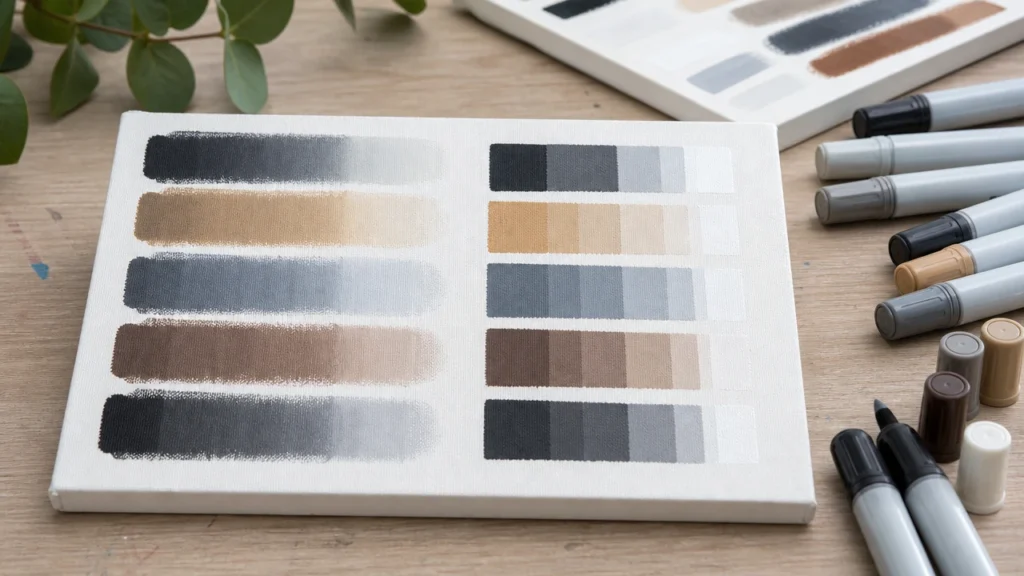
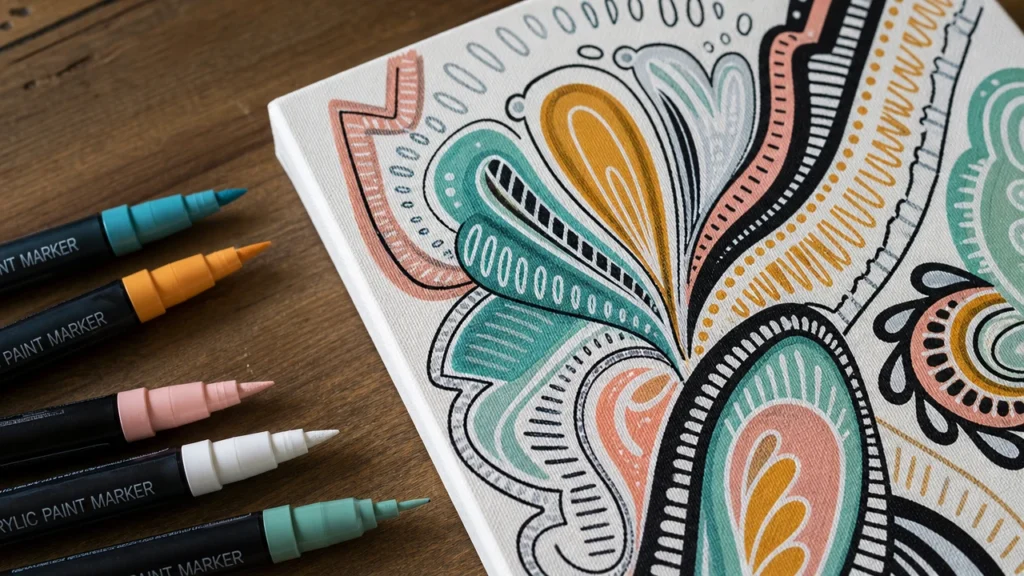
Canvas rewards markers that can hold detail after the base color dries. Fine tips are useful for lettering, small highlights, eyes, borders, and pattern work. Medium bullet tips are better for filling and general craft use. Brush tips can feel expressive, but rough canvas can wear them faster.
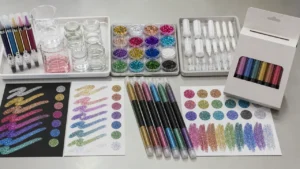
Specialty inks need their own canvas approval. 슈퍼 글리터 아크릴 페인트 마커는 can look strong on darker canvas panels, but glitter distribution, opacity, and tip flow should be tested separately from standard colors.
Common Mistakes That Create Bad Reviews
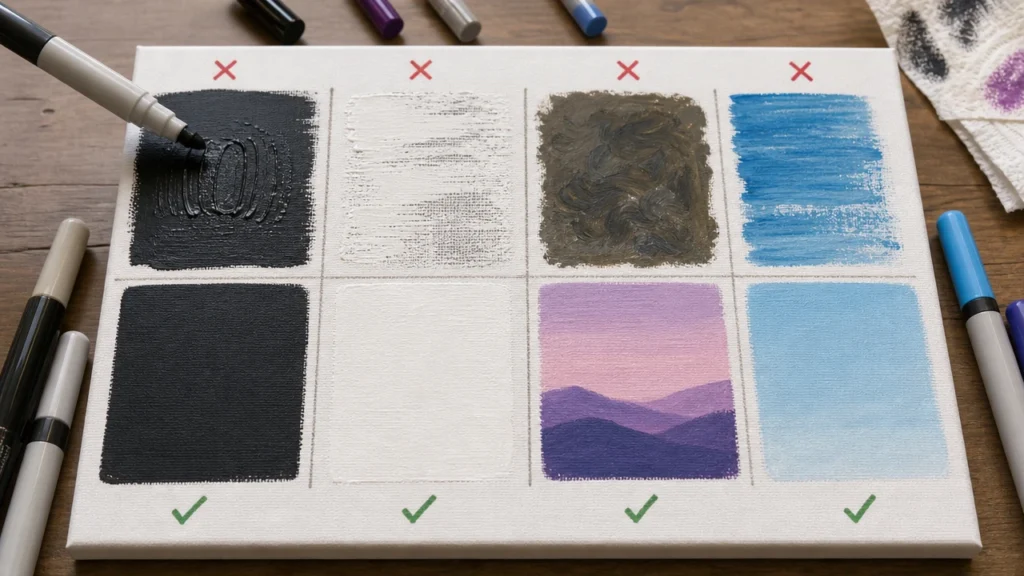
| 실수 | What the User Sees | Prevention |
|---|---|---|
| Using raw canvas without testing | Dull color and fuzzy edges. | Recommend primed canvas for cleaner results. |
| Pressing too hard | Damaged tip, skipped line, and rough stroke. | Explain priming and light pressure. |
| Trying to blend after drying starts | Muddy edges or lifted color. | Blend quickly or layer after dry. |
| Adding thick wet layers | Tacky surface, cracking, or smearing. | Use light passes and drying time. |
| Sealing too early | Smears, dull finish, or uneven gloss. | Test sealer and wait for the paint film to dry. |
| Using the wrong nib size | Poor coverage or lost detail. | Match nib size to canvas texture and artwork size. |
If bad reviews mention dry tips or uneven flow, the issue may not be canvas alone. Review cap seal, priming, filling, and storage checks with the 标记笔干涸投诉案例研究 and your internal QC records.
B2B Sample Approval for Canvas Marker Sets
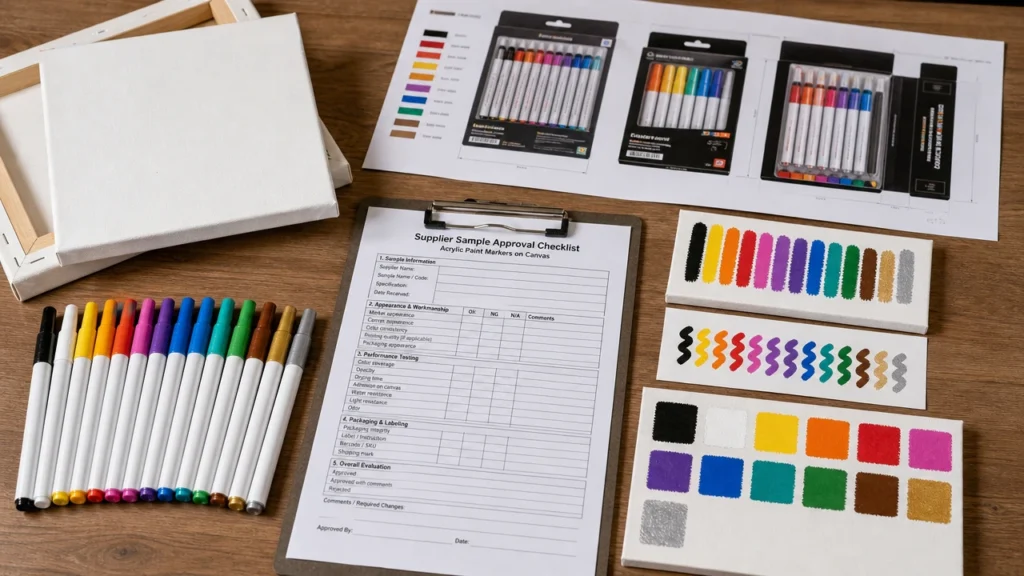
For a private-label marker set, approve canvas performance before product photography. Otherwise, the package may show artwork that ordinary users cannot reproduce with the supplied nibs and color range.
- Test at least one smooth primed canvas and one medium-texture canvas.
- Record priming time and first-stroke consistency.
- Check opacity after one pass and two passes.
- Test layering light-over-dark and dark-over-light.
- Test small-area blending while wet.
- Check tip wear after repeated canvas strokes.
- Test any sealer or varnish shown in instructions.
- Keep retained canvas panels from approved samples.
For higher-risk adhesion or durability claims, buyers can borrow the logic of coating adhesion standards. The ASTM D3359 tape adhesion standard is not a normal retail requirement for every marker set, but it reminds buyers that adhesion claims need a method, not only a nice sample photo. Put the canvas panels into your 样品批准检查清单.
Safety, Labeling and Packaging Instructions
Canvas use is still art-material use. In the U.S., CPSC 예술 재료 지침 explains that covered art materials need toxicological assessment and ASTM D-4236 conformance labeling. ASTM D4236 concerns chronic health hazard labeling for art materials. It does not prove that the marker blends smoothly, layers perfectly, or adheres to every canvas surface.
Packaging should show what the user should actually do: shake, prime, test on scrap canvas, apply light layers, let dry before layering, and seal only after testing. If you need room for those instructions, compare 아크릴 마커 포장 옵션 before choosing a blister card, color box, or gift box.
If the same set also claims fabric use, test that use case separately. Canvas panels and wearable fabric are not the same surface, especially when washing enters the claim. Keep safety files and 认证文件 with the approved packaging record.
더 나은 공급업체 질문을 하세요
A good supplier answer connects canvas performance to nib, ink, instructions, and sample evidence.
- Which canvas types did you test? A good answer names primed canvas, canvas board, roughness, and supplier sample type.
- How should users prime the marker? A good answer gives clear shake, press, and first-use instructions.
- How many layers are realistic? A good answer separates one-pass opacity, two-pass coverage, and color-over-color limits.
- Can the colors blend on canvas? A good answer explains the wet window and warns against overclaiming smooth gradients.
- Which nib works best? A good answer matches fine, bullet, brush, or chisel tips to canvas texture and artwork size.
- Should the art be sealed? A good answer names tested sealer types or states that the buyer must approve sealer compatibility.
- Can you keep retained canvas samples? A good answer includes marked canvas panels, finished markers, packaging proof, and batch records.
자주 묻는 질문
These answers are written for B2B buyers preparing canvas-use instructions, retail claims, and private-label acrylic marker sample approvals.
1. Can acrylic paint markers be used on canvas?
Yes. Acrylic paint markers can work well on primed canvas, canvas boards, and many craft canvas panels. The result depends on canvas texture, primer, ink opacity, nib size, drying time, and how many layers the user applies.
2. Should canvas be primed before using acrylic paint markers?
Primed canvas is usually easier for clean lines and brighter color. Raw canvas absorbs more ink, softens edges, and can make the marker feel dry faster.
3. Can you blend acrylic paint markers on canvas?
You can blend some colors while the ink is still wet, but the blending window is short. Acrylic markers are better for layering, outlining, filling, and small gradients than long wet-on-wet blending.
4. How long should layers dry before adding another color?
The safe answer depends on ink formula, layer thickness, humidity, and canvas type. Buyers should test the exact marker set and give users a practical drying instruction instead of guessing.
5. Should acrylic marker canvas art be sealed?
A sealer can help protect canvas art from rubbing and dust, especially for display pieces. The sealer must be tested with the marker formula because some sprays or varnishes can reactivate, dull, or smear color.
6. What causes acrylic paint markers to look streaky on canvas?
Common causes include rough canvas texture, unprimed fabric, dry nibs, too much pressure, uneven priming, too few layers, or trying to blend after the ink has already started drying.
결론
Acrylic paint markers can perform very well on canvas when the surface is primed, the marker is properly activated, and users understand the difference between layering and blending. The biggest risk is not the canvas itself. It is a product claim that teaches the wrong technique.
For an OEM or ODM acrylic marker project, send ZH Stationery your target canvas type, color count, nib preference, packaging format, and artwork claim. We can help review formula direction, canvas sample testing, user instructions, factory capability, and compliance files, including the ASTM D-4236 테스트 보고서 가이드. You can also review our 공장 견학 before bulk production.