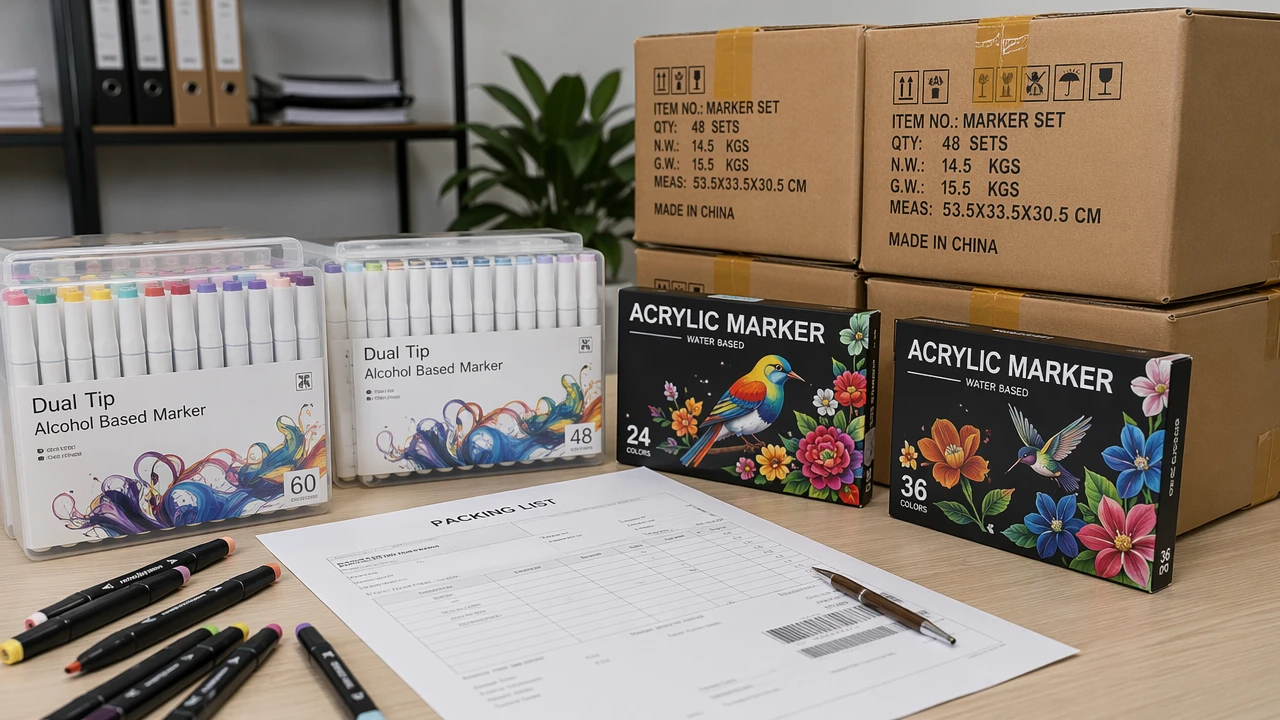
This Latin America stationery importer guide is for buyers who need marker sets that can survive real import work. MOQ pressure. Packaging picks. Shipping cost. Retail labels. The first reorder. The product may look simple in a catalog. The buying call is not simple once cartons, freight, and local sales channels enter the quote.
Latin America is not one market. A school distributor in Mexico. An art wholesaler in Chile. A marketplace seller in Colombia. They may all buy marker sets. They do not carry the same stock risk. The first order should be built around the channel, not only the cheapest unit price.
ZH Stationery supports OEM/ODM marker and writing buyers with product picks, private-label packing, carton plans, and export work. Importers can start with the 제품 카테고리, 아크릴 마커,以及 custom acrylic marker guide before sending an RFQ.
빠른 답변
For most Latin America importers, the safest first plan is one core SKU plus one upgrade SKU. A 24 color set usually works as the core retail or school SKU. A 36 or 48 color set works as the upgrade. A 12 color set is useful for price-tight school channels. It may look weak in art and marketplace channels. A 60 color set should be used only when the importer has a clear premium or gift plan.
Use this guide as a practical pre-deposit checklist. It helps importers compare sets, MOQ, packing, and shipping before a quote turns into a PO.
The RFQ should ask for set size, marker type, pack format, MOQ by SKU, carton size, gross weight, CBM, barcode plan, label text, sample timing, payment terms, and shipping term. If these fields are missing, the buyer is comparing half-quotes.
빠른 링크
- 라틴 아메리카 문구 수입업체 가이드 체크리스트
- 시장 및 채널로 시작
- 구매자 유형에 따라 마커 세트 크기 선택
- 현금 및 선반 위험에 맞춰 MOQ 계획
- 수입 및 소매에 맞는 포장 설계
- 바코드, 라벨, 문서 확인
- 가격보다 운송 조건 비교
- 확인 전에 CBM 및 박스 데이터 사용
- 계약금 전에 공급업체에 질문하기
- 권장 첫 주문 계획
- 자주 묻는 질문
라틴 아메리카 문구 수입업체 가이드 체크리스트
A useful guide should tie nine buying checks. Channel. Set size. MOQ. Packing. Barcode. Label text. Carton data. Shipping term. Supplier proof. If one is missing, the importer may still be guessing at landed cost or retail readiness.
- 카탈로그 사진이 아닌 채널에 따라 첫 세트 크기를 선택하십시오.
- MOQ가 SKU별, 아트웍별, 총 주문별로 적용되는지 물어보십시오.
- 가격을 비교하기 전에 소매 포장을 확인하십시오.
- 계약금 지불 전에 박스 크기, 총 중량, CBM을 요청하십시오.
- 인도 조건 책임을 확인한 후에 착륙 가격을 수락하십시오.
시장 및 채널로 시작
Before asking for MOQ, decide where the set will sell. School distributors need steady color ranges, compact packing, and easy reorder terms. Retail chains care about shelf size, barcode setup, and pack life. Marketplace sellers care about photos, seen value, review risk, and cartons for fulfillment.
A buyer who skips this step often asks for the wrong sample. A large set may look better in a photo. It can sell slow if the real channel is back-to-school volume. A small set may look cheap in a listing even when ink and nib are good.

| 채널 | 예상 첫 세트 | 주요 위험 | 계획 메모 |
|---|---|---|---|
| 학교 유통업체 | 12 또는 24색 | 가격 및 재주문 압박 | 포장을 컴팩트하게 유지하고 카톤 데이터를 명확히 하세요. |
| 소매 체인점 | 24 또는 36색 | 선반 공간 및 바코드 설정 | 케이스 팩 및 디스플레이 요구 사항을 조기에 확인하세요. |
| 아트 및 취미 도매업자 | 36 또는 48 색상 | 색상 범위 기대 | 더 강한 팔레트 스토리와 더 나은 포장을 사용하세요. |
| 마켓플레이스 판매자 | 36, 48 또는 60색 | 검토 및 이행 위험 | 사진, 포장 강도, 카톤 라벨을 계획하세요. |
| 선물 또는 시즌별 구매자 | 48 또는 60색 | 부피가 큰 포장 및 현금 묶임 | 기프트 박스 승인 전에 카톤 CBM을 확인하세요. |
구매자 유형에 따라 마커 세트 크기 선택
An importer does not need every color count in the first order. A full range can look complete on paper. It makes more SKUs to label, store, sell, and reorder. For many buyers, two sizes are enough to test the market. This guide treats range planning as a cash and channel call, not only a color-count call.
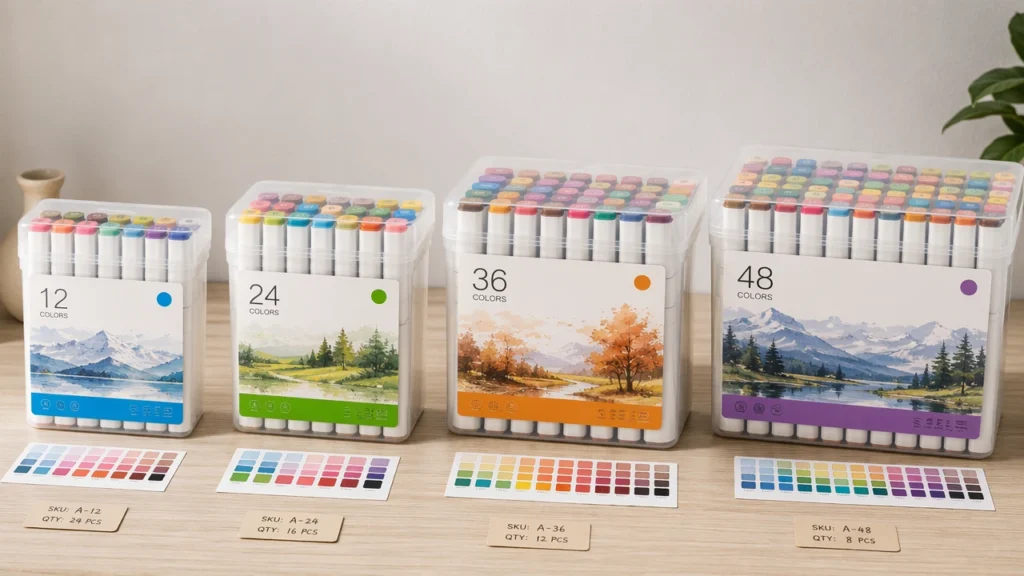
The 24 color set is usually the easiest start. It feels full enough for general users. It keeps pack size under control. A 36 color set gives a stronger art value without jumping to a big premium case. A 48 color set works when the buyer needs a clear upgrade. A 60 color set is best when the channel rewards a larger visual spread.
| 세트 크기 | 최적의 라틴 아메리카 사용 사례 | 피해야 할 때 |
|---|---|---|
| 12가지 색상 | 학교 키트, 예산 소매, 프로모션 번들 | 제품이 진지한 아트 세트로 경쟁해야 할 때. |
| 24색 | 핵심 소매 SKU, 학교 채널, 첫 자체 브랜드 주문 | 구매자가 프리미엄 리스팅 가치를 필요로 할 때. |
| 36색 | 중급 취미용 및 더 강한 소매 선반 가치 | 채널이 단순한 가격대 제품만 수용할 때. |
| 48색 | SKU 업그레이드, 아트 및 마켓플레이스 채널 | 카톤 부피나 현금 위험이 이미 빡빡할 때. |
| 60가지 색상 | 선물 세트, 프리미엄 번들, 대형 온라인 리스팅 | 입증된 수요나 포장 예산이 없을 때. |
현금 및 선반 위험에 맞춰 MOQ 계획
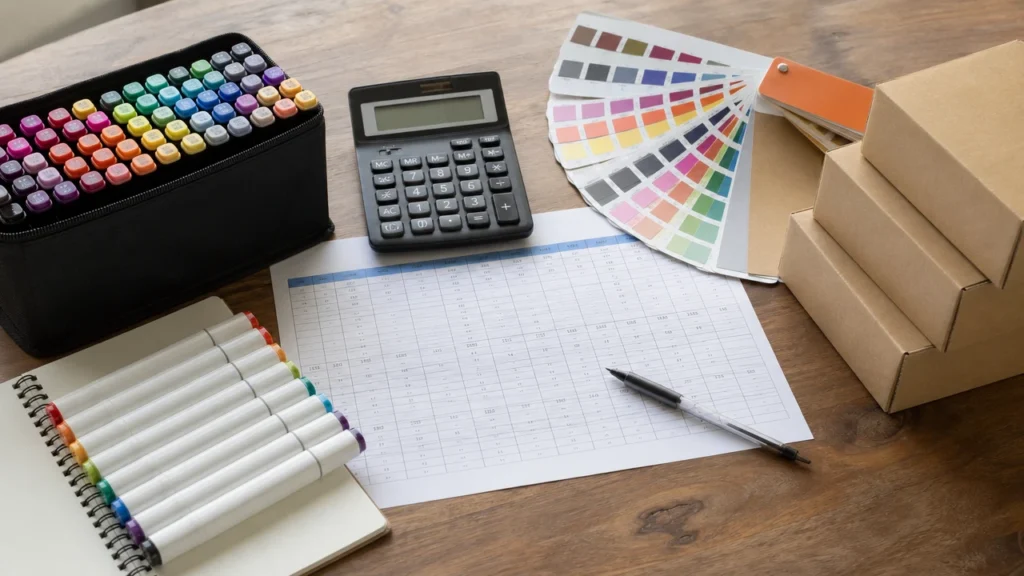
MOQ is not only a factory number. It decides how much cash sits in stock. It decides how many cartons enter the warehouse. It decides how fast the importer must sell the first order. A very low MOQ can ease sampling. It may push unit price up or cut pack options.
Ask whether the MOQ applies per set size, per color range, per pack art, or per total order. These are different risks. A supplier may accept a small trial total. The pack factory may still need a minimum print for each color box. The body, ink, pack, and barcode plan can each make a separate MOQ wall.
| MOQ 질문 | 중요한 이유 |
|---|---|
| MOQ는 SKU별로 계산되나요, 아니면 총 주문별로 계산되나요? | 하나의 낮은 헤드라인 MOQ가 여러 개의 작은 최소 수량을 숨기는 것을 방지합니다. |
| 24색 및 48색 세트가 포장 구성 요소를 공유할 수 있나요? | 박스 제품군이 함께 설계되면 포장 설정 비용이 줄어들 수 있습니다. |
| 자체 브랜드 인쇄가 MOQ에 포함되나요? | 로고 및 컬러 박스 인쇄는 종종 최소 수량을 변경합니다. |
| 첫 주문을 분할 배송할 수 있나요? | 구매자가 일부 카톤을 빠르게 배송하고 나머지는 나중에 배송하려는 경우 유용합니다. |
| 재주문 MOQ를 변경하는 것은 무엇인가요? | 아트워크, 색상 목록, 포장이 변경되지 않으면 재주문이 더 쉬울 수 있습니다. |
수입 및 소매에 맞는 포장 설계
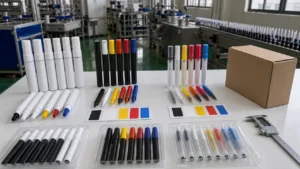
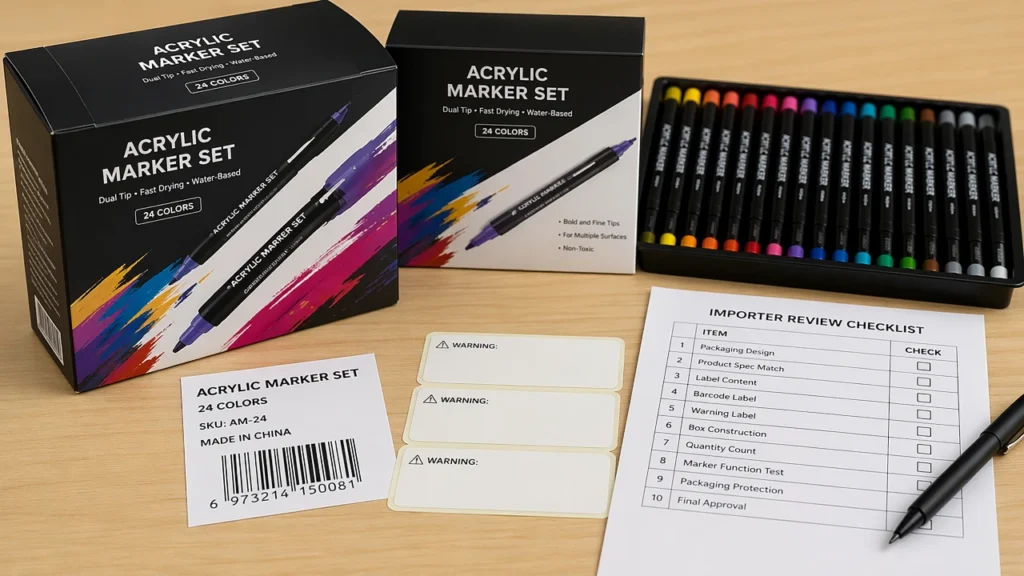
Packing is where many set quotes stop being comparable. A paper color box, zipper case, PP case, tin box, and rigid gift box can hold the same markers. They change shelf price, carton size, gross weight, and damage risk. For importers, packing is part of the logistics plan, not only a design pick.
If the buyer is still comparing formats, the 아크릴 마커 포장 가이드는 is useful even when the project covers wider marker sets. Same logic. Pick the pack by channel, price point, and shipping truth.
| 포장 형식 | 적합한 용도 | 수입업자 관찰 포인트 |
|---|---|---|
| 컬러 박스 | 학교 및 소매 대량 | 모서리를 보호하고 인쇄 MOQ를 확인하세요. |
| PP 케이스 | 재사용 가능한 학교 또는 여행 세트 | 경첩 강도와 골판지 상자 포장을 확인하세요. |
| 지퍼 케이스 | 선물, 아트, 마켓플레이스 세트 | 재료 냄새, 봉제, 부피 중량을 확인하세요. |
| 주석 상자 | 프리미엄 소매 및 계절 선물 | 움푹 들어간 곳과 더 높은 카톤 중량을 주의하십시오. |
| 딱딱한 선물 상자 | 프리미엄 번들 | 강력한 시각적 가치, 그러나 CBM은 빠르게 상승할 수 있습니다. |
바코드, 라벨, 문서 확인
Retail and marketplace channels usually need clean product IDs. GS1 explains that GTINs name trade items. That matters when each set size becomes a separate retail SKU. A 24 set and a 48 set should not share one retail identity if they sell as different items.
Labels should be checked before mass production. Importer info. Language. Age marks. Warnings. Barcode spot. Country-of-origin wording. Carton labels. They may vary by market. ZH Stationery can prepare art and pack samples. The importer should confirm local label needs with its own broker, marketplace team, or compliance adviser.
For company proof pages, buyers can review 인증, 그 공장 견학, 및 회사 소개 before deciding what files to ask in the RFQ.
가격보다 운송 조건 비교
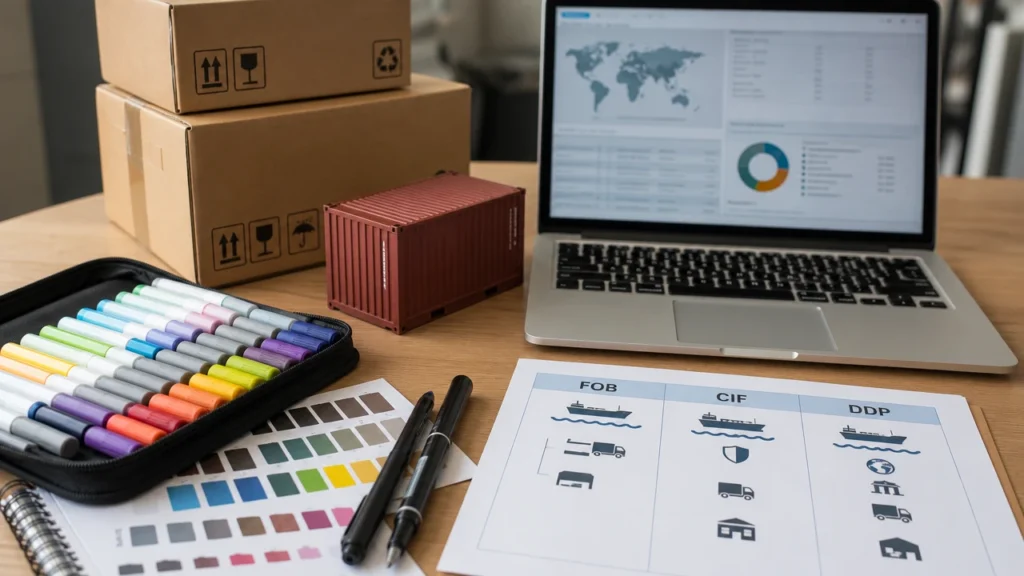
Shipping terms decide who holds cost, risk, freight booking, and import steps. The ICC Incoterms 2020 rules define common trade terms. The US International Trade Administration gives a practical overview. For marker importers, the common compare is FOB, CIF, and sometimes DDP.
FOB can be better when the importer has a trusted forwarder and wants freight control. CIF can help a newer buyer compare landed cost more easily. The buyer still needs to know destination charges. DDP sounds simple. It needs more care. Duties, taxes, customs, and last-mile duties must be clear in the quote.
확인 전에 CBM 및 박스 데이터 사용
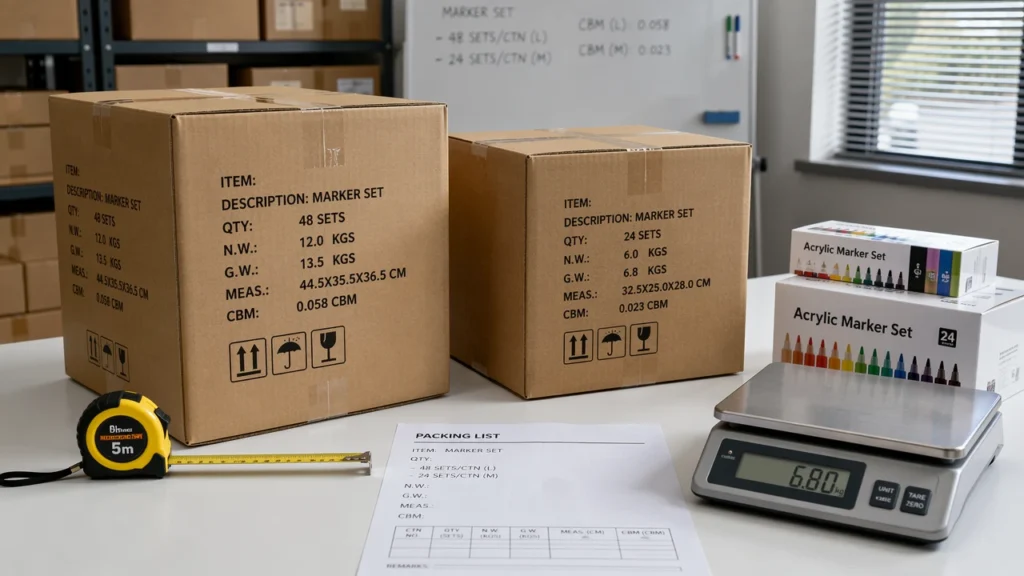
A marker set can lose margin in freight even when the factory price looks good. Pack shape, case thickness, inner tray, and carton method all change CBM. That matters for ocean, air, express, and warehouse receiving.
항공 화물의 경우, IATA notes freight may be billed by volume weight or real weight. That is why a bulky light gift set can cost more than expected. ZH Stationery's carton, gross weight, and CBM guide gives a separate planning method for set cartons.
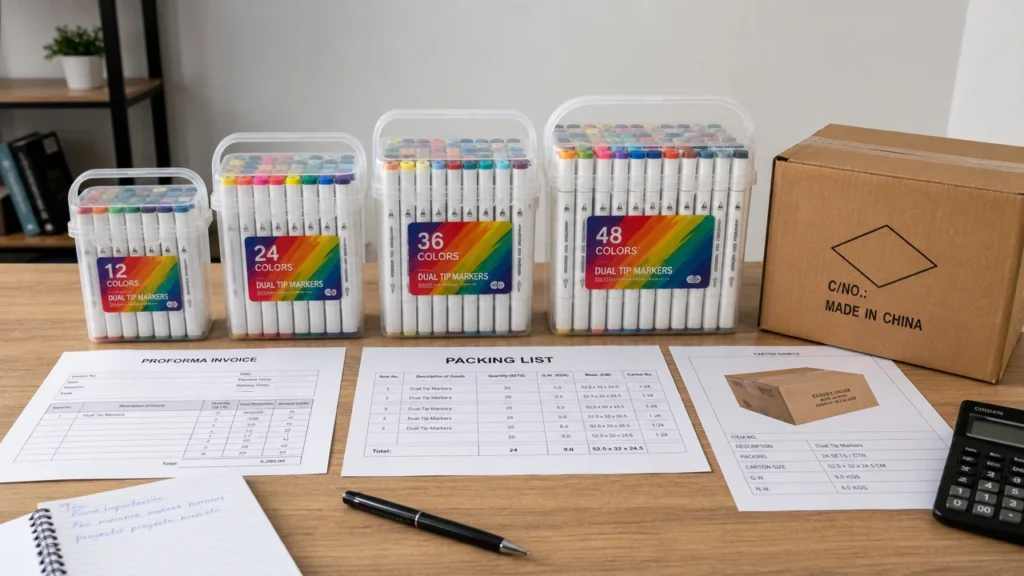
| 데이터 필드 | 공급업체에 확인 요청 | 중요한 이유 |
|---|---|---|
| 카톤 크기 | 길이, 너비, 높이(cm) | CBM 및 창고 계획에 필요합니다. |
| 총중량 | 포장 후 총 카톤 중량 | 해상, 항공 및 내륙 운임 추정에 필요합니다. |
| 카톤당 세트 수 | 각 마스터 카톤에 포장된 소매 세트 | 케이스 팩 및 수령 계획에 영향을 미칩니다. |
| CBM | 카톤 부피 및 총 주문 부피 | 포장이 운임 압력을 만들고 있는지 보여줍니다. |
| 카톤 라벨 | SKU, 수량, 목적지 및 바코드 요구 사항 | 수령 오류 및 마켓플레이스 문제를 줄입니다. |
계약금 전에 공급업체에 질문하기
The deposit should not be paid while the quote is vague. A good supplier answer should tie product, pack, MOQ, and logistics details. If the answer only gives a price and lead time, the importer still does not know what will arrive.
| 질문 | 좋은 답변에 포함되어야 할 사항 |
|---|---|
| 동일한 마커 본체로 24색 및 48색 세트를 견적할 수 있습니까? | 동일한 잉크, 닙, 배럴, 색상 목록 로직 및 포장 차이. |
| SKU 및 포장 아트워크별 MOQ는 무엇입니까? | 마커 MOQ, 박스 인쇄 MOQ 및 총 주문 MOQ로 분할. |
| 샘플 승인 전에 어떤 카톤 데이터를 제공할 수 있습니까? | 예비 카톤 크기, 총 중량, 카톤당 세트 수 및 CBM. |
| 우리에게 어떤 라벨 정보가 필요합니까? | 바코드, 수입업체 세부 정보, 국가 시장, 경고, 언어 및 소매 채널. |
| 샘플 승인 후 무엇이 변경됩니까? | 고정된 색상 목록, 아트워크, 포장 구조, 카톤 계획 및 최종 포장 목록. |
권장 첫 주문 계획
For a new importer, the best first order is usually a controlled test, not a full family. Start with one core set and one upgrade. Keep the body and ink system steady. That tests sales demand, not too many product variables at once. This guide favors a narrow first order. Reorder data is more useful than a crowded first shipment.
A practical start is 24 colors as the core SKU and 48 colors as the upgrade. For a school-heavy channel, use 12 and 24. For marketplace or gift channels, use 36 and 60 only when pack and freight math still work.
| 수입업체 상황 | 권장 첫 주문 | 효과가 있는 이유 |
|---|---|---|
| 학교 유통업체 | 12색 및 24색 | 간단한 가격대와 쉬운 카톤 관리. |
| 일반 소매 수입업체 | 24색 및 36색 | 재고 과부하 없이 좋은 진열 범위. |
| 미술용품 도매상 | 36색 + 48색 | 취미 구매자에게 더 나은 색상 가치. |
| 마켓플레이스 판매자 | 36색 + 60색 | 판지 비용을 통제하면 더 강력한 목록 비주얼. |
| 선물 구매자 | 48색 또는 60색 | 포장은 더 높은 인지 가치를 지원할 수 있습니다. |
Once set sizes, packing, and market are clear, share the RFQ through the 문의 페이지. Include the country, channel, first-order size, pack pick, barcode needs, and shipping term. That gives the supplier enough to quote a real order, not a loose catalog price.
자주 묻는 질문
These are the questions importers usually need answered before they pass samples or pay a deposit.
What set sizes should Latin America importers test first?
Most first orders should start with 24 or 36 colors. Then add 12 for price-tight school channels or 48 for an upgrade SKU. A 60 set can work when tied to a clear retail or marketplace role.
마커 세트에 대해 낮은 MOQ가 항상 더 좋습니까?
No. Lower MOQ can cut cash risk. It may raise unit cost, pack cost, and color-control risk. The better question is whether the MOQ fits the channel, warehouse space, and reorder plan.
수입업체는 FOB, CIF 또는 DDP를 요청해야 합니까?
FOB gives more freight control. CIF can be easier for early compare without a forwarder. DDP needs care because duties, local customs, and delivery duties must be clear before the deposit is paid.
What files should be checked before paying a deposit?
Ask for the proforma invoice, packing list draft, carton size, gross weight, product photos, pack art, barcode plan, and any test report or label text for the target country. Do not wait for carton data until shipment.
수입업체가 운임 문제를 피하려면 어떻게 해야 합니까?
Compare gross weight, CBM, carton count, chargeable weight, and shipping term before approving the order. A set that looks cheap per piece can get costly if the gift box makes every carton bulky.
Can one pack design work across Latin America?
Sometimes. Check it country by country. Language, barcode, importer info, warnings, age marks, and retail label rules can vary. Confirm final pack text with the local importer or adviser before mass production.
How should I use this guide before sending an RFQ?
Use it to prepare one clear brief. Country. Channel. Marker type. Set size. Pack format. Barcode needs. Carton data ask. Shipping term. A supplier can quote better when those fields are already set.
관련 가이드: For the next packing and logistics step, see 기업 선물용 펜 세트.
관련 읽을거리
- 12 vs 24 vs 36 vs 48 vs 60 색상 마커 세트: 바이어는 어떤 것을 소싱해야 할까요?
- FOB vs CIF vs DDP: 중국에서 펜을 배송할 때 손해 보지 않는 방법
- 중국 펜 공장과의 관계를 손상시키지 않고 MOQ를 협상하는 방법
- 팀의 역량 강화: ZH STATIONERY의 직원 복지 및 윤리적 제조
- 2025년 상반기 중국 펜 시장 보고서: 최종 소싱 가이드
- ASTM D-4236 테스트 보고서 가이드
- 워터컬러 마커 소싱 가이드
- 듀얼 팁 vs 싱글 팁 마커 전략
- ZH Stationery Canton Fair 2026 요약
- ZH Stationery의 윤리적 문구류 제조
The minimum order for custom OEM/ODM programs is 50,000 pens per order, counted by total individual pens produced. For a 12-color pack, that equals roughly 4,200 sets, not 50,000 of each color. Standard stock models can be sampled at smaller trial sizes.