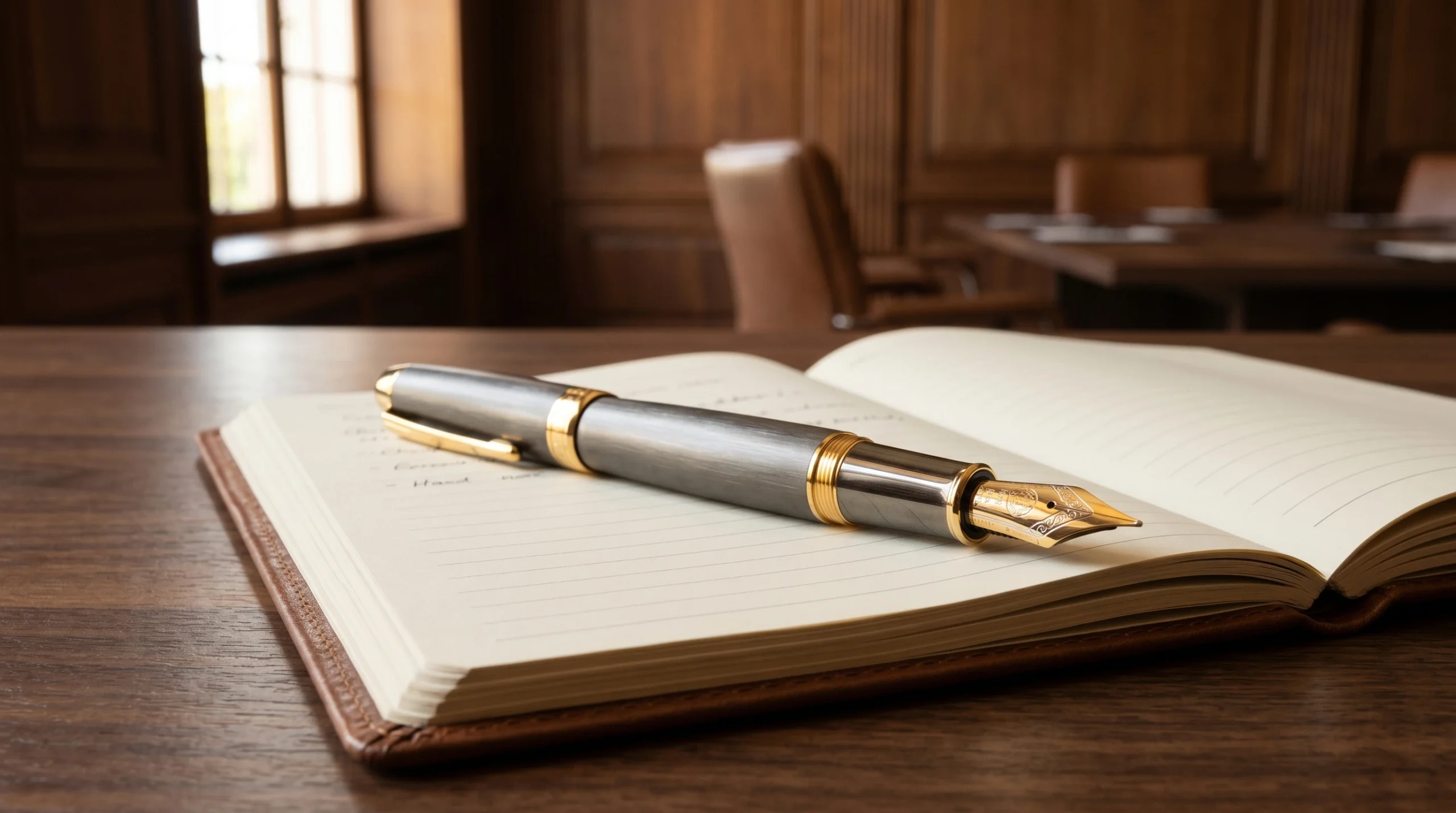
A procurement manager at an engineering firm in Dusseldorf pulls a lacquered fountain pen from his jacket. He is about to sign a EUR 4.7 million contract. Nobody in the room thinks it is pretentious. They would notice if he did not have one.
That reflex matters. Serious business deserves a serious writing instrument. That unspoken expectation explains the luxury corporate pen market better than any report. Europe did not just build the luxury pen industry. Europe built the culture that makes luxury pens matter.
The numbers back this up. The global luxury pen market is roughly USD 2.3 billion. Europe holds about 36% of the value. The high-end fountain pen segment tilts further. DataIntelo puts EU revenues at EUR 628 million in 2025. That is 34.5% of the global total. The dominance is not an accident. It comes from 120 years of manufacturing know-how in a corridor from Hamburg to Milan. Brands like Montblanc, Pelikan, Montegrappa, and Caran d'Ache still make pens near the original workshops. Many sit within 200 kilometers of them.
For brand owners and buying teams sourcing custom writing instruments, this history shows how to compete. You do not need to be Montblanc. You need to understand what Montblanc says about buyer psychology and quality expectations. You also need to see the gap between a giveaway and a pen someone keeps for a decade.
目次
簡潔な回答:なぜ欧州が世界の高級筆記具市場の36%を支配しているのか?
Europe's lead in the luxury corporate pen market rests on four structural advantages. They build on each other:
- 100年以上にわたる集中した製造の伝統。 Germany alone hosts Montblanc (Hamburg, founded 1906), Pelikan (Hanover, 1838), Lamy (Heidelberg, 1930), and Graf von Faber-Castell (Stein, 1761)) the densest cluster of premium pen-making expertise anywhere. Italy adds Visconti, Montegrappa (1912), and Aurora (1919). Each of these brands still operates primary production within a 300-kilometer radius of its founding city, preserving the skilled labor pool that high-end pen assembly requires.
- 筆記具を関係資本として扱う法人ギフト文化。 In German, French, and British business environments, a premium pen is a standard executive gift (not an extravagant gesture. The annual corporate gifting cycle across Europe generates steady demand independent of consumer retail cycles, with Ken Research が報告している。
- 世界最高水準の一人当たり高級品支出。 ドイツ、フランス、イタリア、スイスの欧州消費者は、北米やアジア太平洋地域の消費者と比較して、一人当たりの高級筆記具への支出が不均衡に高い。この国内需要基盤が、特殊な製造を持続させる数量を提供している。
- 品質を重視し、使い捨てを不利にする規制環境。 EU sustainability directives) including single-use plastic restrictions and extended producer responsibility frameworks (make the disposable pen model economically disadvantageous. Premium, refillable writing instruments align structurally with European regulatory direction.
These factors help brand owners and buying teams set sharper quality benchmarks. They also help set positioning. Use them when you review factory partners.
ヨーロッパの高級筆記具市場の理解:市場を定義する購入者の基準
The EU luxury pen market is not one market. It is four demand profiles stacked together. Each has different quality limits and price tolerance. A buyer sourcing for a German corporate gifting program needs something different from a retailer stocking an Italian boutique. Both differ from a brand owner building an own-label luxury line.
The table below maps the most common buyer failure points and the factory-level checks that prevent them.
| 一般的な特徴/問題 | なぜ重要か / 故障の仕方(顧客クレームの根本原因) | 工場の品質管理指標 |
|---|---|---|
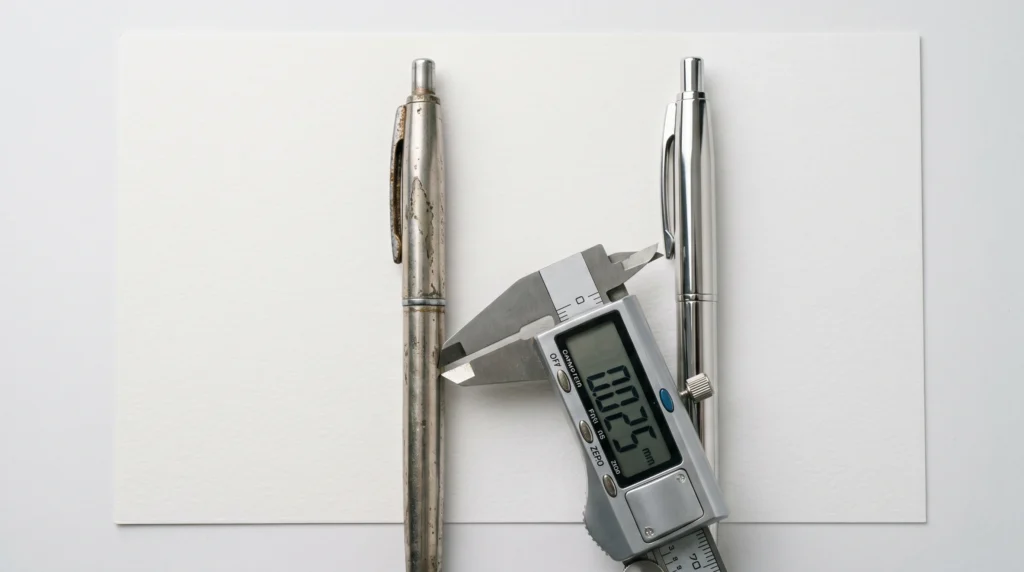
| ペン先の引っ掛かり / インクフローの不安定さ | ペン先のスリットのずれや不適切な幅。ペン先スリットの0.02mmの偏差が毛細管現象によるインクフローを変化させ、かすれの原因となる。使用者はブランドを非難する。 | ペン先スリット幅はユニットごとに40倍の倍率で検証。インクフローレートは22°C ±2°Cでテストし、生産バッチ間での一貫した毛細管現象によるインクの引き出しを確認。 |
| 金属部品(クリップ、リング、ペン先)のメッキ摩耗。 | 3ミクロン未満の金またはパラジウムメッキは、ポケット接触後18~24ヶ月で劣化する。ペンは書けなくなるずっと前に安っぽく見えるようになる。 | バッチごとに蛍光X線(XRF)分析でメッキ厚を±0.1ミクロンの精度で測定。塩水噴霧腐食試験(ISO 9227)を最低48時間実施。 |
| キャップシール不良(非使用後数週間でインクが乾燥)。 | A cap that doesn’t engage with consistent force creates a microscopic vent) solvent evaporates, nib dehydrates. It’s a one-cent tolerance problem destroying a product worth fifty euros or more. | デジタルフォースゲージでキャップ嵌合力を測定。真空減圧試験でシール完全性を確認(60秒間の圧力損失が5%未満)。 |
| バッチ間の色・仕上げの不一致。 | 染色浴の温度や濃度が管理されていないと、アルマイト処理されたアルミニウム製軸の色が製造ロット間で変化する。6ヶ月後に再注文した顧客は、明らかに異なる製品を受け取ることになる。 | 分光光度計による測定(バッチ間のDelta E ≤1.0)。自動循環システムにより染色浴温度を±1.5°Cに維持。各製造ロットのマスター見本を保管。 |
| 軸のネジ部不良。 | 50~100回の開閉サイクル後にネジ山が交差したり固着したりすると、ペン全体の知覚品質が損なわれる。素材が高級でも、機構が安っぽく感じられる。 | 自動サイクル試験機で500回の開閉サイクルによるネジ嵌合テスト。レーザーマイクロメーターによるネジピッチの寸法検査。10,000ユニットバッチあたり200ユニットの無作為サンプル検査。 |
The table makes one thing clear. The difference between a signature piece and a drawer pen is rarely visible at the point of sale. It lives in tolerances and test protocols. It lives in whether the factory rejects a batch that most customers would not notice was off.
That discipline is what EU heritage brands spent a century building. It is also what a new generation of factory partners must show to earn a place in EU supply chains.
高級筆記具の地理学:なぜドイツ、イタリア、フランスが筆記具製造の中心地となったのか
Why Hamburg and not London? Why Florence and not Tokyo? The answer is not about pen-making alone. It is about nearby industries creating the conditions pen-making needed.
Germany's pen industry grew next to its precision engineering sector. The same tool-and-die skills built German cameras, watches, and cars. Those skills also produced the nib equipment and molding precision fountain pens need. When Montblanc started in Hamburg in 1906, the city already had a trained workforce. People were used to sub-millimeter tolerances. Watchmakers, jewelers, and instrument builders were all there.
ドイツ:精密製造インフラ
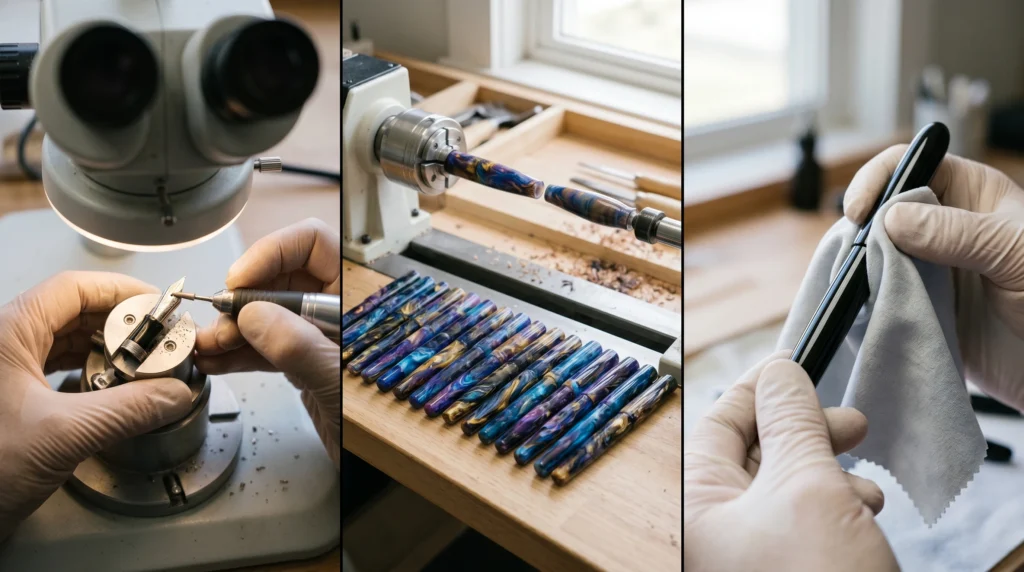
Today, Montblanc's Hamburg factory still makes every pen in-house. The team includes former dental technicians. That path makes sense when you see nib grinding under a microscope. It is close to crown preparation. This depth of specialized labor does not transfer easily. It accumulates.
Italy took a different path. Germany optimized for precision. Italy optimized for expression. Brands like Montegrappa, founded in 1912, and Visconti, founded in 1988, built reputations on materials and jewelry techniques. Celluloid, ebonite, and hand-poured resin show up across their lines. Lost-wax casting and hand-applied enamel come from the jewelry trade.
イタリア:職人技の美学とマテリアルサイエンス
The Italian approach matters for a specific reason. It trained buyers to see pens as aesthetic objects, not just tools. One buyer grew up seeing Montegrappa's silver overlays in a Milan shop. Another only saw BIC ballpoints in blister packs. The first holds a different quality bar. The first will study the finish. The second will not know what to look for.
French brands sit where luxury positioning meets technical skill. S.T. Dupont, founded in 1872, used its lacquer knowledge. That knowledge was built for lighters and leather goods. It helped create pen finishes with depth and life. Rivals could not copy them without the same lacquer chemistry.
フランスとスイス:競争上の堀としてのブランド・ヘリテージ
Switzerland's Caran d'Ache sits between Swiss precision and French color thinking. It makes limited runs where the color mix is the differentiator. One limited edition can take six months of color development before a single body is made.
The thread across these regions is deep specialization built over decades. A factory in Hamburg does not just make pens. It holds years of knowledge about a specific palladium alloy. It knows how that alloy behaves under a specific polishing compound at a specific speed. That knowledge is the real barrier to entry.
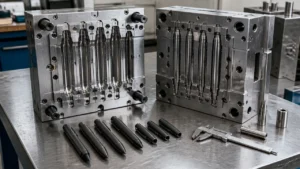
For B2B buyers outside Europe, these regional specializations shape sourcing strategy. A factory with 26 years of OEM experience brings a different kind of knowledge. Think of one running a 10000+ sqm plant with 8 workshops and in-house ink R&D. It can reproduce specific finishes, color matches, and feel at commercial scale and fair MOQs. The precision exists. The question is whether the buyer knows how to specify it.
So you are a brand owner or buying manager aiming at the EU corporate pen market. You are not competing with Montblanc at the EUR 500+ level. Your target is the professional-grade segment. That means corporate gifts and branded executive extras. It means the pen handed out at a conference that people keep. It is not the one thrown into a hotel wastebasket.
欧州法人向けペン市場への参入:OEMバイヤーが知っておくべきこと
Here is what the EU buyer profile demands, based on observable buying behavior rather than survey data:
The EU's rule direction is clear. Single-use plastic limits are coming. Extended producer responsibility is expanding. The EU Green Deal is changing what acceptable means in corporate buying. A German Mittelstand company issuing an RFP for 5,000 corporate pens now puts green criteria in the scoring matrix.
Sustainability Isn’t Optional) It’s Table Stakes
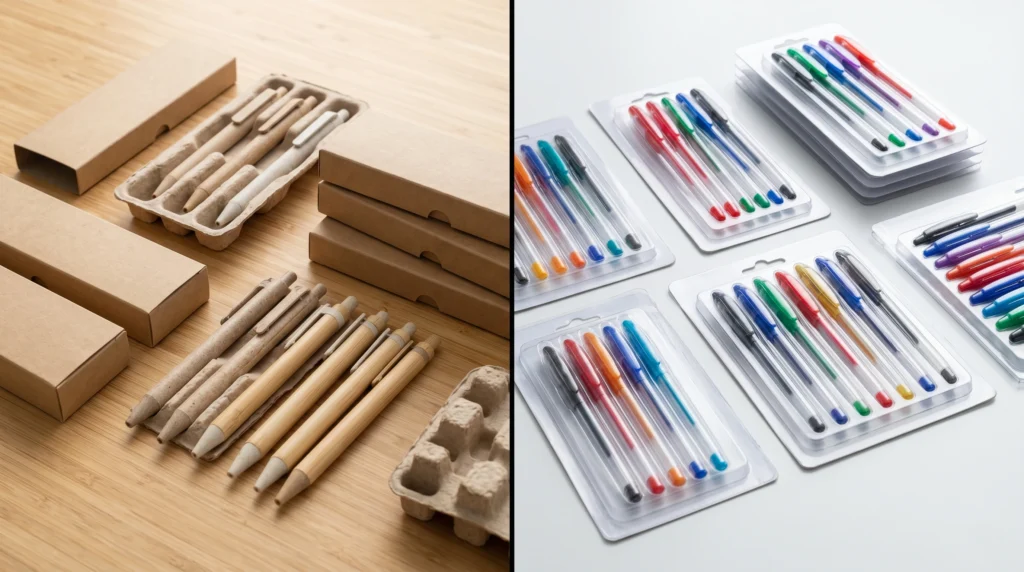
The operational lesson for OEM buyers is simple. Find a partner that can supply refillable designs. Look for recycled barrel material. Look for packaging that does not arrive in layers of non-recyclable plastic. These specs must be documented and verifiable. Brochure claims are not enough.
When in-house ink R&D sits next to production, sustainable mixes can be built to spec. Think water-based options instead of solvent-heavy inks. Think bio-derived pigments and low-VOC carrier systems. The chemistry does not need to be invented from scratch. It needs to be adapted to a buyer's needs. That is what an in-house lab makes possible.
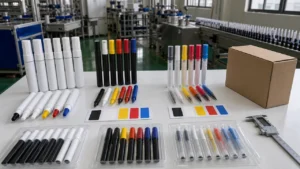
EU corporate buyers personalize heavily. Engraved logos, custom color matching to brand guides, and co-branded packaging are standard requests, not premium upsells. Pen Heaven, the UK corporate pen specialist, processes thousands of laser-engraved orders a year. Standard designs ship the same day.
Customization Depth Differentiates) But Only If The Base Quality Is Right
The trap OEM buyers fall into is overinvesting in custom work and underinvesting in base quality. A perfect engraving on a pen whose cap does not click shut is worse than no logo. It actively damages the perceived quality of the gifting brand.
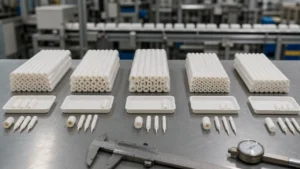
That is where 100% full inspection becomes relevant. Full inspection means every unit gets checked, not a sample. For a 2,000-unit corporate order, that is 2,000 cap-seal tests, 2,000 writing-start tests, and 2,000 finish checks. The labor cost is real. The reputational cost of skipping it is higher.
EU corporate pen budgets sit in two bands. The promotional tier runs EUR 3 to 8. The executive gifting tier runs EUR 25 to 80. The promotional tier competes on unit economics. The executive tier competes on perceived value.
Price Anchors Are High (But Quality Expectations Rise Proportionally
For the executive tier, buyers judge differently. They open the box. They hold the pen. They test the mechanism. They compare it with the EUR 50 to 80 benchmark set by German and Italian mid-market brands. If the pen feels hollow, the buyer will not reorder. If the threading catches, same result. If the plating wears in a month, price does not matter.
A manufacturer with automated lines and a 10000+ sqm plant changes the cost math. Automation cuts per-unit variance. The gap between the best and worst unit in a batch shrinks. When every pen in a 5,000-unit order performs the same, the batch's value is clear. It is the value of the median unit, not the best sample.
Let us address the obvious question. Can a factory outside Europe credibly supply the EU corporate pen market?
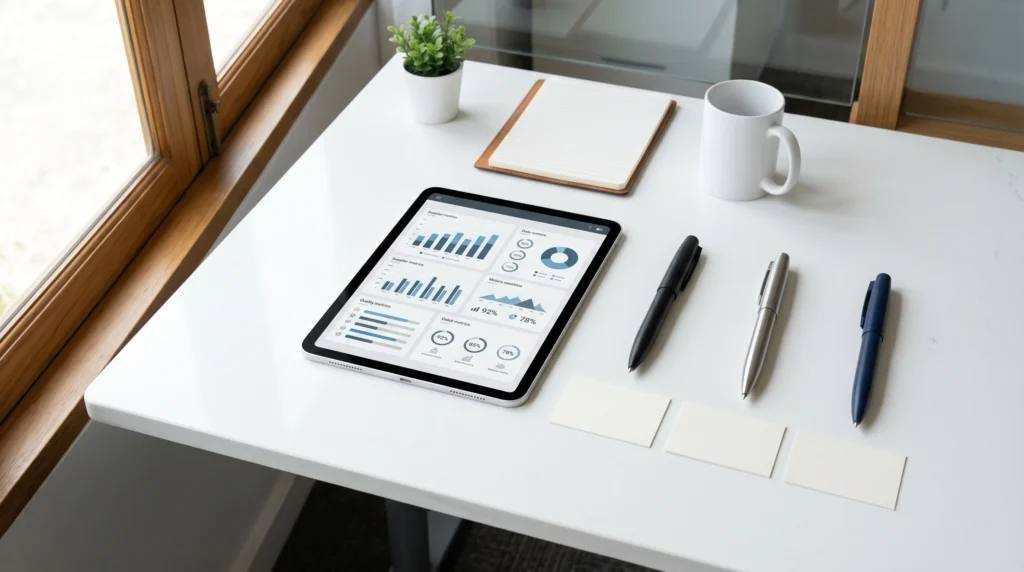
アジア拠点のOEMメーカーが欧州法人向けペン市場で競争する方法
The short answer is yes. But do not compete on heritage. Compete on technical execution.
The short answer is yes. But do not compete on heritage. Compete on technical execution. EU premium brands built their names over generations. An OEM manufacturer in China or Southeast Asia does not have that timeline. It has production economics. With the right QC setup, it can deliver equal quality at 40 to 60% of the EU unit cost.
Here is what matters in practice:
Confirm the product class before you list compliance documents. EN71 concerns toys. An ordinary functional pen is not automatically a toy. U.S. art-material rules depend on how the product is marketed. Use EU stationery guidance and CPSC art materials guidance to set the scope. Then request documents that match the ordered model.
認証基盤.
The minimum order for custom OEM/ODM programs is 50,000 pens per order, counted by total individual pens produced. For a 12-color pack, that equals roughly 4,200 sets, not 50,000 of each color. Standard stock models can be sampled at smaller trial sizes.
最小注文数量の柔軟性.
The minimum order for custom OEM/ODM programs is 50,000 pens per order, counted by total individual pens produced. For a 12-color pack, that equals roughly 4,200 sets, not 50,000 of each color. Standard stock models can be sampled at smaller trial sizes.
サンプリング速度と精度。
EU buying timelines are tight. A buyer asking for a pre-production sample wants it in 7 to 10 days, not 30. The sample must match the production spec exactly. Color, weight, mechanism feel, and packaging all count. A manufacturer that can produce 3D design samples quickly shows competence. Ship them by express within two weeks, and the signal is even stronger. That can happen before the order is placed.
透明な品質文書化。
Batch-specific QC logs beat generic claims. A factory can hand the buyer a spreadsheet of cap-force readings. It can show ink-flow rates and pass/fail counts for their run. That builds trust faster than any marketing copy. This is the operational version of heritage-brand transparency, applied at a different scale and price point.
ESGおよび倫理的製造を欧州のサプライチェーン戦略に組み込むこと
Europe's rules are moving faster than most markets on green work and ethical sourcing. The EU Corporate green work Reporting Directive, or CSRD, is one example. The proposed Corporate green work Due Diligence Directive is another. EU companies will increasingly have to audit their supply chains for environmental and social compliance.
For a EU brand sourcing custom pens from an OEM partner, the compliance team will ask specific questions:
- 製品にどのような材料が使用されており、工場はそれらをトレースできますか?
- 労働者の条件は独立して監査されていますか?
- 生産施設のカーボンフットプリントは?
- パッケージはリサイクル可能で、プラスチック含有量を最小限に抑えていますか?
factory partners that already run ethical programs remove friction from the buyer's compliance work. Documented worker wellbeing plans, waste reduction systems, and energy efficiency work all count. The buyer does not audit from scratch. They reference existing files.
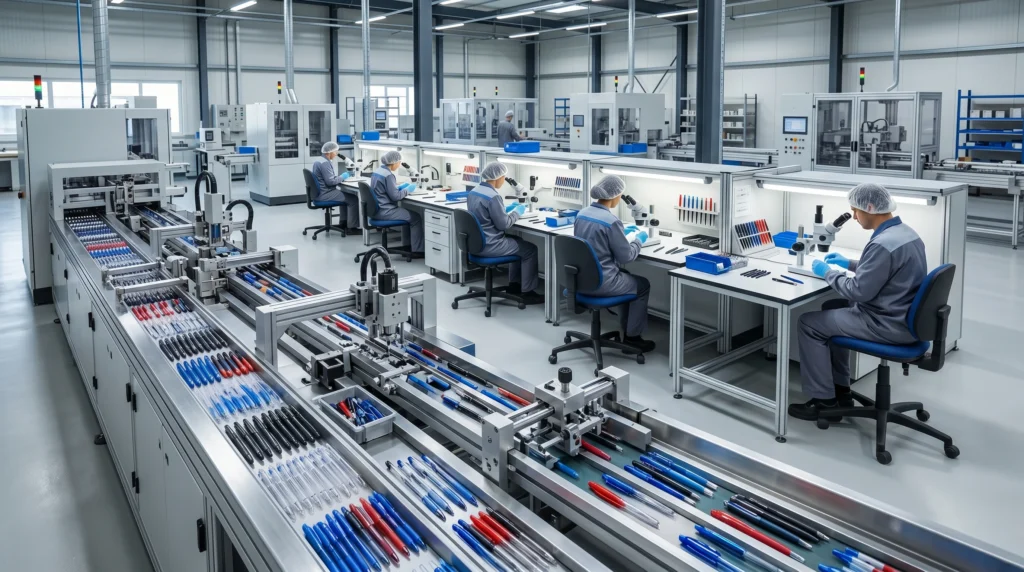
Operationally, this looks like water-based ink that removes solvent VOCs from the factory. It looks like recycled polypropylene barrels certified to GRS, the Global Recycled Standard. It looks like packaging built for single-material recycling, with no mixed laminates that cannot be separated.
These are not premium features. They are becoming baseline needs. A buyer at a mid-sized EU company often picks the supplier with documented ESG work. That choice comes when two suppliers otherwise look equal. It lowers the buyer's own reporting load. The decision is already made on compliance ease, not just unit price.
よくある質問
なぜ欧州が世界の高級筆記具市場を支配しているのか?
EU's lead comes from three things. First, a dense cluster of heritage factories in Germany, Italy, France, and Switzerland. Many have run for over a century. Second, a corporate gifting culture that treats premium pens as normal business gear. Third, rules that favor durable, refillable products over disposables. The cluster effect matters too. Skilled workers move between factories in the region. The knowledge stays inside the industry.
2. 法人向けペンが「高級品」と「プロモーション品」を分けるものは何か?
A promotional pen may be chosen for price and logo visibility. A premium corporate pen may be chosen for writing feel, finish life, refill availability, and packaging. Agree measurable pass limits with the supplier. Compare production samples with the approved sample. EN71 and ASTM D-4236 do not measure these premium traits. They do not set a universal plating thickness either.
3. 欧州外のOEMメーカーは、欧州企業の品質期待に応えるペンを製造できますか?
Yes, but the factory's quality control matters more than its location. Check whether the manufacturer tests every unit or relies on sampling. Check whether batch-level test files exist for the buyer to review. Check whether ink is mixed and tested in-house or bought from third parties. A 10000+ sqm plant with 8 workshops and automated lines can match mid-market EU quality. Add in-house ink R&D and full inspection, and the case is strong. The edge is structural. Automation cuts per-unit variance. Geography does not.
4. 企業向けペンが欧州市場で販売されるためには、どのような認証が必要ですか?
The required documents depend on the model, the use, and the destination. Toy status is judged case by case. Ordinary functional pens are not toys by default. Review chemical needs separately. For products marketed as art materials in the U.S., follow CPSC art materials guidance. ISO 9001 covers quality management. It does not approve every product. Match reports and declarations to the actual SKU.
5. カスタム法人向けペンの現実的な最小発注数量は?
The minimum order for custom OEM/ODM programs is 50,000 pens per order, counted by total individual pens produced. For a 12-color pack, that equals roughly 4,200 sets, not 50,000 of each color. Standard stock models can be sampled at smaller trial sizes.
6. 2026年における欧州企業のペン購入動向はどのように変化していますか?
Three shifts are speeding up. First, green work is moving from nice to have to mandatory. French and German RFPs now include recycled-content minimums and packaging limits as routine. Second, premiumization continues. Average spend per corporate pen is rising as companies trade many cheap items for fewer high-value ones. Third, direct-from-factory buying is growing. E-commerce and B2B platforms make international supplier review easy. A buyer in Lyon can judge a factory in China with the same document depth. They would expect that depth from a local distributor. The cost can be 30 to 50% lower.
Where The European Pen Market Is Headed) And What It Means For Sourcing Strategy
The EU luxury corporate pen market is not shrinking. It is segmenting. The middle is hollowing out. At the bottom, disposable promotional pens face margin pressure from regulation and commoditization. At the top, heritage brands keep loyalty built on cultural capital that new entrants cannot copy.
The chance sits in the professional-grade middle. These pens are not sold on heritage. They are sold on verifiable quality. The buyer's tests are technical. Does it write the same every time? Does the finish last? Can I get my brand colors? The answers matter more than aspiration.
For buyers and brand owners, the old trade-off is fading. European quality or Asian pricing is a false choice. The real question is about the factory partner. Does it have the QC setup, certificate set, and custom work depth to compete on technical merit?
ZH Stationery runs a 10000+ sqm plant with 8 production workshops. For a corporate pen project, agree the spec with the supplier. Agree the approved sample. Agree the inspection criteria. Agree the compliance documents. Review the scope of each report for the ordered model and materials. A factory description alone does not prove test coverage for every SKU.
関連ガイド: 彩色鉛筆品質標準與未來趨勢.