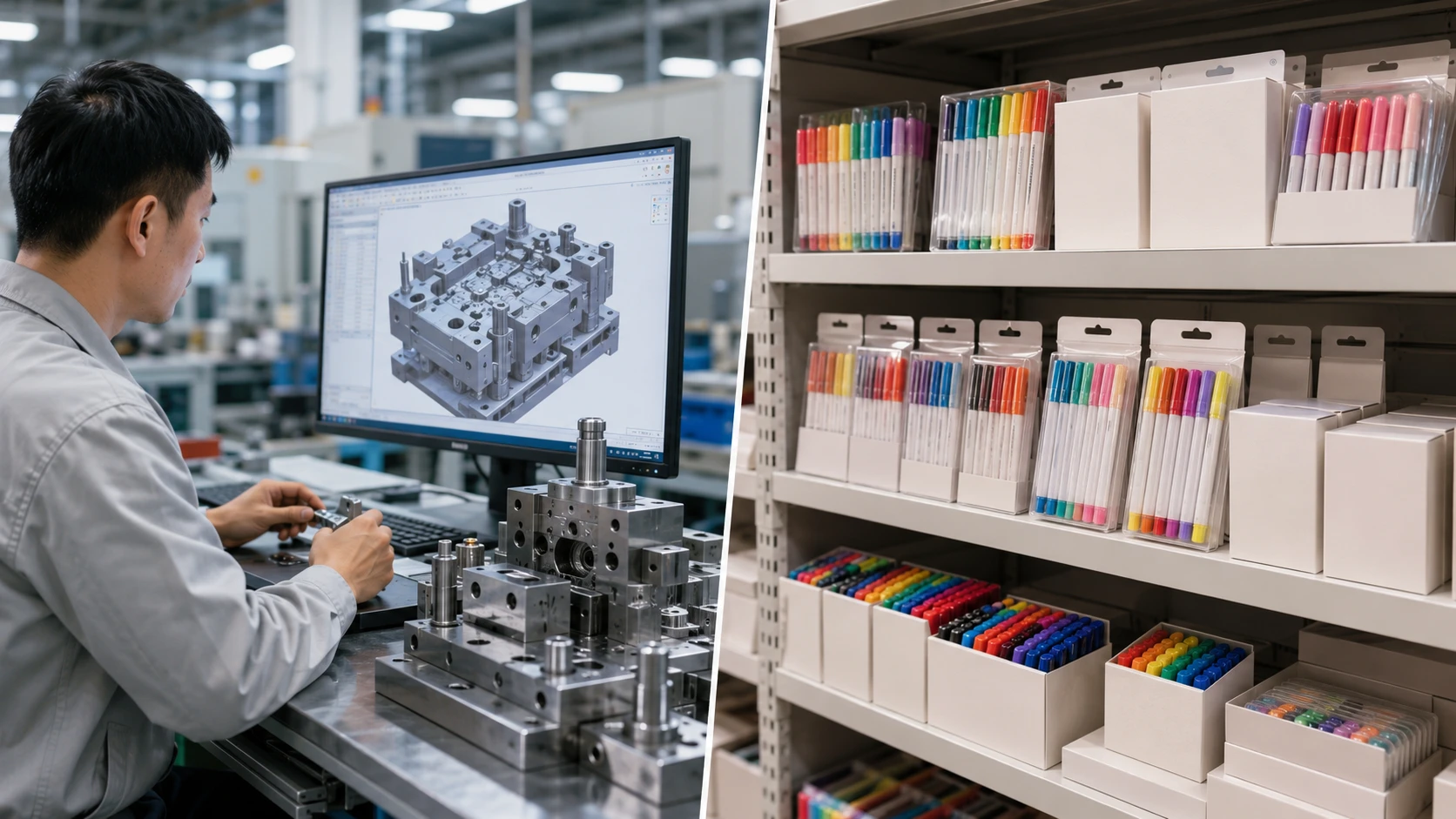
Every B2B buyer who starts pen manufacturing for a private label meets two terms early: OEM and ODM. They appear in every supplier call and sourcing checklist. Yet few guides explain what each model means for a real buying decision.
The confusion is costly. The wrong model can lock you into a product that is hard to tell apart from rivals. It can add mold costs your order volume cannot support. It can also pair you with a factory that lacks the skills your brand needs. Buyers who mix up OEM vs ODM pen manufacturing often face late launches, surprise tooling bills, uneven batch quality, and customs delays.
This guide explains both models as practical sourcing frameworks. It covers timeline, budget, design control, compliance duties, and supplier relations. Some readers are brand owners building a private-label marker line. Others are distributors adding custom stationery. Some are retailers buying factory-direct for the first time. For all of them, the decisions that matter are here.
Indice
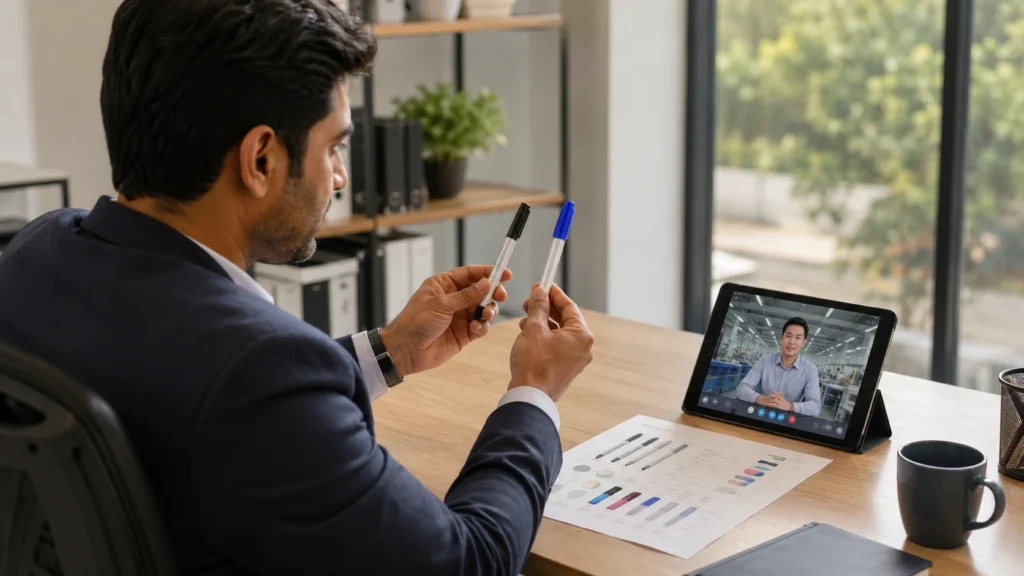
Risposta rapida: Quale modello di produzione dovresti scegliere?
Here is a short breakdown of when each model makes sense:
- Scegli OEM se hai un design di prodotto specifico, hai bisogno del pieno controllo sulla formulazione dell'inchiostro e sulle specifiche della punta, desideri la proprietà esclusiva dello stampo e sei preparato a investire in tempi di sviluppo e costi di attrezzatura.
- Scegli ODM se devi testare rapidamente un nuovo mercato, vuoi marchiare un prodotto esistente con il tuo logo e la tua confezione, hai un budget limitato per lo sviluppo iniziale e ti trovi a tuo agio a lavorare all'interno del catalogo prodotti esistente della fabbrica.
- Se stai scalando un marchio, inizia con ODM per validare la domanda, poi passa a OEM per i tuoi prodotti di punta una volta che il volume giustifica l'investimento.
- Se conformità e sicurezza sono critiche (forniture scolastiche, prodotti per bambini, vendita al dettaglio UE/USA), verifica che il tuo fornitore possieda certificazioni attuali e per lotto, indipendentemente dal modello che scegli.
These factors help brand owners and procurement managers set clearer sourcing and quality standards before contacting factories.
OEM vs ODM: Qual è la Differenza e Cosa Significa per gli Acquirenti di Penne all'Ingrosso
The difference between OEM and ODM is not academic. It sets who owns the design. It sets who pays for the molds. It sets how long development takes. It also sets whether your brand can build a strong market position.
| Fattore | OEM (Original Equipment Manufacturer) | ODM (Original Design Manufacturer) |
| Chi fornisce il design? | L'acquirente fornisce specifiche complete e disegni tecnici | La fabbrica fornisce prodotti pre-progettati; l'acquirente personalizza logo, colori, confezione |
| Chi possiede la proprietà intellettuale? | L'acquirente mantiene la PI del design e la proprietà dello stampo | La fabbrica mantiene tipicamente la PI principale del design |
| Costo di sviluppo iniziale | Higher (mold creation, design validation, sampling | Lower) working from existing templates |
| Tempistica di sviluppo tipica | 3–6 mesi (inclusa fabbricazione dello stampo e campionatura) | 2–6 settimane (approvazione grafica e configurazione confezione) |
| Quantità minima d'ordine | 50,000 pens per order | 50,000 pens per order |
| Profondità di personalizzazione | Controllo totale: inchiostro, punta, forma del corpo, materiali, confezione | Limitato alle opzioni del catalogo: colori, posizionamento logo, stile confezione |
| Coerenza degli ordini ripetuti | Bloccato sulle specifiche del tuo design; la fabbrica non può cambiare senza approvazione | Dipendente dal fatto che la fabbrica mantenga lo stesso SKU in produzione |
| Ideale per | Marchi affermati, requisiti di prodotto unici, programmi a marchio privato a lungo termine | Test di mercato, tirature promozionali, marchi con risorse R&D limitate |
The table shows a pattern that surprises many first-time buyers. OEM is not simply a better version of ODM. Each model solves a different business problem. The right choice depends on your brand strategy, budget, timeline, and the level of differentiation your market demands.
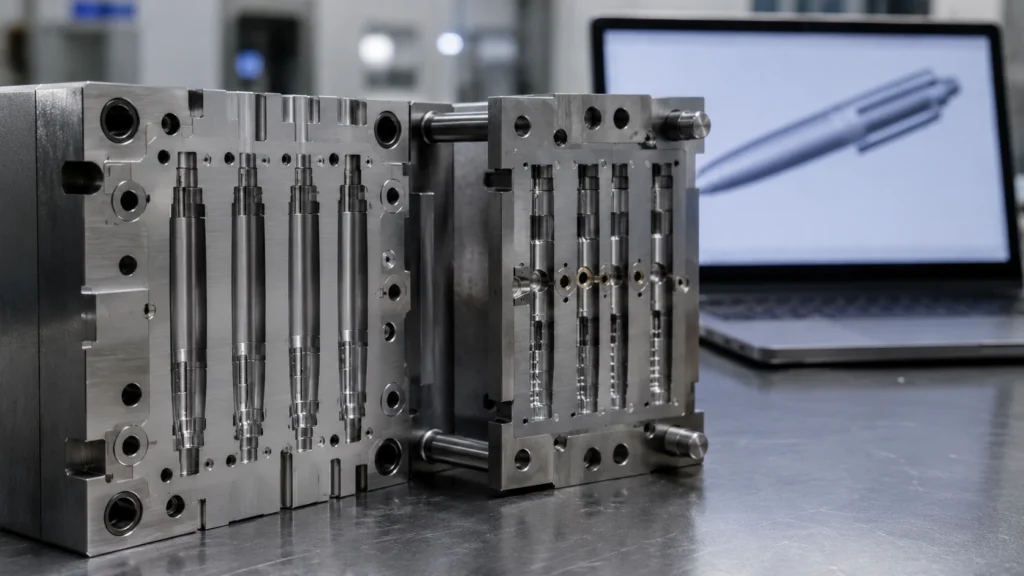
Quando la produzione di penne OEM rappresenta l'investimento giusto
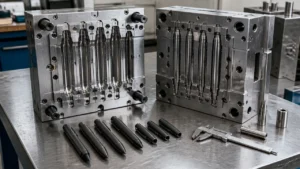
OEM pen manufacturing means you, the buyer, control the product spec. You define the ink chemistry, tip shape, barrel feel, cap seal, and every part of the packaging. The factory executes your design to that spec.
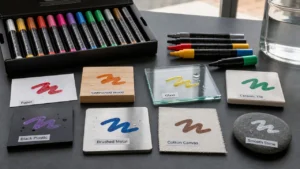
This model suits established stationery brands that know their end users. A brand selling permanent markers to warehouses may need a resin system that bonds to plastic bins and metal shelves. No stock ODM product will reliably deliver that. The brand must order a custom ink mixing formula. It must also pick a nib that resists wear on rough surfaces. And it needs a cap that keeps an airtight seal through months of use.
The cost structure reflects this depth of control. New mold development for a custom barrel, cap, or end plug is a major line item. Complex multi-cavity molds need precision machining and trial runs. That is why OEM minimum order quantities start higher. The mold cost must be spread across production volume to reach a workable per-unit price.
The return is equally real. When you own the mold and the spec, no competitor can walk into the same factory and order your product. Your supply chain is protected. Your repeat orders stay spec-locked. The factory cannot change ink suppliers, barrel materials, or tip sizes without your approval and a new sample round.
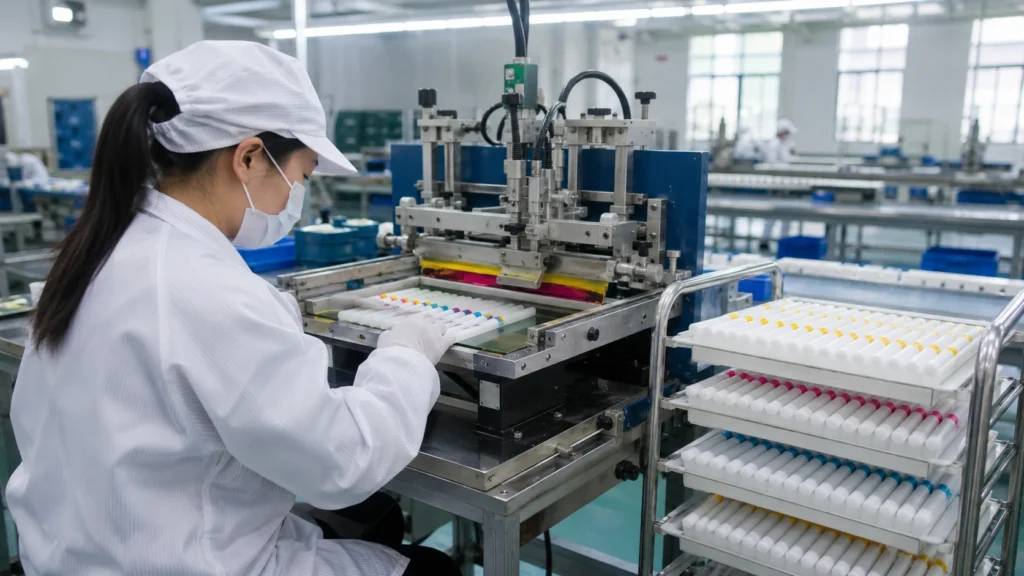
A factory with genuine OEM ability should walk you through a clear workflow. The stages start with requirement confirmation. Then come 3D design and mold making. Next is sampling and performance testing. After that come spec lock, mass production with in-process QC, and final inspection. If a supplier cannot explain these stages, they may not have real OEM capability.
Some buyers work with an experienced design team. Others have already proven product-market fit through ODM sales. For them, OEM is the next step toward a brand that is hard to copy.
Quando l'ODM ti offre la velocità di cui hai bisogno
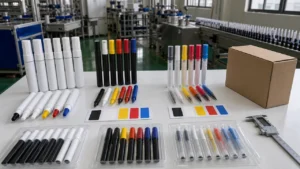
ODM flips the equation. The factory has already designed the product, built the molds, and proven the line. You choose from their catalog. Then you add your branding: logo printing, custom barrel and cap colors, and branded packaging. Retail display design is available where supported.
The speed gain is real. Without mold development, an ODM project can move from artwork approval to finished goods in two to six weeks. That makes seasonal launches, trade show inventory, and market tests feasible on short notice.
ODM is also the right start for businesses that still need to prove product-market fit. Why pay for custom mold development before you know what customers prefer? Do they like alcohol-based ink or water-based? Do they value a brush tip over a chisel tip? ODM lets you test SKUs, gather sales data, and refine your needs before you commit capital.
The tradeoff is differentiation. When three brands source the same ODM marker from the same factory, only the logo, packaging, and price differ. That may be fine for commodity categories where price drives purchases. For premium brands, the limits of ODM become a ceiling on growth. Think of art supply brands selling to pros. Think of school brands selling to buyers who remember failed products.
Many successful brands follow a hybrid path. They use ODM for catalog products that fill out the line, and OEM for the hero SKUs that define the brand. This is not a compromise. It is a deliberate use of development resources.
Ciò di cui la fabbrica ha bisogno per eseguire efficacemente entrambi i modelli
Both models depend on manufacturing basics that are invisible in a catalog but decisive in practice. Three abilities separate factories that can run either model from those that cannot.
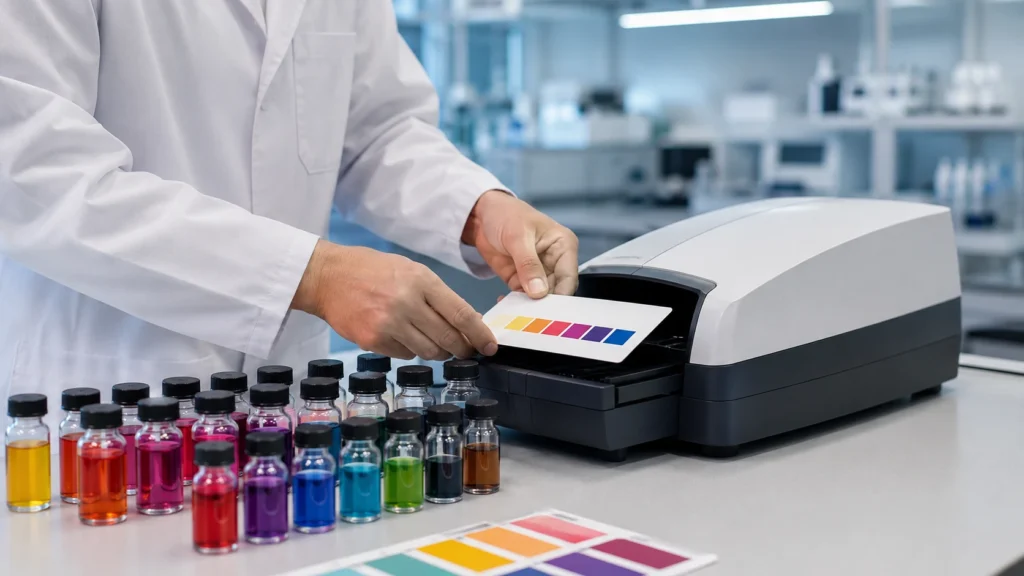
Ink control. Batch differences come down to one question: is the ink mixed in-house or bought outside? This applies to a custom mix for your OEM spec and to a standard ODM ink. When ink is bought outside, changes can happen without the factory knowing. A pigment supplier may switch sources. A solvent grade may drift. Then a color that passed lab testing no longer matches the run. Factories with in-house labs control the mix at the source. ZH STATIONERY runs such a team for marker, metallic, and acrylic pens. The team checks batch color with a spectrophotometer and records the source of every ingredient.
Mold and tooling. Even in ODM, the condition of the factory's molds decides part quality. Worn molds give uneven barrel walls, caps that fit loose, and threads that strip fast. For OEM projects, mold design and making decide how well your 3D design becomes real parts. A factory with in-house 3D design and sample making, rather than outsourced molds, can adjust faster and hold tighter limits.
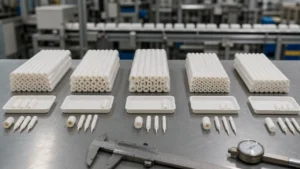
Quality control. The QC difference is not about whether inspection happens. It is about what gets checked and when. In ODM, the factory should already have checkpoints: raw material checks, in-process checks, and final AQL sampling. In OEM, the QC plan must be built for your spec. What color variance, measured as delta-E, is acceptable? What cap-off time is the minimum? What drop-test standard fits your packaging? A factory that runs 100% inline automated inspection before packing can support both models. It also applies strict AQL sampling for shipment, covering fit, sealing, print alignment, cap tightness, and writing performance.
ZH STATIONERY operates from a 10000+ sqm factory area with 8 workshops and automated assembly lines, backed by 26+ years of OEM/ODM experience. You can verify these claims with factory audits, sample tests, and batch-level QC records.
Conformità alla Sicurezza: Requisiti di Entrambi i Modelli per i Mercati Statunitense ed Europeo
Compliance is not optional, and it does not depend on the model. If your pens enter the U.S. or European market, they must meet the applicable safety standards. The burden of proof falls on you, the buyer, not on the factory's marketing team.
In the United States, the Consumer Product Safety Commission, or CPSC, requires all art materials to pass a toxicological review under LHAMA. That includes markers, gel pens, and paint pens. The product or packaging must carry the statement Conforms to ASTM D-4236. The rule covers adult and children's products. For markers sold to children under 12, the CPSIA adds lead limits and mandatory third-party testing by a CPSC-accredited lab.
In the European Union, markers classed as toys fall under the Toy Safety Directive and must meet EN71. EN71-3 sets migration limits for 19 heavy metals, including lead, cadmium, arsenic, and mercury. The test mimics what a child may take in through chewing, licking, or swallowing.
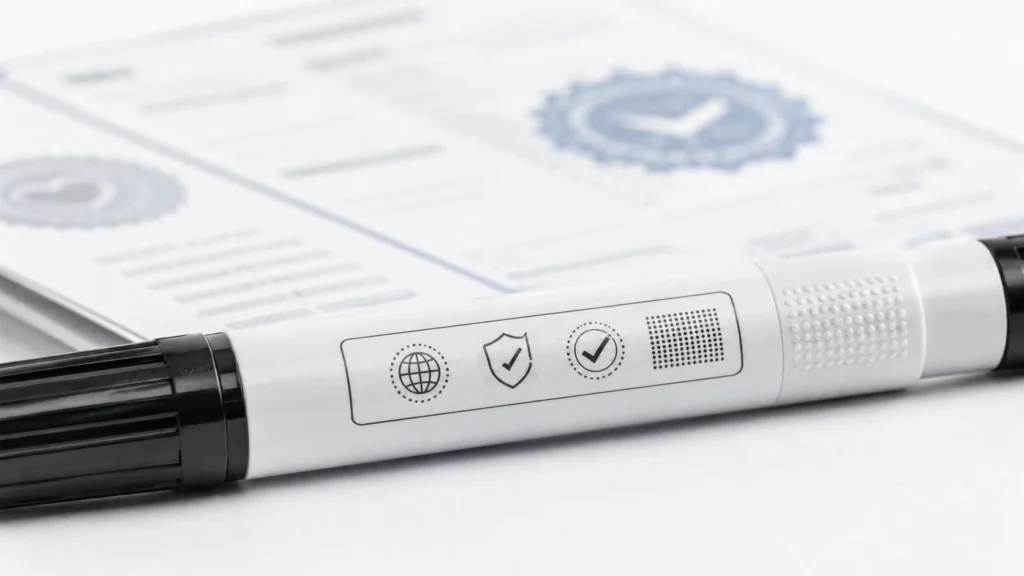
A factory with current EN71 and ASTM D-4236 certificates shows that its sourcing, ink mixing, and production align with recognized safety limits. Ask for dated, batch-specific test reports from labs like SGS, Intertek, or TUV. Ask to see the full report, not a certificate screenshot. Check the date. Confirm it covers the exact product and ink mix you are ordering.
ZH STATIONERY keeps EN71 and ASTM D-4236 certified options with batch-level test records. That ties the paperwork to real production runs, not to a sample sent to a lab years ago.
For buyers building private-label stationery, the practical compliance checklist is short:
- Rapporti di prova EN71-3 per la distribuzione europea (aggiornati entro 12-24 mesi)
- Revisione tossicologica ASTM D-4236 / LHAMA per la distribuzione negli Stati Uniti
- Documentazione REACH se il mercato UE richiede la registrazione di sostanze chimiche
- Certificato di Prodotto per Bambini (CPC) CPSIA se i prodotti sono commercializzati per bambini sotto i 12 anni negli Stati Uniti.
- MSDS (Scheda Dati di Sicurezza del Materiale) per ogni tipo di inchiostro, richiesta per il trasporto internazionale e lo sdoganamento
Domande Frequenti
Qual è la differenza tra la produzione di penne OEM e ODM?
OEM means you provide the design, specs, and technical needs. The factory makes to your exact spec, and you keep IP ownership. ODM means the factory offers pre-designed products from its catalog, which you customize with your logo, colors, and packaging. OEM gives full control but needs higher upfront spend. ODM gives speed and lower cost but limits how different your product can be.
Quanto costa lo sviluppo di uno stampo personalizzato per penne marker OEM?
Mold costs vary a lot with complexity. A simple single-cavity cap mold costs far less than a multi-cavity barrel mold with textured grips and custom shape. Instead of one number, look at total landed cost per unit at your order volume, including mold spread. A factory with in-house 3D design and mold making, like ZH STATIONERY, can usually adjust faster and control cost better than one that outsources tooling.
Qual è il MOQ tipico per ordini di penne OEM rispetto a quelli ODM?
L'ordine minimo per programmi personalizzati OEM/ODM è di 50.000 penne per ordine, conteggiate come totale delle singole penne prodotte. Per una confezione da 12 colori, ciò equivale a circa 4.200 set, non 50.000 per ciascun colore. I modelli standard in stock possono essere campionati in quantità di prova più piccole.
Posso iniziare con ODM e passare successivamente a OEM?
Yes, and this is a common growth path. Many brands start with ODM to prove fit, gather feedback, and build sales data. Then they move hero SKUs to OEM when volume supports the mold spend. Ask suppliers whether they can handle both models. An ODM-only factory may lack the design and project skills that OEM demands.
Quali certificazioni di sicurezza sono necessarie per l'importazione di penne negli Stati Uniti e in Europa?
For the U.S., ASTM D-4236, or LHAMA, compliance is required for all art materials. Products for children under 12 also need CPSIA testing for lead and phthalates, plus a Children's Product Certificate. For Europe, EN71-3 applies to products classed as toys or children's items, and REACH documents may apply. Always ask for current, dated test reports from ISO/IEC 17025-accredited labs, not a logo on a website.
Come posso verificare che una fabbrica sia in grado di fornire effettivamente qualità OEM, e non solo ODM?
Ask the factory for its OEM project flow: requirement confirmation, 3D design, mold making, sampling, spec lock, mass production QC, and final inspection. Ask for physical samples from a past project, not catalog samples. Ask for batch QC records: color readings, viscosity checks, cap-seal results, and surface adhesion data. A factory with 26+ years of experience and 100% inline automated inspection before packing can usually share these records, because the testing is built into the workflow.
Every B2B sourcing decision comes back to one question. Which model gives your brand the right mix of control, cost, and speed? Look at where you are today. Then look at where you plan to be in 24 months.
OEM ODM pen manufacturing is not a binary choice between better and worse. It is a strategic call about how much of your brand's value lives in the product versus the marketing around it. ODM gets you to market fast with low upfront cost. OEM builds a defensible product that rivals cannot copy by walking into the same factory.
The best long-term partners support both stages. ODM gives speed and market testing. OEM builds the brand and improves margins. The factory should not cut corners on ink quality, assembly precision, safety compliance, or batch consistency.
ZH STATIONERY sources marker pens, metallic markers, and gel pens for private-label brands, retail programs, and wholesale channels. We can send samples and discuss your specs. We support ODM and OEM production. Reach out through the contatto page to start a conversation about your project.
Guida correlata: For compliance planning, see Pennarelli a inchiostro cancellabile ad acqua vs. altri tipi di penne.