

Nell'apprendimento della prima infanzia, l'arte conta più che mai. Buoni strumenti artistici per bambini aiutano i bambini a comprendere colori, forme e spazio. Inoltre sviluppano le capacità di pensiero e permettono di esprimere le emozioni.
NAEYC descrive l'arte incentrata sul processo. I bambini esplorano strumenti e metodi invece di copiare un risultato prestabilito. Per gli acquisti scolastici, scegliete strumenti adatti all'età che i bambini possano gestire. Un prezzo elevato da solo non è prova di valore educativo.
Il Ruolo dei Materiali Artistici per Bambini nell'Educazione Precoce
Diversi strumenti per disegnare e dipingere stimolano la creatività in modi propri. Dare ai bambini un'ampia gamma di strumenti artistici per bambini è la base di un buon insegnamento dell'arte.
Quali Sono i Vantaggi dell'Uso di Acquerelli e Pastelli a Olio per Bambini?
Quando scelgono materiali per bambini piccoli, gli insegnanti cercano strumenti facili da impugnare e divertenti da vedere.
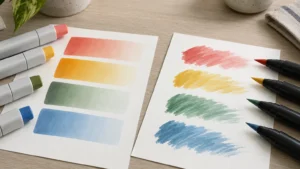
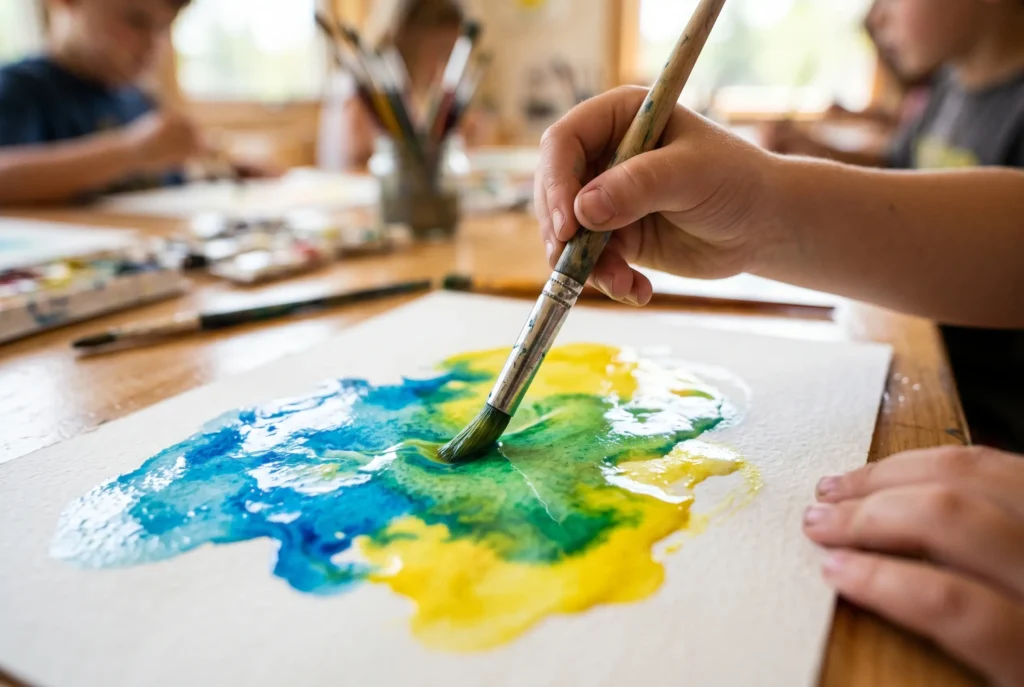
- Acquerelli: La fluidità e la trasparenza degli acquerelli permettono ai bambini di creare opere altamente espressive. Imparando a controllare il rapporto acqua-pigmento, i bambini sperimentano la miscelazione e la fusione dei colori. Questa sperimentazione pratica migliora profondamente la loro percezione cromatica e la flessibilità cognitiva.
- Pastelli a Olio e Crayon: Per i bambini in crescita, i pastelli a olio e i crayon offrono un'ottima copertura e tonalità vivaci. L'atto fisico di applicare questi materiali ricchi aiuta a sviluppare le capacità motorie fini. I vantaggi dell'uso di acquerelli e pastelli a olio per bambini risiedono nella loro capacità di stimolare la sensibilità visiva, permettendo ai giovani artisti di esprimere emozioni complesse ancor prima che il loro vocabolario sia completamente sviluppato.
Il Potere dei Pennarelli e delle Matite Professionali
I pastelli a cera di base funzionano per i bambini piccoli. I bambini più grandi ottengono risultati migliori con strumenti più precisi.
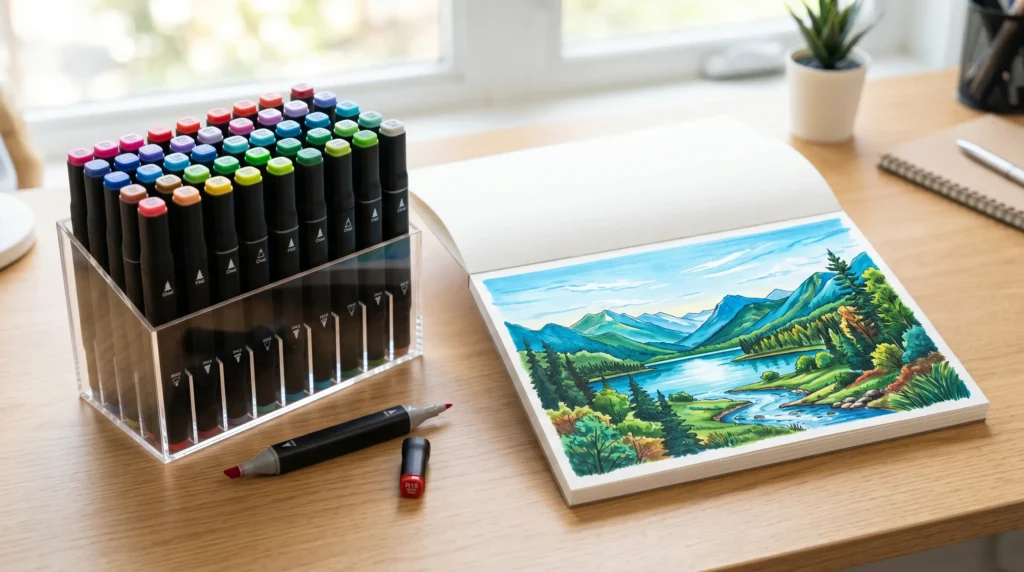
- Pennarelli: Confronta impugnatura, controllo del tratto, visibilità del colore, lavabilità e l'idoneità all'età dichiarata del prodotto effettivo. Lascia che i bambini esplorino segni e colori; non ci sono prove verificate che i pennarelli di livello professionale producano maggiore sicurezza o creatività rispetto ad altri strumenti adatti.
- Matite di Grafite: Le matite agiscono come strumento fondamentale per lo schizzo, offrendo la libertà di abbozzare idee senza la paura di commettere errori permanenti, incoraggiando un'espressione audace.
(Per ulteriori informazioni su come gli strumenti modellano la crescita precoce, consulta le risorse di NAEYC, un gruppo leader nell'apprendimento infantile.)
Comprendere le Fasi della Percezione Artistica
Il senso artistico di un bambino di solito cresce attraverso tre fasi chiare:
- Fase Iniziale (Età 1-3): I bambini esplorano il mondo attraverso scarabocchi e applicazione di colori di base. L'arte è puramente un canale sensoriale per l'espressione emotiva.
- Fase Intermedia (Età 3-5): I bambini iniziano a tentare la rappresentazione figurativa. Incorporano osservazioni della vita quotidiana nei loro disegni. Sebbene le proporzioni possano essere inaccurate, la profondità emotiva è ricca.
- Fase Cruciale (Età 5-7): L'arte diventa più complessa. I bambini prestano attenzione alla composizione e all'abbinamento dei colori. Sperimentano attivamente con vari Materiali artistici per bambini e tecniche per creare opere d'arte multistrato.
Progettare Sessioni d'Arte Guidata Interattiva
Il tempo artistico guidato interattivo si basa su tre parti fondamentali: ascoltare, esprimere e dare feedback.
Applicazione Strategica dei Materiali Artistici
Scegliere strumenti adatti all'età è il primo passo. Per i primi apprendimenti, acquerelli e pastelli a cera spessi suscitano interesse. Man mano che i bambini crescono, pastelli a olio e pennarelli ampliano il loro senso del colore.
In una sessione interattiva, un insegnante potrebbe condurre un gioco di Esplorazione del Colore. Mentre ascolta una storia, il bambino sceglie gli strumenti per colorare una scena. Questo mostra la sua comprensione della trama. Il metodo approfondisce il suo senso delle forme e delle tonalità.
L'Importanza dell'Interazione dell'Educatore
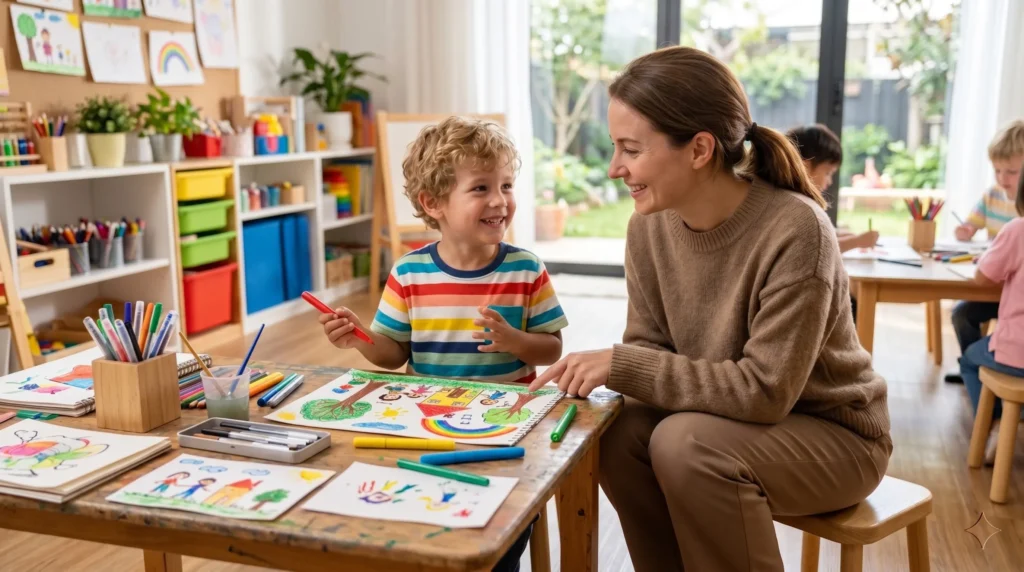
Il compito dell'adulto è guidare, non dettare. Gli insegnanti dovrebbero porre domande aperte. Perché hai scelto questo blu per il cielo? Come ti fa sentire questo disegno? Questo dialogo sviluppa il linguaggio e approfondisce il legame del bambino con la sua arte. I moderni modelli di apprendimento artistico supportano questa idea.
Conclusione: L'Impatto dei Materiali Artistici di Qualità
Una gamma di strumenti da disegno adatti offre ai bambini scelte su come tracciare segni e usare il colore. Osserva il loro gioco e adatta gli strumenti al gruppo. Gli strumenti da soli non garantiscono un apprendimento migliore.
Scegli gli strumenti per i bambini e per l'attività. Poi concedi tempo per esplorare e parlare di ciò che creano. Per ordini scolastici in grandi quantità, confronta campioni, segni e fasi di pulizia prima di scegliere il set.
Guida correlata: 15 Idee per Colorare Estive con Penne Gel.
Letture correlate
- Come Approvvigionare Pennarelli da Disegno per Bambini? Guida all'Acquisto B2B Basata sulle Preferenze Cromatiche dei Bambini dai 3 ai 6 Anni
- Children’s Marker OEM Guide: Ergonomics & Safety for B2B Brands
- La Guida Definitiva alle Matite Colorate: Tipologie, Utilizzi e Tendenze di Mercato
- Il Potere dell'Arte Terapia: Usare Illustrazioni Curative per il Sollievo dallo Stress e il Benessere Mentale
- Come vengono prodotte le matite colorate? Il segreto dietro la mina
- **Pennarelli Commestibili: Decorazione Creativa del Cibo – Dalla Glassatura dei Biscotti all'Arte delle Torte**
- Guida all'inchiostro per pennarelli di grado alimentare
- Guida ai test sulla formaldeide nella cancelleria
- Tendenze artistiche con pennarelli su TikTok
How Materials Shape What a Child Notices
A material is not a neutral tool. It decides which properties of the world a child can perceive and which stay invisible. A thick wax crayon reveals that pressure changes line darkness. A fine-tip marker reveals that pressure changes line width. A watercolor brush reveals that water changes how far color travels. Each material opens a different perceptual door.
This is why the mix of materials matters more than the quality of any single one. A child who only has washable broad markers learns about color and coverage but not about edge control. A child who only has pencils learns about pressure and detail but not about blending.
The practical implication for buyers and parents is simple: variety beats quantity. Twelve colors of one material teaches less than six colors across three materials.
The Four Perceptual Stages and What Each Needs
Children move through recognizable stages in how they use art materials. The stages are not age-locked, but the sequence is consistent.
Random exploration, roughly 18 months to 3 years. The mark itself is the discovery. What matters is that the material responds immediately and forgivingly — broad markers, chunky crayons, finger paint. Fine tips are wasted here because the motor control is not there yet.
Controlled scribbling, roughly 3 to 4 years. The child begins to repeat marks deliberately and to fill space. Materials that reward repetition work best: markers with consistent flow, paper that does not tear under pressure.
Named representation, roughly 4 to 7 years. Marks become symbols — a circle becomes a person. Detail starts to matter, so fine tips and a wider color range become useful. This is where a 24-color set starts to earn its place.
Realistic intent, roughly 8 years and up. The child wants the drawing to look like the thing. Materials that support layering, blending, and correction become relevant — colored pencils, alcohol markers, watercolor.
Why Cheap Materials Cap Development
Cheap materials fail in specific, developmentally consequential ways.
A marker that skips or floods teaches the child that their hand is unreliable. A pencil that breaks inside the barrel teaches them to press harder, which trains a poor grip. Paper that tears under a wet brush teaches them to avoid wet media altogether.
None of these failures is dramatic. Each one quietly removes a material from the child’s vocabulary. Over a year, a shelf of cheap supplies can narrow what a child is willing to attempt.
The threshold is not price, it is consistency. A modest marker that lays down the same line every time is more useful than an expensive one that varies. Consistency is what lets a child build a mental model of cause and effect.
Setting Up a Home Studio That Works
Four practical decisions make a home art space usable.
Storage at child height. Materials that require an adult to retrieve get used less. Open bins at reachable height, sorted by material rather than by color, encourage independent choice.
Paper within reach. A stack of 100 to 160 gsm paper, cut to a workable size. Larger sheets encourage bigger gestures; smaller sheets encourage detail. Having both available matters.
One surface that can get messy. A dedicated mat removes the friction of setup, and friction is the main reason art supplies stay in the cupboard.
A place for work in progress. A folder or a shelf where unfinished pieces can sit without being cleared away. Interruption is normal; losing the work is what stops a project.
Domande Frequenti
What age should a child start using markers? Around 18 months, with supervision, using broad washable markers designed for that age group.
Are expensive materials necessary? No. Consistency matters more than price. A modest marker that performs the same way every time is better than an expensive one that varies.
How many colors should a set have? Twelve is enough to start. Twenty-four becomes useful around age five or six, when detail and color choice start to matter.
Should I buy washable or permanent? Washable for children under eight, with permanent and acrylic media introduced under supervision once the child understands the difference.
How to Tell If It Is Working
Progress in children’s art does not look like better drawing. It looks like wider range. A child who is developing will try a new material, use a color they previously avoided, or attempt a subject they used to say they could not draw. Those are the signals worth watching.
The opposite signal is narrowing. A child who only uses one color, only draws one subject, or refuses to try a new material is not being modest — they are protecting themselves from a result they expect to be bad. That usually traces back to a material that failed them, or an adult who commented on the work.
The practical response is the same in both cases: offer a material they have not tried, don’t correct the result, and let them keep the work without commentary. Range expands when the cost of trying is low.
Domande Frequenti
At what age should a child stop using washable materials? There is no fixed age. The signal is whether the child understands the difference between a material that stays and one that washes out. Most children grasp it around seven or eight.
Is a bigger set always better? No. A 72-color set given to a five-year-old produces choice paralysis more often than creativity. Start at twelve, expand when the child starts asking for a specific color that is missing.
How often should materials be replaced? When they stop performing consistently — a marker that skips, a pencil that keeps breaking. Replacing on a schedule matters less than replacing the ones that have become unreliable.