

En el aprendizaje de la primera infancia, el arte importa más que nunca. Buenas herramientas de arte para niños ayudan a los niños a comprender colores, formas y espacio. También desarrollan habilidades de pensamiento y permiten que se muestren los sentimientos.
NAEYC describe el arte centrado en el proceso. Los niños exploran herramientas y métodos en lugar de copiar un resultado establecido. Para la compra en el aula, elige herramientas adecuadas para la edad que los niños puedan manejar. Un precio alto por sí solo no es prueba de valor de aprendizaje.
El Papel de los Materiales de Arte Infantiles en la Educación Temprana
Diferentes herramientas de dibujo y pintura estimulan la creatividad a su manera. Dar a los niños un amplio conjunto de herramientas de arte para niños es la base de una buena enseñanza del arte.
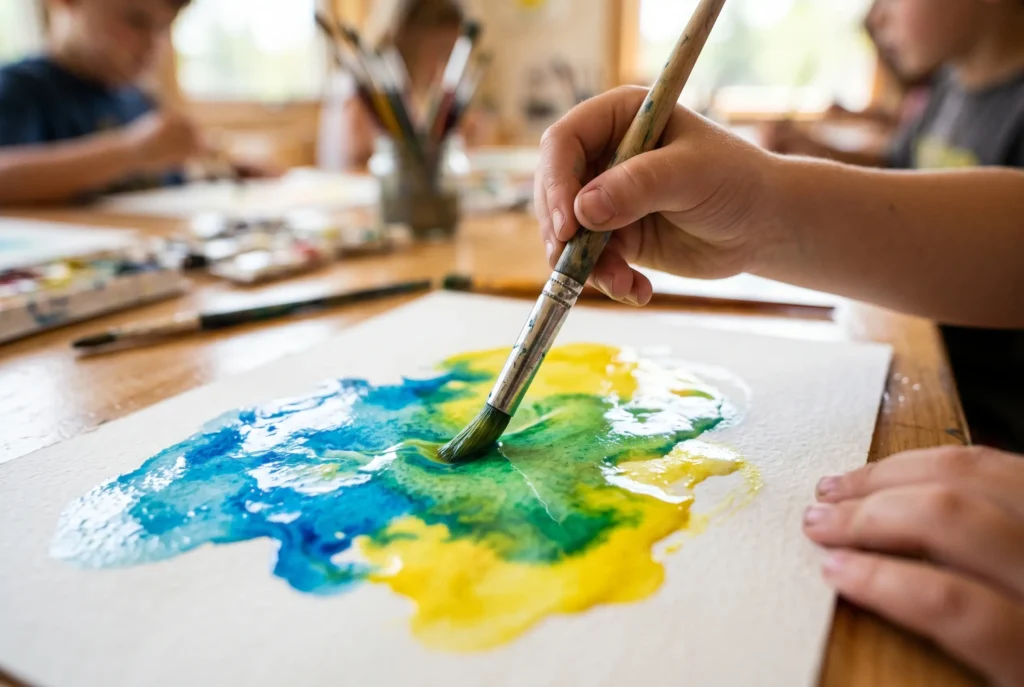
¿Cuáles Son los Beneficios de Usar Acuarelas y Pasteles al Óleo para Niños?
Al elegir suministros para niños pequeños, los maestros buscan herramientas que sean fáciles de sostener y divertidas de ver.
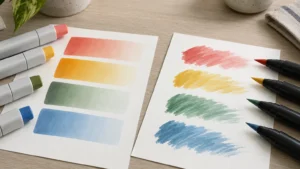
- Acuarelas: La fluidez y transparencia de las acuarelas permiten a los niños crear obras altamente expresivas. Al aprender a controlar la proporción agua-pigmento, los niños experimentan con la mezcla y combinación de colores. Esta experimentación práctica mejora profundamente su percepción del color y su flexibilidad cognitiva.
- Pasteles al Óleo y Crayones: Para los niños pequeños en crecimiento, los pasteles al óleo y los crayones ofrecen una excelente cobertura y tonos vibrantes. El acto físico de aplicar estos materiales ricos ayuda a desarrollar la motricidad fina. Los beneficios de usar acuarelas y pasteles al óleo para niños residen en su capacidad para estimular la sensibilidad visual, permitiendo a los jóvenes artistas expresar emociones complejas incluso antes de que su vocabulario se desarrolle por completo.
El Poder de los Rotuladores y Lápices Profesionales
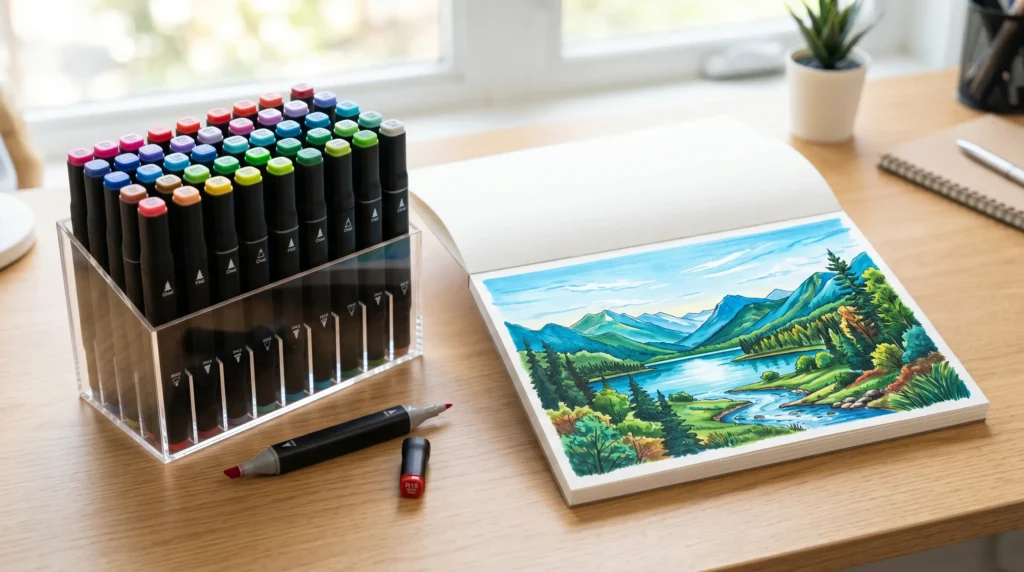
Las ceras básicas funcionan para niños pequeños. Los niños mayores se desempeñan mejor con herramientas más precisas.
- Marcadores: Compare el agarre, el control del trazo, la visibilidad del color, la lavabilidad y la idoneidad de edad indicada del producto real. Deje que los niños exploren marcas y colores; no hay evidencia verificada aquí de que los marcadores de grado profesional produzcan mayor confianza o creatividad que otras herramientas adecuadas.
- Lápices de Grafito: Los lápices actúan como la herramienta de dibujo fundamental, ofreciendo la libertad de esbozar ideas sin el temor de cometer errores permanentes, fomentando la expresión audaz.
(Para más información sobre cómo las herramientas moldean el crecimiento temprano, consulta los recursos de NAEYC, un grupo líder en aprendizaje infantil.)
Comprendiendo las Etapas de la Percepción Artística
A child's art sense usually grows through three clear phases:
- Etapa Temprana (Edades 1-3): Los niños exploran el mundo a través de garabatos y la aplicación básica de color. El arte es puramente un canal sensorial para la expresión emocional.
- Etapa Intermedia (Edades 3-5): Los niños comienzan a intentar la representación figurativa. Incorporan observaciones de la vida cotidiana en sus dibujos. Si bien las proporciones pueden ser inexactas, la profundidad emocional es rica.
- Etapa Crucial (Edades 5-7): El arte se vuelve más complejo. Los niños prestan atención a la composición y la combinación de colores. Experimentan activamente con diversos materiales de arte para niños de alta calidad y técnicas para crear obras de arte multicapa.
Diseñando Sesiones de Arte Guiado Interactivo
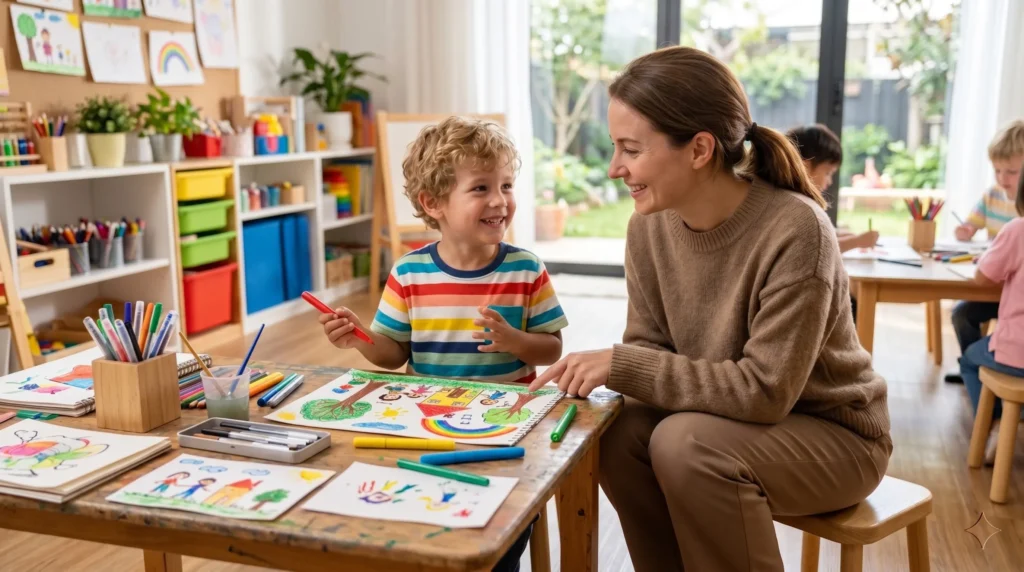
El tiempo de arte guiado interactivo se basa en tres partes centrales: escuchar, expresar y dar retroalimentación.
Aplicación Estratégica de los Materiales de Arte
Elegir herramientas adecuadas para la edad es el primer paso. Para los primeros aprendices, las acuarelas y los crayones gruesos despiertan interés. A medida que los niños crecen, los pasteles al óleo y los rotuladores amplían su sentido del color.
En una sesión interactiva, un maestro podría realizar un juego de Exploración de Colores. Mientras escucha una historia, el niño elige herramientas para colorear una escena. Eso muestra su comprensión de la trama. El método profundiza su sentido de las formas y los matices.
La Importancia de la Interacción del Educador
El trabajo del adulto es guiar, no dictar. Los maestros deben hacer preguntas abiertas. ¿Por qué elegiste este azul para el cielo? ¿Cómo te hace sentir este dibujo? Esta conversación desarrolla el lenguaje y profundiza el vínculo del niño con su arte. Los modelos modernos de aprendizaje artístico respaldan esta idea.
Conclusión: El Impacto de los Materiales de Arte de Calidad
Una variedad de herramientas de dibujo adecuadas da a los niños opciones sobre cómo hacen marcas y usan el color. Observa su juego y ajusta las herramientas al grupo. Las herramientas por sí solas no prometen un mejor aprendizaje.
Elige herramientas para los niños y la actividad. Luego da tiempo para explorar y hablar sobre lo que hacen. Para pedidos masivos de aula, compara muestras, marcas y pasos de limpieza antes de elegir el conjunto.
Guía relacionada: 15 IDEAS DE COLOREO VERANIEGO CON BOLÍGRAFOS DE GEL.
Lecturas relacionadas
- ¿Cómo Adquirir Marcadores de Dibujo para Niños? Una Guía para Compradores B2B Basada en las Preferencias de Color de Niños de 3 a 6 Años
- Guía del marcador infantil OEM: ergonomía y seguridad para marcas B2B
- La Guía Definitiva de los Lápices de Colores: Tipos, Usos y Tendencias del Mercado
- El Poder de la Terapia Artística: Uso de Ilustraciones Sanadoras para el Alivio del Estrés y el Bienestar Mental
- ¿Cómo se Fabrican los Lápices de Color? El Secreto Detrás de la Mina
- Rotuladores Comestibles: Decoración Creativa de Alimentos – Desde Glaseado de Galletas hasta Arte en Pasteles
- Guía de tinta de marcadores de grado alimenticio
- Guía de pruebas de formaldehído en artículos de papelería
- Tendencias de arte con marcadores en TikTok
How Materials Shape What a Child Notices
A material is not a neutral tool. It decides which properties of the world a child can perceive and which stay invisible. A thick wax crayon reveals that pressure changes line darkness. A fine-tip marker reveals that pressure changes line width. A watercolor brush reveals that water changes how far color travels. Each material opens a different perceptual door.
This is why the mix of materials matters more than the quality of any single one. A child who only has washable broad markers learns about color and coverage but not about edge control. A child who only has pencils learns about pressure and detail but not about blending.
The practical implication for buyers and parents is simple: variety beats quantity. Twelve colors of one material teaches less than six colors across three materials.
The Four Perceptual Stages and What Each Needs
Children move through recognizable stages in how they use art materials. The stages are not age-locked, but the sequence is consistent.
Random exploration, roughly 18 months to 3 years. The mark itself is the discovery. What matters is that the material responds immediately and forgivingly — broad markers, chunky crayons, finger paint. Fine tips are wasted here because the motor control is not there yet.
Controlled scribbling, roughly 3 to 4 years. The child begins to repeat marks deliberately and to fill space. Materials that reward repetition work best: markers with consistent flow, paper that does not tear under pressure.
Named representation, roughly 4 to 7 years. Marks become symbols — a circle becomes a person. Detail starts to matter, so fine tips and a wider color range become useful. This is where a 24-color set starts to earn its place.
Realistic intent, roughly 8 years and up. The child wants the drawing to look like the thing. Materials that support layering, blending, and correction become relevant — colored pencils, alcohol markers, watercolor.
Why Cheap Materials Cap Development
Cheap materials fail in specific, developmentally consequential ways.
A marker that skips or floods teaches the child that their hand is unreliable. A pencil that breaks inside the barrel teaches them to press harder, which trains a poor grip. Paper that tears under a wet brush teaches them to avoid wet media altogether.
None of these failures is dramatic. Each one quietly removes a material from the child’s vocabulary. Over a year, a shelf of cheap supplies can narrow what a child is willing to attempt.
The threshold is not price, it is consistency. A modest marker that lays down the same line every time is more useful than an expensive one that varies. Consistency is what lets a child build a mental model of cause and effect.
Setting Up a Home Studio That Works
Four practical decisions make a home art space usable.
Storage at child height. Materials that require an adult to retrieve get used less. Open bins at reachable height, sorted by material rather than by color, encourage independent choice.
Paper within reach. A stack of 100 to 160 gsm paper, cut to a workable size. Larger sheets encourage bigger gestures; smaller sheets encourage detail. Having both available matters.
One surface that can get messy. A dedicated mat removes the friction of setup, and friction is the main reason art supplies stay in the cupboard.
A place for work in progress. A folder or a shelf where unfinished pieces can sit without being cleared away. Interruption is normal; losing the work is what stops a project.
Preguntas Frecuentes
What age should a child start using markers? Around 18 months, with supervision, using broad washable markers designed for that age group.
Are expensive materials necessary? No. Consistency matters more than price. A modest marker that performs the same way every time is better than an expensive one that varies.
How many colors should a set have? Twelve is enough to start. Twenty-four becomes useful around age five or six, when detail and color choice start to matter.
Should I buy washable or permanent? Washable for children under eight, with permanent and acrylic media introduced under supervision once the child understands the difference.
How to Tell If It Is Working
Progress in children’s art does not look like better drawing. It looks like wider range. A child who is developing will try a new material, use a color they previously avoided, or attempt a subject they used to say they could not draw. Those are the signals worth watching.
The opposite signal is narrowing. A child who only uses one color, only draws one subject, or refuses to try a new material is not being modest — they are protecting themselves from a result they expect to be bad. That usually traces back to a material that failed them, or an adult who commented on the work.
The practical response is the same in both cases: offer a material they have not tried, don’t correct the result, and let them keep the work without commentary. Range expands when the cost of trying is low.
Preguntas Frecuentes
At what age should a child stop using washable materials? There is no fixed age. The signal is whether the child understands the difference between a material that stays and one that washes out. Most children grasp it around seven or eight.
Is a bigger set always better? No. A 72-color set given to a five-year-old produces choice paralysis more often than creativity. Start at twelve, expand when the child starts asking for a specific color that is missing.
How often should materials be replaced? When they stop performing consistently — a marker that skips, a pencil that keeps breaking. Replacing on a schedule matters less than replacing the ones that have become unreliable.