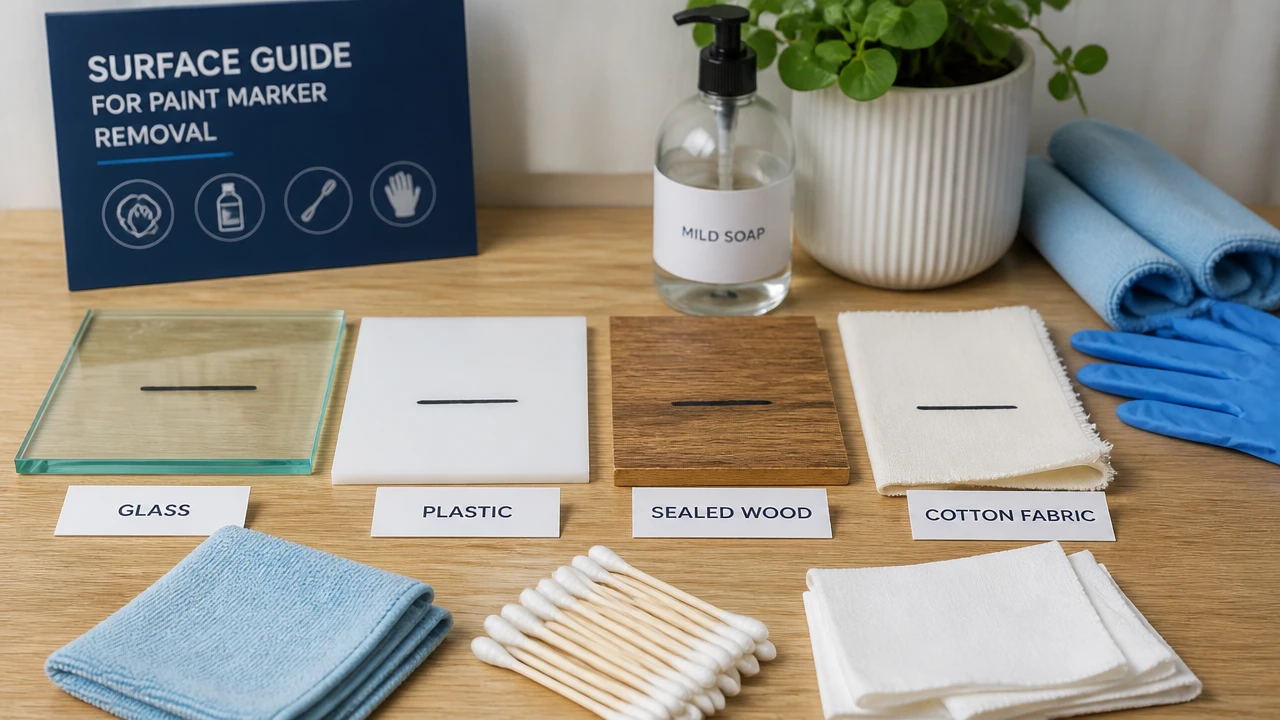
Wie sich ein Lackmarker entfernen lässt, hängt vom Tintensystem, dem Alter der Markierung und der darunterliegenden Oberfläche ab. Eine Methode, die auf blankem Glas funktioniert, kann klaren Kunststoff beschädigen. Ein Lösungsmittel, das Tinte von einer versiegelten Holzplatte löst, kann unbehandeltes Holz verfärben. Bei Stoff kommt ein weiteres Problem hinzu: Pflegeetikett und Farbechtheit sind entscheidend, bevor ein Reinigungsmittel den Fleck berührt.
Für B2B-Käufer ist Entfernungsberatung Teil des Produktsupports. Wenn ein Lackmarker für Glas, Kunststoff, Holz, Stoff, Bastelsets, Klassenzimmer oder Einzelhandelsdisplays verkauft wird, sollte die Verpackung erklären, wo die Markierung dauerhaft sein soll und wo Kunden zuerst testen sollten. Klare Anweisungen reduzieren Verwirrung nach dem Kauf, ohne eine einfache Entfernung zu versprechen.
ZH Stationery arbeitet mit Käufern, die planen Leitfaden zur Beschaffung kundenspezifischer Acryl-Marker, Verpackungsanweisungen und Musterprüfungen für verschiedene Markeranwendungen. Beginnen Sie mit der Produktkategorien wenn Sie Markertypen vergleichen, bevor Sie ein Einzelhandels-SKU aufbauen.
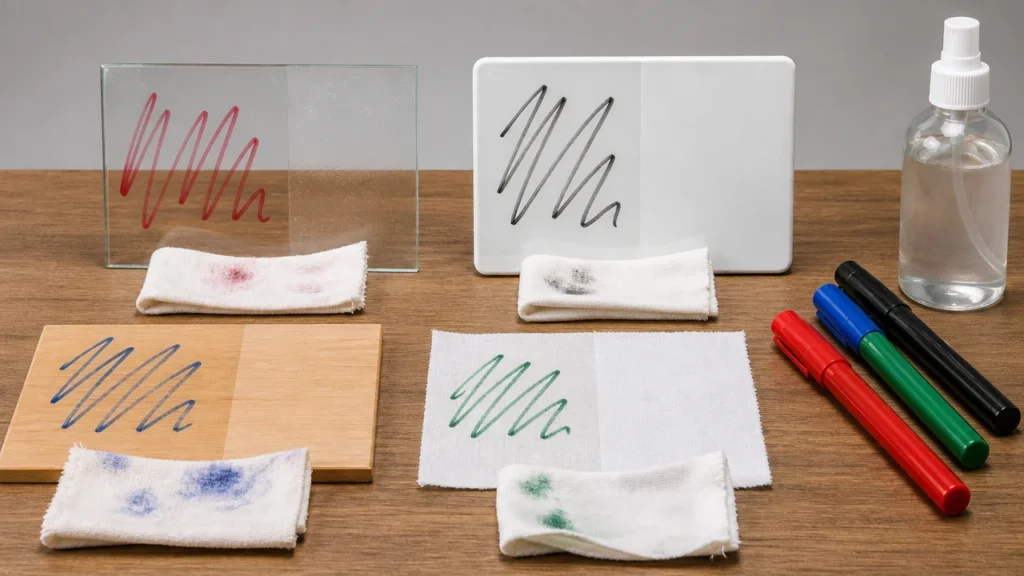
So entfernen Sie Lackmarker: Kurzantwort
Beginnen Sie mit der schonendsten Methode: Seife und Wasser, dann bei geeigneter Oberfläche einen kleinen Test an unauffälliger Stelle mit Isopropylalkohol. Bei Glas wirken oft ein vorsichtiger Alkoholabstrich und ein Kunststoffschaber. Bei Kunststoff Aceton vermeiden, es sei denn, der Kunststofflieferant bestätigt die Kompatibilität. Bei Holz zuerst die Oberfläche schützen; unbehandeltes Holz absorbiert Pigmente. Bei Stoff von der Rückseite abtupfen, Pflegeetikett prüfen, auf Farbechtheit testen und Hitze vermeiden, bis der Fleck entfernt ist.
Behandeln Sie nicht jeden Lackmarker als dasselbe Produkt. Wasserbasierte Acrylmarker, ölbasierte Lackmarker, alkoholbasierte Marker und industrielle Permanentmarker verwenden unterschiedliche Bindemittel und Lösungsmittel. Die Entfernungsempfehlung sollte der tatsächlichen Formel und der vorgesehenen Oberfläche entsprechen.
Quick Links
- Sicherheit und Oberflächentest zuerst
- Entfernungsmethoden nach Oberfläche vergleichen
- Lackmarker von Glas entfernen
- Lackmarker von Kunststoff entfernen
- Lackmarker von Holz entfernen
- Lackmarker von Stoff entfernen
- Was Käufer in Produktanweisungen aufnehmen sollten
- Musterfreigabe- und Reklamationscheckliste
- Stellen Sie bessere Fragen an den Lieferanten
- FAQs
Sicherheit und Oberflächentest zuerst
Testen Sie vor der Verwendung eines Reinigungsmittels eine kleine unauffällige Stelle. Warten Sie lange genug, um zu sehen, ob die Oberfläche trüb wird, weich wird, Glanz verliert, Farbe abgibt oder einen Ring hinterlässt. Verwenden Sie saubere Tücher statt fusselndem Papier und arbeiten Sie von milden zu stärkeren Methoden.
Lösungsmittel erfordern sorgfältige Formulierungen. OSHA-Isopropylalkohol-Daten listet Isopropylalkohol als entzündbare Flüssigkeit mit niedrigem Flammpunkt auf. Produktanweisungen sollten daher Belüftung und Kontrolle von Zündquellen erwähnen, wenn eine Alkoholreinigung empfohlen wird. CDC-NIOSH-Aceton-Leitfaden stuft Aceton ebenfalls als hochentzündlich ein und weist auf Expositionswege über Augen, Haut, Atemwege und Zentralnervensystem hin. Für verbraucherorientierte Texte halten Sie die Empfehlung einfach: kleine Mengen verwenden, lüften, von Flammen fernhalten, bei Bedarf Handschuhe tragen und das Reinigungsmittel-Etikett beachten.
Mischen Sie niemals Reinigungschemikalien. Gießen Sie kein Lösungsmittel direkt auf eine fertige Oberfläche, ein elektronisches Bauteil, eine beschichtete Linse, ein lackiertes Spielzeug oder unbekannten Kunststoff. Geben Sie zuerst eine kleine Menge auf ein Tuch und stoppen Sie, wenn sich die Oberfläche verändert.
Entfernungsmethoden nach Oberfläche vergleichen
Verwenden Sie diese Tabelle als Ausgangspunkt für Kundensupport und Mustertests. Sie ist keine Garantie. Die endgültigen Anweisungen sollten gegen die Markerformel, das Oberflächenmaterial und den Zielmarkt geprüft werden.
| Oberfläche | Beginnen Sie mit | Möglicher nächster Schritt | Vermeiden oder sehr vorsichtig testen | Hinweis für Käufer |
|---|---|---|---|---|
| Glas | Seife, Wasser, Mikrofasertuch | Isopropylalkohol auf Tuch, dann Kunststoffschaber | Scheuerpads auf beschichtetem Glas | Separat warnen bei getöntem, mattiertem, beschichtetem oder verspiegeltem Glas. |
| Kunststoff | Seife und Wasser | Kleiner Test an unauffälliger Stelle mit Isopropylalkohol | Aceton, starkes Lösungsmittel, grobes Scheuern | Viele Kunststoffe können trüb werden, Risse bekommen oder Glanz verlieren. |
| Holz | Trocken abwischen bei frischer Markierung, dann milde Seife auf versiegelter Oberfläche | Oberflächenschonender Reiniger oder leichtes Schleifen bei unbehandeltem Holz | Aceton auf empfindlichen Oberflächen | Angeben, dass unbehandeltes Holz einen Schatten behalten kann. |
| Stoff | Abtupfen, bei Waschbarkeit von der Rückseite ausspülen | Alkohol an unauffälliger Stelle testen, dann gemäß Pflegeetikett waschen | Hitzetrocknung, bevor der Fleck entfernt ist | Nutzer anweisen, das Textilpflegeetikett zu befolgen. |
Lackmarker von Glas entfernen
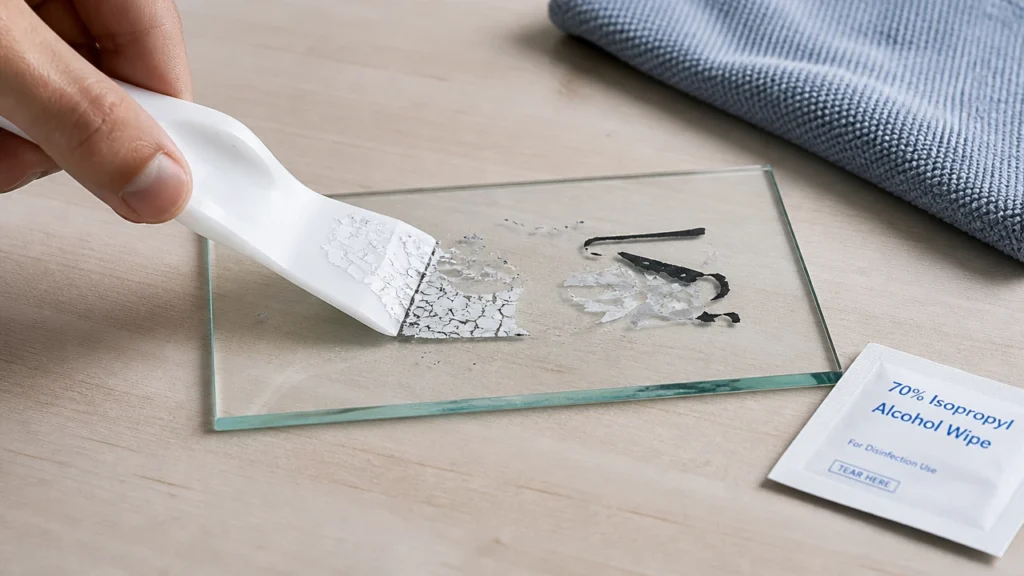
Glas ist in der Regel die verzeihendste Oberfläche, aber nur bei blankem Glas. Fenstertönung, Mattglas, Verspiegelung, Entspiegelungsbeschichtungen und bedrucktes Glas können das Risiko verändern. Beginnen Sie mit warmem Wasser und etwas Spülmittel. Bleibt die Markierung bestehen, befeuchten Sie ein Tuch mit Isopropylalkohol und reiben Sie die Markierung in kleinen Kreisen.
Bei dickeren, eingetrockneten Markierungen lassen Sie den Alkohol kurz auf der Tintenschicht einwirken und verwenden Sie dann einen Kunststoffschaber in einem flachen Winkel. Verwenden Sie keine Metallklinge, es sei denn, der Glasbesitzer akzeptiert das Kratzrisiko und die Oberfläche ist blankes Glas. Reinigen Sie den Bereich erneut mit Seife und Wasser, um Rückstände zu entfernen.
Trennen Sie in Käuferanweisungen dekorative Glasverwendung von temporärer Fensterbeschriftung. Wenn das Produkt für dauerhafte Glasdekoration vorgesehen ist, implizieren Sie nicht, dass jede Markierung nach dem Aushärten sauber abgewischt werden kann.
Lackmarker von Kunststoff entfernen
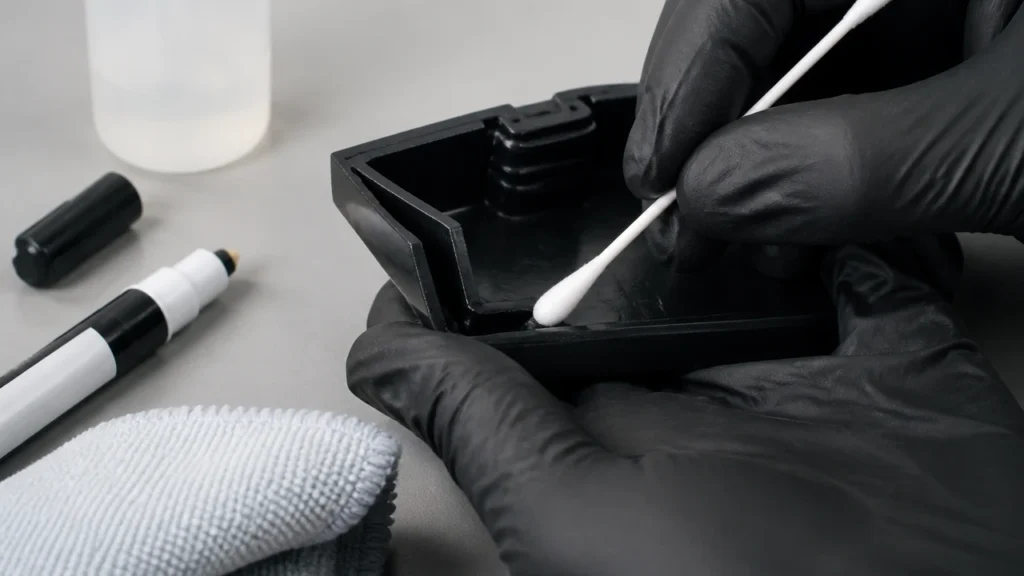
Kunststoff erfordert mehr Vorsicht als Glas. Klares Acryl, Polycarbonat, ABS, PVC, lackierter Kunststoff und weiche gummiartige Beschichtungen können unterschiedlich reagieren. Aceton und Nagellackentferner können Lackmarkertinte lösen, aber auch viele Kunststoffe trüb machen, anlösen, erweichen oder verformen. Für Kundenempfehlungen gehört Aceton in die Kategorie nur testen, nicht als Standardmethode.
Beginnen Sie mit Seife und Wasser. Bleibt die Markierung bestehen, testen Sie Isopropylalkohol an einer unauffälligen Stelle. Wenn sich der Kunststoff nach dem Test nicht verändert, wischen Sie vorsichtig mit einem befeuchteten Tuch. Verwenden Sie kurze Bewegungen statt die Oberfläche zu tränken. Bei alten Markierungen kann das verbleibende Schattenbild in der Oberfläche liegen und nicht nur auf ihr.
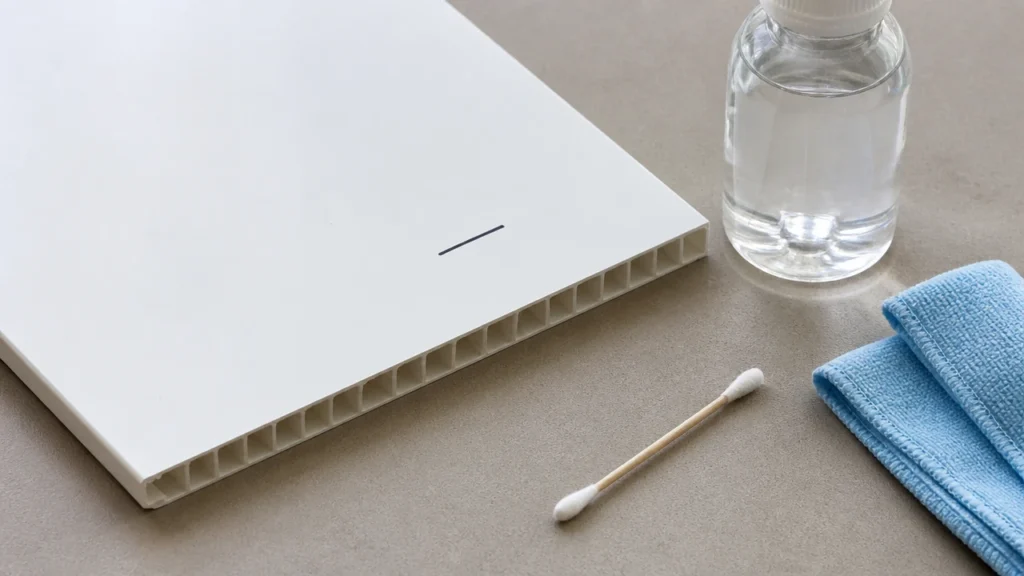
Wenn Ihre Produktlinie Kunststoffbehälter, Kappen, Etuis, Tabletts oder Einzelhandelsfenster umfasst, wenden Sie dieselbe Vorsicht bei der Musterfreigabe an. Verpackungsoptionen aus dem Acryl-Marker-Verpackungsoptionen Artikel sollten auf Tintenkontakt, Reibung und Reinigungseinwirkung getestet werden, wenn das Produkt von Kindern, Künstlern oder Einzelhändlern gehandhabt werden kann.
Lackmarker von Holz entfernen
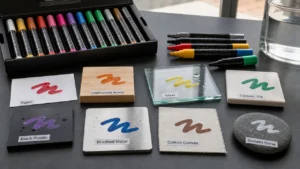
Die Entfernung von Holz hängt von der Oberfläche ab. Eine versiegelte Tischplatte, eine lackierte Platte, ein lackiertes Bastelpanel, eine rohe Kiefernplatte, ein Bambustablett und eine gebeizte Holzbox verhalten sich nicht gleich. Frischer Lackmarker auf versiegelter Oberfläche lässt sich möglicherweise mit milder Seife oder einem oberflächenschonenden Reiniger abwischen. Eingetrockneter Marker auf unbehandeltem Holz kann in die Maserung eindringen.
Bei versiegeltem Holz zuerst eine unauffällige Stelle testen. Verwenden Sie ein feuchtes Tuch mit milder Seife, trocknen Sie den Bereich und testen Sie dann eine kleine Menge Isopropylalkohol, wenn die Oberfläche es zulässt. Stoppen Sie, wenn die Oberfläche weich wird, matt wird oder Farbe abgibt. Bei unbehandeltem Holz ist leichtes Schleifen und Nachbehandeln oft die praktikablere Option als vollständige Lösungsmittelentfernung.
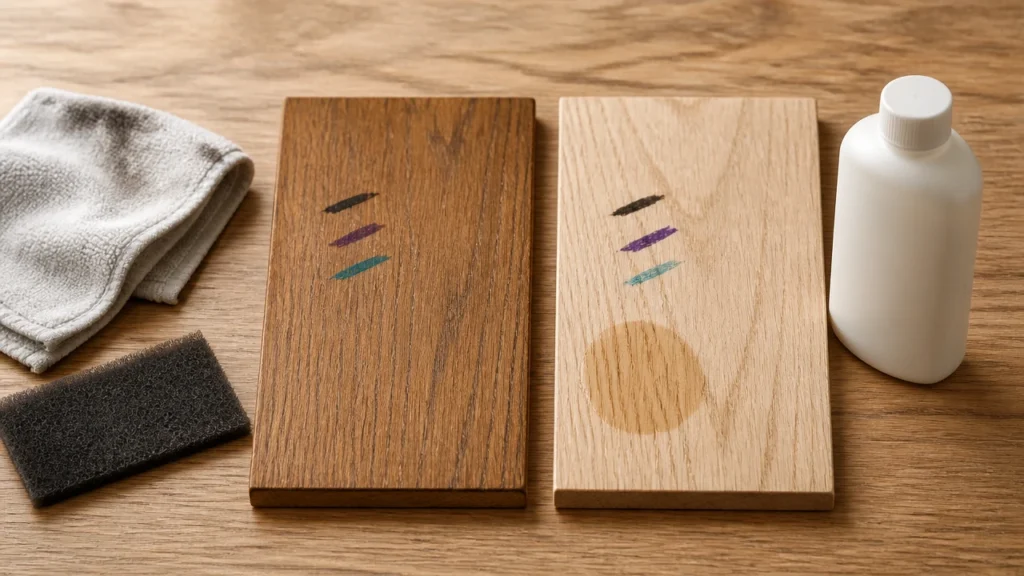
Eine Marke, die Lackmarker für Holzhandwerk verkauft, sollte eine pauschale Aussage wie von Holz entfernbar vermeiden. Eine bessere Aussage ist spezifischer: Die Entfernung hängt davon ab, ob das Holz versiegelt, porös, lackiert, gebeizt oder unbehandelt ist.
Lackmarker von Stoff entfernen
Stoff ist die schwierigste Kategorie, da die Tinte in Fasern eindringen kann und Farbstoffe beim Reinigen ausbluten können. Prüfen Sie zuerst das Pflegeetikett. Die FTC-Kennzeichnungsregel für Pflegeetiketten erfordert Textilpflegeinformationen für bedeckte Kleidung und erklärt, dass Waschen, Trocknen, Bleichen, Bügeln und Warnhinweise angegeben werden müssen, sofern relevant. Für einen Kunden entscheidet dieses Etikett, welche Reinigungsmethode vor Beginn der Fleckenbehandlung zulässig ist.
Tupfen Sie frische Lackmarker-Flecken mit einem sauberen weißen Tuch ab. Reiben Sie den Fleck nicht weiter aus. Wenn der Stoff waschbar ist, legen Sie ein Handtuch hinter den Fleck und spülen Sie ihn wenn möglich von der Rückseite. Testen Sie Isopropylalkohol an einer verdeckten Stelle, bevor Sie ihn auf den Fleck anwenden. Waschen Sie nach der Behandlung gemäß Pflegeetikett und lassen Sie an der Luft trocknen. Verwenden Sie keinen Trockner, bis der Fleck entfernt ist, da Hitze viele Flecken schwerer entfernbar machen kann.
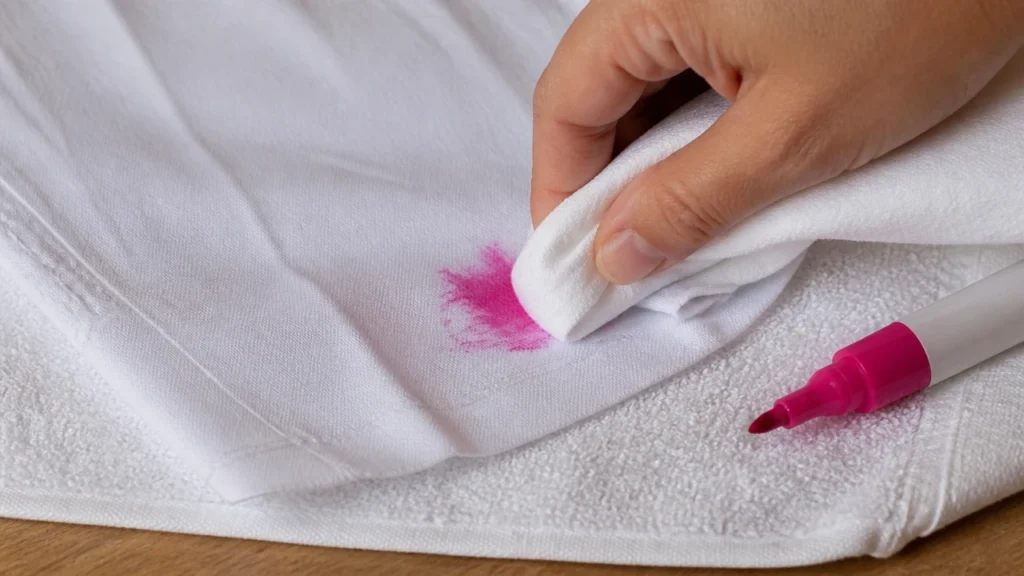
Bei Stoff-Bastelprodukten dürfen Entfernungsempfehlungen dem Produktversprechen nicht widersprechen. Wenn der Marker für dauerhafte Stoffdesigns vermarktet wird, sollte die Support-Seite erklären, dass die Entfernung nach dem Trocknen oder Hitzefixieren unvollständig sein kann. Diese Ehrlichkeit hilft, die Verwendung des falschen Produkts auf Uniformen, Polstern oder teurer Kleidung zu verhindern.
Was Käufer in Produktanweisungen aufnehmen sollten
Entfernungsanweisungen sollten vor der Massenproduktion geschrieben werden, nicht nach der ersten Reklamation. Käufer sollten den Lieferanten fragen, welche Oberflächen vorgesehen sind, welche Oberflächen nur nach Tests kompatibel sind und welche Oberflächen vermieden werden sollten.
Für Kunstmaterialien in den USA, CPSC-Leitfaden für Kunstmaterialien erklärt, dass Kunstmaterialien einer Prüfung der Kennzeichnung chronischer Gefahren und einer Konformitätserklärung unterliegen, sofern anwendbar. Dies entscheidet nicht darüber, ob eine Markierung entfernbar ist. Es erinnert Käufer jedoch daran, dass die Produktverpackung Sicherheitskennzeichnung von Leistungsaussagen trennen sollte. Die ASTM D-4236-Testbericht-Leitfaden kann Käufern helfen, Dokumentation und Leistungsanleitungen in getrennten Ordnern aufzubewahren.
Anleitungsdetails, die Reklamationen reduzieren
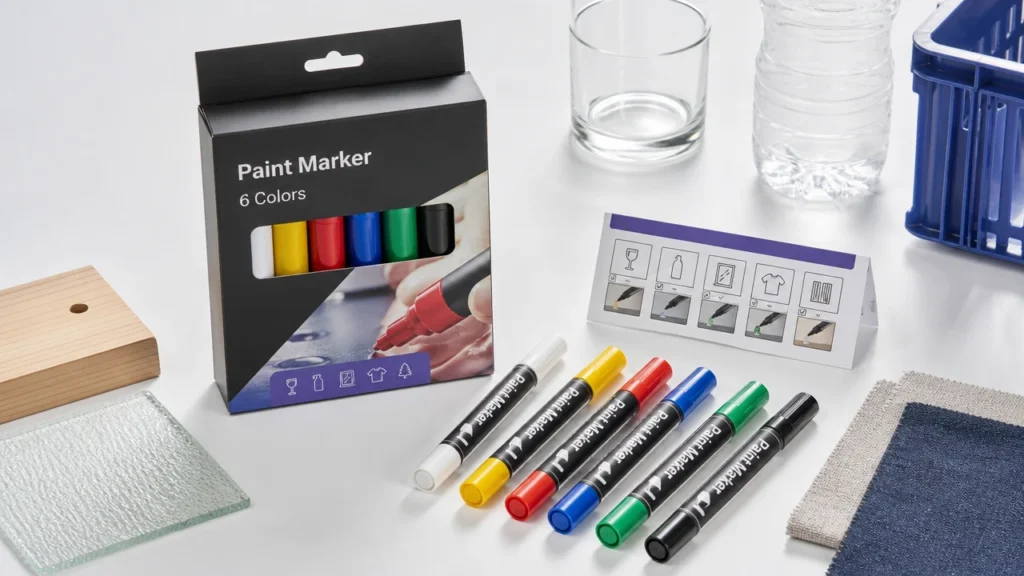
- Geben Sie die vorgesehenen Oberflächen klar an, z. B. Glas, Keramik, Stein, Leinwand, Holz oder Papier.
- Fügen Sie eine Test-zuerst-Anweisung für Kunststoff, lackiertes Holz, Stoff, gestrichene Oberflächen und beschichtetes Glas hinzu.
- Erklären Sie, ob Markierungen nach dem Trocknen, Aushärten, Hitzefixieren oder langer Einwirkung schwerer zu entfernen sind.
- Weisen Sie Benutzer an, Lösungsmittel nicht in der Nähe von Flammen, Hitze, Kindern, Lebensmitteloberflächen oder Elektronik zu verwenden.
- Fügen Sie die Kundendienstinformationen hinzu, die zur Identifizierung von Markertyp, Farbe, Oberfläche und Zeit seit der Anwendung erforderlich sind.
Musterfreigabe- und Reklamationscheckliste
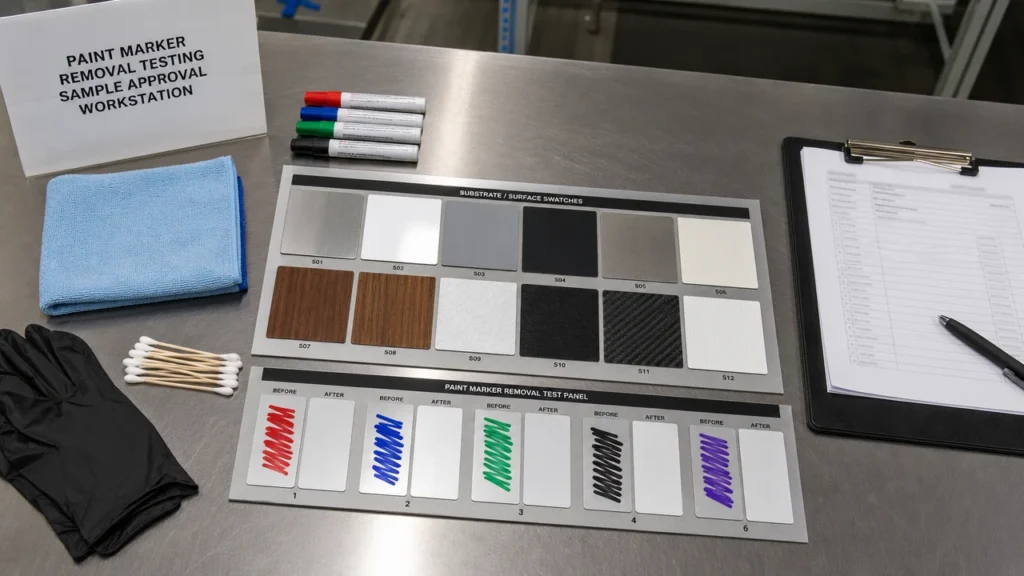
Eine Entfernungsaussage sollte wie jede andere Leistungsaussage getestet werden. Markieren Sie während der Musterfreigabe jede Zieloberfläche, dokumentieren Sie die Trocknungszeit, versuchen Sie die zugelassene Reinigungsmethode und fotografieren Sie das Ergebnis. Bewahren Sie ein Rückstellmuster auf. Wenn ein Kunde später meldet, dass Lackmarker nicht abgeht, kann das Team die Reklamation mit den zugelassenen Testbedingungen vergleichen.
Wenden Sie dieselbe Disziplin auf Tintenfluss und Verschlussdichtung an. Der Artikel zur Qualitätskontrolle von Markern erklärt, warum Leistungsreklamationen oft Chargendetails, Lagerungshistorie und Fotos erfordern statt einer schnellen Ja-oder-Nein-Antwort. Die Ventilpressmarkierungstechnologie und Leitfaden zu Acryl-Marker-Ventil vs. Faserspitze Seiten sind nützlich, wenn die Reklamation Ventilmarker oder Spitzenverhalten betrifft und nicht die Entfernung.
| Reklamationsdetails | Fragen Sie den Kunden | Warum es wichtig ist |
|---|---|---|
| Oberfläche | Ist es Glas, Kunststoff, Holz, Stoff, Keramik, Metall oder beschichtetes Material? | Das Entfernungsrisiko ändert sich je nach Substrat und Beschichtung. |
| Markertyp | Wasserbasiert, ölbasiert, Acryl, alkoholbasiert oder unbekannt? | Verschiedene Formeln erfordern unterschiedliche Support-Sprache. |
| Trocknungszeit | Wie lange blieb die Markierung vor der Reinigung bestehen? | Frische Markierungen sind in der Regel leichter zu entfernen als ausgehärtete. |
| Verwendetes Reinigungsmittel | Welches Reinigungsmittel, welche Konzentration und welches Tuch wurden verwendet? | Ein aggressives Reinigungsmittel kann die Oberfläche beschädigen, bevor die Tinte entfernt wird. |
| Fotos | Können sie Vorher- und Nachher-Fotos bei Tageslicht senden? | Fotos helfen, Fleck, Oberflächenschaden und Rückstände zu unterscheiden. |
Stellen Sie bessere Fragen an den Lieferanten
Fragen Sie nicht nur, ob der Lackmarker entfernbar ist. Fragen Sie, wie der Lieferant „entfernbar“ definiert, wie getestet wurde und welche Oberflächen ausgeschlossen wurden.
- 1. Welche Oberflächen haben Sie auf Entfernbarkeit getestet?
Eine nützliche Antwort listet tatsächliche Oberflächen und Beschichtungen auf, nicht nur allgemeine Begriffe wie Glas, Kunststoff, Holz und Stoff. - 2. Wie lange trocknete die Markierung vor dem Entfernungstest?
Eine nützliche Antwort unterscheidet zwischen frischen, getrockneten und lange einwirkenden Markierungen, da sich die Kundenerfahrung im Laufe der Zeit ändert. - 3. Welches Reinigungsmittel wurde im Test verwendet?
Eine nützliche Antwort nennt Reinigungsmitteltyp und -methode und schlägt kein unsicheres Mischen oder Einweichen vor. - 4. Wird das Produkt nach Hitzefixieren oder Aushärten schwerer zu entfernen?
Eine nützliche Antwort ist besonders wichtig für Stoff-, Keramik-, Glas-Bastel- und Außenanwendungs-Aussagen. - 5. Können Sie Verpackungstexte für Oberflächentests und Entfernungsgrenzen bereitstellen?
Eine nützliche Antwort liefert editierbaren Wortlaut, den der Käufer mit Compliance-, Rechts- oder Marktplatz-Teams prüfen kann. - 6. Welche Dokumente unterstützen den Zielmarkt?
Eine nützliche Antwort trennt Sicherheitskennzeichnung, Testberichte, Produktanleitungen und Leistungstestfotos.
FAQs
1. Kann Lackmarker von Glas entfernt werden?
Häufig ja, insbesondere bei klarem Glas. Beginnen Sie mit Seife und Wasser, testen Sie dann Isopropylalkohol auf einem Tuch. Verwenden Sie vorsichtig einen Kunststoffschaber für dickere, eingetrocknete Rückstände. Beschichtetes, getöntes, mattiertes oder verspiegeltes Glas erfordert besondere Vorsicht.
2. Kann Aceton Lackmarker von Kunststoff entfernen?
Aceton kann einige Lackmarker-Tinten lösen, kann jedoch viele Kunststoffe trüben, aufweichen, rissig machen oder verformen. Es sollte nicht die Standardmethode sein. Testen Sie zuerst eine unauffällige Stelle oder vermeiden Sie es, wenn der Kunststofftyp unbekannt ist.
3. Wie entferne ich Lackmarker von Holz?
Prüfen Sie, ob das Holz versiegelt oder unbehandelt ist. Frische Flecken auf versiegeltem Holz können mit milder Seife oder einem oberflächensicheren Reiniger behandelt werden. Unbehandeltes Holz kann Pigmente aufnehmen, daher sind Schleifen und Nachbearbeiten realistischer als eine vollständige Entfernung mit Lösungsmitteln.
4. Kann Lackmarker aus Stoff entfernt werden?
Manchmal, aber es hängt vom Stoff, der Farbe, der Marker-Formel und der Trocknungszeit ab. Zuerst abtupfen, Pflegeetikett prüfen, Lösungsmittel an einer unauffälligen Stelle testen, gemäß Etikett waschen und an der Luft trocknen, bis der Fleck verschwunden ist.
5. Sollte die Lackmarker-Verpackung eine einfache Entfernung versprechen?
Nur wenn der Lieferant den exakten Marker unter realistischen Bedingungen auf der angegebenen Oberfläche getestet hat. Sicherere Verpackungen empfehlen, zuerst zu testen, und erklären, dass die Entfernung von Oberfläche, Trocknungszeit und Reinigungsmethode abhängt.
6. Beweist ASTM D-4236, dass ein Lackmarker entfernbar ist?
Nr. ASTM D-4236 bezieht sich auf die Kennzeichnung chronischer Gefahren für Kunstmaterialien. Es belegt weder Entfernbarkeit, Oberflächenverträglichkeit, Fleckenbeständigkeit noch Haltbarkeit.
Schlussfolgerung
Wie man Lackmarker entfernt, ist in erster Linie eine Frage der Oberflächenkompatibilität. Glas lässt sich möglicherweise leicht reinigen. Kunststoff kann trüb werden. Holz kann einen Schatten behalten. Stoff kann Pflegeetikett-Grenzen haben und nach dem Trocknen dennoch fleckig bleiben. Deshalb sollten Käufer die Entfernung testen, bevor sie eine breite Aussage auf die Verpackung drucken.
Wenn Sie Eigenmarken-Lackmarker entwickeln, senden Sie ZH Stationery die Zieloberflächen, Markerformel, Verpackungsformat, Zielmarkt und Kundendienstanforderungen. Das Team kann helfen, Produktoptionen, Verpackungssprache und Mustertests zu vergleichen über die Werksbesichtigung, Zertifizierungsseite, und Unternehmenshintergrund auf wer wir sind.
Weiterführende Literatur
- Sind Acrylmarker permanent und wasserfest? Ein Leitfaden nach Oberflächen
- So entfernen Sie Permanentmarker von Kunststoff: Was B2B-Käufer über die Chemie von Tinten wissen sollten
- So verwenden Sie Acrylmarker auf Holz: Vorbereitung, Bemalung und Versiegelung
- Can You Write on CDs With Permanent Marker? Here’s What Actually Happens
Externe Referenz: CPSC-Leitfaden für Kunstmaterialien.