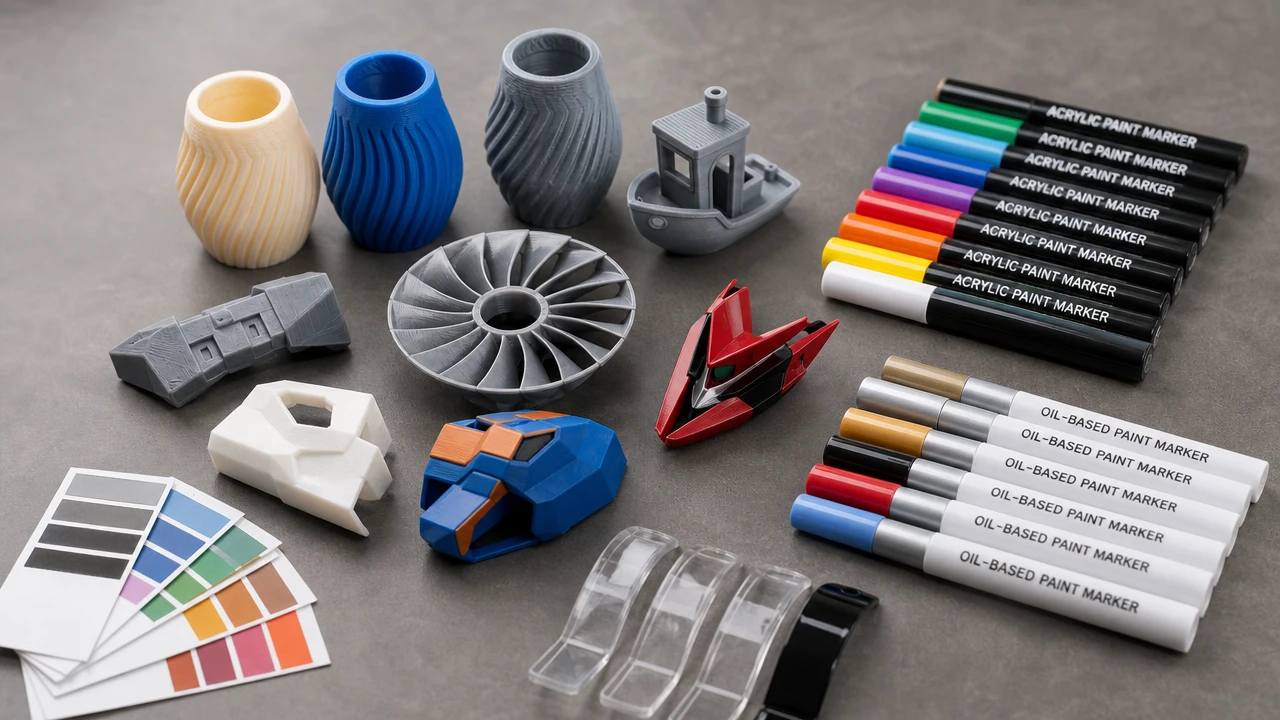
Paint-Marker für 3D-Drucke sind nützlich, um nach dem Druck eines Modells Augen, Trennlinien, Beschriftungen, Verwitterungsspuren, Kantendetails, Farbakzente und kleine Grafiken hinzuzufügen. Die beste Wahl hängt vom Kunststoff, der Oberflächenstruktur, dem Schleifgrad, der Grundierung, der Handhabung und davon ab, ob das Teil eine schützende Klarlackschicht benötigt.
Für die meisten Hobby-, Schul-, Einzelhandels- und Bastelset-Anwendungen sind wasserbasierte Acryl-Malstifte die sicherere erste Empfehlung. Sie sind für den allgemeinen kreativen Einsatz einfacher zu positionieren, haben in der Regel einen geringeren Geruch als lösungsmittelhaltige Optionen und funktionieren gut auf grundiertem oder leicht geschliffenem Kunststoff. Ölbasierte Stifte können auf einigen harten Kunststoffoberflächen stärker sein, erfordern jedoch mehr Vorsicht bei Geruch, Trocknungszeit, Belüftung und Verpackungsangaben.
ZH Stationery unterstützt Käuferplanungen Acrylmarker, Markenstifte-Sets im Private Label und B2B-Verpackungsprogramme. Wenn Sie an 3D-Druck-Hobbyisten, Modellbau-Nutzer, Klassenzimmer, Makerspaces oder Online-Bastelkanäle verkaufen, definieren Sie Druckmaterial, Oberflächenvorbereitung, Stifttyp, Versiegelungsanweisung und Proben-Testmethode, bevor Sie einen Produktionsauftrag freigeben.
Paint-Marker für 3D-Drucke: Kurzantwort
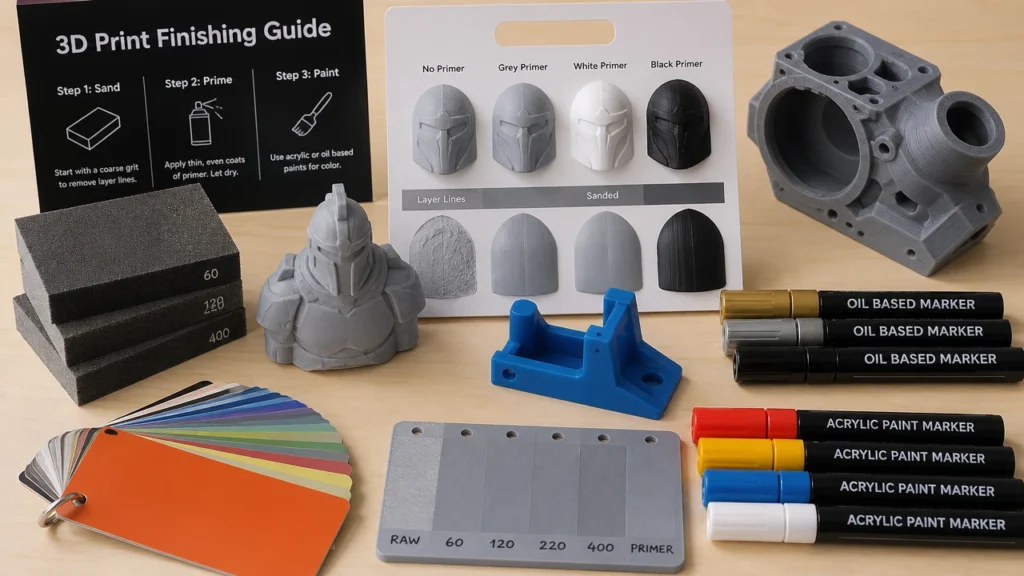
Wählen Sie wasserbasierte Acryl-Malstifte für die meisten 3D-gedruckten Modelle, wenn die Oberfläche geschliffen, gereinigt und idealerweise grundiert ist. Sie eignen sich gut für PLA-Modelle, dekorative Miniaturen, Cosplay-Props, Schilder, Schulprojekte und Einzelhandels-Bastelsets. Wählen Sie ölbasierte Stifte nur, wenn der Käufer den spezifischen Kunststoff getestet hat und stärkere Haftung oder ein härteres Finish benötigt, und wenn das Produkt die richtigen Sicherheits- und Belüftungshinweise tragen kann.
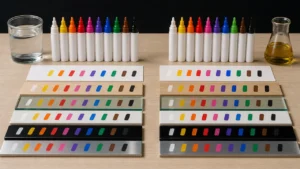
Genehmigen Sie keine der beiden Optionen anhand eines flachen Papierfächers. Testen Sie auf tatsächlichen 3D-gedruckten Teilen mit Schichtlinien, Kurven, entfernten Stützstrukturen, geschliffenen Bereichen, Grundierung und Klarlack. PLA, ABS, PETG, Harzdrucke und lackierte Drucke können sich unterschiedlich verhalten.
Quick Links
- Acryl vs. ölbasierte Marker
- Oberflächenvergleich für 3D-Drucke
- Druck vor dem Markieren vorbereiten
- Wann Acryl-Marker am besten funktionieren
- Wann ölbasierte Marker infrage kommen
- Versiegelungs- und Klarlacktests
- B2B-Verpackung und Anspruchskontrolle
- Qualitätskontrolltests
- Stellen Sie bessere Fragen an den Lieferanten
- FAQs
Acryl vs. ölbasierte Marker
| Option | Beste Eignung | Zu managendes Risiko | Wasserbasierte Acrylmarker |
|---|---|---|---|
| Wasserbasierte Acryl-Marker | Grundiertes PLA, dekorative Modelle, Schul- und Bastelsets, Cosplay-Details | Deckende Farbe, einfachere Anleitung, Positionierung mit geringerem Geruch | Erfordert Oberflächenvorbereitung, Trocknungszeit, Haftungstests und Versiegelung für häufig angefasste Teile |
| Ölbasierte Marker | Ausgewählte harte Kunststoffteile nach Tests | Kann auf einigen glatten oder harten Oberflächen kräftigere Markierungen erzeugen | Geruch, langsamere Trocknung, Lösungsmittelvorsicht, Belüftungsbedarf und strengere Etikettenprüfung |
| Permanentmarker | Schnelle Umrisse oder temporäre Beschriftungen auf ausgewählten Drucken | Einfach zu verwenden und schnell trocknend | Schwache Deckkraft und weniger bastelfertige Farbabdeckung |
| Alkoholmarker | Papierskizzen, konzeptionelle Farbarbeiten oder einige blasse Kunststofftests | Gute Farbmischung auf Papier | Normalerweise nicht ideal für deckende Markierungen auf 3D-gedrucktem Kunststoff |
| Pinselmalerei | Abdeckung großer Modelle und Grundierungsschichten | Gleichmäßigere Abdeckung für große Flächen | Langsamerer Prozess und mehr Reinigungsaufwand als ein Markerset |
Die Markerwahl sollte der Aufgabe folgen. Wenn der Nutzer kleine Details auf einer grundierten Miniatur möchte, reicht Acryl normalerweise aus. Wenn der Käufer eine harte Markierung auf einem glatten Kunststoffschild möchte, können ölbasierte Marker einen Test wert sein. Wenn der Nutzer ein ganzes Modell einfärben möchte, sind Marker möglicherweise nicht das richtige Hauptwerkzeug.
Oberflächenvergleich für 3D-Drucke
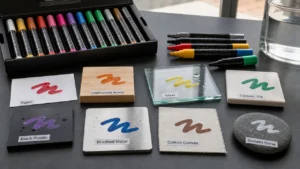
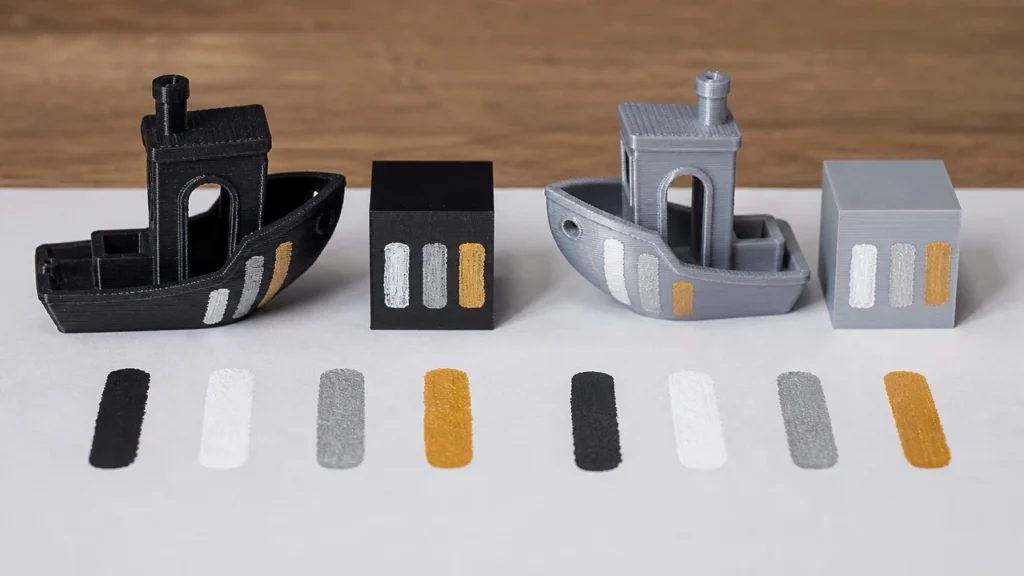
3D-gedruckte Teile sind keine einheitliche Oberfläche. Schichtlinien, Filamenttyp, Schleifspuren, Grundierung, Stützstruktur-Narben und Harzaushärtung können die Markerhaftung beeinflussen. Eine glatte PLA-Testplatte sagt möglicherweise nicht die Leistung auf einem gebogenen Cosplay-Prop oder einer detaillierten Harzminiatur voraus.
| Druckoberfläche | Marker-Verhalten | Käuferempfehlung |
|---|---|---|
| Rohes PLA | Kann Acrylmarkierungen annehmen, aber Schichtlinien können ungleichmäßige Kanten verursachen | Schleifen, reinigen und vor Behauptungen testen. |
| Geschliffenes PLA | Sauberere Linienkante und bessere Kontaktfläche | Bester praktischer Ausgangspunkt für Acryl-Markersets. |
| Grundiertes PLA oder ABS | Vorhersehbarere Deckkraft und Haftung | Empfohlen für Produktfotos und Modellbau-Anleitungen. |
| PETG | Kann glatt und weniger nachgiebig sein | Haftungs- und Kratztests vor Freigabe erforderlich. |
| Harzdrucke | Kann nach ordnungsgemäßer Reinigung und Aushärtung funktionieren, aber die Oberflächenchemie variiert | Am tatsächlichen Harz und Nachbearbeitungsverfahren des Käufers testen. |
| Glänzend lackierte Drucke | Paint-Marker können abperlen oder kratzen | Leichte Oberflächenvorbereitung oder eine andere Beschichtung kann erforderlich sein. |
NIOSH weist darauf hin, dass 3D-Druck gesundheitliche und sicherheitstechnische Lücken aufweist, und hat Druckeremissionen und Kontrollen in büroähnlichen Umgebungen untersucht, wie in der NIOSH-Hinweis zu 3D-Druck-Emissionen. beschrieben. Das entscheidet nicht über die Markerleistung, erinnert Käufer jedoch daran, dass Maker- und Klassenraumprodukte klare Sicherheitskontexte benötigen, insbesondere wenn die Nachbearbeitung Schleifen, Lösungsmittel oder Sprühbeschichtungen hinzufügt.
Druck vor dem Markieren vorbereiten
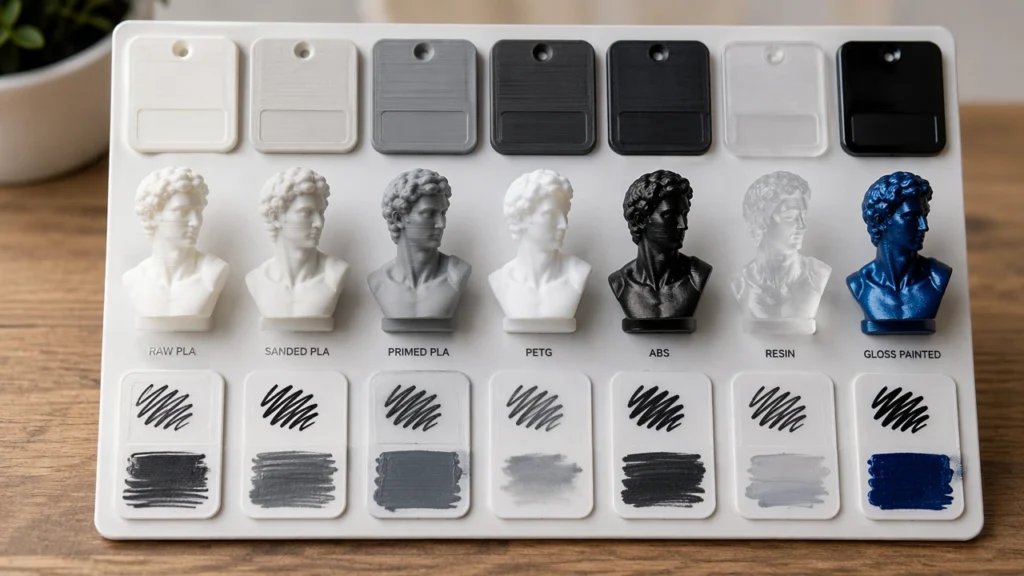
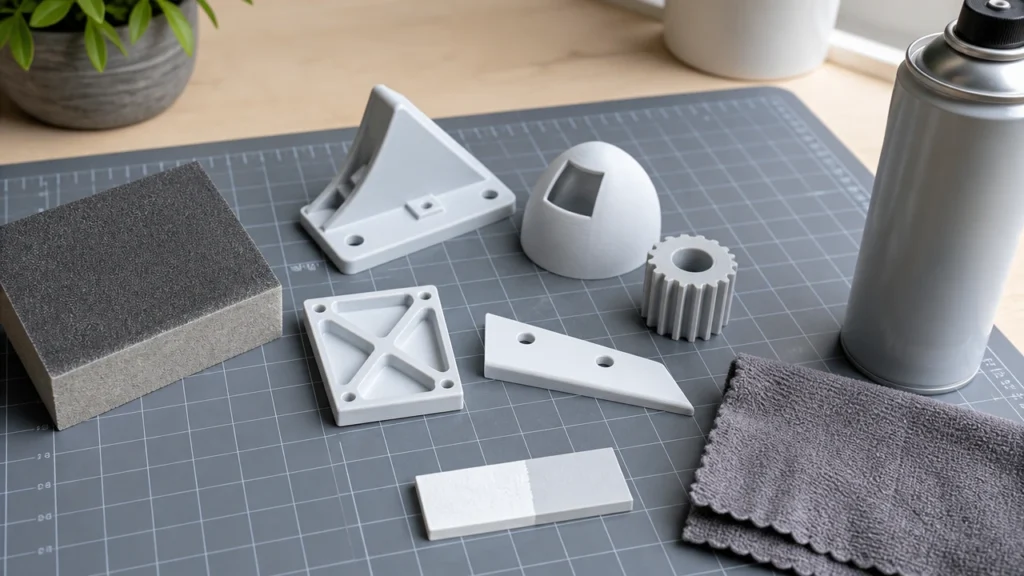
Die Vorbereitung entscheidet, ob die Markierung sauber aussieht. Entfernen Sie Stützstruktur-Markierungen, schleifen Sie raue Bereiche, wischen Sie Staub ab und stellen Sie sicher, dass der Druck trocken ist. Wenn das Teil Fett, Trennmittelrückstände, unausgehärtetes Harz oder Schleifstaub aufweist, kann der Marker überspringen, abperlen oder abblättern.
Für bessere Farbe verwenden Sie vor dem Markieren eine kompatible Grundierung. Grundierung kann die Glätte des Kunststoffs verringern, Schichtlinien verbergen und blasse Farben heller machen. Wenn Ihr Einzelhandelsset keine Grundierung enthält, zeigen Sie in Produktfotos nicht nur grundierte Proben, es sei denn, die Anleitung weist die Nutzer an, zuerst zu grundieren.
Ein Ventilmarker benötigt einen einfachen Erstgebrauchsprozess: schütteln, die Spitze auf Abfallmaterial drücken, den Fluss testen, dann mit leichtem Druck auf den Druck markieren. Die Ventilpressmarkierungstechnologie Anleitung erklärt, warum Grundierung und Flusskontrolle für Paint-Marker-Nutzer wichtig sind.
Wann Acryl-Marker am besten funktionieren
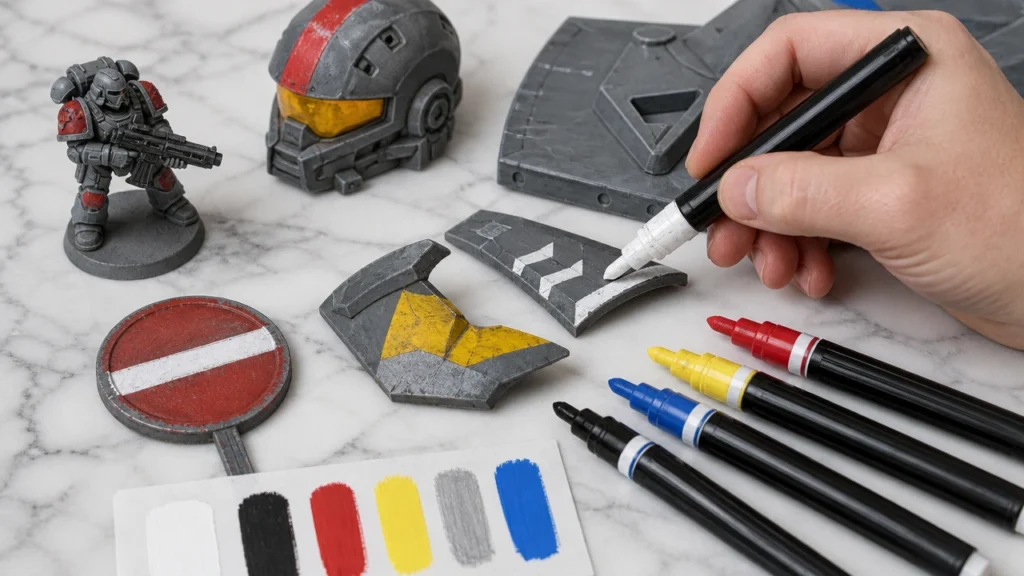
Acryl-Malstifte funktionieren am besten auf 3D-Drucken, wenn der Nutzer deckende Details benötigt und die Oberfläche vorbereiten kann. Sie sind praktisch für Miniaturbasen, Charakteraugen, kleine Props, bedruckte Schilder, Cosplay-Akzentlinien, Schulprojekte und dekorative Modellteile.
Der kommerzielle Vorteil besteht darin, dass Acrylmarker einfacher zu erklären sind. Eine Verkaufsverpackung kann darauf hinweisen, leicht anzuschleifen, Staub zu entfernen, für beste Deckkraft zu grundieren, dünne Schichten aufzutragen, trocknen zu lassen und bearbeitete Teile zu versiegeln. Das ist für ein breites Bastelpublikum einfacher, als sie mit stark riechenden Lösungsmittelmarkern umgehen zu lassen.
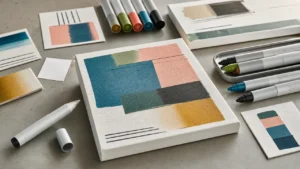
Für Käufer, die ein Acrylmarker-Sortiment aufbauen, ist es sinnvoll, mit nützlichen Kontrastfarben zu beginnen: Weiß, Schwarz, Rot, Gelb, Blau, Grün, Silber, Gold und ein paar kräftigen Akzentfarben. Die Leitfaden zur Beschaffung kundenspezifischer Acryl-Marker kann Käufern helfen, die Farbplanung mit der Beschaffung von Eigenmarken zu verbinden.
Wann ölbasierte Marker infrage kommen
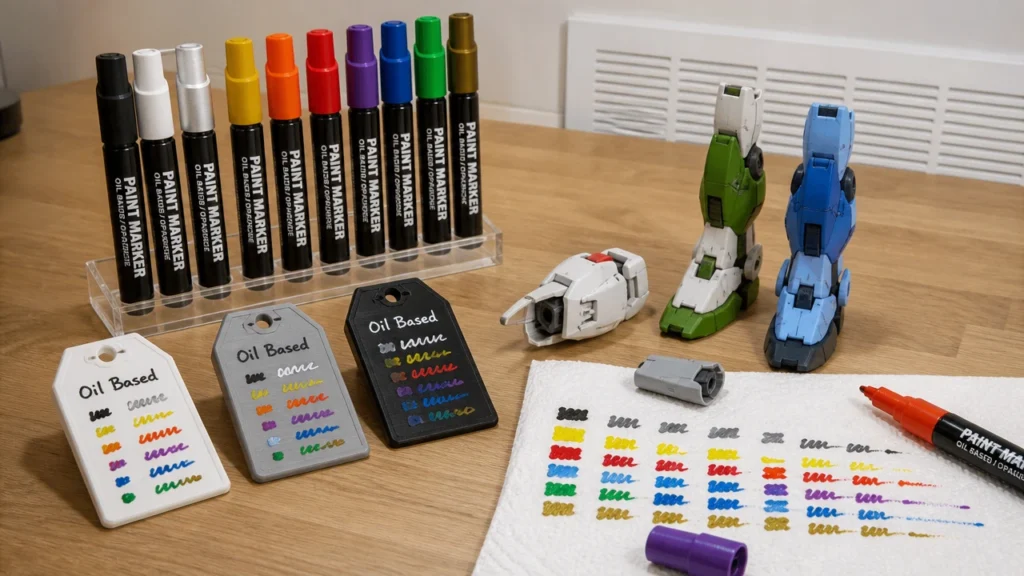
Ölbasierte Marker können für einige 3D-Druck-Projekte geeignet sein, wenn der Käufer stärkere Markierungen auf ausgewählten harten Kunststoffoberflächen benötigt und einen kontrollierteren Einsatz akzeptiert. Sie können für erwachsene Modellbauer, industrielle Beschriftungen, harte Kunststoffetiketten oder Teile nützlich sein, die nach dem Testen einen eher emailleartigen Finish benötigen.
Der Kompromiss ist die Benutzerschulung. Ölbasierte Marker können einen stärkeren Geruch und eine längere Trocknungszeit haben. Einige Produkte benötigen möglicherweise mehr Warnhinweise. Sie sind keine Standardempfehlung für kleine Kinder, Klassenzimmer oder schlecht belüftete Hobbyräume.
Die OSHA- OSHA-Lüftungsregel für Spritzlackierung verlangt ausreichend belüftete Spritzbereiche für Spritzlackierarbeiten, die Lösungsmitteldämpfe freisetzen. Ein Handmarker ist nicht dasselbe wie industrielle Spritzlackierung, aber die Quelle ist eine nützliche Erinnerung: Lösungsmittelintensive Veredelungs- und Beschichtungsaussagen benötigen eine sorgfältige Sicherheitsprüfung, insbesondere wenn die Verpackung den Benutzern sagt, ein Projekt zu versiegeln oder zu überlackieren.
Versiegelungs- und Klarlacktests
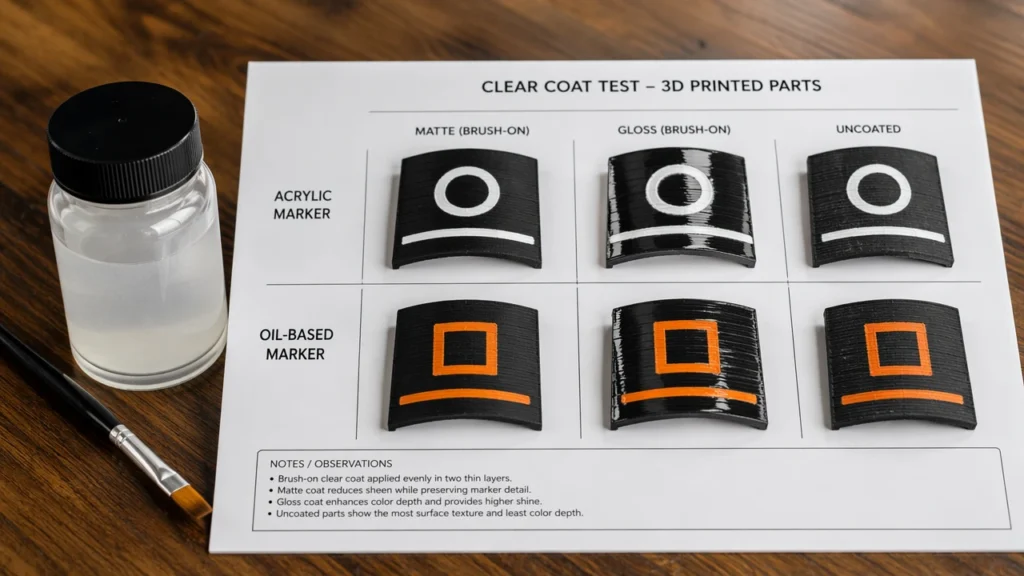
Eine Klarlackschicht kann Markerdetails auf häufig angefassten 3D-Drucken schützen, kann aber auch eine Probe ruinieren, wenn der Marker nicht trocken ist oder die Beschichtung inkompatibel ist. Testen Sie Pinsel- und Sprühklarlacke an Probeteilen, bevor Sie Verpackungsanweisungen verfassen. Achten Sie auf Verschmieren, Trübung, Glanzveränderung, Klebrigkeit, Rissbildung und Farbveränderung.
Für die meisten Verbraucher-Bastelsets ist die sicherere Formulierung, den Marker vollständig trocknen zu lassen und einen kompatiblen Klarlack an einer Ersatzfläche zu testen. Wenn der Endartikel häufig angefasst oder im Freien ausgestellt wird, kann eine Versiegelung hilfreich sein, aber die Aussage sollte an das getestete System aus Marker, Kunststoff, Grundierung und Klarlack gebunden sein.
Vermeiden Sie pauschale Aussagen wie „permanent auf allen 3D-Drucken“, „wasserfest auf allen Kunststoffen“, „funktioniert auf jedem Filament“ oder „sicher für alle Modellbeschichtungen“. Diese Aussagen sind zu weit gefasst, es sei denn, der Käufer hat echte Testergebnisse für jedes Material und jede Verwendungsbedingung.
B2B-Verpackung und Anspruchskontrolle
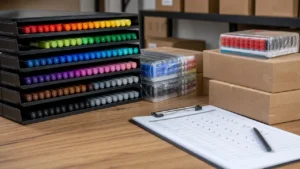
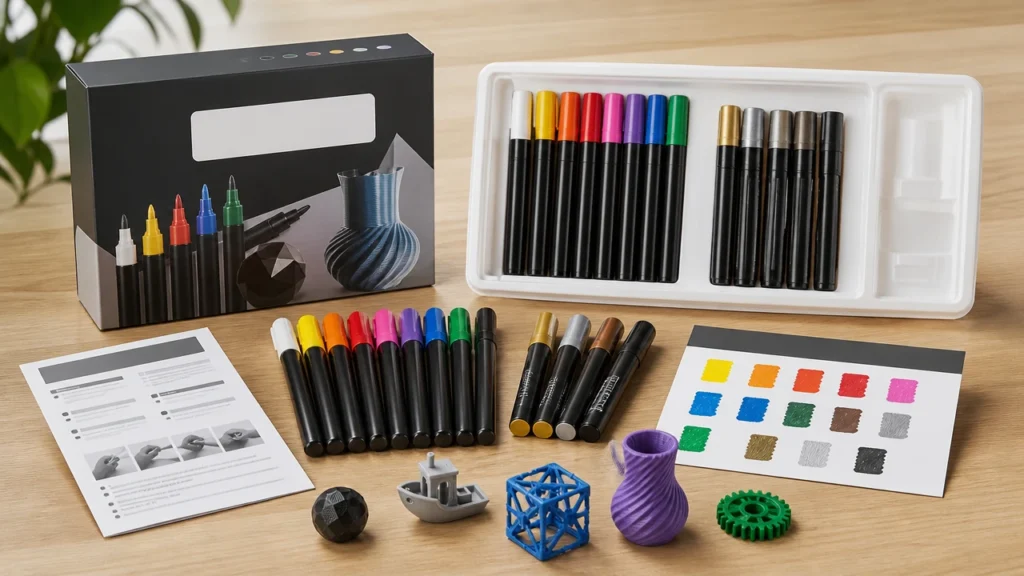
Ein 3D-Druck-Marker-Set benötigt eine andere Anleitungskarte als ein Papiermarker-Set. Es sollte Oberflächenvorbereitung, Schleifstaubentfernung, Grundierung, dünne Schichten, Trocknungszeit, Klarlacktests, Kappenaufbewahrung und Altersempfehlungen erklären. Wenn das Produkt an Makerspaces oder Schulen verkauft wird, sollte der Text einfach und praktisch sein.
Die Verpackung benötigt auch Platz für Warnhinweise und Konformitätsangaben. Die CPSC-Leitfaden für Kunstmaterialien erklärt, dass Kunstmaterialien eine toxikologische Bewertung benötigen, und ASTM-D4236-Kennzeichnungspraxis behandelt die Kennzeichnungspraxis für chronische Gefahren. Die ACMI- ACMI-Seite zur Materialsicherheit gibt Käufern Hintergrundinformationen zur Bedeutung der AP- und CL-Siegel.
Das Acryl-Marker-Verpackungsoptionen Der Leitfaden kann Käufern helfen, Anleitungskarten, Farbmuster, Tabletts, Barcode-Etiketten, Ersatzspitzen und Kartonschilder zu planen. Drängen Sie Versiegelungs- und Oberflächenvorbereitungshinweise nicht aus der Verpackung, nur um mehr Marketingtext hinzuzufügen.
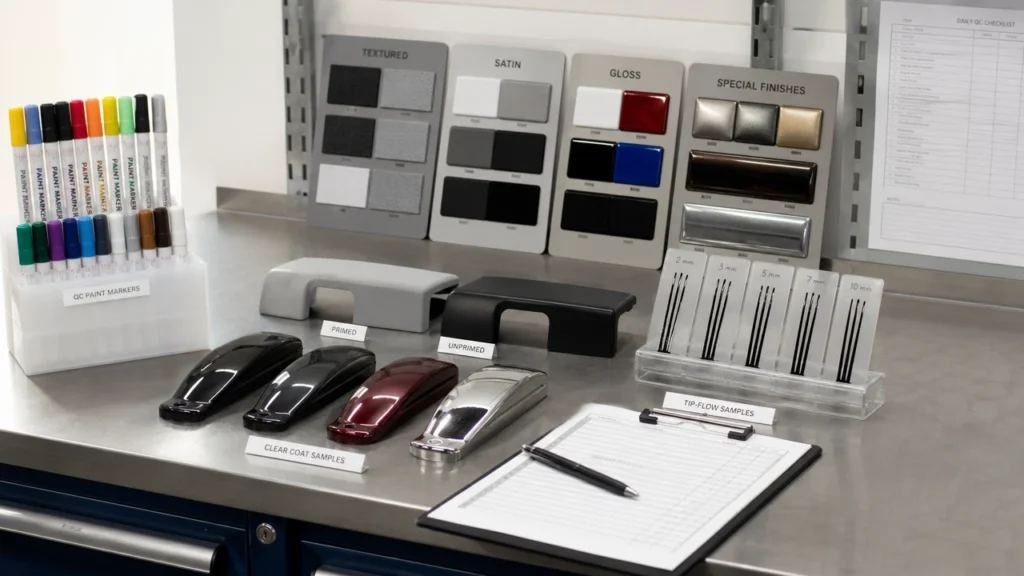
Qualitätskontrolltests für 3D-Druck-Marker
Ein aussagekräftiger Mustertest sollte tatsächliche gedruckte Teile verwenden, nicht nur geformte Kunststoffplatten. Schließen Sie rohes PLA, geschliffenes PLA, grundiertes PLA, ABS, PETG, Harzproben (sofern relevant), gebogene Teile, Schichtlinienbereiche und kleine Details ein. Testen Sie jede Farbe, die sich möglicherweise anders verhält, insbesondere Weiß, Gelb, Metallic, Pastell, Schwarz und Neonfarben.
| QC-Punkt | Was zu prüfen ist | Warum es wichtig ist |
|---|---|---|
| Deckkraft | Helle und dunkle Farben auf rohen, geschliffenen und grundierten Teilen | Schwache Farben enttäuschen Modellbauer und schaden Produktfotos. |
| Haftung | Kratzfestigkeit nach dem Trocknen und nach dem Klarlack | 3D-Drucke werden angefasst, montiert und ausgestellt. |
| Linienkante | Schichtlinien, Kurven, Stützstellen und kleine Details | Unebene Oberflächen können saubere Beschriftungen und Panellinien beeinträchtigen. |
| Fließverhalten | Erste Grundierung, Neustart nach Lagerung, Punkttropfenkontrolle und Spitzendruck | Kleckse und trockene Striche sind häufige Marker-Beschwerden. |
| Trocknung | Trocknungszeit bei Berührung und Aushärtung vor dem Klarlack | Zu frühes Versiegeln kann das Design verschmieren oder trüben. |
| Kompatibilität | Grundierungs- und Klarlackkombinationen | Das gesamte Veredelungssystem ist wichtiger als der Marker allein. |
Fragen Sie vor der Freigabe eines Eigenmarkenprogramms nach Rückstellmustern und Testfotos. Die Zertifizierungsseite, Werksbesichtigung, und den wer wir sind Seiten bieten Nachweise und Werkskontext für die Käuferprüfung.
Stellen Sie bessere Fragen an den Lieferanten
Eine nützliche Lieferantenantwort sollte das Druckmaterial, die Markerformel, die Vorbereitungsmethode und die Grenzen der Aussagen identifizieren. Ein Katalog-Ja ist nicht genug.
- 1. Welche 3D-Druckmaterialien haben Sie getestet?
Eine nützliche Antwort unterscheidet PLA, ABS, PETG, Harz, grundierte Teile, lackierte Teile und die tatsächlichen Druckmuster des Käufers. - 2. Empfehlen Sie Acryl- oder ölbasierte Marker für unsere Zielgruppe?
Eine nützliche Antwort erklärt Geruch, Trocknungszeit, Deckkraft, Haftung, Sicherheitsformulierungen und ob das Produkt für Kinder, Hobbyisten, Schulen oder erwachsene Modellbauer geeignet ist. - 3. Benötigt der Marker Schleifen oder Grundierung?
Eine nützliche Antwort erklärt, wann Schleifen, Reinigen oder Grundieren die Linienkante, Deckkraft und Haftung verbessert. - 4. Welchen Klarlack haben Sie mit dem Marker getestet?
Eine nützliche Antwort enthält versiegelte Muster und vermerkt Verschmieren, Trübung, Glanzveränderung, Klebrigkeit oder Farbveränderung. - 5. Welche Anweisungen sollten im Einzelhandels-Set enthalten sein?
Eine nützliche Antwort deckt Oberflächenvorbereitung, Erstgebrauch-Grundierung, dünne Schichten, Trocknung, Versiegelung, Kappenaufbewahrung und bei Bedarf die Aufsicht durch Erwachsene bei Beschichtungen ab. - 6. Welche Compliance-Dokumente gelten für dieses SKU?
Eine nützliche Antwort trennt Kunstmaterial-Kennzeichnung, Formelprüfung, Alterseinstufung, marktspezifische Dokumente und alle beschichtungs- oder lösungsmittelbezogenen Dokumente, sofern enthalten.
FAQs
Diese Antworten sollten mit der Rank-Math-Schemadatei übereinstimmen, wenn das FAQPage-Schema importiert wird.
1. Welche Marker funktionieren am besten auf 3D-Drucken?
Wasserbasierte Acrylmarker sind der beste Ausgangspunkt für die meisten 3D-gedruckten Modelle, wenn das Teil geschliffen, gereinigt und idealerweise grundiert wurde. Ölbasierte Marker können nach Tests für ausgewählte Hartplastikteile geeignet sein.
2. Funktionieren Acrylmarker auf PLA?
Ja, Acrylmarker können auf PLA funktionieren, insbesondere wenn der Druck geschliffen, gereinigt und grundiert wurde. Rohes PLA sollte dennoch auf Haftung, Kantenschärfe und Kratzfestigkeit getestet werden.
3. Sind ölbasierte Marker besser für 3D-Drucke?
并非总是如此。油性马克笔在某些硬塑料表面上可能附着良好,但可能带来更强烈的气味、更慢的干燥速度以及更多的警示用语。应针对目标塑料材质和使用人群进行测试。.
4. Sollten 3D-Drucke vor der Verwendung von Markern grundiert werden?
Eine Grundierung wird empfohlen, wenn der Nutzer kräftigere Farben, glattere Linienkanten und eine bessere Haftung wünscht. Sie ist besonders nützlich bei sichtbaren Schichtlinien, dunklem Filament oder Teilen, die angefasst werden.
5. Sollten Markerdesigns auf 3D-Drucken versiegelt werden?
Versiegeln Sie behandelte oder ausgestellte Teile, wenn Haltbarkeit wichtig ist, aber testen Sie zuerst die Klarlackschicht. Einige Beschichtungen können Markierungsschichten verschmieren, trüben oder aufweichen, wenn der Marker nicht trocken ist oder die Beschichtung inkompatibel ist.
6. Was sollten Käufer testen, bevor sie Marker für 3D-Drucke bestellen?
Testen Sie Deckkraft, Haftung, Linienkanten, Trocknungszeit, Grundierungskompatibilität, Klarlackkompatibilität, Kratzfestigkeit, Verschlusslagerung, Verpackungsanweisungen und Konformitätsdokumente für den Zielmarkt.
Schlussfolgerung
Marker für 3D-Drucke sollten nach Oberfläche und Benutzer ausgewählt werden. Acrylmarker sind in der Regel die bessere erste Option für breite Bastel-, Schul- und Hobbykanäle. Ölbasierte Marker können nach Tests für engere erwachsene oder Hartflächenanwendungen geeignet sein. Keine der beiden Optionen sollte allein anhand von Papierfarbmustern freigegeben werden.
Fragen Sie bei der Beschaffung nach echten 3D-gedruckten Mustern, nicht nur nach Katalogaussagen. Testen Sie rohe, geschliffene, grundierte und versiegelte Teile. Prüfen Sie Geruch, Trocknung, Haftung, Klarlackverhalten, Verpackungsanweisungen und Konformitätsdokumente, bevor Sie eine Eigenmarkenbestellung aufgeben.
Verwandter Leitfaden: Für eine verwandte Qualitätskontrolle siehe So verwenden Sie Acrylmarker auf Holz.