Inhaltsverzeichnis
Kurze Antwort: Welches Format für welchen Kanal?
Wenn Sie auf Amazon FBA verkaufen, wählen Sie eine stabile Farbbox mit Schaumstoffeinlagen. Sie übersteht die Handhabung im Erfüllungszentrum und fotografiert sich gut auf weißem Hintergrund. Wenn Sie an große Einzelhandelsketten verkaufen, wählen Sie eine Blisterkarte. Das Aufhängeformat passt auf Standard-Stellwände und ist manipulationssicher. Wenn Ihr Produkt ein 48-Farben-Künstlerset zum Preis von 39,99 € ist, wählen Sie eine Geschenkbox mit Magnetverschluss. Das Auspackerlebnis rechtfertigt den Verkaufspreis. Wenn Sie über unabhängige Kunstbedarfsgeschäfte verkaufen, wählen Sie eine Displaybox. Sie steht auf der Theke und verkauft sich von selbst.
Das Verpackungsformat ist keine kosmetische Entscheidung. Es bestimmt Ihre Stückkosten, Ihr Versandvolumen, Ihre Schadensrate und welcher Einzelhandelskanal Ihr Produkt akzeptiert. Dieser Leitfaden führt durch fünf Acrylmarker-Verpackungsformate: was sie kosten, welche Mindestabnahmemenge sie erfordern, wie sie versendet werden und welcher Verkaufskanal am besten geeignet ist.
Format 1: Farbkarton — Der Einzelhandelsregalstandard
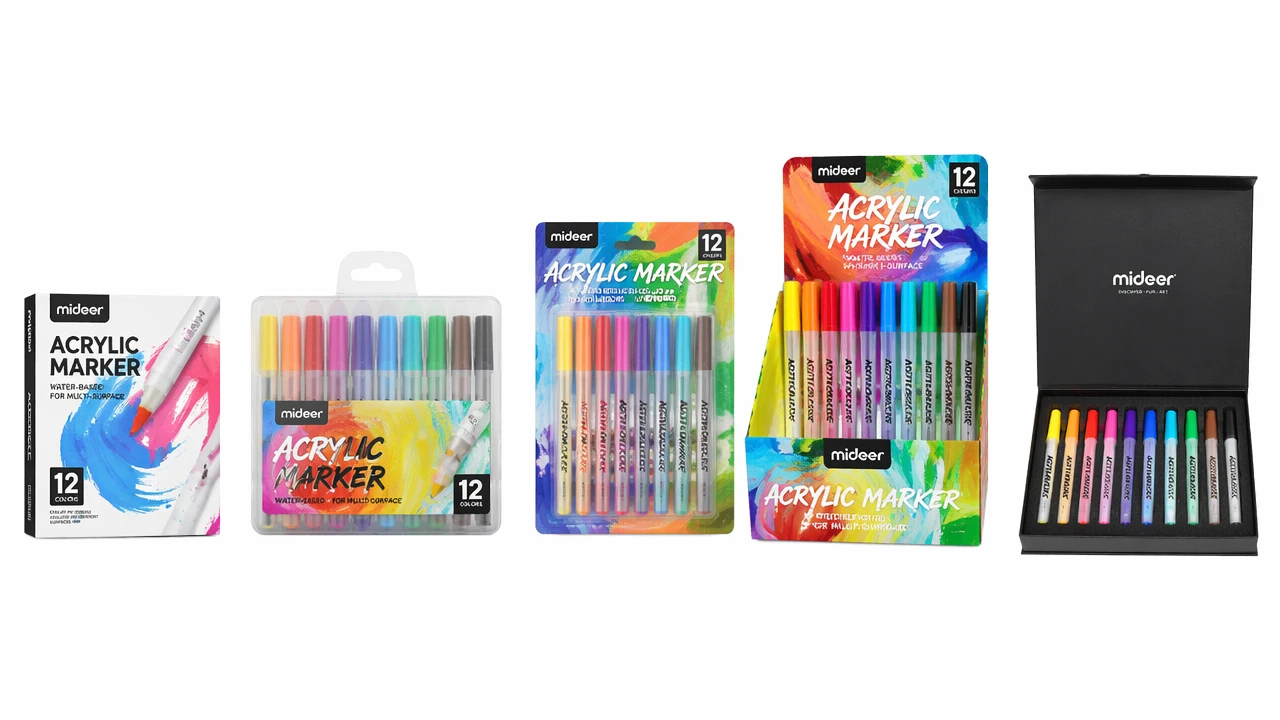
Die Farbbox ist ein bedruckter Karton, typischerweise aus 300 g/m² bis 350 g/m² Kunstdruckpapier mit matter oder glänzender Laminierung. Es ist das gängigste Verpackungsformat für Acrylmarker-Sets im Bereich von 12 bis 36 Farben. Die Box hält die Marker in einer tiefgezogenen Kunststoffschale oder einer gestanzten Kartoneinlage.
Eine gut gestaltete Farbbox kommuniziert Produktinformationen auf jeder Seite. Vorderseite: Markenlogo, Produktname, Farbanzahl, Hervorhebung der Hauptmerkmale. Rückseite: Farbtabelle, Gebrauchsanweisung, Sicherheitshinweise, Barcode. Seitenflächen: Markenslogan, Social-Media-Handles, Zertifizierungszeichen. Die Box wird zu einem stillen Verkäufer in einem überfüllten Regal.
- Kostenstruktur. Eine Standard-Farbbox für 12 Farben mit einer Kunststoff-Innenschale kostet bei einer Bestellmenge von 5.000 Stück etwa 0,35 € bis 0,55 € pro Stück. Die Schale selbst macht etwa 0,10 € bis 0,15 € aus. Glanzlaminierung erhöht die Kosten um etwa 0,02 € pro Stück und verbessert die Kratzfestigkeit während des Versands. Spot-UV auf dem Logo kostet 0,03 € bis 0,05 € mehr.
- Mindestabnahmemenge. Der Druck von individuellen Farbverpackungen hängt von Druckvorlagen, Farbanzahl, Kartonstruktur und Druckverfahren ab. Bestätigen Sie die Verpackung getrennt vom Stift, da Offsetdruck, Digitalproofing und Displayschachtel-Herstellung jeweils unterschiedliche Kosten-Breakpoints aufweisen.
- Auswirkungen auf den Versand. Eine Farbbox für 12 Acrylmarker misst etwa 180 mm × 120 mm × 25 mm. In einen Standard-20-Fuß-Container passen je nach Palettenkonfiguration etwa 25.000 bis 30.000 Stück. Die flache rechteckige Form lässt sich volumenoptimiert verpacken, was die Frachtkosten pro Stück niedrig hält.
- Am besten geeignet für: Amazon FBA-Verkäufer, mittlere Einzelhandelsketten, Schreibwarengeschäfte, Schulbedarfsvertriebe.
Format 2: PP-Box — Transparente Haltbarkeit für eine Premium-Wahrnehmung
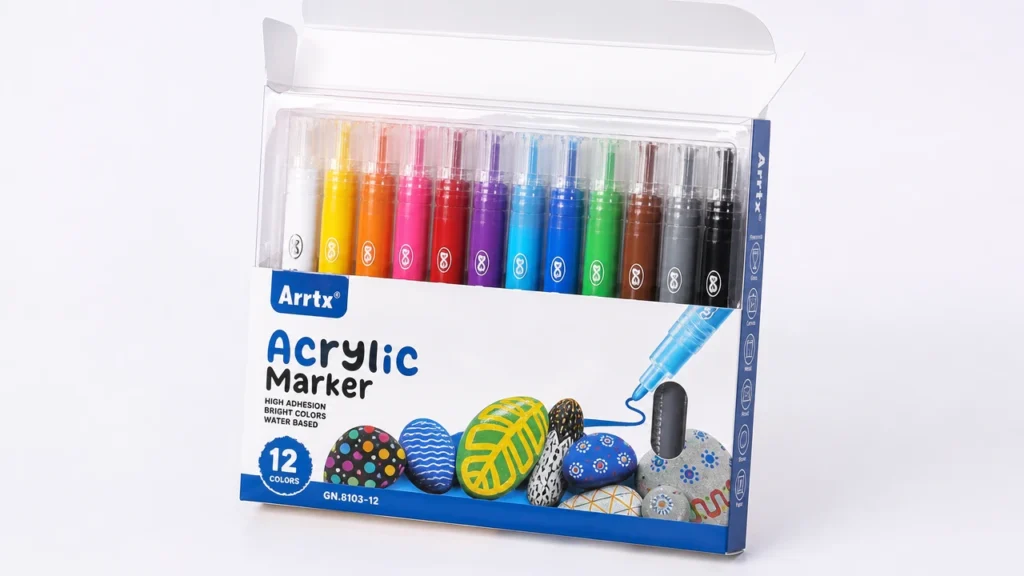
Die PP-Box ist ein transparentes Polypropylen-Etui mit einem Reib- oder Schnappverschluss. Die Marker liegen darin, vollständig durch das klare Plastik sichtbar. Kein Druck auf der Box selbst erforderlich – die Marker bieten die visuelle Anziehungskraft. Eine Papier-Einlegekarte sitzt in der Box hinter den Markern und trägt das Markenlogo, die Farbnamen und den Barcode.
PP-Boxen erzeugen eine Premium-Wahrnehmung, da der Kunde das tatsächliche Produkt vor dem Öffnen sieht. Es gibt keine bedruckte Box, die die Farbsättigung oder Spitzenqualität. falsch darstellen könnte. Was der Kunde sieht, bekommt er. Diese Transparenz reduziert die Rücklaufquote bei farbempfindlichen Produkten wie Acrylmarkern, bei denen “die Farben sehen nicht aus wie auf dem Foto” eine häufige Beschwerde ist.
- Kostenstruktur. Eine Standard-PP-Box für 12 Farben kostet etwa 0,45 € bis 0,70 € pro Stück. Die Einlegekarte kostet 0,03 € bis 0,06 € mehr. Die Gesamtkosten liegen etwas höher als bei einer bedruckten Farbbox, aber die wahrgenommene Qualität gleicht dies im Einzelhandel mehr als aus.
- Haltbarkeitsvorteil. PP-Boxen überstehen den Transport besser als Karton. Sie werden nicht gequetscht, reißen nicht und nehmen keine Feuchtigkeit auf. Wenn Ihre Lieferkette mehrere Lagerstufen oder Seefracht durch feuchte Klimazonen umfasst, schützen PP-Boxen das Produkt besser vom Fabrikboden bis zum Einzelhandelsregal..
- Mindestabnahmemenge. PP-Box-Formen sind einfacher als Spritzgussformen für Markerhülsen. Die Werkzeugkosten für eine maßgefertigte PP-Box in Standardform betragen 300 € bis 800 €. Die Mindestabnahmemenge für die Boxen selbst liegt typischerweise bei 3.000 bis 5.000 Stück.
- Auswirkungen auf den Versand. PP-Boxen wiegen etwas mehr als Karton – etwa 15 bis 20 Prozent schwerer bei gleicher Markeranzahl. Der Gewichtsnachteil ist bei Luftfracht relevant. Bei Seefracht ist der Unterschied pro Stück vernachlässigbar.
- Am besten geeignet für: Premium-Amazon-Listings, spezialisierte Kunstbedarfsketten, Geschenkartikelläden, Märkte, auf denen Farbgenauigkeit ein Verkaufsargument ist.
Format 3: Blisterkarte — Aufhängeffizienz für den Masseneinzelhandel
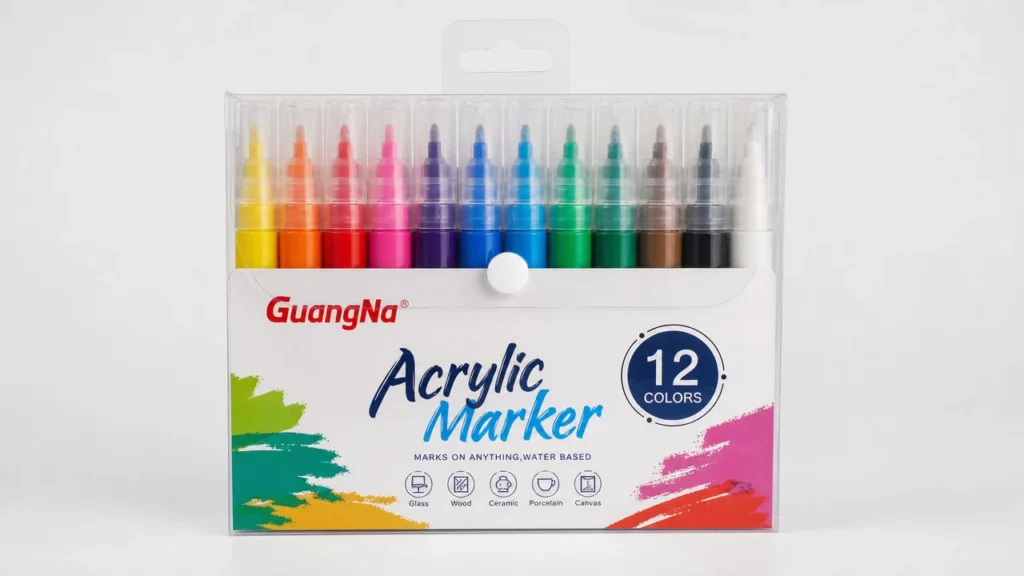
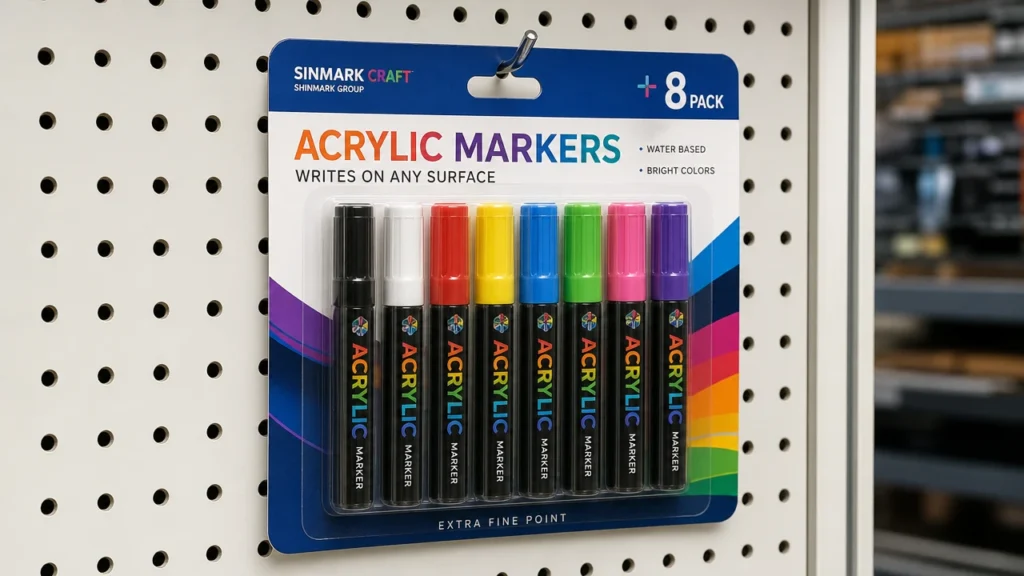
Das Blisterkarten-Format kombiniert eine bedruckte Kartonrückkarte mit einer tiefgezogenen, klaren Kunststoffblase, die die Marker an Ort und Stelle hält. Ein Euroslot-Aufhängeloch oben ermöglicht das Aufhängen des Produkts an Standard-Einzelhandels-Stellwandhaken. Dies ist das Format, das große Einzelhandelsketten wie Walmart, Target, Michaels und Hobby Lobby für die Kategorien Stifte und Marker verlangen.
Blisterkarten sind für eine hochdichte Regalpräsentation konzipiert. Ein 1,2 m langer Stellwandabschnitt kann 40 bis 60 Blisterkarten-Einheiten aufnehmen, verglichen mit 15 bis 20 Farbboxen im gleichen Raum. Einzelhandelseinkäufer berechnen den Umsatz pro laufendem Meter, und Blisterkarten generieren mehr Umsatz auf weniger Raum. Wenn Sie bei einem Ketteneinkäufer vorsprechen, signalisiert das Vorlegen einer Blisterkarten-Probe anstelle einer Box, dass Sie deren Regalökonomie verstehen.
- Kostenstruktur. Eine einzelne Blisterkarte für ein 6er- bis 8er-Pack Marker kostet etwa 0,25 € bis 0,40 € pro Stück. Das Kartenmaterial ist typischerweise 350 g/m² bis 400 g/m² C1S (einseitig gestrichen) mit Glanzfinish. Die Blase besteht aus 0,3 mm bis 0,4 mm PET oder PVC. Die Versiegelung erfolgt mittels HF-Schweißen (Hochfrequenz) oder Klebstoff.
- Mindestabnahmemenge. Der Druck von Blisterkarten beginnt bei 5.000 Stück im Offsetverfahren. Die Blasenform kostet 200 € bis 500 € für eine Standardform. Maßgefertigte Blasenformen kosten mehr und benötigen längere Werkzeugvorlaufzeiten.
- Auswirkungen auf den Versand. Blisterkarten sind flach. Eine Standard-Blisterkarte für 10 Stück misst etwa 250 mm × 180 mm × 15 mm. Das schmale Profil bedeutet mehr Einheiten pro Karton, was die Containerauslastung verbessert. Das Gewicht ist leichter als jedes Boxformat, was die Frachtkosten pro Stück senkt.
- Diebstahlschutz. Einzelhandelsketten bevorzugen Blisterkarten, da die versiegelte Kunststoffblase das Produkt manipulationssicherer macht. Eine Farbbox kann im Regal geöffnet und geschlossen werden. Eine Blisterkarte zeigt sichtbare Schäden, wenn jemand versucht, einen Marker zu entnehmen. Dies ist wichtig für die Abteilungen zur Verlustprävention.
- Am besten geeignet für: Große Einzelhandelsketten, Bastelgeschäftsketten, Schreibwarenabteilungen in Supermärkten, alle Kanäle mit Stellwandpräsentation.
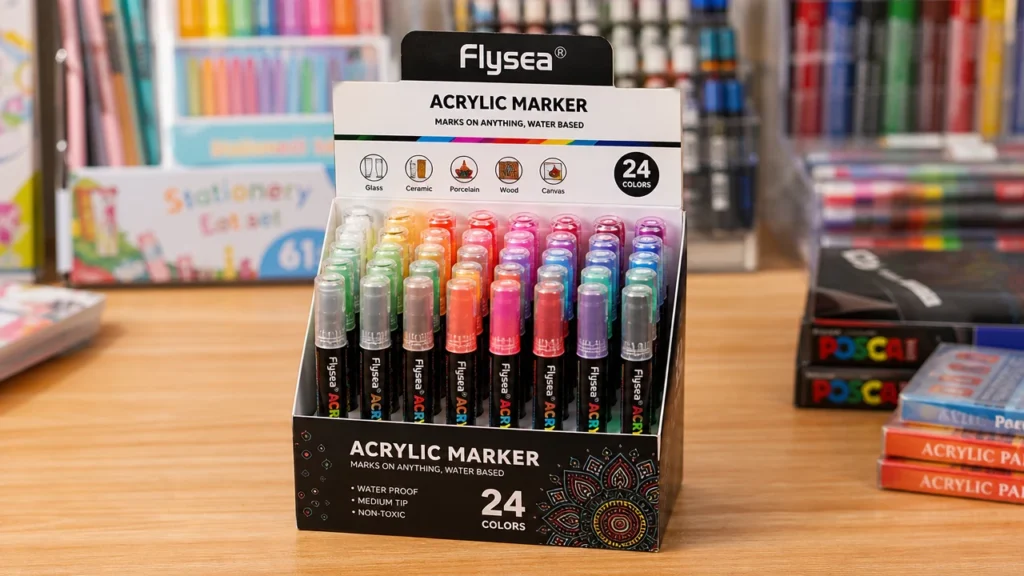
Format 4: Display Box — Thekenpräsentation und Impulskauf
Die Displaybox ist eine eigenständige Einzelhandelseinheit: eine bedruckte Kartonbox mit integriertem Displaykopf, die für die Platzierung auf einer Theke, einem Kassenbereich oder einem Regal-Enddeckel konzipiert ist. Die Marker im Inneren sind für maximale Sichtbarkeit angeordnet. Der Displaykopf trägt den Markennamen und ein kurzes Wertversprechen. Die Box selbst ist die Verkaufsstelle – kein Regal, keine Stellwand oder separate Display-Hardware erforderlich.
Displayboxen fördern Impulskäufe. Ein Kunde, der an einer Kasse wartet, sieht ein Display mit 24 hellen Acrylmarkern in Reichweite. Die Kaufentscheidung dauert Sekunden. Das Display-Format verwandelt passive Regalpräsenz in aktiven Verkauf. Einzelhändler mögen Displayboxen, da sie keine Aufbauarbeit erfordern und Einnahmen aus sonst ungenutzten Thekenflächen generieren.
- Kostenstruktur. Eine Thekendisplaybox mit 24 Markern kostet etwa 0,60 € bis 1,00 € pro Stück, einschließlich der Displaykopf-Struktur. Größere Bodenständer-Displays für 48 bis 72 Marker kosten mehr pro Stück, da die Wellpappenstruktur schwereres Material und zusätzliche Druckflächen erfordert.
- Mindestabnahmemenge. Displayboxen werden in kleineren Mengen als Standardverpackungen gedruckt, da Einzelhändler sie eher als Werbevorrichtungen denn als dauerhafte Verpackungen betrachten. Die Mindestabnahmemenge beginnt bei 1.000 bis 2.000 Stück pro Design.
- Auswirkungen auf den Versand. Displayboxen sind das am wenigsten volumenoptimierte Format. Ein Thekendisplay wird vormontiert oder flach verpackt (zerlegbar) versendet. Vormontierte Displays verbrauchen Containerplatz, da die Kopfstruktur Leervolumen schafft. Zerlegbare Displays verbessern die Volumenauslastung, erfordern jedoch die Montage durch den Einzelhändler. Besprechen Sie Flachverpackungsoptionen mit Ihrer Fabrik.
- Am besten geeignet für: Unabhängige Kunstbedarfsgeschäfte, Buchhandelsketten, Museumsgeschenkartikelläden, saisonale Pop-up-Einzelhandelsgeschäfte, Messemerchandising.
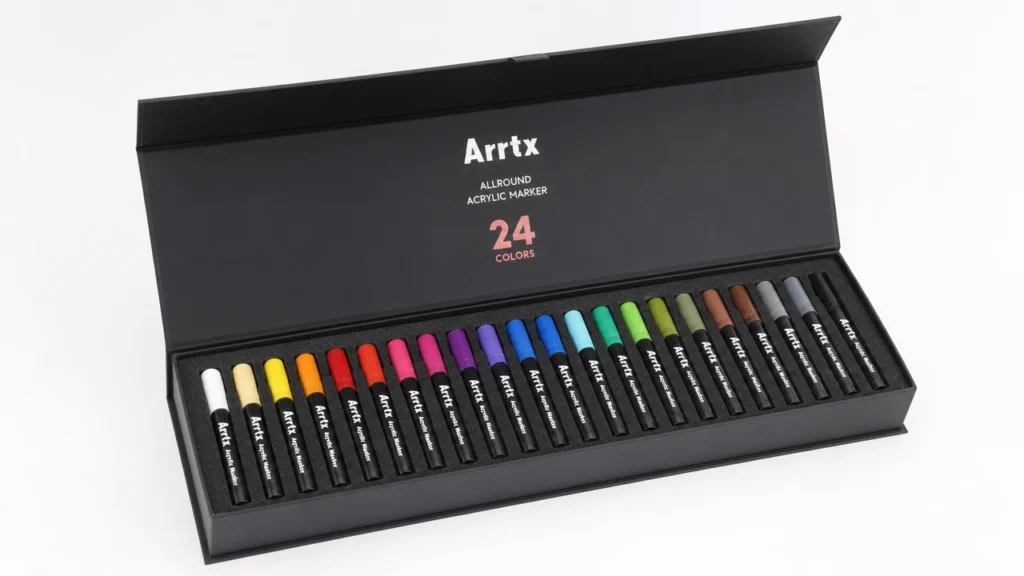
Format 5: Geschenkbox — Premium-Unboxing-Erlebnis für margenstarke SKUs
Die Geschenkbox ist das hochwertigste Verpackungsformat: ein starrer Karton, typischerweise aus 1.200 g/m² bis 1.600 g/m² Graupappe, umwickelt mit Kunstdruckpapier, mit einem Magnetklappenverschluss oder einem Bandzug. Im Inneren sitzt jeder Marker in einer maßgefertigten Schaumstoffeinlage oder einer samtgefütterten Schale. Das Auspackerlebnis ist darauf ausgelegt, einem Verkaufspreis von 29,99 € bis 59,99 € zu entsprechen.
Geschenkboxen dienen zwei Zwecken. Erstens rechtfertigen sie den Preis. Ein Kunde, der 45 € für ein 36-Farben-Acrylmarker-Set bezahlt, erwartet eine Verpackung, die sich vom Moment des Deckelhebens an hochwertig anfühlt. Zweitens fördern Geschenkboxen das Schenkverhalten. Eine Farbbox sagt “Schulbedarf”. Eine Geschenkbox sagt “Geschenk für den Künstler in Ihrem Leben”. Diese Unterscheidung öffnet das Produkt für saisonale Geschenkspitzen – Weihnachten, Muttertag, Schulabschluss – die Standardverpackungen nicht erreichen können.
- Kostenstruktur. Eine Geschenkbox mit Magnetverschluss für ein 24-Farben-Set kostet etwa 1,20 € bis 2,50 € pro Stück, abhängig von Papierqualität, Folienprägung und Einlegekomplexität. Die Schaumstoff- oder Samteinlage kostet 0,30 € bis 0,80 € mehr. Die gesamten Verpackungskosten pro Stück können für eine vollständig maßgefertigte Luxus-Geschenkbox 3,00 €+ erreichen. Dies ist das 5- bis 8-fache der Kosten einer Standard-Farbbox – aber der Einzelhandelspreis-Multiplikator rechtfertigt dies.
- Mindestabnahmemenge. Geschenkboxen werden von Hand montiert, nicht maschinell gefaltet. Die Arbeitskosten bestimmen die Wirtschaftlichkeit. Die Mindestabnahmemenge beginnt bei 1.000 bis 2.000 Stück. Das maßgefertigte Stanzen der Schaumstoffeinlage verursacht zusätzliche Werkzeugkosten von 200 € bis 400 €.
- Auswirkungen auf den Versand. Geschenkboxen sind schwer. Eine starre Box aus 1.600 g/m² Pappe wiegt leer etwa 200 bis 300 Gramm, verglichen mit 60 bis 90 Gramm für eine Standard-Farbbox. Das Gewicht erhöht die Frachtkosten pro Stück um etwa 15 bis 25 Prozent. Die starre Struktur lässt sich auch weniger volumenoptimiert verpacken, da die Boxen nicht komprimiert oder gestapelt werden können. Wenn Ihre Margen knapp sind, werden Sie von den Frachtkosten für Geschenkboxen überrascht sein.
- Am besten geeignet für: Premium-Amazon-Listings, Boutique-Kunstbedarfsmarken, Firmengeschenkprogramme, saisonale Geschenksets, Crowdfunding-Kampagnenstarts.
Direkter Vergleich: 5 Formate im Vergleich
| Format | Stückkosten (12-Farben-Set) | Mindestbestellmenge (MOQ) | Container-Passung (20 Fuß, 12 Farben) | Gewicht pro Stück | Bester Verkaufskanal |
| Farbbox | 0,35 €–0,55 € | 2.000–3.000 | 25.000–30.000 Einheiten | 60–90 g | Amazon FBA, mittlerer Einzelhandel |
| PP-Box | 0,45 €–0,70 € | 3.000–5.000 | 22.000–28.000 Einheiten | 70–100 g | Premium Amazon, Kunstbedarfsketten |
| Blisterkarte | $0,25–$0,40 | 5,000 | 35.000–45.000 Einheiten | 35–55 g | Großhandelsketten, Bastelfachgeschäfte |
| Display-Schachtel | $0,60–$1,00 | 1.000–2.000 | 12.000–18.000 Einheiten | 150–250 g | Unabhängige Geschäfte, Messen |
| Geschenkbox | $1,20–$2,50 | 1.000–2.000 | 10.000–15.000 Einheiten | 200–300 g | Premium, Firmengeschenke |
Die Kostendaten spiegeln typische OEM-Fabrik Preise für kundenspezifische Verpackungen bei einem Bestellvolumen von 5.000+ Einheiten wider. Bei geringeren Mengen fällt ein Aufschlag von 20 bis 40 Prozent pro Einheit an, bedingt durch die Amortisation der Druckplatten und die Einrichtungsarbeit.
Wie die Wahl der Verpackung die FOB-Preisgestaltung und die Containernutzung beeinflusst
Verpackung ist nicht nur ein Posten auf dem Angebotsblatt. Sie verändert den FOB-Preis auf drei Arten: Materialkosten, Arbeitskosten und Frachtkosten pro Einheit.
Materialkosten sind das, was die Verpackung physisch in der Herstellung kostet – Papier, Kunststoff, Schaumstoff, Tinte, Laminierung. Dies ist der einfachste Kostenvergleich zwischen Formaten, da die Fabrik dies direkt angibt. Farbbox: $0,35. Geschenkbox: $1,50. Der Unterschied ist klar.
Arbeitskosten sind weniger sichtbar. Eine Farbbox wird in eine automatische Kartonierungsmaschine eingelegt. Eine Geschenkbox erfordert einen Arbeiter, der die Schaumstoffeinlage platziert, jeden Marker positioniert, die Magnetklappe schließt und die Schrumpffolie anbringt. Die Arbeitskosten pro Einheit für eine Geschenkbox sind 5- bis 8-mal höher als für eine Farbbox. Wenn Sie Verpackungsangebote vergleichen, bitten Sie die Fabrik, Material und Arbeit getrennt auszuweisen. Niedrige Materialkosten mit versteckten Arbeitskosten sind kein Schnäppchen – es ist ein falsch kalkuliertes Angebot.
Frachtkosten pro Einheit sind der Punkt, an dem die Verpackungsstrategie ernst wird. Ein 40-Fuß-Container fasst 55.000 Farbbox-Einheiten, aber nur 22.000 Geschenkbox-Einheiten, da die starren Boxen nicht komprimiert werden können und die Schaumstoffeinlagen Volumen beanspruchen. Die Frachtkosten pro Einheit für Geschenkboxen sind etwa 2,5-mal höher als für Farbboxen. Wenn Ihr Produkt ein $9,99-Markerset für den Einzelhandel ist, können allein die Frachtkosten der Geschenkbox Ihre Marge aufzehren. Wenn Ihr Produkt ein $49,99-Künstlerset ist, sind die Frachtkosten ein Rundungsfehler.
Die Containernutzung wirkt sich direkt auf die Landed Cost aus – die Gesamtkosten, um eine Einheit vom Fabrikboden bis zu Ihrem Lagerregal zu bringen. Die Landed Cost entspricht dem FOB-Preis plus Seefracht geteilt durch die Einheiten pro Container. Ein Verpackungsformat, das die Einheiten pro Container reduziert, erhöht die Landed Cost pro Einheit. Deshalb dominieren Blisterkarten mit ihren dünnen Profilen den Masseneinzelhandel: Sie packen mehr Einheiten in einen Container und senken so die Landed Cost.
Anpassung: Logo, Barcode und Designdateien
Kundenspezifische Verpackung beginnt mit Designdateien. Die Fabrik benötigt Vektorgrafiken für Logos, Farbspezifikationen (Pantone oder CMYK), Stanzlinienvorlagen für die Boxstruktur und Barcode-Dateien (UPC für Nordamerika, EAN für Europa). Hier ist, was jedes Format benötigt.
- Für Farbboxen, Display-Schachteln und Geschenkboxen, stellen Sie eine druckfertige Stanzlinie mit Grafiken auf jeder Platte im Adobe Illustrator (.ai) oder PDF-Format bereit. Fügen Sie Beschnitt, Schnittmarken und ein Referenzfoto eines physischen Musters bei. Wenn die Box Folienprägung oder Reliefprägung hat, geben Sie die Position auf einer separaten Ebene an. Farbabstimmung: Geben Sie Pantone-Codes für Markenfarben an. CMYK-Aufbauten sind günstiger, aber zwischen Druckdurchläufen weniger präzise.
- Für PP-Boxen, liegt die Individualisierung auf der Einlegekarte, nicht auf der Box. Stellen Sie ein druckfertiges Kartendesign bereit. Die PP-Box selbst ist transparent – die Einlegekarte trägt die Markenidentität. Einige Fabriken bieten Siebdruck auf der PP-Oberfläche für ein Logo an, aber dies kostet $0,05 bis $0,10 pro Einheit und ist weniger haltbar als eine bedruckte Einlage.
- Für Blisterkarten, stellen Sie das Kartenrückseitendesign und die Blisterform-Spezifikation bereit. Die Blisterform entspricht den Markermaßen, daher benötigt die Fabrik genaue Messungen Ihres Markerschaftdurchmessers, der Länge und des Clip-Profils. Wenn die Marker im Durchmesser variieren (Spitzspitze vs. Pinselspitze in einem Dual-Tip-Set), muss der Blister beide Größen aufnehmen. Barcode: Platzieren Sie ihn auf der Rückseite in einem flachen, unbeschichteten Bereich für zuverlässiges Scannen.
Barcodes verdienen besondere Aufmerksamkeit. Ein UPC Barcode, der in einem Walmart-Verteilzentrum nicht scannt, verzögert den Wareneingang und löst Rückbelastungen aus. Drei Regeln: Verwenden Sie eine kontrastreiche Farbkombination (schwarze Balken auf weißem Hintergrund ist am sichersten), platzieren Sie den Barcode auf einer flachen, unbeschichteten Oberfläche und lassen Sie den erforderlichen Ruhebereich um den Barcode. Testen Sie den Scan vor der Produktion. Ihre Fabrik sollte einen Barcode-Verifizierungsbericht von einem kalibrierten Scanner bereitstellen.
Häufige Verpackungsfehler, die B2B-Käufer machen
- Fehler 1: Die Verpackung an Ihre Vorlieben anpassen, nicht an die Anforderungen des Vertriebskanals. Sie lieben vielleicht das Aussehen einer Geschenkbox. Aber wenn Ihr Käufer eine Einzelhandelskette mit Stellwanddisplays ist, liegt Ihre schöne Geschenkbox im Lager, weil es keinen Platz zum Aufhängen gibt. Recherchieren Sie das Display-Format des Kanals, bevor Sie die Verpackung auswählen.
- Fehler 2: Den Versandtest ignorieren. Eine Farbbox, die auf einem Fabrikmustertisch perfekt aussieht, kann mit eingedrückten Ecken in einem Amazon-Erfüllungszentrum ankommen. Amazon verlangt, dass Verpackungen den ISTA 6-Amazon.com-Testbestehen: Vibration, Fall und Kompression. Eine Box, die diesen Test nicht besteht, verursacht FBA-Eingangsfehler. Fragen Sie Ihre Fabrik, ob das Verpackungsdesign die E-Commerce-Transportbedingungen berücksichtigt.
- Fehler 3: Die Verpackungsvorlaufzeit unterschätzen. Die Produktion kundenspezifischer Verpackungen dauert 15 bis 25 Tage nach Genehmigung der Grafiken. Dieser Zeitplan läuft parallel zur Markerproduktion, nicht danach. Wenn Sie Grafiken spät genehmigen, wird die Verpackung zum Engpass. Planen Sie, dass die Verpackungsgrafiken vor Produktionsbeginn abgeschlossen sind, nicht währenddessen.
- Fehler 4: Zu viel Verpackungsinventar bestellen. Verpackungsdesigns ändern sich, wenn Sie Farben hinzufügen, das Markenlogo ändern, Zertifizierungszeichen aktualisieren oder ein neues SKU auf den Markt bringen. Wenn Sie 20.000 Farbboxen für ein 12-Farben-Set bestellen und sechs Monate später ein 24-Farben-Set auf den Markt bringen, besitzen Sie 20.000 veraltete Boxen. Bestellen Sie Verpackungen in Mengen, die Ihren nächsten zwei Produktionsläufen entsprechen, nicht Ihrer Jahresprognose.
- Fehler 5: Den Barcode-Verifizierungsschritt überspringen. Ein Barcode, der an der Verkaufsstelle nicht scannt, führt zu manueller Eingabe, verlangsamt den Kassiervorgang und frustriert den Einzelhandelspartner. Das klingt geringfügig. Es ist einer der häufigsten Gründe, warum Einzelhändler eine erste Lieferung ablehnen. Holen Sie sich vor der Produktion einen Barcode-Verifizierungsbericht von der Fabrik.
So weisen Sie Ihre Fabrik in die Verpackungsspezifikationen ein
Wenn Sie einen Hersteller wegen Acrylmarker-Verpackungen kontaktieren, geben Sie diese sechs Informationen im Voraus an:
- Markeranzahl und -abmessungen. Wie viele Marker sind im Set? Was sind der Schaftdurchmesser und die Länge? Gibt es unterschiedliche Spitzengrößen oder Schaftformen im selben Set?
- Zielvertriebskanal. Amazon FBA, Großhandelsketten, unabhängige Geschäfte oder Direktvertrieb an Verbraucher. Der Kanal bestimmt das Verpackungsformat und die Haltbarkeitsanforderungen.
- Bevorzugtes Format. Welche der fünf Formate ziehen Sie in Betracht? Wenn unsicher, bitten Sie die Fabrik, basierend auf Ihrem Kanal zu empfehlen.
- Status des Kunstwerks. Verfügen Sie über druckfertige Designdateien oder benötigen Sie Designunterstützung von der Fabrik?
- Bestellmenge. Dies bestimmt, ob Offset- oder Digitaldruck wirtschaftlich sinnvoll ist.
- Zertifizierungszeichen. Welche Zeichen müssen auf der Verpackung erscheinen? ASTM D-4236-Konformitätserklärung für den US-Markt, EN71- für Europa: CE-Kennzeichnung, Recycling-Symbole, Alterskennzeichnung falls zutreffend.
Eine Fabrik mit eigener Verpackungsdesign-Kapazität kann den Stanzformen-Entwurf entwickeln, Papiersorten empfehlen und physische Muster zur Freigabe produzieren. ZH STATIONERY, Herstellung von Acrylmarkern Seit über 26 Jahren aus einer 10.000+ m² großen Werksfläche mit 8 Produktionswerkstätten unterstützt die Verpackungsgestaltung vom Konzept bis zur Produktion – einschließlich Farbkartons, Blisterkarten, Displayschachteln, Geschenksets und gebrandeten Innenschalen. Besprechen Sie Ihre Verpackungsanforderungen frühzeitig im Beschaffungsprozess, da die Verpackungs- Produktionsläufe parallel zur Markerproduktion verlaufen.
Schlussfolgerung
Die Verpackung von Acrylmarkern ist eine Margenentscheidung, die als Designentscheidung getarnt ist. Das gewählte Format bestimmt Ihre Stückkosten, Ihre Frachteffizienz, Ihren Zugang zu Einzelhandelskanälen und Ihre Retourenquote. Eine Blisterkarte kostet 0,30 € pro Einheit und öffnet die Tür zum Großhandel. Eine Geschenkbox kostet 2,50 € pro Einheit und rechtfertigt einen Preis von 49,99 €. Eine Farbbox kostet 0,45 € pro Einheit und ist die sichere, bewährte Wahl für Amazon FBA.
Die richtige Antwort ist nicht “Welches Format sieht am besten aus?”, sondern “Welches Format passt zum Kanal, übersteht den Transport, kommuniziert die Marke und lässt nach den Landed Costs genügend Marge übrig?” Wenn Sie unsicher sind, beginnen Sie mit einer Farbbox. Testen Sie den Markt. Fügen Sie dann eine Blisterkarte für den Einzelhandel und eine Geschenkbox für saisonale Geschenke hinzu. Die Fabrik, die alle fünf Formate von einem Produktionsstandort aus herstellen kann, erspart Ihnen den Aufwand der Verwaltung mehrerer Verpackungslieferanten. Diese Konsolidierung allein ist eine Reduzierung der Lieferkettenkosten um 5 bis 10 Prozent wert.
Kontaktieren Sie Ihren Acrylmarker-Hersteller , um Verpackungsformate zu besprechen, physische Muster in jedem Format anzufordern und die Landed-Cost-Berechnungen zu vergleichen, bevor Sie sich für die Produktion entscheiden.
Verwandter Leitfaden: Für den nächsten Verpackungs- und Logistikschritt siehe Firmengeschenke 2026.
Weiterführende Literatur
- EU PPWR 2026 für Marker-Verpackungen: Was Private-Label-Marken jetzt ändern müssen
- Kartongröße für Markerset-Sets: Leitfaden zu Bruttogewicht und CBM für 12/24/36/48/60 Farb-Sets
- Kundenspezifische Marker-Stiftsets: OEM Leitfaden zu Farben, Spitzen, Verpackung und MOQ
- 12 vs 24 vs 36 vs 48 vs 60 Farbmarker-Sets: Welches sollten Käufer beziehen?
- Amazon FBA für Stiftverkäufer: Vom Werk zum Lager in 6 Schritten
- Leitfaden für Schreibwarenimporteure in Lateinamerika
- ASTM D-4236-Testbericht-Leitfaden
- Verhandlungsleitfaden für chinesische Kugelschreiberfabriken
- Leitfaden zur Beschaffung von Watercolor-Markern
Externe Referenz: Leitlinien der Europäischen Kommission zu Verpackungen und Verpackungsabfällen.
Die Mindestbestellmenge beträgt 3.000 einzelne Stifte je SKU und Farbe, also je Stiftmodell und Farbe. Die Menge wird in einzelnen Stiften und nicht in Sets gezählt.