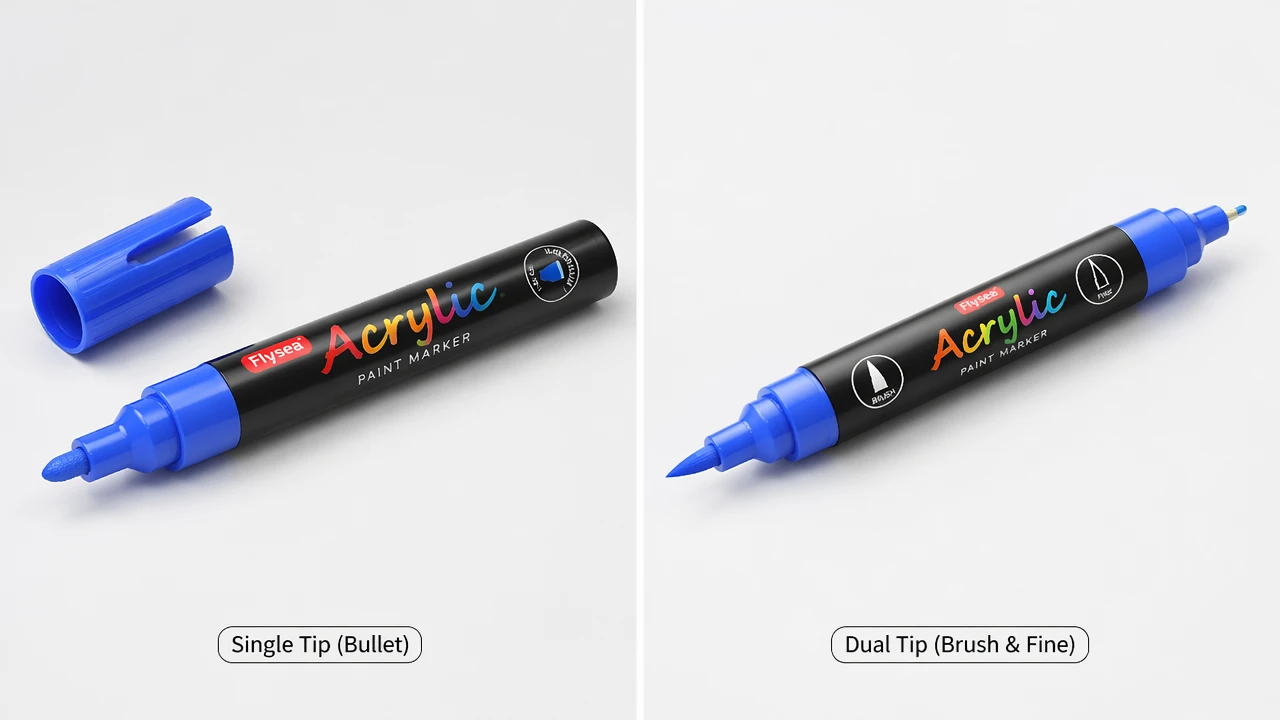
Sie planen Ihre Acrylmarker-Produktlinie. Die Fabrik fragt, ob Sie eine einzelne Spitze oder eine Doppelspitze wünschen. Es klingt nach einer kleinen Designentscheidung. Ist es aber nicht. Diese eine Entscheidung ändert Ihre Stückkosten, Ihre Rücklaufquote, Ihre Verpackungsabmessungen, Ihre Wirtschaftlichkeit der Farbanzahl und ob Ihre Auflistung auf Amazon hochwertig oder budgetär wirkt.
Doppelspitzen-Acrylmarker haben das mittlere bis gehobene Segment übernommen. Durchsuchen Sie eine beliebige Kunstbedarfskategorie auf Amazon und zählen Sie, wie viele der Top-20-Listings Doppelspitzen-Designs im Vergleich zu Einzelspitzen verwenden. Das Verhältnis ist nicht knapp. Aber Doppelspitzen erhöhen die Fertigungskomplexität erheblich. Jede Spitze ist eine separate Komponente. Jeder Spitze-Tinte-Kompatibilitätstest verdoppelt sich. Jede Kappendichtung verdoppelt sich. Eine Fabrik, die die Technik nicht beherrscht, produziert einen Doppelspitzen-Marker, der mehr Retouren generiert, als ein Einzelspitzen-Marker je könnte.
Zwei Formate. Zwei unterschiedliche Kostenstrukturen. Zwei unterschiedliche Rücklaufquotenprofile. Wenn Sie eine Handelsmarke rund um Doppelspitzen-Acrylmarker aufbauen, geht es bei der strategischen Wahl nicht nur um die Spitzenanzahl. Es geht darum, welches Format zu Ihrem Preispunkt, Ihrer Zielkundschaft und der QC-Reife Ihrer Fabrik passt.
Inhaltsverzeichnis
Kurze Antwort: Acrylmarker mit Doppelspitze vs. Einzelspitze
- Doppelspitzen-Acrylmarker erzielen höhere Einzelhandelspreise. Der wahrgenommene Wert verdoppelt sich, wenn ein Kunde zwei Spitzen sieht. Ein $19,99 Einzelspitzen-Set wird zu einem $29,99 Doppelspitzen-Set mit einer etwa 15- bis 25-prozentigen Erhöhung der Herstellungskosten pro Stück. Die Margenrechnung geht auf.
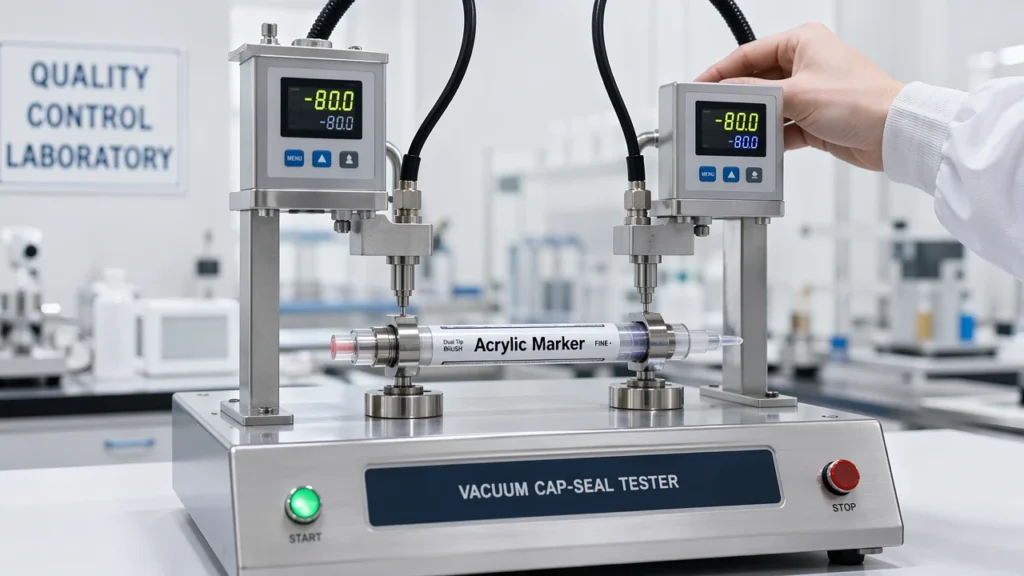
- Doppelspitzen erhöhen das Retourenrisiko. Zwei Kappen. Zwei Verdunstungspunkte. Zwei Spitzen, die ausfallen können. Wenn die Kappendichtungen nicht einzeln vakuumgetestet pro Einheit werden, trocknen Doppelspitzen-Marker schneller aus als Einzelspitzen. Die Rücklaufquotenlücke zwischen einem gut gefertigten Doppelspitzen-Marker und einem schlecht gefertigten ist größer als bei jeder anderen einzelnen Designvariablen.
- Einzelspitzen-Acrylmarker sind günstiger in der Herstellung,, einfacher in der Qualitätskontrolle und besitzen das Budget-Segment (Einzelhandel $8 bis $14). Im Preiswettbewerb hält, die Einzelspitze Ihre Stückkostenwirtschaftlichkeit aufrecht. Im Wettbewerb um den wahrgenommenen Wert rechtfertigen Doppelspitzen-Acrylmarker den höheren Preispunkt.
- Die Spitzenkombination ist wichtiger als die Spitzenanzahl. Ein Doppelspitzen-Marker mit Pinsel- und Feinspitze verkauft sich an Illustratoren und Lettering-Künstler. Ein Doppelspitzen-Marker mit Meißel- und Rundspitze verkauft sich an Studenten und Bastler. Die falsche Kombination für Ihren Markt verschwendet die Doppelspitzen-Prämie vollständig.
Für Markeninhaber und Einkaufsmanager hilft das Verständnis dieser Faktoren, präzisere Beschaffungs- und Qualitätskontrollstandards festzulegen.
Wie die Anzahl der Trinkgelder Kundenbeschwerden und Retouren beeinflusst
Jeder Käufer von Doppelspitzen-Acrylmarkern muss verstehen, dass die Spitzenanzahl die Fehlerpunkte multipliziert. Hier ist wie:
| Problem | Einzelspitze Ursache | Doppelspitze Ursache | B2B-Lösung |
| Marker bei Ankunft ausgetrocknet | Kappendichtung auf einer Seite ausgefallen | Eine von zwei Kappendichtungen ausgefallen; die andere war in Ordnung, aber der Marker ist trotzdem tot | Vakuumtest beider Kappendichtungen pro Einheit |
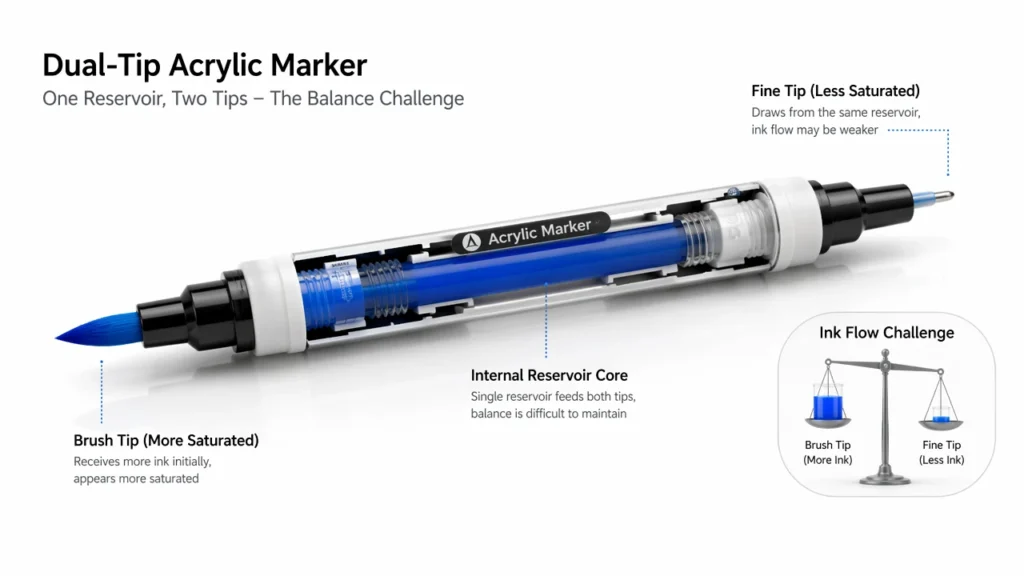
| Eine Spitze schreibt, die andere ist trocken | N/A (keine zweite Spitze) | Ungleichmäßige Reservoir-Sättigung; eine Spitze zieht schneller, entzieht der anderen | Geschichtete Reservoir-Dichte zum Ausgleich der Ziehgeschwindigkeit |
| Tintenfarbe unterscheidet sich zwischen den Spitzen | N/A | Reservoir nicht homogenisiert; Tinte setzt sich während der Lagerung zu einer Spitze ab | Horizontale Lagerspezifikation; Spektralphotometer- Prüfung pro Spitze |
| Spitze franst nach leichtem Gebrauch aus | Niedrige Faserdichte | Niedrige Faserdichte an einer Spitze, während die andere in Ordnung ist. Inkonsistente Spitzenbeschaffung | Faserdichtespezifikation pro Spitzentyp; Abriebtest pro Spitze |
| Farbabweichung bei Nachbestellungen | Pigmentdrift | Pigmentdrift. Doppelte QC-Oberfläche | Batch-Spektralphotometer pro Farbe, pro Spitze |
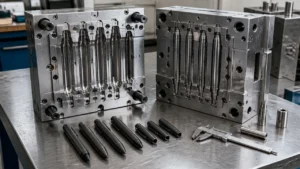
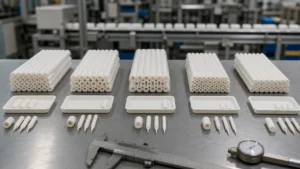
Doppelspitzen-Acrylmarker verdoppeln nicht nur die Anzahl der Spitzen. Sie verdoppeln die Anzahl der Dinge, die ausfallen können. Eine Fabrik, die zuverlässig Doppelspitzen produziert, hat eine QC-Infrastruktur, die beide Spitzen als unabhängige Qualitätseinheiten behandelt. Kappendichtungen einzeln an beiden Enden getestet. Farbkonsistenz an beiden Spitzen gemessen. Spitzenhaltbarkeit an beiden Spitzen mit der tatsächlichen Tintenformulierung getestet. Die Tinte, die durch eine Pinselspitze fließt, ist dieselbe Tinte, die durch eine Feinspitze fließt. Eine Viskosität, die für eine funktioniert, kann die andere verstopfen.
Dual Tip Acrylic Markers: Die Spitzenkombinationen, die sich verkaufen
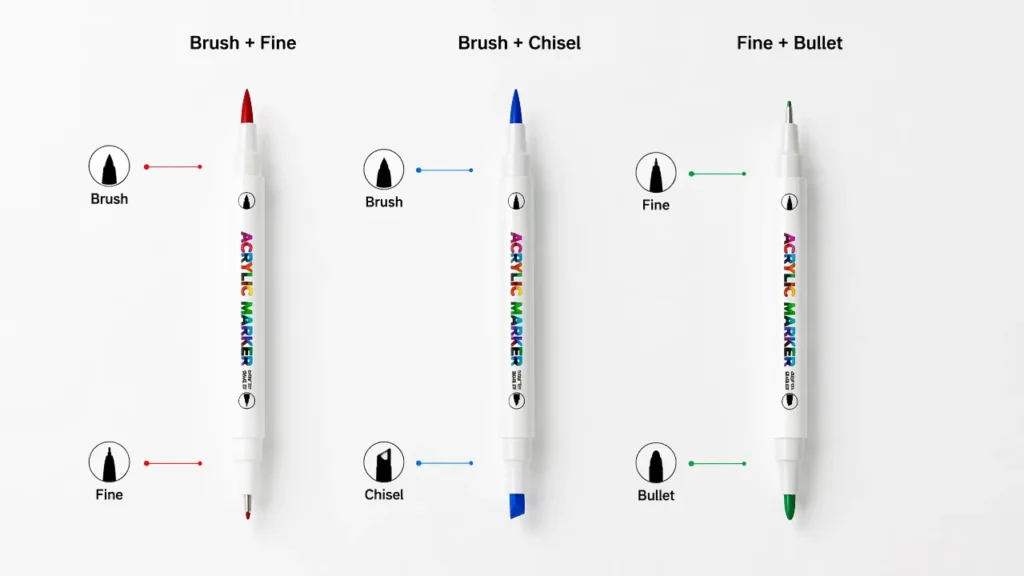
Drei Paarungen dominieren den Markt. Jede bedient eine andere Kundschaft und birgt unterschiedliche Fertigungsrisiken.
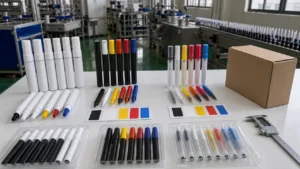
- Pinsel plus Feinspitze ist die Künstler- und Illustratoren-Kombination. Die Pinselspitze handhabt organische Linienführung, Verblendungen, ausdrucksstarke Striche. Die Feinspitze handhabt Detailarbeit, Konturen, präzises Lettering. Höchster Preispunkt, da sie die anspruchsvollsten Nutzer bedient. Am schwierigsten herzustellen. Die Pinselspitze benötigt eine niedrige Faserdichte für Flexibilität. Die Feinspitze benötigt eine hohe Faserdichte für Präzision. Sie ziehen mit unterschiedlichen Raten aus demselben Reservoir. Die Fabrik muss das Reservoir so konstruieren, dass der Fluss zwischen zwei Spitzen mit sehr unterschiedlichen Kapillaranforderungen.
- ausgeglichen wird. Pinsel plus Meißelspitze dominiert eher das Bastel- und Hobbysegment als die reine Kunst. Die Pinselspitze handhabt ausdrucksstarke Arbeiten. Die Meißelspitze handhabt breite Flächenfüllungen, Beschriftungen, Kalligrafie. Breitere Marktanziehungskraft als Pinsel plus Fein weil Meißelspitzen nachsichtiger sind. Eine leicht unvollkommene Meißelspitze schreibt noch. Eine leicht unvollkommene Feinspitze verstopft. Für Marken, die auf den Massenmarkt abzielen, erfasst Pinsel plus Meißel die Doppelspitzen-Prämie mit geringerem QC-Risiko.
- Fein plus Rundspitze ist die haltbarste Kombination. Am einfachsten herzustellen. Beide Spitzen sind starr. Beide haben eine ähnliche Faserdichte. Das Reservoir-Balance-Problem ist minimal, da beide Spitzen mit vergleichbaren Raten ziehen. Verkauft sich an Studenten, Journaling-Enthusiasten, allgemeine Bastler. Einzelhandelspreis niedriger als Pinsel-Kombinationen. Herstellungskosten niedriger. Rücklaufquote noch niedriger. Für Marken, denen die Stückkostenwirtschaftlichkeit wichtiger ist als der maximale Einzelhandelspreis, ist Fein plus Rund die sicherste Doppelspitzen-Acrylmarker-Konfiguration. Es ist auch der klügste Einstiegspunkt für Marken, die zum ersten Mal Doppelspitzen-Acrylmarker auf den Markt bringen, da das Fertigungsrisiko am geringsten und die Kundenerwartung am einfachsten zu erfüllen ist.
ZH STATIONERY produziert Doppelspitzen- Acrylmarker in allen drei Kombinationen, mit spitzenspezifischen QC-Protokollen, die die Kappendichtungsintegrität testen, Spitzendichte, und Tintenflussrate unabhängig an jeder Spitze. Das Problem des Reservoir-Ausgleichs, die häufigste Fehlerquelle bei Doppelspitzen-Markern, wird während der Produktentwicklung angegangen und nicht erst während der Produktion entdeckt.
Einzeltip-Acrylmarker: Wenn Einfachheit gewinnt
Einzelspitzen-Acrylmarker sind kein Kompromiss. Sie sind die richtige Antwort für spezifische Strategien.
- Einzelspitzen-Marker kosten weniger. Eine Spitze. Eine Kappe. Ein Reservoir. Ein Qualitätskontrollpunkt pro spitzenbezogener Variable. Die Einsparungen pro Einheit sind bescheiden, 15 bis 25 Prozent im Vergleich zu Doppelspitzen-Markern, aber sie summieren sich. Eine Bestellung von 10.000 Einheiten zu 2,50 € pro Einheit für Einzelspitzen-Marker gegenüber 3,10 € für Doppelspitzen-Marker spart 6.000 €. Für eine Marke, die mit knappen Margen auf Amazon startet, finanziert dieser Betrag die anfänglichen Werbeausgaben.
- Einzelspitzen-Marker vereinfachen die Lagerhaltung. A Ein 24-Farben- Einzelspitzen-Set besteht aus 24 SKUs. Ein 24-Farben-Doppelspitzen-Set mit Pinsel- und Feinspitze besteht ebenfalls aus 24 SKUs, aber jede SKU hat die doppelte Qualitätskontrollfläche. Wenn der Qualitätskontrollprozess der Fabrik für Doppelspitzen-Marker nicht ausgereift ist, produziert die Einzelspitzen-Linie weniger Fehler pro tausend Einheiten. Weniger Fehler. Weniger Retouren. Gesundere Verkäuferbewertung.
- Einzelspitzen-Marker vereinfachen die Kaufentscheidung des Kunden. Manche Käufer, insbesondere im Budget- und Studentensegment, finden Doppelspitzen-Marker verwirrend. Welche Spitze wofür? Ein Einzelspitzen-Marker mit klarem Verwendungszweck – Rundspitze zum Schreiben, Meißelspitze zum Markieren, Pinselspitze zum Lettering – beseitigt diese Frage. Dies ist wichtig in Einzelhandelskanälen, wo der Kunde vor dem Kauf keine Produktbeschreibung lesen kann.
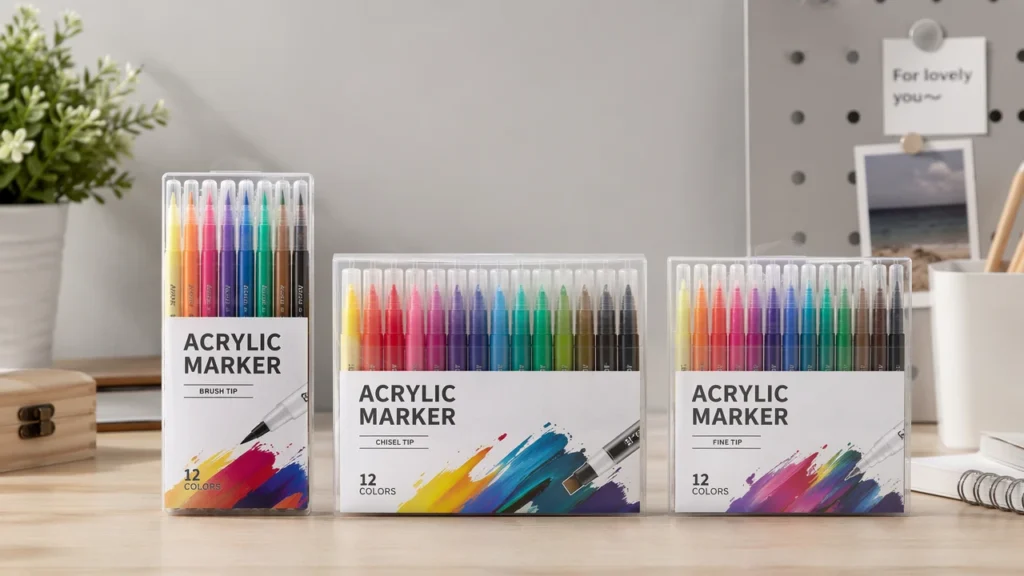
- Einzelspitzen-Marker ermöglichen auch eine Markenstrategie mit mehreren Sets nach Spitzentyp. Bieten Sie ein Pinselspitzen-Set, ein Meißelspitzen-Set und ein Feinspitzen-Set separat an. Ein Kunde kauft drei Sets statt einem. Die Berechnung des Kundenlebenszeitwerts kann für Einzelspitzen-Marker sprechen, wenn die Produktlinie auf Wiederholungskäufe ausgelegt ist. Dies ist die gegenteilige Strategie zu Doppelspitzen-Acrylmarkern, die Vielseitigkeit in einer SKU bündeln. Keiner ist besser. Sie bedienen unterschiedliche Erlösmodelle.
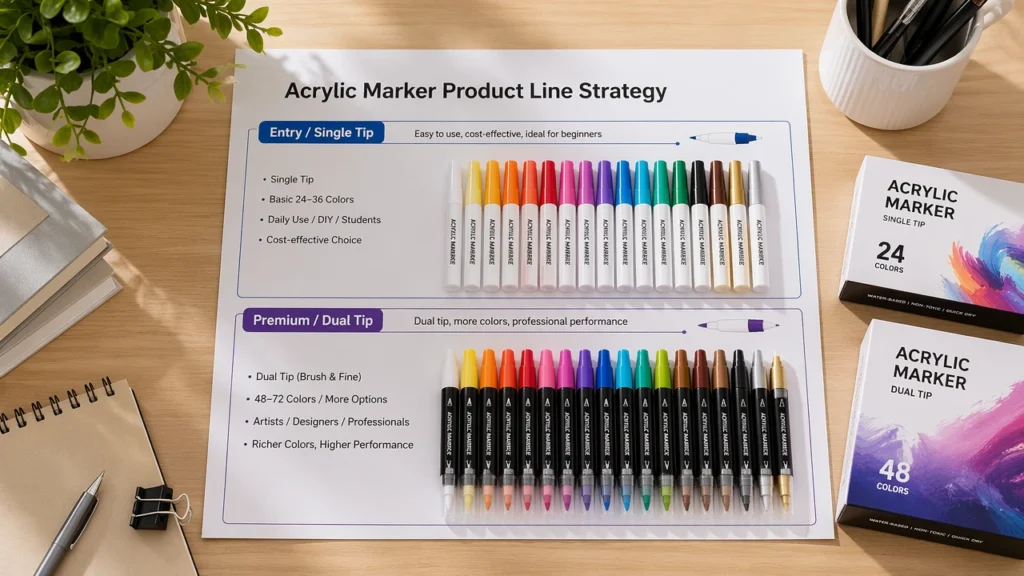
ZH STATIONERY stellt sowohl Einzelspitzen- als auch Doppelspitzen-Acrylmarker her und ermöglicht es Marken, gemischte Produktlinien aufzubauen – Einzelspitzen für Einstiegsniveau, Doppelspitzen für Premium – innerhalb einer Lieferantenbeziehung. Die Qualitätskontrollinfrastruktur handhabt beide Formate. Die Entscheidung ist strategisch.
Häufig gestellte Fragen
Welche verkauft sich besser, Acrylmarker mit Doppelspitze oder mit Einzelspitze?
Dual tip besitzt das mittlere bis obere Preissegment ($15 bis $35). Single tip besitzt das Budgetsegment ($8 bis $14). Die Daten bestimmen keinen Gewinner. Sie zeigen, dass sie unterschiedliche Preispunkte und unterschiedliche Kunden bedienen. Die stärksten Marken verkaufen beides.
Was ist die beliebteste Zweispitzen-Kombination?
Pinsel- plus Feinspitze für Künstler und Illustratoren. Pinsel- plus Meißelspitze für Bastel- und Hobbyarbeiten. Feinspitze plus Rundspitze für Studenten und Tagebuchführung. Passen Sie die Kombination an den primären Verwendungszweck Ihres Kunden an, nicht an das Standardkatalog der Fabrik.
Kosten Doppelspitzen-Acrylmarker deutlich mehr in der Herstellung?
15 bis 25 Prozent mehr pro Einheit als ein vergleichbarer Einzelspitzen-Marker. Die Kosten entstehen durch die zweite Spitze, die zweite Kappe, das komplexere Reservoir und die verdoppelte Qualitätskontrolle. Aber der Einzelhandelspreisunterschied beträgt typischerweise 30 bis 50 Prozent mehr, sodass Doppelspitzen-Marker bessere Margen auf SKU-Ebene erzielen.
Wie kann ich die Qualität von Doppelspitzen-Markern vor der Bestellung testen?
Fordern Sie Kappendichtungs-Vakuumdaten für beide Spitzen unabhängig an. Spitzendichtespezifikationen und Abriebtestergebnisse pro Spitzentyp. Spektralphotometer-Messungen für Farbkonsistenz zwischen den Spitzen. Schreiben Sie mit beiden Spitzen kontinuierlich 100 Meter. Linienbreite und Farbdichte sollten konsistent bleiben. Wenn eine Spitze merklich schlechter ist als die andere, bedeutet dies, dass die Fabrik das Reservoir nicht ausgleicht oder die Spitzenqualität nicht anpasst.
Kann ich verschiedene Trinkgeldarten in meiner Produktlinie mischen?
Ja. Übliche Strategie: Einzelspitzen-Marker für 12- und 24-Farben-Einstiegssets (niedrigerer Preis, geringeres Risiko), Doppelspitzen-Marker für 36- und 48-Farben-Premium-Sets (höherer Preis, höhere Marge). ZH STATIONERY produziert beide Formate und hilft Marken, gemischte Linien zu strukturieren, die die Marge pro SKU-Stufe optimieren.
Welche Verpackung eignet sich am besten für Doppelspitzen im Vergleich zu Einzelspitzen?
Einzelspitzen-Marker: schlankes Etui oder Beutel. Niedrigere Verpackungskosten, einfachere Erwartungshaltung. Doppelspitzen-Marker: strukturiertes Etui mit elastischen Schlaufen und einer Spitzengebrauchsanleitung im Deckel. Die Verpackung von Doppelspitzen-Markern muss erklären, welche Spitze was tut. Ein Doppelspitzen-Marker in einem Beutel wirkt verwirrend. In einem Etui mit Anleitung wirkt er hochwertig. Kontaktieren Sie ZH STATIONERY, um Konfigurationen zu besprechen, spitzenbezogene Qualitätskontroll- Dokumentation anzufordern und Verpackungsmuster zu erhalten.
Doppelspitzen-Acrylmarker sind nicht automatisch besser als Einzelspitzen-Marker. Doppelspitzen-Marker punkten bei Premium-Preispunkten und Vielseitigkeit. Einzelspitzen-Marker punkten bei Kostenkontrolle und Lieferketten-Einfachheit. Die richtige Antwort hängt von Ihrer Positionierung, Ihren Margenzielen und davon ab, ob Ihre Fabrik beide Spitzen unabhängig qualitätskontrollieren kann. Kontaktieren Sie ZH STATIONERY uns, um Ihre Produktstrategie zu besprechen und Produktionsmuster mit spitzenbezogenen Daten zu erhalten.
Verwandter Leitfaden: Für eine verwandte Qualitätskontrolle siehe Nass-abwischbare Marker Beschaffungsbericht 2026.
Weiterführende Literatur
- Kundenspezifische Marker-Stiftsets: OEM Leitfaden zu Farben, Spitzen, Verpackung und MOQ
- Leitfaden für Schreibwarenimporteure in Lateinamerika
- Leitfaden zu Kartongröße und CBM für Markerset
- ASTM D-4236-Testbericht-Leitfaden
- Verhandlungsleitfaden für chinesische Kugelschreiberfabriken
- Leitfaden zur Beschaffung von Watercolor-Markern
- Leitfaden für 12 vs. 24 vs. 36 vs. 48 vs. 60 Farb-Marker-Sets
Externe Referenz: CPSC-Leitfaden für Kunstmaterialien.
Die Mindestbestellmenge beträgt 3.000 einzelne Stifte je SKU und Farbe, also je Stiftmodell und Farbe. Die Menge wird in einzelnen Stiften und nicht in Sets gezählt.