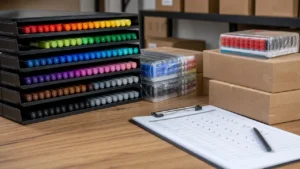
A factory sends you a sample set of acrylic markers. The colors look saturated. The caps click shut. The packaging is exactly what you asked for. Everything seems fine. You place an order for 10,000 units.
Three months later, your customers start posting photos. The red is not the same red they saw in the listing. The white barely shows up on dark paper without three passes. A reviewer says the paint “separated inside the barrel” after sitting on a shelf for two months. Your return rate climbs. Your listing score drops. You are now sitting on 7,000 units you cannot sell.
The problem was not the factory. The problem was that you accepted the sample at face value. Five tests reveal acrylic ink quality at the formulation level. They take less than an hour. They need no lab equipment. They tell you everything a catalog photo cannot.
目录

Quick Answer: 5 Tests For Acrylic Ink Quality
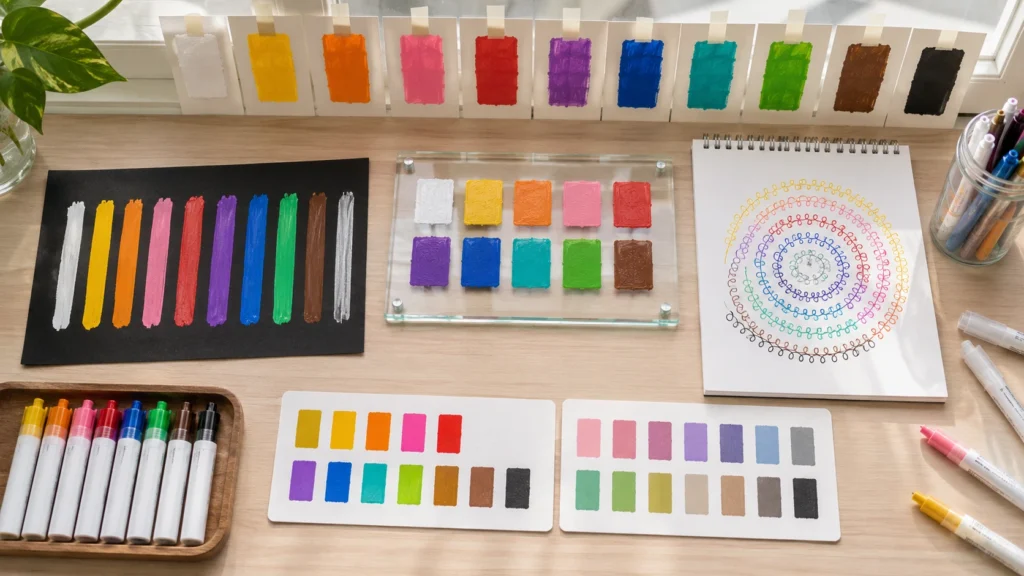
Each test measures one specific dimension of acrylic ink quality. Each one prevents one kind of customer complaint:
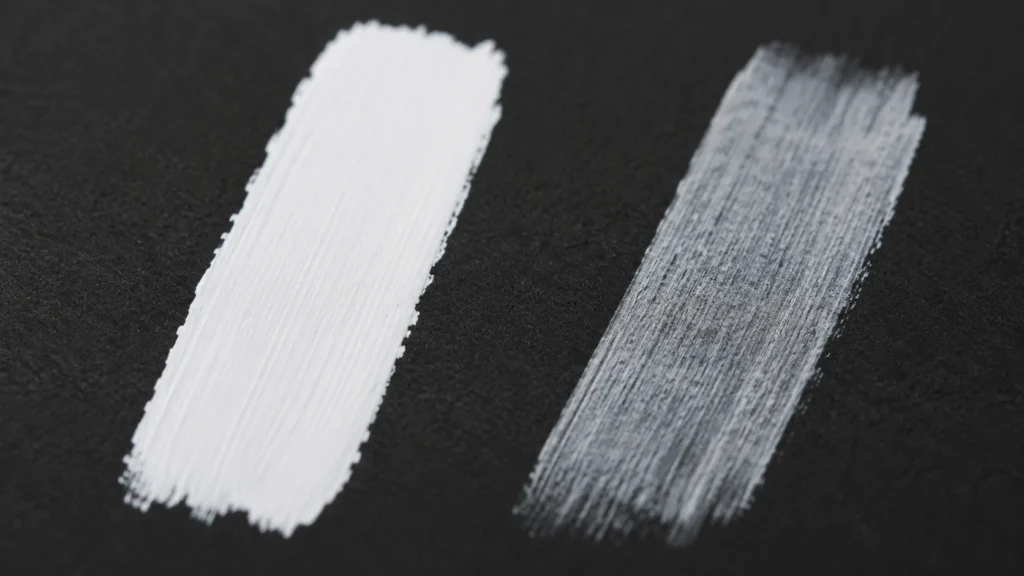
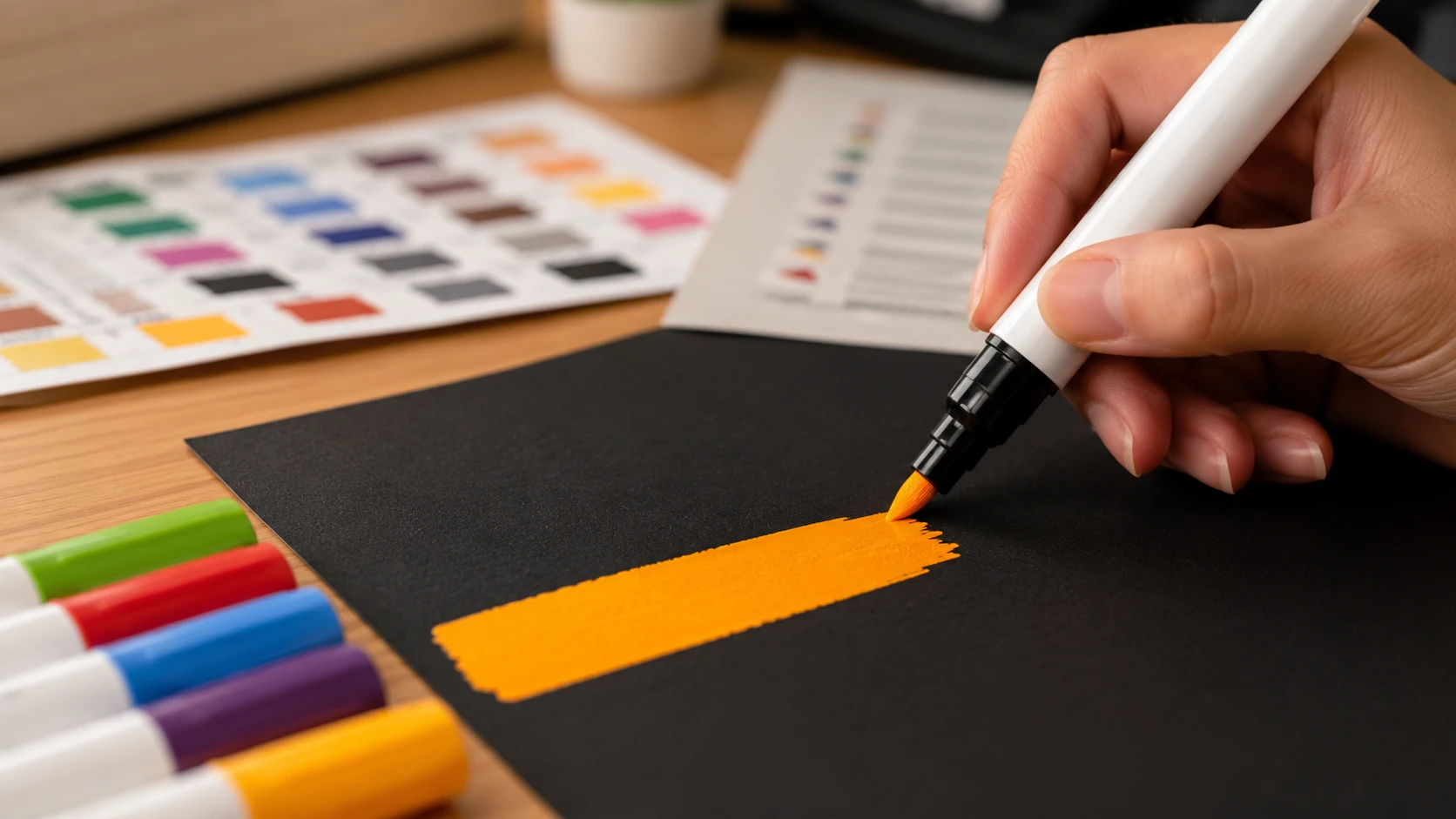
- Single-pass opacity on black paper. This measures pigment load, the most expensive variable in acrylic ink quality. Apply one stroke on dark paper with normal pressure. If the paper shows through, the pigment concentration is too low. Customers call this “thin” or “watery” coverage.
- Viscosity flow test. This measures whether ink moves through the nib consistently. Paint too thick clogs. Paint too thin drips. Write continuously for two minutes without stopping. The line should stay even from the first millimeter to the last. Both failures are preventable with basic acrylic ink quality testing before you commit to an order.
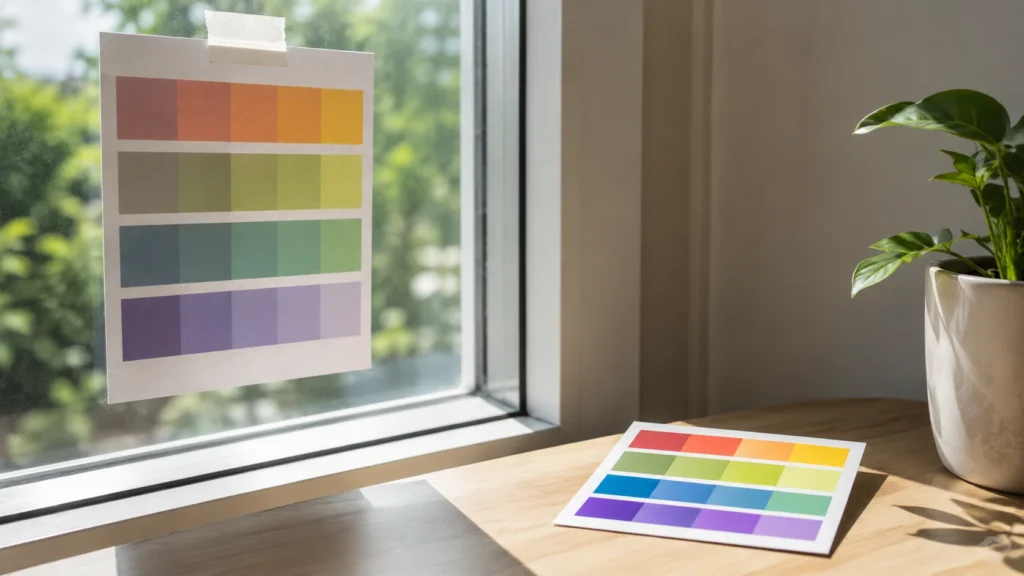
- Lightfastness window test. This catches the complaint that destroys art supply brands: fading. Tape a swatch in a sunny window for 72 hours. Compare to a control swatch kept in a drawer. Any visible shift means the pigment will not survive in a sketchbook. These are predictable outcomes of acrylic ink quality decisions made at the formulation stage.
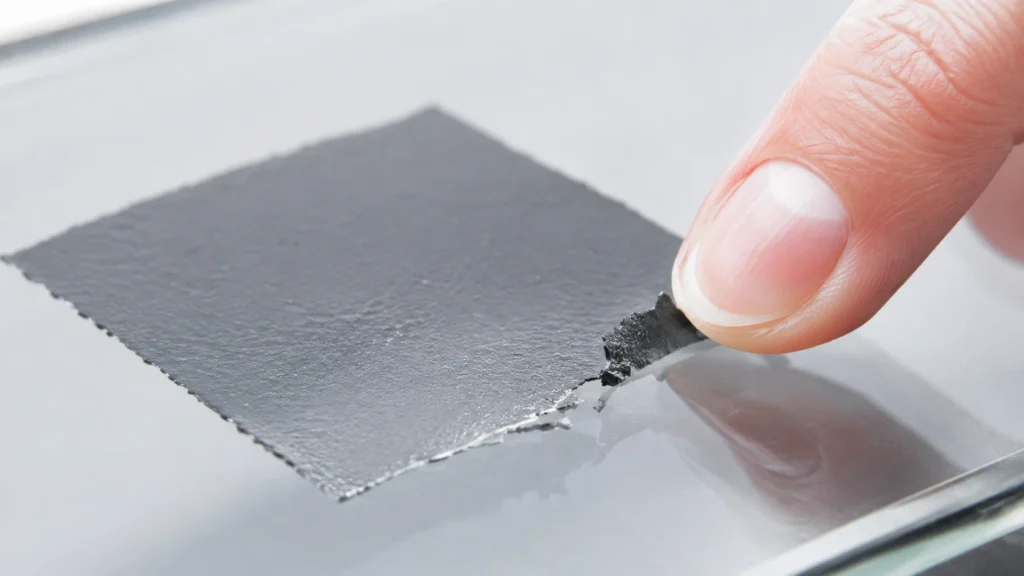
- Adhesion and scratch resistance. Acrylic ink is supposed to form a durable film. Paint on glass or plastic, let cure 24 hours, scratch with a fingernail. If the paint lifts or flakes, the resin binder is weak. Acrylic ink quality testing catches this before your customers do.
- Batch-to-batch color matching. Get two samples from different production runs. Put them side by side under the same light. If they look different to the naked eye, the supplier is not controlling color. Your third order will not match your first.
對於品牌所有者和採購經理而言,理解這些因素有助於建立更精準的採購和品質檢驗標準。.
How Ink Quality Failures Map To Customer Complaints
Every acrylic ink quality failure has a root cause on the manufacturing floor:
| Test | What It Reveals About Acrylic Ink Quality | Customer Complaint If It Fails | Factory QC Metric to Request |
| Single-pass opacity | Pigment-to-binder ratio and pigment particle size | “Thin, watery, needs three coats” | Pigment loading percentage per batch; opacity measurement on black/white contrast chart |
| Viscosity flow | Paint formulation stability and nib compatibility | “Skips, streaks, stops mid-stroke” | Viscosity per batch (Brookfield viscometer); flow-rate consistency across 300 meters of continuous writing |
| 耐光性 | Pigment type (organic vs inorganic) and UV resistance | “Faded within weeks, colors look washed out” | ASTM D4303 or Blue Wool Scale rating per color; pigment specification documentation |
| Adhesion and scratch resistance | Resin binder quality and film-forming capability | “Peels off, flakes, doesn’t stick to surfaces” | Cross-hatch adhesion test on glass and plastic; film hardness after 24-hour cure |
| Batch-to-batch color matching | Pigment sourcing consistency and formulation control | “Reordered and the colors don’t match the first batch” | Spectrophotometer delta-E readings between batches (under 1.5 for professional grade) |
Run these before you order. The hour you spend testing now is cheaper than the months you will spend processing returns later.

Test 1: Single-Pass Opacity On Black Paper
Opacity is the most visible measure of acrylic ink quality. It is also the one manufacturers compromise most often to cut cost.
Acrylic paint is pigment suspended in a polymer emulsion. The pigment provides color and opacity. The polymer binder forms a film when water evaporates. Budget formulations replace some pigment with fillers, calcium carbonate, talc. These add bulk without adding color. The result looks like paint in the barrel. It feels like paint. It goes down pale and transparent on dark surfaces. When you measure acrylic ink quality with a single stroke on black paper, the fillers have nowhere to hide.
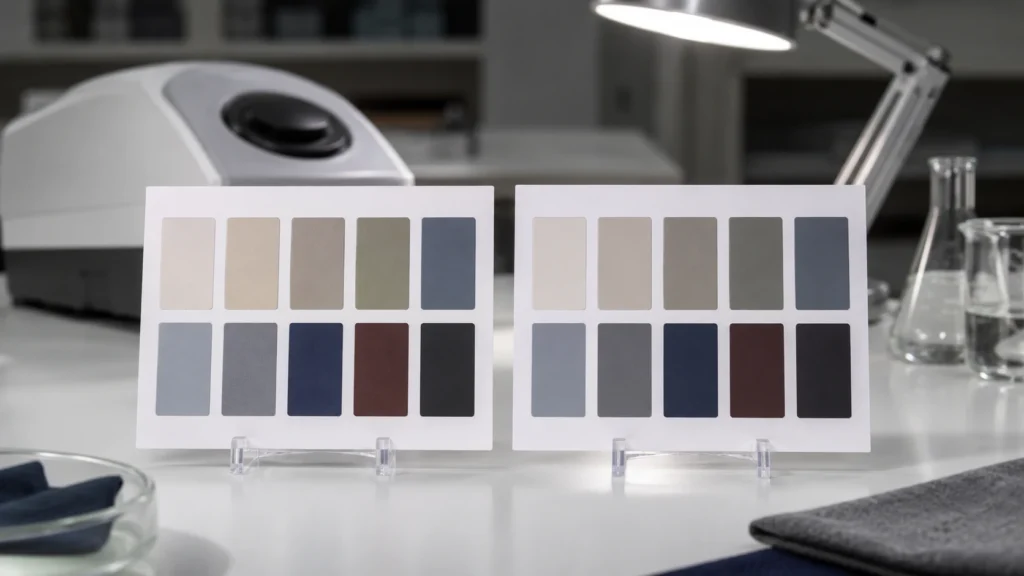
To test: one sheet of black cardstock. One stroke of each color, straight line, normal writing pressure. Do not go over it twice. Hold the paper up to a light source. Quality acrylic ink should deliver near-complete opacity. Black paper should not be visible through the paint.
Document which colors pass and which fail. White and yellow usually fail first. White pigment, 二氧化鈦, and yellow pigments need higher loading to achieve opacity. If only the dark colors pass, the entire formulation is cut with filler and the dark colors are masking it with their natural density. The light colors are telling you the truth.
A factory that formulates ink in-house can document pigment loading by weight per batch. A factory that buys pre-mixed paint from a third party cannot, because they have no control over the formulation. ZH 文具, with its own ink R&D laboratory, controls pigment loading at the formulation stage and provides batch-level opacity data for every color in your set.
Test 2: Viscosity And Flow Consistency
Acrylic ink has to be thick enough for opaque coverage and thin enough to flow through a narrow nib channel. Too thick, it clogs. Too thin, it drips. Both generate returns. Both are measurable with a simple acrylic ink quality flow test.
To test: standard mixed-media paper. Write continuously in a spiral for two full minutes. Do not lift the marker. Watch the line. It should stay consistent in width and density from the first millimeter to the last. Skipping, fading, or any change in character after 30 seconds points to a viscosity problem.
What you are really testing is whether the paint was designed for the nib it is paired with. Cheap markers use one nib and one ink across different product lines. The nib that handles alcohol-based dye fine may choke on acrylic pigment. A manufacturer that tests nibs with the actual paint formulation, checking flow rate, fiber saturation, and tip wear, produces consistent results. A manufacturer that sources nibs and ink from separate catalogs and assembles them produces unpredictable ones.
Viscosity also matters after storage. Paint that is slightly too thick writes fine fresh out of the box. It clogs after two weeks sitting unused. The cap-off recovery test, uncap for 30 minutes, re-cap for 24 hours, write again, simulates this. A quality acrylic formulation with proper flow modifiers recovers without priming.

Test 3: Lightfastness Window Test
Artists keep sketchbooks for years. Students pin work to sunny dorm walls. Crafters sell at outdoor markets. If the color fades in months, every one of these scenarios produces a disappointed customer. These failures trace directly back to acrylic ink quality choices made when the pigment was sourced.
Lightfastness comes down to pigment chemistry. Inorganic pigments, iron oxides, titanium dioxide, cadmium replacements, score highest on ASTM D4303 and the Blue Wool Scale. Organic pigments can produce brilliant color but fade faster under UV. The gap between a set labeled “artist grade” and one labeled “student grade” is often just which pigment category the manufacturer bought.
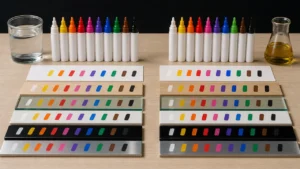
To test: paint a swatch of each color on acid-free paper. Cut it in half. Tape one half to a sunny window. Store the other half in a dark drawer. After 72 hours, compare them side by side. Any visible color shift, dulling, or saturation change means the pigment is not lightfast enough for professional use.
This is not pass/fail. It is a market-positioning test. If your product sells to students, moderate fading over months may be fine. If it sells to professional artists at a premium price, any visible fade within 72 hours of direct sun is a problem that will show up in reviews. Know your market and what level of lightfastness it expects.

Test 4: Adhesion And Scratch Resistance
Acrylic paint is permanent when dry because the polymer binder forms a durable film. If that film is weak, the paint lifts, flakes, or scratches off. The user blames the marker. The problem is the resin. And it is another variable that acrylic ink quality testing catches before your customers see it.
To test: paint a one-inch square of each color on glass and a separate square on plastic. Let cure 24 hours at room temperature. Scratch with moderate fingernail pressure. Quality acrylic ink stays put. If the paint peels in sheets or leaves a visible scratch, the resin binder is underperforming.
Weak adhesion has three causes: too little resin relative to pigment, the wrong resin chemistry for the pigment type, or incomplete film formation because the paint dried too fast. The resin system in acrylic paint does the same job as the binder in any paint. It holds pigment to the surface after the water evaporates. Weak binder means pigment has nothing holding it in place.
For B2B buyers, adhesion testing matters most for markers sold as “multi-surface.” That claim implies the ink bonds to glass, plastic, metal, wood, ceramic. A formulation that sticks to paper but flakes off glass is not multi-surface. It is paper-only. Test on every surface your packaging claims the marker handles.
Test 5: Batch-To-Batch Color Matching
Your first order looks perfect. Your customer base grows. Six months later you reorder and the red is different. Listing photos no longer match. Reviews mention “colors changed.” This is what happens when acrylic ink quality is not verified across production runs.
This is the most common long-term quality failure. It happens when the supplier does not control pigment sourcing. A third-party paint supplier changes a pigment source. A solvent grade drifts. A filler supplier ships a slightly different material. The factory assembling your markers never notices because they do not test color against a reference.
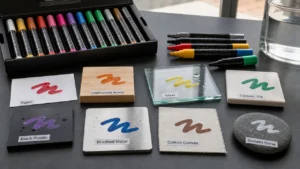
To test: request two samples from different production runs, ideally months apart. Put them side by side on the same paper under the same light. If you can see a difference without instruments, the delta-E is too high for professional use. If you need a spectrophotometer to detect a difference under 1.5 delta-E, the supplier is controlling color.
A factory with in-house ink formulation and spectrophotometer verification per batch can document color consistency across production runs. A factory buying pre-mixed paint cannot, because they have no control over what happens upstream. When the third-party supplier changes something, the factory finds out the same time your customers do.
ZH STATIONERY tests color at the formulation stage with batch-level spectrophotometer readings. That infrastructure, a dedicated ink lab plus documented acrylic ink quality data per production run, is what lets a supplier deliver consistency across years of reorders.

常見問題解答
What Is The Most Important Test For Acrylic Ink Quality?
Single-pass opacity on black paper. 30 seconds per color. It reveals the most expensive variable in acrylic ink: pigment loading. If opacity fails, everything else is compromised. The paint is filler, not pigment.
How Can I Test Acrylic Ink Quality Without Lab Equipment?
Black cardstock for opacity. A sunny window for lightfastness. Your fingernail for adhesion. Two minutes of continuous writing for viscosity. Two production run samples for color matching. Nothing you cannot get at an art supply store.
Why Does Acrylic Paint Separate Inside The Marker Barrel?
Not enough suspension agents. Pigment particles are heavier than the acrylic emulsion. Without stabilizers, they settle. A quality formulation includes rheology modifiers that keep pigment suspended. Test it: store a sample marker horizontally for two weeks, write without shaking. If the first stroke is watery and color only appears after shaking, the suspension system failed.
What Causes Acrylic Markers To Smell Bad?
Low-quality formulations sometimes use ammonia or strong preservatives to stretch shelf life. Quality water-based acrylic ink should be low-odor. A strong chemical smell from a sample is a red flag. The formulation is compensating for something, usually weak biocide control, with harsher chemistry. For products sold to children or schools, odor is a compliance and safety issue.
How Do I Know If The Supplier Can Maintain Acrylic Ink Quality Across Reorders?
Ask for batch-to-batch color data from two production runs at least three months apart. If they cannot show 驗證並記錄顏料來源鏈。 readings with delta-E under 1.5 between batches, they are not controlling color. Ask for pigment specifications. If they cannot name the pigment type and lightfastness rating per color, they are buying pre-mixed paint with no formulation visibility. A manufacturer with 內部墨水研發能力, like ZH STATIONERY, generates this data during production. It is not something they chase down later.
What Certifications Should I Check For Acrylic Markers?
**ASTM D-4236** for the US market, conformance statement printed on packaging. EN71-3 for Europe if the product reaches children. ASTM D4303 lightfastness for artist-grade products. REACH documentation for EU chemical compliance. All reports should be current, dated, from ISO 17025-accredited labs, and tied to your specific SKU. Contact ZH STATIONERY to request certified test documentation and discuss your acrylic marker specifications.
若您正在採購 丙烯马克笔 for your brand, run these five tests on every sample before you place an order. Acrylic ink quality is not something you verify by looking at a catalog photo or a hand-assembled prototype. It is something you measure, with repeatable tests, on production-line samples, before you commit to inventory. 聯絡 ZH STATIONERY to request acrylic marker samples, discuss ink formulation requirements, and review batch-level documentation that proves acrylic ink quality across production runs.