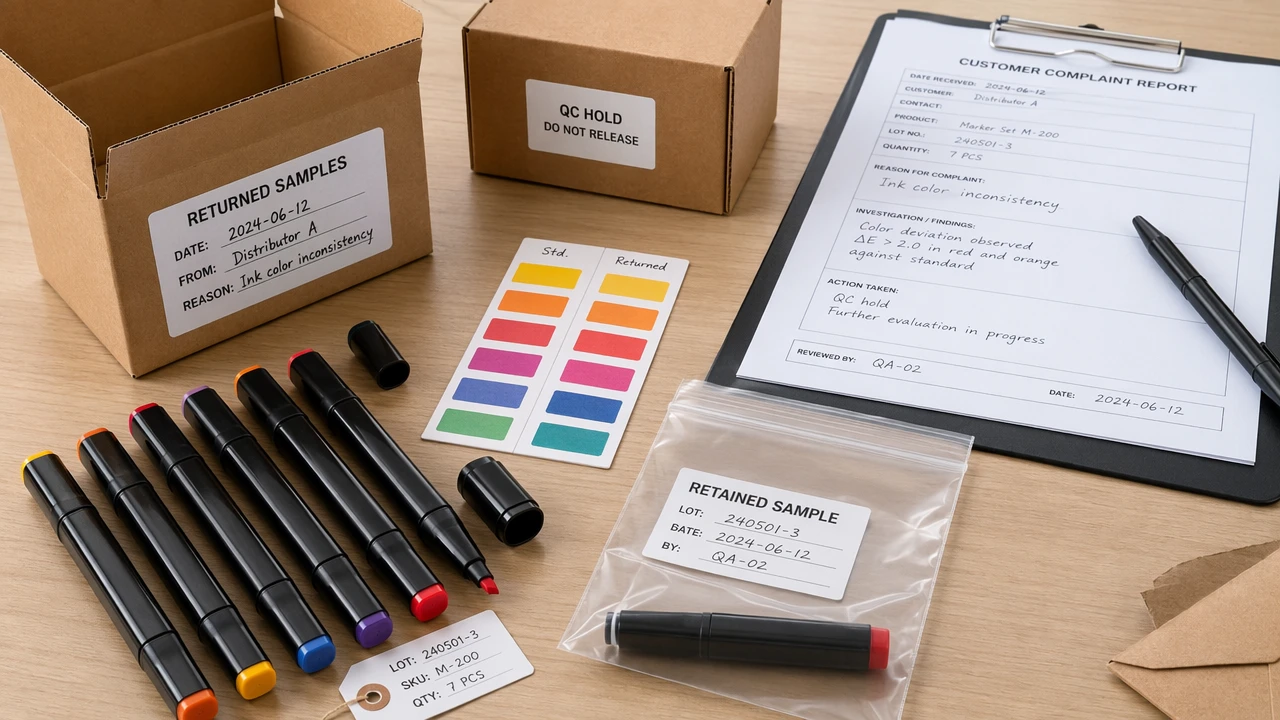
khiếu nại của khách hàng về bút lông bị khô không nên biến thành trò đổ lỗi giữa nhà phân phối, nhà bán lẻ, đội chăm sóc khách hàng và nhà máy. Bút lông bị khô có thể do nắp bị rò rỉ, mực không được bơm đúng cách, nhiệt độ bảo quản, thời gian lưu kho lâu, bao bì hư hỏng hoặc lỗi sản xuất thực sự. Sự khác biệt màu sắc có thể do sai lệch lô mực, giấy, ánh sáng, thời gian khô hoặc thay đổi đặt hàng lại không được phê duyệt.
Bài viết này cung cấp cho các nhà nhập khẩu, thương hiệu nhãn riêng, người bán Amazon và nhà phân phối văn phòng phẩm một quy trình thực tế để xử lý khiếu nại về bút lông khô hoặc chênh lệch màu sắc trước khi họ đưa ra quyết định thay thế hoặc yêu cầu nhà cung cấp thực hiện hành động khắc phục.
Trả lời nhanh
Xử lý khiếu nại về bút lông theo bảy bước: phân loại loại khiếu nại, thu thập bằng chứng, xác định lô hàng, so sánh với mẫu lưu, xem xét điều kiện bảo quản và vận chuyển, trả lời khách hàng với biện pháp khắc phục rõ ràng, sau đó yêu cầu nhà cung cấp thực hiện hành động khắc phục dựa trên sự thật. Không coi mọi bút lông khô là lỗi của nhà máy, và không coi mọi chênh lệch màu là sai lệch chấp nhận được.
Liên kết nhanh
- Trả lời nhanh
- Phân Loại Loại Khiếu Nại
- Thu thập bằng chứng
- Truy xuất lô hàng
- Đối chiếu mẫu lưu
- Kiểm tra lưu kho và vận chuyển
- Phản hồi khách hàng
- CAPA của nhà cung cấp
- Biểu mẫu báo cáo khiếu nại
- Đặt câu hỏi tốt hơn cho nhà cung cấp
- Câu hỏi thường gặp
Phân loại khiếu nại trước khi quyết định biện pháp xử lý
Sai lầm đầu tiên là gộp khiếu nại khô mực và khiếu nại màu sắc thành một vấn đề chất lượng. Chúng thường cần bằng chứng khác nhau. Bút khô liên quan đến khả năng ra mực, độ kín nắp, tình trạng ống chứa mực, tình trạng ngòi và điều kiện bảo quản. Khác biệt màu sắc liên quan đến công thức, tiêu chuẩn màu, bề mặt ghi, thời gian khô, ánh sáng và so sánh lô.
| Loại khiếu nại | Ý nghĩa thường gặp | Bằng chứng đầu tiên cần yêu cầu |
|---|---|---|
| Khô khi nhận hàng | Bút lông không viết được khi mở nắp hoặc sau khi mồi mực thông thường | Video mở nắp, thao tác mồi mực, tình trạng nắp, mã lô và ảnh bao bì |
| Viết được rồi nhanh bị khô | Có thể liên quan đến độ kín nắp, hư hỏng đầu bút, nhiệt độ bảo quản hoặc công thức mực | Cung cấp mốc thời gian, vị trí bảo quản, ảnh nắp, mẫu viết và số lượng bị ảnh hưởng |
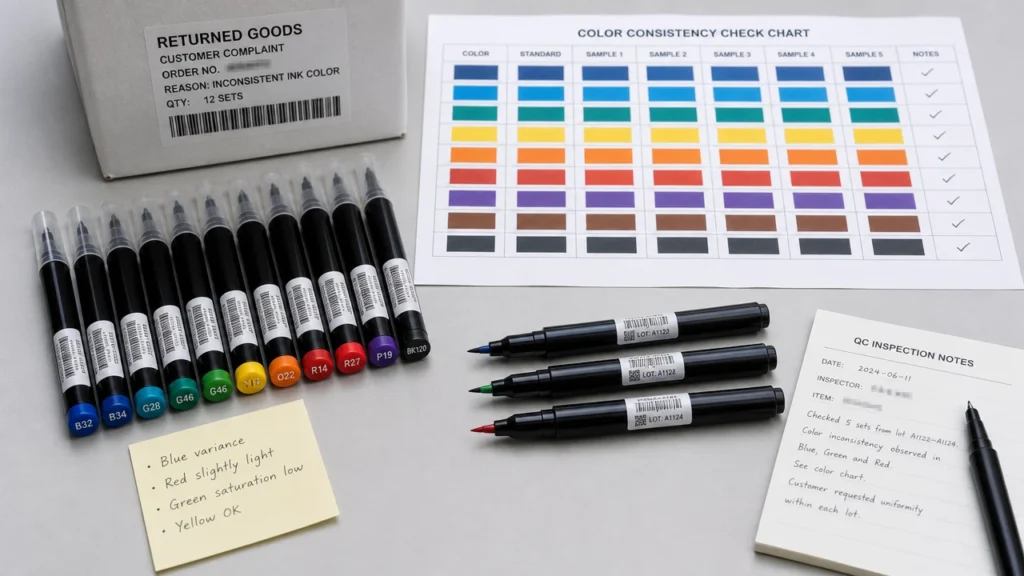
| Một màu bị nhạt | Độ bão hòa mực, khả năng dẫn mực của ngòi, hàm lượng bột màu hoặc giấy có thể ảnh hưởng đến kết quả | Mã màu, mẫu viết, loại giấy và so sánh với bộ khác |
| Cả bộ sản phẩm trông khác biệt | Có thể liên quan đến thay đổi lô, ánh sáng, thẻ màu bao bì hoặc điều kiện trưng bày | Mã lô, so sánh mẫu lưu, bảng màu và ảnh chụp dưới ánh sáng trung tính |
| Màu đơn hàng đặt lại không khớp | Lô mới có thể không khớp với mẫu đã duyệt hoặc mẫu lưu trước đó | Mã lô cũ và mới, tiêu chuẩn màu đã phê duyệt và mẫu thử khô so sánh cạnh nhau |
Để có cái nhìn sâu hơn về sản xuất, hướng dẫn ZH Stationery về kiểm soát chất lượng bút lông và tình trạng bút lông khô mực giải thích về độ kín nắp, dòng mực và các điểm kiểm tra. Đối với vấn đề đặt hàng lại, hãy xem bài viết về duy trì màu bút lông nhất quán giữa các lần đặt hàng lại như một danh sách kiểm tra đi kèm.
Thu thập bằng chứng trước khi đổ lỗi cho lô hàng
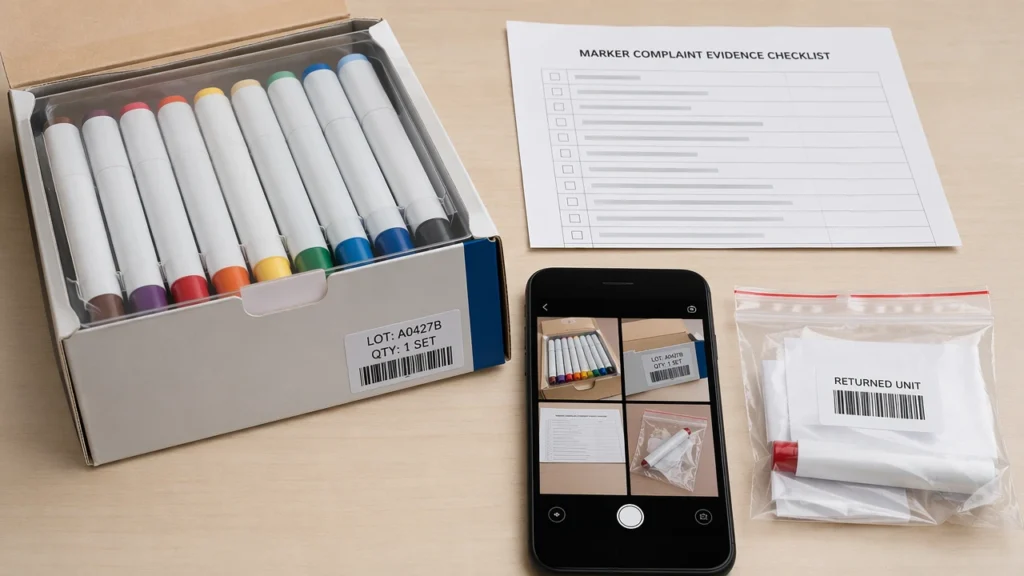
Đội ngũ chăm sóc khách hàng muốn giải quyết khiếu nại nhanh chóng. Điều đó hợp lý, nhưng hoàn tiền nhanh mà không có bằng chứng không giúp người mua tìm ra nguyên nhân gốc rễ. Hãy yêu cầu đủ thông tin để đánh giá khiếu nại mà không bắt khách hàng phải tự kiểm tra ở cấp độ nhà máy.
- Số đơn hàng, SKU, bộ màu và ngày mua.
- Mã lô, mã ngày, ký hiệu thùng carton, mã vạch hoặc bất kỳ nhãn nào liên kết sản phẩm với lô hàng.
- Ảnh chụp toàn bộ bộ sản phẩm, bao bì hư hỏng, vị trí nắp, tình trạng ngòi bút và các màu bị ảnh hưởng.
- Video ngắn cho thấy quá trình bơm mực hoặc viết thử trên giấy thường.
- Số lượng sản phẩm bị ảnh hưởng trong tổng số sản phẩm đã bán hoặc đã kiểm tra.
- Nơi lưu trữ hàng hóa trước khi bán và liệu có khả năng tiếp xúc với nhiệt độ cao, đóng băng, ánh nắng hoặc thùng carton bị nén không.
Đối với sản phẩm bán lẻ hoặc trực tuyến, mã định danh sản phẩm rất quan trọng. US GS1 giải thích rằng GTIN xác định một mặt hàng thương mại. Mã vạch không tự xác định lô sản xuất, vì vậy người mua cũng nên giữ mã lô hoặc nhãn thùng carton trong hồ sơ khiếu nại.
Truy vết lô hàng và tìm ra mô hình khiếu nại
Một khiếu nại có thể là vấn đề do khách hàng sử dụng. Mười khiếu nại từ cùng một lô, màu sắc, bao bì hoặc kho hàng là một mô hình. Người mua nên liên kết từng khiếu nại với lô hàng, thùng carton, ngày sản xuất và kênh bán hàng trước khi quyết định thay thế các đơn vị riêng lẻ, cách ly hàng tồn kho hoặc yêu cầu nhà cung cấp điều tra.
| Mô hình | Hướng có thể | Hành động của người mua |
|---|---|---|
| Cùng màu trên nhiều bộ sản phẩm | Vấn đề về mực, ngòi bút hoặc bộ phận nạp mực theo màu cụ thể | So sánh màu bị ảnh hưởng với mẫu lưu giữ và yêu cầu nhà cung cấp cung cấp hồ sơ lô sản xuất |
| Cùng lô hàng trên nhiều khách hàng | Có thể liên quan đến điều kiện sản xuất hoặc vận chuyển | Giữ hàng tồn kho còn lại từ lô hàng cho đến khi hoàn tất kiểm tra |
| Chỉ một kho hàng hoặc khu vực | Có thể liên quan đến bảo quản, nhiệt độ hoặc xử lý | Xem xét nhật ký kho, hư hỏng thùng carton và tuyến đường vận chuyển |
| Chỉ trả hàng qua kênh trực tuyến | Có thể liên quan đến kỳ vọng của khách hàng, ảnh niêm yết hoặc hư hỏng bao bì | Kiểm tra ảnh sản phẩm, chính sách thay thế và bảo vệ bao bì |
| Không khớp khi đặt hàng lại | Tiêu chuẩn được phê duyệt hoặc kiểm soát công thức có thể đã bị sai lệch | So sánh lô cũ, lô mới và tiêu chuẩn màu đã ký |
Người mua tìm nguồn cung các loại bút marker khác nhau có thể xem dòng sản phẩm bút lông và hướng dẫn về bút marker acrylic đầu đôi so với đầu đơn. Số lượng đầu bút và nắp bút làm thay đổi số điểm có thể gây lỗi, vì vậy việc truy vết khiếu nại cần phản ánh đúng thiết kế sản phẩm.
So Sánh Mẫu Lưu Trong Điều Kiện Kiểm Soát
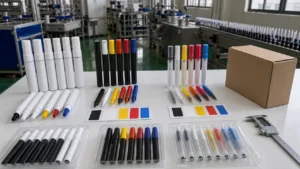
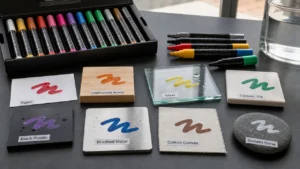
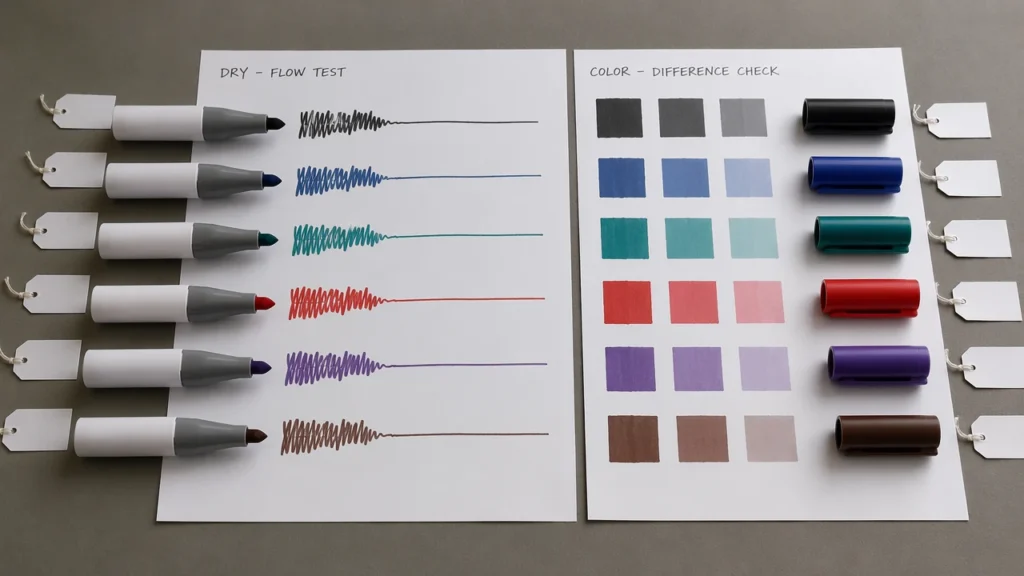
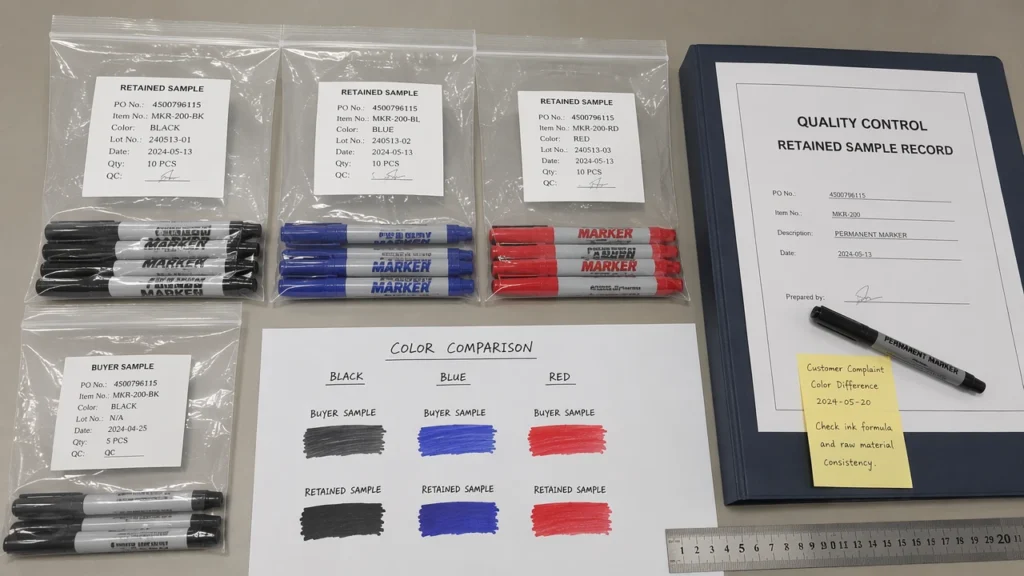
Mẫu lưu là biện pháp bảo vệ tốt nhất của người mua trước sự phỏng đoán. Giữ một mẫu đã được duyệt từ phía người mua và một mẫu từ phía nhà cung cấp. Đối với tranh chấp về màu sắc, so sánh mẫu bị ảnh hưởng với mẫu lưu trên cùng loại giấy, sau cùng thời gian khô, dưới ánh sáng trung tính. Đối với tranh chấp về khô mực, kiểm tra độ khít của nắp, tình trạng ngòi bút, chênh lệch trọng lượng nếu có, và liệu việc mồi mực thông thường có khôi phục dòng mực hay không.
Nếu khiếu nại liên quan đến bút lông acrylic hoặc bút lông điều khiển bằng van, cần kiểm tra kỹ hành vi mồi mực. công nghệ bút van nhấn trang giải thích lý do dòng mực phụ thuộc vào mối quan hệ giữa van, bể mực, ngòi bút và cách người dùng mồi mực.
Kiểm Tra Lưu Kho, Vận Chuyển và Xử Lý Tại Bán Lẻ
Bút lông là sản phẩm nhỏ, nhưng hiệu suất của chúng vẫn có thể bị ảnh hưởng bởi lưu kho và vận chuyển. Nhiệt độ, tiếp xúc lâu với ánh nắng, nắp bị bẹp, bao bì bán lẻ lỏng lẻo, hoặc hàng lưu kho lâu ngày có thể biến một lô sản xuất tốt thành vấn đề khiếu nại.
Để biết bối cảnh kiểm tra bao bì, trang ASTM D4332 mô tả việc điều hòa thùng chứa, bao bì hoặc các bộ phận đóng gói trước khi thử nghiệm. Điều này không có nghĩa là mọi lô bút lông đều cần thử nghiệm vận chuyển trong phòng thí nghiệm, nhưng là lời nhắc hữu ích rằng nhiệt độ và độ ẩm có thể thay đổi vật liệu đóng gói và kết quả thử nghiệm.
Hình thức đóng gói có thể tăng hoặc giảm rủi ro. Xem xét tùy chọn đóng gói bút lông acrylic và hướng dẫn kích thước thùng, trọng lượng cả bì và CBM khi khiếu nại liên quan đến thùng bị móp, khay bị lỏng, nhãn kho hoặc hư hỏng cấp thùng.
Phản hồi khách hàng không hứa quá mức
Một phản hồi khách hàng tốt là bình tĩnh, cụ thể và nhanh chóng. Nó nên ghi nhận vấn đề, yêu cầu bằng chứng còn thiếu, giải thích bước tiếp theo và đưa ra biện pháp khắc phục thực tế khi khiếu nại đáng tin cậy. Tránh ngôn ngữ kỹ thuật khiến khách hàng cảm thấy bị đổ lỗi.
| Tình huống | Hướng phản hồi đề xuất | Những điều không nên nói |
|---|---|---|
| Bút lông khô đơn lẻ | Yêu cầu ảnh hoặc video, đề nghị thay thế nếu chính sách cho phép, ghi lại chi tiết lô hàng | Tất cả bút lông đã được kiểm tra, vì vậy điều này không thể xảy ra |
| Nhiều bút lông khô trong một bộ | Thay thế bộ sản phẩm, yêu cầu trả lại đơn vị bị ảnh hưởng nếu cần, kiểm tra hàng tồn kho còn lại | Bạn chắc đã bảo quản không đúng cách |
| Màu sắc trông khác với hình ảnh niêm yết | Yêu cầu chụp ảnh dưới ánh sáng trung tính và so sánh với hình ảnh niêm yết, bảng màu trên bao bì và mẫu lưu giữ | Màu màn hình luôn là vấn đề của bạn |
| Không khớp khi đặt hàng lại | So sánh mẫu lô hàng cũ và mới, tạm dừng lô hàng tiếp theo nếu khác biệt đáng kể | Sai lệch nhỏ là bình thường nếu không kiểm tra |
Yêu cầu CAPA từ nhà cung cấp dựa trên sự thật
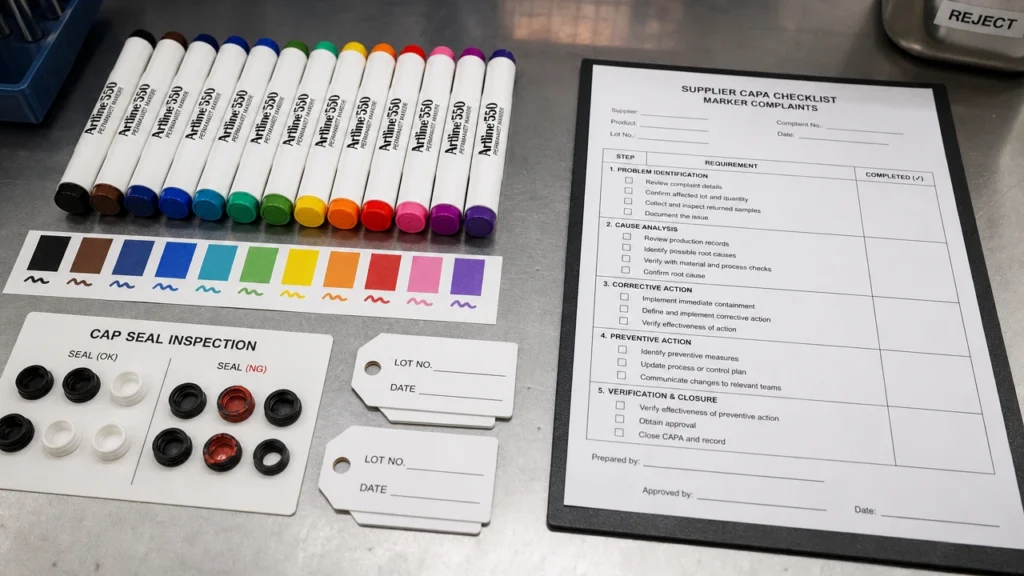
Hành động khắc phục của nhà cung cấp phải phù hợp với bằng chứng. Đừng yêu cầu báo cáo xin lỗi chung chung. Hãy yêu cầu đánh giá nguyên nhân gốc, phạm vi ảnh hưởng, hành động ngăn chặn, hành động khắc phục, phương pháp phòng ngừa và cách kiểm tra lô hàng tiếp theo.
Dành cho khiếu nại về bút lông khô
- Yêu cầu nhà cung cấp rà soát dữ liệu độ kín nắp, độ khít ngòi, lượng mực nạp, độ bão hòa bầu chứa mực và áp lực đóng gói.
- Hỏi xem vấn đề chỉ giới hạn ở một màu, lô, loại ngòi hay hình thức đóng gói.
- Yêu cầu so sánh với mẫu lưu và ảnh hoặc video kiểm tra nội bộ.
- Chỉ thống nhất phương án thay thế, bồi hoàn, phân loại hoặc biện pháp phòng ngừa cho đơn hàng tiếp theo sau khi đã xác định rõ phạm vi.
Đối với khiếu nại sai lệch màu sắc
- Yêu cầu so sánh với tiêu chuẩn màu đã phê duyệt và mẫu lô trước đó.
- Sử dụng cùng loại giấy, thời gian khô và điều kiện quan sát khi so sánh mẫu màu.
- Kiểm tra xem sắc tố, thuốc nhuộm, gốc mực, ngòi hoặc hướng dẫn về giấy có thay đổi giữa các đơn hàng hay không.
- Nếu việc kiểm soát màu sắc là yếu tố quan trọng, hãy xác định Delta E hoặc dung sai quan sát trước đơn hàng tiếp theo thay vì sau khi xảy ra khiếu nại.
Để xem xét tài liệu, hãy sử dụng ZH Stationery của trang chứng nhận của 1TP5T và hướng dẫn báo cáo kiểm tra ASTM D-4236. Hoa Kỳ hướng dẫn vật liệu nghệ thuật CPSC giải thích rằng vật liệu nghệ thuật có nghĩa vụ ghi nhãn theo LHAMA và ASTM D-4236. Trang chính thức ASTM D4236 cũng nêu rõ rằng tiêu chuẩn này liên quan đến việc ghi nhãn cảnh báo rủi ro sức khỏe mãn tính, không phải là sự đảm bảo rằng bút lông sẽ không bao giờ bị khô mực.
Biểu mẫu báo cáo khiếu nại
Sử dụng một mẫu báo cáo cho cả người mua và nhà cung cấp. Một báo cáo khiếu nại ngắn gọn, đầy đủ giúp tiết kiệm thời gian hơn một chuỗi email dài.
| Trường dữ liệu | Nội dung cần ghi |
|---|---|
| Người mua và kênh phân phối | Nhà phân phối, nhà bán lẻ, Amazon, bán lẻ trực tiếp, nhà cung cấp trường học hoặc kênh khác |
| SKU và loại sản phẩm | Kích thước bộ, loại bút lông, loại ngòi, hệ thống mực, định dạng bao bì và mã vạch hoặc GTIN |
| Thông tin lô hàng | Ngày sản xuất, mã lô, ký hiệu thùng carton, ngày giao hàng và vị trí kho |
| Mô tả khiếu nại | Bút marker khô, ra mực yếu, lệch màu, vấn đề nắp, hư hỏng bao bì, hoặc lỗi trộn lẫn |
| Bằng chứng | Hình ảnh, video, mẫu viết, tin nhắn khách hàng, sản phẩm bị trả lại và so sánh mẫu lưu |
| Phạm vi bị ảnh hưởng | Số lượng đã bán, số lượng đã kiểm tra, khiếu nại đã nhận, màu bị ảnh hưởng và thùng carton bị ảnh hưởng |
| Biện pháp tạm thời | Thay thế, hoàn tiền, giữ hàng tồn, phân loại hoặc kiểm tra bổ sung |
| Hành động của nhà cung cấp | Nguyên nhân gốc rễ, biện pháp ngăn chặn, hành động khắc phục, phương pháp phòng ngừa và kiểm tra lô hàng tiếp theo |
Đặt câu hỏi tốt hơn cho nhà cung cấp
Câu hỏi khiếu nại nên buộc nhà cung cấp đưa ra câu trả lời hữu ích. Nếu nhà cung cấp chỉ nói đơn hàng sau sẽ tốt hơn thì người mua vẫn không có phương pháp kiểm soát.
| Câu hỏi | Câu Trả Lời Hữu Ích Từ Nhà Cung Cấp Nên Bao Gồm |
|---|---|
| Lô, màu hoặc bộ phận nào có khả năng liên quan nhất? | Phạm vi rõ ràng dựa trên mã lô, số màu, ngòi bút, nắp bút, lô mực, bao bì hoặc hồ sơ lô hàng |
| Bạn đã so sánh những mẫu lưu nào? | Hình ảnh, phương pháp so sánh, ngày lấy mẫu và việc mẫu nhà máy có khớp với mẫu của người mua hay không |
| Bạn đã kiểm tra loại khiếu nại gặp phải như thế nào? | Kiểm tra tình trạng khô mực đối với độ kín nắp và dòng mực, hoặc kiểm tra màu trên cùng chất liệu và thời gian khô |
| Người mua nên giữ lại hoặc phân loại hàng tồn kho nào? | Lô cụ thể, phạm vi thùng carton, màu sắc, kênh phân phối hoặc vị trí kho, không phải đề xuất chung chung |
| Hành động khắc phục nào sẽ thay đổi đơn hàng tiếp theo? | Thay đổi quy trình, điểm kiểm tra, kiểm soát nguyên vật liệu, thay đổi bao bì hoặc bước phê duyệt |
| Bạn sẽ gửi bằng chứng gì trước khi sản xuất hàng thay thế? | Ảnh kiểm tra, kết quả mẫu, thông số kỹ thuật cập nhật, mẫu chuẩn đã ký hoặc mẫu lô hàng |
Câu hỏi thường gặp
Những câu hỏi thường gặp này phù hợp với các câu hỏi khiếu nại thực tế mà nhà phân phối bút dạ và người mua nhãn riêng thường đặt ra.
1. Tôi nên yêu cầu khách hàng gửi gì khi bút dạ bị khô?
Yêu cầu số đơn hàng, SKU, mã lô hoặc nhãn thùng carton, ảnh của bộ sản phẩm và nắp, video ngắn về quá trình mồi mực hoặc viết bình thường, và số lượng bút bị ảnh hưởng. Nếu có thể, giữ lại đơn vị trả về để so sánh với mẫu lưu.
2. Làm thế nào để tôi biết sự khác biệt màu sắc là do lỗi nhà máy hay do điều kiện quan sát?
So sánh mẫu bị ảnh hưởng với mẫu lưu đã được phê duyệt trên cùng loại giấy, sau cùng thời gian khô, dưới ánh sáng trung tính. Nếu sự khác biệt vẫn nhìn thấy được qua các lần kiểm tra lặp lại và khớp với một lô hoặc một màu, hãy yêu cầu nhà cung cấp xem xét hồ sơ lô và kiểm soát màu.
3. Tôi có nên thay thế hàng tồn kho trước khi nhà máy kiểm tra mẫu không?
Đối với khiếu nại khách hàng đáng tin cậy, việc thay thế có thể là quyết định dịch vụ phù hợp. Đối với hành động ở cấp độ tồn kho, hãy chờ cho đến khi bạn biết lô hàng, màu sắc, phạm vi thùng carton hoặc vị trí kho bị ảnh hưởng. Nếu không, bạn có thể thay thế quá nhiều hàng hoặc bỏ sót vấn đề thực sự.
4. Nhà phân phối nên giữ lại những mẫu lưu nào?
Lưu giữ mẫu tiền sản xuất đã được phê duyệt, một mẫu sản xuất hàng loạt từ mỗi lô hàng, mẫu bao bì, bảng màu và ảnh nhãn thùng carton. Đánh dấu mỗi mẫu bằng SKU, PO, lô, ngày và tên nhà cung cấp.
5. ASTM D-4236 có thể chứng minh rằng bút lông sẽ không bị khô không?
Số ASTM D-4236 liên quan đến việc ghi nhãn nguy cơ sức khỏe mãn tính cho vật liệu nghệ thuật. Nó hữu ích cho việc rà soát tuân thủ, nhưng khiếu nại về bút khô cần kiểm tra chất lượng sản phẩm như nắp bút, dòng mực, độ khít của ngòi, tình trạng nạp mực, kho bãi và so sánh mẫu lưu.
6. Hành động khắc phục của nhà cung cấp nên bao gồm những gì?
Hành động khắc phục của nhà cung cấp nên bao gồm nguyên nhân gốc, phạm vi ảnh hưởng, biện pháp ngăn chặn tạm thời, hành động khắc phục, bước phòng ngừa, bằng chứng từ mẫu lưu hoặc thử nghiệm, và phương pháp kiểm tra cho lô hàng tiếp theo.
Kết luận
Bút lông bị khô và sự khác biệt màu sắc không phải là cùng một khiếu nại, và chúng không nên được điều tra với cùng một danh sách kiểm tra. Người mua cần đủ bằng chứng để bảo vệ khách hàng, đủ khả năng truy xuất nguồn gốc để bảo vệ hàng tồn kho, và đủ chi tiết từ nhà cung cấp để ngăn chặn vấn đề tương tự trong lô hàng tiếp theo.
Nếu nhóm của bạn đang chuẩn bị một đơn hàng bút lông mới hoặc xem xét một dạng khiếu nại, hãy gửi ZH Stationery SKU, quy cách bộ, loại mực, loại ngòi, quy cách đóng gói, thị trường mục tiêu, chi tiết lô bị ảnh hưởng và bằng chứng hiện có. Bạn cũng có thể xem xét tham quan nhà máy và Chúng tôi là ai các trang trước khi thảo luận về quy trình kiểm soát chất lượng bút lông.
Hướng dẫn liên quan: Bút lông sơn acrylic so với bút lông cồn.
Bài đọc liên quan
- Nghiên cứu tình huống: Cách chúng tôi giúp một nhà phân phối giảm khiếu nại về bút lông bị khô mực
- Cách bảo quản bút lông để không bị khô mực
- Danh sách kiểm tra phê duyệt mẫu cho đơn hàng bút lông nhãn riêng
Tham chiếu bên ngoài: Tài nguyên quản lý chất lượng ISO.