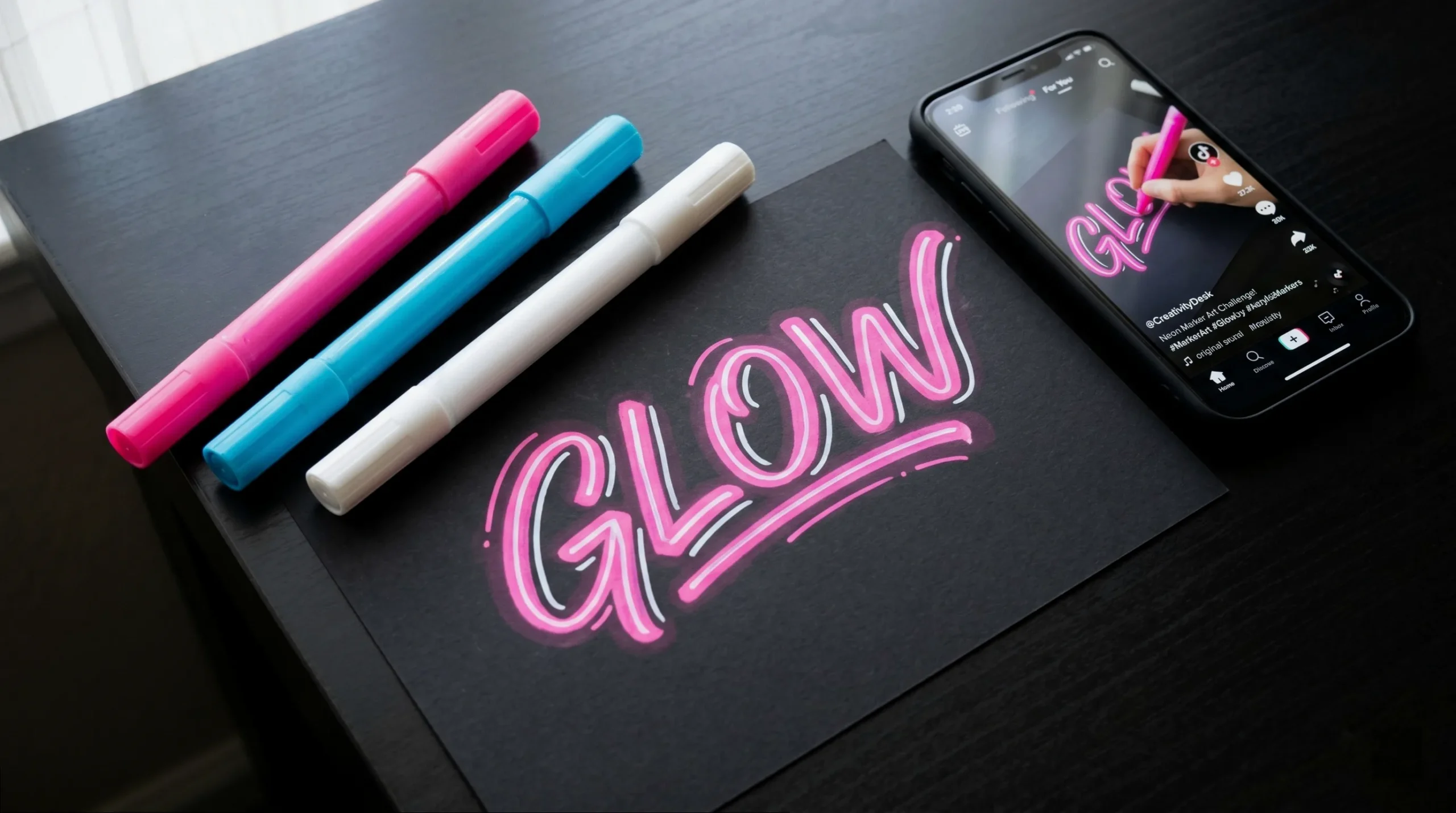
Прокручивая TikTok, вы их видели. Рука, держащая три маркера. Лист чёрной бумаги. Пятнадцать секунд спустя — неоновая вывеска, будто из токийского переулка, галактика, закручивающаяся на странице блокнота, портрет, выполненный в трёх оттенках синего.
Затем вы смотрите на свой стол. Горсть полувысохших ручек. Возможно, старый скетчбук. И вы задаётесь вопросом: сможете ли вы повторить это?
Сможете. То, что отличает создателей контента в TikTok от остальных, — это не набор из 200 маркеров. Это знание того, какие три ручки выбрать и что с ними делать. Тренды, набирающие миллионы просмотров, объединяет общая черта: они основаны на технике, а не на количестве материалов.
В этой статье я расскажу о пяти трендах в рисовании маркерами в TikTok, для каждого из которых требуется всего три ручки. Я разберу, какие типы маркеров дают наилучшие результаты, почему состав чернил важнее количества цветов и — для менеджеров по закупкам и владельцев брендов — какие заводские меры контроля качества отличают маркер, становящийся трендом, от того, который разочаровывает.
Содержание
Краткий ответ: Какие тренды в искусстве маркерами на TikTok сейчас самые популярные?
Если вы хотите сразу перейти к делу, не читая полный разбор, вот краткая версия. Эти пять трендов доминируют в искусстве маркеров в TikTok в 2026 году — и для каждого нужно ровно три ручки:
- Неоновое свечение на чёрной бумаге: Белый маркер + два ярких цвета. Белый базовый слой заставляет цвета флуоресцировать на тёмном фоне. Акриловые маркеры здесь обязательны — чернила на водной основе не дадут нужной непрозрачности.
- Градиентное смешивание с тремя оттенками: Один светлый, один средний, один тёмный из одной цветовой гаммы. Спиртовые маркеры смешиваются бесшовно, поскольку чернила реактивируют нижележащий слой. Результат выглядит как цифровая аэрография.
- Рисунки в стиле «One-Color Challenge»: Один цвет, три маркера — тонкий наконечник, кисть, широкое долото. Этот тренд доказывает, что мастерство важнее количества материалов. Ограничение заставляет думать о толщине линии и негативном пространстве.
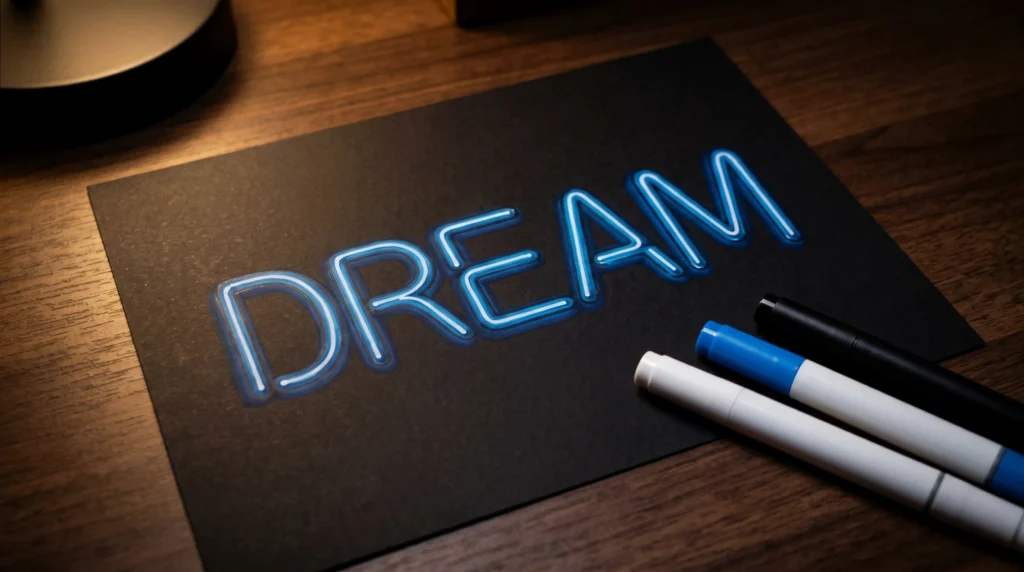
- Имитация неоновой вывески: Белый контур, один яркий цвет заливки, чёрный фон. Секрет не в цветах — а в смещённом блике с одной стороны, имитирующем настоящую неоновую трубку.
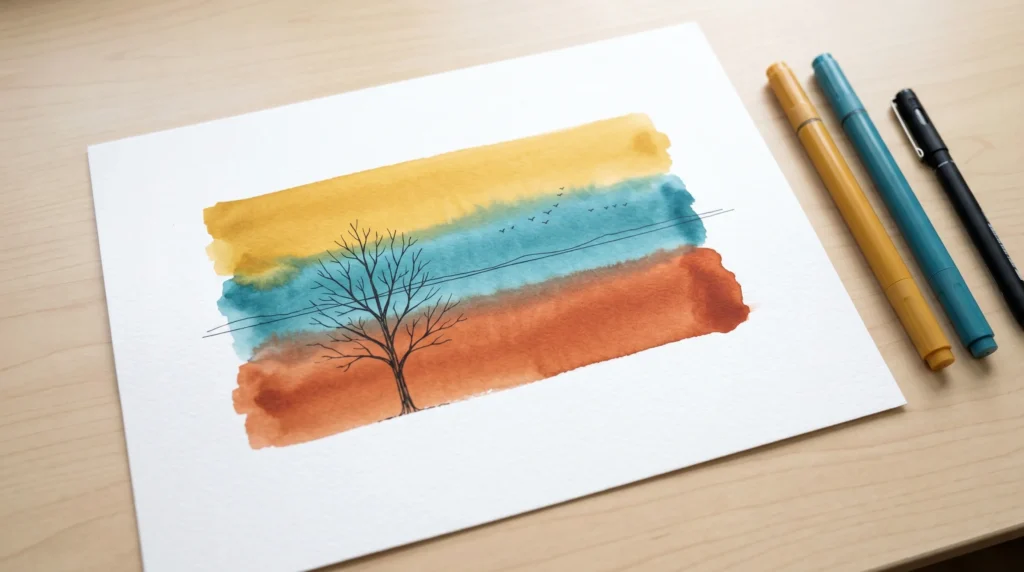
- Абстрактные пейзажи из маркерных свотчей: Три цвета, которые вы никогда бы не соединили. Тренд взорвался, потому что он поощряет спонтанность. Нанесите их рядом, дайте им растечься друг в друга, добавьте сверху минималистичные линии.
Для владельцев брендов и менеджеров по закупкам понимание того, почему эти тренды работают, помогает установить более точные стандарты sourcing и контроля качества — потому что маркер, который не даёт непрозрачности на чёрной бумаге, неконтролируемо растекается или выцветает через неделю, никогда не создаст тот органический контент, который стимулирует потребительский спрос.
Что делает маркер вирусным: техническая основа искусства маркеров в TikTok
TikTok всё равно на вашу цепочку поставок. Но алгоритм безжалостно вознаграждает одно: визуальное воздействие в первые 0,8 секунды. А визуальное воздействие в искусстве маркеров — это чистое материаловедение.
Три фактора определяют, создаёт ли маркер этот останавливающий прокрутку эффект. Непрозрачность чернил. Насыщенность цвета. Поведение при высыхании. Ошибка хотя бы в одном — и видео проваливается.
Спиртовые маркеры — рабочая лошадка большинства артов в TikTok — используют краситель, растворённый в спиртовом растворителе. Спирт испаряется за секунды. Краситель проникает в волокна бумаги. Это создаёт гладкий, без полос цвет, который смешивается во влажном состоянии, но фиксируется после высыхания. Именно поэтому градиентное смешивание выглядит бесшовно на камере.
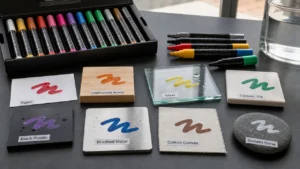
Акриловые маркеры ведут себя иначе. Они наносят слой пигмента, взвешенного в акриловой смоле, который затвердевает в гибкую плёнку на поверхности. Эта плёнка лежит на бумаге, а не впитывается. В этом секрет тренда «неон на чёрной бумаге»: белый акриловый базовый слой создаёт непрозрачный холст, а цветные слои лежат поверх него, отражая свет обратно через пигмент, а не поглощаясь тёмной бумагой.
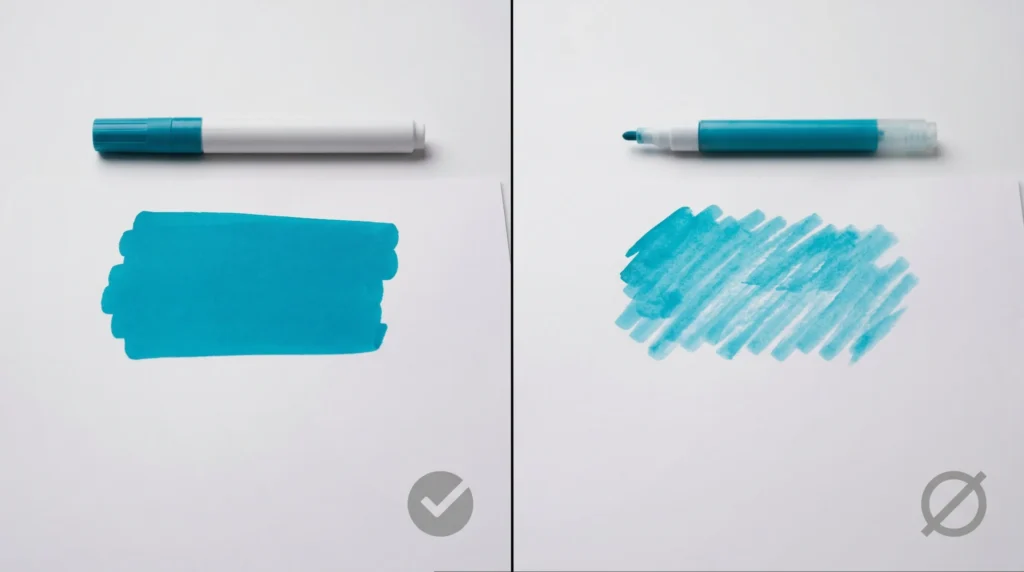
Маркеры на водной основе — те, что обычно валяются у большинства людей — показывают наихудшие результаты для контента в TikTok. Их чернила впитываются в бумагу неравномерно. Цвета выглядят приглушёнными на тёмном фоне. Они не могут создавать слои без повреждения поверхности бумаги.
Но не все спиртовые маркеры одинаковы, как и не все акриловые. И именно здесь разница между жалобой потребителя и лояльным клиентом прослеживается до заводского цеха в Тунлу.
| Распространенная характеристика/Проблема | Почему это важно/В чем причина отказа (Коренная причина жалоб клиентов) | Показатель заводского контроля качества |
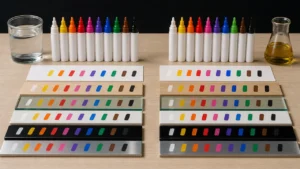
| Соответствие цвета чернил между партиями | Если “Лазурно-голубой” из партии A отличается от партии B, создатели не смогут повторить уроки — и они винят бренд, а не фабрику | Проверка спектроколориметром каждой партии; допуск Delta E ≤ 1,5 относительно мастер-стандарта |
| Нарушение герметичности колпачка → высыхание | Колпачок, который не защёлкивается с постоянным усилием, позволяет растворителю улетучиваться через микроскопическую щель. Наконечник высыхает. Маркер мёртв через две недели | Тест на усилие снятия колпачка (≥15 Н), ускоренное старение при 50°C в течение 72 часов, тест на утечку при 0,05 МПа |
| Истирание наконечника / царапающее письмо | Дешёвые войлочные наконечники деградируют после 200 метров непрерывного письма. Кончик разлохмачивается, поток чернил становится неравномерным, и ощущение “скольжения” исчезает | Тест на истирание наконечника (минимальная дистанция письма 500 м); микроскопический контроль наконечника при 40-кратном увеличении |
| Полосы цвета на больших площадях | Воздушные карманы в резервуаре для чернил вызывают прерывистый поток. Пользователь видит бледные участки между насыщенными полосами | Тест непрерывного письма (300 м); автоматический контроль уровня чернил во время заправки; проверка насыщения резервуара |
| Выцветание цвета при экспонировании | Красители с низкой светостойкостью деградируют под воздействием УФ-излучения и комнатного освещения. Рисунок, выглядевший ярким в первый день, к третьему месяцу становится блёклым | Ускоренный тест на УФ-старение (имитация 6-месячного воздействия); рейтинг светостойкости ≥ 5 по шкале Blue Wool для маркеров художественного качества |
Таблица выше отображает, что испытывают конечные пользователи, напрямую связывая это с тем, что происходит на производственной линии. Нарушение герметичности колпачка — это не мелкий дефект. Это самая распространённая причина, по которой маркер выбрасывают, а потребитель в следующий раз тянется к продукту конкурента. На хорошо отлаженной линии механизм колпачка тестируется на статистической выборке из каждого цикла пресс-формы — а не только один раз в начале партии.
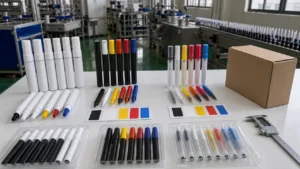
На заводской площади более 10 000 кв. м с 8 производственными цехами, где работает автоматизированная сборочная линия, дозирующая игла для заправки чернил калибруется повторно каждые 2 000 единиц продукции. Если пропустить этот этап, вес заправки начинает отклоняться — примерно на 0,1 грамма каждые 50 единиц, и погрешность накапливается. Уже в течение одной смены вы получаете маркеры с содержанием чернил от 2,8 г до 3,4 г. Потребитель не может измерить эту разницу. Но он может её увидеть: переполненный маркер подтекает при первом же штрихе, а недозаправленный высыхает на середине рисунка.
5 трендов в искусстве маркеров TikTok, которые можно создать всего с 3 ручками
1. Эффект неонового свечения на чёрной бумаге
Этот тренд начался с художников Posca в TikTok и распространился по платформе за считанные недели. Визуальный эффект мгновенный: светящиеся, электрические цвета, которые, кажется, парят над страницей.
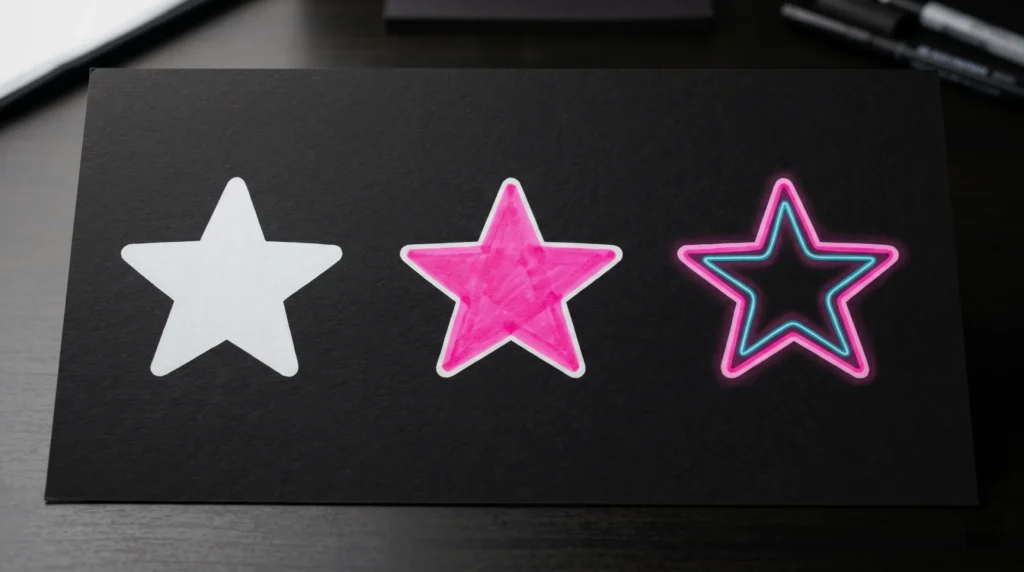
Вам понадобится: Один белый акриловый маркер, два ярких акриловых маркера (выбирайте контрастные цвета — розовый и циан, или оранжевый и лаймово-зелёный).
Техника: Покройте область, которую хотите “заставить светиться”, сплошным белым базовым слоем. Дайте ему полностью высохнуть — это занимает около 30 секунд для акриловых маркеров. Нанесите ваш рисунок поверх белой основы первым цветом. Дайте высохнуть. Добавьте более тонкую линию второго цвета внутри первой для эффекта неоновой “трубки”. Белый слой отражает свет обратно через цветные слои, создавая то светящееся качество, которое на камере воспринимается как неон.
Почему это работает в TikTok: Контраст «до и после» экстремален. Чёрный прямоугольник превращается в светящуюся вывеску менее чем за 60 секунд. Трансформация сама по себе вызывает желание поделиться.
Ключевым фактором является содержание пигмента. Маркер с недостаточной концентрацией пигмента — распространённый в бюджетных акриловых маркерах — будет выглядеть полупрозрачным даже после трёх слоёв на чёрной бумаге. Белый не перекроет. Цвета будут выглядеть грязными. Фабрики с собственными возможностями R&D в области чернил могут регулировать соотношение пигмента и связующего для конкретных применений. Независимая лаборатория, которая разрабатывает чернила на месте, может настроить кривую непрозрачности так, чтобы один проход белого достигал 95% покрытия на чёрном картоне плотностью 300 г/кв.м.
2. Градиентное смешивание с тремя оттенками
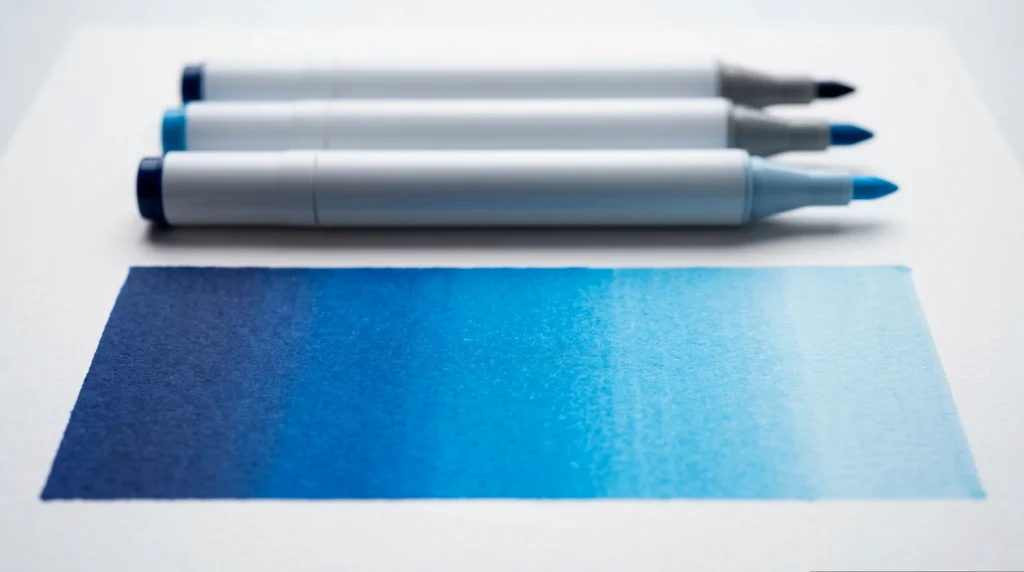
Это техника, которая заставляет три маркера выглядеть как набор из 24 цветов. Выберите одну цветовую гамму — например, синюю. Возьмите бледно-голубой, чистый средний синий и тёмный индиго. С помощью спиртовых маркеров эти три цвета создают непрерывный градиент, который глаз воспринимает как бесконечное множество оттенков.
Техника: Нанесите самый светлый цвет на всю область градиента. Пока он ещё влажный, введите средний оттенок в средней точке, используя мелкие круговые движения для слияния границы. Затем добавьте тёмный оттенок в самую глубокую часть. Ключ в работе «мокрым-по-мокрому» — спиртовые чернила остаются работоспособными около 8-12 секунд, это ваше окно для смешивания. Если первый слой высохнет до того, как вы нанесёте второй, вы получите жёсткую линию вместо градиента.
Привлекательность для TikTok: Наблюдение за формированием градиента в реальном времени визуально удовлетворяет. Алгоритм вознаграждает показатель досмотра, и видео с градиентным смешиванием удерживают зрителей до момента слияния.
Консистентность спиртовых чернил — это то, где точность производства определяет художественные результаты. Если растворитель испаряется с разной скоростью у трёх маркеров — скажем, средний оттенок высыхает за 6 секунд, а тёмный за 14 — смешивание становится невозможным. Пользователь винит свою технику. Настоящая причина — вариация соотношения растворителя от партии к партии.
3. Рисунки в стиле “One-Color Challenge”
Этот тренд сводит всё к одному цвету и заставляет художника общаться исключительно через толщину линии, штриховку и негативное пространство. Создатели в TikTok создавали портреты, городские пейзажи и абстрактные композиции, используя один маркер — переключаясь между типами наконечников.
Вам понадобится: Три маркера одного цвета — один с тонким пулевидным наконечником (0,7 мм), один с наконечником-кистью, и один с широким долотообразным наконечником.
Техника: Используйте долото для заполнения больших областей. Переключитесь на кисть для органических линий, кривых и переменной толщины штриха. Примените тонкий пулевидный наконечник для перекрёстной штриховки и деталей. Ограничение одним цветом заставляет думать о тоне через плотность: больше линий на квадратный дюйм воспринимается как более тёмный тон, меньше — как более светлый.
Вывод для покупателей: 在许多工厂中,不同笔尖类型的质量并不统一。一种能带来出色墨水流量的刷形笔尖,在使用另一种配方时可能会堵塞。一家拥有26年OEM经验的工厂已积累数据,能够将笔尖材料与特定墨水化学成分相匹配——例如,知道聚酯纤维笔尖比尼龙笔尖更能耐受酒精基墨水,并且刷形笔尖的 毛细通道设计 需要补偿更高粘度的丙烯酸配方。.

4. Фальшивое неоновое шрифтовое оформление
这可以说是过去两年TikTok上被复制最多的马克笔艺术趋势。它仅使用马克笔和黑色纸张模仿玻璃霓虹灯管的外观。这种错觉依赖于一种特定的光学技巧。.
Вам понадобится: 一支白色丙烯马克笔,一种亮色(热粉色、电光蓝或霓虹绿效果最佳),以及一支用于修饰的黑色马克笔。.
Техника: 用亮色以中等粗细的线条绘制你的文字或形状。待其干燥后,沿一条边缘添加白色高光线——每个字母的同一侧边缘保持一致。这种偏移的高光正是营造霓虹错觉的关键。真实的霓虹灯管由于玻璃曲率反射环境光,会在其一侧产生高光。你的白线模拟了这种反射。最后,使用黑色马克笔清理任何不稳定的边缘。.
它流行的原因: 结果看起来像昂贵的定制标牌。过程看起来任何人都能做到。“令人印象深刻的结果”与“易于上手的过程”之间的差距,正是病毒式传播内容的甜蜜点。.
5. Абстрактные маркерные пейзажи с образцами цветов
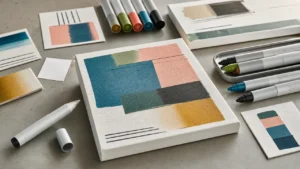
这一趋势较新,出现于2026年初,是五种趋势中最宽容的。其概念是:选取三种明显不搭调的颜色,在页面上以水平色带形式进行色块展示,然后添加极简的线条作品——几只鸟、遥远的地平线、一棵孤树——将抽象色域转变为风景画。.
Вам понадобится: 三种故意选择不相关颜色的马克笔。也许是赭色、蓝绿色和铁锈色。或者是薰衣草色、橄榄色和珊瑚色。.
Техника: 将每种颜色以水平色块形式进行色块展示,让边缘略微相互渗透。待其干燥后,使用三种颜色中最深的一种绘制稀疏的、具有暗示性的风景元素。抽象色域与具象线条作品之间的对比创造了一种张力,显得既刻意又精致。.
这些色块的色彩稳定性——例如蓝绿色在室内光线下暴露一周后是否会向绿色偏移——取决于 светостойкость 所用染料的特性。一家通过加速紫外老化测试批量检验墨水配方的工厂不会将此留待偶然。每个生产批次都经过分光色度仪验证的工厂生产的马克笔,能在第90天呈现出与第一天相同的颜色。这对于其内容无限期留存在网上的TikTok创作者来说至关重要。对于依赖产品一致性来维护声誉的品牌所有者来说,这甚至更为重要——因为一个在社交媒体上发布褪色马克笔的顾客,并非在发布产品评测。他们是在发布警告。.
Часто задаваемые вопросы
1. Какой тип маркера лучше всего подходит для рисования маркерами в TikTok на чёрной бумаге?
丙烯马克笔。颜料作为不透明薄膜停留在纸张表面,而非渗入其中,这意味着颜色在深色背景上能保持鲜艳。酒精马克笔会消失在黑色纸张中——染料是透明的,会被深色表面吸收。如果你为此目的购买丙烯马克笔,请检查其不透明度规格。在300gsm黑色卡纸上,单层涂覆应至少达到90%的覆盖率。低于此标准意味着你需要涂3-4层,这会增加干燥时间并提高表面起毛的可能性。.
2. Почему мои градиенты маркера выглядят полосатыми, а не гладкими?
两个可能的原因。首先,你使用的是水性马克笔——它们干燥太快,无法进行湿画法混色,会在颜色区域之间留下生硬的边缘。请改用酒精基马克笔。其次,即使使用酒精马克笔,如果你在添加第二层之前让第一层完全干燥,墨水将无法重新激活,边界将变成永久性的。你大约有8-12秒的时间在溶剂蒸发前进行混色。.
3. Как определить, что маркер хорошего качества, перед покупкой?
在包装或产品页面上寻找三项信息:墨水类型(混色用酒精基,不透明度用丙烯酸)、笔尖材料(聚酯纤维笔尖比基础毛毡更耐用)以及安全认证。如果一个品牌列出了 EN71 或ASTM D-4236合规性,这是制造严谨性的基线信号——这些标准要求第三方毒理学审查,而不仅仅是自我声明。在包装之外,一个有意义的指标是制造商是否发布批次级别的质量控制数据,或者仅仅是营销宣传。一家向你提供批次检验记录的工厂没有什么可隐瞒的。.
4. Могу ли я использовать металлические маркеры для этих трендов в TikTok?
是的——但有一个注意事项。金属马克笔在霓虹灯字体和抽象风景画等趋势中用于高光和点缀效果非常出色。基于云母的颜料以适合拍照的方式反射光线。但它们不能替代其他技术中的白色丙烯或酒精马克笔。金属墨水的遮盖力低于颜料型丙烯酸,也无法像酒精基染料那样进行混色。它们是点缀工具,而非基础工具。.
5. Как найти надежных поставщиков маркеров для собственного бренда, если я хочу продавать их создателям контента на TikTok?
Start with the ink. If a supplier sources ink from third parties, you’re inheriting someone else’s formulation drift — and your customers will notice when Batch 2 doesn’t match Batch 1. Look for manufacturers with in-house ink R&D who can provide color stability data (Delta E measurements across production runs). A factory like ZH STATIONERY, with a dedicated ink laboratory and spectrocolorimeter verification per production batch, can also provide physical samples before production so you can test opacity, blending behavior, and cap-seal reliability on your own desk — not on a spec sheet. If you’re evaluating suppliers and want to compare specifications, the team at ZH STATIONERY can walk you through their quality control documentation and send sample sets for your evaluation. The minimum order quantity is 3,000 pens per SKU per color. Quantities are counted in individual pens, not sets.
6. Как долго должен служить хороший маркер для художественных проектов?
对于酒精马克笔:一支满容量马克笔(约3-4克墨水)在标准80gsm纸张上连续书写约300-400米后才会干涸。这相当于在中等覆盖度下绘制约200-300张A4纸画作。但真正的寿命变量不是墨水量——而是密封盖的完整性。一支存放在密封良好的盖子中的马克笔应能保持可用18-24个月。一支密封盖薄弱的马克笔,无论初始墨水量多少,都会在数周内干涸。.
上述五种趋势有一个共同点:尝试门槛低,分享回报高。你不需要一套120色的马克笔。你也不需要正式的艺术训练。你需要的是三支性能一致的马克笔——墨水能以正确的遮盖力涂布,笔尖能经受数百次描画而保持形状,并且盖子每次都能紧密密封。.
对于普通创作者来说,这意味着带着比以前更清晰的清单去一趟美术用品店。对于为这类受众采购产品的品牌所有者来说,这意味着向供应商提出那些能将制造合作伙伴与普通交易区分开来的问题:你们如何验证 批次间的色彩一致性?你们的密封盖故障率是多少?我能看看质量控制日志吗?
这些问题的答案决定了你发货的马克笔是创造TikTok内容——还是导致客户退货。.
如果你正在为你的品牌采购马克笔,并希望讨论规格、墨水配方或索取实物样品,你可以通过其 командой ZH STATIONERY 联系页面联系该团队,进行无义务咨询。.
Связанное руководство: Для дополнительного контекста рынка см. Рынок акриловых маркеров 2026.
Связанные материалы
- 10 техник работы с маркерами, которые должен знать каждый начинающий художник: руководство эксперта фабрики по инструментам, обеспечивающим результат
- Техники работы с маркерами, которые должен освоить каждый начинающий художник
- Карманные канцелярские принадлежности набирают популярность в 2026 году: лучшие мини-ручки и маркеры для творчества в дороге
- Сила арт-терапии: использование исцеляющих иллюстраций для снятия стресса и поддержания психического благополучия
- идеи для летней раскраски с использованием гелевых ручек
- Типы цветных карандашей и рыночные тенденции
Внешняя ссылка: Учебник по наслоению и смешиванию Copic.