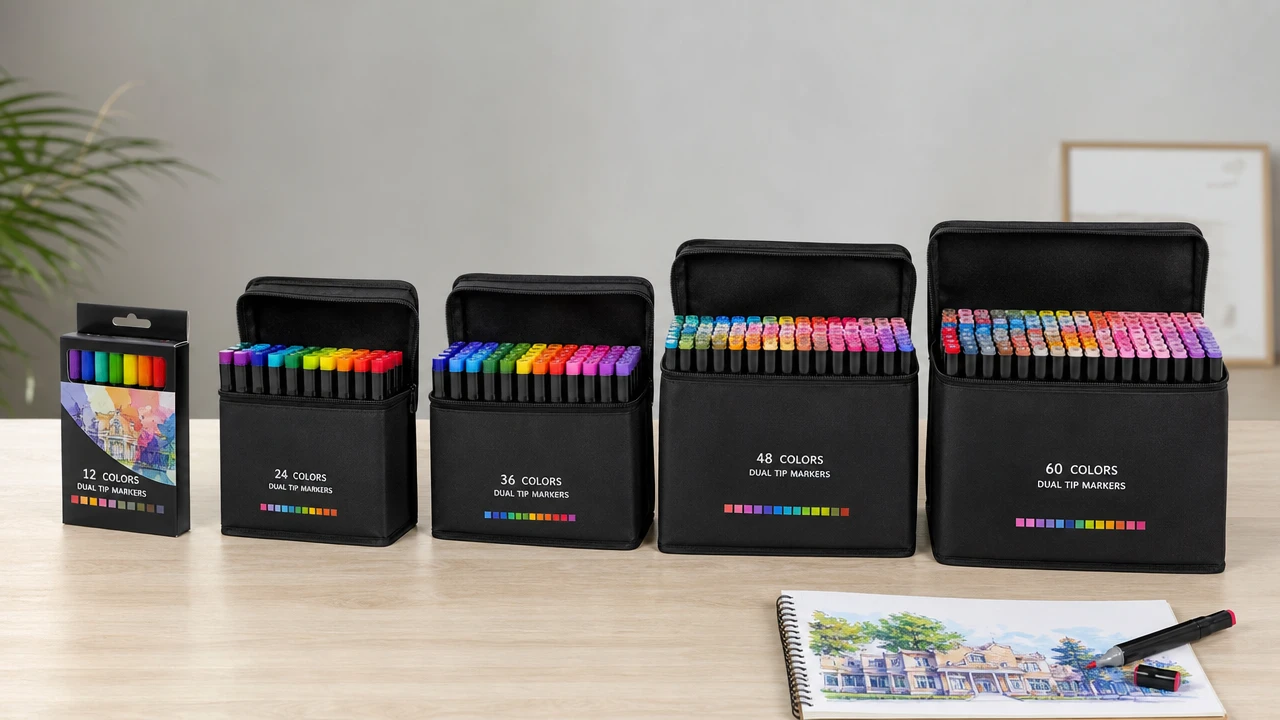
Choosing between 12 vs 24 vs 36 vs 48 vs 60 color marker sets is a sourcing call, not only a color-count call. The wrong size can make a product look cheap. It can push retail price too high. It can leave the buyer with slow-moving stock.
For most buyers, the best size depends on the channel, target user, pack format, and first-order risk. A 12 color set can be a clean entry SKU. A 60 color set can work as a premium gift or serious art set. The middle sizes often decide whether the line makes money.
ZH Stationery works with marker and writing buyers who need OEM/ODM help, private-label packing, and set plans across channels. Before comparing colors, review the kategorie produktów, markery akrylowe, oraz custom acrylic marker guide for making context.
Szybka odpowiedź
If buyers need one starter SKU, pick a 24 color set for school, gift, and general retail. Pick 36 when the product must feel more full without getting bulky. Pick 48 or 60 when the target is an artist, hobby user, Amazon shopper, or gift buyer who compares value by color count. Use 12 for budget, classroom, trial, and promo programs.
The safest range plan is usually 24 colors as the core, 48 as the upgrade, and 12 as the entry only when the channel is price-tight. A full 12/24/36/48/60 range is better for established brands with sales data, not a first test order.
Szybkie linki
- Tabela porównawcza
- Dopasuj rozmiar zestawu do kanału
- Kiedy pozyskiwać 12 kolorów
- Kiedy pozyskiwać 24 kolory
- Kiedy pozyskiwać 36 kolorów
- Kiedy pozyskiwać 48 kolorów
- Kiedy pozyskiwać 60 kolorów
- Opakowanie i zgodność z przepisami
- Złóż pierwsze zapytanie ofertowe (RFQ)
- FAQ
Tabela porównawcza
Use this table as a sourcing start. The numbers are not fixed factory promises. They show how buyers usually place each count before final art, pack, carton, and test needs are set.
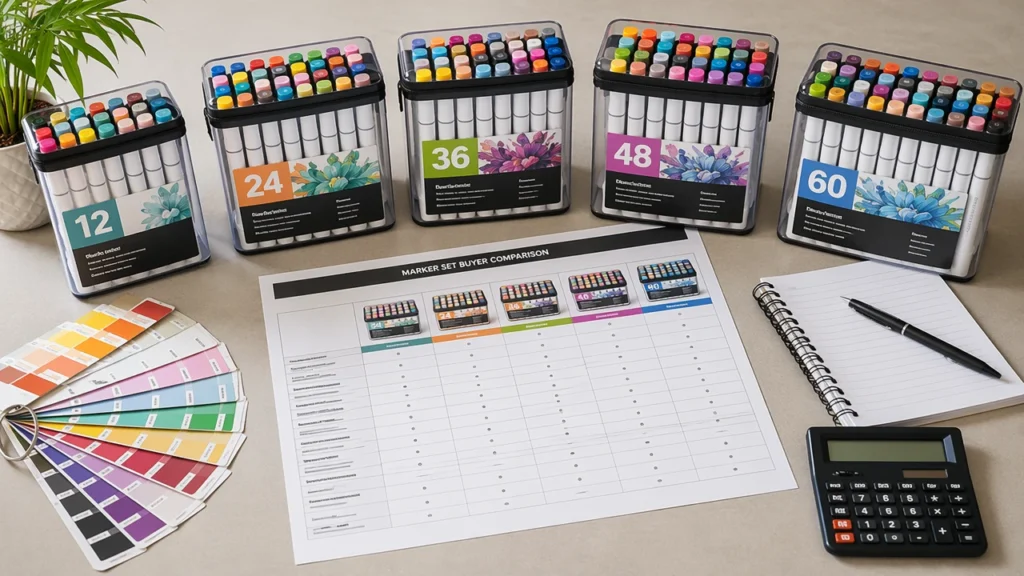
| Rozmiar zestawu | Najlepsze zastosowanie | Ryzyko kupującego | Uwagi dotyczące opakowania | Porada sourcingowa |
|---|---|---|---|---|
| 12 kolorów | Szkoła, budżet, promocja, zestawy próbne | Niska presja cenowa, ale ograniczona postrzegana wartość | Małe pudełko, woreczek lub blister | Użyj, gdy kanał potrzebuje wolumenu i niskiej ceny półkowej. |
| 24 kolory | Ogólna sprzedaż detaliczna, powrót do szkoły, sztuka dla początkujących | Zazwyczaj najbezpieczniejszy pierwszy SKU | Kolorowe pudełko, etui PP lub kompaktowe etui | Dobry pierwszy rozmiar pod marką własną dla wielu kupujących. |
| 36 kolorów | Średnia półka detaliczna i użytkownicy hobbystyczni | Wyższy koszt, ale lepsza gama kolorystyczna | Mocniejsze etui lub dwuwarstwowa tacka | Użyj, gdy 24 kolory wydają się zbyt podstawowe dla rynku. |
| 48 kolorów | Premium detal, Amazon, sztuka hobbystyczna | Większy zapas i objętość kartonu | Sztywne etui, woreczek strunowy lub pudełko prezentowe | Dobry ulepszony SKU, gdy kupujący porównują wartość online. |
| 60 kolorów | Prezenty, poważne hobby, zestawy marketplace | Najwyższe ryzyko kosztu lądowania | Duże etui, organizer lub pudełko prezentowe | Użyj po potwierdzeniu popytu lub gdy liczba kolorów napędza konwersję. |
Dopasuj rozmiar zestawu do kanału
Color count should follow the channel. A distributor selling to schools cares about price, reorder ease, and carton speed. An Amazon seller cares about thumbnail value, review hopes, barcode accuracy, and pack that survives fulfillment. A gift buyer may take a larger set when the box looks premium.
For e-commerce, check pack and barcode calls early. GS1 explains that GTINs name trade items used in listings and retail systems. Each retail SKU needs clean product ID. If the same brand sells 24, 36, and 48 sets, each set normally needs its own SKU and barcode flow.
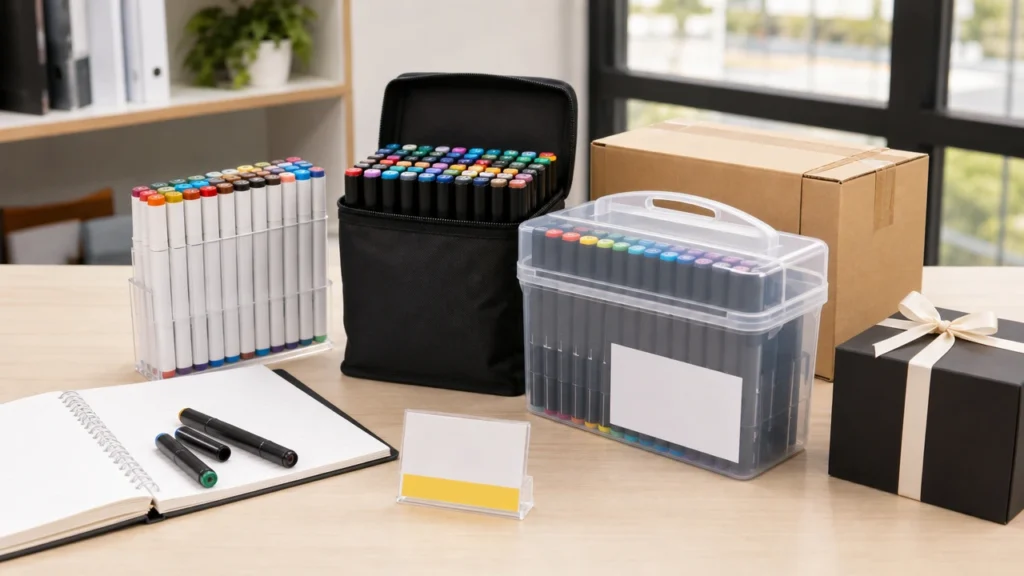
| Kanał | Zalecany pierwszy rozmiar | Powód |
|---|---|---|
| Szkoła i klasa | 12 lub 24 kolory | Łatwy punkt cenowy, prosty zakres kolorów, łatwiejsze planowanie kartonów. |
| Supermarket lub masowa sprzedaż detaliczna | 24 lub 36 kolorów | Wystarczająca wartość półkowa bez czynienia opakowania zbyt dużym. |
| Amazon lub marketplace online | 36, 48 lub 60 kolorów | Liczba kolorów i prezentacja wpływają na wartość kliknięcia i recenzje. |
| Programy prezentowe i sezonowe | 48 lub 60 kolorów | Większe zestawy sprawiają wrażenie bardziej odpowiednich na prezent, gdy opakowanie jest solidne. |
| Zamówienie testowe pod marką własną | 24 lub 36 kolorów | Zrównoważone ryzyko związane z MOQ, narzędziami, grafiką i gotówką. |
Kiedy pozyskiwać 12 kolorów
A 12 color set works when the buyer needs an entry product. It is common for classroom, low-price retail, promo packs, sample kits, and starter ranges. It is easy to explain, easy to pack, and easier to move in higher counts.
The weak point is clear. 12 colors can look too basic in art channels. If the market compares by color count, a 12 set may lose before the buyer reads the details. It needs a clear role. School use. Travel size. First art kit. Bundle add-on.
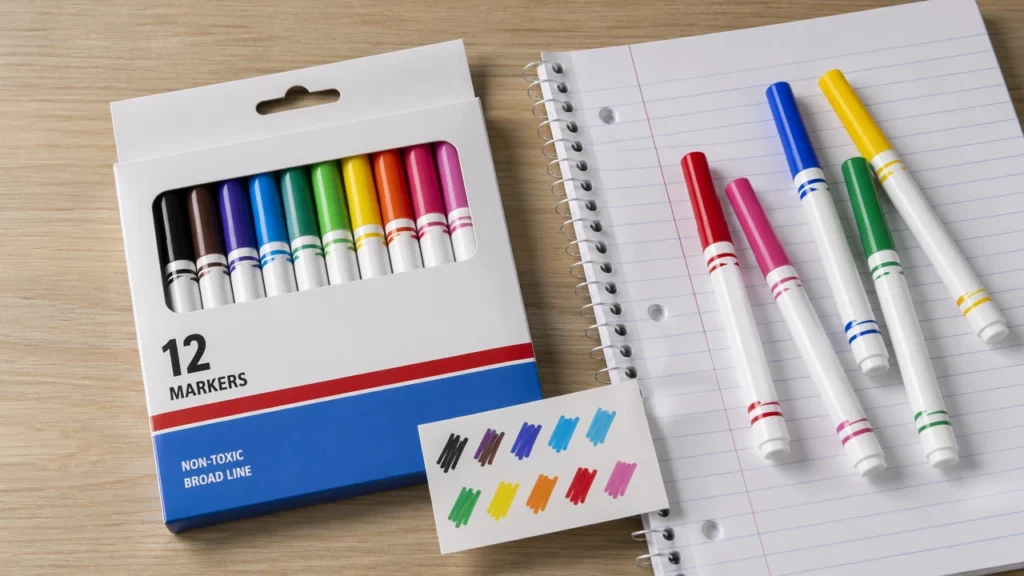
Najlepsze zastosowania dla 12 kolorów
- Pakiety powrotu do szkoły dla młodszych użytkowników.
- Zestawy próbne przed większym programem marki własnej.
- Półki budżetowe w handlu detalicznym, gdzie cena jest ważniejsza niż zakres.
- Pakiety promocyjne z notatnikami, kolorowankami lub piórnikami.
- Programy próbne dla dystrybutorów, którzy chcą przetestować jakość tuszu i końcówek.
Kiedy pozyskiwać 24 kolory
A 24 color set is often the most practical first SKU. It gives enough range for daily drawing, school projects, journals, crafts, and beginner art. It keeps pack and freight light. For many importers, it is the size that holds retail price and MOQ in check.
Without sales history, 24 is usually easier to defend than 48 or 60. It also leaves room for an upgrade later. For a private-label launch, it tests the palette, ink feel, pack art, and reorder cycle without tying too much cash into one large SKU.
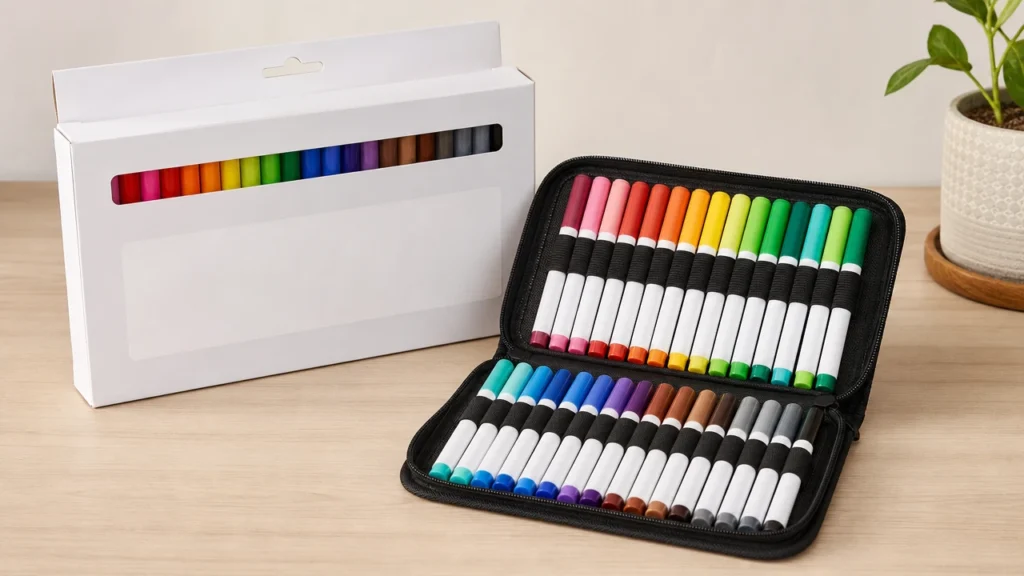
Najlepsze zastosowania dla 24 kolorów
- Pierwsze zamówienie marki własnej dla ogólnej marki artykułów piśmiennych.
- Programy szkolne i detaliczne z umiarkowaną przestrzenią na półkach.
- Zestawy startowe do sztuki sprzedawane ze szkicownikami lub akcesoriami do rękodzieła.
- Katalogi dystrybutorów, gdzie kupujący chcą bezpiecznego, znanego rozmiaru zestawu.
- Programy sezonowe, gdzie liczy się cena i wydajność kartonu.
Kiedy pozyskiwać 36 kolorów
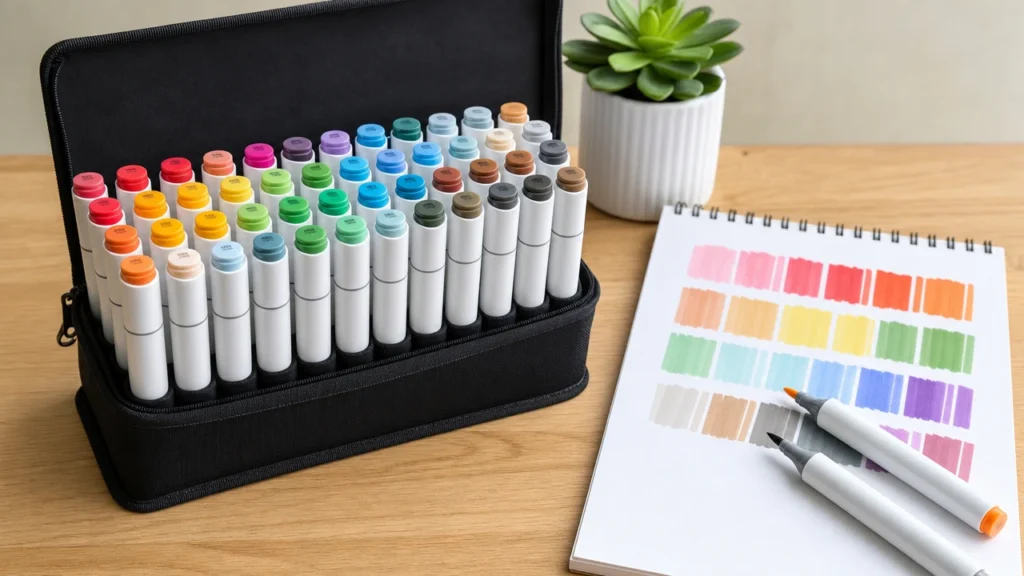
A 36 color set sits in a useful middle lane. It feels more full than 24. It does not make the same pack and freight pressure as 48 or 60. That fits mid-range retail, hobby users, and brands that want a stronger value story without overbuilding the first order.
The main test is position. Some buyers get 24 and 48 faster than 36. If the set uses 36, the pack should explain the logic. Portrait tones. Grayscale. Blend colors. School colors. A balanced palette for journaling and craft.
Kiedy pozyskiwać 48 kolorów
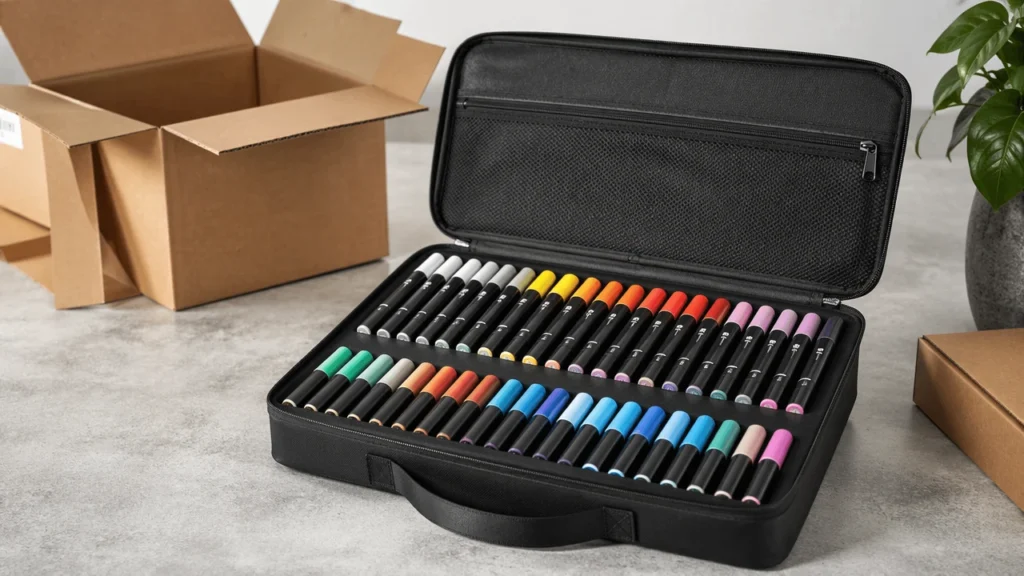
A 48 color set is a strong upgrade SKU. It gives enough variety for listings, hobby art, illustration, and gifts. Against 60, it can keep the pack more manageable when the body, tray, and outer box are built with care.
Check carton size, gross weight, and CBM before passing a 48 order. A set that looks good by unit price can fade once freight and warehouse work join in. The carton, gross weight, and CBM guide gives a separate method to compare the shipping side.
Kiedy pozyskiwać 60 kolorów
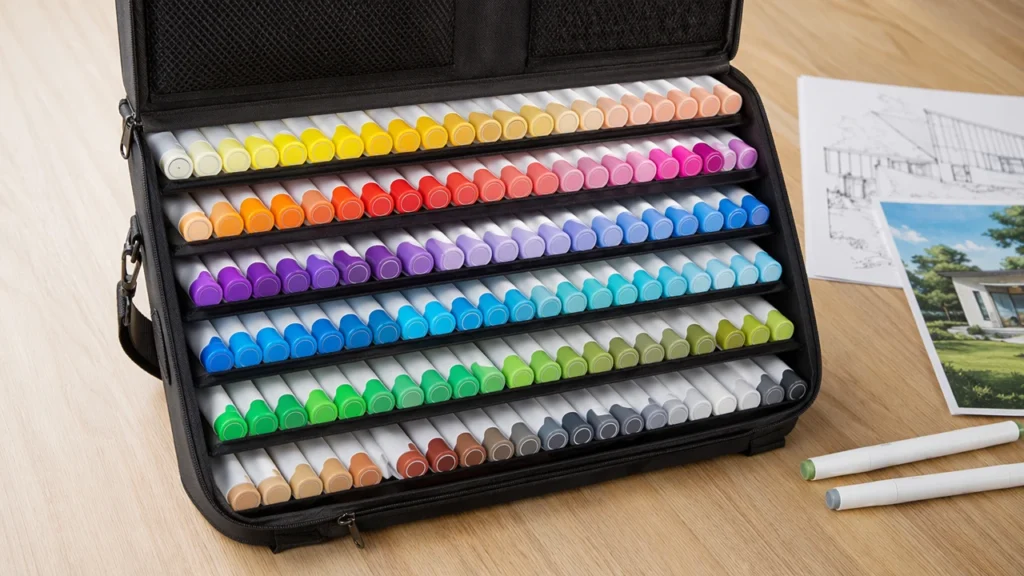
A 60 color set is best when color count is part of the sell. It can work for gift boxes, Amazon bundles, premium retail, art hobby, and brands that need a large visual spread in photos. It looks strong when the case opens clean and colors sit in a clear order.
The risk is overbuying. A 60 set raises the value of each carton. It uses more warehouse space. It makes more colors to control in production. Confirm color names, color order, replacement policy, carton strength, and drop performance before a large order.
Opakowanie i zgodność z przepisami
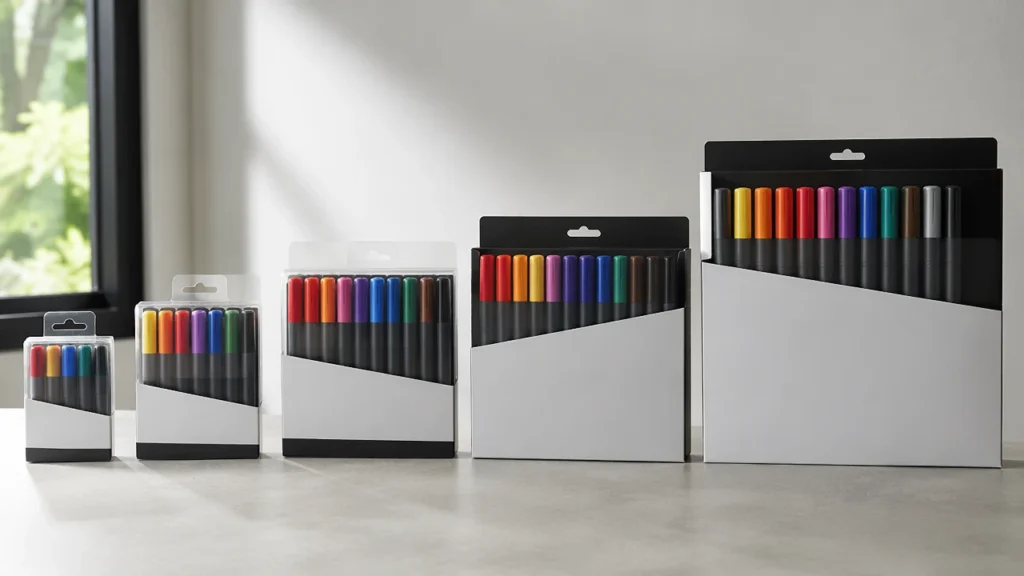
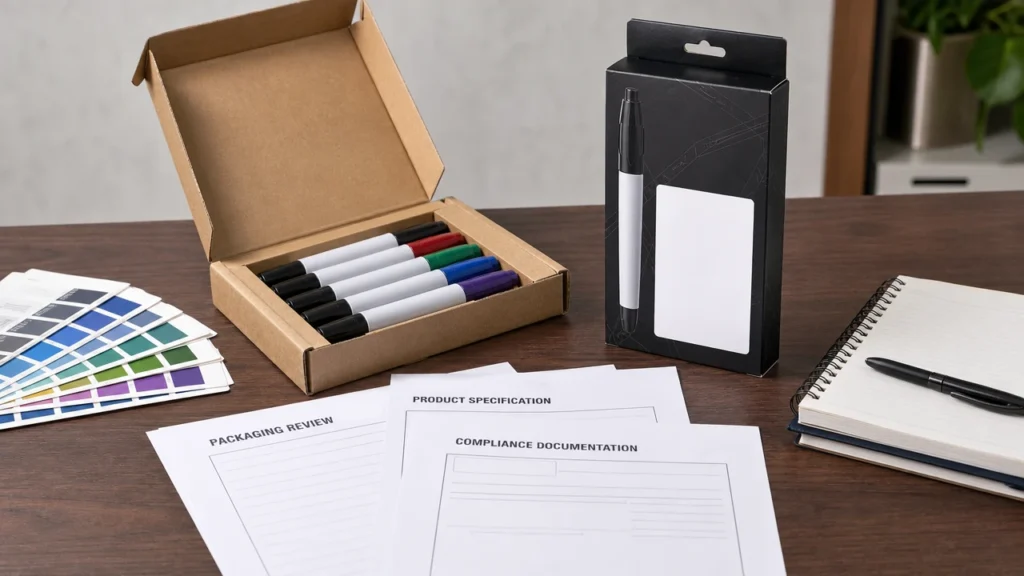
The same count can feel cheap or premium by pack. A 24 set in a thin paper box may fight on price. A 24 set in a reusable PP case can sell as a better school or travel kit. A 48 or 60 set often needs a stronger case, tray, or gift box. Users expect order, not only more colors.
For US art materials, review label duties early. wytyczne dotyczące materiałów plastycznych CPSC says art materials under ASTM D-4236 need a conformance line where practical. Hazardous art materials need the right marks. This is not a place for generic files. Ask whether the report and label cover the exact marker type, ink system, and final SKU.
Packing also hits landed cost. A zipper case, tin box, rigid gift box, or molded tray can lift seen value. Each one changes carton size. ZH Stationery has a separate przewodnikiem dotyczącym opakowań markerów akrylowych. Use that logic for wider color set plans.
Złóż pierwsze zapytanie ofertowe (RFQ)
The RFQ should force suppliers to compare the same thing. If one quote is 24 colors in a paper box and another is 24 colors in a plastic case, the price gap tells you little. Ask for the same body, same nib, same ink type, same pack build, and same shipping base.
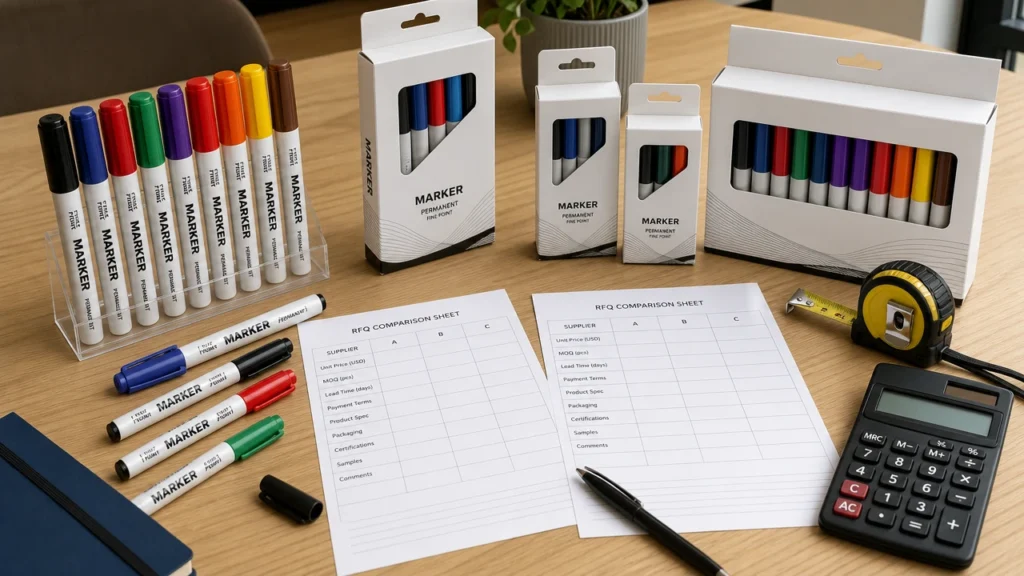
Pola RFQ, które kupujący powinni uwzględnić
- Docelowy rozmiar zestawu: 12, 24, 36, 48, 60 lub niestandardowa liczba kolorów.
- Typ markera: marker akrylowy, marker alkoholowy, marker akwarelowy, marker pędzelkowy lub inny typ.
- Struktura końcówki: pojedyncza końcówka, podwójna końcówka, końcówka pędzelkowa, końcówka dłutowa, końcówka kulista lub system zaworowy.
- Lista kolorów: standardowa paleta fabryczna lub zamówiona przez kupującego kolejność kolorów.
- Opakowanie detaliczne: papierowe pudełko, etui PP, woreczek z zamkiem błyskawicznym, pudełko blaszane, pudełko ekspozycyjne lub pudełko prezentowe.
- Wymagania dotyczące zgodności: rynek docelowy, kategoryzacja wiekowa, etykieta ostrzegawcza i wymóg raportu z testów.
- Pola logistyczne: zestawy na karton, rozmiar kartonu, waga brutto, waga netto i CBM.
- Konfiguracja kodu kreskowego i SKU: potwierdź, czy każdy rozmiar zestawu potrzebuje własnego kodu kreskowego i pliku graficznego.
Zalecane ścieżki zaopatrzenia
A buyer does not need every count on day one. A small clean range is easier to run than five half-tested SKUs. For a new brand, start with one core and one clear upgrade. For an existing distributor, add sizes from channel feedback and reorder data.
| Sytuacja kupującego | Zalecana ścieżka | Dlaczego to działa |
|---|---|---|
| Nowa marka własna | Najpierw 24 kolory, potem 48 kolorów | Testuje podstawowy produkt przed dodaniem zestawu premium. |
| Dystrybutor szkolny | 12 i 24 kolory | Dopasowuje się do budżetów klasowych i zamówień powtarzalnych. |
| Sprzedawca Amazon | 36 i 60 kolorów | Tworzy średniej półki SKU i mocny wizualnie listing. |
| Nabywca programu prezentowego | 48 lub 60 kolorów | Obsługuje opakowania nadające się na prezenty i wyższą postrzeganą wartość. |
| Test w sieci detalicznej | 24 i 36 kolorów | Kontroluje powierzchnię półki, oferując widoczną modernizację. |
If the goal is a full family, build it in phases. Start with 24. Pass ink and pack. Expand to 36 or 48. Add 12 for price-tight channels. Add 60 only when the big set has a clear retail role. ZH Stationery can support custom quote talks when the set build, color count, and pack path are ready. Use the strony kontaktowej.
FAQ
Jaki rozmiar zestawu markerów kolorowych będzie najlepszy dla nowej marki własnej?
A 24 or 36 set is usually the safer first private-label pick. A 24 keeps price and MOQ easy to test. A 36 gives better shelf value when the buyer wants a more serious art product without the freight and stock pressure of a 60.
Czy kupujący powinni pozyskiwać wszystkie pięć rozmiarów jednocześnie?
Not for the first order unless demand is proven. Most buyers should start with one main SKU and one upsell. Add sizes after sales data confirms the palette, pack format, and price.
Czy zestaw 60 markerów jest zawsze lepszy niż zestaw 48 kolorów?
No. A 60 looks stronger in a listing. It also raises carton volume, pack cost, and stock value. A 48 can be easier to sell when the market wants a premium set and the buyer still needs a controlled landed cost.
Jaki jest najlepszy rozmiar zestawu markerów do kanałów szkolnych i klasowych?
A 12 or 24 is usually more practical for school and classroom. The set is easier for parents, schools, and distributors to buy in volume. The pack stays compact for shelves and cartons.
Jak kupujący powinni porównywać oferty dla różnych zestawów markerów?
Compare price per set, price per marker, carton size, gross weight, CBM, pack type, barcode setup, report cover, and replacement rate. A cheap 60 quote can get costly if the carton is bulky or the pack fails in transit.
Czy jeden raport z testów może obejmować zestawy markerów w 12, 24, 36, 48 i 60 kolorach?
It depends on the ink system, formula, barrel part, cap part, age grade, and market need. Ask the supplier and lab whether the report covers the exact SKU family and every color or part in the final order.
Powiązany przewodnik: For the next packing and logistics step, see Jak pozyskać marki własne markerów akrylowych z Chin.
Powiązane artykuły
- Zestawy niestandardowych markerów: OEM Przewodnik po kolorach, końcówkach, opakowaniach i MOQ
- Przewodnik dla importerów artykułów biurowych z Ameryki Łacińskiej: Zestawy markerów, MOQ i planowanie wysyłki
- Przewodnik po zaopatrzeniu w markery akwarelowe
- strategia markerów dwustronnych vs jednostronnych
- Przewodnik po raportach z testów ASTM D-4236
- Przewodnik negocjacyjny MOQ dla chińskich fabryk długopisów
The minimum order for custom OEM/ODM programs is 50,000 pens per order, counted by total individual pens produced. For a 12-color pack, that equals roughly 4,200 sets, not 50,000 of each color. Standard stock models can be sampled at smaller trial sizes.