アルコールマーカーは肌に安全ですか?「無毒」が肌に安全という意味ではない理由

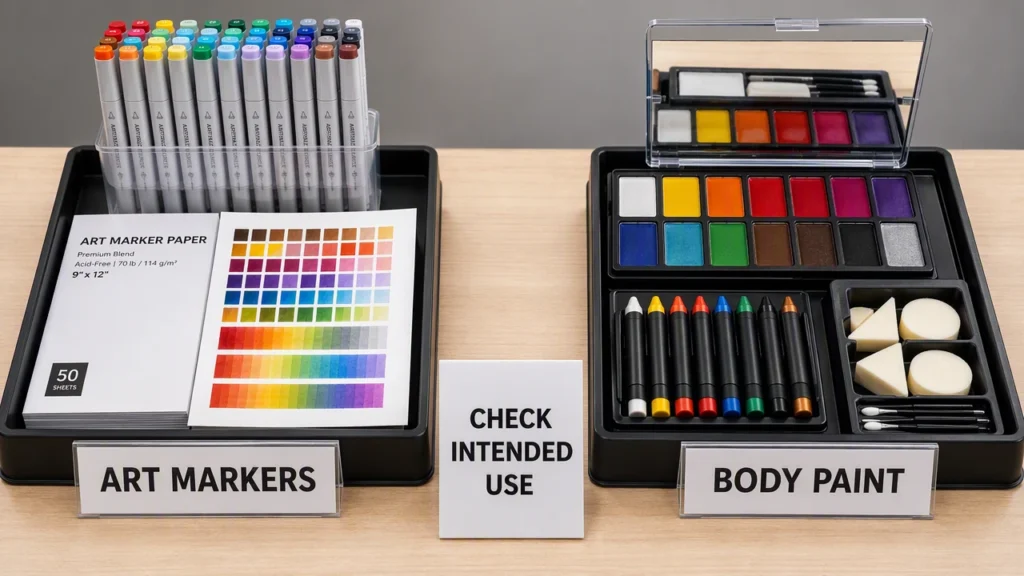
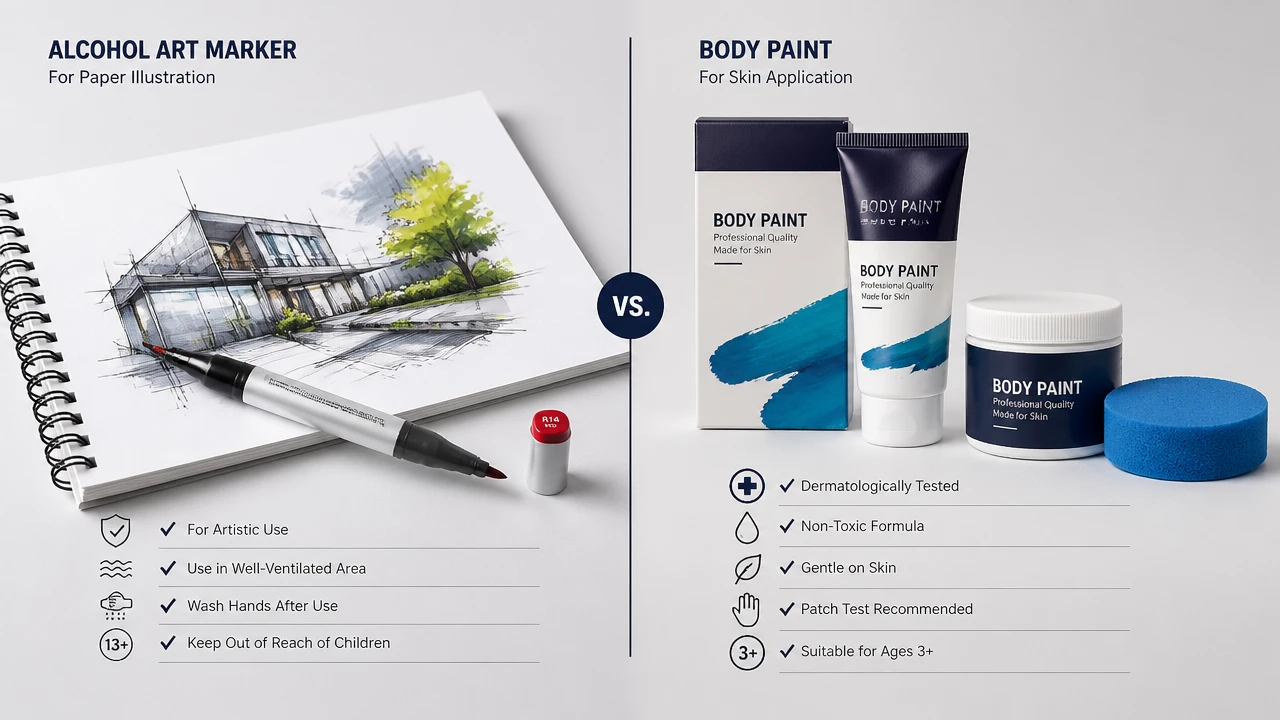
紙用アルコールアートマーカーと専用ボディペイントの比較

アルコールマーカーは肌に安全ですか? Ordinary alcohol markers are made for drawing surfaces, especially paper, not for decorating the body. A non-toxic statement, an AP seal, or ASTM D-4236 wording does not automatically make an alcohol marker a cosmetic, face paint, tattoo ink, or product intended for repeated skin application.

A small accidental mark on intact skin is usually a different exposure from deliberately covering skin, drawing near the eyes or mouth, using a marker on broken skin, or puncturing the skin. The safest rule is simple: use ordinary alcohol markers only as directed by the manufacturer and choose products specifically intended and compliant for body or face use when skin decoration is the goal.

This guide is for consumers and for private label brands writing accurate packaging and customer-support language. For a broader comparison of purpose-built options, see ZH Stationery’s guide to the safest pens to write on skin with および 认证页面.

快速解答

Do not use ordinary alcohol markers as skin markers. They may contain dyes, resins, and fast-evaporating solvents selected for paper performance, and the product’s safety review is tied to intended use and foreseeable incidental contact. A marker can be properly labeled as an art material without being evaluated or marketed for repeated direct application to the human body.

If a small amount gets on intact skin, stop using it on the body and wash with soap and water. Follow the product label. Seek local poison-control or medical advice if there is persistent irritation, a large exposure, eye contact, ingestion, breathing symptoms, use on broken skin, or uncertainty about the specific product.

What Non-Toxic Actually Means

The term must be read in context. The CPSC艺术材料指南 explains that covered U.S. art materials require a toxicologist’s chronic-hazard review and ASTM D-4236 conformance labeling. The active ASTM D4236-26 standard page says the practice develops precautionary labels for chronic health hazards and does not claim to address every safety concern.

Health Canada states even more plainly that ASTM D-4236 does not itself mean non-toxic. It means the product was reviewed for potential hazards and should carry appropriate safe-use information. A properly reviewed product may still require caution wording.

Label or ClaimWhat It SupportsWhat It Does Not Prove
Conforms to ASTM D-4236Chronic hazard review and appropriate art-material labeling for the formulation and intended useSkin-safe, cosmetic compliant, edible, washable, or harmless in every misuse.
ACMI AP sealToxicological evaluation and non-injurious status for intended use under the certification programApproval as face paint, body marker, eyeliner, lipstick, tattoo ink, or repeated skin application.
ACMI CL sealKnown hazards are addressed through cautionary labeling for appropriate usersA child product or permission to ignore warnings.
Non-toxicA claim that must be understood under its test, review, market, and intended-use contextZero risk, allergy-free, solvent-free, or suitable for every body area.
Skin-safeShould indicate a product intentionally developed and supported for skin contactA phrase that can be copied from an ordinary art-marker report without cosmetic review.

ローラーボールペンとボールペンの ACMI材料安全ページ says its art-material evaluations consider incidental or limited skin contact, but products intended to alter the appearance of the human body fall under a different regulatory regime. That distinction is the core answer to this question.

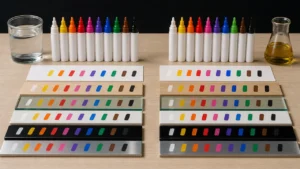
Alcohol marker used on illustrated marker paper rather than skin

Why Alcohol Marker Ink Is Different

Alcohol marker ink is designed to flow quickly, spread through paper fibers, blend before it dries, and restart after capping. The formulation commonly combines a volatile solvent system with colorants and resins or other additives. The exact ingredients vary, so smell is not a reliable toxicity test and one brand cannot stand in for another.

  • Fast evaporation can dry or irritate sensitive skin, especially with repeated use.
  • Dyes can stain skin and transfer to clothing, furniture, or bedding.
  • Fragrance and solvent odor can be uncomfortable in poorly ventilated rooms.
  • Colorants permitted for an art material are not automatically permitted for cosmetic use on every body area.
  • Broken, abraded, recently shaved, or inflamed skin creates a different exposure from intact skin.
  • Eye, lip, mouth, and mucous-membrane exposure need greater caution than a small spot on the hand.

Do not infer safety from odor. A strong smell does not prove a product is toxic, and a mild smell does not prove that it is suitable for skin. Read the label and request the current formula-specific safety documentation from the manufacturer.

Accidental Mark vs Deliberate Skin Use

状況Risk DirectionPractical Response
Small accidental line on intact skinUsually limited contact, but individual sensitivity and formulation varyStop, wash with soap and water, and watch for irritation.
Repeated drawing on hands or armsLonger solvent and colorant contact with more surface areaDo not continue. Use a product intended for body art.
Large area or long wearMore exposure, transfer, drying, and irritation potentialRemove the product and seek product-specific advice if symptoms occur.
Near eyes, lips, mouth, or mucous membranesHigher-concern locationAvoid use. Rinse accidental eye exposure as directed by poison-control guidance and seek help.
Broken skin, cuts, rash, or recent shavingCompromised barrierDo not apply. Contact a clinician or poison service if exposure causes symptoms.
Puncturing skin or DIY tattooInfection and injection risk, not ordinary surface contactNever use an art marker as tattoo ink. Use licensed professionals and regulated products.

The U.S. Poison Control pen and ink guidance recommends using pens as intended and keeping ink away from the face, mouth, and eyes. Its general ink advice should not be read as a blanket approval for every alcohol marker formulation or deliberate body art.

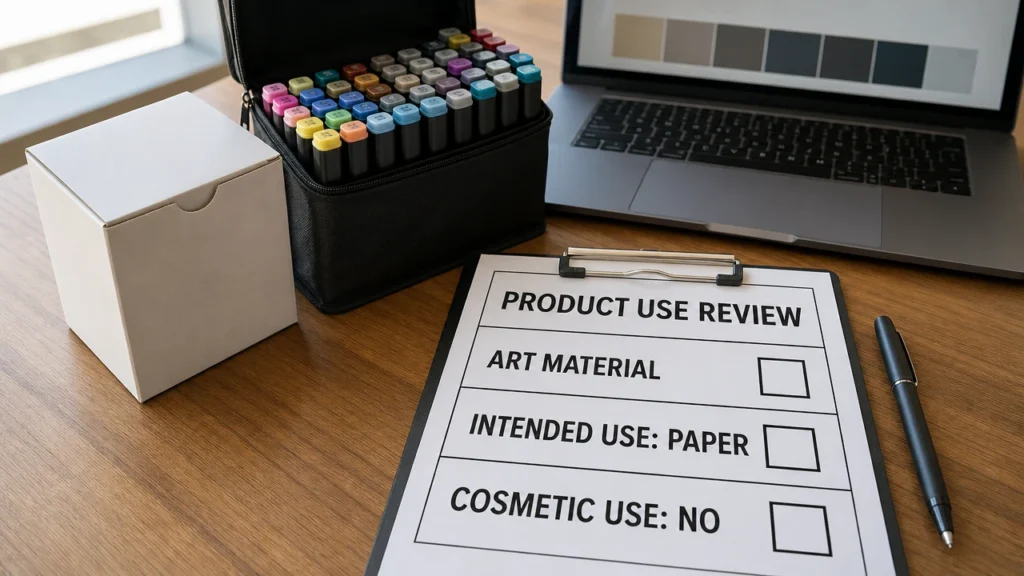
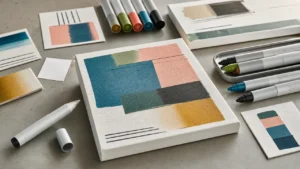
Buyer worksheet separating art-material labeling from cosmetic skin use

Uses to Avoid

  • Face painting, festival body art, or children’s party skin decoration with ordinary alcohol markers.
  • Drawing on eyelids, waterline, lips, inside the mouth, or around the nose.
  • Using marker ink as temporary-tattoo ink under adhesive films.
  • Stick-and-poke or any method that punctures the skin.
  • Marking cuts, rashes, eczema, sunburn, or freshly shaved skin.
  • Using a marker as a surgical skin marker or medical identification product.
  • Assuming washable from skin means approved for skin.

In the United States, the FDA cosmetics labeling summary explains that products intended to be applied to the human body for beautifying or altering appearance are cosmetics. The FDA also maintains color-additive use tables for cosmetics; permitted uses can differ for the eye area, lips, and external use.

What to Do After Skin Contact

  1. Stop using the marker on skin and recap it.
  2. Read the product label for first-aid or caution instructions.
  3. Wash intact skin gently with soap and water. Do not scrub until the skin is raw.
  4. Move to fresh air if odor is causing discomfort and ventilate the room.
  5. For eye contact, ingestion, a large exposure, persistent symptoms, or uncertainty, contact the local poison centre or medical service and provide the exact product name and label.

Health Canada art and craft safety guidance recommends following labels, washing after use, using appropriate ventilation, and obtaining medical advice if symptoms continue or return. Avoid aggressive household solvents on irritated skin unless a qualified source advises them for that specific exposure.

Safer Alternatives for Body Art

Choose face paint, body paint, cosmetic crayons, or body markers that are specifically labeled for the intended body area, age group, duration, and market. Check ingredient and warning information, patch-test directions where provided, removal instructions, and whether the product excludes eyes, lips, or broken skin.

Intended UseBetter Product CategoryBuyer Check
Children’s face paintingPurpose-made face paint for the age groupCosmetic compliance, permitted colors, warnings, hygiene, and removal.
Festival body designsPurpose-made body paint or body markerLarge-area use, wear time, transfer, removal, and sensitivity instructions.
Temporary tattooA system specifically marketed and compliant for temporary skin decorationIngredients, application method, duration, removal, and local legal requirements.
Medical skin markingPurpose-made medical or surgical skin markerMedical-device or relevant professional requirements and use instructions.
Paper illustrationAlcohol art markerVentilation, cap storage, age positioning, and art-material labeling.
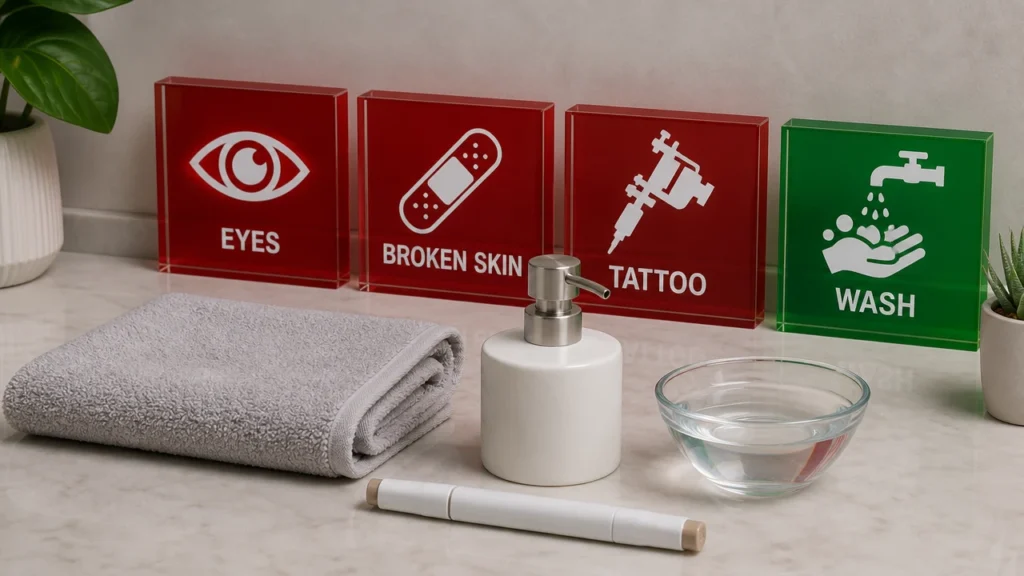
Alcohol marker exposure precautions for eyes broken skin and tattoo use

Private Label Brand Checklist

  1. Define intended use in the product specification, packaging, listing, images, and influencer brief.
  2. Do not show ordinary alcohol markers drawing on skin in marketing photos or videos.
  3. Match non-toxic, ASTM D-4236, AP, CL, or other claims to current formula-specific evidence.
  4. Add a clear statement such as not intended for use on skin when misuse is foreseeable and counsel approves the wording.
  5. Keep age grading, ventilation, storage, eye-contact, ingestion, and first-aid language consistent across the box and online listing.
  6. Train customer service to separate a small accidental mark from deliberate body-art use and to refer users to the label and poison services.
  7. Use lot coding and complaint records so a reaction can be traced to the formula, colors, and production batch.
  8. If the commercial goal is a skin marker, develop it under the correct cosmetic, medical, or other product framework instead of relabeling an art marker.

For an OEM review, first identify the marker platform in the ZH Stationery product range, then connect the final formula and warnings to the private label sample approval checklist および marker quality-control process. Company evidence is available on the who we are page および 工場見学. These pages support supplier review, but they do not convert an art marker into a body-use product.

ローラーボールペンとボールペンの ASTM D-4236 test report guide for marker buyers explains how to match a report to a product. Use it to prevent a common claim error: turning chronic-hazard labeling evidence into an unsupported skin-safety statement.

常見問題

1. Are alcohol markers safe to draw on skin?
Ordinary alcohol art markers should not be used for deliberate skin drawing unless the manufacturer specifically states that the product is intended and compliant for that use. Choose purpose-made body or face products instead.

2. What does non-toxic mean on an alcohol marker?
It means the claim must be understood under the product’s toxicological review, labeling rules, intended use, and foreseeable exposure. It does not automatically mean cosmetic-grade, edible, allergy-free, or approved for repeated skin application.

3. Does ASTM D-4236 mean an alcohol marker is skin-safe?
No. ASTM D-4236 addresses chronic health-hazard review and precautionary labeling for art materials. It is not a certification that the marker is a cosmetic or suitable for body art.

4. What should I do if alcohol marker gets on my hand?
Stop using it on skin, read the label, and wash intact skin gently with soap and water. Contact local poison control or a medical professional if irritation persists, the exposure is large, or the ink reached eyes, mouth, broken skin, or was swallowed.

5. Can AP-certified markers be used as face paint?
No automatic permission follows from the AP seal. ACMI distinguishes incidental or limited skin contact in art-material evaluation from products intended to alter the body’s appearance, which fall under a different regulatory regime.

6. Can alcohol marker ink be used for stick-and-poke tattoos?
No. Art marker ink is not tattoo ink, and puncturing skin creates infection and injection risks. Use a licensed tattoo professional and products intended for that regulated purpose.

結論

Alcohol markers belong on their intended drawing surfaces, not on the body. Non-toxic, AP, CL, and ASTM D-4236 statements can communicate important art-material safety information, but none should be converted into an unsupported skin-safe claim.

For private label development, decide at the beginning whether the product is an art marker or a product intended for human-body application. That intended use determines the formulation review, colorants, claims, labeling, testing, and regulatory path.

上部へスクロール