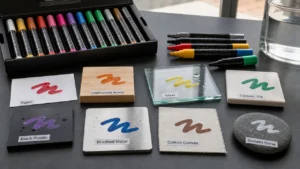
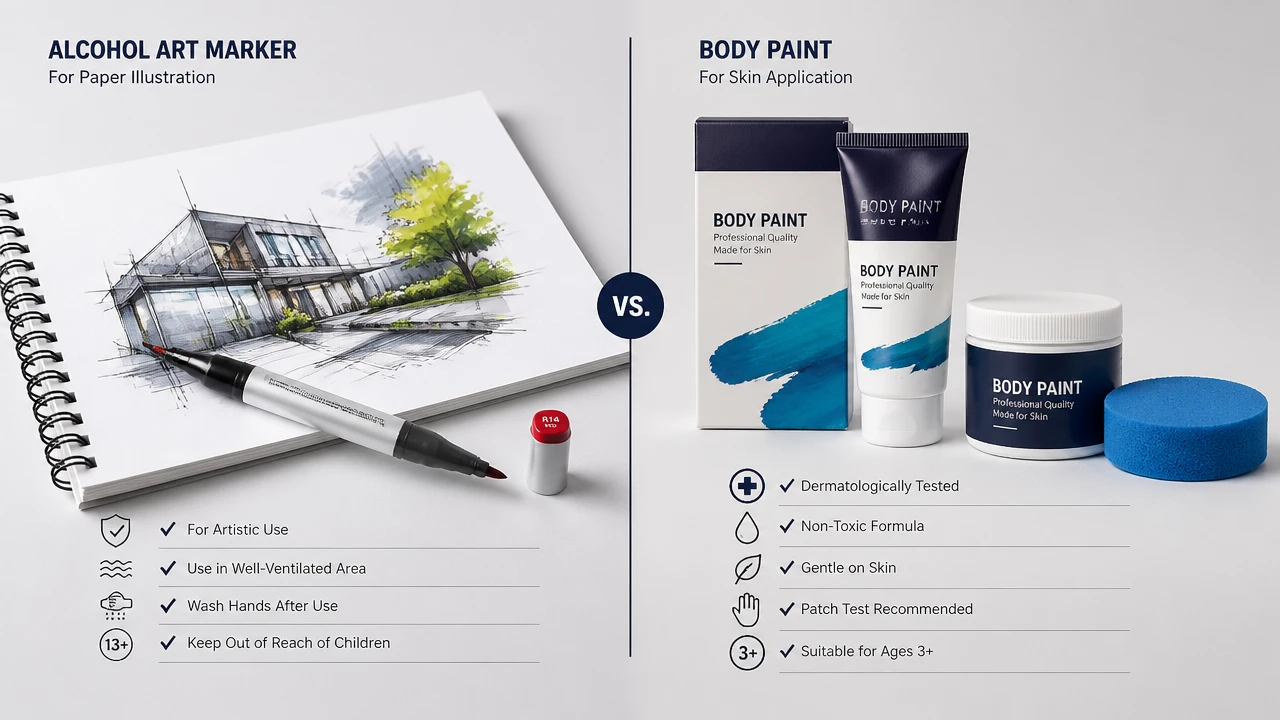
I pennarelli ad alcool sono sicuri per la pelle? I marcatori ad alcool ordinari sono realizzati per superfici da disegno, in particolare carta, non per decorare il corpo. Una dichiarazione di non tossicità, un sigillo AP o la dicitura ASTM D-4236 non rendono automaticamente un marcatore ad alcool un cosmetico, trucco per il viso, inchiostro per tatuaggi o un prodotto destinato all'applicazione ripetuta sulla pelle.
Una piccola macchia accidentale sulla pelle integra è generalmente un'esposizione diversa dal coprire deliberatamente la pelle, disegnare vicino a occhi o bocca, usare un marcatore su pelle lesionata o perforare la pelle. La regola più sicura è semplice: usare i marcatori ad alcool ordinari solo come indicato dal produttore e scegliere prodotti specificamente destinati e conformi per l'uso su corpo o viso quando l'obiettivo è la decorazione della pelle.
Questa guida è destinata ai consumatori e ai marchi private label che redigono testi accurati per imballaggi e assistenza clienti. Per un confronto più ampio delle opzioni specificamente progettate, vedere ZH Stationery guida alle penne più sicure per scrivere sulla pelle e pagina delle certificazioni.
Risposta rapida
Non usare i marcatori ad alcool ordinari come marcatori per la pelle. Possono contenere coloranti, resine e solventi a evaporazione rapida selezionati per le prestazioni su carta, e la valutazione di sicurezza del prodotto è legata all'uso previsto e al contatto incidentale prevedibile. Un marcatore può essere correttamente etichettato come materiale artistico senza essere valutato o commercializzato per l'applicazione diretta ripetuta sul corpo umano.
Se una piccola quantità viene a contatto con la pelle integra, interrompere l'uso sul corpo e lavare con acqua e sapone. Seguire l'etichetta del prodotto. Rivolgersi al centro antiveleni locale o a un medico in caso di irritazione persistente, esposizione estesa, contatto con gli occhi, ingestione, sintomi respiratori, uso su pelle lesionata o incertezza sul prodotto specifico.
Collegamenti rapidi
- I Marcatori ad Alcool Sono Sicuri per la Pelle? Cosa Significa Non Tossico
- Perché l'Inchiostro ad Alcool È Diverso
- Macchia Accidentale vs Uso Deliberato sulla Pelle
- Usi da Evitare
- Cosa Fare Dopo il Contatto con la Pelle
- Alternative Più Sicure per l'Arte sul Corpo
- Checklist per Marchi Private Label
- FAQ
Cosa Significa Realmente Non Tossico
Il termine deve essere letto nel contesto. La Guida CPSC sui materiali artistici spiega che i materiali artistici coperti negli Stati Uniti richiedono una valutazione tossicologica dei rischi cronici e l'etichettatura di conformità ASTM D-4236. La pagina attiva ASTM D4236-26 standard page afferma che la pratica sviluppa etichette precauzionali per i rischi cronici per la salute e non pretende di affrontare ogni problema di sicurezza.
Health Canada afferma ancora più chiaramente che ASTM D-4236 non significa di per sé non tossico. Significa che il prodotto è stato valutato per i potenziali pericoli e dovrebbe riportare adeguate informazioni per un uso sicuro. Un prodotto correttamente valutato può comunque richiedere avvertenze.
| Etichetta o Dichiarazione | Cosa Supporta | Cosa Non Dimostra |
|---|---|---|
| Conforme a ASTM D-4236 | Valutazione dei rischi cronici e etichettatura appropriata come materiale artistico per la formulazione e l'uso previsto | Sicuro per la pelle, conforme ai cosmetici, commestibile, lavabile o innocuo in ogni uso improprio. |
| Sigillo AP ACMI | Valutazione tossicologica e stato non dannoso per l'uso previsto nell'ambito del programma di certificazione | Approvazione come trucco per il viso, marcatore per il corpo, eyeliner, rossetto, inchiostro per tatuaggi o applicazione ripetuta sulla pelle. |
| Sigillo CL ACMI | I pericoli noti sono affrontati tramite etichettatura di avvertenza per gli utenti appropriati | Un prodotto per bambini o il permesso di ignorare le avvertenze. |
| Non tossico | Una dichiarazione che deve essere compresa nel contesto del suo test, valutazione, mercato e uso previsto | Rischio zero, ipoallergenico, senza solventi o adatto a ogni area del corpo. |
| Sicuro per la pelle | Dovrebbe indicare un prodotto sviluppato e supportato intenzionalmente per il contatto con la pelle | Una frase che può essere copiata da un rapporto di un marcatore artistico ordinario senza valutazione cosmetica. |
Il pagina sulla sicurezza dei materiali ACMI afferma che le sue valutazioni dei materiali artistici considerano il contatto incidentale o limitato con la pelle, ma i prodotti destinati ad alterare l'aspetto del corpo umano rientrano in un regime normativo diverso. Questa distinzione è la risposta fondamentale a questa domanda.
Perché l'Inchiostro del Marcatore ad Alcool È Diverso
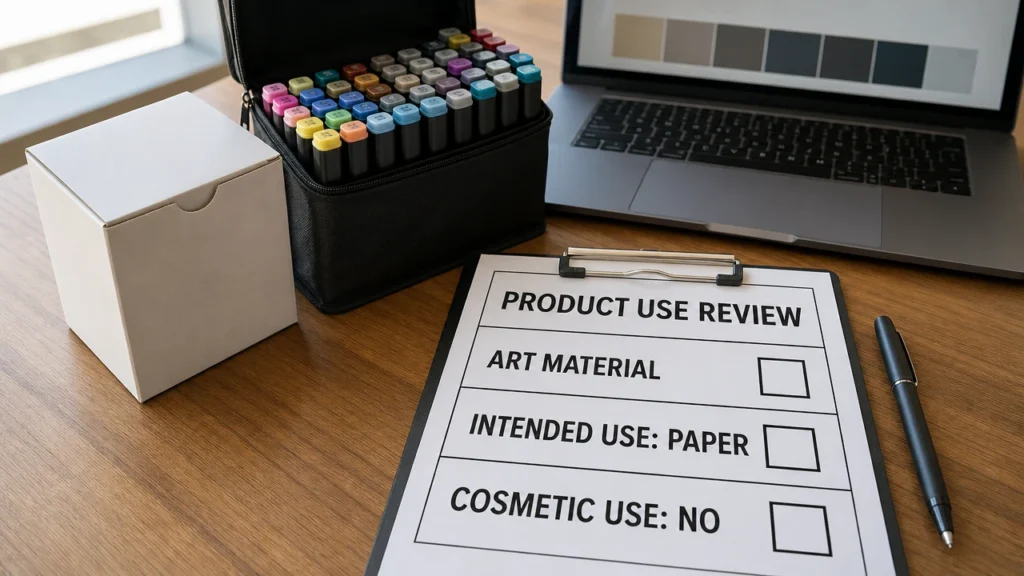
L'inchiostro del marcatore ad alcool è progettato per scorrere rapidamente, diffondersi attraverso le fibre della carta, mescolarsi prima di asciugarsi e ripartire dopo la chiusura del tappo. La formulazione combina comunemente un sistema di solventi volatili con coloranti e resine o altri additivi. Gli ingredienti esatti variano, quindi l'odore non è un test affidabile di tossicità e un marchio non può sostituire un altro.
- L'evaporazione rapida può seccare o irritare la pelle sensibile, soprattutto con l'uso ripetuto.
- I coloranti possono macchiare la pelle e trasferirsi su vestiti, mobili o biancheria da letto.
- L'odore di fragranza e solvente può essere sgradevole in ambienti poco ventilati.
- I coloranti consentiti per un materiale artistico non sono automaticamente consentiti per l'uso cosmetico su ogni area del corpo.
- La pelle lesionata, abrasa, rasata di recente o infiammata crea un'esposizione diversa dalla pelle integra.
- L'esposizione di occhi, labbra, bocca e mucose richiede maggiore cautela rispetto a una piccola macchia sulla mano.
Non dedurre la sicurezza dall'odore. Un odore forte non dimostra che un prodotto sia tossico, e un odore lieve non dimostra che sia adatto alla pelle. Leggere l'etichetta e richiedere la documentazione di sicurezza aggiornata specifica per la formulazione al produttore.
Macchia Accidentale vs Uso Deliberato sulla Pelle
| Situazione | Direzione del Rischio | Risposta Pratica |
|---|---|---|
| Piccola linea accidentale sulla pelle integra | Contatto solitamente limitato, ma la sensibilità individuale e la formulazione variano | Fermarsi, lavare con acqua e sapone e osservare eventuali irritazioni. |
| Disegno ripetuto su mani o braccia | Contatto più lungo con solventi e coloranti su una superficie maggiore | Non continuare. Usare un prodotto destinato all'arte sul corpo. |
| Area estesa o uso prolungato | Maggiore esposizione, trasferimento, secchezza e potenziale irritazione | Rimuovere il prodotto e richiedere consulenza specifica sul prodotto se si verificano sintomi. |
| Vicino a occhi, labbra, bocca o mucose | Area di maggiore preoccupazione | Evitare l'uso. Sciacquare l'esposizione accidentale agli occhi come indicato dalle linee guida del centro antiveleni e richiedere assistenza. |
| Pelle lesionata, tagli, eruzioni cutanee o rasatura recente | Barriera cutanea compromessa | Non applicare. Contattare un medico o un centro antiveleni se l'esposizione causa sintomi. |
| Punture sulla pelle o tatuaggio fai-da-te | Rischio di infezione e iniezione, non semplice contatto superficiale | Non usare mai un pennarello artistico come inchiostro per tatuaggi. Rivolgersi a professionisti autorizzati e prodotti regolamentati. |
Gli Stati Uniti. Guida di Poison Control su penne e inchiostro raccomanda di usare le penne per lo scopo previsto e di tenere l'inchiostro lontano da viso, bocca e occhi. Il suo consiglio generale sull'inchiostro non deve essere interpretato come un'approvazione generale per ogni formulazione di pennarello ad alcool o per il body art deliberato.
Usi da Evitare
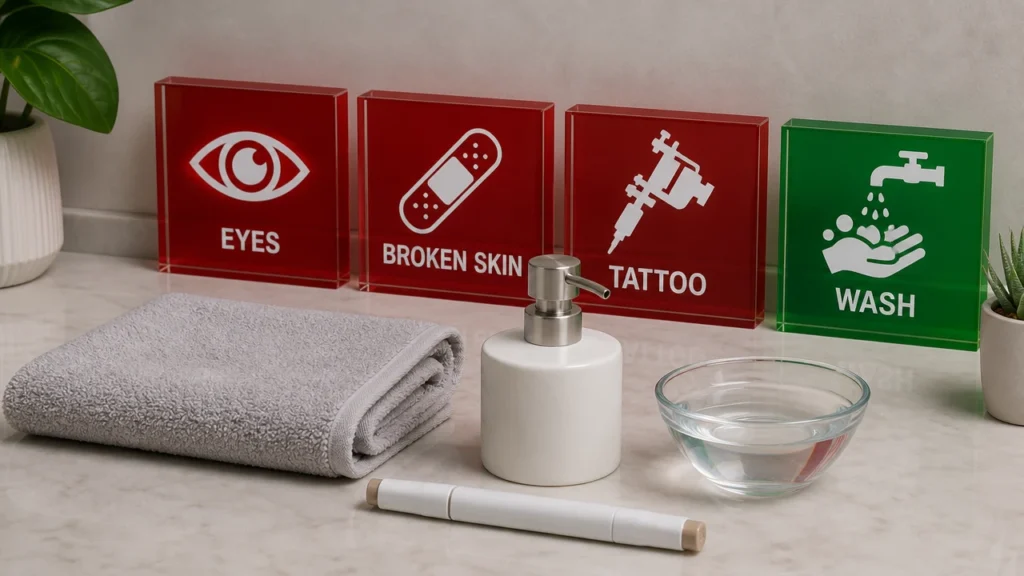
- Truccabimbi, body art festivaliero o decorazione della pelle per feste di bambini con normali pennarelli ad alcool.
- Disegnare su palpebre, rima ciliare, labbra, interno della bocca o intorno al naso.
- Uso dell'inchiostro del pennarello come inchiostro per tatuaggi temporanei sotto pellicole adesive.
- Stick-and-poke o qualsiasi metodo che perfora la pelle.
- Segnare tagli, eruzioni cutanee, eczema, scottature solari o pelle appena rasata.
- Uso di un pennarello come marcatore chirurgico cutaneo o prodotto di identificazione medica.
- Presumere che la lavabilità dalla pelle significhi approvazione per l'uso cutaneo.
Negli Stati Uniti, la sintesi sull'etichettatura dei cosmetici della FDA spiega che i prodotti destinati all'applicazione sul corpo umano per abbellire o modificare l'aspetto sono cosmetici. La FDA mantiene inoltre tabelle sugli usi consentiti degli additivi coloranti per i cosmetici; gli usi consentiti possono differire per l'area degli occhi, le labbra e l'uso esterno.
Cosa Fare Dopo il Contatto con la Pelle
- Smetti di usare il pennarello sulla pelle e richiudilo.
- Leggi l'etichetta del prodotto per le istruzioni di primo soccorso o precauzioni.
- Lava delicatamente la pelle integra con sapone e acqua. Non strofinare fino a irritare la pelle.
- Spostati all'aria aperta se l'odore causa disagio e ventila la stanza.
- In caso di contatto con gli occhi, ingestione, esposizione estesa, sintomi persistenti o incertezza, contatta il centro antiveleni locale o il servizio medico e fornisci il nome esatto del prodotto e l'etichetta.
Guida sulla sicurezza di arti e mestieri di Health Canada raccomanda di seguire le etichette, lavarsi dopo l'uso, garantire una ventilazione adeguata e ottenere consulenza medica se i sintomi persistono o si ripresentano. Evita solventi domestici aggressivi sulla pelle irritata a meno che una fonte qualificata non li raccomandi per quella specifica esposizione.
Alternative Più Sicure per l'Arte sul Corpo
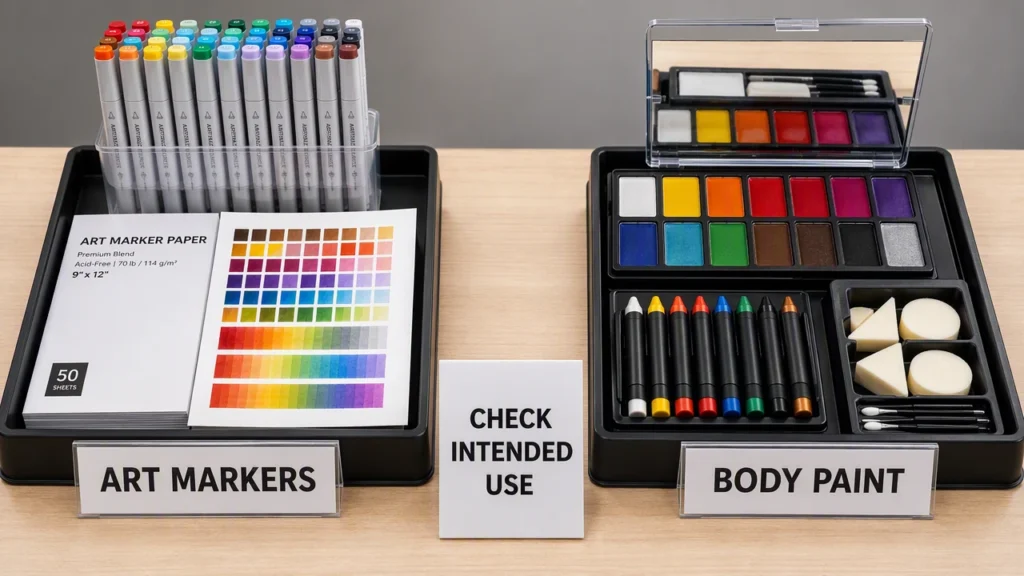
Scegli truccabimbi, vernice per il corpo, matite cosmetiche o pennarelli per il corpo specificamente etichettati per l'area del corpo, la fascia d'età, la durata e il mercato previsti. Controlla le informazioni su ingredienti e avvertenze, le istruzioni per il patch test dove fornite, le istruzioni per la rimozione e se il prodotto esclude occhi, labbra o pelle lesionata.
| Uso previsto | Categoria di prodotto migliore | Verifica per l'acquirente |
|---|---|---|
| Truccabimbi per bambini | Truccabimbi appositamente formulato per la fascia d'età | Conformità cosmetica, colori consentiti, avvertenze, igiene e rimozione. |
| Decorazioni per il corpo festivaliere | Vernice per il corpo o pennarello per il corpo appositamente formulato | Uso su grandi aree, durata, trasferimento, rimozione e istruzioni sulla sensibilità. |
| Tatuaggio temporaneo | Un sistema specificamente commercializzato e conforme per la decorazione cutanea temporanea | Ingredienti, metodo di applicazione, durata, rimozione e requisiti legali locali. |
| Marcatura cutanea medica | Pennarello medico o chirurgico appositamente formulato | Requisiti professionali o di dispositivo medico pertinenti e istruzioni per l'uso. |
| Illustrazione su carta | Pennarello artistico ad alcool | Ventilazione, conservazione con tappo, posizionamento per età ed etichettatura dei materiali artistici. |
Checklist per Marchi Private Label
- Definisci l'uso previsto nelle specifiche del prodotto, nell'imballaggio, nell'inserzione, nelle immagini e nel brief per gli influencer.
- Non mostrare normali pennarelli ad alcool che disegnano sulla pelle in foto o video di marketing.
- Abbina le dichiarazioni di non tossicità, ASTM D-4236, AP, CL o altre alle attuali evidenze specifiche della formulazione.
- Aggiungi una dichiarazione chiara come "non destinato all'uso sulla pelle" quando l'uso improprio è prevedibile e il consulente approva la formulazione.
- Mantieni coerenti le indicazioni su fascia d'età, ventilazione, conservazione, contatto con gli occhi, ingestione e primo soccorso tra la confezione e l'inserzione online.
- Forma il servizio clienti a distinguere un piccolo segno accidentale dall'uso deliberato come body art e a indirizzare gli utenti all'etichetta e ai servizi antiveleni.
- Utilizza codici lotto e registri dei reclami affinché una reazione possa essere ricondotta alla formulazione, ai colori e al lotto di produzione.
- Se l'obiettivo commerciale è un pennarello per la pelle, sviluppalo nell'ambito del corretto quadro cosmetico, medico o altro prodotto, invece di rietichettare un pennarello artistico.
Per una revisione OEM, identifica prima la piattaforma del pennarello nella gamma di prodotti ZH Stationery, quindi collega la formulazione finale e le avvertenze alla checklist di approvazione dei campioni per etichette private e processo di controllo qualità dei pennarelli. Le evidenze aziendali sono disponibili nella pagina chi siamo e visita guidata alla fabbrica. Queste pagine supportano la revisione del fornitore, ma non convertono un pennarello artistico in un prodotto per uso corporeo.
Il Guida al rapporto ASTM D-4236 per gli acquirenti di pennarelli Spiega come abbinare un rapporto a un prodotto. Usala per prevenire un comune errore di dichiarazione: trasformare prove di etichettatura per rischio cronico in un'affermazione non supportata di sicurezza per la pelle.
FAQ
1. I pennarelli ad alcool sono sicuri da usare sulla pelle?
I marcatori artistici ad alcool ordinari non dovrebbero essere utilizzati per disegnare deliberatamente sulla pelle, a meno che il produttore non dichiari specificamente che il prodotto è destinato e conforme a tale uso. Scegliere invece prodotti specifici per il corpo o per il viso.
2. Cosa significa "non tossico" su un pennarello ad alcool?
Significa che l'affermazione deve essere interpretata sulla base della revisione tossicologica del prodotto, delle norme di etichettatura, dell'uso previsto e dell'esposizione prevedibile. Non significa automaticamente che sia di grado cosmetico, commestibile, ipoallergenico o approvato per l'applicazione ripetuta sulla pelle.
3. Il marchio ASTM D-4236 significa che un pennarello ad alcool è sicuro per la pelle?
La norma ASTM D-4236 riguarda la revisione dei rischi cronici per la salute e l'etichettatura precauzionale per i materiali artistici. Non costituisce una certificazione che il pennarello sia un cosmetico o adatto per l'arte sul corpo.
4. Cosa devo fare se il pennarello ad alcool mi finisce sulla mano?
Interrompere l'uso sulla pelle, leggere l'etichetta e lavare delicatamente la pelle integra con sapone e acqua. Contattare il centro antiveleni locale o un medico se l'irritazione persiste, l'esposizione è estesa o l'inchiostro è entrato in contatto con occhi, bocca, pelle lesa o è stato ingerito.
5. I pennarelli certificati AP possono essere usati come trucco per il viso?
Nessuna autorizzazione automatica deriva dal sigillo AP. L'ACMI distingue il contatto incidentale o limitato con la pelle nella valutazione dei materiali artistici dai prodotti destinati ad alterare l'aspetto del corpo, che rientrano in un diverso regime normativo.
6. L'inchiostro dei pennarelli ad alcool può essere usato per tatuaggi stick-and-poke?
No. L'inchiostro dei pennarelli Art non è inchiostro per tatuaggi e perforare la pelle comporta rischi di infezione e iniezione. Rivolgersi a un tatuatore professionista autorizzato e utilizzare prodotti destinati a tale scopo regolamentato.
Conclusione
I pennarelli ad alcool sono destinati alle superfici di disegno previste, non al corpo. Le dichiarazioni di non tossicità, AP, CL e ASTM D-4236 possono comunicare importanti informazioni sulla sicurezza dei materiali artistici, ma nessuna di esse deve essere trasformata in un'affermazione non supportata di sicurezza per la pelle.
Per lo sviluppo a marchio privato, decidi all'inizio se il prodotto è un pennarello artistico o un prodotto destinato all'applicazione sul corpo umano. L'uso previsto determina la revisione della formulazione, i coloranti, le dichiarazioni, l'etichettatura, i test e il percorso normativo.
Letture correlate
- Oltre “Non Tossico”: La Verità Nascosta sull'Inchiostro per Pennarelli di Grado Alimentare per Bambini
- Pennarelli a base d'acqua vs a base di olio: durata, sicurezza e migliori utilizzi
Riferimento esterno: Linee guida FDA sugli additivi coloranti.