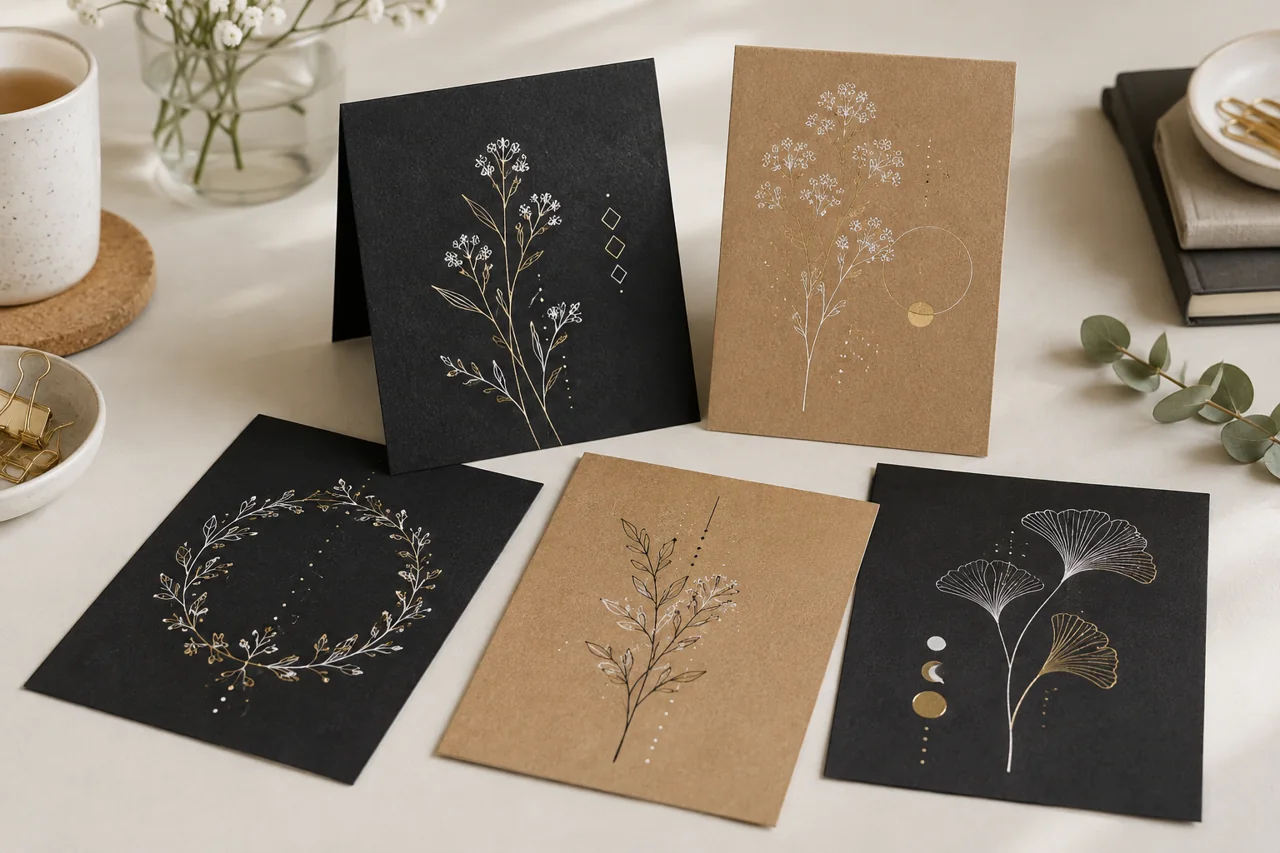
Metallic and glitter paint markers are both specialty products, but they are not the same. Metallic markers are usually picked for a smooth shine and clean lettering. They give a premium look on dark or non-porous surfaces. Glitter markers are picked when visible sparkle and moving particles drive the sale. They suit a more decorative feel.
For an OEM or private-label buyer, the right pick goes beyond the color name. Finish matters. Opacity and coverage matter. Nib flow, settling, and drying time matter. Surface fit, packing safety, and retail position all shape the final SKU. This guide shows how to compare metallic vs glitter paint markers. Do this before you approve samples or place a repeat order.
Metallic vs Glitter Paint Markers: Quick Answer
Pick metallic paint markers when you need smooth reflective lines and a premium result. They fit lettering, gifts, journaling, glass, metal, and dark craft surfaces. Coverage stays controlled. Pick glitter markers when sparkle is the main draw. They fit cards, seasonal crafts, decorations, kids' kits, and trend-led gift sets. Metallic mixes often look more even. Glitter mixes need closer control of particles, mixing, nib fit, and storage.
Enlaces rápidos
- Finish and Coverage
- Compatibilidad de superficies
- Formula and Nib Testing
- Packaging and Retail Positioning
- OEM Sample Approval
- MOQ and Repeat Orders
- Preguntas frecuentes
[IMAGE PLACEHOLDER: metallic-vs-glitter-paint-markers-image-2.jpg]
Finish and Coverage
Metallic paint gets its look from reflective pigments or flakes spread through the coat. A strong metallic sample gives a steady line with an even sheen where strokes overlap. If the pigment settles, the first stroke may look dull and later strokes may turn darker. Check the finish after drying. Do not judge the wet mark alone.
Glitter paint markers make sparkle with visible particles held in a binder. The particles flash under angled light. They can also make coverage look less solid when the binder is see-through. A glitter marker may need more shaking or more passes for a dense base. That is not a defect by itself. It must match the product promise and the printed steps for the user.
| Factor | Marcadores Metálicos | Marcadores con Purpurina |
|---|---|---|
| Efecto visual | Smooth reflective sheen | Visible sparkle and particle flash |
| Coverage | Often more even for lettering | May need layering for a dense base |
| Primary buyer cue | Premium finish and contrast | Fun, seasonal or decorative sparkle |
| Main formula risk | Settling, dullness and streaking | Settling, clogging and particle separation |
Compatibilidad de superficies
Both finishes can work on paper, cardboard, glass, ceramic, wood, and some plastics. The background changes how the finish reads. Metallic colors are often easier to see on black, navy, or other dark surfaces. Reflection has room to show there. Glitter can vanish on a busy or pale background. The particle color must stand out from the surface.
On porous wood or uncoated paper, metallic ink may sink into the fibers and lose its shine. Glitter particles may gather in the texture and make a rougher line. On glass, ceramic, and metal, both may look brighter. But grip, cure, smudge resistance, and washing must be tested separately. A marker that looks great on a display swatch may not survive packing, rubbing, or normal handling.
- Use black, white and colored substrates for a fair comparison.
- Test a single stroke, a slow fill, small details and overlapping layers.
- Check the mark after drying, stacking, rubbing and light scratching.
- Use the actual production surface instead of a visually similar substitute.
- Photograph the finish under diffuse, direct and angled light.
[IMAGE PLACEHOLDER: metallic-vs-glitter-paint-markers-image-3.jpg]
Formula and Nib Testing
Specialty mixes put more strain on the nib and ink path than normal paint markers. Before approval, note how long the marker must be shaken. Check that the mixing ball moves freely and first strokes are even, then test after horizontal and vertical storage. Particle spread and cap seal can change start-up behavior.
For glitter markers, look at the nib after many strokes. Particle build-up can drag a fine nib, widen the line, or leave an uneven trail. For metallic markers, check whether the shiny layer streaks when strokes overlap. Nib hardness, channel size, reservoir flow, and cap seal should be tested together. Changing the nib after ink approval can change coverage and finish.
[IMAGE PLACEHOLDER: metallic-vs-glitter-paint-markers-image-4.jpg]
Packaging and Retail Positioning
Metallic markers can support premium gift sets, office writing, journaling, lettering, and craft programs. Glitter markers often fit seasonal lines, party decor, kids' creative kits, and novelty sets. The packing should show the real finish with a swatch, finished art, or a controlled product photo. A generic color chip cannot show reflection or sparkle.
Protect the nib from pressure, dust, and dirt inside the pack. A clear window can help buyers see the product. It should not expose the nib during shipping. If the glitter mix needs shaking, make the step easy for the user. If the finish needs set time, do not stack the products tight or bag them right after use.
- Match the product name and color description to the tested finish.
- Show representative swatches rather than relying only on digital artwork.
- Confirm marker count, tip size, color order and carton configuration.
- Check barcode readability on reflective or glossy packaging.
- Keep packaging claims narrower than the test evidence when results vary by surface.
[IMAGE PLACEHOLDER: metallic-vs-glitter-paint-markers-image-5.jpg]
OEM Sample Approval Checklist
An OEM buyer should approve metallic or glitter markers as a full product system. Ink, barrel, cap, nib, pack, steps, and swatch photos belong together. Approving a loose pen without its final packing can hide problems. Cap pressure, shipping, stacking, or a wrong color card may be the cause.
- Request physical samples from the intended production platform.
- Record the ink reference, nib material, nib size and cap style.
- Test light, dark and colored substrates using equal coat counts.
- Photograph wet, dry, stacked and rubbed results under consistent lighting.
- Check startup after storage and record shaking or priming requirements.
- Inspect fine lines, broad fills, overlaps, particle distribution and edge control.
- Approve the package dummy, tray, transparent window and instruction card.
- Keep a signed finish board for repeat orders and quality inspection.
When changes are asked, move one variable at a time where possible. If nib, pigment load, and binder all change at once, you cannot tell what fixed or broke something. A clean sample history speeds supplier talk and helps buying teams compare quotes on the same spec.
[IMAGE PLACEHOLDER: metallic-vs-glitter-paint-markers-image-6.jpg]
MOQ and Repeat-Order Planning
Specialty finishes can raise MOQ beyond ink cost. Metallic and glitter colors may need separate pigment systems. They may need other mixing steps, more swatch work, packing review, or a different nib channel. Ask whether both finishes share the barrel, cap, tray, and carton. Request separate MOQ and price tiers for standard colors, custom colors, custom packing, and mixed sets.
Repeat orders should be checked against the approved finish board. Use the same surface, light, pass count, and drying time when you compare a new lot. If the result looks off, first separate a real batch change from camera, surface, or light drift. This protects the buyer and the factory from needless quality fights.
For related planning, review the glitter marker manufacturing guide, acrylic markers on canvas, y factory audit checks. ZH Stationery can help buyers compare finish, nib, packing, and sample needs for private-label marker programs.
[IMAGE PLACEHOLDER: metallic-vs-glitter-paint-markers-image-7.jpg]
Retail Positioning and Assortment Planning
Metallic and glitter markers should not carry the same retail message. Metallic markers can support premium gift sets, office writing, journaling, lettering, and craft programs. A smooth shiny line is easy to read there. Glitter markers often fit seasonal lines, party decor, kids' kits, and novelty sets. Sparkle is the reason to buy. The pack, photos, and sample art should all back the chosen position.
Set planning also touches stock. A small metallic range may work as a year-round core product. Glitter colors may fit seasonal launches or limited lines better. Before approving a mixed set, check whether the two finishes share the barrel, cap, tray, and carton. If each finish needs its own parts, a combined set can create separate minimums and harder restocking.
What to Include in the Buyer RFQ
A clear RFQ should name the target surfaces, tip, color families, finish standard, and packing format. Add the rough order size and destination market. Ask the factory to quote standard metallic and glitter platforms apart from custom work. Custom colors, custom barrels, printed packing, and new nib work are separate. That makes it easy to compare a low-risk stock platform with a deeper OEM program.
- Describe the target user and sales channel.
- Specify the required tip size and line type.
- List the substrates used in the product demonstration.
- Request wet and dry swatches under more than one light angle.
- Confirm shaking, priming, cure and storage instructions.
- Ask how MOQ changes for custom colors and mixed cartons.
- Define the retained sample and repeat-order approval process.
[IMAGE PLACEHOLDER: metallic-vs-glitter-paint-markers-image-8.jpg]
Storage and Repeat-Order Risk
Metallic and glitter finishes can shift in storage. The cap seal, pigment balance, or pack protection may be weak. Before approval, hold samples in the same position the finished product will use. Then check start-up, line width, opacity, and sparkle. A marker that works right after filling may perform differently after heat, vibration, or a long idle time.
Repeat-order control should use a kept sample board. It holds the approved marker, finish swatches, target surface, pack dummy, and step version. When a later lot arrives, compare it under the same light and with the same stroke count. If the finish looks off, separate a real batch change first. Surface, camera, or drying drift can fool the eye. Do that before you open a claim. This record protects the buyer and gives the factory a clear target.
Preguntas frecuentes
Are metallic paint markers better than glitter markers?
Neither is always better. Metallic markers usually give smoother shiny coverage. Glitter markers give a stronger sparkle cue. The right pick depends on the audience, surface, and retail position.
Do glitter markers clog more easily?
They can be more sensitive to settling and particle build-up. A matched nib, mixing system, cap seal, and user instructions cut the risk.
What should an OEM buyer request?
Request physical swatches and angled-light photos. Ask for settling and recovery tests. Get nib specs, packing samples, and storage instructions. Set the approved finish standard.The minimum order for custom OEM/ODM programs is 50,000 pens per order, counted by total individual pens produced. For a 12-color pack, that equals roughly 4,200 sets, not 50,000 of each color. Standard stock models can be sampled at smaller trial sizes.