
When sourcing writing instruments for retail or distribution, one question consistently surfaces: are premium markers genuinely worth the higher per-unit cost? For procurement managers evaluating supplier catalogs and brand owners developing new product lines, the answer directly affects margins, customer satisfaction scores, and return rates. In 2026, as raw material costs fluctuate and end-consumer expectations for product safety and performance continue to rise, understanding what separates premium markers from budget alternatives has never been more critical for B2B buying decisions.
The distinction is not merely about branding or packaging. It comes down to measurable technical factors: ink formulation chemistry, nib engineering tolerances, barrel seal integrity, and compliance with international safety standards. Each of these variables translates directly into the consumer experience — and, by extension, into your brand’s reputation and repeat purchase rate.
For brand owners and procurement managers, understanding these factors helps establish more precise sourcing and quality inspection standards before committing to a supplier relationship.
Table of Contents
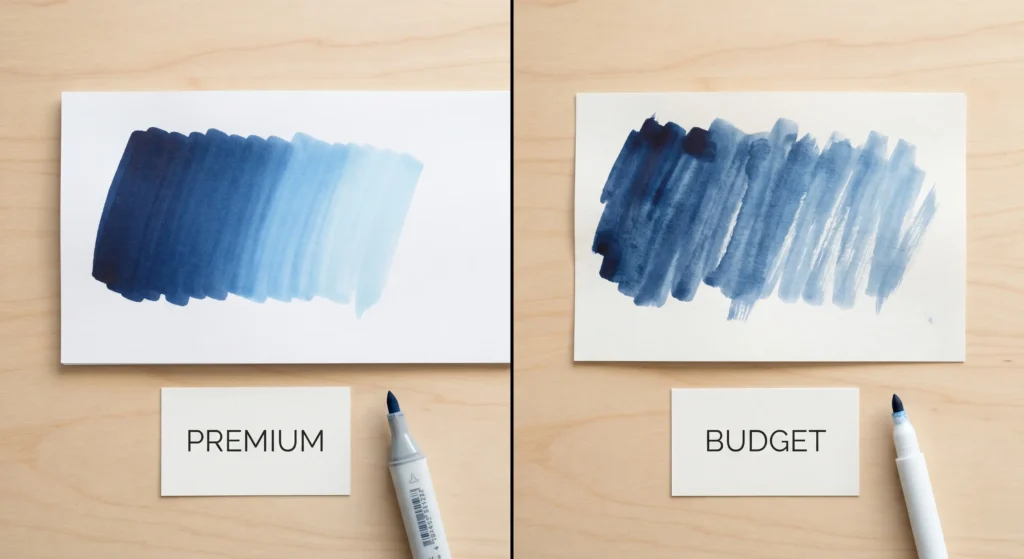
Quick Answer: Are Premium Markers Really Worth The Higher Price?
When buyers ask whether premium markers justify their cost, the answer depends on which metrics you prioritize. From a B2B perspective, the value proposition breaks down into verifiable quality indicators:
- Ink formulation quality directly determines color vibrancy, blendability, and lightfastness — attributes that budget markers consistently fail to deliver over time.
- Nib durability and precision affect the end-user’s control and satisfaction; premium nibs use engineered fiber or synthetic tip materials that resist fraying through extended use.
- Barrel and cap seal integrity prevents ink evaporation, extending shelf life by 12–24 months compared to budget alternatives that may dry out in weeks.
- Safety and regulatory compliance (EN71, ASTM D-4236, REACH) ensures the product meets target market legal requirements, reducing liability risk for distributors and retailers.
- Consistent batch-to-batch performance is a hallmark of premium-tier manufacturing — something achievable only through rigorous in-process QC and post-production inspection protocols.
For brand owners and procurement managers, understanding these factors helps establish more precise sourcing and quality inspection standards — and ultimately protects the end-consumer experience that drives repeat business.
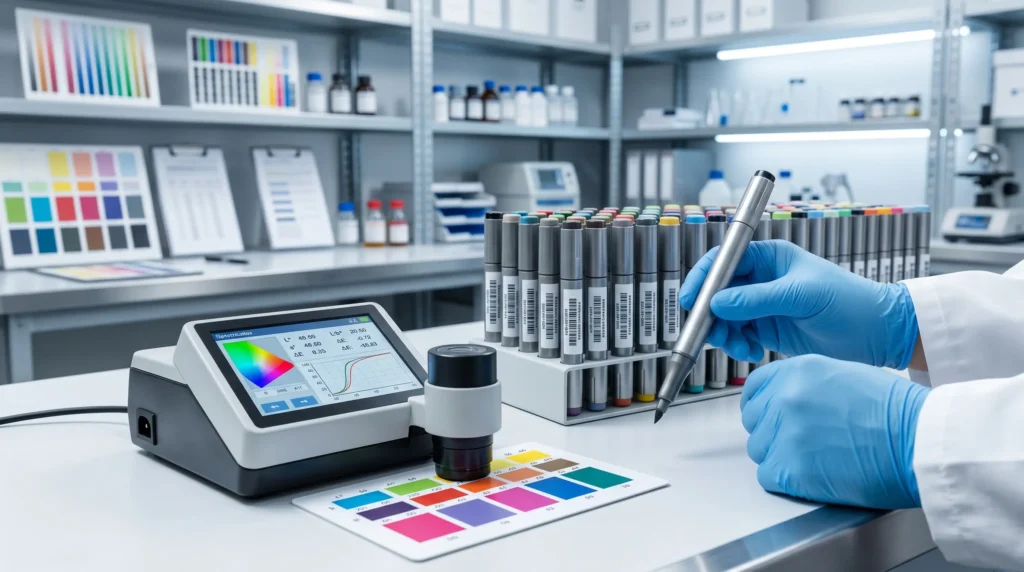
Factory Quality Control Behind Consistent Marker Performance
What consumers experience as a “good marker” or a “bad marker” is actually the cumulative result of dozens of production decisions made at the factory level. For B2B buyers evaluating suppliers, the following table maps common end-user complaints back to the manufacturing controls that prevent them. Use this as a sourcing evaluation framework when auditing potential OEM partners.
| Common Feature/Issue | Why It Matters/Fails (Root Cause of Customer Complaints) | Factory Quality Control Metric |
| Ink Color Inconsistency | Differences in pigment dispersion, solvent ratios, or batch mixing lead to visible color drift between production runs. Consumers notice when a replacement marker does not match the original set. | Spectrocolorimeter testing per batch; ΔE (color difference) tolerance ≤ 1.5; in-house ink formulation ensures controlled raw material sourcing rather than third-party ink purchasing. |
| Nib Fraying or Mushrooming | Inferior fiber materials or improper bonding between nib core and tip housing cause the writing tip to deform after moderate use, producing imprecise lines. | Nib abrasion cycle testing (minimum 2,000 linear meters before measurable tip wear); microscope inspection of tip geometry at multiple production checkpoints. |
| Premature Drying / Cap Seal Failure | Poor cap-to-barrel tolerance or low-grade polypropylene materials allow solvent evaporation through micro-gaps. Markers dry out within weeks of first use. | Hermetic seal vacuum testing; accelerated aging tests (caps on, 40°C / 75% RH for 90 days with weight loss ≤ 3%); cap retention force verification. |
| Ink Flow Inconsistency / Skipping | Irregular fiber density in the ink reservoir or inconsistent ink viscosity causes interrupted ink delivery to the nib tip — resulting in “skipping” during use. | Ink viscosity measurement (Brookfield viscometer, ±5% tolerance); reservoir saturation uniformity testing; continuous writing machine test (minimum 300 meters uninterrupted output). |
| Barrel Cracking Under Pressure | Thin-walled or low-grade barrel materials fracture when gripped firmly, especially by younger users or during transit. | Barrel crush resistance testing (minimum 15 kg static load); drop testing from 1.2 meters onto concrete; material tensile strength verification per ISO 527. |
These are not abstract benchmarks. At factories like ZH STATIONERY, where 26+ years of OEM/ODM experience informs every production decision, these quality control gates are embedded into the standard manufacturing workflow — not treated as optional add-ons for premium-tier orders. Across a 10000+ sqm production facility with 8 production workshops, inline inspection stations and post-production sampling ensure that every batch meets the same specifications whether the order is 3,000 pens per SKU per color or 200,000 pens.
What Makes Premium Markers Different: A Technical Breakdown
Procurement professionals who understand the underlying engineering can make smarter sourcing decisions. Here is what separates premium markers from commodity alternatives at the component level.
Ink Formulation: The Single Largest Cost Driver
The difference between a marker that blends seamlessly and one that streaks is almost entirely determined by ink chemistry. Premium markers use either alcohol-based or high-grade water-based formulations where pigment particle size, solvent purity, and additive ratios are tightly controlled.
Three ink characteristics matter most for B2B buyers evaluating supplier quality:
- Particle size distribution. Fine pigments (typically 0.1–0.5 microns) produce smooth, consistent color laydown. Coarse or unevenly dispersed pigments create visible grain and uneven coverage — a common complaint in budget marker reviews.
- Solvent evaporation rate. Too fast, and the marker dries on the nib between strokes. Too slow, and it bleeds through paper. Premium formulations balance evaporation rate with open time for blending techniques.
- Lightfastness rating. ASTM D5383 or Blue Wool Scale testing determines how long a color resists fading under UV exposure. Budget markers often omit this testing entirely.
This is where manufacturing capability directly impacts product quality. Factories that purchase pre-mixed ink from third-party suppliers have limited control over these variables. By contrast, manufacturers operating an in-house ink R&D laboratory — ZH STATIONERY included — can adjust formulations to meet a brand’s specific requirements for color gamut, drying speed, and regulatory compliance. When a client requests a custom metallic gold that matches their brand Pantone within ΔE 2.0, that precision is only achievable with in-house ink formulation capabilities.
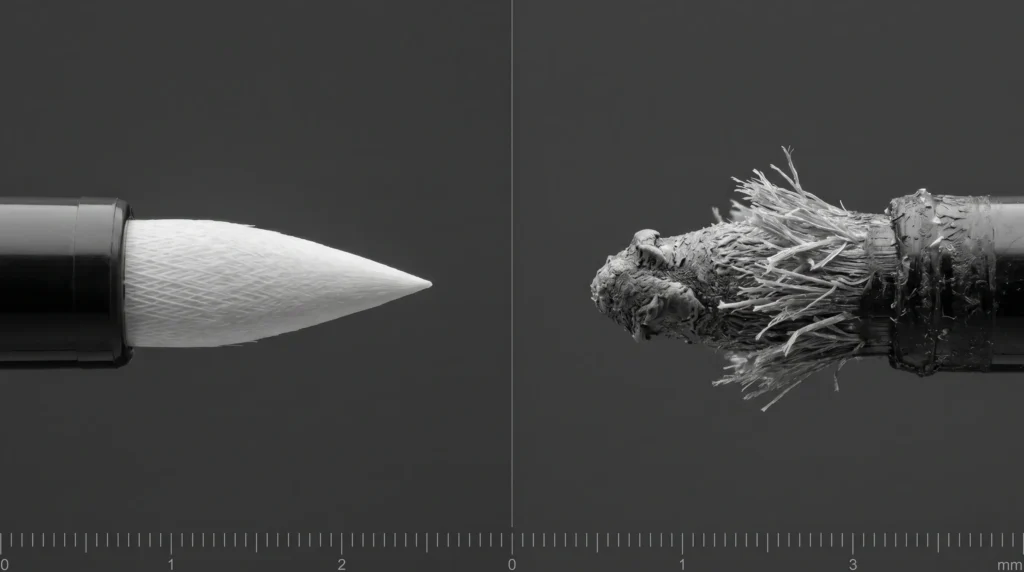
Nib Engineering: Where Precision Meets Durability
Nib quality is the single most tactile quality indicator for end users. A premium marker nib delivers consistent ink flow with controlled line width across its entire lifespan.
Key nib quality metrics that B2B buyers should inquire about include:
- Tip material composition. Polyester fiber nibs offer superior durability for alcohol-based inks; acrylic fiber nibs are preferred for water-based formulations. Using the wrong fiber-to-ink pairing causes premature degradation.
- Porosity control. The internal fiber density of the nib determines ink flow rate. Too dense, and the marker writes dry. Too porous, and it floods. Premium manufacturing involves porosity tolerance within ±3% across production batches.
- Bonding integrity. In dual-tip markers (brush + fine liner), the mechanical bond between nib types and the barrel connector must withstand repeated cap removal cycles without loosening.
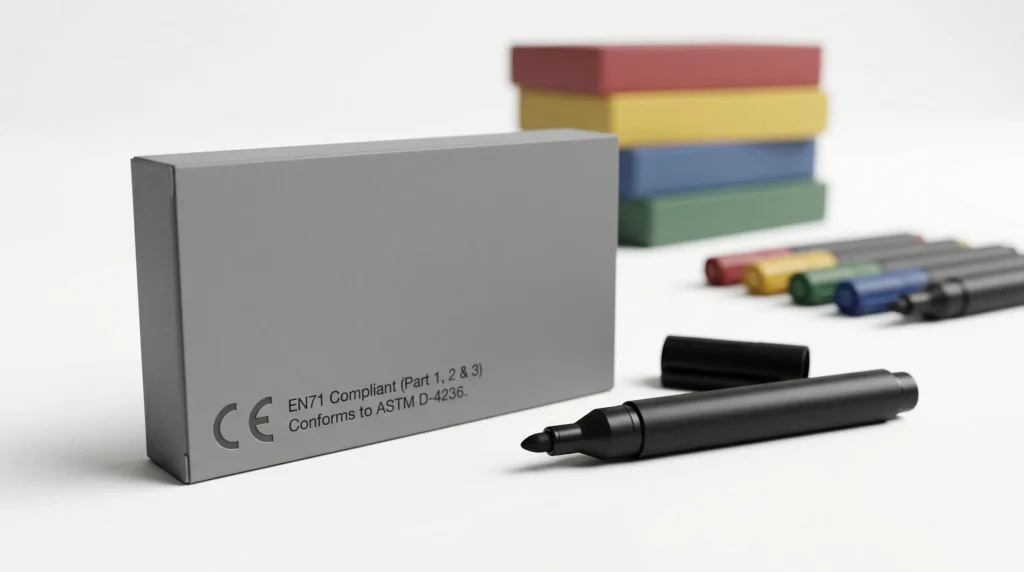
Barrel & Cap Engineering: Protecting Ink Integrity
The barrel and cap assembly of a marker serves a function that most consumers never think about: it is a miniature sealed container designed to preserve solvent-based ink for 18–36 months. Budget markers often fail this task within weeks.
Critical engineering factors include:
- Cap seal geometry. A properly engineered inner cap seal — often a polyethylene plug that mates precisely with the nib collar — creates an airtight chamber. Without this, solvent vapor escapes around the threads.
- Barrel material selection. Polypropylene barrels provide optimal chemical resistance to alcohol-based ink solvents. Lower-cost polyethylene can soften or swell over time when exposed to aggressive solvent formulations.
- Thread precision and cap retention. Cap threads must engage with consistent torque across thousands of cycles. Loose caps cause drying; overly tight caps frustrate users and risk cracking.
These technical differentiators are why 100% quality inspection at the factory level matters. At ZH STATIONERY, every production batch undergoes cap seal vacuum testing, nib writing performance verification, and barrel integrity checks — not just statistical sampling. For B2B buyers, asking a potential supplier about their full-inspection versus AQL sampling policy is one of the fastest ways to gauge manufacturing seriousness.
Certifications & Custom Manufacturing Capabilities
For brand owners importing premium markers into regulated markets, certifications are not optional marketing badges — they are legal prerequisites for market access. Understanding which standards apply to your target region prevents costly compliance failures at customs.
Essential Safety Certifications For Global Markets
- EN71 (EU Toy Safety Directive). Mandatory for any marker marketed to or accessible by children under 14 in the European Union. EN71 Part 3 specifically governs migration limits for heavy metals (lead, cadmium, mercury, chromium VI, etc.) from marker ink and barrel materials. ZH STATIONERY markers are fully EN71 certification compliant, with test reports available for buyer review.
- ASTM D-4236 (US Chronic Hazard Labeling). Required in the United States for art and craft materials. This standard mandates toxicological evaluation and appropriate hazard labeling for marker ink formulations. ASTM D-4236 compliance is non-negotiable for markers entering the US retail market.
- REACH Regulation (EU). Beyond EN71, REACH governs chemicals across all consumer products. REACH compliance ensures that no Substances of Very High Concern (SVHCs) are present in marker ink, barrel plastics, or packaging materials above threshold limits.
- CE Marking. For the European market, CE marking confirms conformity with all applicable EU health, safety, and environmental requirements.
ZH STATIONERY B2B Service Advantages
When evaluating a manufacturing partner for your marker product line, consider these supplier capabilities that directly impact your time-to-market and unit economics:
- The minimum order quantity is 3,000 pens per SKU per color. Quantities are counted in individual pens, not sets.
- Fully customized packaging. From blister cards and window boxes to custom-printed barrels and cap colors, packaging can be designed to match your brand identity. ZH STATIONERY produces 2,000+ new SKUs per year across diverse packaging formats.
- 3D design and physical sampling. Before committing to production tooling, clients receive 3D renderings and physical prototypes for approval — reducing development risk and ensuring design intent matches final output.
- Rapid production and delivery. A 10000+ sqm factory area with 8 production workshops with dedicated assembly lines ensures that confirmed orders move from PO to shipment without the bottlenecks common at smaller workshops.
- Free sample policy. Pre-production samples are available for buyer evaluation. Contact the sales team to discuss your specific requirements.
Ready to source premium markers for your brand? Contact ZH STATIONERY today to request a product catalog, discuss custom specifications, or arrange free samples for evaluation.
Frequently Asked Questions
Are Premium Markers Safe For Children?
Premium markers designed for the children’s market must comply with EN71 Part 3 (EU) or ASTM D-4236 (US) safety standards, which set strict limits on heavy metals and hazardous substances in ink and materials. When sourcing, always request the manufacturer’s test reports from an accredited third-party laboratory (e.g., SGS, TÜV, Intertek) rather than relying solely on the supplier’s self-declaration. At ZH STATIONERY, EN71 and ASTM D-4236 certification documentation is available upon request for every product SKU.
How Do Alcohol-Based Markers Compare To Water-Based Markers For Quality?
Alcohol-based markers offer superior blending capability, faster drying times, and more consistent color laydown on non-porous surfaces compared to water-based alternatives. However, they typically cost 30–50% more to manufacture due to higher solvent costs and more complex ink formulation requirements. For B2B buyers, the choice depends on your target market: art and illustration professionals strongly prefer alcohol-based markers, while the educational and children’s segments are dominated by water-based formulations for cost and washability reasons.
Can I Order Custom-Colored Markers With My Brand’s Specific Pantone Requirements?
Yes — provided the manufacturer operates an in-house ink R&D capability. Custom color matching requires formulating ink from base pigments and testing against a target color standard using spectrophotometer measurement. Factories that outsource ink production typically have limited ability to achieve precise custom colors. ZH STATIONERY’s in-house ink R&D laboratory enables custom color formulation to match brand Pantone specifications, with color variance maintained within ΔE 2.0 across production batches.
What Is The Typical MOQ For Custom Premium Markers?
The minimum order quantity is 3,000 pens per SKU per color. Quantities are counted in individual pens, not sets.
How Long Do Premium Markers Last Before Drying Out?
When manufactured with proper cap seal engineering and quality barrel materials, premium markers typically maintain usable ink for 18–36 months after first use, and 3–5 years unopened. Budget markers often fail within weeks due to solvent evaporation through poorly sealed caps. B2B buyers should ask potential suppliers for accelerated aging test data (sealed and opened samples at elevated temperature/humidity) to verify shelf-life claims. At ZH STATIONERY, cap seal vacuum testing and 90-day accelerated aging protocols are part of the standard quality assurance workflow.
How Can I Verify A Marker Manufacturer’s Quality Control Process Before Placing An Order?
Request a factory audit — either conducted by your own team or through a third-party inspection service. Key areas to evaluate include: ink formulation lab capabilities (in-house versus outsourced), inline QC checkpoints on the assembly line, post-production inspection protocols (AQL sampling versus 100% inspection), and certification documentation (EN71, ASTM D-4236, REACH). ZH STATIONERY welcomes factory audits and provides full transparency into manufacturing processes, QC documentation, and certification records. Contact ZH STATIONERY to schedule a virtual or in-person factory tour.
Making The Sourcing Decision: Quality That Pays For Itself
The per-unit price difference between premium markers and budget alternatives typically ranges from $0.15 to $0.60 at the wholesale level. For a procurement manager placing an order of 50,000 units, that represents a $7,500–$30,000 additional investment. The question is whether that investment generates a positive return.
It does. Budget marker failures — dried-out nibs, inconsistent color, cracked barrels, cap seal failures — generate customer complaints, negative reviews, product returns, and damaged retailer relationships. Each of these outcomes carries a measurable cost: return shipping, refund processing, customer service overhead, and lost repeat purchases. For an established brand, the lifetime value of a satisfied repeat customer far exceeds the marginal per-unit savings of downgrading to a budget product.
This is the fundamental calculation that premium markers make possible: invest in manufacturing quality upfront, and reduce the downstream cost of customer dissatisfaction. When you partner with a manufacturer that operates an in-house ink R&D laboratory, maintains 100% quality inspection protocols, and holds current EN71 and ASTM D-4236 certifications, you are not just buying markers — you are purchasing predictability, compliance, and brand protection.
For brand owners and procurement managers ready to explore custom marker manufacturing, ZH STATIONERY offers the technical capability, production capacity, and quality infrastructure to support your product line — whether you need 3,000 pens per SKU per color for a market test or 200,000 pieces for a major retail launch. The difference between a premium marker and a budget marker begins at the factory level. Make sure yours is built on the right foundation.
Related guide: For a related quality-control check, see Beyond “Non-Toxic”: The Hidden Truth About Food-Grade Marker Ink for Kids.
Related Reading
- Acrylic Marker Market 2026: Trends, Margins, and What Suppliers Are Not Telling You
- High Quality Acrylic Paint Markers: A B2B Buyer’s Sourcing Checklist
- Best Alcohol Markers Manufacturers in China: A B2B Buyer’s Guide
External reference: CPSC art materials guidance.