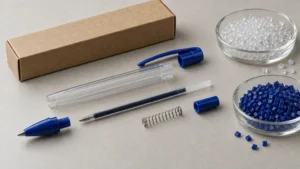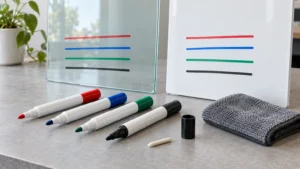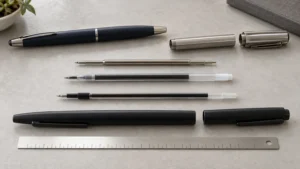
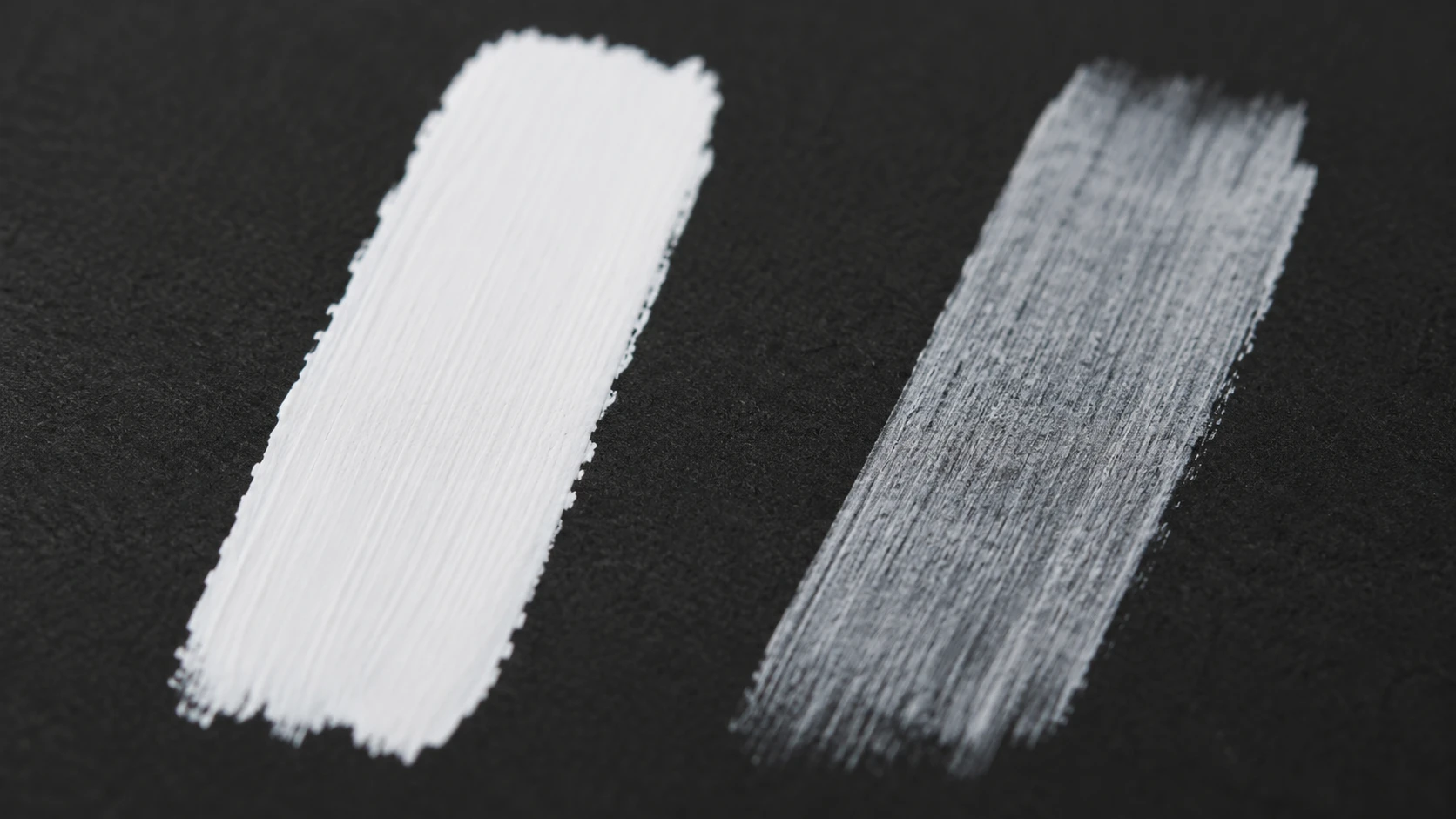
Black vs white paint pens are often compared as opposite versions of one product. In practice, they solve different cover problems. Black paint pens must make clean, dense lines without looking gray or glossy in a wrong manner. White paint pens must cover dark or colored faces without repeat flooding, skips, or visible nib stains. For buyers, opacity, tip design, surface fit, and drying performance should be tested as separate specs.
Black vs White Paint Pens: Quick Answer
Black paint pens are usually easier to make visually opaque on light faces. White paint pens need stronger pigment load, controlled flow, and better shake or prime steps. Black works well for outlines, lettering, and contrast. White is useful for highlights, dark packing mockups, chalk-style effects, and fixes. It shows weak cover faster. A buyer should test both colors on the exact glass, plastic, metal, wood, or paper surface planned for the final product.
Links Rápidos
- Opacity and Pigment Load
- Compatibilidade de Superfície
- Tip Size and Flow
- Testing Black and White Pens
- Perguntas Frequentes

Opacity and Pigment Load
Opacity depends on pigment dose, particle spread, binder performance, nib delivery, and the surface under the mark. Black ink can look strong after one pass. A low-pigment mix may turn clear when spread across a porous surface. White paint is harder because users see grayness, streaks, and gaps at once against black or heavy colors.
| Product color | Common use | Main approval risk |
|---|---|---|
| Black | Outlines, lettering, contrast and line art | Gray appearance, feathering or gloss variation. |
| Branco | Highlights, dark surfaces, corrections and decoration | Weak coverage, clogging or uneven layering. |
| Black and white set | Monochrome craft and design kits | Different flow behavior between the two colors. |
Compatibilidade de Superfície
On paper and cardboard, black paint pens usually make strong outlines. White can sink into fibers unless the surface is coated or the user adds a second layer. On glass and ceramic, both colors may look bright. Grip and wash resistance depend on cure and surface prep. On plastic and metal, check whether the paint wets the surface even and whether rubbing takes the film off.
- Glass: clean oils first and test curing, scratching and washing.
- Ceramic: separate decorative use from claims about dishwasher resistance.
- Plastic: identify the plastic type and test adhesion after drying.
- Metal: check smoothness, oxidation, handling marks and abrasion.
- Wood: sand and seal when needed, then compare absorption and edge spread.
Tip Size and Flow
Tip size changes the seen opacity. A broad tip lays down more paint but can flood small details. A fine tip gives control but may need more passes, especially with white pigment. For a retail set, say whether the pen is valve-action, squeeze-to-prime, or ready-to-write. Check cap seal, nib hardness, and recovery after storage for both black and white versions.
How to Test Black and White Paint Pens
- Draw one-pass lines on white, black, transparent and colored samples.
- Apply a second layer after the first layer dries and record the difference.
- Test fine details, broad fills, dots and crosshatching.
- Rub, scratch and wash the cured mark according to the intended use.
- Photograph the result under consistent lighting.
- Repeat after horizontal and vertical storage to compare startup.
Do not use one opacity claim for every surface. A line like opaque on dark surfaces should name the tested base, coat count, and cure state. That makes packing more real. It gives QC teams a repeatable pass bar.
Perguntas Frequentes
Are white paint pens harder to manufacture than black paint pens?
They can be more demanding because white coverage makes pigment loading, dispersion, settling and nib flow easier to see.
Which color is better for lettering?
Black is usually easiest on light backgrounds, while white is useful for dark or transparent backgrounds when opacity is strong enough.
Are black and white paint pens permanent?
Not automatically. Permanence depends on the formula, surface, cure and exposure conditions. Test the finished mark instead of relying on color alone.
For related calls, compare the acrylic paint marker permanence guide e o paint marker removal guide. ZH Stationery can help buyers match paint pen color, nib, surface, and packing needs for OEM programs.
Choosing Black or White for the Actual Use Case
Black and white paint pens solve different seeing problems. Black usually gives the strongest contrast on light paper, pale wood, and unfinished ceramic. White is picked for dark boards, colored paper, glass, and layered art. The call is not only pigment color. Opacity, valve response, nib size, drying performance, and the surface below decide whether the mark looks planned or patchy.
For product work, compare both colors on the materials customers will really use. Test a single stroke, slow fill, lettering-sized line, and layered marks on glass, plastic, metal, wood, and paper. White mixes make settling and weak spread easy to see. Black mixes show streaks when the nib cannot feed enough ink. Photo the samples after drying and after normal handling. Do not judge cover while the paint is wet.
Formula, Tip and Packaging Decisions
White paint pens may need stronger pigment care to hold cover without making ink too thick for the valve and nib. Black pens still need steady spread, because settled pigment can make a weak first stroke or a darker second layer. In both colors, cap seal, shake step, and nib build shape shelf performance. A buyer should ask for recovery tests after storage. Do not rely on a fresh sample from production.
Packing should show the color through a clear barrel or swatch. The final claim must match the tested surface. Avoid calling every black or white paint pen permanent or waterproof. A safer product stand names the suitable surfaces, cure states, and care limits.
Common Approval Mistakes With Paint Pen Color
One common mistake is passing black and white paint pens on one surface. The same mix may look dense on coated card but weak on porous wood. It may look bright on ceramic but scratch easy from smooth plastic. Another mistake is comparing black after one pass with white after two passes. Use equal coat counts and record the cure time. Then the buyer can see whether the gap comes from pigment, surface, or skill.
Also review the user flow. If the white pen needs shaking, priming, or several light coats, test that flow with someone who did not build the sample. A retail product works when the planned user can repeat the result without special knowledge. Include cap security, nib recovery, storage position, and stain-handling instructions in the product review.
Surface Preparation and Cure Are Part of the Specification
Paint pen performance cannot be cut from surface prep. Dust, oil, mold-release marks, rough fibers, and old coats can change wetting and grip. For a buyer compare, prep each base the same manner. Use the same stroke pressure and the same cure time. If the product is used on glass or ceramic, decide whether the item is decorative or likely to be washed, rubbed, or heated. Those are different performance needs.
Black and white mixes should also be checked against other colors. White may be a base layer. Black may draw outlines over a colored fill. Test the order, drying between layers, and the risk that the upper nib picks up the lower color. A small cross-stain issue can become a visible retail complaint when the set holds both colors in one tray.
How to Build a Better Buyer Comparison
Use a sample board with the same shapes on every base. A thin line. A broad fill. A corner. A dot. A crosshatch. Overlapping layers. Add a cured rub test and a photo under steady light. That makes opacity easier to compare without mixing it with gloss or shine. If a black pen is for fine lettering, weight line control over max fill. If a white pen is for dark faces, weight first-pass cover and recovery after storage.
For private label, pass the barrel color, cap, nib, formula, steps, and pack together. The final promise should describe what the tested system does. It should not lean on what the color name suggests. That builds a safer SKU and gives QC a clear pass base. It also cuts returns and gives retailers a real reason to stock both colors instead of treating one as a universal stand-in for the other.