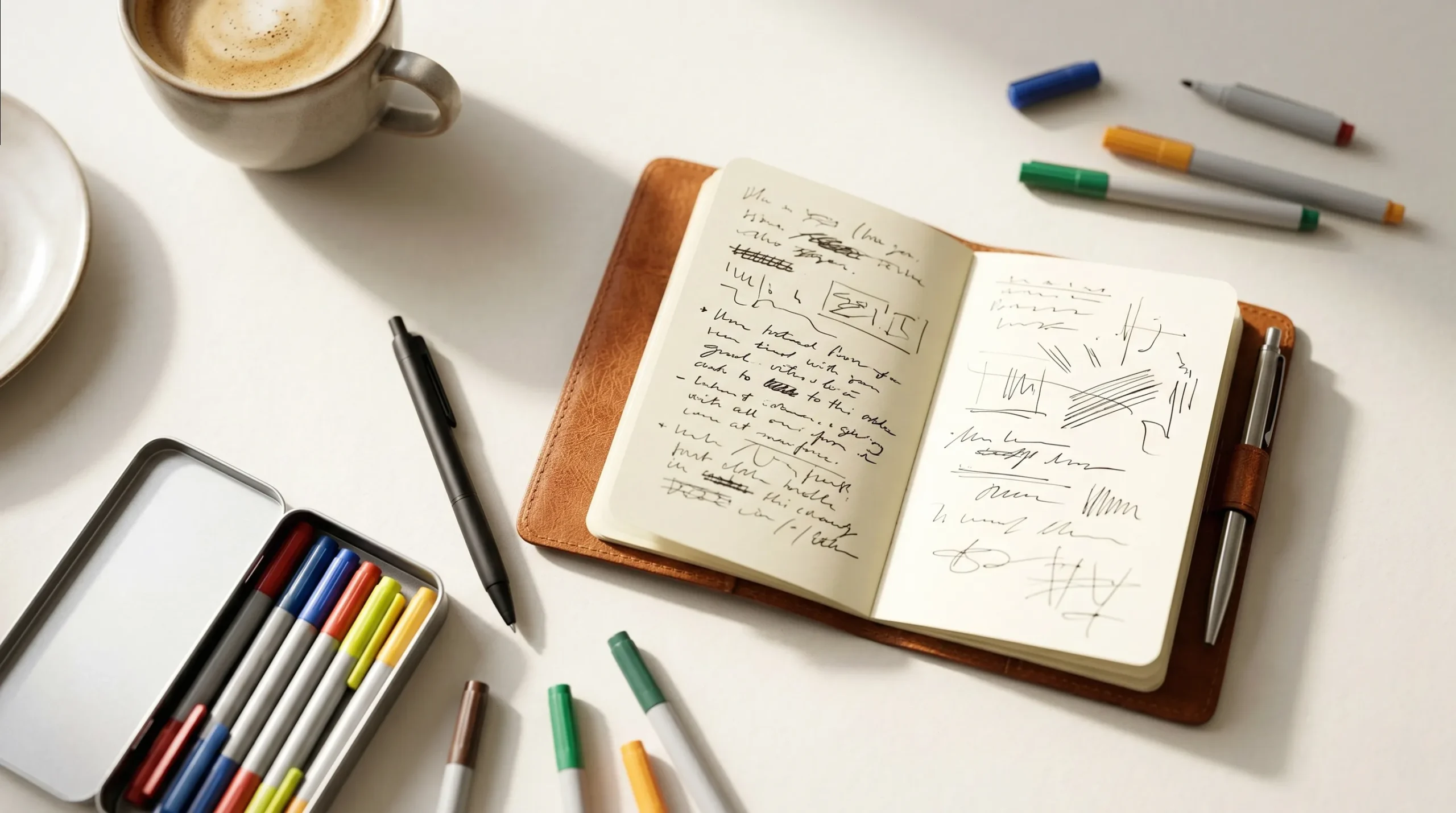
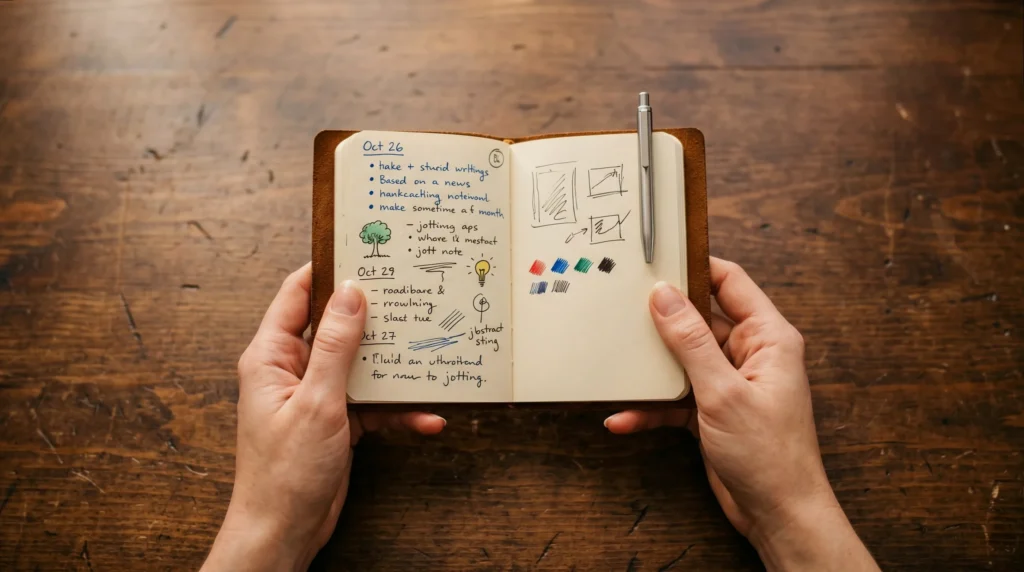
For a while, everything went digital. Notes moved to apps. To-do lists lived in phones. Ideas got typed into cloud files and, often enough, forgotten. But something shifted. Across design studios, buying offices, and creative workspaces, a quiet counter-move is gaining ground. It is the return of the physical, the portable, the pocket-sized tool that is always within reach. Pocket stationery sits at the center of this shift.
Designers sketch in cafes. Brand managers mark samples on factory floors. Writers catch phrases before they vanish. None of them want to carry a full pencil case or a 15-inch laptop sleeve. They want something that slips into a pocket, a bag, or a notebook band. Then it surfaces the moment an idea needs catching.
This is not nostalgia. It is practicality meeting intent. In 2026, the demand for compact writing tools, mini pens, pocket markers, and slim notebooks, has moved from niche interest to real market force. For brand owners and buying teams, it marks a category worth knowing at the factory level. That is why ZH Stationery's team watches this format closely.
Tabla de Contenidos
Respuesta rápida: ¿Por qué está aumentando la papelería de bolsillo en 2026?
The term pocket stationery now covers a product world. Mini ballpoints under 10 cm. Compact dual-tip markers. Clip-on fineliners. Notebooks small enough to ride in a back pocket. Their rise is not random. It tracks a few trends that are coming together:
- La fatiga digital es real. After years of all-screen workflows, creatives and professionals are pairing digital tools with physical ones (not replacing, but balancing. A pocket pen and a small notebook act as a “thinking space” away from notifications.
- La portabilidad impulsa la adopción. Tools that fit into daily carry) not just desk drawers (get used more often. A marker that’s always in your jacket gets more miles than the best pen left at home.
- Las expectativas de sostenibilidad han cambiado. Consumers) and increasingly, B2B buyers (favor products built to last. Refillable mini pens and markers with replaceable nibs fit the “buy less, buy better” ethos.
- Las redes sociales impulsan el descubrimiento. Platforms like TikTok and Instagram have turned pocket-friendly stationery into visual content. A satisfying pen mechanism or a compact color swatch set makes for shareable material) and organic brand exposure.
- Los planificadores y diarios han vuelto. El resurgimiento de los planificadores en 2026 ha creado una demanda complementaria: bolígrafos lo suficientemente delgados para deslizarse en un lazo de diario, marcadores lo suficientemente pequeños para un kit de viaje. Para los propietarios de marcas y gerentes de adquisiciones, comprender estos impulsores ayuda a establecer especificaciones de producto más precisas y estándares de inspección de calidad.
For brand owners and buying teams, these drivers help set sharper product specs and quality check bars.

Mini Bolígrafos y Marcadores Compactos: Un Marco de Evaluación de Calidad para Compradores B2B
When you judge mini pens or pocket markers for retail or private-label programs, the buyer's experience hangs on factory-level choices. A pen that skips after three uses is a return. A marker cap that cracks in a pocket is a brand problem. Here is how common end-user complaints map to factory quality control:
| Decoloración del color en semanas de uso | Por Qué Es Importante / Fallos (Causa Raíz de Quejas de Clientes) | Comprobaciones a acordar con el proveedor |
| El sello de la tapa no mantiene un cierre hermético; el solvente se evapora a través de microespacios entre el revestimiento de la tapa y el cuerpo | Pruebas de consistencia de la fuerza de extracción de la tapa (objetivo: 8–15 N); verificación del sello hermético por lote usando el método de caída de presión | Acuerde las comprobaciones de retención del capuchón y sellado para el usuario y la tinta previstos; revise los resultados de evaporación y sin capuchón. |
| Viscosidad de tinta inconsistente — demasiado espesa causa saltos; demasiado delgada causa fugas a través de la punta | Inconsistent ink viscosity) too thick causes skipping; too thin causes leakage through the nib | Acuerde las comprobaciones de flujo de tinta y consistencia de lote para la punta y la formulación seleccionadas. |
| Formulación de plástico deficiente o parámetros de moldeo por inyección inconsistentes (temperatura, presión, tiempo de enfriamiento) | Protocolo de prueba de caída (1.2 m sobre concreto, 3 ángulos); prueba de resistencia a la tracción en las roscas del cuerpo; registro de temperatura del molde de inyección por turno | Acuerde las condiciones de caída y las comprobaciones estructurales para el uso previsto; inspeccione las roscas y los clips en las muestras aprobadas. |
| Variación del lote de pigmento; los proveedores de tinta externos pueden no mantener tolerancias de color estrictas | Lectura con espectrocolorímetro contra el estándar maestro por lote; tolerancia ΔE ≤ 2.0 para marcadores de grado de consumo | Apruebe una muestra de color maestra y acuerde el método de medición y la tolerancia de color. |
| Densidad de fibra de la punta insuficiente para el tipo de solvente de tinta; las tintas a base de alcohol degradan el fieltro de baja densidad más rápido | Prueba de desgaste acelerado (distancia de escritura de 500 m); especificación del material de la punta emparejada con la química de la tinta en la etapa de I+D | Acuerde una prueba de distancia de escritura y calidad de línea; haga coincidir el material de la punta con la tinta seleccionada. |
| Tensión del resorte inconsistente; rebaba de moldeo en la pista interna interfiere con la activación suave | Prueba de ciclo hasta 10,000 activaciones; verificación con calibre pasa/no pasa de las dimensiones de la pista interna por lote de producción | Acuerde el objetivo de resistencia del mecanismo e inspeccione la consistencia de accionamiento en las muestras de producción. |
A factory that shows QC logs by batch has nothing to hide. One that says we check quality without naming methods either does not track this data or does not want you to see it.
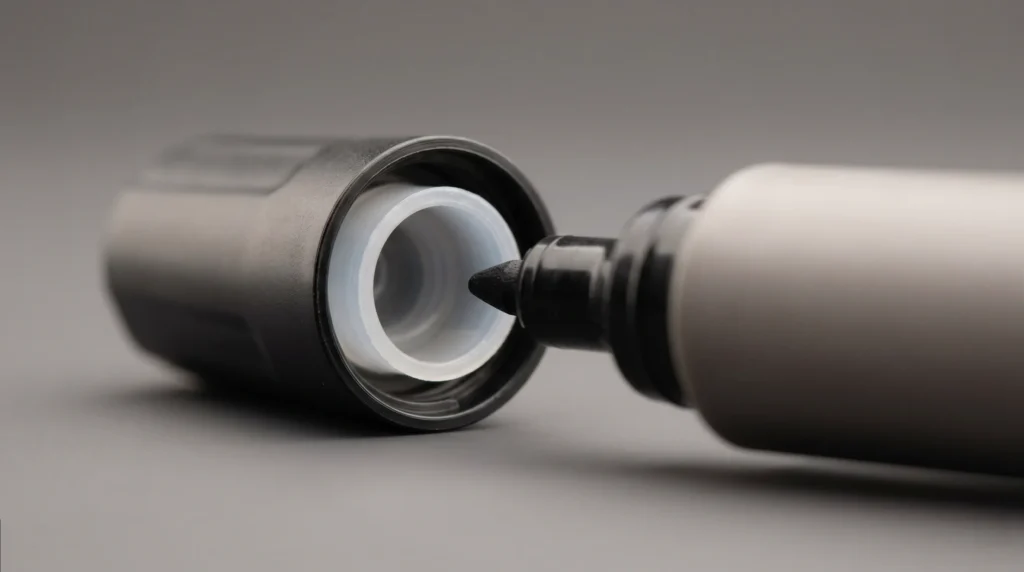
Las fuerzas detrás del renacimiento de la papelería de bolsillo
Fatiga Digital y el Retorno a lo Analógico
Screen time in creative jobs has climbed for a decade. The pushback was easy to predict. What is interesting is the shape it took. People are not leaving digital tools. They are adding physical ones that serve a different thinking job.
A 2020 handwriting EEG study compared 12 young adults and 12 children on handwriting, typing, and drawing. It found different brain-activity patterns. It did not measure pocket stationery demand. For sourcing, test the simpler question. Does the notebook and pen fit the buyer's pocket, writing habit, and refill needs?
La portabilidad define el producto, no solo el empaque.
Designing a writing tool for pocket carry is not just shrinking a standard pen. It adds limits that do not exist at full size. The ink reservoir is smaller. The formula must perform the same across a shorter fluid column. The cap seal matters far more, because a mini marker has less ink to lose before it is dry.
The mechanism also needs a rethink. A click pen at 14 cm has room for a standard spring and cam build. At 9 cm, the same build needs tighter limits. A cap that seals with an audible click, the kind you feel as much as hear, tells the user the seal is whole. That feel is not decoration. It is functional quality built into the product.
¿Qué Hace a un Gran Mini Marcador? Dentro de la Ingeniería
Formulación de Tinta a Pequeña Escala
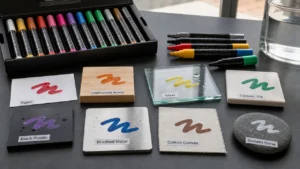
Alcohol-based ink, the kind in nearly every pro-grade marker, evaporates through a different path than water-based mixes. The solvent flashes off on contact with air. That gives alcohol markers their fast dry time and their ability to layer without waking earlier strokes. It also makes them easy to dry out in a pocket-sized body.
A compact marker has little room for ink and sealing parts. Compare usable writing output and closed-cap storage on the real design. A percent solvent loss alone does not show when a nib dies. A small body alone does not prove a shorter life.
Judge the ink, nib, and cap as one built system. Compare dried strokes across batches under steady light. Agree any instrument color limit with the supplier. A single delta-E value does not promise every eye will miss it. An in-house lab alone does not prove steady production.
Precisión de la punta e integridad del sello de la tapa
The most common marker failure is not the ink.
It is the cap.
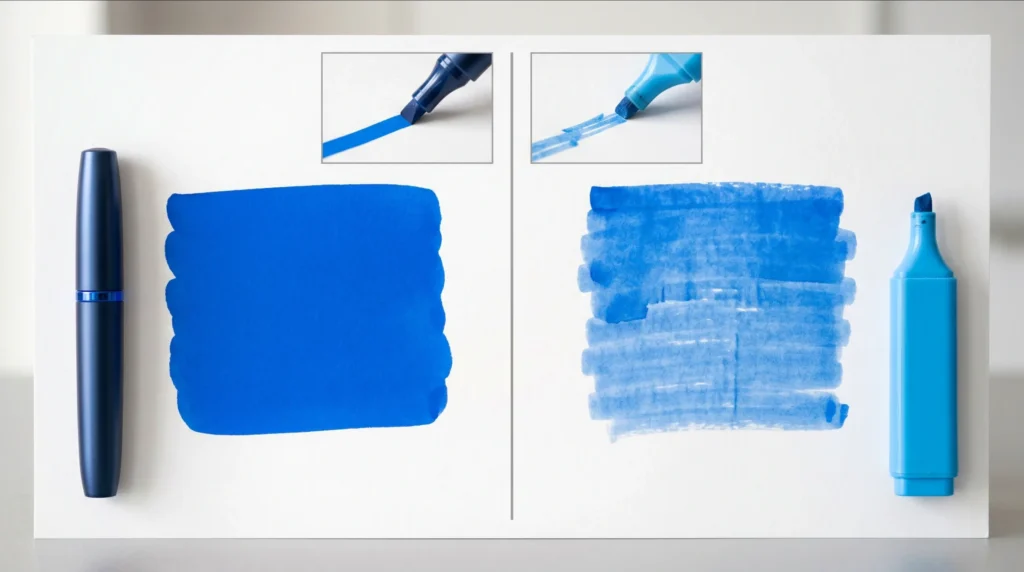
A cap that does not seat fully lets solvent escape around the nib. Over days and weeks, the usual life of a pocket item that sits in a bag and gets used now and then, that slow leak adds up. The user picks up the marker after a month and finds it dry. They do not blame the cap. They blame your brand.
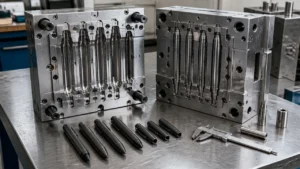
On a good line, cap pull-force is tested per batch. The spec range, often 8 to 15 Newtons, makes sure the cap clicks shut with enough force to seal, but not so much that a user cannot open it one-handed. The inner cap liner, usually polyethylene or a soft polymer, must seal fully around the nib housing. Even 0.2 mm molding flash on the liner edge makes a micro-channel for solvent vapor to escape.
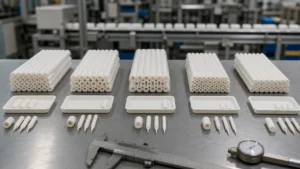
These are not exotic engineering problems. They are plain quality-control work. But they need systematic testing, not spot checks. A good QC plan samples 200 to 300 units per batch, not five. It logs results. It traces defect patterns to mold care or ink batch numbers. It does this for every run, not only the key accounts.
For brand owners sourcing compact markers, asking to see these logs during a factory visit tells you more about real quality than any wall certificate. Start with marcadores que pintan y la recorrido por la fábrica.
Certificaciones y Fabricación Personalizada para Productos de Tamaño de Bolsillo
Selling mini pens and compact markers into regulated markets means working through safety and compliance needs. These are not optional. They are the baseline for market entry:
- Requisitos de juguetes de la UE: Determine si el producto es un juguete antes de aplicar el marco de juguetes de la UE. Para juguetes, evalúe los requisitos químicos, físicos y de otro tipo pertinentes. La papelería para adultos no requiere automáticamente documentación de conformidad de juguetes.
- ASTM D-4236 (EE. UU.)): Obligatorio para todos los materiales de arte vendidos en el mercado estadounidense. Requiere una evaluación de riesgos toxicológicos revisada por un toxicólogo calificado. La declaración “Cumple con ASTM D-4236” impresa en el empaque es el resultado visible de este proceso.
- REACH (UE): Regulación química más amplia que cubre SVHC (Sustancias Altamente Preocupantes). Se aplica a todos los productos, no solo a artículos infantiles.
- Marcado CE: Requerido para productos clasificados como juguetes según la Directiva de Seguridad de Juguetes de la UE. El fabricante debe mantener una Declaración de Conformidad y un expediente técnico.
When you source pocket stationery for retail or private-label, the supplier's certificate file is the start, not the finish. Check that the reports cover your exact SKUs, your ink mixes, and your batches. A golden sample passing a lab test means nothing if mass production uses different parts.
B2B manufacturing abilities to judge:
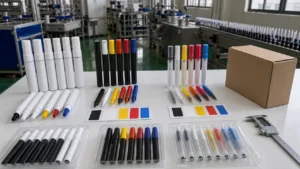
- The minimum order for custom OEM/ODM programs is 50,000 pens per order, counted by total individual pens produced. For a 12-color pack, that equals roughly 4,200 sets, not 50,000 of each color. Standard stock models can be sampled at smaller trial sizes.
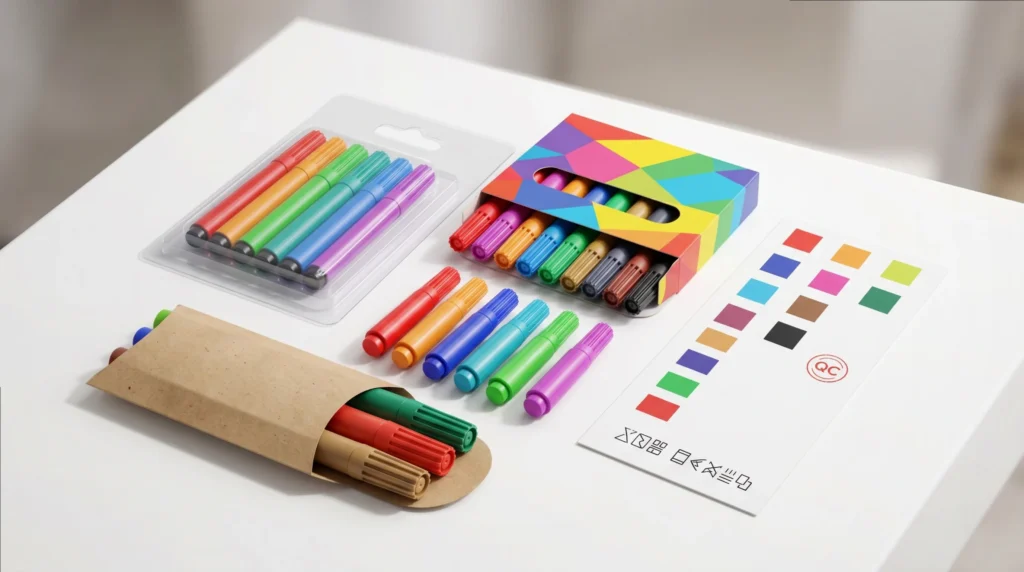
- Personalización completa del empaque: tarjetas blister, cajas de color, expositores, opciones ecológicas.
- Diseño 3D y muestreo físico: prototipos en 72 horas, desarrollo de moldes en 4–6 semanas.
- Free sample policy for qualified buyers) enables side-by-side evaluation before committing to a production run.
- 100% inline automated inspection on every unit before packing, plus strict AQL sampling (not statistical sampling alone; completete inspection.
If you are sourcing mini markers or pocket pens for your brand and want to talk specs, you can reach the equipo de ZH STATIONERY.
Preguntas Frecuentes
P: ¿Son los mini marcadores menos duraderos que los marcadores de tamaño completo?
Not by nature. Durability depends on the cap seal, the ink's resistance to solvent loss, and the barrel and nib build. A well-made mini marker with an airtight inner cap liner and alcohol ink with evaporation guards can perform well for 12 to 18 months after opening. That matches many full-size markers. The weak point in most compact markers is the cap seal, not the ink volume.
P: ¿Se pueden personalizar los mini bolígrafos y marcadores con el logotipo y empaque de mi marca?
Yes. OEM makers with molding, pad printing, and packing in-house can build fully custom pocket stationery. That runs from barrel color and material to logo spot, pack design, and ink mix. This makes pocket stationery a real private-label category, even for smaller brands testing new markets. The minimum order for custom OEM/ODM programs is 50,000 pens per order, counted by total individual pens produced. For a 12-color pack, that equals roughly 4,200 sets, not 50,000 of each color. Standard stock models can be sampled at smaller trial sizes.
P: ¿Qué certificaciones de seguridad debo buscar al adquirir mini marcadores?
First agree the planned age group and product class. Then ask for model-specific files for the rules that apply, including art-material marking or toy conformance where relevant. Check that the report covers the ordered ink, coat, and parts. Do not assume every adult pocket pen needs CE marking.
P: ¿Por qué algunos mini bolígrafos saltan o dejan de escribir después de un tiempo breve?
Skipping in compact pens usually traces to three causes. One, a nib that did not get enough ink during first fill and prime. Two, ink viscosity too high for the narrow feed channel in a mini body. Three, cap seal loss that lets the nib dry between uses. In production, these are held with per-batch viscosity tests, automated fill with volume checks, and cap pull-force consistency checks.
Q: What's the minimum order quantity for custom pocket stationery?
The minimum order for custom OEM/ODM programs is 50,000 pens per order, counted by total individual pens produced. For a 12-color pack, that equals roughly 4,200 sets, not 50,000 of each color. Standard stock models can be sampled at smaller trial sizes.
P: ¿Cómo puedo obtener muestras para evaluar la calidad del mini marcador antes de realizar un pedido al por mayor?
Most B2B writing makers give free samples to qualified buyers. When you ask, request production-line samples, not hand-built prototypes, so you judge what customers will actually get. Test cap seal by leaving a sample uncapped for 2 hours, then 24 hours. The marker should recover and write normal at both points. Also test vertical storage, nib up and nib down, for leaks. The sourcing and certification guide adds market context. You can also contacte con ZH Stationery.
Pocket stationery is not a passing look. It is a category shaped by real shifts in how people work, create, and carry tools. The drivers, digital balance, portability, sustainability, and planner culture, are not leaving in 2026. Neither is the hope that a compact pen or mini marker performs as well as its full-size twin.
For brand owners watching this space, the chance is not in chasing a moment. It is in building products that solve the format's engineering tests. It is also in sourcing from makers who can prove their quality, batch by batch.
Guía relacionada: Para obtener más contexto del mercado, consulte Arte de Marcadores en TikTok: 5 Tendencias Virales que Puedes Crear con Solo 3 Rotuladores.
Lecturas relacionadas
- 15 IDEAS DE COLOREO VERANIEGO CON BOLÍGRAFOS DE GEL
- Técnicas de marcado que todo artista principiante debería aprender
- Dual Tip Markers Explained: Brush, Chisel, Fine: What’s Best?
- técnicas de rotulador para artistas aspirantes
- tipos de lápices de colores y tendencias del mercado
- cómo se fabrican los lápices de colores